- Product Description Description
- Table of Contents TOC
- List of Table & Figure LOT
- Get Free Sample PDF Sample PDF
Market Size, 2025
$390.00 MnMarket Estimate, 2026
$420.00 MnMarket Forecast, 2034
$750.00 MnCAGR, 2026–2034
7.52%Executive Summary: Latin America Ventilator Market
- Market Scope: Comprehensive Latin America ventilator market analysis covering interface types, end-user settings, mobility segments, country-level adoption, and healthcare infrastructure drivers.
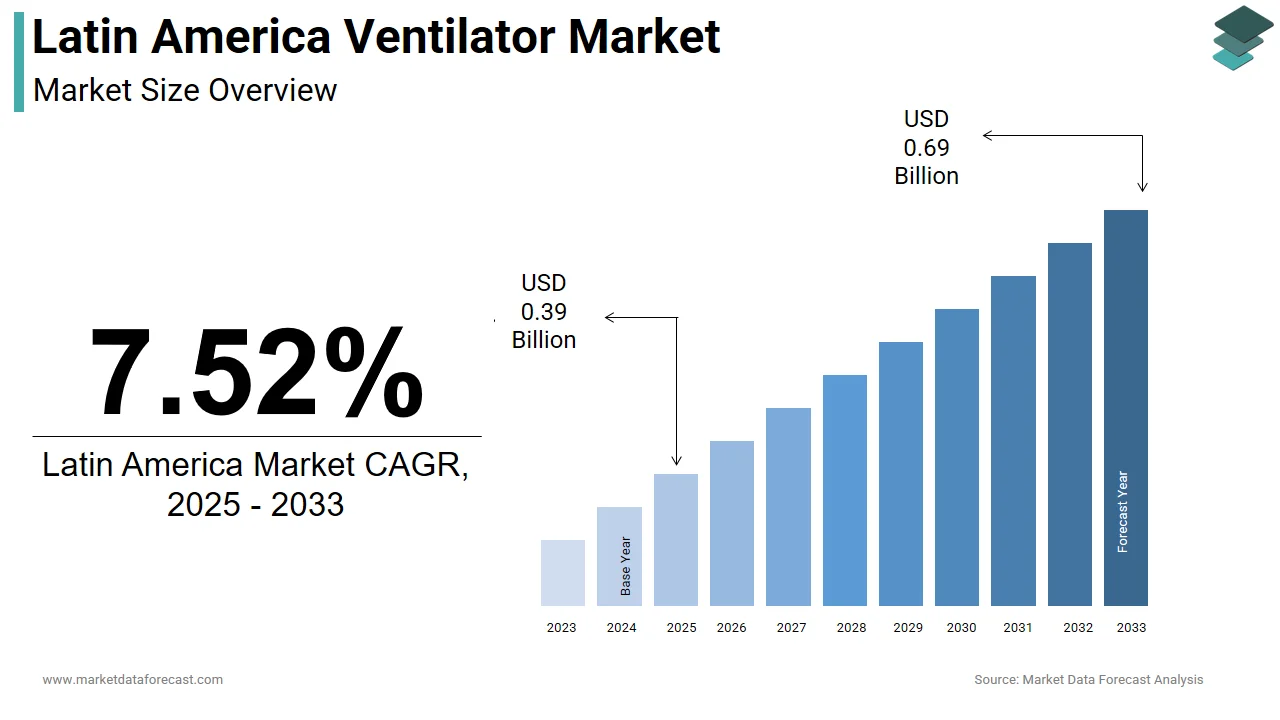
- Market Valuation: Valued at USD 390 million (2025), estimated at USD 420 million (2026), and projected to reach USD 750 million by 2034, registering a solid CAGR of 7.52% (2026–2034).
- Primary Growth Drivers: Rising prevalence of chronic respiratory diseases (such as COPD), rapidly aging geriatric population, increasing incidence of premature births, growing intensive care bed capacities, and post-pandemic medical infrastructure investments. Key restraints include budgetary constraints, ventilation risks (e.g., ventilator-associated pneumonia), and limited insurance reimbursement for device purchases and accessories.
Key Market Segment Metrics (2026–2034)
| Category | Leading Segment (2025 Position) | Fastest-Growing Segment |
|---|---|---|
| By Type of Interface | Invasive Ventilation (dominant in critical care and intensive care units for severe respiratory failure and surgical interventions) | Non-Invasive Ventilation (expanding rapidly due to lower infection risks, patient comfort, and home care adoption) |
| By Mobility | Intensive Care Ventilators (held the largest market share anchored by hospital ICU setups and advanced life support) | Portable / Transport Ventilators (surging due to rising demand in emergency medical services and ambulances) |
| By End-User | Hospitals & Clinics (anchored as primary healthcare facilities handling acute respiratory trauma and surgeries) | Home Care & EMS (growing on the back of long-term chronic disease management and pre-hospital emergency transport) |
| By Country | Brazil (led regional market share backed by a large population, government manufacturing initiatives, and broad healthcare infrastructure) | Mexico (projected to register a lucrative CAGR driven by local medical device production and international supply agreements) |
Major Market Players & Market Structure
Market Structure: Highly competitive medical device landscape featuring multinational healthcare giants competing on advanced ventilation modes, portability, digital monitoring integration, and localized supply chain partnerships across Latin America.
Key Companies: Philips, ResMed, Medtronic, Becton, Dickinson and Company, Getinge, Dräger, Smiths Group, Hamilton Medical, GE Healthcare, Fisher & Paykel, Air Liquide, Asahi Kasei, and Allied Healthcare Products.
 Download Free Sample Report
Latin America Ventilator Market Size
The size of the Latin America ventilator market was valued at USD 390 million in 2025. This market is expected to grow at a CAGR of 7.52% from 2026 to 2034 and be worth USD 750 million by 2034 from USD 420 million in 2026.
A ventilator is a medical life-support machine that mechanically moves breathable air into and out of a patient's lungs when they cannot breathe adequately on their own. These systems are essential in intensive care units, emergency departments, and home care settings for managing acute respiratory failure and chronic obstructive pulmonary disease. According to the Pan American Health Organization, chronic respiratory diseases account for 5.5% of all deaths in the Region of the Americas, with chronic obstructive pulmonary disease accounting for 5% of all deaths. This high mortality rate directly correlates with increased demand for mechanical ventilation solutions in public and private healthcare facilities. According to the Pan American Health Organization and World Health Organization data, noncommunicable diseases are responsible for about 80.7% of total deaths in the Region of the Americas. Ventilators mitigate these risks by providing precise oxygen delivery and pressure support, thereby enhancing patient survival rates. As healthcare systems modernize across emerging economies, the adoption of smart ventilators with remote monitoring capabilities accelerates. This technological evolution supports data-driven clinical decisions and improves overall treatment outcomes. The market thus serves as a vital component in strengthening healthcare resilience throughout the diverse Latin American landscape.
MARKET DRIVERS
Rising Prevalence of Respiratory Diseases
The escalating burden of respiratory illnesses fuels the growth of the Latin American ventilator market. This creates sustained demand for critical care equipment in hospitals and clinics. Conditions such as pneumonia, chronic obstructive pulmonary disease, and asthma require immediate and often prolonged mechanical support, which manual interventions cannot provide effectively. According to the Pan American Health Organization, lower respiratory infections remain among the top five causes of death in Latin America, necessitating robust infrastructure for acute care management. This high incidence rate drives healthcare providers to invest in advanced ventilators that offer precise control over tidal volume and pressure levels. As per studies, chronic respiratory illnesses place an immense burden on the healthcare landscape of Latin America, demonstrating an escalating necessity for distributed and scalable treatment frameworks. Hospitals increasingly prioritize the acquisition of dual-mode ventilators capable of handling both invasive and non-invasive therapies to accommodate diverse patient needs. The aging population further exacerbates this trend, as elderly patients are more susceptible to severe respiratory complications requiring intensive monitoring. Government initiatives to improve public health outcomes also stimulate procurement of essential medical devices. As awareness of early intervention grows, the adoption of sophisticated ventilation technologies becomes essential for reducing mortality and improving quality of life across the region.
Expansion of Healthcare Infrastructure
Significant investments in healthcare infrastructure accelerate the Latin American ventilator market. This, in turn, increases the availability of advanced medical facilities in both urban and rural areas. Governments across the region are prioritizing healthcare modernization to meet the needs of growing populations and improve access to quality care. According to sources, public sector health infrastructure finance in Latin American economies has adapted shifting multi-year investment patterns to expand localized intensive care capacity and build newer hospital networks. This expansion creates substantial demand for essential medical equipment, including ventilators for emergency departments and critical care wards. As per the Unified Health System (SUS) and the Brazilian Intensive Medicine Association (AMIB), Brazil had an average of approximately 1.4 ICU beds per 10,000 inhabitants within the public sector (SUS) and 4.9 ICU beds per 10,000 inhabitants in the private sector around 2020, rather than a nationwide public average of 2.5 per 1,000 inhabitants. New facilities often procure state-of-the-art devices to attract patients and maintain competitive standards, leading to higher adoption rates of smart and connected ventilators. Private sector participation also contributes significantly, as international healthcare chains establish a presence in emerging markets, bringing global best practices and technology. Improved reimbursement policies and insurance coverage further enable patients to access advanced treatments requiring mechanical ventilation. This infrastructural growth ensures a steady pipeline for ventilator manufacturers seeking to expand their footprint in the dynamic Latin American healthcare landscape.
MARKET RESTRAINTS
High Cost of Advanced Ventilators
Substantial acquisition and maintenance costs hamper the growth of the Latin American ventilator market. This limits accessibility for smaller healthcare facilities and budget-constrained public hospitals. Advanced smart ventilators with wireless connectivity and integrated monitoring software command premium prices that may exceed the financial capabilities of many regional institutions. According to OECD data, health spending per capita in 2024 ranged from a low of USD PPP 105 in Haiti to a high of USD PPP 4,003 in Chile, with the average across 33 Latin American and Caribbean nations sitting at USD PPP 1,518. The financial constraint forces many facilities to rely on older manual or basic electronic ventilators, which lack safety features and efficiency benefits. As per sources, severe budget restraints frequently force rural health clinics throughout developing global markets to maintain older medical infrastructure and encounter significant technical procurement backlogs. High import duties and taxes in certain countries further inflate the final price of imported ventilation systems, making them less affordable for local buyers. Additionally, the recurring costs of proprietary consumables such as specific circuits and filters add to the total cost of ownership, discouraging widespread adoption. Maintenance and repair services for sophisticated devices also require specialized technicians who may not be readily available in remote areas. These economic barriers slow the penetration of advanced ventilation technologies, particularly in developing nations where healthcare funding is primarily directed toward basic primary care services rather than specialized equipment upgrades.
Shortage of Skilled Healthcare Professionals
A deficit of trained medical personnel inhibits the expansion of the Latin America ventilator market. This complicates the effective operation and management of sophisticated respiratory devices. Proper use of advanced ventilators requires comprehensive training to configure modes, manage alarms, and interpret data, which many nurses and respiratory therapists lack due to inadequate educational programs. According to the Pan American Health Organization, it is estimated that by 2030, Latin America and the Caribbean will face a shortage of between 600,000 and 2 million health professionals. This workforce gap leads to underutilization of advanced features or improper usage that can compromise patient safety and device longevity. As per OECD data, the average number of nurses per 1,000 population in the Latin America and Caribbean region is 3, which is exactly one-third of the average of 9 nurses per 1,000 population across OECD countries. Without sufficient staff, hospitals struggle to maintain rigorous protocols for mechanical ventilation, increasing the risk of complications despite having advanced equipment. Training programs are often resource-intensive and time-consuming, diverting attention from direct patient care during staffing crises. High turnover rates among healthcare professionals further disrupt continuity of care and require constant retraining efforts. Until educational infrastructure improves and staffing levels stabilize, the full potential of smart ventilators remains unrealized. This limitation is particularly evident in many parts of the region.
MARKET OPPORTUNITIES
Integration with Telemedicine and Remote Monitoring
The convergence of ventilators with telemedicine technology offers a transformative opportunity for the Latin America ventilator market. This integration enables real-time remote monitoring and data analytics for improved patient care. Smart ventilators equipped with connectivity modules can transmit respiratory parameters, alarm status, and battery levels to central nursing stations or cloud platforms, allowing proactive intervention. As per sources, a McKinsey report predicts the total number of connected Internet of Things (IoT) devices will reach 50 billion by 2025. This connectivity reduces the burden on nursing staff by automating documentation and alerting them only when necessary, thereby improving workflow efficiency. As per reports, decentralized healthcare adoption and remote monitoring systems have expanded significantly throughout Latin American markets due to institutional pushes for outpatient care continuity. Home care patients benefit significantly from this technology, as caregivers can track ventilation progress via mobile applications, ensuring safety and compliance. Hospitals can leverage aggregated data to identify trends, optimize inventory management, and enhance clinical decision-making through predictive analytics. As 5G networks expand across the region, the reliability and speed of data transmission will further enhance the capabilities of connected ventilation systems. This digital transformation opens new revenue streams through software subscriptions and value-added services for manufacturers.
Growth in Home Healthcare Services
Expanding home healthcare services provides a significant growth area for the Latin America ventilator market. This shifts treatment delivery from hospitals to patient residences. Rising preference for comfort and cost-effective care drives demand for portable and user-friendly ventilation devices suitable for non-clinical environments. According to research, the home care services and devices vertical across Latin America is experiencing steady structural growth aligned with evolving regional demographic needs and long-term decentralized care transitions. This trend is fueled by an aging population preferring to age in place and rising healthcare costs associated with prolonged hospital stays. Portable ventilators allow patients to receive respiratory support at home, reducing hospital readmission rates and improving quality of life. As per studies, home-based respiratory therapies and clinical monitoring segments in South America have expanded into highly structured sub-markets serving large clinical populations within Brazil. Manufacturers can capitalize on this by developing lightweight, battery-operated ventilators with intuitive interfaces for patient self-administration. Reimbursement policies in countries like Mexico and Chile increasingly cover home-based treatments, further accelerating adoption. Partnerships with home care providers and insurance companies can facilitate broader access to these devices, establishing a robust distribution channel beyond traditional hospital procurement.
MARKET CHALLENGES
Regulatory Heterogeneity Across Countries
Diverse regulatory frameworks challenge the Latin American ventilator market. This creates complex compliance requirements that vary significantly between countries. Each nation has its own approval processes, safety standards, and certification timelines, which delay market entry and increase operational costs for manufacturers. According to reports, efforts are continuously underway to promote the regional harmonization of medical device frameworks to enhance safety, improve technical transparency, and minimize international market trade friction. This fragmentation forces companies to navigate distinct legal landscapes, requiring separate clinical trials and documentation for each market. According to regional regulatory frameworks, the National Agency for Health Surveillance in Brazil operates under standards like RDC 657/2022 for software as a medical device, while the National Institute for Drug, Food, and Medical Technology in Argentina enforces separate local requirements, which creates diverging technical validation and cybersecurity pathways for product design. Delays in regulatory approvals can extend launch timelines by months or years, causing manufacturers to miss market windows and lose competitive advantage. Small and medium-sized enterprises often lack the resources to manage multiple regulatory submissions, limiting their ability to compete with larger global players. Constant updates to local laws further add uncertainty, requiring continuous monitoring and adaptation of compliance strategies. Until greater regional alignment is achieved, manufacturers must maintain dedicated regulatory affairs teams for each country. This fragmentation increases overhead and slows innovation diffusion across the Latin America region.
Supply Chain Disruptions and Logistics Issues
Global supply chain vulnerabilities are a major obstacle to the expansion of the Latin America ventilator market. This causes delays in equipment delivery and increases production costs for manufacturers. Shortages of semiconductors, electronic components, and specialized materials have disrupted the manufacturing of ventilators, leading to longer lead times for customers. According to reports, systemic global logistics disruptions and macro trade volatility in recent years have substantially escalated domestic freight costs across developing regions, directly eroding infrastructure purchasing power. These delays hinder the ability of hospitals to ramp up capacity quickly in response to surging demand for respiratory care. As per research, widespread logistical disruptions and structural international supply chain bottlenecks frequently cause prolonged procurement delays for critical capital equipment and medical components. Ventilator providers struggle to source necessary parts for their own assemblies, creating bottlenecks that ripple through the entire healthcare ecosystem. Customers face extended wait times for new installations or upgrades, forcing them to rely on older, less efficient models. This instability undermines confidence in the reliability of supply chains and encourages companies to seek alternative sourcing strategies or hold larger inventory buffers, increasing working capital requirements. Such disruptions slow market growth and innovation momentum as manufacturers prioritize availability over feature expansion.
REPORT COVERAGE
| REPORT METRIC | DETAILS |
| Market Size Available | 2025 to 2034 |
| Base Year | 2025 |
| Forecast Period | 2026 to 2034 |
| Segments Covered | By Type of Interface, End-users, Mobility, and Country. |
| Various Analyses Covered | Global, Regional and Country-Level Analysis, Segment-Level Analysis, Drivers, Restraints, Opportunities, Challenges; PESTLE Analysis; Porter’s Five Forces Analysis, Competitive Landscape, Analyst Overview of Investment Opportunities |
| Country Covered | UK, France, Spain, Germany, Italy, Russia, Sweden, Denmark, Switzerland, Netherlands, Turkey, Czech Republic & Rest of Europe. |
| Market Leaders Profiled | Philips, Resmed, Medtronic, Becton, Dickinson and Company, Getinge, Dräger, Smiths Group, Hamilton Medical, GE Healthcare, Fisher & Paykel, Air Liquide, Asahi Kasei, and Allied Healthcare Products |
SEGMENTAL ANALYSIS
By Type of Interface Insights
The invasive ventilation segment dominated the Latin American ventilator market and accounted for a substantial share in 2025. Its critical role in managing severe respiratory failure and acute care scenarios in intensive care units drove the dominance of this segment. This method involves inserting a tube into the patient's airway, ensuring the direct and controlled delivery of oxygen, which is essential for unconscious or critically ill patients. According to sources, severe pneumonia and acute respiratory distress syndrome represent significant drivers of critical care admissions, though specific regional installation or database metrics tracking precise percentages under active PAHO surveillance remain variable across the Americas. This high volume of critical cases drives hospitals to prioritize the procurement of advanced invasive ventilators with multiple modes and safety features. According to the World Health Organization, lower respiratory infections remain a leading cause of mortality in Latin America, highlighting the indispensable nature of invasive mechanical ventilation for survival. Hospitals in major urban centers continuously upgrade their fleets to handle complex surgeries and trauma cases requiring prolonged ventilatory support. The established clinical protocols and trained workforce for intubation further sustain the dominance of this segment. Government investments in expanding ICU capacity also boost demand for high-end invasive devices. As healthcare facilities strive to meet international standards of care, the reliability and precision of invasive ventilation ensure its continued leadership in the regional market landscape.
The non-invasive ventilation segment exhibits the highest CAGR due to the rising prevalence of chronic obstructive pulmonary disease and the shift toward home-based care. This interface uses masks or nasal prongs to deliver pressure support without intubation, making it less intrusive and more comfortable for long-term use. According to the Global Initiative for Chronic Obstructive Lung Disease (GOLD), strategic frameworks emphasize the rising multi-decade health and economic burden of chronic obstructive pulmonary disease across the globe. This trend encourages patients and providers to adopt non-invasive devices that allow for greater mobility and quality of life. As per reports, home non-invasive ventilation serves as a key strategy to mitigate hospital readmission rates for chronic respiratory patients, showcasing measurable clinical and economic advantages. Technological advancements have made these devices lighter, quieter, and easier to operate, facilitating wider acceptance among elderly populations. Reimbursement policies in countries like Chile and Mexico are increasingly covering home respiratory therapy, further accelerating adoption. The ability to manage mild to moderate respiratory distress outside intensive care settings also relieves pressure on hospital resources. These factors collectively establish non-invasive ventilation as the fastest-expanding category in the market.
By End Users Insights
The hospitals and clinics segment led the Latin America ventilator market and captured a significant share in 2025. This leading position was attributed to its role as primary centers for acute care and emergency treatment. These institutions handle the highest volume of patients requiring mechanical ventilation for surgeries, trauma, and severe infections, thereby necessitating extensive equipment fleets. The growth in physical capacity directly drives the volume demand for ventilators, as each new bed unit requires dedicated respiratory support devices. According to research, public and private hospital networks serve as the primary foundational centers for the deployment and installation of intensive care mechanical ventilators. Tertiary care centers particularly invest in high-end models with advanced monitoring capabilities to handle complex cases. Accreditation standards and regulatory requirements mandate specific equipment levels for emergency and surgical departments, ensuring consistent procurement. The concentration of skilled respiratory therapists in hospitals also facilitates the adoption of sophisticated devices. As governments prioritize reducing mortality rates from respiratory diseases, the hospital segment remains the dominant driver of market revenue and technological adoption.
The home care segment exhibits the fastest growth in the Latin American market, owing to the rising preference for decentralized treatment and the need to reduce hospital congestion. Patients with chronic respiratory conditions increasingly receive ventilation support at home, where they can maintain comfort and normalcy while undergoing therapy. This trend is supported by advancements in portable and user-friendly ventilators that are lightweight and easy to operate for non-clinical users. According to studies, public healthcare systems manage extensive non-labor medical allocations dedicated to handling the complications of chronic diseases and expanding general patient access. Telemedicine integration allows clinicians to monitor ventilation progress remotely, ensuring safety without frequent clinic visits. The aging population preferring to age in place further accelerates demand for discreet and reliable devices suitable for domestic environments. As healthcare systems seek cost-effective alternatives to inpatient care, the home care segment emerges as the most rapidly expanding end-user category in the region.
By Mobility Insights
In 2025, the intensive care ventilators segment held the largest share of the Latin America ventilator market because of its necessity in critical care units and operating rooms. These stationary devices offer comprehensive monitoring, multiple ventilation modes, and high-performance capabilities required for managing life-threatening conditions. According to sources, intensive care bed density and associated respiratory system infrastructures vary significantly across developing regions based on specific state and public sector resource capacities rather than a single uniform metric. This gap necessitates the procurement of robust intensive care ventilators to enhance capacity and improve survival rates for critically ill patients. The Pan American Health Organization states that respiratory failure accounts for a significant portion of ICU admissions requiring advanced mechanical support for extended periods. Hospitals prioritize these devices for their reliability and ability to integrate with central monitoring systems for real-time data analysis. The complexity of surgical procedures and trauma care in urban centers further sustains demand for high-end stationary units. Government initiatives to upgrade public hospital facilities also boost sales volumes for intensive care ventilators. As medical tourism grows in countries like Brazil and Mexico, the need for world-class critical care equipment ensures the continued dominance of this segment.
The portable ventilators segment is expanding rapidly. This expansion is propelled by the expansion of emergency medical services and the rise of home healthcare. These compact devices enable respiratory support during patient transport and in non-clinical settings, offering flexibility and convenience for diverse care scenarios. According to reports, strengthening domestic pre-hospital networks and regional emergency management frameworks relies heavily on mobile life-support infrastructure. Ambulances and air medical services increasingly equip their fleets with portable ventilators to stabilize patients before reaching hospitals. As per the Brazilian Ministry of Health, pre-hospital care initiatives have expanded significantly, requiring lightweight and battery-operated devices for field use. Advances in battery technology and miniaturization have enhanced the performance and duration of portable units, making them viable for long-term home use as well. The growing incidence of road accidents and natural disasters in the region further stimulates demand for rapid deployment respiratory solutions. As healthcare systems focus on continuity of care from field to home, the portable ventilator segment emerges as the most dynamic growth area in the market.
COUNTRY-LEVEL ANALYSIS
Brazil Ventilator Market Analysis
Brazil was the top performer in the Latin America ventilator market and occupied a commanding share in 2025. This prominence was credited to a vast healthcare network and significant government investment in public health infrastructure. The country benefits from programs aimed at expanding ICU capacity and improving access to critical care in remote areas. According to research, state infrastructure evaluations emphasize legacy beds and strategic regional Tele-ICU networks authorized by the Ministry of Health to optimize patient critical care access. This expansion drives substantial demand for both invasive and non-invasive ventilators across public and private hospitals. As per studies, expanding domestic manufacturing and technological capacity plays a critical role in optimizing health logistics and mitigating reliance on imported advanced components. The high prevalence of respiratory diseases, such as dengue-related complications and pneumonia, further stimulates procurement of advanced ventilation systems. Government tenders for hospital modernization projects provide consistent opportunities for manufacturers to supply large volumes of equipment. Focus on universal health coverage ensures that even smaller municipalities receive funding for essential medical devices. This combination of scale, policy support, and domestic production solidifies Brazil's leadership in the regional market.
Mexico Ventilator Market Analysis
Mexico was positioned second in the Latin American ventilator market in 2025. This position was supported by a robust private healthcare sector and increasing medical tourism. The country boasts numerous world-class hospitals that invest in state-of-the-art technology to attract international patients and maintain competitive standards. According to sources, large-scale social security allocations are directed toward general health provisions, modernization projects, and maintaining clinical infrastructure across major public hospitals. This substantial funding enables facilities to upgrade legacy systems with connected devices that offer remote monitoring and data analytics. As per reports, Mexico's sanitary control and device compliance mandates are overseen by the Federal Commission for the Protection against Sanitary Risks (COFEPRIS), while the National Institute for Drug, Food, and Medical Technology (ANMAT) serves as the statutory regulatory authority exclusively for Argentina. The rising incidence of chronic diseases such as diabetes and obesity, which often lead to respiratory complications, further boosts demand. Private insurance coverage expands access to specialized care, driving adoption of home ventilation solutions. Strong trade agreements facilitate the import of high-quality devices from North America and Europe. This blend of regulatory rigor and market dynamism sustains Mexico's prominent position in the regional landscape.
Argentina Ventilator Market Analysis
Argentina is growing steadily in the Latin American ventilators market due to a strong tradition of medical education and specialized healthcare services. The country has a high density of physicians and specialists who prioritize advanced diagnostic and therapeutic tools for patient management. According to research, Argentine public healthcare system investments prioritize the distribution of equipment upgrades to bolster provincial health capacities and balance standard municipal capabilities. This initiative drives demand for reliable and cost-effective ventilators suitable for diverse clinical settings. As per studies, macro-economic factors and shifting domestic demand dictate the volume of imported specialized respiratory support systems needed to maintain baseline intensive care infrastructure. Economic stabilization efforts have improved purchasing power, allowing private clinics to invest in newer technologies. High awareness of respiratory health issues among the population supports consistent demand for both hospital and home care devices. Local distributors play a crucial role in providing technical support and training, ensuring optimal utilization of equipment. Focus on improving rural healthcare access also opens new markets for portable and durable ventilation solutions.
Chile Ventilator Market Analysis
Chile maintains a noteworthy position in the Latin America Ventilator Market owing to high healthcare spending per capita and efficient public health management. The country prioritizes patient safety and clinical efficacy, leading to widespread adoption of advanced ventilators with comprehensive safety features. According to sources, Chile's overall financing landscape reflects integrated financing structures that fund advanced equipment procurement across both public and private health networks. This substantial funding enables hospitals to invest in the latest-generation devices that reduce errors and improve workflow efficiency. As per reports, medical device safety evaluations and marketing authorizations are primary statutory functions overseen by the Institute of Public Health (ISP), whereas general national public health planning is managed under the direct framework of the Ministry of Health. The Superintendence of Health emphasizes the importance of standardized care protocols, which are facilitated by interconnected ventilation systems. Growing demand for home care services among the elderly population also drives sales of portable and wearable devices. The strong presence of global market leaders ensures availability of cutting-edge technologies and robust after-sales support. Focus on digital health integration allows for seamless data exchange, enhancing overall care coordination and patient outcomes.
COMPETITIVE LANDSCAPE
The Latin America Ventilator Market features moderate competition among established global medical device manufacturers and emerging regional players striving for technological differentiation and market penetration. Companies compete primarily on device reliability, ease of use, and after-sales support rather than price alone due to the critical nature of respiratory care. The landscape is characterized by continuous innovation as firms seek to enhance ventilator performance through advanced algorithms and connectivity options. Strategic collaborations between hardware manufacturers and local distributors are common, aiming to provide comprehensive solutions that address complex regulatory and logistical challenges. Market participants focus on expanding their regional footprint through localized service centers and training programs to serve diverse healthcare environments effectively. The entry of cost-competitive manufacturers from Asia adds further dynamism to the competitive environment, forcing incumbents to offer value-based packages. Customer retention relies heavily on maintenance contracts and technical assistance that ensure optimal equipment performance. Intellectual property protection remains crucial as companies safeguard proprietary ventilation modes and software designs. The market structure encourages partnerships with government bodies to secure large-scale procurement contracts for public health infrastructure improvements.
KEY MARKET PLAYERS
The leading companies operating in the Latin America ventilator market include:
- Philips
- ResMed
- Medtronic
- Becton, Dickinson and Company
- Getinge
- Dräger
- Smiths Group
- Hamilton Medical
- GE Healthcare
- Fisher & Paykel
- Air Liquide
- Asahi Kasei
- Allied Healthcare Products
TOP PLAYERS IN THE MARKET
- ResMed Ltd maintains a strong presence in the Latin America Ventilator Market through its comprehensive portfolio of non-invasive and home care respiratory solutions. The company focuses on developing user-friendly devices that support chronic disease management in domestic settings. The company continues to invest heavily in research and development to improve algorithm accuracy and patient comfort. Their extensive distribution network ensures rapid support and service delivery, which strengthens customer loyalty. ResMed actively collaborates with local healthcare providers to customize training programs for home care technicians. This strategic alignment enhances operational efficiency for patients while promoting adherence to therapy protocols. By integrating hardware with advanced software solutions, ResMed solidifies its reputation as a leader in accessible respiratory care technology for the region.
- Philips Healthcare contributes significantly to the Latin America Ventilator Market by providing robust critical care and acute care ventilation systems for hospitals. The company is renowned for its high-performance intensive care units designed for complex clinical scenarios and emergency departments. Philips emphasizes interoperability, allowing seamless integration with hospital information systems and electronic health records. The company partners with government agencies to supply equipment for public health infrastructure upgrades in Argentina and Chile. Their commitment to sustainability drives continuous improvement in energy-efficient designs that reduce operational costs. Philips also provides extensive clinical education resources to help respiratory therapists optimize device usage, ensuring maximum patient safety and treatment efficacy in diverse medical environments.
- Getinge AB plays a pivotal role in the Latin American ventilator market by offering durable and versatile mechanical ventilation solutions for various care settings. The company specializes in both invasive and non-invasive devices suitable for intensive care units, operating rooms, and home care applications. Getinge focuses on modular design principles, allowing facilities to upgrade existing systems without replacing the entire infrastructure. The company actively engages in partnerships with local distributors to ensure regulatory compliance and market access. Their emphasis on reliability and ease of use establishes Getinge as a trusted provider for essential respiratory support. By continuously refining product ergonomics and connectivity features, Getinge supports the industry's transition toward efficient and patient-centered healthcare delivery models in Latin America.
TOP STRATEGIES USED BY THE KEY MARKET PARTICIPANTS
Key market participants employ several strategic approaches to strengthen their position in the Latin America Ventilator Market. Product innovation remains the primary strategy, with companies investing heavily in research and development to introduce ventilators with smaller footprints, longer battery life, and improved cybersecurity features. Strategic partnerships and collaborations with local distributors enable providers to navigate complex regulatory landscapes and ensure timely market entry in countries like Brazil and Mexico. Geographic expansion into emerging markets represents another critical strategy as companies establish local assembly plants to reduce costs and comply with local content requirements. Acquisition of smaller technology firms allows major players to integrate specialized expertise in wireless connectivity or data analytics into their existing portfolios quickly. Customer-centric initiatives such as comprehensive clinical training programs and responsive technical support enhance brand loyalty and reduce switching costs for hospitals. Focus on value-based healthcare solutions tailored to specific regional needs helps companies differentiate their offerings and command premium pricing. Continuous improvement in supply chain efficiency ensures timely delivery and cost competitiveness while maintaining high-quality standards for critical medical components.
MARKET SEGMENTATION
This Latin America ventilator market research report is segmented and sub-segmented into the following categories.
By Type of Interface
- Invasive ventilation
- Non-Invasive ventilation
By End-users
- Hospitals and clinics
- Ambulances
- Home care
- Emergency Medical Services
By Mobility
- Intensive care
- Portable ventilators
By Country
- Brazil
- Mexico
- Argentina
- Chile
- Rest of Latin America