- Product Description Description
- Table of Contents TOC
- List of Table & Figure LOT
- Get Free Sample PDF Sample PDF
Market Size, 2025
$0.73 BnMarket Estimate, 2026
$0.80 BnMarket Forecast, 2034
$1.60 BnCAGR, 2026–2034
9.03%Executive Summary: Latin America Whey Protein Market
- Market Scope: Comprehensive market evaluation of the Latin American whey protein industry covering processing types, end-use applications, regional country-level dynamics, and distribution barriers.
- Market Valuation: Valued at USD 0.73 billion in 2025, reaching USD 0.80 billion in 2026, and projected to expand up to USD 1.60 billion by 2034, growing at a robust CAGR of 9.03% from 2026 to 2034.
- Primary Growth Drivers: Surging fitness culture, a rapidly growing middle-class demographic, increasing urbanization, and expanding adoption of functional foods and sports nutrition supplements.
Key Market Segment Metrics
| Category | Leading Segment (Base Year Position) | Fastest-Growing / High-Impact Segment |
|---|---|---|
| By Type | Whey Protein Concentrates (leads consumption due to affordability, low cholesterol, and high protein/nutrient density) | Whey Protein Isolates & Hydrolysates (surging through premium sports nutrition and specialized infant formulations) |
| By Application | Food & Beverages (dominates total revenue driven by fortification of snacks, dairy, and ready-to-drink options) | Nutritional Supplements (expanding rapidly via fitness centers and urban wellness lifestyle transitions) |
| By Country | Brazil (market leader supported by a massive dairy sector producing over 34 billion liters of milk annually and an 8% annual fitness industry growth rate) | Mexico (high-impact market propelled by a fast-growing dietary supplement sector and strong supply chains linked to the U.S.) |
Major Market Players & Market Structure
Market Structure: Competitive regional landscape featuring global dairy giants and specialized ingredient processors focusing on product innovation, hybrid plant-dairy blends, and tailored nutritional solutions.
Key Companies: Hilmar Cheese Company, Maple Island Inc., Glanbia, Saputo Inc., Davisco Foods International Inc., Alpavit, Fonterra Cooperative Group Ltd., Milk Specialty Globals, Wheyco GmbH, and Milkaut SA.
Latin America Whey Protein Market Size
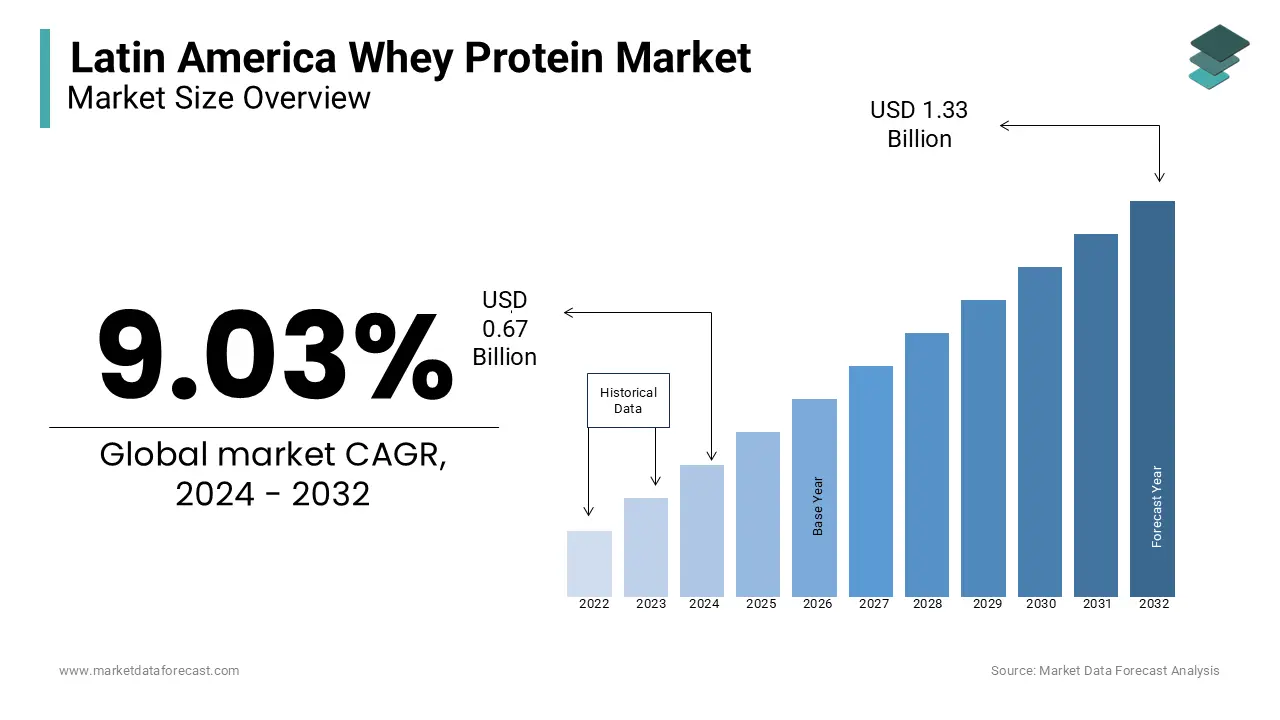
The whey protein market in Latin America was valued at USD 0.73 billion in 2025. The Latin American market is expected to grow at a CAGR of 9.03% from 2026 to 2034 and be worth USD 1.60 billion by 2034, up from USD 0.80 billion in 2026.
The whey protein market is a dairy-derived protein supplement market across nations including Brazil, Mexico, Argentina, Chile, and Colombia. Whey protein serves as a complete protein source containing all nine essential amino acids required for muscle repair, immune function, and overall metabolic health. This market has evolved from a niche segment catering primarily to bodybuilders into a mainstream nutritional category embraced by fitness enthusiasts, elderly populations, and health-conscious consumers seeking convenient protein intake solutions. Physical inactivity affects nearly 30% of adults in the region, creating a substantial demand base for fitness-related nutritional products.
MARKET DRIVERS
Rising Fitness Culture and Gym Membership Growth
The proliferation of fitness centers and structured exercise programs for consumption is propelling the growth of the Latin America whey protein market. This expansion in gym infrastructure directly correlates with increased demand for post-workout recovery supplements, wherein whey protein remains the preferred choice due to its rapid absorption profile and high biological value. The fitness economy in Latin America generated revenues exceeding 8 billion dollars in 2023, with nutritional supplements accounting for nearly 22% of total spending within this sector. Social media influence further amplifies this trend as fitness influencers promote protein supplementation routines to millions of followers across platforms such as Instagram and TikTok. Consequently, manufacturers are responding with localized marketing campaigns and product formulations tailored to regional taste preferences, thereby fuelling the connection between active lifestyles and whey protein intake throughout Latin America.
Increasing Prevalence of Sarcopenia and Aging Population Dynamics
The shift toward an older population combined with rising awareness of age-related muscle loss is greatly influencing the growth of the Latin American whey protein market. As per the United Nations Department of Economic and Social Affairs, the proportion of individuals aged 60 years and above in Latin America is projected to reach 25% of the total population by 2050, up from 11% in 2020. Sarcopenia, which involves progressive loss of skeletal muscle mass and strength, affects approximately 10% of adults over 60 years in the region, according to research. Clinical studies indicate that whey protein supplementation can mitigate muscle degradation when combined with resistance training, making it an attractive intervention for healthy aging. Moreover, geriatric care facilities and outpatient clinics increasingly recommend protein supplementation as part of comprehensive wellness protocols. The sales of senior-focused nutritional products grew in 2023 across major Latin American markets, reflecting heightened consumer recognition of protein importance for maintaining mobility and independence in later life stages.
MARKET RESTRAINTS
High Dependency on Imported Raw Materials and Supply Chain Vulnerabilities
The reliance on imported whey concentrates and isolates primarily sourced from North America and Europe is hampering the growth of the Latin American whey protein market. Fluctuations in international dairy prices directly impact local manufacturing costs and retail pricing structures. Currency depreciation further exacerbates this challenge as the Brazilian real and Argentine peso lost 12% and 23% of their value against the US dollar, respectively, in 2023, according to the study. These exchange rate movements increase the cost burden for importers who must pay in dollars while selling in local currencies. Additionally, logistical disruptions at major ports, including Santos in Brazil and Veracruz in Mexico, cause delays averaging 7 to 10 days, as per the study, leading to inventory shortages and increased warehousing expenses. Limited domestic dairy processing capacity means that only 30% of milk produced in Latin America undergoes advanced fractionation to extract whey protein, leaving the region vulnerable to external supply disruptions and price instability.
Limited Consumer Awareness and Misconceptions About Protein Supplements
Despite growing fitness participation, a significant portion of the Latin American population remains unaware of the specific benefits of whey protein or holds misconceptions regarding its safety and necessity. The limited consumer awareness and misconceptions about protein supplements are also inhibiting the growth of the Latin American whey protein market. This knowledge gap is particularly pronounced in rural areas and among lower-income demographics, where access to nutritional education is limited. The misinformation spreads rapidly through informal channels, leading to unfounded fears about kidney damage and digestive issues associated with protein consumption. Furthermore, cultural dietary habits emphasizing traditional protein sources such as beans, rice, and meat reduce perceived need for supplemental options. Many households in Latin America regularly purchase protein powders compared to 35% in North America, indicating substantial room for education-driven growth, according to the study. Manufacturers face additional hurdles in communicating scientific benefits due to regulatory restrictions on health claims in countries like Brazil, where the National Health Surveillance Agency imposes stringent labeling requirements.
MARKET OPPORTUNITIES
Expansion of E-commerce Platforms and Direct-to-Consumer Sales Models
The rapid digitization of retail channels to reach underserved areas and enhance customer engagement is expected to promote new opportunities for the growth of the Latin American whey protein market. Direct-to-consumer models enable brands to bypass traditional retail markups, offer personalized subscription services, and gather valuable consumer insights through digital interactions. Internet penetration in Latin America reached 78% in 2023, with mobile devices driving 65% of online transactions, facilitating easy access to product information and purchasing options, as per the study. Social commerce further amplifies reach as platforms like WhatsApp Business and Instagram Shopping allow small and medium enterprises to sell directly to consumers without extensive infrastructure investments. Many first-time protein buyers in Latin America discovered products through social media advertisements, escalating the effectiveness of digital marketing strategies. Additionally, cross-border e-commerce enables consumers in smaller markets such as Paraguay and Uruguay to access premium international brands previously unavailable locally. This digital shift reduces geographic barriers, lowers customer acquisition costs, and creates opportunities for data-driven product innovation tailored to regional preferences.
Growing Integration of Whey Protein in Functional Foods and Beverages
The incorporation of whey protein into everyday food and beverage products offers manufacturers a strategic avenue to expand consumption beyond traditional powder supplements. The growing integration of whey protein in functional foods and beverages is also fueling the growth of the Latin American whey protein market. Ready-to-drink shakes, protein bars, fortified cereals, and baked goods represent key categories, where whey protein enhances nutritional profiles while maintaining acceptable taste and texture. Consumers actively seek products with added protein content when purchasing snacks and breakfast items, indicating strong market readiness for functional formats. Major food companies, including Nestle and Danone, have introduced whey-enriched yogurt drinks and snack bars targeting busy professionals and schoolchildren, who require convenient nutrition solutions. Furthermore, technological advancements in microencapsulation and flavor masking enable seamless integration of whey protein into diverse matrices without compromising sensory attributes. This diversification strategy reduces dependency on supplement-specific demand cycles and positions whey protein as an integral component of daily nutrition rather than a specialized fitness product.
MARKET CHALLENGES
Regulatory Fragmentation and Compliance Complexities Across Countries
The diverse regulatory landscapes for manufacturers and distributors are major challenges for the growth of the Latin America whey protein market. Each country maintains distinct approval processes, labeling requirements, and ingredient standards, creating compliance burdens for companies operating regionally. Brazil requires pre-market approval from the National Health Surveillance Agency for all protein supplements, involving extensive documentation and testing protocols that can take 12 to 18 months to complete. In contrast, Mexico permits faster market entry but imposes strict limits on certain additives and mandates Spanish-language labeling with specific nutritional declarations. These inconsistencies force companies to maintain separate product formulations, packaging designs, and regulatory dossiers for each market, increasing administrative costs and delaying product launches. The non-tariff barriers related to health regulations affect approximately 30% of intra-regional trade in nutritional products within Latin America. Small and medium enterprises particularly struggle with these complexities, lacking resources to manage multi-jurisdictional compliance. Furthermore, frequent regulatory updates require continuous monitoring and adaptation, as seen when Chile revised its front-of-package warning label laws in 2023, affecting how protein products display nutritional information.
Price Sensitivity and Economic Volatility Impacting Affordability
The economic instability and widespread price sensitivity among consumers are also slowing the growth of the Latin American whey protein market. Whey protein typically commands a price premium of 40 to 60% over traditional protein sources such as eggs, chicken, and legumes, making it inaccessible for middle- and lower-income households. Latin American consumers consider price as the primary factor when selecting nutritional supplements, with only a few people willing to pay extra for branded or imported options. Currency fluctuations further complicate pricing strategies as local manufacturers importing raw materials face unpredictable cost structures. In response, many consumers resort to purchasing smaller pack sizes or switching to cheaper alternatives such as soy or pea protein, which offer lower cost per serving. Retailers also face pressure to offer frequent discounts and promotional bundles to maintain sales volumes, impacting profit margins for brands.
REPORT COVERAGE
| REPORT METRIC | DETAILS |
| Market Size Available | 2025 to 2034 |
| Base Year | 2025 |
| Forecast Period | 2026 to 2034 |
| CAGR | 9.03% |
| Segments Covered | By Type, Application, And Region |
|
Various Analyses Covered | Global, Regional & Country Level Analysis; Segment-Level Analysis; DROC, PESTLE Analysis; Porter’s Five Forces Analysis; Competitive Landscape; Analyst Overview of Investment Opportunities |
| Regions Covered | Brazil, Mexico, Argentina, Chile, and Rest Of Latin America |
|
Market Leaders Profiled | Hilmar Cheese Company, Maple Island Inc., Glanbia, Saputo Inc., Davisco Foods International Inc., Alpavit, Fonterra Cooperative Group Ltd, Milk Speciality Globals, Wheyco GmbH, Milkaut SA. |
SEGMENTAL ANALYSIS
By Type Insights
The whey protein concentrates segment held a prominent share of the Latin America whey protein market in 2025 due to its superior cost efficiency compared to isolates and hydrolysates. As per data, whey protein concentrate typically costs 30 to 40% less than whey protein isolate, making it the preferred choice for price-sensitive consumers in Latin America. The regional population falls within middle- to lower-income brackets, where discretionary spending on premium supplements is limited. Consequently, manufacturers prioritize concentrate formulations to maintain competitive retail pricing while ensuring adequate protein content of 70 to 80%. Additionally, the production process for concentrates involves fewer processing steps, which reduces energy consumption and manufacturing overheads. This economic advantage allows brands to offer larger package sizes such as 2-kilogram tubs, which provide better value per serving. The affordability factor is particularly crucial in markets like Argentina and Colombia where inflationary pressures have reduced purchasing power.
The whey protein hydrolysate segment is expected to grow at the fastest CAGR of 9.8% from 2026 to 2034 with its superior bioavailability and rapid absorption characteristics, which are important for medical nutrition and clinical applications. Whey protein hydrolysate undergoes enzymatic pre-digestion, breaking down proteins into smaller peptides that are absorbed up to 50% faster than intact proteins, according to studies. This feature makes it ideal for post-surgical recovery, elderly care, and gastrointestinal disorders where digestive efficiency is compromised. Healthcare expenditure in the region is shifting toward preventive and rehabilitative care, with nutritional interventions playing a central role. Hospitals and clinics in Brazil and Mexico increasingly prescribe hydrolyzed whey formulas for patients with malabsorption syndromes or muscle wasting conditions. Furthermore, sports medicine professionals recommend hydrolysates for elite athletes requiring immediate muscle repair after intense training sessions.
By Application Insights
The nutritional supplements segment accounted for 62.1% of the Latin America whey protein market share in 2025, fundamentally anchored in the rapid expansion of fitness infrastructure and the growing adoption of active lifestyles across Latin America. This proliferation of gyms and fitness centers creates a direct pipeline for whey protein consumption as users seek effective post-workout recovery solutions. Social media influence further amplifies demand as fitness influencers promote supplementation routines to millions of followers, creating aspirational consumption patterns. Manufacturers respond by launching targeted marketing campaigns and flavored variants that appeal to local tastes, thereby reinforcing the link between gym attendance and protein intake. The cultural shift toward physical fitness as a status symbol and health imperative ensures sustained demand for whey protein supplements. Additionally, the availability of diverse product formats including ready-to-drink shakes and single-serve sachets enhances convenience for busy urban consumers.
The food and beverage application segment is projected to grow at the fastest CAGR of 8.5% during the forecast period owing to the changing consumer preferences toward convenient ready-to-eat products that offer enhanced nutritional benefits without requiring additional preparation. Busy urban professionals and students increasingly seek grab-and-go options such as protein bars, fortified cereals, and ready-to-drink shakes that fit seamlessly into hectic schedules. Major food companies, including Nestle and Danone, have responded by integrating whey protein into mainstream product lines, ensuring wide distribution through supermarkets and convenience stores. This accessibility removes barriers associated with traditional powder supplements, which require mixing and preparation time. Furthermore, technological advancements in flavor masking and texture improvement enable manufacturers to incorporate whey protein into diverse matrices, including baked goods, dairy desserts, and savory snacks without compromising taste.
REGIONAL ANALYSIS
Brazil Whey Protein Market Analysis
Brazil was the largest contributor in the Latin America whey protein market by accounting for a 38.3% share in 2025, with a large population, a robust fitness industry, and established dairy processing infrastructure. The Brazilian fitness culture is deeply embedded in urban centers such as Sao Paulo and Rio de Janeiro, where social media influence and celebrity endorsements drive premium product adoption. However, economic volatility and currency fluctuations pose challenges, as the Brazilian real has experienced depreciation, affecting import costs for whey concentrates. The government has also introduced tax incentives for domestic dairy processing under the National Dairy Plan, aiming to boost local value addition. Consumer awareness campaigns by industry associations have improved understanding of whey protein benefits beyond bodybuilding, extending to general wellness and aging populations.
Mexico Whey Protein Market Analysis
Mexico whey protein market was positioned second by holding a 22.3% share in 2025, with strong cross-border trade dynamics and growing middle-class consumption. The proximity to the United States facilitates efficient import logistics for whey raw materials, with over 40% of Mexico's whey protein supply sourced from North American producers, as per the United States Dairy Export Council. This geographic advantage ensures stable supply and competitive pricing compared to other regional markets. The middle class in Mexico has grown by 15% over the past decade, according to the Economic Commission for Latin America and the Caribbean, increasing disposable income for health and wellness products. Local manufacturers are increasingly partnering with international brands to introduce customized flavors such as chocolate chili and tropical fruits that resonate with local palates. Regulatory frameworks under the Federal Commission for Protection against Sanitary Risk have become more streamlined, facilitating faster product launches.
Argentina Whey Protein Market Analysis
Argentina whey protein market is deemed to register the fastest CAGR from 2026 to 2034, with the macroeconomic conditions and domestic dairy production capabilities. The country is a major global dairy exporter with milk production reaching 11 billion liters annually, providing a strong foundation for local whey processing, according to the study. This economic instability has led to a shift toward locally produced whey concentrates rather than imported isolates or hydrolysates, which are priced in US dollars. The fitness culture in Buenos Aires and Córdoba remains vibrant, with gym memberships growing by 5% annually, according to the study. The government has imposed export restrictions on dairy products to ensure domestic supply stability, affecting the availability of premium whey ingredients for local manufacturers. Nutritionists and healthcare providers continue to advocate for protein supplementation amid rising obesity rates, which affect 35% of adults, as per the study.
Chile Whey Protein Market Analysis
Chile whey protein market is growing significantly, with high consumer awareness and premium product preference. The country boasts one of the highest per capita incomes in the region, enabling greater affordability for imported premium whey isolates and hydrolysates. Chilean consumers exhibit sophisticated nutritional knowledge, with 55% correctly identifying whey protein benefits, reducing the need for extensive educational marketing, as per the survey. The fitness industry is well developed, with high penetration rates in Santiago and Valparaiso driving consistent demand for high-quality supplements. Regulatory standards under the Ministry of Health are stringent, ensuring product safety and labeling accuracy, which builds consumer trust in branded offerings. The stable political and economic environment attracts international brands seeking to establish regional headquarters in Chile. Additionally, the aging population is increasingly adopting whey protein for sarcopenia prevention supported by public health initiatives.
COMPETITION OVERVIEW
The competition in the Latin America whey protein market is characterized by a mix of global giants and emerging local manufacturers vying for consumer attention in a rapidly evolving landscape. International players leverage their established brand reputation and advanced processing technologies to offer premium products, while local companies compete on price and cultural relevance. The market exhibits moderate fragmentation with no single entity holding absolute dominance, allowing for dynamic competitive interactions. Companies frequently engage in product differentiation through unique flavor profiles, functional benefits, and packaging innovations to stand out on crowded retail shelves. Price wars are common in the mass market segment where cost sensitivity drives purchasing decisions, particularly in economically volatile countries. Brand loyalty remains relatively low as consumers often switch based on promotions and availability, prompting continuous marketing investments. Regulatory compliance varies across borders, creating additional layers of complexity for multinational operators.
KEY MARKET PLAYERS
Major Key Players in the Latin America whey protein market include
- Hilmar Cheese Company
- Maple Island Inc
- Glanbia
- Saputo Inc
- Davisco Foods International Inc
- Alpavit
- Fonterra Cooperative Group Ltd
- Milk Speciality Globals
- Wheyco Gmbh
- Milkaut SA
Top Strategies Used by the Key Market Participants
Key players in the Latin America whey protein market primarily employ product innovation and localization strategies to capture consumer interest. Companies invest heavily in research and development to create flavors and formats that align with regional taste preferences such as tropical fruit variants and convenient single-serve sachets. Strategic partnerships with local distributors and retailers enable broader penetration and improved supply chain efficiency across diverse geographic areas. Digital marketing campaigns leveraging social media influencers and fitness professionals help build brand awareness and trust among younger demographics. Manufacturers also focus on educational initiatives to clarify misconceptions about protein supplements and highlight health benefits for various age groups. Pricing strategies often include tiered offerings to accommodate different income levels, ensuring accessibility for both premium and mass market segments. Additionally, companies emphasize sustainability and transparency in sourcing to appeal to environmentally conscious consumers.
Leading Players in the Market
- Glanbia plc maintains a robust presence in the Latin American whey protein market through its specialized nutrition division, which supplies high-quality ingredients to local manufacturers. The company focuses on providing tailored whey protein concentrates and isolates that meet the specific functional requirements of regional food and beverage producers. Glanbia recently expanded its technical support services in Brazil and Mexico to assist clients in product formulation and innovation. This strategic move enhances customer loyalty and ensures that local partners can develop competitive products using Glanbia ingredients. The company also invests in sustainability initiatives within its supply chain, which resonates with increasingly environmentally conscious consumers in the region. By leveraging its global research and development capabilities, Glanbia delivers innovative solutions that address local taste preferences and nutritional needs.
- Arla Foods Ingredients strengthens its footprint in Latin America by offering specialized whey protein fractions designed for sports nutrition and medical applications. The company collaborates closely with regional distributors to ensure consistent supply of high-purity isolates and hydrolysates to key countries, such as Brazil and Argentina. Arla recently launched new product lines featuring enhanced solubility and neutral flavor profiles, which are important for ready-to-drink beverages popular in the region. The company also engages in educational workshops for local formulators to demonstrate the benefits of its advanced protein technologies. These initiatives help differentiate Arla products in a competitive landscape and build strong relationships with industrial buyers. By focusing on scientific validation and performance benefits, Arla Foods Ingredients establishes itself as a trusted partner for brands seeking premium whey solutions in Latin America.
- Fonterra Co-operative Group Limited leverages its extensive dairy processing infrastructure to supply a wide range of whey protein products to Latin American customers. The company emphasizes reliability and quality consistency, which are vital for large-scale food manufacturers in the region. Fonterra recently optimized its logistics network to reduce delivery times to major ports in Mexico and Chile, thereby improving service levels for local clients. The company also introduced customized packaging options that cater to the diverse needs of small and medium enterprises alongside large industrial buyers. Fonterra actively participates in regional trade shows to showcase its latest innovations in protein fortification and texture enhancement. These efforts demonstrate its commitment to supporting the growth of the Latin American food and nutrition sector.
MARKET SEGMENTATION
This research report on the Latin America whey protein market is segmented and sub-segmented into the following categories.
By Type
- Isolates
- Concentrates
- Hydrolysate
By Application
- Nutritional
- Personal Care
- Feed
- Food
By Country
- Brazil
- Mexico
- Argentina
- Chile
- Rest Of Latin America