Global Luxury Yacht Market Size, Share, Trends & Growth Forecast Report – Segmented By Type (Motor Yacht, Sailing Yacht), Size, Propulsion System, End User, And Region (North America, Europe, Asia Pacific, Latin America, And Middle East & Africa) - Industry Analysis (2026 To 2034)
Global Luxury Yacht Market Report Summary
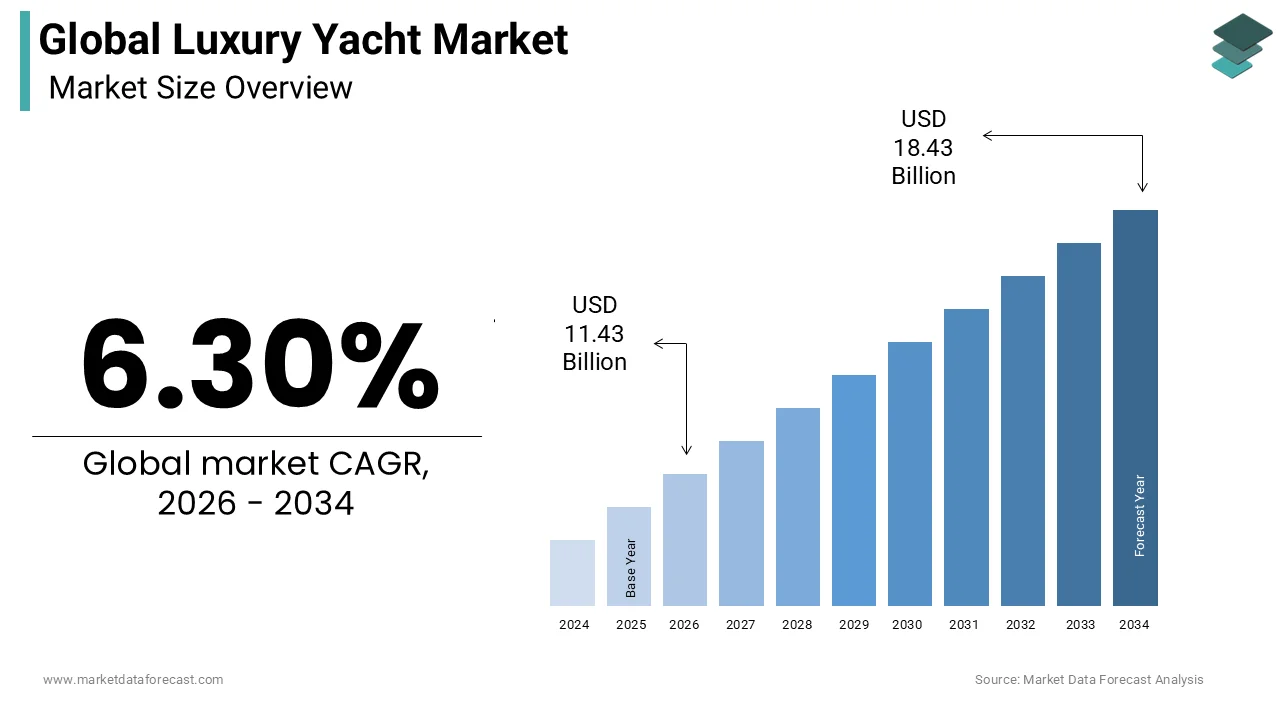
The global luxury yacht market was valued at USD 10.75 billion in 2025 and is projected to reach USD 18.43 billion by 2034, growing from USD 11.43 billion in 2026 at a CAGR of 6.30% during the forecast period. Market growth is driven by the increasing number of high-net-worth individuals (HNWIs), rising demand for luxury marine tourism, expanding yacht charter services, and growing interest in customized recreational vessels. Technological advancements in yacht design, sustainable propulsion systems, and smart onboard technologies are further supporting market expansion.
Key Market Trends
- Rising demand for customized and ultra-luxury yachts.
- Increasing adoption of hybrid and eco-friendly propulsion technologies.
- Growing popularity of yacht charter and marine tourism services.
- Rising investments in smart yacht automation and digital navigation systems.
- Expansion of superyacht marinas and premium waterfront infrastructure.
Segmental Insights
- Based on Type, the motor yachts segment dominated the global luxury yacht market in 2025 by accounting for 44.3% of the market share. The segment's leadership is driven by superior speed, enhanced onboard amenities, longer cruising capabilities, and strong demand among private yacht owners and charter operators.
- Based on Size, the 20 to 40 meters segment held the largest market share of 44.6% in 2025 due to its optimal balance between luxury, operational efficiency, and suitability for both private ownership and charter operations.
- Based on the propulsion system, the diesel propulsion segment dominated the luxury yacht market in 2025, owing to its proven reliability, long cruising range, widespread refueling infrastructure, and strong performance for medium- and large-sized yachts.
- Based on End User, the private individuals segment accounted for the largest share of 44.3% in 2025, driven by rising wealth among high-net-worth individuals, increasing demand for personalized luxury experiences, and growing ownership of recreational yachts.
Regional Insights
- Europe dominated the global luxury yacht market in 2025 by accounting for 45.4% of the market share. The region's leadership is supported by the presence of world-renowned yacht manufacturers, established shipbuilding expertise, luxury tourism destinations, and extensive marina infrastructure.
- North America held the second-largest share of 25.4% in 2025, driven by high disposable incomes, strong recreational boating culture, and growing demand for luxury yacht ownership and charter services.
- Asia-Pacific is expected to register the fastest growth during the forecast period due to the expanding population of high-net-worth individuals, increasing luxury spending, growing coastal tourism, and marina infrastructure development.
- The Middle East and Africa market is projected to witness strong growth owing to the rising number of affluent consumers, increasing demand for ultra-luxury yachts, year-round cruising conditions, and investments in premium waterfront developments.
- Latin America is anticipated to experience steady market growth, supported by rising wealth, expanding marine tourism, and increasing interest in recreational boating across key coastal destinations.
Competitive Landscape
The global luxury yacht market is highly competitive, with manufacturers focusing on yacht customization, sustainable propulsion technologies, advanced onboard automation, and premium customer experiences. Companies are investing in innovative yacht designs, digital navigation systems, hybrid propulsion, and strategic partnerships to strengthen their global market presence.
Key players operating in the global luxury yacht market include Ferretti Group, Azimut Benetti Group, Sanlorenzo S.p.A., Lürssen, Feadship, Princess Yachts, Sunseeker International, Oceanco, Heesen Yachts, Gulf Craft, Benetti, Baglietto, Christensen Shipyards, Horizon Yacht, and Damen Yachting.
Global Luxury Yacht Market Size
The global luxury yacht market size was calculated at USD 10.75 billion in 2025 and is anticipated to reach USD 18.43 billion by 2034, from USD 11.43 billion in 2026, growing at a CAGR of 6.30% during the forecast period.
The luxury yacht is a high-end private vessel, typically exceeding 24 meters in length, characterized by bespoke craftsmanship, advanced navigation systems, and premium amenities. This sector serves ultra-high-net-worth individuals, who view yachting not merely as transportation but as a lifestyle statement and a mobile sanctuary. The industry is deeply intertwined with global wealth distribution, tourism infrastructure, and maritime regulations. According to the Knight Frank Wealth Report, the number of ultra-high-net-worth individuals globally increased by 9% in recent years, creating a robust base of potential buyers with the liquidity to invest in assets ranging from 5 million to over 100 million dollars. In Europe, the Mediterranean region remains the epicenter of yachting culture, with the French Riviera and Italian coast hosting thousands of superyachts annually during peak seasons. The recreational vessels contribute to local economies through marina fees, crew employment, and maintenance services, generating billions in indirect economic activity. Furthermore, the average age of superyachts has decreased as owners seek newer models with improved fuel efficiency and smart technology integration. The shift toward experiential luxury has also boosted the charter segment, allowing affluent consumers to test ownership without long-term commitment.
MARKET DRIVERS
Surge in Ultra High Net Worth Population and Wealth Concentration
The exponential growth in the global ultra-high-net-worth population, directly correlating with increased demand for bespoke maritime assets, is fuelling the growth of the luxury yacht market. As wealth concentrates among the earners, discretionary spending on luxury goods and experiences rises proportionally. According to the Capgemini World Wealth Report, the number of individuals with investable assets exceeding 30 million dollars grew by 9.4% globally, providing a larger pool of potential buyers capable of affording superyachts. These individuals often view yachts as tangible stores of value and status symbols that offer privacy and exclusivity unavailable in other luxury sectors. The proliferation of new wealth in emerging countries, such as Asia and the Middle East,t has diversified the buyer demographic, leading to increased orders for larger and more technologically advanced vessels. Additionally, the trend toward multi-generational family use encourages the purchase of larger yachts with ample guest accommodations and entertainment facilities. Financial advisors increasingly recommend yachts as part of a diversified asset portfolio, particularly when structured through leasing or corporate ownership to optimize tax liabilities. This financial structuring capability makes yacht ownership more accessible to wealthy individuals who prioritize fiscal efficiency. The sustained accumulation of wealth ensures a steady pipeline of inquiries and orders, supporting shipyard backlogs and driving innovation in custom design and engineering to meet the evolving tastes of this affluent clientele.
Growth of the Charter Industry and Experiential Tourism
The barrier to entry for high-end maritime experiences and stimulating eventual ownership interest is additionally promoting the growth of the luxury yacht market. Affluent travelers are increasingly prioritizing unique, personalized experiences over material possessions, leading to a surge in superyacht charters for vacations and corporate events. According to the study, charter bookings for vessels over 30 meters increased by 25% in recent years, reflecting a shift toward private, secluded travel options post-pandemic. Chartering allows potential buyers to experience different layouts, brands, and cruising grounds before committing to a purchase, effectively serving as a trial period for ownership. This exposure builds brand loyalty and familiarity with specific shipyards, influencing future buying decisions. Furthermore, the charter industry supports a vast ecosystem of brokers, crew agencies, and provisioning services that enhance the overall appeal of yachting. High-profile charter destinations such as the Caribbean, Mediterranean, and South Pacific have invested heavily in marina infrastructure, making access easier for international clients. The rise of social media has also amplified the visibility of charter lifestyles, creating aspirational demand among younger, wealthier demographics. As charter rates remain strong and availability tightens, some frequent charterers find it economically viable to transition to ownership, thereby converting rental demand into sales.
MARKET RESTRAINTS
Stringent Environmental Regulations and Emission Standards
The growing strict environmental regulations imposed by international and regional bodies, complicating design processes and increasing operational costs, are hindering the growth of the luxury yacht market. The International Maritime Organization and the European Union are implementing tighter limits on sulfur oxide, nitrogen oxide, and carbon dioxide emissions, which apply to recreational vessels above certain sizes. The inclusion of maritime transport in the Emissions Trading System requires yacht owners to monitor and report carbon footprints, adding administrative burdens and financial liabilities. Compliance often necessitates the installation of expensive exhaust cleaning systems or the adoption of alternative fuels, such as liquefied natural gas or hydrogen, which require specialized storage and handling infrastructure. Many existing marinas lack the facilities to support these new fuel types, limiting the operational range of eco-friendly yachts. Furthermore, noise pollution regulations in sensitive coastal areas restrict engine usage, impacting the cruising experience. Shipbuilders must invest heavily in research and development to create compliant designs without compromising performance or aesthetics, leading to higher initial purchase prices. These regulatory pressures can deter potential buyers who are concerned about future resale value and operational flexibility.
High Operational and Maintenance Costs
The substantial ongoing costs associated with owning and maintaining a luxury yacht are significantly impeding the growth of the luxury yacht market. Annual operating expenses typically range from 10 to 15% of the vessel’s initial purchase price, covering crew salaries, insurance, docking fees, fuel, and regular maintenance. According to the study, the cost of hiring a qualified captain and crew for a 40-meter yacht can exceed 1 million dollars annually, excluding bonuses and training expenses. Insurance premiums have risen due to increased claims related to extreme weather events and cybersecurity threats, further straining budgets. Docking fees in prime locations such as Monaco or St. Tropez are exceptionally high, with seasonal berths costing hundreds of thousands of dollars. Routine maintenance, including hull cleaning, engine servicing, and interior refurbishment, requires specialized technicians and genuine parts, which are often expensive and subject to long lead times. Unexpected repairs can result in significant unplanned expenditures, disrupting financial planning for owners. These high recurring costs make yacht ownership a considerable financial commitment that extends far beyond the initial acquisition. Potential buyers often hesitate due to the unpredictability of these expenses, while existing owners may choose to sell or charter out their vessels to offset costs. The transparency of these costs through digital platforms and broker networks has made buyers more cautious, leading to longer decision-making cycles and increased scrutiny of the total cost of ownership before purchasing.
MARKET OPPORTUNITIES
Integration of Hybrid and Electric Propulsion Technologies
The adoption of hybrid and electric propulsion systems, aligning with growing environmental consciousness and technological innovation, is setting up new opportunities for the growth of the luxury yacht market. Advances in battery energy density and electric motor efficiency now allow for silent, emission-free cruising in sensitive areas. The number of hybrid and electric vessel orders has increased significantly, with luxury yacht builders leading the adoption of these technologies to differentiate their brands. Electric propulsion offers enhanced comfort by reducing vibration and noise, who prioritize tranquility and wellness. Hybrid systems allow vessels to operate on electric power in ports and coastal areas, switching to diesel generators for long-distance transit, thus optimizing fuel consumption and reducing emissions. This dual capability addresses range anxiety while meeting strict local environmental regulations. Governments in Europe and North America are offering incentives for green maritime technologies, including tax breaks and preferential berthing rights for low-emission vessels. Shipbuilders who pioneer these technologies can capture a premium segment of eco-conscious buyers willing to pay for sustainability and innovation. Furthermore, the development of solar-integrated hulls and hydrogeneration systems provides additional energy sources, extending battery life and reducing reliance on fossil fuels.
Expansion into Emerging Markets and New Cruising Destinations
The emergence of new wealthy demographics in Asia, the Middle East, and Latin America, accompanied by the development of new cruising destinations, will additionally promote new opportunities for the expansion of the luxury yacht market. Countries such as China, India, and the United Arab Emirates are seeing rapid growth in ultra-high-net-worth individuals who are increasingly interested in yachting as a lifestyle choice. China has the second-largest number of billionaires globally, creating a vast untapped need for luxury marine assets. Local governments in these regions are investing in world-class marina infrastructure and hosting international boat shows to stimulate interest and facilitate sales. The development of new cruising grounds in Southeast Asia, the Red Sea, and the Persian Gulf provides exotic alternatives to traditional Mediterranean routes, attracting adventurous owners and charterers. These regions offer year-round warm weather and unique cultural experiences, diversifying the yachting calendar. Shipbuilders are adapting designs to suit local preferences, such as larger indoor spaces for climate control and specific aesthetic elements. Partnerships with local distributors and service providers help establish after-sales support networks, which are critical for building trust in new markets. This geographic expansion reduces reliance on mature Western areas and drives global volume growth by encouraging shipyards to tailor their offerings to diverse cultural and operational needs.
MARKET CHALLENGES
Shortage of Skilled Labor and Technical Expertise
The challenge in the form of a shrinking skilled labor force, including naval architects, engineers, welders, and interior craftsmen, is to limit the growth of the luxury yacht market. Building a superyacht requires highly specialized skills that take years to master, yet vocational training programs have struggled to attract young talent to the maritime sector. The aging workforce in shipbuilding is not being replaced at a sufficient rate, leading to project delays and quality inconsistencies. The complexity of modern yachts, which integrate advanced IT systems, automation, and sustainable technologies, demands a multidisciplinary skill set that is scarce in the current labor market. Competition from other high-tech industries such as aerospace and automotive further exacerbates the shortage, as these sectors often offer higher wages and better working conditions. This labor gap increases production costs and extends delivery timelines, frustrating clients and damaging reputations. Shipyards are forced to invest heavily in training and retention programs, but high turnover rates remain a persistent issue. The reliance on subcontractors for specialized tasks introduces variability in quality control, requiring rigorous oversight.
Geopolitical Instability and Regulatory Fragmentation
The geopolitical tensions and fragmented regulatory frameworks are affecting ownership structures, mobility, and market confidence, which is also inhibiting the growth of the luxury yacht market. Sanctions imposed on individuals from certain countries have led to the seizure or detention of yachts, creating legal uncertainties and reputational risks for banks, insurers, and shipyards. The compliance with anti-money laundering and sanctions regulations has become increasingly complex, requiring extensive due diligence that slows down transactions and increases legal costs. The lack of harmonized international regulations for yacht registration, taxation, and environmental standards creates administrative burdens for owners who cruise across multiple jurisdictions. Different countries have varying rules regarding crew visas, import duties, and value-added tax, complicating logistics and increasing operational expenses. Political instability in popular cruising regions can lead to sudden closures of airspace or ports, disrupting itineraries and affecting charter revenues. Furthermore, trade disputes and tariffs on materials such as steel and aluminum can increase construction costs and supply chain disruptions. Owners are increasingly concerned about the security of their assets and the freedom to travel without bureaucratic hindrances. This uncertain environment discourages investment and leads to more conservative ownership structures, such as trusts or offshore companies, which add layers of complexity.
REPORT COVERAGE
| REPORT METRIC | DETAILS |
| Market Size Available | 2025 to 2034 |
| Base Year | 2025 |
| Forecast Period | 2026 to 2034 |
| CAGR | 6.30% |
| Segments Covered | By Type, Size, Propulsion System, End User, and Region |
| Various Analyses Covered | Global, Regional, & Country Level Analysis; Segment-Level Analysis; DROC; PESTLE Analysis; Porter’s Five Forces Analysis; Competitive Landscape; Analyst Overview of Investment Opportunities |
| Regions Covered | North America, Europe, Asia Pacific, Latin America and Middle East, and Africa |
| Market Leaders Profiled | Ferretti Group, Azimut Benetti Group, Sanlorenzo S.p.A., Lürssen, Feadship, Princess Yachts, Sunseeker International, Oceanco, Heesen Yachts, Gulf Craft, Benetti, Baglietto, Christensen Shipyards, Horizon Yacht, Damen Yachting. |
SEGMENTAL ANALYSIS
By Type Insights
The motor yachts segment accounted in holding 44.3% of the luxury yacht market share in 2025 due to their superior speed, spaciousness, and ability to accommodate extensive amenities that appeal to modern luxury seekers. The preference for comfort and convenience among ultra-high net worth individuals, who prioritize interior volume and stability over sailing performance, is boosting the growth of the segment. The advancement in naval architecture has allowed designers to create sleeker profiles that reduce drag and improve fuel efficiency without sacrificing space. Furthermore, motor yachts are better suited for diverse cruising grounds, including calm inland waterways and open oceans, providing versatility that sailing yachts cannot match. The integration of stabilizer systems ensures a smooth ride even in rough seas, enhancing passenger comfort during long transits. High-net-worth families often use these vessels for multi-generational gatherings, requiring the expansive living areas that motor yachts provide. The ease of operation with smaller crew requirements compared to large sailing vessels also makes them attractive to owners who prefer a more relaxed onboard experience.
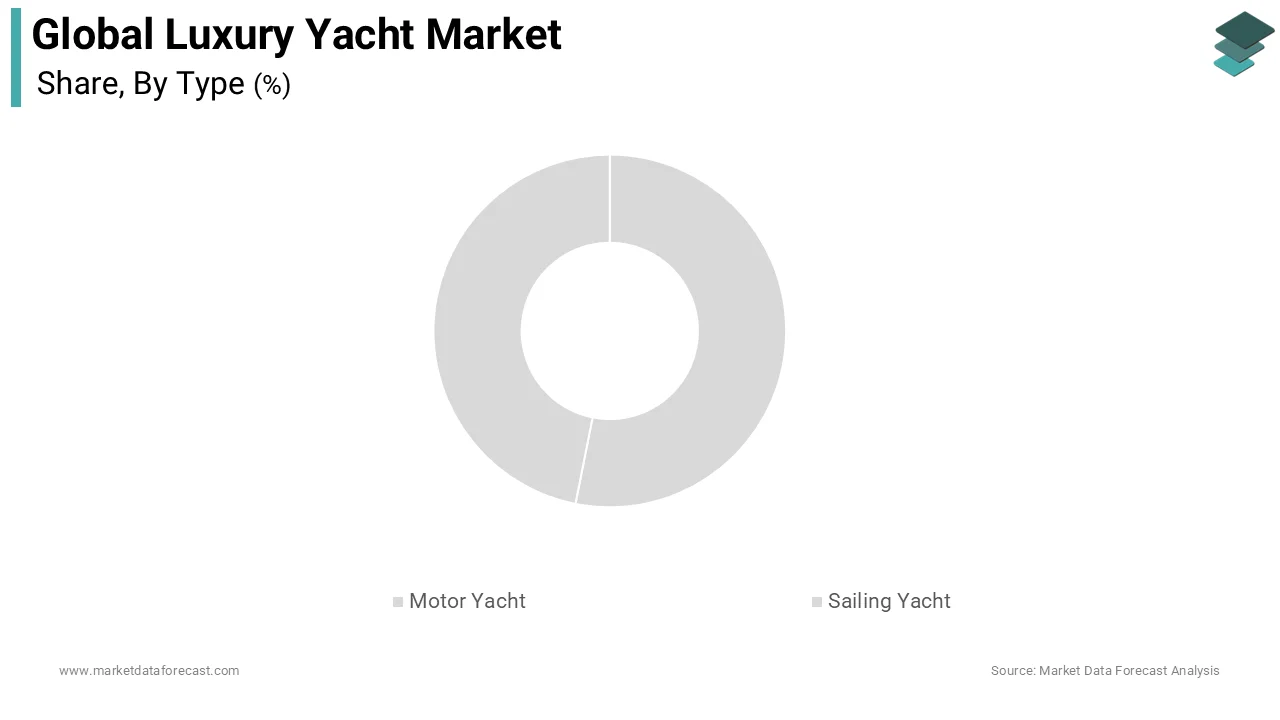
The sailing yachts segment is likely to grow at the fastest CAGR of 6.5% throughout the forecast period, owing to a rising desire for authentic maritime experiences and environmental consciousness among affluent buyers. Modern sailing yachts incorporate advanced technologies such as automated sail handling systems and hybrid propulsion, making them easier to operate and more efficient than traditional models. The appeal of silent cruising under sail resonates with eco-conscious consumers who wish to minimize their carbon footprint while enjoying the ocean. Additionally, sailing yachts offer a unique aesthetic and emotional connection to the sea that motor yachts cannot replicate, attracting a niche but passionate demographic. The development of performance cruising designs allows these vessels to achieve competitive speeds while maintaining high levels of comfort and luxury. Charter companies are also expanding their sailing fleets to meet demand from guests seeking active and engaging vacations. As battery technology improves, hybrid sailing yachts can operate silently in anchorages, enhancing the guest experience.
By Size Insights
The yachts ranging from 20 to 40 meters segment was accounted for in holding 44.6% of the luxury yacht market share in 2025, as they offer an optimal balance between size, cost, and operational flexibility. According to the study, this size category represents the highest volume of transactions in the pre-owned and new build areas, as it provides ample space for guests and crew without the exorbitant running costs of larger superyachts. Vessels in this range can access smaller marinas and secluded coves that are off limits to larger ships, offering greater itinerary freedom. The crew requirement is typically manageable, often needing only three to five staff members, which keeps annual operating budgets within reach for many high-net-worth individuals. Technological advancements have maximized interior space in these hulls, allowing for luxurious amenities such as gyms, spas, and multiple staterooms. This size is also popular in the charter market, appealing to groups of friends or families who want privacy and luxury without the formality of a mega yacht.
The Yachts above 60 meters segment is likely to register the fastest CAGR of 8.2% during the forecast period, with the increasing wealth concentration and demand for extreme customization. These massive yachts offer facilities such as helipads, submarine garages, beach clubs, and extensive staff quarters, catering to the needs of owners, who travel with large entourages. The trend toward longer voyages and live-aboard lifestyles necessitates larger storage capacities and self-sufficiency features, which only mega yachts can provide. Shipyards in Europe are competing fiercely for these prestigious projects, pushing the boundaries of engineering and design. Furthermore, the charter rates for mega yachts are substantial, allowing some owners to offset costs through high-end corporate events or celebrity rentals.
By Propulsion System Insights
The diesel propulsion segment held a dominant share of the luxury yacht market in 2025 due to its proven reliability, widespread availability of fuel, and established maintenance infrastructure. The confidence owners and captains place in diesel engines for long-distance cruising and safety is also fuelling the growth of the segment. Diesel engines offer high torque at low revolutions, which is ideal for heavy displacement hulls typical of luxury yachts. The global network of marine service providers ensures that parts and expertise are available in most major ports, reducing the risk of prolonged downtime. While environmental concerns are rising, modern diesel engines equipped with selective catalytic reduction and exhaust gas cleaning systems meet current emission standards by allowing them to remain compliant in regulated zones. The lower initial cost compared to hybrid or electric systems makes diesel the default choice for many buyers, who prioritize budget certainty. Furthermore, the energy density of diesel fuel allows for an extended range without frequent refueling, which is crucial for remote explorations.
The hybrid and electric propulsion systems segment is likely to witness the fastest CAGR of 12.5% from 2026 to 2034, owing to the advancements in battery technology that now allow for silent zero-emission cruising in sensitive areas. The number of hybrid yacht projects has doubled in recent years, with major shipyards integrating lithium-ion battery banks and electric motors into their designs. Hybrid systems enable yachts to operate on electric power while in port or near coastlines, significantly reducing noise and emissions, before switching to diesel generators for open sea transit. This dual capability addresses range anxiety while meeting strict local environmental laws in places like the Norwegian fjords or Mediterranean marine reserves. Governments are offering incentives for green technologies, including reduced docking fees and tax benefits, which enhance the economic appeal of hybrid systems. Owners are increasingly motivated by corporate social responsibility goals and personal environmental values, willing to pay a premium for cleaner propulsion. The quiet operation of electric motors also enhances the onboard experience, providing a tranquil atmosphere that appeals to luxury clients.
By End User Insights
The private individuals segment was the largest by holding 44.3% of the luxury yacht market share in 2025, with the desire for exclusive ownership, privacy, and personalized lifestyle experiences. The domination of this segment is attributed to the emotional and status value associated with owning a bespoke vessel that reflects personal taste and preferences. The majority of superyacht sales are to private owners, who use their vessels for family vacations, entertaining business associates, and personal relaxation. Ownership allows for complete customization of interior layouts, amenities, and technical systems, ensuring the yacht meets specific lifestyle needs. Private owners also benefit from the flexibility to cruise whenever and wherever they choose, without the scheduling constraints of charter bookings. The asset appreciation potential, although variable, and the ability to use the yacht for tax-efficient corporate purposes in some jurisdictions further incentivize private purchase. Additionally, private ownership fosters a sense of community among yacht owners, leading to participation in exclusive clubs and regattas.
The charter companies segment is anticipated to grow at the fastest CAGR of 9.8% from 2026 to 2034, with the preference for experiential luxury over asset ownership gaining traction. The charter revenues have reached record highs, with increased demand for fully crewed luxury experiences in prime destinations. Charter companies invest in new builds to meet the rising expectations of guests for modern amenities, high-speed internet, and wellness facilities. The rise of the sharing economy and digital platforms has made chartering more accessible and transparent, attracting a younger demographic of wealthy professionals. Corporate charters for team building and executive retreats also contribute to this growth, as businesses seek unique venues for high-impact events. Chartering allows users to experience different types of yachts and destinations, fostering a deeper appreciation for the industry. For owners, placing their yachts in charter programs helps offset operational costs, creating a symbiotic relationship that supports fleet expansion.
REGIONAL ANALYSIS
Europe Luxury Yacht Market Analysis
Europe was the top performer in the global luxury yacht market by accounting for 45.4% of the market share in 2025, with its historic shipbuilding heritage and premier cruising destinations. According to the study, the Mediterranean remains the most popular yachting destination globally by attracting owners and charterers from around the world during the summer season. The French Riviera and Italian Coast offer extensive marina infrastructure and a vibrant social scene that complements the luxury yacht lifestyle. European regulations regarding emissions and safety are stringent, pushing manufacturers to innovate in green technologies and sustainable materials. High net worth individuals in Europe view yachting as an integral part of their cultural heritage, sustaining steady demand for both new builds and pre-owned vessels.
North America Luxury Yacht Market Analysis
North America luxury yacht market was ranked second by holding 25.4% of the share in 2025, with a strong culture of recreational boating and significant wealth concentration in coastal states. The popularity of large motor yachts in Florida and the Caribbean, as well as sailing yachts in New England and the Pacific Northwest, is bolstering the growth of the market. According to the study, the United States has one of the highest rates of boat ownership per capita, with a growing segment of high-end buyers entering the superyacht sector. The Caribbean serves as a major winter cruising ground, driving demand for vessels with robust tropical specifications and extensive air conditioning systems. American owners often prioritize functionality and entertainment spaces, influencing design trends toward open plan layouts and outdoor living areas. The presence of major brokerage firms and management companies in Fort Lauderdale and Miami facilitates a liquid secondary market and professional fleet management services. Tax incentives in certain states and the availability of financing options support new purchases.
Asia Pacific Luxury Yacht Market Analysis
Asia Pacific luxury yacht market growth is likely to grow at the fastest rate in the coming years, with the rising disposable income and emerging luxury lifestyles in China, Singapore, and Australia. The rapid infrastructure development and government initiatives to promote marine tourism are additionally gearing up the growth of the market in this region. The number of billionaires in Asia has surged, creating a new base of potential yacht owners who are increasingly interested in international cruising. Singapore and Hong Kong serve as key hubs for yacht management and brokerage, offering favorable regulatory environments and strategic locations. Australia has a mature yachting culture with a strong focus on sailing and outdoor activities, supporting a robust domestic market. China is investing heavily in marina construction and hosting international boat shows to stimulate local interest and consumption. The proximity to exotic destinations in Southeast Asia, such as Thailand and Indonesia, attracts regional owners and charterers. Cultural shifts toward experiential luxury and status display are driving demand for branded and customized vessels.
Middle East and Africa Luxury Yacht Market Analysis
The Middle East and Africa luxury yacht market growth is likely to grow with the high net worth individuals with a strong preference for large, opulent vessels, and year-round cruising conditions. The wealth generated from energy sectors and sovereign investment funds, particularly in the United Arab Emirates and Saudi Arabia. According to the study, Dubai and Abu Dhabi have emerged as major yachting hubs, with state-of-the-art marinas and hosting prestigious events like the Dubai International Boat Show. The warm climate allows for yachting throughout the year, unlike seasonal markets in Europe. Owners in the Middle East often favor mega yachts with extravagant amenities such as gold plating, large beach clubs, and extensive guest accommodations for hospitality. The region is also seeing increased interest in explorer yachts for diving and adventure tourism in the Red Sea and Arabian Gulf. Government visions, such as Saudi Vision 2030, include developing coastal tourism infrastructure, which is expected to boost local demand and attract international visitors. The cultural emphasis on privacy and luxury aligns well with the yacht ownership model.
Latin America and Africa Luxury Yacht Market Analysis
Latin America and Africa luxury yacht market is likely to grow with the emerging wealth and growing interest in marine leisure, though constrained by economic volatility and infrastructure gaps. Brazil has a vibrant yachting community centered in Rio de Janeiro and Sao Paulo, with a focus on mid-sized motor yachts for coastal cruising. South Africa offers a gateway to Antarctic expeditions and Indian Ocean cruises, attracting adventure-oriented owners and charter operators. The Caribbean islands, while geographically distinct, often serve as an extension of the Latin American region for maintenance and provisioning. Economic challenges and currency fluctuations can impact purchasing power, leading to a stronger pre-owned market compared to new builds. However, tourism development in countries like Mexico and the Seychelles is creating new opportunities for charter fleets. Local governments are beginning to recognize the economic potential of yachting tourism and are improving port facilities.
COMPETITION OVERVIEW
The competition in the luxury yacht market is characterized by intense rivalry among established European shipyards and emerging builders in Asia and Turkey. Major players compete on design exclusivity, technical innovation, build quality, and brand heritage rather than price alone. The market is highly fragmented with numerous boutique yards catering to niche segments, while large conglomerates dominate the mega yacht sector. Differentiation is achieved through bespoke customization options, allowing owners to create unique floating palaces that reflect personal style. Reputation and past project success play crucial roles in securing new orders from ultra-high net worth individuals, who value discretion and reliability. The shift toward sustainable technologies has intensified competition as builders race to offer green solutions without compromising luxury or performance. Customer service and after-sales support are critical differentiators since long-term maintenance relationships drive recurring revenue. New entrants face high barriers due to capital requirements and the need for proven craftsmanship.
KEY MARKET PLAYERS
A few major players of the global luxury yacht market include
- Ferretti Group
- Azimut Benetti Group
- Sanlorenzo S.p.A
- Lürssen
- Feadship
- Princess Yachts
- Sunseeker International
- Oceanco
- Heesen Yachts
- Gulf Craft
- Benetti
- Baglietto
- Christensen Shipyards
- Horizon Yacht
- Damen Yachting
Top Strategies Used by Key Market Participants
Key players in the luxury yacht market primarily focus on bespoke customization and technological innovation to meet the unique demands of ultra-high net worth individuals. Companies invest significantly in sustainable practices by integrating hybrid propulsion systems and eco-friendly materials to align with environmental regulations and client values. Strategic partnerships with famous designers and architects help create distinctive aesthetics that differentiate brands in a crowded marketplace. Shipyards emphasize exclusivity and privacy by offering confidential sales processes and personalized after-sales support services. Expansion into emerging markets through targeted marketing and participation in international boat shows helps capture new wealth demographics. Digitalization efforts include virtual reality tools for design visualization and smart yacht systems for enhanced user experience. These strategies collectively strengthen market position by delivering superior value, uniqueness, and sustainability to discerning clients worldwide.
Leading Players in the Global Market
- Fincantieri S.p.A. is a leading Italian shipbuilder renowned for constructing some of the world’s most prestigious luxury superyachts and cruise ships. The company combines traditional craftsmanship with advanced engineering to deliver bespoke vessels that define modern maritime luxury. Recent actions include the launch of several groundbreaking mega yachts featuring hybrid propulsion systems and innovative exterior designs by top naval architects. Fincantieri strengthens its market position by expanding its specialized yacht division facilities to handle larger projects and complex customizations. The company focuses on sustainability by integrating energy-efficient technologies and eco-friendly materials into its builds. By maintaining strong relationships with high-profile designers and ultra-high-net-worth clients, Fincantieri continues to set industry standards for quality and exclusivity in the global luxury yacht sector.
- Lurssen Yachts is a prominent German shipyard specializing in the construction of large custom motor yachts and explorer vessels known for their technical sophistication. The company serves a discerning clientele who prioritize privacy, performance,e and cutting-edge technology in their maritime assets. Recent initiatives involve delivering record-breaking gigayachts equipped with advanced stabilization systems and extensive range capabilities for remote exploration. Lurssen invests heavily in research and development to pioneer new hull forms and propulsion solutions that enhance efficiency and comfort. The shipyard emphasizes strict confidentiality and personalized service to protect client interests and ensure unique specifications are met. By focusing on technical excellence and bespoke engineering, Lurssen maintains its reputation as a preferred builder for owners seeking robust and highly customized luxury yachts capable of global cruising.
- Benetti Yachts is a historic Italian manufacturer recognized for producing elegant and stylish motor yachts ranging from thirty to over one hundred meters. The company blends classic Italian design aesthetics with modern naval architecture to create vessels that appeal to traditional and contemporary tastes. Recent actions include the introduction of new series featuring sustainable materials and smart home integration technologies for enhanced onboard living experiences. Benetti strengthens its presence by collaborating with renowned interior designers to offer diverse customization options for global clients. The shipyard focuses on improving production efficiency through modular construction techniques, while maintaining high-quality standards.
MARKET SEGMENTATION
This research report on the global luxury yacht market has been segmented and sub-segmented based on type, size, propulsion system, end user, and region.
By Type
- Motor Yacht
- Sailing Yacht
By Size
- Up to 20 meters
- 20 To 40 Meter
By Propulsion System
- Diesel
- Diesel-Electric/Hybrid
By End User
- Private Individuals
- Charter Companies
By Region
- North America
- Europe
- Asia Pacific
- Middle East and Africa
- Latin America
Frequently Asked Questions
1. What is driving the growth of the Global Luxury Yacht Market?
The market is driven by rising numbers of high-net-worth individuals, increasing demand for luxury tourism, and advancements in yacht design and technology.
2. Which type of luxury yacht holds the largest market share?
Motor yachts hold the largest market share due to their high performance, spacious interiors, and suitability for long-distance cruising.
3. Who are the major customers in the luxury yacht market?
High-net-worth individuals, ultra-high-net-worth individuals, luxury charter operators, and corporate clients are the primary customers.
4. Who are the major customers in the luxury yacht market?
High-net-worth individuals, ultra-high-net-worth individuals, luxury charter operators, and corporate clients are the primary customers.
5. What are the main propulsion systems used in luxury yachts?
Luxury yachts are powered by diesel engines, hybrid propulsion systems, and increasingly by electric technologies to improve fuel efficiency and sustainability.
6. What are the major challenges facing the luxury yacht market?
High purchase and maintenance costs, stringent environmental regulations, and economic uncertainty are key challenges.
7. How is technology transforming luxury yachts?
Advanced navigation systems, smart automation, satellite connectivity, AI-enabled controls, and enhanced onboard entertainment are improving the luxury yachting experience.
8. What role does customization play in luxury yacht purchases?
Customization is a major purchasing factor, with buyers requesting personalized interiors, entertainment systems, wellness facilities, and advanced marine technologies.
9. What trends are shaping the Global Luxury Yacht Market?
Key trends include hybrid and electric yachts, explorer yachts, smart onboard technologies, sustainable materials, and increasing demand for customized luxury vessels.
10. What is the future outlook for the Global Luxury Yacht Market?
The market is expected to grow steadily over the coming years, driven by rising wealth, expanding luxury tourism, technological innovation, and increasing demand for sustainable luxury yachts.
Related Reports
Access the study in MULTIPLE FORMATS
Purchase options starting from
$ 2500
Didn’t find what you’re looking for?
TALK TO OUR ANALYST TEAM
Need something within your budget?
NO WORRIES! WE GOT YOU COVERED!
Call us on: +1 888 702 9696 (U.S Toll Free)
Write to us: sales@marketdataforecast.com