- Product Description Description
- Table of Contents TOC
- List of Table & Figure LOT
- Get Free Sample PDF Sample PDF
Market Size, 2025
$71 MnMarket Estimate, 2026
$80 MnMarket Forecast, 2034
$189 MnCAGR, 2026–2034
11.38%Middle East and Africa Acai Berry Market Size
The acai berry market size in the Middle East & Africa was valued at USD 71.97 million in 2025. The regional market is anticipated to grow at a CAGR of 11.38% from 2026 to 2034 and be worth USD 189.85 million by 2034 from USD 80.16 million in 2026.
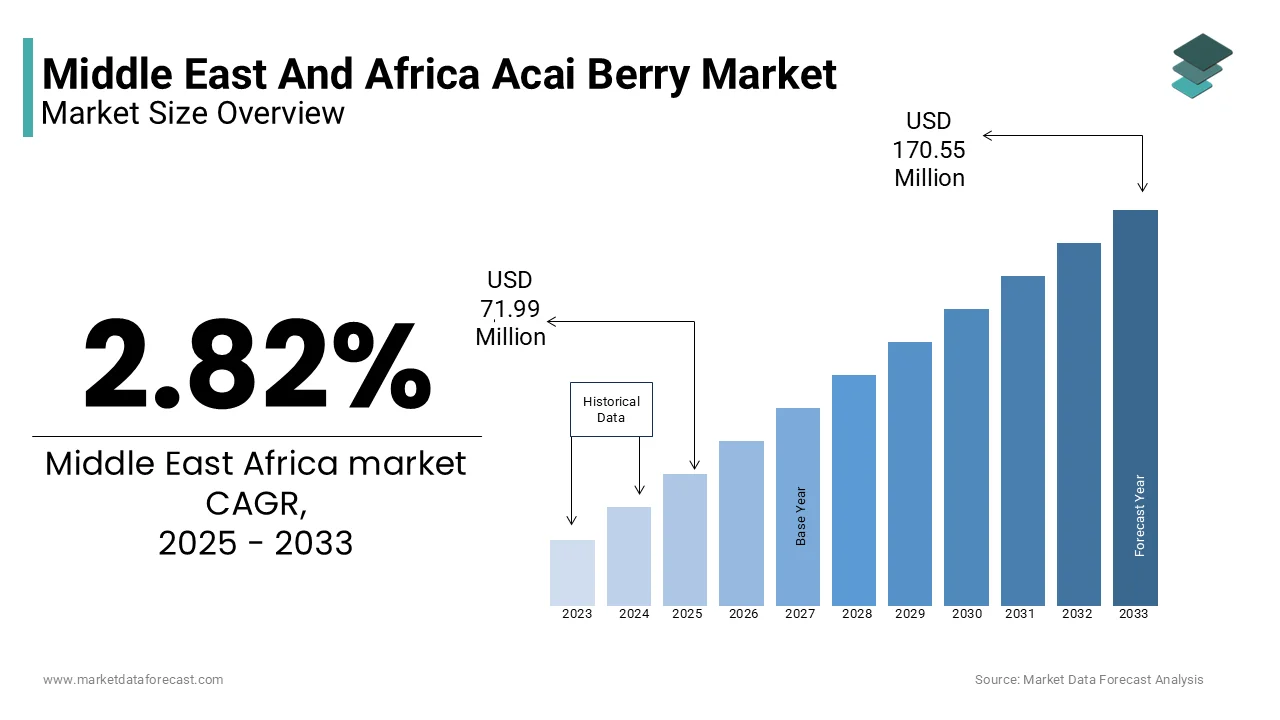
The acai berry is a niche import distribution and consumption of acai berries, primarily in frozen puree powder and supplement forms across countries, such as the United Arab Emirates, Saudi Arabia, South Africa, and Egypt. As an exotic fruit native to the Amazon rainforest, acai is not cultivated locally in this region making it entirely dependent on international supply chains from South America. The product is valued for its high antioxidant content and potential health benefits including improved cardiovascular health and enhanced energy levels. According to the World Health Organization noncommunicable diseases such as diabetes and heart disease account for approximately 74% of all deaths in the Eastern Mediterranean Region which has spurred interest in preventive nutrition. Furthermore, the Food and Agriculture Organization of the United Nations notes that urbanization rates in Africa are increasing leading to lifestyle changes that favor convenient and healthy food options. The Gulf Cooperation Council countries exhibit a strong affinity for premium imported goods driven by high disposable incomes. In South Africa the growing middle class is increasingly adopting global dietary trends. The market is characterized by a shift toward wellness-oriented consumption where consumers seek natural ingredients to support holistic health. Retail channels range from specialized health food stores to high end supermarkets and online platforms.
MARKET DRIVERS
Increasing Incidence of Obesity and Diabetes in the Region Accelerates Demand for Antioxidant Rich Functional Foods Like Acai
The rising prevalence of lifestyle related diseases, as consumers increasingly seek dietary solutions for health management is majorly fuelling the growth of Middle East and Africa acai berry market. The significant burden of noncommunicable diseases, particularly type 2 diabetes and obesity are linked to poor dietary habits and sedentary lifestyles. The health crisis has prompted a shift toward preventive healthcare, where nutrition plays a central role. Acai berries are renowned for their high concentration of anthocyanins and other antioxidants , which help combat oxidative stress and inflammation associated with metabolic disorders. Consumers are actively incorporating superfoods into their diets to manage weight and improve overall vitality. The World Health Organization states that unhealthy diets are a leading risk factor for health loss in the Eastern Mediterranean Region. Consequently, there is a growing awareness of the benefits of plant-based nutrients. Fitness enthusiasts and health-conscious individuals in urban centers, such as Dubai Riyadh and Johannesburg are driving demand for acai bowls and supplements. Social media influencers and health professionals frequently advocate for the inclusion of antioxidant rich foods in daily routines.
Growth of Premium Supermarkets and Health Focused Retail Channels Facilitates Access to Exotic Superfoods for Affluent Consumers
The expansion of modern retail infrastructure and a growing health-conscious consumer base is additionally levelling up the growth of Middle East and Africa acai berry market. Urbanization and economic development in major countries, such as the United Arab Emirates and South Africa have led to the proliferation of high end supermarkets and specialty health food stores. According to the United Nations Department of Economic and Social Affairs, the urban population in Africa is projected to double by 2050 creating a concentrated consumer base with access to diverse product offerings. In the Gulf Cooperation Council countries the retail sector is highly developed with major chains like Carrefour Lulu Hypermarket and Spinneys stocking imported organic and superfood products. These retailers cater to an affluent demographic that prioritizes quality and novelty in their food choices. The rise of e commerce platforms further enhances accessibility allowing consumers to purchase frozen acai puree and powders directly from online vendors. Data from Statista indicates that e commerce revenue in the Middle East and Africa is growing steadily providing a convenient channel for niche products. Additionally, the influence of global wellness trends is amplified through digital media where health bloggers and nutritionists promote acai as a staple for healthy living. The increasing number of gyms yoga studios and wellness centers in major cities also contributes to demand, as these establishments often serve acai based snacks and beverages.
MARKET RESTRAINTS
Reliance on Long Distance Logistics from South America Exposes the Market to Price Volatility and Supply Disruptions
The high dependency on imports and supply chain vulnerabilities act as major restraints for the Middle East and Africa acai berry market, since the fruit is not cultivated locally. The reliance on long distance logistics from South America is significantly hampering the growth of Middle East and Africa acai berry market. The region relies entirely on shipments from Brazil and other South American countries, which involves complex logistics including cold chain transportation to maintain product quality. Any disruption in these supply chains due to geopolitical tensions shipping delays or climate events can lead to significant shortages and price spikes. According to the United Nations Conference on Trade and Development, logistics performance in many African countries remains below global averages affecting the efficiency of perishable goods transport. The cost of maintaining cold storage throughout the journey from the Amazon to retail shelves in Dubai or Cape Town is substantial which inflates the final retail price. This high cost limits accessibility to only affluent consumers restricting market penetration among the broader population. Furthermore, fluctuations in global freight rates impact profitability for importers and distributors. In the Middle East while infrastructure is advanced the reliance on air freight for premium perishables adds to the expense. Seasonal variations in acai harvests in South America also affect availability leading to inconsistent supply. These logistical challenges create uncertainty for retailers and consumers alike.
Lack of Familiarity with Acai Flavor Profile and Traditional Dietary Habits Restricts Mass Market Acceptance in Certain Regions
The limited consumer awareness and entrenched cultural dietary preferences is another factor hampering the growth of Middle East and Africa acai berry market. While health consciousness is rising many consumers in rural areas and traditional communities remain unfamiliar with acai berries and their benefits. The distinct earthy and slightly tart flavor of acai may not align with local taste preferences which often favor sweeter or spicier profiles. According to the Food and Agriculture Organization of the United Nations, traditional diets in many African and Middle Eastern countries are deeply rooted in local crops such as dates grains and legumes. Introducing an exotic fruit requires extensive education and marketing efforts to overcome cultural barriers. In some regions there is skepticism toward foreign superfoods due to a preference for locally sourced and traditional remedies. The high price point of acai products further exacerbates this issue as consumers may perceive them as luxury items rather than essential nutritional sources. Additionally, the lack of standardized labeling and information in local languages can hinder understanding of product benefits. Retailers often struggle to educate staff and customers about proper preparation and consumption methods. This knowledge gap limits the product's appeal beyond niche urban elites. Until acai becomes more integrated into local culinary practices and its benefits are widely understood its growth will remain constrained by cultural and informational barriers.
MARKET OPPORTUNITIES
Growing Luxury Tourism and Hospitality Industry Creates Demand for Premium Acai Based Menu Items and Wellness Offerings
The integration of acai berries into the hospitality and wellness tourism sector is creating new opportunities for the growth of Middle East and Africa market. The region is a global hub for luxury tourism with countries like the United Arab Emirates, Egypt, and South Africa, attracting millions of visitors annually. According to the World Travel and Tourism Council, the travel and tourism sector contributes significantly to the GDP of these nations driving demand for high quality dining experiences. Hotels resorts and spas are increasingly incorporating superfoods like acai into their menus to cater to health-conscious travelers seeking nutritious and exotic options. Acai bowls smoothies and desserts are becoming popular features in breakfast buffets and poolside bars. This exposure introduces the product to a wide audience including international tourists who may influence local consumption trends. The rise of wellness tourism which focuses on physical mental and spiritual health further boosts demand. Resorts offer detox programs and fitness retreats where acai is promoted for its energizing and antioxidant properties. Partnerships between acai suppliers and hospitality groups can ensure consistent bulk orders enhancing market stability. Additionally, the presence of international celebrity chefs and influencers in the region helps popularize acai through social media and culinary events.
Establishment of Regional Processing Facilities for Acai Derivatives Can Reduce Costs and Enhance Product Accessibility
The development of local processing and value-added product manufacturing is another attribute to fuel the growth of Middle East and Africa acai berry market. Currently most acai products are imported in frozen or powdered form which incurs high logistics costs. Establishing regional processing facilities that can handle bulk imports and convert them into ready to consume products such as juices snacks and supplements can reduce final prices and improve availability. According to the research, investing in agro processing industries can add value to raw materials and create jobs. By processing acai locally companies can tailor products to local tastes and preferences such as blending acai with familiar fruits like mango or dates. This customization can enhance consumer acceptance and drive broader adoption. Furthermore, local manufacturing reduces dependency on immediate cold chain logistics for finished goods allowing for longer shelf lives and wider distribution networks. The United Nations Industrial Development Organization emphasizes the importance of industrialization in Africa to boost economic resilience. Companies can leverage free trade zones and investment incentives to set up processing plants. This strategy not only lowers costs but also ensures a more stable supply chain.
MARKET CHALLENGES
Stringent and Varying Food Safety Regulations Across Countries Complicate Import Procedures and Market Entry
The regulatory hurdles and food safety compliance complexities is certainly a major challenge for the growth of Middle East and Africa acai berry market. Each country in the region has its own set of regulations governing the import and sale of food products particularly those classified as novel or functional foods. Navigating these diverse regulatory landscapes requires significant time and resources for certification and approval. According to the World Health Organization, food safety standards vary widely across the Eastern Mediterranean and African regions leading to inconsistencies in enforcement. Failure to comply can result in product recalls or bans. In Africa regulatory frameworks are often fragmented with limited capacity for enforcement in some nations. The African Union has been working toward harmonizing food safety standards but progress is slow. Importers must deal with multiple agencies including health ministries and customs authorities which can delay market entry. Additionally, the classification of acai as a dietary supplement versus a food item can vary affecting tax rates and labeling requirements. Data from the World Bank highlights that non-tariff barriers such as complex customs procedures remain a significant obstacle to trade in the region. These bureaucratic challenges increase operational costs and create uncertainty for businesses.
Fluctuating Currency Values and Inflation in Key African Markets Limit Purchasing Power for Premium Imported Goods
The price sensitivity and economic instability in emerging countries is also to impede the growth of Middle East and Africa acai berry market. Acai berries are positioned as premium products with prices significantly higher than local fruits. In many African countries, economic volatility characterized by high inflation and currency depreciation reduces consumer purchasing power. According to the International Monetary Fund, several African nations have experienced significant inflation rates in recent years eroding household budgets. This economic pressure forces consumers to prioritize essential goods over luxury items like imported superfoods. In the Middle East while wealthier nations show resilience others face economic constraints that affect spending patterns. The fluctuation of local currencies against the US dollar which is often used for international trade impacts the cost of imports. When local currencies weaken the price of acai products rises making them less accessible to the middle class. Data from the World Bank indicates that poverty rates remain high in parts of Sub Saharan Africa limiting the potential customer base. Even in urban areas where income levels are higher price sensitivity remains a factor. Consumers may switch to cheaper local alternatives that offer similar nutritional benefits such as baobab or moringa. This substitution effect limits the growth potential of acai.
REPORT COVERAGE
| REPORT METRIC | DETAILS |
| Market Size Available | 2025 to 2034 |
| Base Year | 2025 |
| Forecast Period | 2026 to 2034 |
| CAGR | 11.38% |
| Segments Covered | By Application, Product Form, Distribution Channel, and Region |
| Various Analyses Covered | Global, Regional, & Country Level Analysis; Segment-Level Analysis; DROC, PESTLE Analysis; Porter’s Five Forces Analysis; Competitive Landscape; Analyst Overview of Investment Opportunities |
| Regions Covered | KSA, UAE, Israel, rest of GCC countries, South Africa, Ethiopia, Kenya, Egypt, Sudan and Rest of MEA |
| Market Leaders Profiled | Berry Company Limited, Açaí Berry Foods, Sambazon Inc., Organique Acai USA, Acai Roots Inc., and Nossa Fruits SAS |
SEGMENTAL ANALYSIS
By Application Insights
The food and beverage segment was the largest by holding 45.3% of the Middle East and Africa acai berry market share in 2025 owing to the rapid expansion of the cafe culture and the integration of superfoods into mainstream culinary offerings across urban centers. In countries like the United Arab Emirates and Saudi Arabia, the proliferation of health focused cafes and juice bars has normalized the consumption of acai bowls and smoothies. As per the World Travel and Tourism Council, the hospitality sector in the Gulf Cooperation Council region continues to expand with Dubai and Riyadh emerging as global culinary hubs. These establishments cater to a young demographic that views food as a lifestyle statement. The visual appeal of acai bowls makes them highly shareable on social media platforms which further amplifies demand. Consumers are willing to pay a premium for exotic and healthy food options. Additionally, international food chains operating in the region have begun incorporating acai into their menus to align with global trends. The versatility of acai puree allows it to be used in various forms including desserts snacks and beverages. This widespread adoption in the food service industry ensures a steady and high volume of demand. The segment benefits from continuous innovation in product presentation and flavor combinations which keeps consumer interest high. The strong presence of tourism also contributes as visitors seek familiar healthy options while traveling.
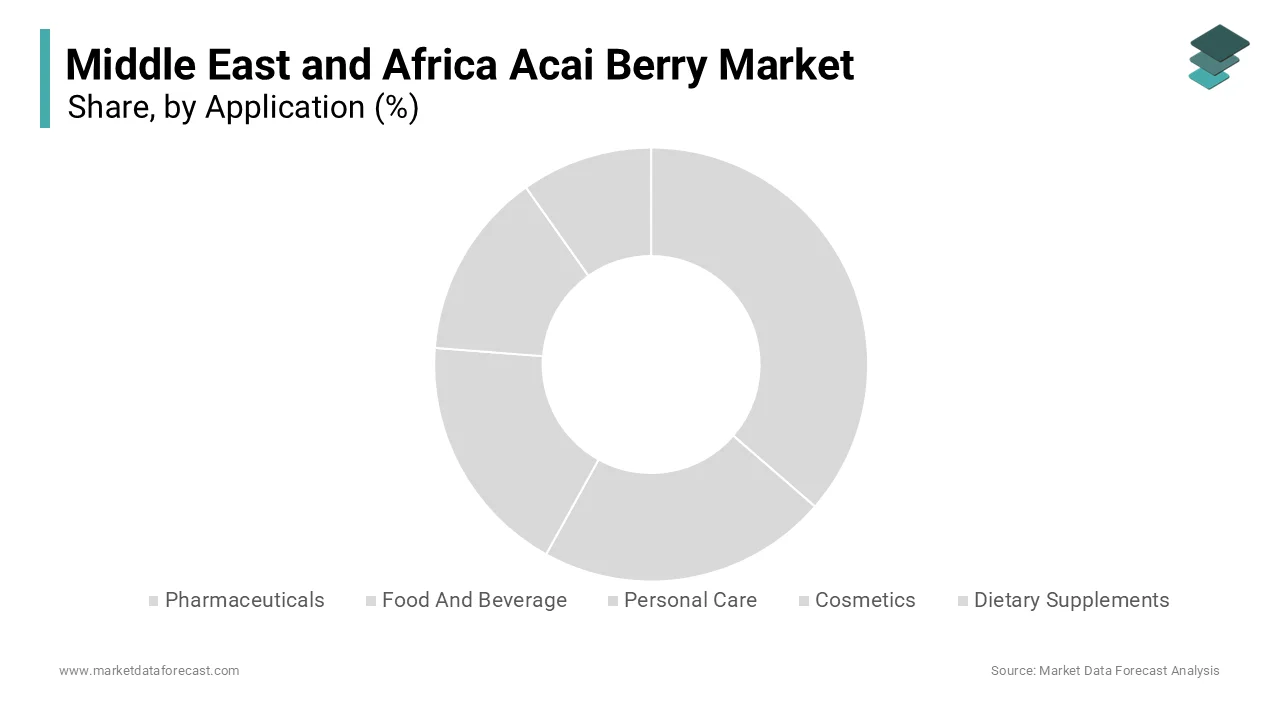
The dietary supplements segment is projected to witness a fastest CAGR of 8.5% from 2026 to 2034 with the consumer preference for convenient and concentrated forms of nutrition. Busy lifestyles in urban areas limit the time available for preparing fresh superfood meals making capsules powders and tablets an attractive alternative. As per the research, the wellness economy in the Middle East is expanding rapidly with consumers investing heavily in preventive health measures. Dietary supplements offer an easy way to incorporate the benefits of acai into daily routines without the need for refrigeration or preparation. The aging population in countries like South Africa and Israel is also contributing to this growth as older adults seek supplements to support overall health and vitality. Online retail platforms have made it easier for consumers to access a wide variety of acai supplements from international brands. These platforms provide detailed product information and customer reviews which help build trust. Furthermore, the perception of supplements as scientifically formulated products adds to their credibility. Manufacturers are innovating with blends that combine acai with other popular ingredients like collagen or probiotics. This customization appeals to specific health needs such as skin health or digestion.
By Product Form Insights
The pulp segment was accounted in holding a significant share of the Middle East and Africa acai berry market in 2025 with the versatility of acai pulp in culinary applications particularly in the preparation of smoothies bowls and desserts. Consumers and food service providers prefer pulp because it retains the authentic texture and flavor of the fruit, which is essential for creating high quality dishes. Frozen acai pulp is widely available in supermarkets and specialty stores in major cities like Dubai and Cape Town. In the Middle East, the strong cafe culture relies heavily on frozen pulp to maintain consistency in taste and presentation. The ability to blend pulp with other fruits and toppings allows for creative menu offerings that attract customers. Additionally, the perception of pulp as a less processed form compared to powders or capsules enhances its appeal among health conscious buyers. The cold chain infrastructure in Gulf countries is well developed ensuring that frozen pulp maintains its quality during distribution. This reliability encourages retailers to stock larger quantities. Furthermore, the visual appeal of acai pulp when served in bowls aligns with the social media driven dining trends.
The dried acai segment is likely to witness a fastest CAGR of 7.2% from 2026 to 2034 with the convenience and extended shelf life of dried products, which address the logistical challenges of distributing fresh pulp in remote areas. Dried acai in the form of powder or freeze-dried pieces does not require refrigeration making it easier to store and transport. As per the study, improving food preservation technologies is a key priority for enhancing food security and reducing waste. Dried acai can be easily incorporated into smoothies yogurts and baked goods offering a versatile ingredient for home use. The lightweight nature of dried products also reduces shipping costs making them more affordable for consumers. Data from the International Trade Centre indicates that trade in dried fruits and nuts is growing steadily in the region. Consumers appreciate the ease of use as dried acai can be stored in pantries for long periods without losing nutritional value. This convenience appeals to busy professionals and families who want to add superfoods to their diets without the hassle of thawing frozen pulp.
By End User Insights
The hypermarkets and supermarkets segment was the largest by holding 50.5% of the Middle East and Africa acai berry market share in 2025 with the wide product availability and the convenience of one stop shopping. Major retail chains, such as Carrefour Lulu Hypermarket and Pick n Pay have extensive networks, across the region offering a variety of acai products including frozen pulp powders and juices. As per the United Nations Conference on Trade and Development, modern retail formats are expanding rapidly in emerging markets providing consumers with access to global products. Shoppers prefer supermarkets because they can purchase acai alongside their regular groceries saving time and effort. The visibility of acai products in prominent freezer aisles or health food sections increases impulse purchases. Additionally, supermarkets often run promotions and discounts which attract price sensitive consumers. The trust associated with established retail brands also influences purchasing decisions as consumers feel confident about the quality and safety of products sold in these stores. Supermarkets also offer a range of brands allowing consumers to compare prices and features. This variety caters to different preferences and budgets. The strategic placement of acai products near other healthy items like yogurt and granola further boosts sales. The combination of convenience variety and trust ensures that hypermarkets and supermarkets remain the primary channel for acai berry purchases.
The online segment is expected to register a fastest CAGR of 9.5% from 2026 to 2034 owing to the increasing digital penetration and the convenience of home delivery. Internet usage in the region is rising sharply with more consumers accessing e commerce platforms via smartphones. As per study, the number of internet users in the Middle East and Africa is expected to grow significantly in the coming years. Online retailers offer a wider selection of acai products, including niche brands and specialized forms that may not be available in physical stores. The ability to compare prices and read reviews helps consumers make informed decisions. Home delivery is particularly appealing for heavy frozen items like acai pulp which are cumbersome to transport. Major e-commerce players like Amazon Noon and Jumia have improved their logistics networks to handle perishable goods efficiently. The convenience of ordering from home saves time and effort appealing to busy urban professionals. Additionally online platforms often offer competitive pricing and discounts which attract cost conscious shoppers. The ease of subscription services ensures regular delivery of acai products enhancing customer retention.
REGIONAL ANALYSIS
United Arab Emirates Acai Berry Market Analysis
The United Arab Emirates was the largest contributor in the Middle East and Africa acai berry market by holding 25.4% of share in 2025 with its affluent population and advanced retail infrastructure. The country is a regional hub for luxury goods and health trends attracting both residents and tourists. As per the Dubai Department of Economy and Tourism Dubai welcomes millions of visitors annually many of whom seek premium dining and wellness experiences. This demand supports a vibrant cafe and restaurant scene where acai bowls are popular menu items. The high disposable income of residents allows for frequent consumption of imported superfoods. Data from the Ministry of Health and Prevention indicates a growing emphasis on preventive healthcare which boosts demand for nutritious foods. The well-developed cold chain logistics ensure that high quality frozen acai pulp is readily available in supermarkets and specialty stores. E commerce is also thriving with platforms like Noon and Amazon AE offering convenient delivery options.
Saudi Arabia Acai Berry Market Analysis
Saudi Arabia acai berry market growth is growing with fastest CAGR from past few years and is expected to have the prominent opportunities in coming years with the rapid economic transformation and changing lifestyle patterns. The Vision 2030 initiative aims to improve quality of life and promote healthy living which has spurred interest in nutritious foods. As per the General Authority for Statistics, the population is young and increasingly health conscious driving demand for superfoods. The expansion of modern retail chains and the entry of international food brands have made acai products more accessible. Coffee shops and juice bars in cities like Riyadh and Jeddah are incorporating acai into their menus to cater to evolving tastes. The support encourages local entrepreneurs to launch health focused businesses. Women are key consumers of health and wellness products including acai. E-commerce is gaining traction with platforms like Jarir and Noon expanding their grocery sections. The government’s investment in sports and entertainment infrastructure creates opportunities for health-related consumption.
South Africa Acai Berry Market Analysis
South Africa acai berry market growth is driven by a mature retail sector and high health awareness among urban consumers. The country has a well-established supermarket industry with chains like Pick n Pay Woolworths and Checkers stocking a wide range of health products. As per research, the middle class is expanding leading to higher spending on premium food items. Cape Town and Johannesburg are hubs for wellness trends with numerous gyms yoga studios and health cafes. These establishments frequently serve acai bowls and smoothies influencing consumer habits. The local fitness community is active and vocal on social media promoting superfoods like acai. Import regulations are clear and logistics infrastructure is relatively efficient allowing for steady supply of frozen acai. Local distributors have built strong relationships with Brazilian suppliers ensuring product quality. The tourism sector also contributes as visitors seek healthy dining options.
Israel Acai Berry Market Analysis
Israel acai berry market growth is driven by the strong culture of health and innovation in food technology. The population is highly educated and health conscious with a significant focus on preventive medicine. Tel Aviv is known for its vibrant vegan and health food scene where acai is a staple ingredient in many cafes and restaurants. Supermarkets, such as Shufersal and Rami Levy offer a variety of acai products including organic and non GMO options. The proximity to Europe facilitates easy import of high quality acai from global suppliers. Local manufacturers are also exploring ways to incorporate acai into functional foods and supplements. The military and sports sectors emphasize nutrition which drives institutional demand. Online shopping is widespread with quick delivery services enhancing convenience.
Egypt Acai Berry Market Analysis
Egypt acai berry market growth is likely to grow with its large population. While current consumption is lower than in Gulf countries, the growing middle class in Cairo and Alexandria is increasingly interested in global food trends. International hotel chains and upscale cafes in major cities are introducing acai to attract affluent customers and tourists. This exposure helps build awareness among locals. The retail sector is modernizing with new malls and supermarkets opening regularly. Data from the Ministry of Supply and Internal Trade indicates efforts to improve food distribution networks. Local distributors are working to make acai more affordable by offering smaller pack sizes. The potential for growth is substantial as income levels rise and health awareness spreads. Government initiatives to promote tourism also support the hospitality sector’s demand for exotic ingredients.
COMPETITIVE LANDSCAPE
The competition in the Middle East and Africa acai berry market is characterized by the presence of international superfood brands and local distributors who vie for market share in a niche but growing sector. Major global players leverage their established brand recognition and superior supply chain capabilities to dominate premium segments in wealthy nations like the United Arab Emirates and Saudi Arabia. Local distributors compete by offering personalized service and adapting products to regional tastes and price sensitivities. The market sees intense rivalry in the hospitality sector where suppliers strive to secure contracts with hotels and cafes. Price competition is moderate as consumers prioritize quality and authenticity over cost for health products. However economic volatility in some African nations creates pressure on pricing strategies. Differentiation through organic certifications and sustainable sourcing practices is a key competitive advantage. Digital marketing plays a crucial role as brands engage consumers through social media and online platforms. The entry of new players with innovative product formats adds dynamism to the landscape. Collaboration with health influencers helps build credibility and drive trial.
KEY MARKET PLAYERS
Some of the notable companies in the MEA Acai Berry market are
- Berry Company Limited
- Açaí Berry Foods
- Sambazon Inc.
- Organique Acai USA
- Acai Roots Inc.
- Nossa Fruits SAS
Top Players in the Market
- Sambazon Inc is a pioneering force in the global acai industry and plays a significant role in supplying premium organic acai products to the Middle East and Africa. The company is renowned for its sustainable sourcing practices in the Amazon rainforest which ensure high quality and ethical production standards. In recent years Sambazon has expanded its distribution network in the Gulf Cooperation Council region by partnering with major hospitality groups and health food retailers. These strategic alliances have increased the visibility of their frozen puree and supplement lines in key markets like the United Arab Emirates and Saudi Arabia. The company actively participates in regional health and wellness expos to educate consumers about the benefits of acai. By maintaining strict organic certifications and investing in cold chain logistics Sambazon ensures product integrity during long distance transport.
- Camu Health Foods is a prominent supplier of superfood ingredients with a growing presence in the Middle East and Africa acai berry market. The company specializes in providing high quality acai powder and freeze dried products that offer extended shelf life and convenience for manufacturers and consumers. Recently, Camu Health Foods has strengthened its position by collaborating with local distributors in South Africa and Egypt to enhance market accessibility. These partnerships facilitate the entry of their products into mainstream supermarkets and online retail platforms. The company focuses on innovation by developing blended superfood mixes that cater to local taste preferences. Their marketing efforts emphasize the nutritional density and versatility of acai in various culinary applications. Their ability to adapt product formats to regional needs supports market growth. This strategic approach enables them to capture a broader customer base and establish a strong foothold in emerging markets.
- Navitas Organics is a leading provider of organic superfoods including acai berries and has made significant inroads into the Middle East and Africa market. The company is known for its commitment to organic farming and fair trade practices which align with the values of health conscious consumers in the region. Navitas Organics has recently enhanced its digital presence by launching targeted e commerce campaigns in key countries such as Israel and the United Arab Emirates. These initiatives leverage social media influencers and health bloggers to promote the benefits of acai powder and snacks. The company has also partnered with premium grocery chains to secure shelf space for its products. Their diverse product portfolio allows for flexibility in meeting different consumer needs.
Top Strategies Used by the Key Market Participants
Key players in the Middle East and Africa acai berry market primarily employ strategic partnerships with local distributors to overcome logistical challenges and enhance market penetration. Companies focus on educating consumers through digital marketing campaigns and influencer collaborations to build awareness and demand for superfoods. Product innovation is another major strategy with firms introducing convenient forms like powders and capsules to suit local preferences. Establishing strong relationships with the hospitality sector helps integrate acai into menus and wellness programs driving bulk sales. Maintaining high quality standards and organic certifications is crucial for gaining trust in premium markets. Expanding e commerce capabilities allows brands to reach wider audiences and offer convenient purchasing options. Investing in cold chain infrastructure ensures product quality during transport and storage.
MARKET SEGMENTATION
This research report on the Middle East and Africa acai berry market is segmented and sub-segmented into the following categories.
By Application
- Pharmaceuticals
- Food And Beverage
- Personal Care
- Cosmetics
- Dietary Supplements
By Product Form
- Dried
- Pulp
By End-User
- Convenience Stores
- Hypermarkets Or Supermarkets
- Online
- Drugstores Or Drugstores
By Country
- KSA
- UAE
- Israel
- Rest Of GCC Countries
- South Africa
- Ethiopia
- Kenya
- Egypt
- Sudan
- Rest Of the Middle East and Africa