- Product Description Description
- Table of Contents TOC
- List of Table & Figure LOT
- Get Free Sample PDF Sample PDF
Market Size, 2025
$1.18 BnMarket Estimate, 2026
$1.24 BnMarket Forecast, 2034
$1.9 BnCAGR, 2026–2034
5.5%Global Areca Nuts Market Report Summary
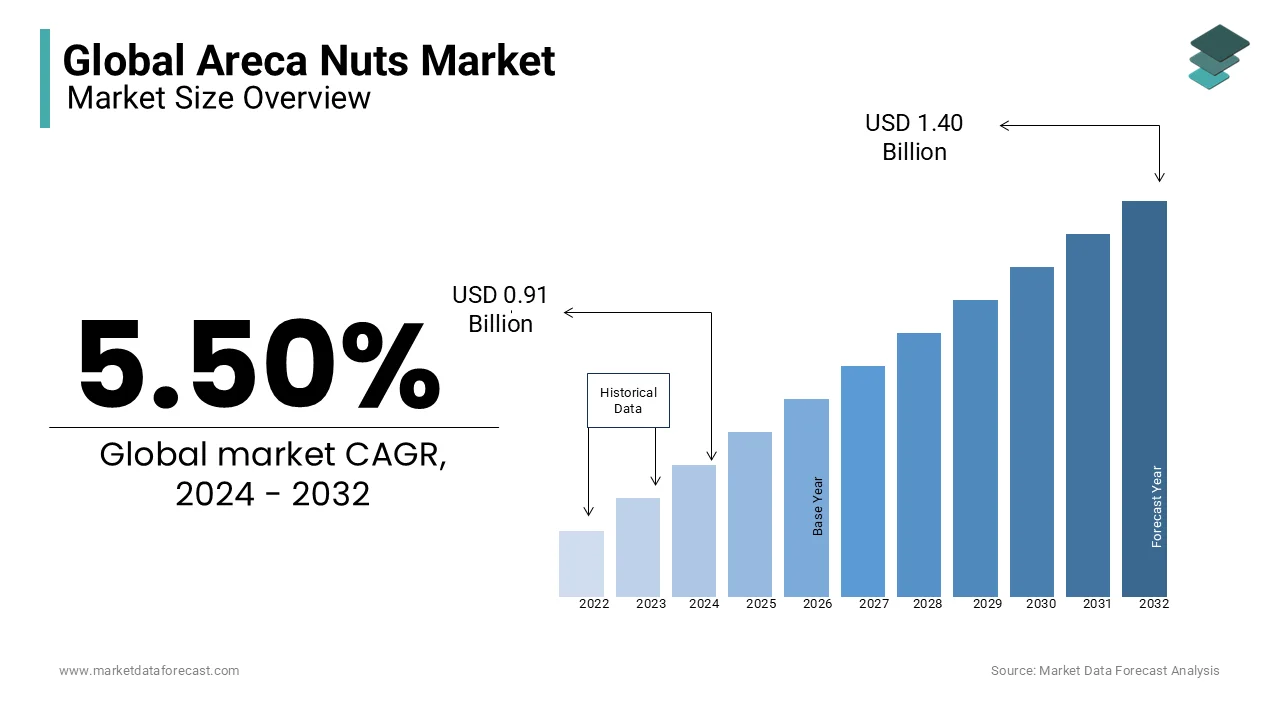
The global areca nuts market was valued at USD 1.18 billion in 2025, is estimated to reach USD 1.24 billion in 2026, and is projected to reach USD 1.90 billion by 2034, growing at a CAGR of 5.51% during the forecast period. Market growth is driven by strong cultural and traditional consumption patterns, particularly across Asia, along with increasing trade and export activities. Areca nuts are widely used in chewing products and traditional practices, which continues to support steady demand. In addition, expanding distribution networks and rising availability across retail formats are contributing to market growth globally.
Key Market Trends
- Strong cultural and traditional consumption is driving consistent demand for areca nuts.
- Increasing export activities are supporting market expansion.
- Growing retail penetration through convenience stores is improving product accessibility.
- Rising demand in emerging markets is boosting trade volumes.
- Expansion of supply chains and distribution networks is enhancing market reach.
Segmental Insights
- Based on volume, the exports segment held a dominant share of the global areca nuts market in 2025. This dominance is attributed to strong international demand and established trade routes across key producing countries.
- Based on distribution channel, the convenience stores segment accounted for 50.3% of the global areca nuts market share in 2025. The segment’s growth is driven by easy accessibility, high consumer footfall, and widespread availability of packaged products.
Regional Insights
- The global areca nuts market is experiencing steady growth across regions, supported by cultural consumption and trade activities.
- Asia Pacific was the leading region, accounting for 54.3% of the global areca nuts market share in 2025, driven by high consumption in countries such as India, Indonesia, and Bangladesh, along with strong production and export capabilities.
Competitive Landscape
The global areca nuts market is moderately competitive, with key players focusing on supply chain efficiency, export expansion, and product distribution to strengthen their market position. Companies are investing in sourcing, processing, and international trade partnerships. Prominent players in the global areca nuts market include Grains and Spices, Amafu Stock Trading Pty, Plamai Gabor Gyorgy, Indo Aluvium Permata, Portpro Duct Co, and Agro Komoditindo.
Global Areca Nuts Market Size
The global areca nut market size was valued at USD 1.18 billion in 2025, and the global market size is expected to reach USD 1.90 billion by 2034 from USD 1.24 billion in 2026. The market's promising CAGR for the predicted period is 5.51%.
The areca nuts are the seeds from the Areca catechu palm, primarily utilized for chewing purposes in various cultural contexts, across Asia and the Pacific. These nuts are commonly consumed with betel leaves slaked lime and tobacco forming a quid that holds significant social and ceremonial value in many communities. According to the Food and Agriculture Organization of the United Nations, global production of areca nuts exceeded 1.3 million metric tons in 2023 with India Indonesia and Bangladesh serving as the primary producing nations. The crop is predominantly grown in tropical regions requiring specific climatic conditions including high humidity and consistent rainfall. As per data from the World Health Organization approximately 600 million people worldwide engage in the habit of chewing areca nut preparations making it one of the most widely used psychoactive substances globally. The economic significance of this crop is profound for smallholder farmers who rely on it as a primary source of income. However, the industry faces increasing scrutiny due to well documented health risks associated with long term consumption. Regulatory bodies in several countries have implemented stricter controls on packaging and sales to mitigate public health impacts.
MARKET DRIVERS
Deep Rooted Cultural and Social Traditions Sustain Consistent Demand
The enduring presence of areca nut consumption in cultural and social rituals is driving the growth of areca nuts market. In many South Asian and Pacific Islander, communities the exchange of betel quids containing areca nuts is a symbol of hospitality respect and social bonding. This practice is integral to weddings religious ceremonies and daily social interactions ensuring a steady baseline demand regardless of economic fluctuations. According to the International Agency for Research on Cancer, the habit of chewing areca nut is deeply embedded in the cultural fabric of countries like India Papua New Guinea and Myanmar, where it is estimated that over 200 million individuals consume it regularly. The social normalization of this practice means that initiation often occurs at a young age perpetuating intergenerational usage patterns. In rural areas the availability of raw materials and the low cost of preparation further reinforce its accessibility. Community leaders and elders often participate in these traditions lending them legitimacy and continuity. The lack of viable culturally equivalent substitutes means that consumers remain loyal to traditional forms of consumption. Additionally, the informal economy surrounding the sale of prepared quids provides livelihoods for millions of vendors creating a self-sustaining ecosystem. As per sociological studies conducted by the National Institute of Mental Health and Neurosciences in India, the psychological comfort derived from these social rituals contributes to the persistence of the habit.
Economic Affordability and Accessibility Drive Mass Consumption in Rural Areas
The low cost and widespread availability of areca nuts make them an accessible stimulant for large segments of the population, particularly in rural and low-income urban areas is leveraging the growth of areca nuts market. Compared to other recreational substances, such as alcohol or tobacco products processed for smoking areca nuts are relatively inexpensive to produce and purchase. According to the World Bank data on household expenditure in South Asia indicates that lower income households allocate a significant portion of their discretionary spending to habitual consumables including areca nuts. The ease of cultivation in tropical climates allows for local production which minimizes transportation costs and keeps retail prices low. In countries like Bangladesh and Indonesia small scale farmers dominate the supply chain ensuring that the product reaches even remote villages through extensive informal distribution networks. The immediate physiological effects such as mild stimulation and increased alertness provide perceived value for money among laborers and workers who seek energy boosts during long working hours. As per the Global Adult Tobacco Survey in several Southeast Asian nations, the prevalence of areca nut chewing is higher among individuals with lower educational attainment and income levels. The demographic reliance creates a stable consumer base that is less sensitive to price increases. Furthermore, the lack of strict enforcement of age restrictions in many regions allows for easy access. The combination of affordability accessibility and immediate gratification sustains high volume consumption driving the market forward.
MARKET RESTRAINTS
Severe Health Risks and Oral Cancer Associations Deter New Adopters
The well-established link between areca nut consumption and severe health complications, particularly oral submucous fibrosis and oral cancer is restricting the growth of arcea nuts market. Medical research has conclusively demonstrated that the alkaloids in areca nuts are carcinogenic leading to chronic inflammation and cellular damage in the oral cavity. According to the World Health Organization, areca nut is classified as a Group 1 carcinogen meaning there is sufficient evidence of its cancer-causing potential in humans. This classification has led to increased public awareness campaigns highlighting the dangers of regular consumption. As knowledge of these health risks spreads among educated urban populations younger generations are increasingly reluctant to initiate the habit. Healthcare providers actively discourage usage during routine check-ups further reducing social acceptance. The financial burden of treating oral diseases also discourages continued use among low-income groups, who cannot afford medical care. As per data from the Global Burden of Disease Study the disability adjusted life years lost due to oral cancers linked to areca nut chewing have risen prompting stricter health advisories.
Stringent Regulatory Measures and Packaging Restrictions Limit Commercial Expansion
The increasingly stringent regulatory frameworks governing the sale labeling and packaging of areca nut products restrict commercial is hampering the growth of arcea nuts market. Governments in key producing and consuming countries have introduced laws aimed at reducing consumption through fiscal and administrative measures. According to the Tobacco Control Policy Watch, several states in India have implemented bans on the sale of flavored and packaged areca nut products known as pan masala due to their appeal to minors. These regulations require prominent health warnings on packaging which can deter casual buyers and reduce impulse purchases. In Taiwan the government has imposed heavy taxes on areca nut sales and restricted advertising leading to a decline in formal market activities. The European Union also restricts the import of certain areca nut preparations under food safety regulations citing health concerns. As per the United States Food and Drug Administration, areca nut products are subject to rigorous scrutiny and potential seizure if they are marketed with unapproved health claims. Compliance with these diverse and evolving regulations increases operational costs for manufacturers and distributors. Small scale producers often struggle to meet labeling requirements leading to their exclusion from formal retail channels. The fragmentation of regulatory landscapes across different jurisdictions complicates cross border trade. These legal barriers limit the ability of companies to scale up operations and invest in branding thereby constraining market growth.
MARKET OPPORTUNITIES
Development of Safer Processing Techniques and Value Added Products
The innovation of safer processing methods and the creation of value-added areca nut products is creating new opportunities for the growth of areca nuts market. According to the Indian Council of Medical Research, ongoing studies focus on fermentation and enzymatic treatments that may mitigate the carcinogenic potential of areca nuts. Additionally, the extraction of arecoline and other bioactive compounds for pharmaceutical applications offers a lucrative avenue for diversification. The cosmetic industry is also investigating the use of areca nut extracts for their antimicrobial properties in oral care products. Certification programs that verify the safety and quality of processed areca nuts can build consumer trust and open up new export markets.
Expansion into Non-Traditional Markets Through Digital Marketing and E Commerce
The utilization of digital marketing strategies and e-commerce platforms to expand the reach of areca nut products beyond traditional geographic strongholds is additionally to enhance the growth of areca nuts market. According to the International Telecommunication Union, mobile broadband subscriptions in South and Southeast Asia have grown by 15%, annually facilitating greater online engagement. Brands can leverage social media to educate consumers about premium quality organic and traditionally sourced areca nuts appealing to niche segments willing to pay for authenticity. E commerce enables the distribution of packaged and branded products to diaspora communities in North America Europe and the Middle East who seek familiar tastes. The Global E commerce Index indicates that cross border online shopping for ethnic food items is rising as migrants maintain cultural connections. Digital platforms also allow for targeted advertising that respects regulatory boundaries while promoting cultural heritage. Partnerships with online grocery retailers can enhance visibility and convenience for urban consumers.
MARKET CHALLENGES
Environmental Degradation and Unsustainable Farming Practices
The environmental impact of intensive areca nut cultivation to the long term sustainability is one of the challenges for the growth of areca nuts market. Monoculture farming practices often lead to soil depletion loss of biodiversity and increased vulnerability to pests and diseases. According to the United Nations Environment Programme the expansion of areca nut plantations in regions like the Western Ghats of India has contributed to deforestation and habitat fragmentation. The heavy use of chemical fertilizers and pesticides to maintain high yields contaminates water sources and affects local ecosystems. Climate change exacerbates these issues by altering rainfall patterns and increasing the frequency of extreme weather events such as droughts and floods. As per the Intergovernmental Panel on Climate Change tropical crops like areca nut are highly sensitive to temperature fluctuations which can reduce productivity and quality. Farmers face declining yields due to soil exhaustion forcing them to expand into forested areas further aggravating environmental damage. The lack of sustainable agricultural practices threatens the viability of future production. Regulatory pressures to adopt eco friendly farming methods increase costs for smallholders who lack resources for transition. Water scarcity in key producing regions also limits irrigation capabilities affecting crop health. These environmental challenges undermine the stability of the supply chain and raise concerns among environmentally conscious consumers. Addressing these issues requires significant investment in sustainable farming technologies and community education.
Labor Shortages and Rising Production Costs
The labor shortages and escalating production costs, which impact profitability and supply consistency is additionally to decline the growth of areca nuts market. Harvesting areca nuts is a labor intensive process that requires skilled workers to climb tall palms and manually collect the fruits. According to the study, rural-to-urban migration in major producing countries has led to a decline in the agricultural workforce. Younger generations are increasingly seeking employment in urban sectors leaving an aging population to manage farms. This demographic shift results in higher wages for available laborers increasing overall production expenses. Additionally, the cost of inputs such as fertilizers pesticides and transportation has risen due to global inflationary pressures. As per data from the Food and Agriculture Organization the cost of agricultural inputs in Asia increased by 10% in 2023 affecting profit margins for small scale farmers. The lack of mechanization in harvesting further exacerbates labor dependency as no efficient machines are widely available for safe and effective collection. These economic pressures force some farmers to abandon areca nut cultivation in favor of less labor intensive crops.
REPORT COVERAGE
| REPORT METRIC | DETAILS |
| Market Size Available | 2025 to 2034 |
| Base Year | 2025 |
| Forecast Period | 2026 to 2034 |
| CAGR | 5.51% |
| Segments Covered | By Volume, Distribution Channel And Region |
| Various Analyses Covered | Global, Regional and Country Level Analysis; Segment-Level Analysis; DROC; PESTLE Analysis; Porter’s Five Forces Analysis; Competitive Landscape; Analyst Overview of Investment Opportunities |
| Regions Covered | North America, Europe, APAC, Latin America, Middle East & Africa |
| Market Leaders Profiled | Grains & Spices, Amafu Stock Trading Pty, Plamai Gabor Gyorgy, Indo Aluvium Permata, Portpro Duct Co, Agro Komoditindo |
SEGMENTAL ANALYSIS
By Volume Insights
The exports segment was accounted in holding a dominant share of the Areca Nuts Market in 2025 with the massive production surplus in major cultivating countries, such as India, Bangladesh, and Indonesia, which far exceeds domestic consumption capacities in certain grades. According to the Food and Agriculture Organization of the United Nations, India alone produced over 900000 metric tons of areca nuts in 2023 with a significant portion designated for international trade. The demand from South Asian expatriates, who maintain cultural chewing habits drives consistent export volumes. Trade agreements within regional blocs, such as the Association of Southeast Asian Nations further streamline cross border transactions reducing tariff barriers. The standardization of grading and packaging for export markets ensures quality consistency, which builds trust among international buyers.
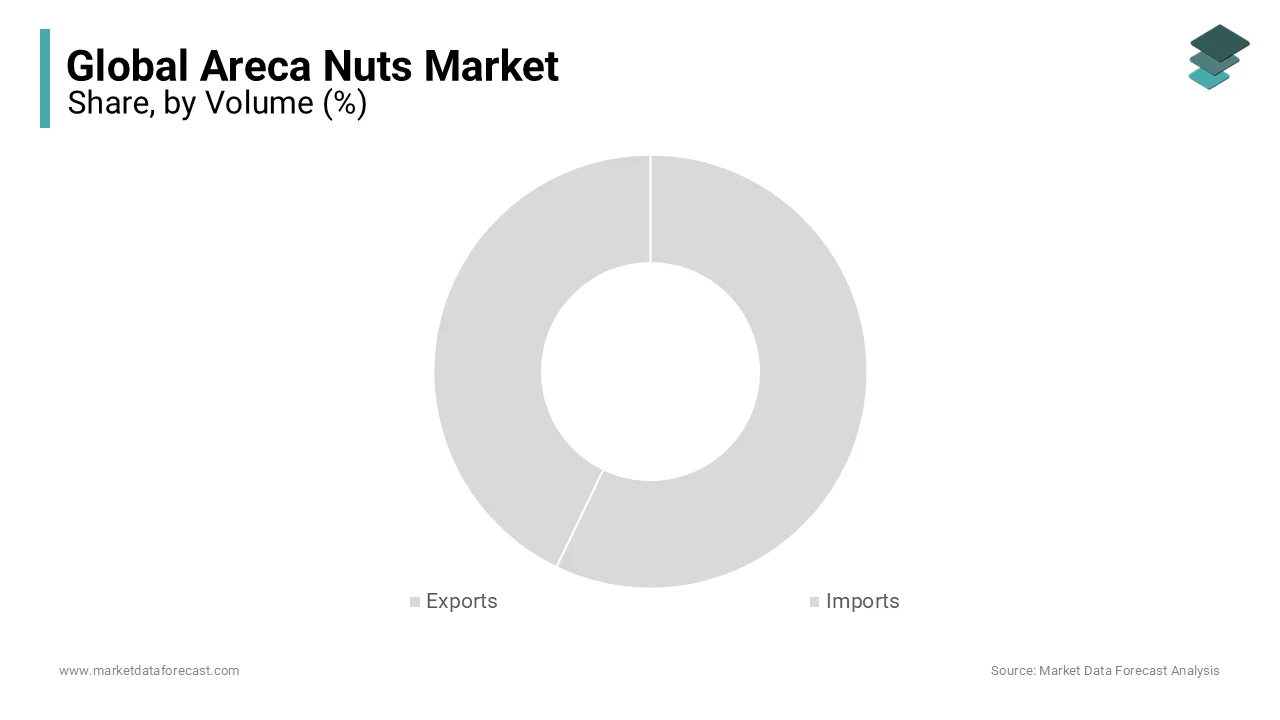
The imports segment is projected to register a CAGR of 4.2% during the forecast period with the increasing consumption in regions that do not cultivate areca nuts domestically but have growing populations of migrants from traditional consuming countries. Countries in the Middle East, particularly the United Arab Emirates and Saudi Arabia are seeing a surge in imports to meet the demands of their large South Asian workforce. Additionally, some European nations are importing specific processed forms of areca nuts for use in traditional medicine and niche culinary applications despite strict regulations on raw sales. The availability of diverse varieties through import channels allows consumers to access premium and organic options that may not be available locally. Importers are leveraging e commerce platforms to reach dispersed consumer bases enhancing accessibility. The growing awareness of alternative uses for areca nut extracts in pharmaceuticals also contributes to import growth.
By Distribution Channel Insights
The convenience stores segment was accounted in holding 50.3% of the Areca Nuts Market share in 2025 with the widespread availability of these small retail outlets in both urban and rural areas, where areca nut consumption is prevalent. The proximity of convenience stores to residential neighborhoods and workplaces makes them the most accessible point of purchase for daily consumers. According to the National Sample Survey Office in India, a significant majority of households in rural and semi urban areas rely on local kirana stores or convenience shops for daily consumables including areca nuts and related paraphernalia. The informal nature of many of these stores allows for the sale of loose or small packaged quantities which aligns with the purchasing power of low-income consumers. Impulse buying is a key driver as these stores often display products prominently at counter levels. The flexibility of convenience store owners to stock various brands and local variants ensures that consumer preferences are met without the rigid inventory constraints of larger retailers. Additionally, the extended operating hours of convenience stores cater to consumers who purchase areca nuts at various times of the day.
The supermarkets and hypermarkets segment is esteemed to register a fastest CAGR of 5.8% from 2026 to 2034 with the expansion of organized retail sectors in developing economies and the increasing consumer preference for branded and packaged products. As urbanization rises, consumers are shifting towards modern retail formats that offer hygiene assurance and quality certification. Supermarkets provide a controlled environment where packaged areca nuts are stored under optimal conditions reducing the risk of contamination compared to loose sales. The availability of premium organic and flavored varieties in these stores appeals to health conscious and affluent consumers. Major retail chains are increasingly dedicating shelf space to ethnic and traditional products recognizing their steady demand. The implementation of loyalty programs and promotional discounts in supermarkets further incentivizes purchases.
REGIONAL ANALYSIS
Asia Pacific Areca Nuts Market Analysis
The Asia Pacific Areca Nuts Market was the outperformer by accounting for 54.3% of share in 2025 with its status as the primary producer and consumer of areca nuts globally. According to the Food and Agriculture Organization of the United Nations, Asia Pacific produces over 95% of the world's areca nuts ensuring a robust supply chain. In India, the crop supports the livelihoods of millions of smallholder farmers particularly in states like Karnataka and Kerala. The economic significance of areca nut cultivation is profound contributing significantly to rural incomes. However, the region also faces the highest burden of oral diseases associated with consumption prompting public health interventions. The presence of extensive informal distribution networks ensures that areca nuts are accessible even in remote villages.
Middle East and Africa Areca Nuts Market Analysis
The Middle East and Africa areca nuts market was positioned second by holding 22.1% of share in 2025 with the large expatriate population from South Asia. Countries, such as the United Arab Emirates, Saudi Arabia, and Oman have substantial communities of workers from India, Pakistan, and Bangladesh, who maintain the habit of chewing areca nuts. According to the study, remittance flows and migration patterns indicate a steady presence of South Asian laborers in the Gulf Cooperation Council countries sustaining demand. The lack of local cultivation means that all supply is sourced through imports primarily from India and Southeast Asia. Retailers in these countries cater to this niche market by stocking imported brands in ethnic grocery stores and supermarkets. The regulatory environment in the Middle East is generally permissive regarding the sale of raw areca nuts although some restrictions apply to mixed products containing tobacco.
Europe Areca Nuts Market Analysis
Europe areca nuts market growth is steadily growing with the strict regulatory frameworks governing food safety and public health, which limit the commercial visibility of areca nuts. Countries with significant South Asian populations, such as the United Kingdom, Germany, and France, have localized markets served by ethnic grocery stores and online retailers. According to the European Union, customs data imports of areca nuts are monitored closely due to health concerns regarding oral cancer risks. Consumer awareness of health risks is higher in Europe leading to a gradual decline in usage among second and third generation immigrants. However, the first generation continues to drive demand maintaining a stable market size. The rise of e-commerce has facilitated access to areca nuts for consumers in areas without specialized physical stores.
North America Areca Nuts Market Analysis
North America areca nuts market growth is likely to grow at an anticipated CAGR from 2026 to 2034 owing to the stringent regulatory oversight and limited public acceptance of areca nut chewing. According to the Centers for Disease Control and Prevention, oral health campaigns are the risks of areca nut chewing reducing initiation rates, among younger demographics. Ethnic grocery stores and online platforms are the primary distribution channels. The demand is relatively inelastic among long term users but lacks growth potential due to the absence of cultural transmission to wider society. Legal challenges and health litigation risks also deter large scale commercial investment. However, the presence of a wealthy diaspora allows for the sale of premium priced organic and processed products.
Latin America Areca Nuts Market Analysis
Latin America areca nuts market growth is eventually growing with the very small groups of immigrants from Asia or individuals interested in exotic herbal remedies. According to the Economic Commission for Latin America and the Caribbean, there is no significant agricultural production of areca palms in the region due to unsuitable climatic conditions in most areas. Imports are minimal and mostly restricted to specialty herbal shops or online retailers catering to niche interests. The lack of awareness and cultural context means that there is no organic demand driver. Public health authorities in Latin America focus on other prevalent health issues and do not prioritize areca nut regulation.
COMPETITIVE LANDSCAPE
The competition in the Areca Nuts Market is characterized by a fragmented landscape comprising numerous small scale producers and a few established branded players. Large companies compete primarily on brand recognition packaging quality and distribution reach while smaller entities rely on price competitiveness and local presence. The market sees intense rivalry in the processed segment where brands differentiate through unique flavors and marketing campaigns. Regulatory pressures regarding health warnings and advertising restrictions create a challenging environment for all participants forcing them to adapt quickly. Unorganized sectors continue to dominate volume sales due to lower prices and easy availability in rural areas. Branded players strive to capture market share by promoting hygiene and consistency which appeals to urban consumers. The threat of substitution from other tobacco and non tobacco products adds another layer of complexity. Companies must balance traditional appeal with modern compliance requirements to survive. Innovation in product formats and sustainable sourcing practices is becoming a key differentiator. The lack of significant barriers to entry in the unorganized sector keeps competition high.
Key Market Players
Some of the key players in areca nuts market are
- Grains & Spices
- Amafu Stock Trading Pty
- Plamai Gabor Gyorgy
- Indo Aluvium Permata
- Portpro Duct Co
- Agro Komoditindo
Top Players in the Market
- Vimal Pan Masala is a prominent brand under the Core Health Care Limited umbrella and holds a significant position in the processed areca nut sector. The company contributes to the global market by setting high standards for hygiene and packaging in the industry. Its involvement centers on producing flavored areca nut products that appeal to modern consumers seeking convenience and variety. Recent actions to strengthen its market position include the launch of innovative packaging formats that preserve freshness and enhance portability. The company has also invested heavily in digital marketing campaigns to engage with younger demographics while emphasizing quality assurance. These strategic initiatives help the brand maintain visibility and consumer loyalty amidst increasing regulatory scrutiny. The focus on consistent product quality and brand trust allows Vimal to remain a key player in the competitive landscape of processed areca nut products.
- Rupa Pan Masala operates as a major competitor in the Indian market with a strong presence in the processed areca nut segment. The company contributes to the global market by exporting its products to regions with significant South Asian diaspora populations. Its involvement includes manufacturing a wide range of flavored areca nut preparations that cater to diverse taste preferences. Recent actions to strengthen its market position include the adoption of advanced manufacturing technologies to improve production efficiency and product consistency. Rupa has also focused on enhancing its supply chain logistics to ensure timely delivery across domestic and international markets. The company engages in promotional activities that highlight the premium quality of its ingredients. These efforts enable the company to sustain its growth and reinforce its brand identity in a highly regulated and competitive industry environment.
- Kamla Pasand is a well-recognized brand in the areca nut industry known for its traditional formulations and strong regional presence. The company contributes to the global market by preserving cultural consumption patterns while adapting to modern safety standards. Its involvement focuses on producing high quality pan masala and areca nut products that resonate with traditional consumers. Recent actions to strengthen its market position include the introduction of new flavor variants and improved packaging designs that enhance shelf appeal. Kamla Pasand has also expanded its retail footprint by partnering with local distributors in key consumption zones. The company emphasizes adherence to quality control measures to build consumer trust. These strategic moves help the company maintain its relevance and market presence despite evolving health regulations and changing consumer preferences in the areca nut sector.
Top Strategies Used by the Key Market Participants
Key players in the Areca Nuts Market primarily employ strategies focused on product differentiation and enhanced packaging to maintain competitive advantage. Companies are increasingly investing in branding efforts that emphasize hygiene and quality assurance to address consumer health concerns. Expansion into rural distribution networks ensures broader market penetration and accessibility for traditional consumers. Innovation in flavor profiles and packaging sizes caters to diverse preferences and purchasing power levels. Strategic partnerships with local distributors facilitate efficient supply chain management and reduce logistical costs. Additionally firms are adopting digital marketing techniques to engage with younger demographics and build brand loyalty. Compliance with regulatory standards is prioritized to mitigate legal risks and ensure long term operational stability.
MARKET SEGMENTATION
This research report on the global areca nuts market has been segmented and sub-segmented based on volume, distribution channel & region.
By Volume
- Exports
- Imports
By Distribution Channel
- Supermarkets and Hypermarkets
- Convenience Stores
- Drink Specialists and Food
By Region
- North America
- Europe
- Asia-Pacific
- MEA
- Latin America