- Product Description Description
- Table of Contents TOC
- List of Table & Figure LOT
- Get Free Sample PDF Sample PDF
Market Size, 2025
$0.97 BnMarket Estimate, 2026
$1.16 BnMarket Forecast, 2034
$4.91 BnCAGR, 2026–2034
19.75%Executive Summary: Middle East and Africa Intravenous Ibuprofen Market
- Market Scope: Regional analysis of the Middle East and Africa (MEA) intravenous ibuprofen market covering age groups, medical indications, country-level breakdowns, and non-opioid pain management trends.
- Market Valuation: Valued at USD 0.97 billion in 2025, estimated at USD 1.16 billion in 2026, and projected to reach USD 4.91 billion by 2034, registering a high CAGR of 19.75% from 2026 to 2034.
- Primary Growth Drivers: High bioavailability and immediate efficacy of IV injections; rising prevalence of chronic pain, cardiovascular issues, osteoarthritis, and rheumatoid arthritis; shift away from opioid analgesics.
Key Market Segment Metrics (2026–2034)
| Category | Leading Segment / Position | Segment Details / Breakdown |
|---|---|---|
| By Age Group | Adults & Pediatrics | Adult segment dominates consumption, while pediatric use grows following expanded post-2015 clinical approvals. |
| By Indication | Pain/Inflammatory & Fever | Driven by acute postoperative care, trauma management, and fever reduction in clinical settings. |
| By Country / Region | Saudi Arabia (KSA) & UAE (Regional Leaders) | Anchored by advanced healthcare infrastructure, high drug discovery adoption, and rising arthritis prevalence. |
Major Market Players & Market Structure
Market Structure: Competitive pharmaceutical landscape featuring global specialty drug manufacturers and regional distributors focusing on clinical trials, non-opioid alternatives, and regulatory expansion.
Key Companies: Cumberland Pharmaceuticals Inc., Alveda Pharmaceuticals Inc., CSL Limited, Sandor Medicaids Pvt Ltd., Al Nabeel International Ltd., PT. Soho Industri Pharmasi, Germin MED, Grifols S.A., Harbin Gloria Pharmaceuticals Co., Ltd., and Laboratorios Valmorca C.A.
 Download Free Sample Report
Middle East and Africa Intravenous Ibuprofen Market Size
The size of the Middle East and Africa intravenous ibuprofen market was worth USD 0.97 billion in 2025. The regional market is anticipated to grow at a CAGR of 19.75% from 2026 to 2034, reaching USD 4.91 billion by 2034, up, from USD 1.16 billion in 2026.

Intravenous ibuprofen is a parenteral nonsteroidal anti-inflammatory drug administered for acute pain management. According to World Health Organization guidelines for pharmacological pain management, effective intravenous analgesics remain essential components of multimodal pain control strategies across healthcare facilities. As per recent literature reviews, the management of postoperative pain in Africa remains substantially insufficient due to resource shortages compared to developed countries.
MARKET DRIVERS
Rising Surgical Volume and Postoperative Pain Management Needs
The increasing number of surgical procedures is propelling the growth of the Middle East and Africa intravenous ibuprofen market. Hospitals and surgical centers require reliable intravenous analgesics that provide rapid-onset action without the respiratory depression risks associated with opioid alternatives. This infrastructure development enables greater surgical capacity, which subsequently increases the volume of patients requiring postoperative pain management. Intravenous ibuprofen offers clinicians a nonopioid option that aligns with global efforts to reduce opioid dependency while maintaining effective pain control standards. The combination of rising surgical volumes and heightened awareness of postoperative pain management best practices creates sustained demand for intravenous nonsteroidal anti-inflammatory drugs throughout the region.
Government Healthcare Initiatives and Pharmaceutical Access Programs
Government-led healthcare reforms and pharmaceutical access initiatives across Middle Eastern and African nations are significantly accelerating the growth of the Middle East and Africa intravenous ibuprofen market. Countries in the Middle East and North Africa region have been investing in the development of their health systems through implementing comprehensive reforms to improve medication accessibility and treatment quality . Saudi Arabia National Transformation Program 2030 seeks to enhance pharmaceutical availability while ensuring cost-effectiveness through mandatory generic pricing policies that require generics to be priced at least 30% lower than branded drugs. These policy frameworks create favorable conditions for intravenous ibuprofen procurement as healthcare institutions prioritize affordable yet clinically effective analgesic options. Regulatory reforms and faster drug approval processes are enabling quicker market entry for pharmaceutical producers, including those manufacturing intravenous analgesics. The Saudi Food and Drug Authority implemented updated regulatory measures in 2023 to further streamline the approval process for generic drugs, facilitating broader market penetration. These governmental actions reduce barriers to market entry and ensure that intravenous ibuprofen reaches healthcare facilities serving diverse patient populations.
MARKET RESTRAINTS
Fragmented Regulatory Frameworks and Registration Barriers
The absence of harmonized drug regulation is hindering the growth of the Middle East and Africa intravenous ibuprofen market. According to a recent study, the lack of unified regulatory standards results in prolonged approval timelines that delay product availability in multiple jurisdictions simultaneously. Generic pharmaceutical policies in the Middle East and North Africa region reveal that demand-side policies such as generic drug prescribing and substitution policies are rarely in place and, where they exist, are often not mandatory. This regulatory fragmentation forces manufacturers to navigate complex country-specific requirements for each market entry, increasing compliance costs and delaying commercialization. The main procedures for registering generic drugs encompass submission of documents, dossier preparation, and bioavailability studies that vary considerably between nations. Research examining the regulatory framework for generic drug registration in the Middle East and North Africa region highlights inconsistent bioequivalence requirements that complicate multinational approval strategies. A minimum of 24 evaluable subjects is required per bioequivalence study under these guidelines, yet enforcement differs substantially between regulatory authorities. These inconsistencies create uncertainty for manufacturers seeking to introduce intravenous ibuprofen across multiple markets simultaneously. The resulting delays prevent healthcare facilities from accessing newer formulations and limit competition that could drive price reductions.
Limited Healthcare Infrastructure in Sub-Saharan African Regions
The insufficient healthcare infrastructure and resource constraints in many Sub-Saharan African nations are limiting the growth of the Middle East and Africa intravenous ibuprofen market. According to the study, the management of postoperative pain in Africa remains substantially insufficient due to resource shortages when compared to developed countries. Pain management is a subspecialty still in development in much of sub-Saharan Africa, where HIV related pain and symptoms compete for limited healthcare resources within funded facilities. Many healthcare facilities lack the necessary storage conditions, infusion equipment, and trained personnel required for safe intravenous medication administration. Improving awareness, education, referral systems and standardized protocols can transform chronic pain management across African nations, but progress remains slow due to funding limitations. Resource allocation priorities in many African healthcare systems focus on infectious disease control and maternal health rather than advanced pain management therapies. The limited number of specialized pain clinics and anesthesia practitioners further constrains the prescription and administration of intravenous analgesics. Without adequate infrastructure investment and workforce training the potential market for intravenous ibuprofen remains confined to urban tertiary care centers, leaving rural and secondary facilities underserved.
MARKET OPPORTUNITIES
Expansion of Medical Tourism and Premium Healthcare Services
The growing medical tourism sector to supply premium healthcare facilities catering to international patients is solely anticipated to create new opportunities for the expansion of the Middle East and Africa intravenous ibuprofen market. Medical tourists expect world-class pain management protocols, including access to advanced intravenous analgesics that match standards available in their home countries. Healthcare facilities competing for international patients invest heavily in comprehensive pain management programs that incorporate multimodal approaches featuring nonopioid intravenous options. These facilities require reliable supplies of intravenous ibuprofen to maintain accreditation standards and meet patient expectations for rapid, effective pain relief. The concentration of medical tourism hubs in countries like the United Arab Emirates, Saudi Arabia, and Egypt creates clustered demand patterns that enable efficient distribution strategies. International joint commission-accredited hospitals in the region prioritize evidence-based pain management protocols that favor intravenous nonsteroidal anti-inflammatory drugs for postoperative care. The premium pricing environment in medical tourism facilities allows for higher margin sales compared to public healthcare systems. Manufacturers who establish partnerships with leading medical tourism destinations can secure long-term supply contracts that provide stable revenue streams.
Growing Awareness of Opioid Sparing Analgesic Strategies
The increasing recognition of opioid related adverse effects and addiction risks, as a preferred component of opioid sparing multimodal analgesia protocols, is also fueling the growth of the Middle East and Africa intravenous ibuprofen market. Adapting global pain guidelines to local contexts is crucial for improving treatment, reducing disparities, and preserving patient dignity in low- and middle-income countries. Healthcare providers across Middle Eastern and African institutions are increasingly adopting multimodal pain management strategies that minimize opioid exposure while maintaining adequate analgesia. Expert panel consensus recommendations for pain management in the Middle East recommend structured treatment protocols beginning with paracetamol for mild to moderate acute pain before escalating to stronger agents. Intravenous ibuprofen fits strategically within these protocols as an intermediate step that provides superior analgesia to paracetamol alone without opioid related side effects. The World Health Organization guidelines for pharmacological and radiotherapeutic management of cancer pain support stepped approaches that incorporate nonopioid options at appropriate stages. Growing awareness among anesthesia practitioners and surgeons about enhanced recovery after surgery protocols drives preference for nonopioid intravenous analgesics that facilitate faster patient mobilization. Training programs supported by organizations like the World Federation of Societies of Anaesthesiologists Pain Management Committee promote education on alternative analgesic modalities. The shift toward opioid sparing strategies aligns with global patient safety initiatives and reduces institutional liability associated with opioid prescribing. Manufacturers can capitalize on this trend by providing clinical education supporting protocol development and demonstrating cost-effectiveness data.
MARKET CHALLENGES
Competition from Established Oral and Injectable Analgesics
The entrenched presence of conventional oral analgesics and alternative injectable pain medications is also a major challenge for the growth of the Middle East and Africa intravenous ibuprofen market. Generic oral nonsteroidal anti-inflammatory drugs remain widely available at substantially lower costs, making them the default choice for many healthcare providers despite slower onset times. However, most of this demand is satisfied by oral tablets and capsules that dominate prescribing patterns due to familiarity, ease of administration, and minimal infrastructure requirements. Intravenous formulations must overcome prescriber inertia and demonstrate clear clinical advantages that justify higher acquisition costs and more complex administration procedures. Many healthcare facilities, particularly in resource-constrained settings, lack the nursing staff ratios necessary for safe intravenous medication monitoring, creating practical barriers to adoption. The preference for familiar treatment protocols means that changing prescribing habits requires extensive clinical education and outcome data that may not be readily available in local contexts. Price-sensitive procurement decisions in public healthcare systems favor the lowest-cost options regardless of clinical nuances, favoring oral generics over specialized intravenous formulations. Manufacturers face the challenge of differentiating intravenous ibuprofen from both oral ibuprofen and alternative intravenous analgesics, including ketorolac and acetaminophen injections. Building market share requires overcoming deeply ingrained prescribing patterns and demonstrating value propositions that resonate with budget-conscious healthcare administrators.
Supply Chain Vulnerabilities and Distribution Complexities
The complex supply chain requirements and distribution also degrade the growth of the Middle East and Africa intravenous ibuprofen market. The vast geographical expanse of the Middle East and Africa region encompasses diverse climates, transportation infrastructures, and regulatory environments that complicate pharmaceutical logistics. Maintaining cold chain integrity for certain intravenous formulations requires specialized storage and transportation capabilities that may be unavailable in remote or underdeveloped areas. Many African nations face intermittent electricity supply, unreliable refrigeration, and inadequate warehousing facilities that threaten product stability and shelf life. The Middle East presents different challenges, including extreme temperatures that require climate-controlled storage throughout the distribution journey. Import dependencies for many African countries create vulnerability to currency fluctuations, customs delays, and political instability that disrupt supply continuity. Local manufacturing capacity for sterile injectable products remains limited, forcing reliance on imports that extend lead times and increase costs. The absence of regional distribution hubs means that products must travel long distances through multiple intermediaries, increasing the risk of stockouts and expired inventory. Healthcare facilities in rural areas experience particular difficulty maintaining adequate inventory levels of specialized intravenous medications due to infrequent delivery schedules. These supply chain vulnerabilities undermine confidence among prescribers who may revert to more readily available alternatives when intravenous ibuprofen availability cannot be guaranteed.
REPORT COVERAGE
| REPORT METRIC | DETAILS |
| Market Size Available | 2025 to 2034 |
| Base Year | 2025 |
| Forecast Period | 2026 to 2034 |
| Segments Covered | By Age Group and Indication for Thin Film Drugs, and Region. |
| Various Analyses Covered | Global, Regional and Country-Level Analysis, Segment-Level Analysis, Drivers, Restraints, Opportunities, Challenges; PESTLE Analysis; Porter’s Five Forces Analysis, Competitive Landscape, Analyst Overview of Investment Opportunities |
| Countries Covered | Brazil, Mexico, Argentina, Chile, Rest of Latin America |
| Market Leaders Profiled | Cumberland Pharmaceuticals Inc., Alveda Pharmaceuticals, Inc., CSL Limited, and Sandor Medicaids Pvt Ltd., Fresenius Kabi AG, Al Nabeel International Ltd., PT. Soho Industri Pharmasi, Germin MED, Baxter International Inc, Grifols S.A., Harbin Gloria Pharmaceuticals Co., Ltd., and Laboratorios Valmorca, C.A. |
SEGMENTAL ANALYSIS
By Age Group Insights
The adult demographic segment was the largest, accounting for 33.2% of the Middle East and Africa intravenous ibuprofen market share in 2025, with high surgical volumes and chronic pain prevalence in aging populations. These investments primarily target tertiary care facilities where adult patients receive complex surgical interventions necessitating advanced pain management protocols. Adult patients frequently present with comorbidities such as cardiovascular disease and diabetes, which increase surgical complexity and postoperative pain severity. Healthcare providers prefer intravenous ibuprofen for adults due to its favorable safety profile compared to opioids, particularly in patients with respiratory risks. The concentration of working-age adults in Gulf Cooperation Council nations drives occupational injury cases requiring immediate pain relief. Government initiatives focusing on noncommunicable diseases further amplify demand as adult populations require comprehensive pain management strategies.
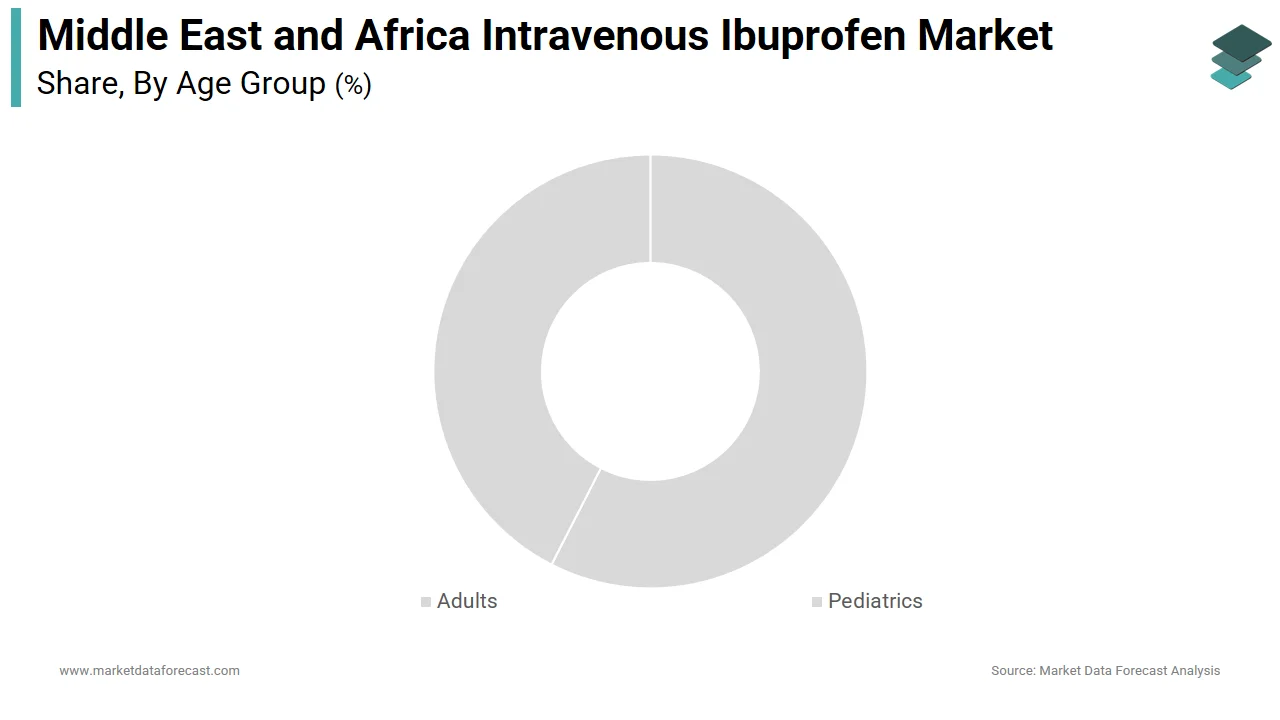
The pediatric segment is likely to exhibit the fastest CAGR of 8.9% during the forecast period, with the increasing recognition of safe nonopioid analgesic options for children and rising pediatric surgical volumes. The guidelines for pharmacological pain management and effective intravenous analgesic options remain essential components of multimodal pain control strategies across healthcare facilities, including pediatric units. This global standard increasingly influences regional practices as healthcare systems prioritize child-friendly pain management protocols that avoid opioid related adverse effects. The prevalence of inadequate postoperative pain management in African healthcare systems creates substantial demand for advanced intravenous solutions, as studies indicate that moderate to severe postoperative pain affects significant proportions of pediatric surgical patients. Pediatric anesthesia societies across the region advocate for standardized pain assessment tools and age-appropriate analgesic formulations, driving adoption of intravenous ibuprofen. Parents and caregivers increasingly demand transparent pain management plans for children undergoing medical procedures, creating pressure on healthcare providers to adopt evidence-based nonopioid options. Regulatory approvals for pediatric indications of intravenous nonsteroidal anti-inflammatory drugs have expanded in key markets, facilitating broader usage. Training programs for pediatric nurses and physicians emphasize the importance of timely pain intervention using safe intravenous agents.
By Indication Insights
The pain and inflammatory indication segment accounted for 48.4% of the Middle East and Africa intravenous ibuprofen market share in 2025, with the high prevalence of postoperative pain and musculoskeletal conditions requiring rapid anti-inflammatory action. This alarming statistic underscores the critical role of intravenous ibuprofen in addressing unmet clinical needs across surgical and emergency care settings. Healthcare facilities increasingly adopt multimodal analgesia protocols where intravenous ibuprofen serves as a cornerstone for managing acute inflammatory pain without opioid related side effects. Expert panel consensus recommendations for pain management in the Middle East recommend structured treatment protocols that prioritize effective analgesia for acute pain conditions. The rising incidence of trauma cases due to road traffic accidents and occupational injuries in rapidly developing economies further amplifies demand for immediate anti-inflammatory pain relief. Orthopedic surgeries, which frequently involve significant inflammatory responses, represent a major application area for intravenous ibuprofen. Physicians value the dual mechanism of action that addresses both pain perception and underlying inflammation, contributing to faster recovery times. The shift toward enhanced recovery after surgery protocols emphasizes early mobilization, which requires effective pain and inflammation control.
The fever indication segment is expected to grow at the fastest CAGR of 9.3% from 2026 to 2034, with increasing utilization in hospital settings for managing high-grade fevers unresponsive to oral antipyretics. The management of postoperative pain in Africa remains substantially insufficient due to resource shortages when compared to developed countries, yet fever management receives prioritized attention in infectious disease-prevalent regions. Intravenous ibuprofen offers rapid antipyretic effects crucial for patients unable to tolerate oral medications due to nausea, vomiting, or altered consciousness. The World Health Organization guidelines for pharmacological and radiotherapeutic management of cancer pain support stepped approaches that incorporate nonopioid options, which also possess antipyretic properties. Hospitals in tropical African nations frequently encounter patients with severe febrile illnesses requiring immediate temperature reduction to prevent complications. The expansion of emergency departments equipped with intravenous therapy capabilities enables broader administration of injectable antipyretics. Pediatric intensive care units increasingly utilize intravenous ibuprofen for persistent fevers associated with serious infections where oral absorption may be compromised. Climate change impacts contribute to rising temperatures and heat-related illnesses requiring effective antipyretic interventions in vulnerable populations. The availability of intravenous formulations ensures consistent dosing accuracy compared to variable oral absorption in critically ill patients. Healthcare providers recognize the convenience of combining pain relief and fever reduction in single intravenous administrations, improving workflow efficiency.
COUNTRY LEVEL ANALYSIS
Saudi Arabia Intravenous Ibuprofen Market Analysis
Saudi Arabia intravenous ibuprofen market was the largest contributor, holding 39.2% of the share in 2025, with robust healthcare infrastructure investments and progressive regulatory reforms. The Saudi Food and Drug Authority implemented updated regulatory measures in 2023 to further streamline the approval process for generic drugs, facilitating quicker market entry for intravenous analgesics. These policy frameworks create favorable conditions for intravenous ibuprofen procurement as healthcare institutions prioritize cost-effective yet clinically superior analgesic options. This technological advancement enables sophisticated pain management protocols that incorporate intravenous nonsteroidal anti-inflammatory drugs. The country hosts numerous international joint commission-accredited hospitals that adhere to global pain management standards favoring multimodal analgesia. High surgical volumes in Riyadh and Jeddah medical hubs drive consistent demand for intravenous ibuprofen in postoperative care. Government initiatives promoting medical tourism further elevate expectations for premium pain management services.
United Arab Emirates Intravenous Ibuprofen Market Analysis
United Arab Emirates intravenous ibuprofen market was positioned next, with a 26.5% share in 2025, with the high adoption rates of innovative analgesic therapies. Medical tourists expect world-class pain management protocols, including access to advanced intravenous analgesics that match international standards. Dubai and Abu Dhabi host state-of-the-art medical facilities that prioritize evidence-based pain management strategies incorporating intravenous ibuprofen for acute care. The presence of multinational pharmaceutical companies establishes strong distribution channels, ensuring consistent product supply. Regulatory authorities in the United Arab Emirates maintain stringent quality standards that favor established brands with proven clinical track records. The country serves as a re-export hub for neighboring markets, extending its influence beyond domestic consumption. High per capita healthcare spending enables patients to access premium analgesic options without financial constraints. Training programs for healthcare professionals emphasize contemporary pain management techniques, including opioid sparing strategies.
Israel Intravenous Ibuprofen Market Analysis
Israel intravenous ibuprofen market is likely to grow at the fastest CAGR in the coming years, with the medical research capabilities and high healthcare standards. The country boasts one of the highest physician-to-population ratios globally, supporting sophisticated pain management practices that incorporate the latest therapeutic innovations. Israeli healthcare institutions actively participate in clinical trials evaluating new analgesic formulations, contributing to evidence-based prescribing patterns. The nation's strong emphasis on technological innovation extends to pharmaceutical delivery systems, enhancing intravenous therapy effectiveness. Healthcare providers in Israel adhere to rigorous clinical guidelines that favor multimodal analgesia, reducing reliance on opioids. The country's well-developed pharmaceutical industry supports local manufacturing and distribution of intravenous medications, ensuring supply chain reliability. Israeli hospitals serve as regional training centers for pain management specialists, influencing practices across neighboring countries. The integration of digital health technologies enables precise pain assessment and monitoring, optimizing intravenous ibuprofen administration. Research institutions collaborate with international partners to develop novel analgesic strategies addressing unmet clinical needs. High health literacy among the population drives demand for transparent and effective pain management options.
South Africa Intravenous Ibuprofen Market Analysis
South Africa intravenous ibuprofen market growth is driven by the well-established regulatory frameworks through the South African Health Products Regulatory Authority, ensuring quality standards for imported and locally manufactured medications. Private healthcare facilities in South Africa adhere to international clinical guidelines favoring multimodal analgesia, including intravenous nonsteroidal anti-inflammatory drugs. The public healthcare sector faces resource constraints yet prioritizes essential medicines, including analgesics for surgical care. Medical scheme coverage in the private sector enables access to advanced therapeutic options for insured patients. South Africa serves as a clinical trial hub for pharmaceutical companies testing new formulations in diverse patient populations. The country's strong pharmaceutical manufacturing base supports local production of generic intravenous medications, reducing costs. Distribution networks extend from urban centers to rural areas, though challenges persist in remote regions. Healthcare professionals in South Africa receive ongoing education on contemporary pain management strategies through professional associations.
Ethiopia Intravenous Ibuprofen Market Analysis
Ethiopia's intravenous ibuprofen market growth is driven by expanding healthcare infrastructure and increasing surgical capacity. The government prioritizes primary healthcare expansion, which includes basic surgical services requiring adequate pain management resources. International donors and nongovernmental organizations support healthcare improvements, including the provision of essential medicines. The prevalence of traumatic injuries due to agricultural activities and transportation accidents creates demand for effective analgesics. Healthcare workforce training programs increasingly emphasize pain assessment and management techniques. Urban hospitals in Addis Ababa lead adoption of advanced therapeutic protocols, including intravenous analgesics. Supply chain improvements facilitate better medication availability, though rural areas remain underserved. The growing middle class increases demand for quality healthcare services, including effective pain relief.
COMPETITIVE LANDSCAPE
The competitive landscape of the Middle East and Africa intravenous ibuprofen market features a mix of multinational pharmaceutical corporations and regional generic manufacturers vying for market influence. These players emphasize product quality, regulatory compliance, and comprehensive medical education support to differentiate their offerings. Regional generic manufacturers compete primarily on price, accessibility, and local market knowledge, offering cost-effective alternatives to branded products. The market exhibits moderate consolidation as larger entities acquire smaller distributors or form strategic alliances to expand geographic reach. Differentiation strategies focus on clinical evidence, supply reliability, and value-added services such as training programs. Price sensitivity remains high in public healthcare systems, driving demand for affordable generic options, while private sectors favor branded products with proven track records. Intellectual property protections vary across jurisdictions, influencing competitive dynamics.
KEY MARKET PLAYERS
The leading companies operating in the Middle East and Africa intravenous ibuprofen market include:
- Cumberland Pharmaceuticals Inc.
- Alveda Pharmaceuticals, Inc.
- CSL Limited
- Sandor Medicaids Pvt. Ltd.
- Fresenius Kabi AG
- Al Nabeel International Ltd.
- Soho Industri Pharmasi
- Germin MED
- Baxter International Inc.
- Grifols S.A.
- Harbin Gloria Pharmaceuticals Co., Ltd.
- Laboratorios Valmorca, C.A.
TOP PLAYERS IN THE MARKET
- Cumberland Pharmaceuticals Inc. maintains a significant presence in the Middle East and Africa intravenous ibuprofen market through its proprietary branded formulation. The company focuses on delivering high-quality sterile injectable solutions that meet stringent international regulatory standards. Recent initiatives include expanding distribution partnerships with local pharmaceutical distributors in key Gulf Cooperation Council nations to enhance product accessibility. Cumberland actively participates in medical education programs targeting anesthesiologists and surgeons to promote evidence-based pain management protocols. The company invests in clinical research demonstrating the efficacy and safety profile of its intravenous ibuprofen product in diverse patient populations. Strategic collaborations with healthcare institutions support the adoption of multimodal analgesia strategies. Cumberland ensures consistent supply chain reliability by maintaining robust manufacturing capabilities and quality control measures. The company emphasizes customer support and technical assistance to healthcare providers, facilitating proper administration techniques.
- Fresenius Kabi AG leverages its extensive global infrastructure to deliver intravenous ibuprofen solutions across Middle Eastern and African healthcare systems. The company specializes in critical care therapies and provides comprehensive pain management portfolios, including nonopioid analgesics. The company engages in continuous product innovation, ensuring compliance with evolving regulatory requirements. Recent actions include launching educational campaigns for healthcare professionals on enhanced recovery after surgery protocols. Fresenius Kabi collaborates with government health ministries to support national pain management guidelines. The company prioritizes sustainable supply chains by ensuring uninterrupted availability of essential medications.
- Baxter International Inc contributes significantly to the Middle East and Africa intravenous ibuprofen market through its broad portfolio of acute care solutions. The company integrates intravenous analgesics into its comprehensive hospital care offerings, supporting surgical and emergency departments. Baxter strengthens its market position by investing in digital health technologies that optimize medication management and patient monitoring. Recent actions include forming alliances with regional healthcare providers to implement standardized pain assessment tools. The company supports clinical training programs for nurses and physicians on safe intravenous therapy administration. Baxter emphasizes product quality and patient safety through rigorous manufacturing standards and quality assurance processes. The company adapts its distribution strategies to address logistical challenges in remote areas. Collaborative efforts with local partners enhance market penetration and service delivery.
TOP STRATEGIES USED BY THE KEY MARKET PARTICIPANTS
Key players in the Middle East and Africa intravenous ibuprofen market employ multifaceted strategies to consolidate their positions and drive growth. Strategic partnerships with local distributors remain paramount for navigating complex regulatory landscapes and ensuring efficient product distribution across diverse geographies. Companies actively invest in medical education initiatives targeting healthcare professionals to promote awareness of multimodal analgesia benefits and proper administration techniques. Product differentiation through superior quality standards and clinical evidence supports premium positioning against generic competitors. Regulatory engagement involves proactive collaboration with health authorities to streamline approval processes and maintain compliance with evolving standards. Pricing strategies balance affordability with value proposition, particularly in price-sensitive public healthcare sectors. Supply chain optimization focuses on establishing regional hubs to mitigate logistical challenges and ensure consistent product availability. Innovation in packaging and delivery systems enhances user convenience and patient safety. Market expansion efforts target emerging economies with growing healthcare infrastructure investments. Digital health integration supports better pain management outcomes through data-driven insights. These combined approaches enable sustained competitive advantage in this dynamic market environment.
MARKET SEGMENTATION
This research report on the Middle East and Africa intravenous ibuprofen market has been segmented and sub-segmented into the following categories.
By Age Group
- Adults
- Pediatrics
By Indication
- Fever
- Pain/inflammatory
By Country
- KSA
- UAE
- Israel
- rest of GCC countries
- South Africa
- Ethiopia
- Kenya
- Egypt
- Sudan
- rest of Middle East and Africa