- Product Description Description
- Table of Contents TOC
- List of Table & Figure LOT
- Get Free Sample PDF Sample PDF
Middle East and Africa Pigmented Lesion Treatment Market Summary
The Middle East and Africa Pigmented Lesion Treatment Market size was valued at USD 0.18 billion in 2024 and is anticipated to reach USD 0.30 billion by 2033, growing at a CAGR of 6.02% from 2024 to 2033. The market is gaining momentum due to the rising demand for remote cardiac care, the growing burden of cardiovascular diseases, and technological advancements in AI-powered diagnostics and wearable cardiac monitoring devices.
Key Market Trends & Insights
- Middle East and Africa dominated the global market with a largest share in 2024.
- Middle East and Africa is projected to grow at the fastest rate between 2024 and 2033.
- Based on technology, the software segment held the largest share of 49.59% in 2024 due to its critical role in remote monitoring.
- Based on technology, the IT services segment is the fastest-growing with a projected CAGR of 6.02%.
- AI and wearable tech adoption are key trends driving innovation in the market.
Market Size & Forecast
- 2024 Market Size: USD 0.18 Billion
- 2033 Projected Market Size: USD 0.30 Billion
- CAGR (2024–2033): 6.02%
- Middle East and Africa: Largest market in 2024
Middle East and Africa Pigmented Lesion Treatment Market Size
The Middle East and Africa Pigmented Lesion Treatment Market Size was valued at USD 0.19 billion in 2025, is expected to have 6.02 % CAGR from 2026 to 2034 and be worth USD 0.32 billion by 2034 from USD 0.20 billion in 2026.
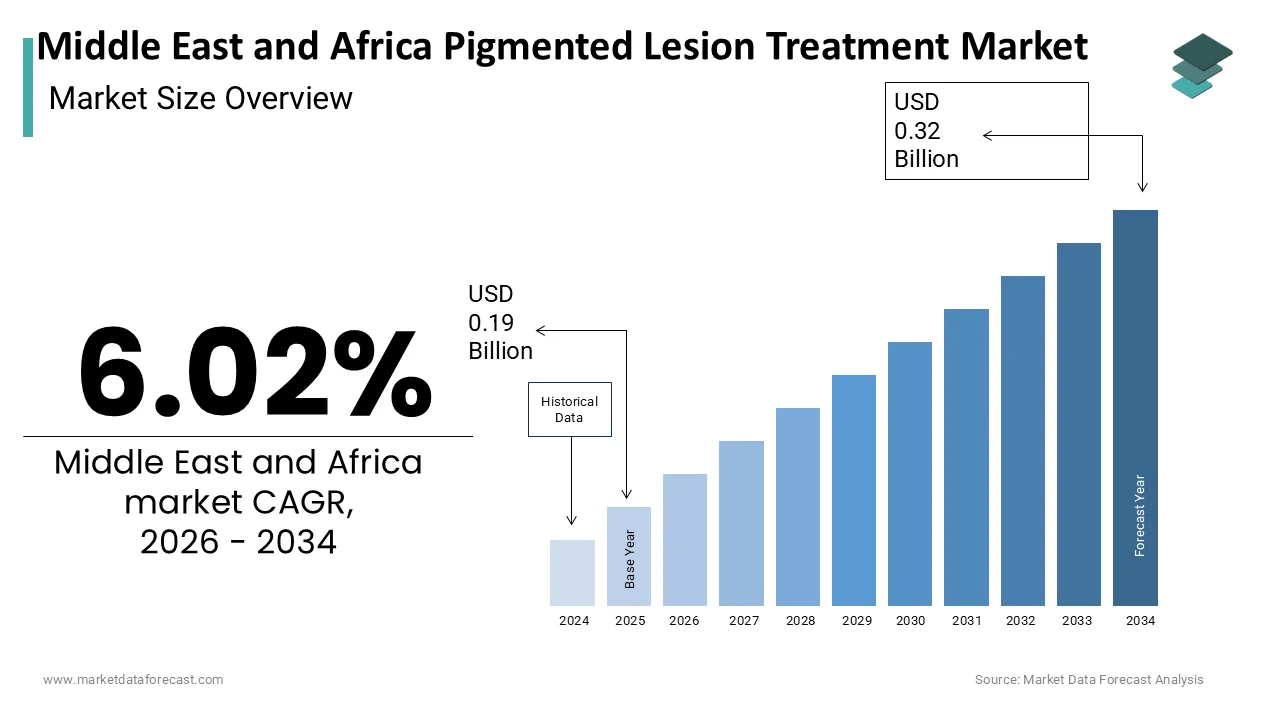
The Middle East and Africa (MEA) pigmented lesion treatment market encompasses a range of medical interventions aimed at diagnosing, managing, and removing benign and malignant pigmented skin lesions. These treatments include laser therapy, cryotherapy, surgical excision, topical medications, and emerging non-invasive procedures driven by growing awareness about skin health and aesthetics.
As per the World Health Organization (WHO), skin-related conditions are increasingly prevalent in the region due to high UV exposure, changing lifestyle patterns, and rising urbanization. In countries like Saudi Arabia and South Africa, dermatological consultations have surged over the past decade, with pigmented lesions being among the most common diagnoses. Also, according to the International Agency for Research on Cancer, melanoma incidence is gradually increasing in fair-skinned populations residing in Gulf Cooperation Council (GCC) countries.
In addition, aesthetic concerns are fueling demand for cosmetic lesion removal, particularly in urban centers such as Dubai, Cairo, and Cape Town. According to the International Society of Aesthetic Plastic Surgery, there has been a consistent rise in non-surgical cosmetic procedures across the MEA region, supported by improved healthcare infrastructure and increased disposable incomes.
Moreover, advancements in laser technology and telemedicine platforms are enabling broader access to treatment options. Governments in the region are also investing in dermatology education and early detection programs for melanoma and other skin cancers. As awareness grows and treatment modalities evolve, the MEA Pigmented Lesion Treatment Market is witnessing steady expansion, supported by both medical necessity and aesthetic demand.
MARKET DRIVERS
Rising Incidence of Skin Cancer and Melanoma Cases
A core element driving the growth of the MEA Pigmented Lesion Treatment Market is the increasing prevalence of skin cancer and melanoma cases, particularly in regions with high ultraviolet (UV) radiation exposure. Countries such as Saudi Arabia, Oman, and South Africa report elevated rates of sun-induced skin damage, contributing to a growing number of diagnosed melanomas and precancerous pigmented lesions.
According to the International Agency for Research on Cancer (IARC), melanoma incidence in the GCC region rose by approximately 12% between 2018 and 2023 , attributed to prolonged outdoor exposure, shifting lifestyle habits, and inadequate sun protection practices. Also, in South Africa, as per the National Cancer Registry, over 1,800 new melanoma cases were recorded annually , with fair-skinned populations showing higher susceptibility.
These trends have prompted increased investment in early diagnosis and treatment facilities. The Ministry of Health in the United Arab Emirates launched a national skin cancer awareness campaign in 2023, encouraging regular screenings and timely intervention. Similarly, dermatology departments in major hospitals across Egypt and Nigeria have expanded their diagnostic and therapeutic capabilities.
As public awareness grows and healthcare systems prioritize skin cancer prevention, the demand for pigmented lesion treatment services continues to rise, significantly driving market growth across the MEA region.
Growing Demand for Aesthetic and Cosmetic Dermatology Procedures
A different significant driver of the MEA pigmented lesion treatment market is the rising consumer interest in aesthetic and cosmetic dermatology procedures. With increasing disposable incomes and growing influence from social media and beauty standards, more individuals are opting for elective treatments to remove or lighten pigmented lesions for appearance-related reasons.
According to the International Society of Aesthetic Plastic Surgery (ISAPS), non-invasive cosmetic procedures in the MEA region grew by 9% in 2023 , with laser-based pigmented lesion removal ranking among the top five requested treatments in countries like the UAE, Qatar, and South Africa. In Dubai alone, leading cosmetic clinics reported a 30% increase in inquiries related to facial pigmentation correction, indicating strong market momentum.
In addition, the proliferation of premium skincare brands and the availability of advanced laser technologies in private dermatology clinics have made these treatments more accessible. The Egyptian Society of Dermatology noted that demand for fractional lasers and Q-switched Nd:YAG treatments doubled over the past four years , particularly among younger demographics seeking clearer skin.
With continued investments in aesthetic training centers and the expansion of medical tourism in the Gulf region, the cosmetic aspect of pigmented lesion treatment remains a powerful catalyst for market expansion across the MEA region.
MARKET RESTRAINTS
Limited Awareness and Late Diagnosis of Skin Conditions
A major restraint for the MEA pigmented lesion treatment market is the limited awareness and late diagnosis of skin-related conditions, particularly in rural and underserved areas. Many patients lack basic knowledge about pigmented lesions, including the risks associated with melanoma and the importance of early intervention. This lack of awareness often leads to delayed treatment, reducing the effectiveness of available therapies and limiting market growth.
According to the World Health Organization (WHO), only 35% of adults in sub-Saharan Africa receive timely dermatological care , with many cases diagnosed at advanced stages where treatment options are limited. In countries like Ethiopia and Sudan, cultural stigma and misinformation surrounding skin diseases further discourage people from seeking professional help.
Similarly, in the Middle East, as per a study conducted by the Kuwait Institute for Medical Specialties found that nearly 40% of patients consulted a dermatologist only after noticeable changes in pigmented lesions , increasing the risk of complications. Without widespread public education campaigns and improved access to screening programs, early diagnosis will remain a challenge, hindering the expansion of the pigmented lesion treatment market in the region.
High Cost of Advanced Treatment Technologies
One more constraint facing the MEA Pigmented Lesion Treatment Market is the high cost associated with advanced treatment technologies such as laser therapy, photodynamic therapy, and targeted immunotherapies. These cutting-edge treatments, while highly effective, remain financially inaccessible to a large portion of the population, especially in lower-income countries within the region.
In countries like Yemen and Somalia, where healthcare budgets are limited, even basic dermatological care is often unavailable, let alone specialized lesion removal procedures.
Furthermore, as per the indications by the Gulf Center for Disease Control, only 15% of health insurance policies in the GCC cover cosmetic dermatology procedures , discouraging patients from opting for elective treatments. Public hospitals typically offer subsidized services, but long waiting times and limited equipment availability deter potential users.
Until pricing structures become more affordable or government subsidies expand, the adoption of advanced pigmented lesion treatments will remain constrained, limiting overall market penetration in the MEA region.
MARKET OPPORTUNITIES
Expansion of Telemedicine and Digital Dermatology Platforms
An attractive prospect for the MEA pigmented lesion treatment market is the rapid expansion of telemedicine and digital dermatology platforms, which are enhancing access to specialist care and streamlining diagnosis and treatment planning. With mobile internet penetration increasing across the region, virtual consultations and AI-powered skin analysis tools are becoming viable solutions for early lesion detection.
In Saudi Arabia, the Ministry of Health introduced a national teledermatology initiative in 2023, allowing patients in remote areas to submit images of suspicious lesions for expert review. Similarly, in South Africa, several startups have launched AI-driven skin scanning apps that assess pigmented lesions and recommend whether a biopsy or specialist consultation is necessary.
With continued investment in digital health infrastructure and regulatory support for telehealth services, the MEA region is poised to leverage these innovations to enhance patient outcomes and drive market growth in pigmented lesion management.
Growth in Medical Tourism and Private Healthcare Investment
One more promising opportunity for the MEA pigmented lesion treatment market is the expansion of medical tourism and private healthcare investment, particularly in the Gulf Cooperation Council (GCC) countries. Nations like the UAE, Qatar, and Saudi Arabia are positioning themselves as regional hubs for high-quality dermatological care, attracting patients from neighboring countries seeking advanced treatment options.
According to the Dubai Health Authority, medical tourism revenue in the UAE reached USD 4.3 billion in 2023 , with dermatology and aesthetic treatments accounting for a significant share. Leading hospitals and clinics in cities like Dubai and Riyadh now offer state-of-the-art laser treatments, cryotherapy, and minimally invasive procedures for pigmented lesions, drawing international patients seeking faster, more personalized care.
In addition, private equity investment in dermatology clinics has surged. As per the Kuwait Financial Centre, private healthcare spending in the GCC increased by 14% in 2023 , with a notable focus on aesthetic and preventive dermatology. This trend is not only improving local service offerings but also reinforcing the region’s reputation as a destination for advanced skin care.
As governments continue to incentivize private sector participation and improve regulatory frameworks, the MEA Pigmented Lesion Treatment Market stands to benefit significantly from this evolving healthcare landscape.
MARKET CHALLENGES
Regulatory Hurdles and Lack of Standardized Guidelines
A serious challenge confronting the MEA pigmented lesion treatment market is the inconsistency in regulatory frameworks and the absence of standardized clinical guidelines for diagnosing and treating pigmented lesions. Unlike in Europe or North America, where national dermatology associations provide clear protocols, many countries in the MEA region lack unified standards for lesion classification, treatment eligibility, and post-procedure care.
According to the Eastern Mediterranean Regional Office of the World Health Organization (EMRO), only six out of 22 countries in the region have established formal dermatology practice guidelines , leading to variability in treatment quality and patient outcomes. In countries like Libya and Yemen, regulatory oversight of cosmetic procedures remains minimal, resulting in unregulated use of laser devices and off-label treatments.
Moreover, as per a study published by the Saudi Commission for Health Specialties, inconsistent licensing requirements for dermatologists and aesthetic practitioners contribute to disparities in treatment safety , particularly in private clinics offering pigmented lesion removal.
Without stronger regulatory enforcement and harmonized medical guidelines, the credibility and scalability of pigmented lesion treatment services will remain challenged, impeding market growth and patient trust across the MEA region.
Shortage of Skilled Dermatologists and Specialist Infrastructure
Another pressing challenge for the MEA pigmented lesion Treatment Market is the chronic shortage of trained dermatologists and insufficient specialist infrastructure, particularly in rural and low-income areas. Effective diagnosis and treatment of pigmented lesions require expertise in dermoscopy, histopathology, and laser-based interventions—resources that are unevenly distributed across the region.
According to the International League of Dermatological Societies (ILDS), the MEA region has fewer than two dermatologists per million people , compared to over 20 in Western Europe.
Moreover, as per a 2023 report by the African Skin Cancer Foundation found that only 12% of public hospitals in Kenya and Tanzania have dedicated dermatology units , forcing patients to travel long distances for specialist care. Even in urban centers, private clinics equipped with advanced treatment technologies remain concentrated in capital cities, leaving vast populations underserved.
REPORT COVERAGE
| REPORT METRIC | DETAILS |
| Market Size Available | 2026 to 2034 |
| Base Year | 2025 |
| Forecast Period | 2026 to 2034 |
| Segments Covered | By Product, End User and Country. |
| Various Analyses Covered | Global, Regional & Country Level Analysis, Segment-Level Analysis; DROC, PESTLE Analysis, Porter's Five Forces Analysis, Competitive Landscape, Analyst Overview of Investment Opportunities |
| Country Covered | KSA ,UAE ,Israel ,rest of GCC countries, South Africa ,Ethiopia ,Kenya ,Egypt, Sudan, Rest of MEA. |
| Market Leader Profiled | Alma Lasers Ltd., Lumenis Ltd., Cynosure, Inc., Strata Skin Sciences Inc. |
SEGMENTAL ANALYSIS
By Product Insights
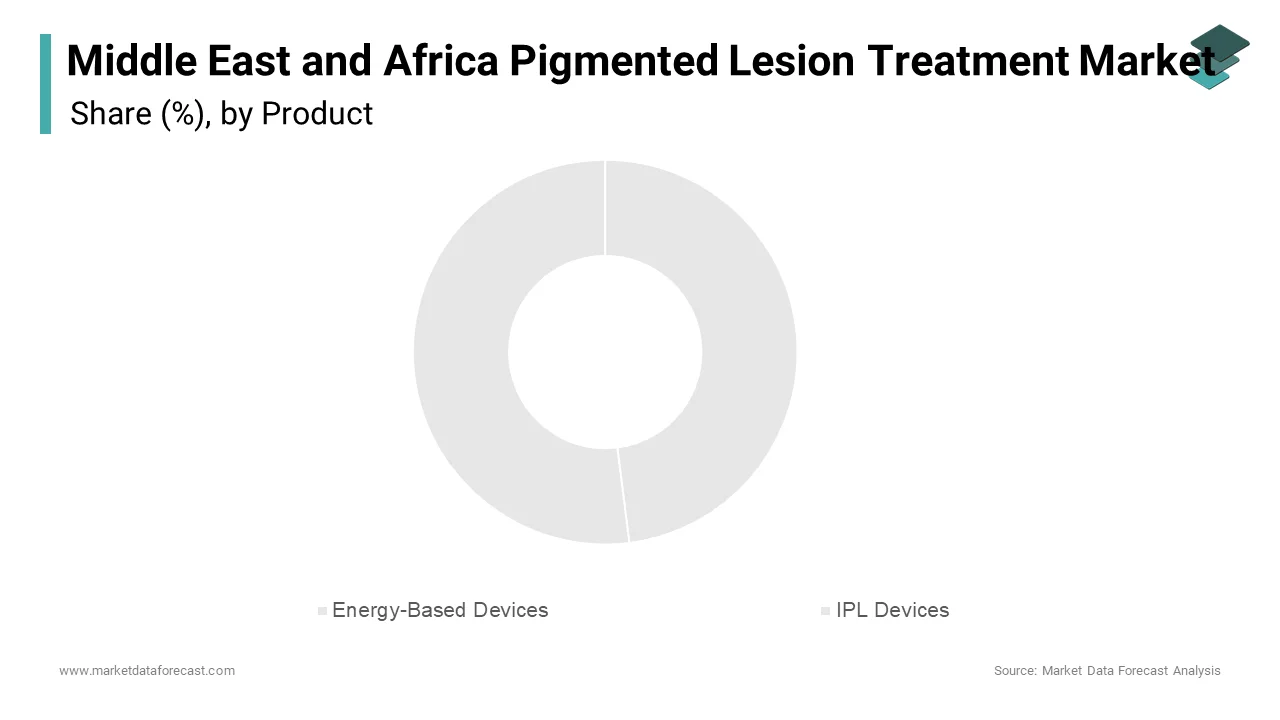
Energy-based devices dominated the MEA pigmented lesion treatment market, capturing approximately 48% of total market revenue in 2025. This segment includes laser systems such as Q-switched lasers and fractional lasers, which are widely used for non-invasive removal of benign pigmented lesions like nevi and melasma.
Besides, technological advancements have enhanced device safety and efficacy across different skin types, which is particularly important in the MEA region where Fitzpatrick skin types IV to VI are common. As per a 2023 study by the University of Cape Town, fractional laser use increased by 22% in South Africa , especially among patients seeking post-inflammatory hyperpigmentation correction.
With increasing adoption in both medical and aesthetic settings, supported by rising disposable incomes and growing awareness, energy-based devices remain the leading product category in the MEA Pigmented Lesion Treatment Market.
Intense Pulsed Light (IPL) devices are projected to grow at the fastest CAGR of 9.3% from 2025 to 2033. While currently holding a smaller market share compared to energy-based lasers, IPL technology is gaining traction due to its versatility, cost-effectiveness, and suitability for treating multiple skin concerns simultaneously.
Moreover, IPL devices are well-suited for the diverse skin tones prevalent in the MEA region when operated by trained professionals. As manufacturers introduce more affordable and user-friendly models tailored for small clinics and aesthetic centers, the IPL segment is poised for accelerated expansion across the MEA region.
By End User Insights
Dermatology clinics represented the biggest end-user segment in the MEA pigmented lesion treatment market, contributing 58.6% of total market revenue in 2025. These specialized facilities serve as primary diagnostic and treatment centers for both benign and malignant pigmented lesions, leveraging advanced equipment and expert-led care.
Apart from these, government initiatives to expand dermatological care infrastructure have strengthened the role of these clinics. As per the Ministry of Health in Egypt, the number of accredited dermatology centers nationwide grew by 15% in 2023, particularly in urban areas where access to specialist care is improving. Continued emphasis on early diagnosis and professional treatment keeps dermatology clinics central to the pigmented lesion management landscape in the MEA region.
Beauty clinics are rising as the quickly advacning end-user segment in the MEA pigmented lesion treatment market, expanding at a CAGR of 10.1% during the forecast period. Unlike traditional dermatology clinics, beauty clinics focus primarily on aesthetic improvements, offering treatments such as laser toning, IPL therapy, and chemical peels to lighten or remove benign pigmented spots.
Furthermore, as disposable incomes rise and societal emphasis on appearance grows, beauty clinics are expected to continue capturing a larger share of the MEA pigmented lesion treatment market.
COUNTRY LEVEL ANALYSIS
Saudi Arabia held the largest share of the MEA pigmented lesion treatment market, contributing 24.4% of total regional revenue in 2025. The country’s lead position is driven by strong healthcare investments, rising awareness of skin conditions, and growing adoption of aesthetic procedures among both men and women.
According to the Saudi Commission for Health Specialties, dermatology consultations for pigmented lesions increased by 17% in 2023 , particularly in major cities like Riyadh, Jeddah, and Dammam. Also, the Ministry of Health has also launched national campaigns promoting sun protection and early melanoma detection, encouraging proactive skin health management.
Additionally, the Kingdom's Vision 2030 initiative has spurred private healthcare investment, resulting in an influx of premium dermatology clinics equipped with advanced laser and IPL technologies. As per the Dubai Health Authority, medical tourism in the Gulf region has indirectly benefited Saudi Arabia through cross-border knowledge exchange and collaborative training programs.
The United Arab Emirates is another key player in the MEA pigmented lesion treatment market. Its prominence is attributed to a combination of high disposable incomes, robust private healthcare infrastructure, and a thriving medical tourism industry centered around aesthetic and preventive dermatology.
Moreover, the UAE government has implemented stringent licensing requirements for aesthetic practitioners, ensuring service quality and boosting consumer confidence. Also, it remained among the top ten global destinations for cosmetic procedures in 2023, attracting patients from North Africa, the Levant, and South Asia. With ongoing investments in digital dermatology platforms and AI-assisted diagnostics, the UAE continues to strengthen its position as a regional leader in pigmented lesion treatment.
Israel is distinguished by its advanced dermatological research, high healthcare expenditure, and early adoption of innovative treatment technologies. Although not traditionally grouped with Middle Eastern markets, Israel's proximity and collaboration with regional players make it a key contributor to the broader MEA dermatology ecosystem.
According to the Israeli Ministry of Health, skin cancer incidence rates have risen steadily over the past decade , prompting increased investment in early diagnosis and treatment facilities. Also, dermatology departments are integrating AI-driven imaging tools to enhance pigmented lesion classification accuracy , improving patient outcomes.
Additionally, Israel serves as a regional hub for clinical trials and R&D in dermatological devices, with companies like Pollogen and Alma Lasers developing cutting-edge solutions adopted across the MEA region. With continued innovation and strategic partnerships, Israel is positioning itself as a key player in the broader MEA pigmented lesion treatment landscape.
South Africa held a significant portion in the MEA pigmented lesion treatment market, driven by a well-developed private healthcare system, rising awareness of skin cancer risks, and increasing demand for aesthetic procedures in major metropolitan areas. The country's diverse population and varying Fitzpatrick skin types necessitate tailored treatment approaches, fostering innovation in pigmented lesion management.
According to the South African Medical Research Council, melanoma cases have been on the rise, particularly among fair-skinned individuals residing in coastal regions , leading to higher demand for early diagnosis and intervention.
With expanding private dermatology networks and growing medical tourism from neighboring African nations, South Africa continues to solidify its position as a key market in the MEA Pigmented Lesion Treatment landscape.
The Rest of the GCC, including Kuwait, Bahrain, Oman, and Qatar, collectively contributes a notable share of the MEA pigmented lesion treatment market. While these countries lag behind Saudi Arabia and the UAE in terms of market maturity, they present substantial growth opportunities due to rising healthcare spending, increasing prevalence of skin conditions, and expanding private sector involvement.
Apart from these, private healthcare investments are accelerating in Qatar and Bahrain, with several premium dermatology centers opening in recent years to cater to both residents and international patients. With continued policy reforms and investment in dermatology education, the Rest of the GCC is poised for significant market expansion in the coming years.
The Rest of the MEA region encompasses Ethiopia, Kenya, Egypt, Sudan, and other African and Middle Eastern nations. Though less developed compared to the Gulf and South Africa, this segment is experiencing steady growth due to increasing awareness, urbanization, and gradual improvements in healthcare infrastructure.
According to the Ethiopian Federal Ministry of Health, non-communicable diseases, including skin conditions, have gained attention in recent national health strategies , leading to better integration of dermatological services in primary care.
Egypt, in particular, has seen a surge in private dermatology clinics offering laser and IPL treatments for pigmented lesions, especially in Cairo and Alexandria. With increasing support from global health organizations and rising investment in telemedicine, the Rest of MEA is gradually transitioning from low awareness to active participation in the pigmented lesion treatment market, offering long-term growth potential.
KEY MARKET PLAYERS AND COMPETITIVE LANDSCAPE
Companies that play a dominating role in the Middle East and Africa pigmented lesion treatment market include Alma Lasers Ltd., Lumenis Ltd., Cynosure, Inc., Strata Skin Sciences Inc., Fotona d.d., Sciton, Inc., EL.En. S.p.A., Lynton Lasers Ltd, Solta Medical Inc., Syneron Medical Ltd., Lutronic Corporation, and Cutera Inc.
The MEA Pigmented Lesion Treatment Market is characterized by a competitive landscape featuring a mix of global medical device manufacturers and emerging regional distributors. While multinational corporations dominate due to their technological expertise and brand recognition, local players are gaining traction by offering cost-effective solutions and localized service support. The market is witnessing increased investment in aesthetic and therapeutic dermatology, driven by rising awareness about skin health and growing demand for non-invasive procedures. As a result, competition is intensifying not only in product innovation but also in post-sale services, training, and regulatory compliance. Companies are differentiating themselves through tailored treatment protocols, enhanced safety profiles for diverse skin types, and strategic collaborations with healthcare institutions. Additionally, the expansion of private healthcare infrastructure and the rise of medical tourism in the Gulf region are further shaping competitive dynamics. With advancements in laser and light-based technologies, firms are under pressure to continuously innovate while maintaining affordability and accessibility across both urban and rural markets in the MEA region.
Top Players in the Market
Lumenis Ltd.
Lumenis is a global leader in medical laser technologies and plays a significant role in the MEA Pigmented Lesion Treatment Market. The company offers a wide range of energy-based devices, particularly Q-switched and fractional lasers, which are widely used for treating benign pigmented lesions and melasma. In the MEA region, Lumenis has established a strong presence through partnerships with dermatology clinics and aesthetic centers, especially in Saudi Arabia, the UAE, and South Africa. Their commitment to innovation and regulatory compliance makes them a trusted name among medical professionals seeking safe and effective treatment solutions.
Alma Lasers Ltd.
Alma Lasers is a key player known for its comprehensive portfolio of aesthetic and dermatological treatment systems. The company provides advanced laser and IPL devices that cater to both medical and cosmetic applications in pigmented lesion management. In the MEA market, Alma has focused on expanding its regional distribution network and providing tailored training programs for clinicians. Their emphasis on technology integration and customer support has positioned them as a preferred supplier for beauty and dermatology clinics across the Gulf and North Africa.
Candela Corporation (a subsidiary of Syneron Medical Ltd.)
Candela, now part of Syneron Medical, is recognized for its innovative laser systems designed for skin treatments, including pigmented lesion removal. The company has a strong foothold in the MEA region, particularly in countries where aesthetic dermatology is growing rapidly. Candela’s contribution lies in its development of customizable treatment protocols and its efforts to educate healthcare providers on safe and effective lesion management. Their products are widely used in both clinical and cosmetic settings across the MEA region.
Top Strategies Used by Key Market Participants
One major strategy employed by leading players in the MEA Pigmented Lesion Treatment Market is expanding their regional presence through strategic partnerships and local distributor networks , ensuring broader access to their technologies across both public and private healthcare facilities. These collaborations help companies establish credibility and improve after-sales service delivery.
Another key approach is investing in professional training and certification programs for dermatologists and aestheticians , enabling them to effectively utilize advanced treatment devices. By offering hands-on workshops, online education modules, and clinical support, manufacturers enhance product adoption and ensure safe usage in diverse skin types prevalent in the MEA region.
Additionally, companies are increasingly focusing on product localization and customization , adapting their device parameters and features to suit the unique needs of MEA consumers, particularly those with darker skin tones. This includes optimizing wavelengths and pulse durations to minimize complications and improve treatment outcomes, thereby strengthening brand loyalty and market penetration.
RECENT HAPPENINGS IN THE MARKET
In March 2025, Lumenis expanded its regional office in Dubai, enhancing its technical support and customer service capabilities to better serve dermatology and aesthetic clinics across the GCC.
In July 2023, Alma Lasers launched a specialized training academy in Cairo, aimed at certifying dermatologists and aestheticians in the safe and effective use of IPL and laser technologies for pigmented lesion treatment.
In October 2023, Syneron Medical introduced a new line of customized laser protocols tailored for Middle Eastern and African skin types, improving treatment efficacy and reducing adverse effects in the MEA market.
In January 2025, Cynosure partnered with a leading Saudi Arabian healthcare group to deploy its PicoSure laser platform in multiple private clinics, boosting access to advanced pigmented lesion removal treatments.
In May 2025, Sciton announced a distribution agreement with a prominent Egyptian medical equipment provider, aiming to increase the availability of its BBL and laser-based systems in both public and private dermatology centers.
MARKET SEGMENTATION
This research report on the MEA Pigmented Lesion Treatment Market has been segmented and sub-segmented into the following categories.
By Product
- Energy-Based Devices
- IPL Devices
By End User
- Beauty Clinics
- Dermatology Clinics
By Country
- KSA
- UAE
- Israel
- Rest of the GCC countries
- South Africa
- Ethiopia
- Kenya
- Egypt
- Sudan
- Rest of MEA