- Product Description Description
- Table of Contents TOC
- List of Table & Figure LOT
- Get Free Sample PDF Sample PDF
Market Size, 2025
$1.37 BnMarket Estimate, 2026
$1.43 BnMarket Forecast, 2034
$2.07 BnCAGR, 2026–2034
4.73%Middle East and Africa Spices and Seasonings Market Report Summary
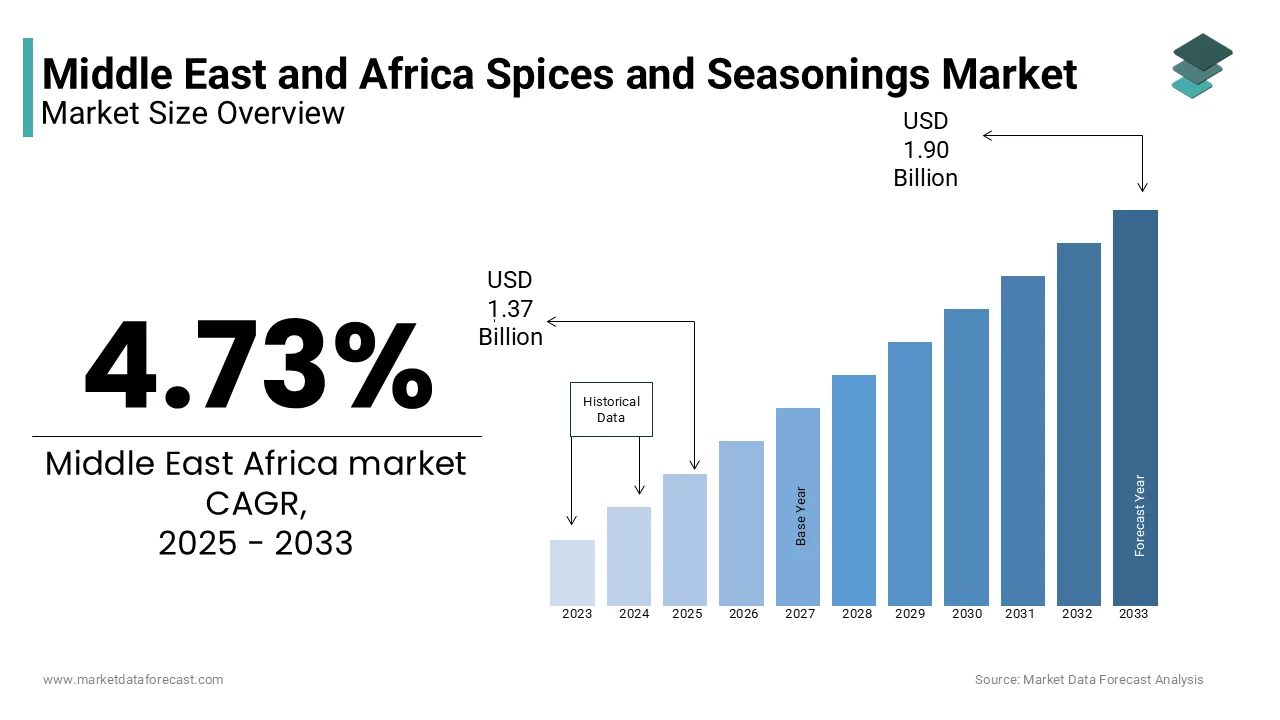
The Middle East and Africa spices and seasonings market was valued at USD 1.37 billion in 2025, is estimated to reach USD 1.43 billion in 2026, and is projected to reach USD 2.07 billion by 2034, growing at a CAGR of 4.73% during the forecast period. Market growth is driven by strong culinary traditions, increasing demand for flavor enhancement in food products, and rising consumption of processed and packaged foods. Spices and seasonings are widely used across households and the food service sector to enhance taste, aroma, and preservation. The expansion of food processing industries and growing interest in diverse cuisines are further supporting steady market growth across the region.
Key Market Trends
- Strong demand for flavorful and aromatic food products is driving market growth.
- Increasing consumption of processed and packaged foods is boosting demand.
- Growing popularity of diverse and international cuisines is supporting market expansion.
- Expansion of food service and hospitality sectors is enhancing demand.
- Rising innovation in spice blends and seasoning products is influencing market growth.
Segmental Insights
- Based on type, the pepper segment was the largest and held 28.4% of the Middle East and Africa spices and seasonings market share in 2025. This dominance is attributed to its widespread use across various cuisines and food preparations.
- Based on application, the meat and poultry products segment accounted for 35.8% of the Middle East and Africa spices and seasonings market share in 2025. The segment’s growth is driven by high consumption of seasoned meat products and demand for flavor enhancement.
Regional Insights
- The Middle East and Africa spices and seasonings market is experiencing steady growth across key countries, supported by strong culinary culture and food industry expansion.
- Saudi Arabia was the largest contributor, accounting for 22.4% of the Middle East and Africa spices and seasonings market share in 2025, driven by high consumption of spices, expanding food service sector, and growing demand for packaged seasonings.
Competitive Landscape
The Middle East and Africa spices and seasonings market is moderately competitive, with key players focusing on product innovation, quality enhancement, and expansion of distribution networks to strengthen their market position. Companies are investing in new spice blends, processing technologies, and branding strategies. Prominent players in the Middle East and Africa spices and seasonings market include McCormick and Company, Associated British Foods, Kerry Group plc, Olam International Limited, Ajinomoto Co Inc, Ariake Japan Company, SHS Group, Dohler Group, Worlee Gruppe, and Sensient Technologies.
Middle East and Africa Spices and Seasonings Market Size
The Middle East and Africa spices and seasonings market size was valued at USD 1.37 billion in 2025, and the market size is expected to reach USD 2.07 billion by 2034 from USD 1.43 billion in 2026. The market is promising a CAGR for the predicted period is 4.73%.
The spices and seasonings products like turmeric, cumin, cardamom, saffron, and blended mixes that are essential for traditional cuisines across nations, such as India, Egypt, Nigeria, and Saudi Arabia. Spices serve not only as flavor enhancers but also as natural preservatives and medicinal agents reflecting their multifaceted role in daily life. The region’s strategic location facilitates significant import and export activities connecting major producing countries with global demand centers. According to the Food and Agriculture Organization of the United Nations, the African continent produces approximately 30% of the world’s ginger and substantial quantities of chili peppers highlighting its agricultural significance. Furthermore, the World Health Organization emphasizes that over 80% of the population in some African regions relies on traditional medicine where spices play a crucial therapeutic role. The growing urbanization and rising disposable incomes in Gulf Cooperation Council countries have transformed consumption patterns leading to increased demand for packaged and premium spice blends. Additionally, the expansion of the food service industry driven by tourism and hospitality sectors further amplifies the need for consistent and high quality seasoning supplies. These socio economic and cultural dynamics create a robust foundation for market growth distinct from mere commercial metrics.
MARKET DRIVERS
Cultural Significance and Culinary Traditions Driving Daily Consumption
The deep-seated cultural importance of spices in Middle Eastern and African cuisines is primary factor bolstering the growth of Middle East and Africa spices and seasonings market. In these regions, food is central to social interaction and religious ceremonies necessitating the regular use of specific spice blends, such as baharat zaatar and berbere. According to the United Nations Educational Scientific and Cultural Organization, traditional culinary practices in countries like Morocco and Ethiopia are recognized as intangible cultural heritage ensuring the preservation and continuous use of indigenous spices. The daily preparation of staple dishes, such as couscous tagines and stews requires substantial volumes of cumin coriander and turmeric creating a stable baseline demand. Furthermore, the Ramadan season sees a significant spike in spice consumption as families prepare elaborate meals for iftar and suhoor. Additionally, the diaspora communities in Europe and North America maintain strong ties to their culinary roots driving export opportunities for regional producers. The authenticity of flavor remains a priority for consumers who prefer traditional whole spices over artificial alternatives.
Growing Health Consciousness and Medicinal Applications
The increasing health awareness among consumers due to their recognized medicinal and nutritional benefits, which is another attribute elevating the growth of Middle East and Africa spices and seasonings market. Ingredients, such as ginger garlic turmeric and cinnamon are widely valued for their anti-inflammatory antioxidant and immune boosting properties. As per the World Health Organization, non-communicable diseases, such as diabetes and hypertension are rising in the region prompting individuals to seek natural dietary interventions. Turmeric for instance contains curcumin which has been extensively studied for its potential to reduce inflammation and improve metabolic health. The African Journal of Traditional Complementary and Alternative Medicine reported that over 60% of households in rural areas incorporate medicinal spices into their daily diets for preventive healthcare. Government health initiatives in countries like Saudi Arabia and the United Arab Emirates promote healthy eating habits, further encouraging the substitution of salt and synthetic additives with natural spices. Additionally, the global trend toward clean label products influences local manufacturers to highlight the natural origins and health benefits of their seasoning blends.
MARKET RESTRAINTS
Supply Chain Volatility and Climate Change Impacts
The susceptibility of spice production to climate change and environmental variability is hindering the growth of the Middle East and Africa. Many key spice crops, such as saffron cardamom and vanilla are highly sensitive to temperature fluctuations rainfall patterns and extreme weather events. According to the Intergovernmental Panel on Climate Change, rising temperatures and irregular precipitation have reduced crop yields in several African regions by up to 15% in recent years. Droughts in East Africa have severely impacted the production of chili peppers and ginger leading to supply shortages and price volatility. These disruptions affect both smallholder farmers and large scale exporters creating uncertainty in availability and costing. The World Bank highlighted that agricultural productivity in Sub Saharan Africa is among the most vulnerable to climate risks due to limited irrigation infrastructure and adaptive technologies. Furthermore, political instability in certain producing regions can disrupt logistics and trade routes exacerbating supply chain challenges. For instance, conflicts in parts of the Sahel region have hindered the transport of goods to ports affecting export timelines. Importers and manufacturers face difficulties in maintaining consistent inventory levels and pricing strategies amidst such unpredictability. The reliance on rain fed agriculture in many areas means that even minor climatic shifts can have disproportionate effects on output.
Quality Control Issues and Adulteration Concerns
The prevalence of adulteration and inconsistent quality standards in the spice supply chain is another factor degrading the growth of Middle east and Africa spices and seasoning market. In many parts of the Middle East and Africa informal markets dominate the distribution of spices, where regulatory oversight is limited. Such practices pose serious health risks to consumers and damage the reputation of regional brands in international markets. The lack of standardized testing facilities and enforcement mechanisms allows substandard products to circulate freely. In addition, poor post harvest handling and storage conditions lead to contamination with aflatoxins and microbial pathogens which further degrade quality. The World Health Organization has raised alarms about food safety incidents linked to contaminated spices particularly in regions with inadequate hygiene infrastructure. Exporters face stringent compliance requirements from European and North American buyers who demand rigorous certification and traceability. Failure to meet these standards results in rejected shipments and financial losses. Small scale producers often lack the resources to implement good agricultural and manufacturing practices necessary for quality assurance. This gap between local practices and global expectations restricts market access and limits the ability of regional players to compete in high value segments.
MARKET OPPORTUNITIES
Expansion of Organic and Premium Spice Segments
The growing global demand for organic and premium spices is lucratively setting up new opportunities for the growth of Middle East and Africa spices and seasonings market. Consumers in Europe, North America are willing to pay a premium for certified organic products that are free from pesticides and synthetic fertilizers. Countries, such as Egypt, Turkey, and South Africa have favorable climatic conditions for organic cultivation of herbs and spices like basil oregano and rooibos. By obtaining international certifications, such as USDA Organic or EU, Organic local producers can access lucrative export channels and differentiate their offerings. The African Union’s Agenda 2063 emphasizes the development of value-added agricultural products encouraging governments to support organic farming initiatives. Additionally, the rise of e commerce platforms allows smaller producers to reach niche markets directly bypassing traditional intermediaries. This direct to consumer model enhances profit margins and builds brand loyalty. Furthermore, the tourism industry in the Middle East offers opportunities for selling premium spice blends as souvenirs and culinary experiences. Hotels and restaurants are increasingly sourcing high quality local spices to enhance their menus appealing to discerning travelers.
Development of Value Added Spice Blends and Convenience Products
The shift toward convenience foods and ready to cook meals creates significant opportunities for the development of value added spice blends and seasoning mixes. Urbanization and changing lifestyles in the Middle East and Africa have increased the demand for time saving culinary solutions without compromising on flavor. According to the United Nations Department of Economic and Social Affairs the urban population in Africa is expected to double by 2050 driving the need for convenient food options. Manufacturers can capitalize on this trend by creating pre mixed spice kits tailored to specific dishes such as curry mixes marinades and rubs. These products appeal to younger consumers who may lack the time or expertise to blend individual spices. The success of international brands in the region demonstrates the potential for local companies to innovate with culturally relevant flavors. For instance ready to use tahini blends or harissa pastes offer convenience while maintaining traditional taste profiles. Additionally, the food service sector including quick service restaurants and catering services requires consistent and standardized seasoning solutions to ensure product uniformity. Partnerships with food processors and retail chains can facilitate the widespread distribution of these value-added products. Furthermore, innovation in packaging such as resealable pouches and single serve sachets enhances usability and shelf life.
MARKET CHALLENGES
Regulatory Compliance and Export Barriers
Navigating complex regulatory frameworks and meeting stringent international safety standards for spice exporters is one of the major challenges for the growth of the Middle East and Africa spices and seasonings market. According to the International Trade Centre, non-tariff barriers such as strict labeling and certification requirements account for significant delays and rejections of agricultural exports from developing countries. The European Union’s Rapid Alert System for Food and Feed, frequently lists spices from African and Asian countries due to excessive levels of contaminants leading to trade disruptions. Achieving compliance requires investment in laboratory testing quality control systems and documentation, which many smallholders cannot afford. Additionally, frequent changes in regulations require constant monitoring and adaptation increasing operational costs. The lack of harmonized standards within the African Continental Free Trade Area, also complicates intra-regional trade. Exporters must navigate diverse legal landscapes each with its own inspection protocols and approval processes. This fragmentation increases the time and cost associated with cross border transactions. Furthermore, the absence of mutual recognition agreements between countries means that products approved in one market may face retesting in another. These regulatory hurdles limit the competitiveness of regional producers in global markets and restrict their ability to scale operations.
Infrastructure Deficits and Post Harvest Losses
The inadequate infrastructure for storage transportation and processing leads to significant post harvest losses and quality degradation in the spice supply chain is also to impede the growth of Middle east and Africa spices and seasonings market. Many producing regions lack proper warehousing facilities with controlled temperature and humidity resulting in spoilage and contamination of harvested crops. According to the Food and Agriculture Organization of the United Nations, post-harvest losses for perishable agricultural products in Sub Saharan Africa can range from 20 to 40% due to poor handling and storage conditions. Spices are particularly vulnerable to moisture mold and pest infestation if not dried and stored correctly. The lack of reliable electricity and cold chain infrastructure further exacerbates these issues limiting the shelf life and marketability of the products. Poor road networks and logistical bottlenecks delay the transport of goods from farms to processing centers or ports increasing the risk of deterioration. These inefficiencies increase costs for producers and reduce the final quality of the product reaching the consumer. Additionally, the fragmented nature of the supply chain involving multiple intermediaries leads to further handling and potential damage. Investing in modern drying technologies improved storage facilities and efficient logistics is essential to minimize losses and maintain quality. However, the high capital requirements and limited access to finance pose significant challenges for stakeholders aiming to upgrade their infrastructure.
REPORT COVERAGE
| REPORT METRIC | DETAILS |
| Market Size Available | 2025 to 2034 |
| Base Year | 2025 |
| Forecast Period | 2026 to 2034 |
| CAGR | 4.73% |
| Segments Covered | By Type, Application, and Region |
| Various Analyses Covered | Global, Regional, & Country Level Analysis; Segment-Level Analysis; DROC, PESTLE Analysis; Porter’s Five Forces Analysis; Competitive Landscape; Analyst Overview of Investment Opportunities |
| Regions Covered | KSA, UAE, Israel, rest of GCC countries, South Africa, Ethiopia, Kenya, Egypt, Sudan and Rest of MEA |
| Market Leaders Profiled | McCormick & Company (U.S.), Associated British Foods (U.K.), Kerry Group Plc. (Ireland), Olam International Limited (Singapore), Ajinomoto Co., Inc. (Japan), Ariake Japan Company (Japan), SHS Group (U.K.), Dohler Group (Germany), Worlee Gruppe (Germany), Sensient Technologies (U.S.) |
SEGMENTAL ANALYSIS
By Type Insights
The pepper segment was the largest by holding 28.4% of the Middle East and Africa spices and seasonings market share in 2025 with the universal culinary application of black and white pepper across diverse cuisines in the region serving as a fundamental flavor enhancer in both household and commercial cooking. According to the International Pepper Community, global consumption of pepper continues to rise with Asia and the Middle East being primary demand centers due to cultural dietary habits that prioritize spiced dishes. In the Middle East, pepper is an essential ingredient in traditional meat marinades rice dishes and spice blends such as baharat which are consumed daily. The preservation properties of pepper make it indispensable in hot climates, where food spoilage is a concern. The versatility of pepper allows it to be used in everything from street food to high end restaurant cuisine ensuring consistent demand. Additionally, the growing popularity of international cuisines such as Italian and American fast food in urban centers has further entrenched pepper as a staple ingredient. The ease of storage and long shelf life of dried pepper compared to other perishable spices also contributes to its widespread adoption among retailers and consumers alike.
The turmeric segment is expected to witness a fastest CAGR of 7.2% from 2026 to 2034 owing to the increasing recognition of turmeric’s medicinal properties, particularly its anti-inflammatory and antioxidant effects attributed to curcumin. According to the World Health Organization, the rising prevalence of chronic diseases, such as arthritis and diabetes in the Middle East and Africa has led consumers to seek natural remedies and functional foods. Turmeric is increasingly incorporated into dietary supplements wellness teas and functional beverages catering to health-conscious demographics. The African Journal of Traditional Complementary and Alternative Medicine noted that traditional medicine practices in countries like Nigeria and Kenya heavily utilize turmeric for treating various ailments driving domestic consumption. Furthermore, the global wellness trend has influenced local markets with premium organic turmeric powders and extracts gaining popularity in urban retail outlets. In the Gulf Cooperation Council countries, the integration of turmeric into luxury skincare and beauty products has opened new avenues for market expansion. Additionally, culinary innovation sees chefs and food manufacturers experimenting with turmeric for its vibrant color and earthy flavor in modern fusion dishes. The shift toward preventive healthcare and the desire for clean label ingredients further propel the demand for high quality turmeric.
By Application Insights
The meat and poultry products segment was the largest by holding 35.8% of the Middle East and Africa spices and seasonings market share in 2025 due to the central role of spiced meats in regional diets. In the Middle East and Africa meat consumption is deeply embedded in cultural and religious traditions with dishes, such as kebabs biryani and stews requiring extensive use of spice blends for marination and flavoring. According to the Organisation for Economic Co-operation and Development, meat consumption per capita in the Middle East has increased by 15% over the last decade reflecting higher disposable incomes and urbanization. Spices, such as cumin coriander cardamom and cloves are essential for masking strong odors and enhancing the taste of lamb chicken and beef which are staple proteins. The Halal food industry which is prominent in the region relies heavily on specific spice formulations to ensure compliance and authenticity. Furthermore, the proliferation of quick service restaurants and grilled meat outlets in urban areas drives bulk demand for standardized spice mixes. In Africa, the preparation of traditional dishes like nyama choma in Kenya or suya in Nigeria requires robust seasoning profiles that rely on local spice blends. The inability to replicate these flavors without authentic spices ensures sustained demand. Additionally, the growth of processed meat products such as sausages and deli items in supermarkets has introduced spices into new convenient formats further solidifying this segment’s leadership.
The snacks and convenience food segment is projected to witness a fastest CAGR of 6.8% from 2026 to 2034 with the changing lifestyles and urbanization trends. As more individuals move to cities in the Middle East and Africa, the demand for ready to eat and easy to prepare foods has surged. According to the United Nations Department of Economic and Social Affairs, the urban population in Africa is expected to reach 50% by 2030 creating a large consumer base for convenience foods. Spices are increasingly used to flavor chips crackers nuts and savory biscuits appealing to younger consumers seeking bold and exotic tastes. The influence of global snack brands entering local markets has introduced new flavor profiles such as chili lime and peri peri which rely heavily on spice blends. In the Gulf states the snacking culture is particularly strong during social gatherings and religious holidays like Ramadan leading to seasonal spikes in demand for spiced snacks. The Food and Local manufacturers are innovating with traditional spice combinations to create unique snack offerings that resonate with cultural preferences. Furthermore, the rise of e commerce platforms facilitates the distribution of niche spicy snacks to wider audiences.
REGIONAL ANALYSIS
Saudi Arabia Spices and Seasonings Market Analysis
Saudi Arabia spices and seasonings market was the outperformer in the Middle East and Africa by capturing 22.4% of share in 2025 with its large population and robust food service industry. The country’s market status is characterized by high per capita consumption of spices due to the cultural importance of elaborate meals and hospitality traditions. The government’s Vision 2030 initiative aims to diversify the economy and improve quality of life leading to increased spending on dining and entertainment. This shift boosts demand for high quality spices in both home cooking and commercial establishments. Additionally, the Hajj and Umrah pilgrimages bring millions of visitors annually who consume traditional spiced foods further stimulating market activity. The Saudi Food and Drug Authority has implemented stricter food safety regulations encouraging the import of certified and packaged spices over loose variants. This regulatory environment favors established brands and importers who can guarantee quality and traceability. Furthermore, the growing interest in health and wellness has led to the introduction of organic and functional spice blends in retail stores.
United Arab Emirates Spices and Seasonings Market Analysis
The United Arab Emirates spices and seasonings market was ranked second by holding 18.6% of share in 2025 with its strategic location and world class logistics infrastructure facilitate the import and distribution of spices from Asia and Africa to the rest of the Middle East. According to the Dubai Chamber of Commerce and Industry, the UAE is one of the largest re exporters of food products in the region with spices forming a significant portion of this trade. The diverse expatriate population in cities like Dubai and Abu Dhabi creates a multicultural demand for various international spice profiles ranging from Indian curries to Mediterranean herbs. The UAE government’s focus on food security has led to investments in local processing and packaging facilities enhancing the value addition of imported raw spices. Additionally, the presence of major global food manufacturers and distributors in the country fosters competition and innovation in spice blends.
South Africa Spices and Seasonings Market Analysis
South Africa spices and seasonings market growth is likely to grow with its developed retail infrastructure and industrialized food processing sector. The country’s market status is influenced by a blend of indigenous culinary traditions and Western influences resulting in diverse spice usage. According to the studies, the manufacturing sector including food and beverages remains a key contributor to the gross domestic product with processed foods relying heavily on spice inputs. The popularity of braai culture which involves grilling meat with specialized spice rubs drives consistent demand for products like paprika garlic powder and mixed herbs. The retail sector is dominated by large supermarket chains that offer a wide variety of branded spice blends catering to different income groups. Additionally, the growing middle class is increasingly interested in international cuisines leading to the adoption of spices, such as turmeric ginger and cinnamon for health benefits.
Egypt Spices and Seasonings Market Analysis
Egypt spices and seasonings market is expected to have a dominant growth opportunities in coming years with the historical status, as a spice trading center and a producer of key crops like cumin and coriander. According to the Central Agency for Public Mobilization and Statistics in Egypt, the food industry is one of the largest manufacturing sectors employing a significant portion of the workforce. The abundance of local agriculture reduces dependency on imports for certain spices allowing for competitive pricing in the domestic market. The tourism sector which is a vital source of foreign currency also drives demand for high quality spices in hotels and restaurants catering to international visitors. The Egyptian government has initiated programs to support small and medium enterprises in the food processing sector encouraging the production of packaged spice mixes. Additionally, the rising population and urbanization in Cairo and Alexandria increase the demand for convenient and flavorful food options. The cultural significance of spices in Egyptian hospitality ensures steady household purchases.
Kenya Spices and Seasonings Market Analysis
Kenya spices and seasonings market growth is driven by the growing urban population and increasing adoption of packaged spices. According to the Kenya National Bureau of Statistics, the retail sector is expanding rapidly with modern trade outlets gaining prominence in Nairobi and Mombasa. The influence of Indian cuisine due to the significant Indian diaspora has popularized spices such as curry powder turmeric and garam masala among the local population. Additionally, the growth of the food service industry including fast food chains and casual dining restaurants drives bulk demand for consistent spice supplies. Small scale farmers are increasingly organizing into cooperatives to produce and export spices such as chili and ginger improving quality and market access. The rise of health consciousness among urban consumers has led to increased sales of organic and single origin spices. E-commerce platforms are also emerging as a channel for selling specialty spices to tech savvy consumers.
COMPETITIVE LANDSCAPE
The competition in the Middle East and Africa spices and seasonings market is intense characterized by a mix of multinational corporations and local family owned businesses. Multinational players leverage their global supply chains and brand recognition to dominate the premium segment while local firms compete on price and cultural relevance. Key competitors differentiate themselves through product quality packaging innovation and adherence to food safety regulations. The rise of private label brands by major supermarket chains adds pressure on established players to maintain competitive pricing. Companies are increasingly investing in digital marketing to engage with younger consumers and build brand loyalty. Strategic acquisitions and partnerships are common as firms seek to expand their geographic reach and product portfolios. The emphasis on sustainability and ethical sourcing is becoming a critical factor in competitive positioning.
KEY MARKET PLAYERS
Some of the key players in the Middle East and Africa spices and seasonings market are
- McCormick & Company
- Associated British Foods
- Kerry Group plc
- Olam International Limited
- Ajinomoto Co. Inc.
- Ariake Japan Company
- SHS Group
- Dohler Group
- Worlee Gruppe
- Sensient Technologies
Top Players in the Market
- Everest Food Products LLC is a prominent player in the Middle East and Africa spices market renowned for its extensive portfolio of authentic Indian and Middle Eastern spice blends. The company leverages its strong distribution network to supply high quality products to retail outlets and food service providers across the Gulf Cooperation Council countries. Everest focuses on maintaining traditional flavors while adhering to international food safety standards which enhances its brand reputation. Recently the company has invested in advanced packaging technologies to extend shelf life and preserve aroma thereby improving consumer satisfaction. Their strategic partnerships with local distributors have expanded their reach into remote markets ensuring consistent product availability. Everest also engages in community initiatives to support sustainable farming practices among spice growers.
- Badia Spices Inc holds a significant presence in the Middle East and Africa market through its diverse range of single spices and seasoning mixes. The company is known for its commitment to sourcing high quality ingredients from global suppliers ensuring consistency and purity in every product. Badia has recently expanded its manufacturing capabilities to meet the growing demand for organic and non genetically modified organism certified spices. This move aligns with the increasing health consciousness among consumers in the region. The company actively participates in trade exhibitions to showcase new products and build relationships with key retailers. Badia also focuses on educational campaigns to teach consumers about the culinary uses of various spices.
- Al Alali Company is a leading food manufacturer in the Middle East with a strong footprint in the spices and seasonings sector. The company offers a wide array of products tailored to local tastes including traditional spice blends and marinades. Al Alali has recently launched innovative ready to cook meal kits that include pre measured spices catering to the busy lifestyles of urban consumers. This product expansion aims to simplify cooking while preserving authentic flavors. The company invests heavily in research and development to create unique flavor profiles that appeal to younger demographics. Al Alali also strengthens its supply chain by collaborating directly with farmers to ensure the quality of raw materials.
Top Strategies Used by the Key Market Participants
Key players in the Middle East and Africa spices and seasonings market primarily focus on product innovation and diversification to meet evolving consumer preferences. Companies are increasingly launching organic and clean label products to cater to health conscious individuals seeking natural ingredients. Strategic partnerships with local farmers ensure a stable supply of high quality raw materials while supporting sustainable agricultural practices. Expansion of distribution networks into rural areas allows firms to tap into underserved markets and increase brand visibility. Investment in advanced packaging technologies helps preserve freshness and extend shelf life which is crucial in hot climates. Marketing campaigns emphasize cultural heritage and authenticity to connect with consumers on an emotional level. Additionally, companies are leveraging e commerce platforms to reach tech savvy customers and offer convenient purchasing options.
MARKET SEGMENTATION
This research report on the Middle East and Africa spices and seasonings market is segmented and sub segmented into following categories
By Type
- pepper
- capsicum
- ginger
- cinnamon
- cumin
- turmeric
- nutmeg and mace
- cardamom
- coriander
- cloves
By Application
- Meat & Poultry Products
- Snacks & Convenience Food
- Soups
- Sauces
- Dressings
- Bakery & Confectionery
- Frozen Products
- Beverage
By Country
- KSA
- UAE
- Israel
- rest of GCC countries
- South Africa
- Ethiopia
- Kenya
- Egypt
- Sudan
- rest of MEA