- Product Description Description
- Table of Contents TOC
- List of Table & Figure LOT
- Get Free Sample PDF Sample PDF
Global Medical Supplies Market Report Summary
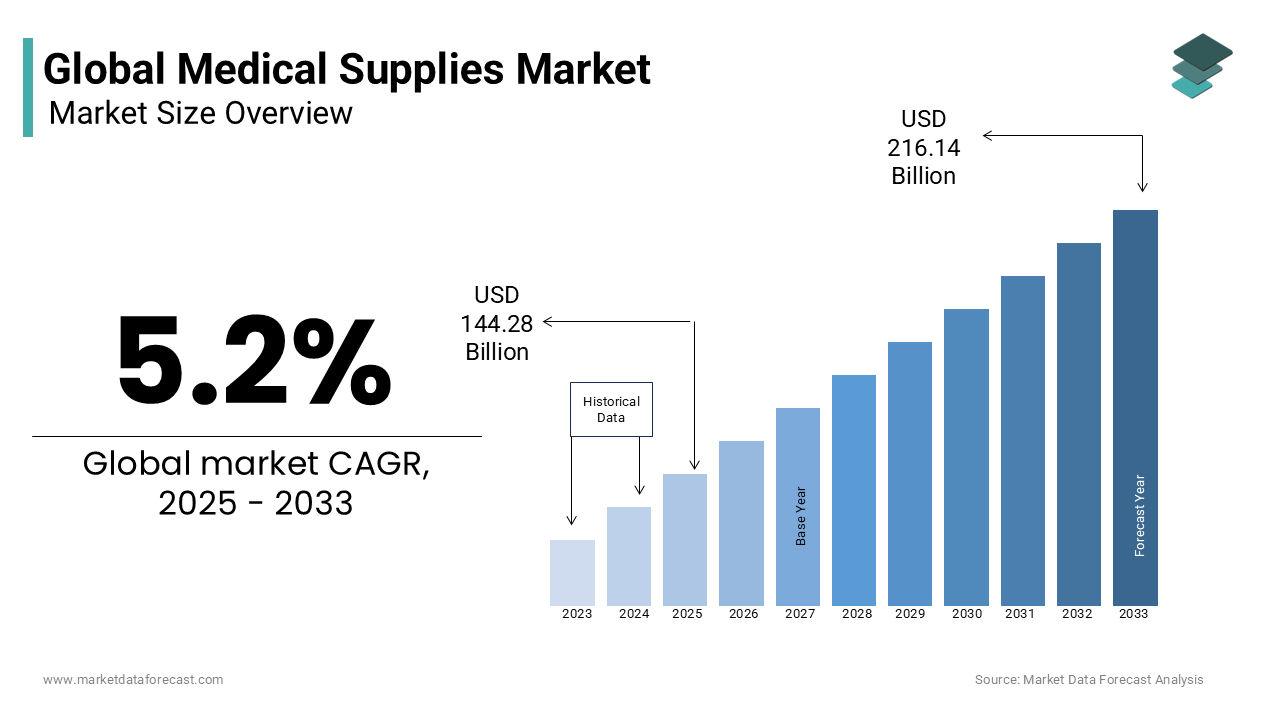
The global medical supplies market was valued at USD 137.15 billion in 2024, is estimated to reach USD 144.28 billion in 2025, and is projected to reach USD 216.14 billion by 2033, growing at a CAGR of 5.2% during the forecast period from 2025 to 2033. Market growth is driven by rising global surgical volumes, the expansion of ambulatory care centers, and strengthened infection-prevention protocols in post-pandemic healthcare systems. Increasing demand for disposable protective equipment, advanced wound care products, and diagnostic consumables is further supporting market expansion. Moreover, the rise of universal health coverage programs in emerging economies, growing chronic disease burden, and advancements in smart packaging and digital traceability technologies are enhancing supply chain efficiency and broadening access to essential medical supplies worldwide.
Key Market Trends
- Rising global surgical volumes and the expansion of ambulatory surgery centers are driving recurring demand for sterile single-use consumables.
- Increasing consumption of infection-prevention products such as gloves, gowns, and masks due to permanently heightened hygiene standards in healthcare settings.
- Rapid adoption of smart packaging, RFID, and serialized labeling to strengthen traceability and combat counterfeit medical supplies.
- Growing emphasis on sustainable materials and reduced-plastic packaging is driven by environmental regulations and hospital sustainability targets.
- Accelerating demand for home-based and long-term care supplies due to population aging and the shift toward community healthcare delivery.
Segmental Insights
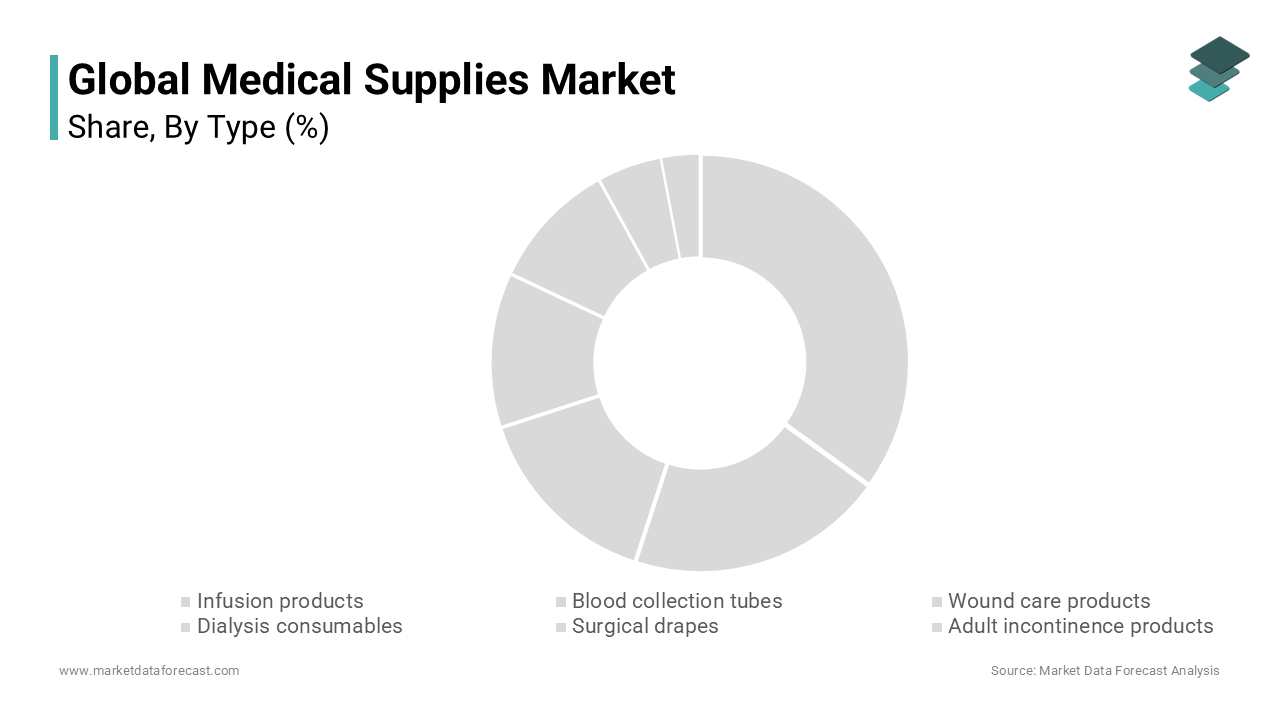
- Based on type, the wound care products segment was the largest and held a significant share of the global medical supplies market in 2024, supported by rising chronic wounds, diabetic ulcer cases, and increasing adoption of advanced dressings in hospitals and outpatient clinics.
- The blood glucose test strips segment is witnessing the fastest growth due to the rising global prevalence of diabetes and the increasing need for routine self-monitoring. Integration of test strip data with digital health platforms is further accelerating adoption.
- Based on application, the hospitals segment was the largest in 2024, driven by high procedure volumes and universal dependence on sterile consumables for surgeries, diagnostics, and emergency care. Nursing homes are emerging as the fastest-growing segment due to global population aging and rising long-term care admissions.
- Based on end-user, hospitals remain the dominant consumers of medical supplies, followed by clinics and nursing homes, which are experiencing steady growth as care delivery decentralizes.
Regional Insights
- The global medical supplies market is witnessing strong growth across major healthcare economies, supported by expanding healthcare infrastructure, rising procedure volumes, and evolving procurement standards.
- North America was the largest contributor, accounting for 36.4% of the global medical supplies market share in 2024, driven by a highly developed hospital network, large outpatient surgery capacity, and stringent infection-control mandates.
- Europe continues to represent a substantial share, supported by universal healthcare systems, centralized procurement frameworks, and elevated quality standards under the EU Medical Device Regulation.
- The Asia-Pacific region is projected to record the fastest growth, fueled by healthcare reforms, rising incomes, and large-scale government initiatives such as India’s Ayushman Bharat program and Japan’s aging-focused care infrastructure.
- Latin America is expanding steadily, supported by public hospital modernization and universal coverage initiatives in countries such as Brazil and Mexico.
- The Middle East and Africa region is also emerging as a growing market, supported by national healthcare transformation programs, facility expansions, and multilateral funding for essential medical supplies across developing nations.
Competitive Landscape
The global medical supplies market is characterized by the strong presence of multinational corporations alongside regional manufacturers supplying cost-effective essential consumables. Leading companies are emphasizing product innovation, sustainability, traceability, and resilient supply chain models to meet rising global demand. Strategic partnerships with hospitals, group purchasing organizations, and government health programs are strengthening long-term procurement channels. Prominent players in the global medical supplies market include Medtronic, Cardinal Health, BD, Johnson & Johnson, B. Braun Melsungen, Boston Scientific, Thermo Fisher Scientific, Baxter International, Avanos Medical, 3M, Smith & Nephew, ConvaTec, Abbott, Cook Medical, Merit Medical Systems, Stryker, and Terumo Corporation.
Global Medical Supplies Market Size
The global medical supplies market size was valued at USD 137.15 billion in 2024 and is estimated to reach USD 216.14 billion by 2033 from USD 144.28 billion in 2025, registering a CAGR of 5.2% from 2025 to 2033.
Medical supplies are a wide array of consumable and reusable items used in the delivery of healthcare services, ranging from basic wound dressings and examination gloves to surgical sutures, syringes, diagnostic reagents, and infection prevention materials. These products are distinct from complex medical devices in that they typically do not require external power sources or software integration, as they are indispensable for routine clinical procedures, emergency response, and public health interventions. The criticality of medical supplies extends far beyond commercial considerations, anchoring directly to patient safety and system functionality. According to the World Health Organization over 80% of essential primary healthcare services in low income countries rely on a consistent flow of basic medical supplies such as sterile gloves antiseptics and disposable injection equipment. As per the U.S. Centers for Disease Control and Prevention the use of single use sterile supplies in operating rooms has been shown to reduce surgical site infections by up to 45%, underscoring their role in infection control. The International Council of Nurses further emphasizes that shortages of fundamental items like gauze bandages and protective gowns compromise care quality and increase occupational exposure risks for frontline workers.
MARKET DRIVERS
Rising Global Surgical Volume and Expansion of Ambulatory Care Centers
The steady increase in surgical procedures worldwide driven by aging populations chronic disease prevalence and greater access to care is a primary driving factor for the growth of medical supplies market. This shift amplifies demand for single use sterile kits drapes gowns and sutures as these facilities prioritize efficiency infection control and rapid patient turnover. As per the U.S. Agency for Healthcare Research and Quality, ambulatory surgery centers in the United States conducted over 36 million procedures in 2023 alone representing a 12% annual growth rate since 2019. Each procedure requires a standardized bundle of disposable supplies with the average orthopedic outpatient surgery consuming approximately 45 individual sterile items. Furthermore, the International Consortium for Health Outcomes Measurement notes that low and middle income countries are expanding day surgery capacity to reduce hospital congestion with India’s National Health Mission reporting a 28% rise in accredited ambulatory facilities between 2021 and 2023.
Strengthened Infection Prevention Protocols in Post Pandemic Healthcare Settings
The healthcare institutions worldwide have institutionalized heightened infection control measures following the global pandemic leading to permanent increases in the consumption of disposable medical supplies. The strengthened infection prevention protocols in post pandemic healthcare settings is additionally to escalate the growth of medical supplies market. According to the U.S. Centers for Disease Control and Prevention, 92% of acute care hospitals in the United States now enforce universal use of gloves gowns and face protection during all patient interactions involving potential exposure with a 35% increase from pre 2020 protocols. As per the European Centre for Disease Prevention and Control, national guidelines in 24 European Union member states now mandate double gloving and disposable isolation gowns for all contact precautions regardless of pathogen type. The World Health Organization estimates that global consumption of medical gloves alone rose from 200 billion units annually in 2019 to over 350 billion in 2023 driven by routine rather than emergency use. Additionally, the Joint Commission International has updated its hospital accreditation standards to require auditable inventory logs for sterile supplies as part of infection risk management. These embedded behavioral and regulatory shifts ensure that elevated usage levels are not temporary but represent a new baseline for clinical hygiene thereby creating durable demand for gloves masks drapes and other single use barrier products across public and private healthcare systems.
MARKET RESTRAINTS
Stringent Regulatory Compliance and Prolonged Product Approval Timelines
The complex and varying regulatory requirements across jurisdictions which delay product introductions and increase development costs is additionally to hamper the growth of medical supplies market. In the United States the Food and Drug Administration classifies many medical supplies including surgical gloves wound dressings and syringes as Class II devices requiring 510(k) premarket notifications that can take 180 to 270 days for review. According to the U.S. Government Accountability Office, nearly 40% of 510(k) submissions for sterile consumables in 2023 received additional information requests causing average approval delays of 4.2 months. Emerging markets add further complexity, where India’s Central Drugs Standard Control Organization now mandates local clinical evaluations for certain imported sterile items extending time to market by up to 14 months. These regulatory hurdles disproportionately affect small and medium enterprises which lack dedicated compliance teams, stifling innovation and limiting product diversity.
Environmental Concerns and Waste Management Pressures from Single Use Products
The environmental impact of disposable medical supplies as healthcare systems confront mounting waste volumes and sustainability mandates is restraining the growth of medical supplies market. Single use items such as gloves gowns and syringes constitute over 25% of total hospital waste, according to the World Health Organization with the U.S. Environmental Protection Agency estimating that healthcare facilities generate more than 5.9 million tons of medical waste annually 85% of which is non-hazardous but still incinerated or landfilled. A global coalition of health and environmental organizations hospitals in high income countries produce an average of 14 kilograms of waste per patient per day largely driven by disposable supplies. The medical plastic waste increased by 30% between 2019 and 2023 prompting the European Union to include single use medical plastics in its Circular Economy Action Plan review. Although, reusables are not always clinically feasible regulatory bodies like the U.S. Food and Drug Administration maintain strict sterility standards that discourage material substitution
MARKET OPPORTUNITIES
Expansion of Universal Health Coverage Driving Primary Care Infrastructure in Emerging Economies
The global push toward universal health coverage is unprecedented investment in primary care networks across low- and middle-income countries, which is creating a substantial opportunity for the growth of medical supplies market. As per the World Health Organization, 63 countries have adopted national universal health coverage roadmaps since 2020, collectively aiming to extend basic health services to over 1.2 billion previously underserved people. According to the World Bank, over 18,000 new primary healthcare facilities were constructed or upgraded in Sub-Saharan Africa and South Asia between 2021 and 2023, each requiring baseline inventories of examination gloves wound dressings diagnostic test strips and sterile injection equipment. India’s Ayushman Bharat program alone has established 150,000 Health and Wellness Centers nationwide, with the Ministry of Health mandating monthly supply quotas that include 500 pairs of gloves and 200 sterile syringes per facility.
Integration of Smart Packaging and Traceability Technologies Enhancing Supply Chain Integrity
The adoption of digital traceability solutions in medical supply logistics to address counterfeit risks stockouts and expiration waste is certainly to pose new opportunities for the growth of medical supplies market. Technologies, such as QR codes RFID tags and blockchain enabled serialization are being embedded into packaging to provide real time visibility from manufacturer to point of care. According to the U.S. Food and Drug Administration the Drug Supply Chain Security Act now requires full electronic traceability for all medical products including supplies like surgical kits and diagnostic reagents by 2024, driving widespread adoption of smart labeling. In the European Union, the Falsified Medicines Directive has been extended to cover critical medical supplies by prompting manufacturers to integrate tamper evident and trackable packaging. Additionally, the World Health Organization reports that pilot programs using SMS based expiry alerts in Nigeria and Indonesia reduced supply wastage by 22%. These innovations not only enhance patient safety but also create value added differentiation for suppliers capable of delivering digitally enabled, auditable product ecosystems
MARKET CHALLENGES
Volatile Raw Material Costs and Geopolitical Disruptions in Supply Chains
The medical supplies persistent instability due to fluctuating prices and constrained availability of raw materials, such as nitrile latex polypropylene and medical grade plastics, which are heavily influenced by petrochemical markets and geopolitical tensions. The volatile raw material costs and geopolitical disruptions in supply chains is challenging the growth of medical supplies market. According to the International Council of Chemical Associations, the price of nitrile butadiene rubber with a key component in exam gloves increased by 38% between 2021 and 2023, due to supply chain bottlenecks and export restrictions from major producing nations like Malaysia and Thailand. As per the U.S. Bureau of Labor Statistics, the producer price index for medical nonwoven fabrics rose by 22% in 2022 alone, which is directly impacting the cost of gowns drapes and masks. Hospitals and group purchasing organizations increasingly report delayed deliveries and forced substitutions, undermining clinical planning.
Inconsistent Quality Standards and Proliferation of Substandard Products in Global Markets
The widespread circulation of non-compliant or substandard products in regions with weak regulatory oversight is one of the challenges for the growth of medical supplies market. According to the World Health Organization, an estimated 10% of medical products in low and middle income countries fail to meet quality standards, with disposable supplies such as gloves syringes and wound dressings among the most commonly falsified items. These deficiencies pose direct clinical risks, where a study published in The Lancet Global Health linked substandard sterile supplies to a 3.4 fold increase in post operative infection rates in Nigerian hospitals. While initiatives like the WHO Prequalification Program aim to vet suppliers, enforcement remains fragmented. The absence of harmonized global quality benchmarks allows unscrupulous manufacturers to exploit regulatory gaps, eroding confidence among healthcare providers and complicating procurement decisions even in high income markets where counterfeit goods increasingly infiltrate secondary distribution channels
REPORT COVERAGE
| REPORT METRIC | DETAILS |
| Market Size Available | 2024 to 2033 |
| Base Year | 2024 |
| Forecast Period | 2025 to 2033 |
| Segments Analysed | By Type, Application, End-User, and Region |
| Various Analyses Covered | Global, Regional & Country Level Analysis, Segment-Level Analysis, Drivers, Restraints, Opportunities, Challenges, PESTLE Analysis, Porter's Five Forces Analysis, Competitive Landscape, Analyst Overview on Investment Opportunities |
| Regions Analysed | North America, Europe, Asia Pacific, Latin America, the Middle East, and Africa |
| Key Market Players | Medtronic, Cardinal Health, Inc., BD, Johnson & Johnson, B. Braun Melsungen AG, Boston Scientific Corporation, Thermo Fisher Scientific, Inc., Baxter International, Inc., Avanos Medical, Inc., 3M, Smith & Nephew, ConvaTec Group Plc., Abbott, Cook Medical, Merit Medical Systems, Stryker, Terumo Corporation |
SEGMENTAL ANALYSIS
By Type Insights
The wound care products segment was the largest by holding 24.3% of the global medical supplies market share in 2024 from the universal and recurring need for advanced dressings across acute chronic and surgical wound types, driven by rising diabetes prevalence aging populations and hospital acquired pressure injuries. As per the U.S. Agency for Healthcare Research and Quality, pressure injuries affect more than 2.5 million patients annually in American hospitals alone, with each Stage II or higher wound necessitating weekly dressing changes using advanced materials. The public healthcare systems in Germany France and the United Kingdom now reimburse up to 80% of costs for evidence based wound care products, accelerating adoption. Furthermore, the shift toward outpatient wound clinics with over 3,200 now operate in the United States that ensures consistent consumption outside hospital settings.
The blood glucose test strips segment is swiftly emerging at a fastest CAGR of 9.7% from 2025 to 2033 with the escalating global burden of diabetes and the critical role of self-monitoring in glycemic control. As per the International Diabetes Federation, the number of adults with diabetes is projected to rise to 783 million by 2045, with over 80% requiring regular blood glucose testing. Government programs are amplifying access, where India’s National Programme for Prevention and Control of Cancer Diabetes Cardiovascular Diseases and Stroke now provides subsidized test strips at over 12,000 public health centers nationwide. Additionally, the integration of test strip data with digital health platforms, such as Apple Health and Roche’s mySugr app that enhances patient adherence and creates recurring consumption patterns
By Application Insights
The hospitals segment was the largest by holding 58.3% of the global medical supplies market share in 2024 with the high volume and complexity of care delivered within acute care settings, which require a continuous and diverse inventory of sterile consumables ranging from surgical drapes and infusion sets to wound dressings and diagnostic reagents. According to the U.S. Centers for Disease Control and Prevention, the average acute care hospital performs over 12,000 surgical procedures annually, each consuming dozens of single use items. As per the Organisation for Economic Co-operation and Development hospitals in high income countries account for nearly 70% of total national health expenditure, with supply costs constituting 18 to 22% of operational budgets. The European Hospital and Healthcare Federation further notes that European hospitals maintain on average 3,500 distinct medical supply SKUs to support multidisciplinary services from emergency departments to intensive care units. Additionally, stringent infection control protocols post pandemic have institutionalized higher usage rates of gloves gowns and disposable equipment.
The nursing homes segment is expected to witness a fastest CAGR of 10.3% from 2025 to 2033 owing to the rapid global population aging and the shift toward community based long term care models. As per the United Nations World Population Prospects 2022 the number of people aged 65 and older is projected to double to 1.6 billion by 2050 with over 70% residing in low- and middle-income countries where institutional care is expanding. In the United States, the Centers for Medicare and Medicaid Services reports that over 1.3 million residents live in skilled nursing facilities requiring daily use of incontinence products wound care dressings and infection prevention supplies. The European Commission’s 2023 Ageing Report indicates that 28 EU member states have increased public funding for residential elderly care by an average of 9% annually since 2021. Furthermore, regulatory reforms such as the U.S. Nursing Home Reform Act now mandate minimum staffing and hygiene standards that directly increase per resident supply consumption
By End-User Insights
The hospital segment is estimated to occupy the largest share among other segments during the forecast period. Hospitals now specialize in treating various diseases; thus, there is a need for a large variety and quantity of medical supplies. Clinics have the second largest market share and are expected to grow at a reasonable rate, but some clinics specialize in treating one type of disease; thus, the growth is restricted. Nursing homes also have a significant share, but it is low due to their ability to treat wounds better.
REGIONAL ANALYSIS
North America Medical Supplies Market Analysis
North America was the largest by holding 36.4% of the medical supplies market share in 2024. The United States growth is likely to grow with its highly developed hospital network extensive outpatient surgery centers and stringent infection control mandates. As per the American Hospital Association, the U.S. operates over 6 000 registered hospitals consuming an estimated 45 billion medical gloves and 1.2 billion surgical kits annually. Canada complements this demand through its publicly funded healthcare system which mandates standardized supply kits for all provincial long term care facilities under the 2023 National Long Term Care Standards Framework. Additionally, the U.S. Food and Drug Administration’s enforcement of unique device identification for certain high risk supplies ensures traceability and quality control.
Europe Medical Supplies Market Analysis
Europe medical supplies market was positioned second by capturing 23.4% of share in 2024. The region’s demand is sustained by universal healthcare coverage aging populations and centralized procurement policies across member states. Germany and France lead national consumption. Germany’s Federal Statistical Office, acute care hospitals performed inpatient procedures in 2023 each requiring standardized sterile supply bundles. The United Kingdom’s National Health Service operates one of the world’s largest group purchasing organizations sourcing distinct medical supply items annually under framework agreements that prioritize quality and cost efficiency. Furthermore, the EU Medical Device Regulation has elevated quality standards requiring enhanced documentation for sterile products which favors established manufacturers.
Asia Pacific Medical Supplies Market Analysis
The Asia Pacific medical supplies market growth is likely to grow with prominent growth opportunities during the forecast period. Rapid urbanization rising incomes and government led healthcare reforms are transforming medical supply demand across key economies. India’s Ayushman Bharat scheme has established over 150,000 Health and Wellness Centers requiring monthly replenishment of basic supplies including gloves syringes and diagnostic test strips. As per the Ministry of Health, Japan over 80% of medical procedures occur in outpatient settings where single use supplies are mandated for infection control.
Latin America Medical Supplies Market Analysis
Latin America medical supplies market growth is likely to grow in next coming years with prominent growth opportunities, such as national efforts to achieve universal health coverage and modernize public hospitals. Brazil leads adoption through its Unified Health System which operates over 7 000 public hospitals and mandates standardized supply kits for all primary care units. Mexico’s Ministry of Health reports that federal procurement of sterile gloves and wound dressings increased in 2023 to support expanded surgical capacity in state hospitals.
Middle East and Africa Medical Supplies Market Analysis
The Middle East and Africa medical supplies market growth is likely to grow eventually in coming years with the experiencing targeted growth through sovereign health transformation agendas and multilateral support. Saudi Arabia’s Vision 2030 includes the construction of 300 new primary care centers by 2025 each requiring baseline medical supply inventories as specified by the Ministry of Health. The United Arab Emirates enforces mandatory use of WHO prequalified supplies in all public hospitals under its 2023 National Infection Control Policy. The African Union’s Partnership for Accelerating Universal Health Coverage has secured 1.8 billion US dollars to stock essential commodities across 20 member states.
COMPETITIVE LANDSCAPE
The Medical supplies market features intense competition among multinational corporations regional manufacturers and specialized niche players. Competition is driven by product quality regulatory compliance supply chain reliability and cost efficiency rather than brand alone. Large players like Medline and Becton Dickinson leverage scale and logistics to dominate hospital contracts while smaller innovators focus on advanced wound care or eco-friendly alternatives to capture premium segments. The market is highly fragmented in emerging regions where local producers supply basic items but struggle with quality consistency. Regulatory scrutiny has intensified globally with agencies demanding greater transparency in material sourcing and sterilization processes. At the same time healthcare systems increasingly prioritize sustainability leading to demand for recyclable or reduced plastic packaging. This dynamic environment encourages continuous innovation in materials science digital integration and circular economy models as companies strive to balance clinical performance environmental responsibility and operational resilience in an essential yet evolving sector
KEY MARKET PLAYERS
Some of the companies that are playing a dominating role in the global medical supplies market include
- Medtronic
- Cardinal Health, Inc.
- BD
- Johnson & Johnson
- B. Braun Melsungen AG
- Boston Scientific Corporation
- Thermo Fisher Scientific, Inc.
- Baxter International, Inc.
- Avanos Medical, Inc.
- 3M
- Smith & Nephew
- ConvaTec Group Plc.
- Abbott
- Cook Medical
- Merit Medical Systems
- Stryker
- Terumo Corporation
Top Players in the Market
Medline Industries LP
Medline Industries LP is a leading global manufacturer and distributor of medical supplies offering an extensive portfolio that includes surgical drapes wound care products gloves and incontinence solutions. The company operates one of the largest private logistics networks in healthcare enabling rapid delivery to over 400 000 healthcare facilities worldwide. Recently Medline has expanded its advanced wound care segment through strategic partnerships with biotech firms to incorporate antimicrobial and moisture managing technologies into dressings. It also launched a sustainability initiative to reduce single use plastic in packaging while maintaining sterility standards. These moves reinforce Medline’s role as a vertically integrated end to end solutions provider that combines product innovation with supply chain resilience to meet evolving clinical and environmental demands.
Becton Dickinson and Company
Becton Dickinson and Company is a major contributor to the medical supplies market through its comprehensive range of infusion products blood collection systems and diagnostic consumables. The company leverages its global regulatory expertise to ensure compliance with diverse regional standards while maintaining high quality manufacturing protocols. In recent years, BD has enhanced its smart supply offerings by integrating RFID tracking into blood collection tubes and infusion sets to support hospital inventory management. It also expanded production capacity for safety engineered syringes in response to global needlestick prevention mandates.
3M Company
3M Company plays a pivotal role in the medical supplies market with its portfolio of advanced wound care dressings surgical drapes and infection prevention products under the 3M Health Care division. The company is renowned for its science-based material innovations including hydrocolloid and antimicrobial technologies that accelerate healing and reduce complications. Recently 3M has focused on sustainable product design by introducing recyclable packaging and reducing water usage in manufacturing processes. It also collaborated with hospital systems to develop evidence-based protocols for pressure injury prevention using its specialty dressings. These initiatives demonstrate 3M’s commitment to clinical efficacy environmental responsibility and partnership driven care improvement reinforcing its global relevance in high performance medical consumables.
Top Strategies Used by the Key Market Participants
Key players in the Medical supplies market primarily pursue vertical integration to secure raw material sourcing and control quality across manufacturing and distribution channels. Companies invest heavily in regulatory compliance and global certification to navigate diverse regional standards efficiently. Strategic partnerships with healthcare providers and group purchasing organizations enable long term supply agreements and co development of application specific solutions. Innovation in sustainable packaging and biodegradable materials addresses growing environmental concerns without compromising sterility. Additionally, firms are embedding digital traceability features such as QR codes and RFID tags into products to enhance supply chain transparency combat counterfeiting and support hospital inventory management systems thereby differentiating their offerings in a highly competitive landscape.
MARKET SEGMENTATION
This research report on the global medical supplies market has been segmented and sub-segmented based on type, application, end-user, and region.
By Type
- Infusion products
- Blood collection tubes
- Wound care products
- Dialysis consumables
- Surgical drapes
- Adult incontinence products
- Blood glucose test strips
By Application
- Urology
- Anesthesia
- Wound care
- Sterilization
By End-User
- Hospitals
- Clinics
- Nursing Homes
By Region
- North America
- Europe
- Asia Pacific
- Latin America
- The Middle East and Africa