- Product Description Description
- Table of Contents TOC
- List of Table & Figure LOT
- Get Free Sample PDF Sample PDF
Market Size, 2025
$55.06 BnMarket Estimate, 2026
$61.56 BnMarket Forecast, 2034
$150.26 BnCAGR, 2026–2034
11.8%Executive Summary: Hospital Supplies Market
- Market Scope: Global hospital supplies market analysis covering product types, consumable categories, regional leadership frameworks, and healthcare infrastructure adoption metrics.
- Market Valuation: Valued at USD 55.06 billion in 2025, estimated at USD 61.56 billion in 2026, and projected to reach USD 150.27 billion by 2034, registering a CAGR of 11.8% from 2026 to 2034.
- Primary Growth Drivers: Increasing prevalence of chronic diseases, rising hospital admissions, expanding healthcare infrastructure, and growing awareness of hospital-acquired infections (HAIs). Key operational trends include the rapid adoption of infection-control products, disposable medical consumables, and government healthcare expenditure.
Key Market Segment Metrics (2026–2034)
| Category | Leading Segment (2025 Position) | Fastest-Growing Segment |
|---|---|---|
| By Product Type | Disposable hospital supplies (dominated with a 46% share, driven by stringent infection prevention protocols) | Advanced infection-control products and smart medical devices |
| By Consumable Category | Syringes and needles segment (accounted for 23% of the global market) | Single-use medical consumables and digital hospital solutions |
| By End-User Setting | Hospitals and ambulatory care centers | Modern outpatient and specialized care facilities |
| By Region / Country | North America (held the largest regional share due to advanced infrastructure and high expenditure) | Asia-Pacific (projected to witness the fastest growth across China, India, and Japan) |
Major Market Players & Market Structure
Market Structure: Competitive global healthcare landscape focused on product innovation, advanced sterilization technologies, disposable medical consumables, infection prevention solutions, strategic acquisitions, manufacturing expansion, and sustainable healthcare products.
Key Companies: Advanced Sterilization Products Services Inc., Becton, Dickinson and Company (BD), Cardinal Health, Inc., Kimberly-Clark Corporation, 3M Health Care, and B. Braun Melsungen AG.
 Download Free Sample Report
Global Hospital Supplies Market Size
The global hospital supplies market size was valued at USD 55.06 billion in 2025. The hospital supplies market is forecasted to be worth USD 150.26 billion by 2034 from USD 61.56 billion in 2026, growing at a CAGR of 11.8% during the forecast period.
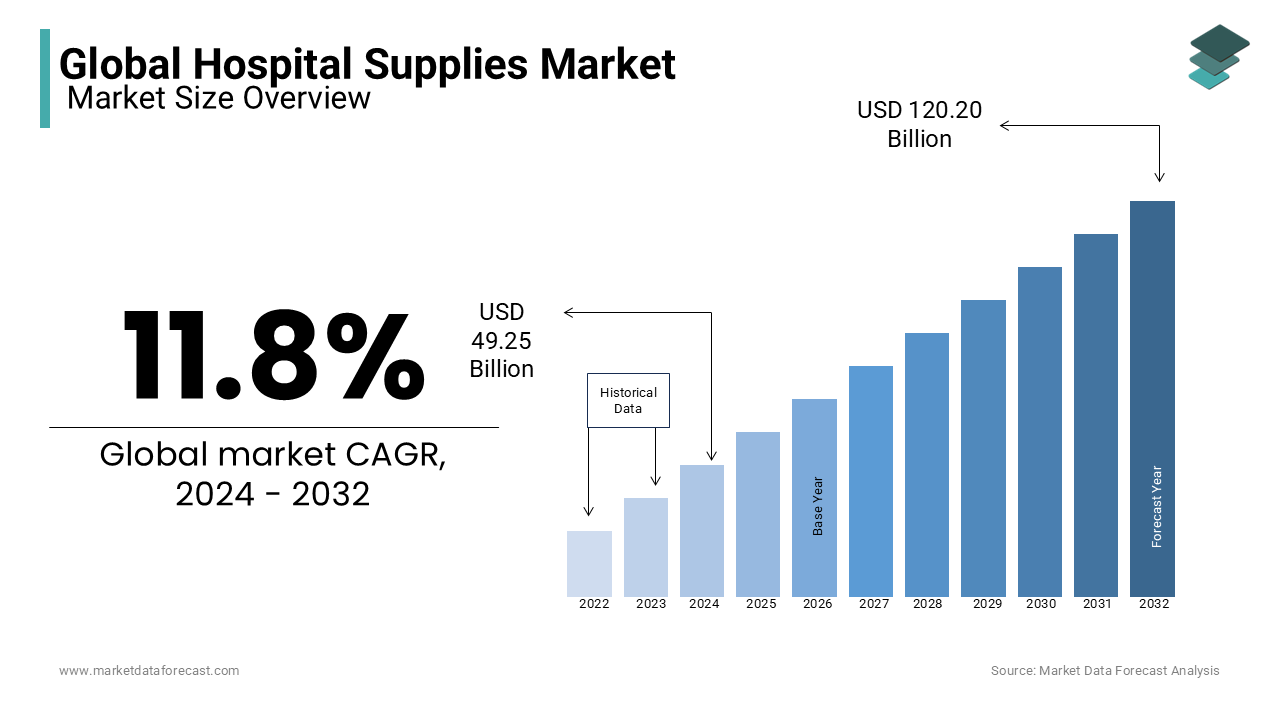
Hospital supplies are a vast array of consumable and durable goods essential for the daily operations of healthcare facilities including surgical instruments, personal protective equipment, diagnostic kits, and patient care items. These supplies form the backbone of clinical workflows, ensuring hygiene, safety, and effective treatment delivery across emergency rooms, operating theatres and intensive care units. The sector is characterized by high volume consumption and strict regulatory standards governing quality and sterility. According to the World Health Organization, healthcare-associated infections affect hundreds of millions of patients globally each year, underscoring the critical importance of reliable infection control supplies such as gloves, masks, and disinfectants. Furthermore, according to the Centers for Disease Control and Prevention, approximately 1 in 31 hospital patients has at least one healthcare-associated infection on any given day, highlighting the continuous demand for sterile products. As healthcare systems expand to meet the needs of aging populations and rising chronic disease prevalence, the consumption of medical disposables increases proportionally. As per the European Centre for Disease Prevention and Control, improved hand hygiene compliance can significantly reduce infection rates. This correlation between supply availability and patient outcomes drives hospitals to maintain robust inventory levels. The market also faces pressure to adopt sustainable practices as medical waste generation rises with increased usage of single-use items. Consequently, the industry is evolving toward eco-friendly materials and efficient supply chain management to balance operational needs with environmental responsibility while ensuring uninterrupted patient care.
MARKET DRIVERS
Prevalence of Healthcare Associated Infections and Strict Hygiene Protocols
The escalating incidence of healthcare-associated infections is primarily fuelling the growth of the global hospital supplies market, which is compelling facilities to adhere to stringent hygiene protocols. Hospitals are under immense pressure to prevent the spread of multidrug-resistant organisms and viruses, which necessitates the extensive use of personal protective equipment and sterilization products. According to the World Health Organization, healthcare-associated infections are a major patient safety issue affecting millions of patients worldwide, leading to prolonged hospital stays and increased mortality rates. To combat this, healthcare providers implement rigorous hand hygiene and isolation precautions that rely heavily on disposable gloves, gowns, masks, and antiseptic solutions. According to the Centers for Disease Control and Prevention, proper use of personal protective equipment can reduce pathogen transmission by up to 63% in clinical settings. Additionally, regulatory bodies such as the Joint Commission mandate strict compliance with infection control standards, requiring hospitals to maintain adequate stockpiles of sterile supplies. The COVID-19 pandemic further amplified this trend, establishing new norms for universal masking and enhanced cleaning procedures that persist in post-pandemic healthcare environments. As awareness of infection risks grows among patients and staff, the demand for high-quality disposable supplies continues to rise. Hospitals prioritize suppliers who can guarantee consistent quality and availability to mitigate the risk of outbreaks. This focus on patient safety and regulatory compliance ensures steady growth in the consumption of essential hospital supplies, particularly in high-risk departments such as intensive care and surgery.
Increasing Volume of Surgical Procedures and Hospital Admissions
The growing number of surgical procedures and hospital admissions globally is further propelling the hospital supplies market growth. An aging population and the rising burden of chronic diseases such as diabetes and cardiovascular conditions lead to higher rates of medical interventions requiring extensive use of surgical kits, sutures, drapes, and anesthesia supplies. According to the Organisation for Economic Co-operation and Development, the average number of hip and knee replacements has increased substantially in member countries, reflecting the surge in orthopedic surgeries. Each procedure generates a predictable demand for sterile disposables and specialized instruments, driving consistent procurement cycles for hospitals. Furthermore, the expansion of outpatient surgical centers adds to the overall volume of supplies consumed as these facilities operate with high turnover rates. According to the American Hospital Association, over 27 million surgeries are performed annually in the United States alone, creating a massive baseline demand for operational supplies. As medical technology advances, minimally invasive procedures become more common, requiring specific specialized supplies such as laparoscopic trocars and endoscopic accessories. The shift toward value-based care also encourages hospitals to optimize supply usage to reduce costs while maintaining quality. However, the sheer volume of procedures ensures that the consumption of basic and advanced hospital supplies remains robust. This structural demand is reinforced by the need for redundancy in supply chains to prevent disruptions during peak periods or emergencies.
MARKET RESTRAINTS
Stringent Regulatory Compliance and Quality Standards
Strict regulatory frameworks governing the manufacturing and distribution of hospital supplies is a significant restraint to market entry and operational flexibility. Manufacturers must comply with rigorous standards set by agencies such as the Food and Drug Administration in the United States and the European Medicines Agency in Europe to ensure product safety and efficacy. According to the International Organization for Standardization, medical device regulations require extensive documentation, clinical testing, and quality management system certification, which can cost small companies up to $40,000 to implement. For small and medium-sized enterprises, these regulatory burdens can be prohibitive, limiting innovation and market competition. Additionally, changes in regulations such as the European Union Medical Device Regulation have introduced stricter requirements for clinical evidence and post-market surveillance, forcing companies to re-evaluate their product portfolios. According to the Healthcare Distribution Alliance, compliance complexities often lead to supply chain delays as manufacturers navigate varying international standards. Hospitals face challenges in verifying the compliance status of numerous suppliers, adding administrative overhead to procurement processes. Non-compliance can result in product recalls, legal penalties, and reputational damage, discouraging rapid product launches. The need for continuous monitoring and adaptation to evolving regulatory landscapes requires significant investment in legal and quality assurance resources. This regulatory intensity slows the introduction of new products and increases the cost of goods sold, ultimately impacting the affordability and availability of certain hospital supplies, particularly in resource-constrained settings.
Volatility in Raw Material Prices and Supply Chain Disruptions
Fluctuations in the prices of key raw materials such as plastics, latex, and steel, coupled with global supply chain disruptions, pose a major restraint to the hospital supplies market. The production of disposable items like syringes, gloves, and IV bags relies heavily on petrochemical derivatives whose prices are subject to global oil market volatility. According to the International Monetary Fund, commodity price shocks can significantly impact manufacturing costs, leading to margin compression for suppliers. Additionally, geopolitical tensions and trade restrictions have exposed vulnerabilities in global supply chains, which are causing shortages of critical components. According to the World Trade Organization, trade barriers and logistics bottlenecks have led to increased lead times and freight costs, affecting the timely delivery of hospital supplies. During the pandemic, many hospitals experienced severe shortages of personal protective equipment due to disrupted manufacturing and export bans, highlighting the fragility of just-in-time inventory models. These disruptions force hospitals to hold larger safety stocks, tying up capital and increasing storage costs. Furthermore, the reliance on single-source suppliers for specialized items creates risks of stockouts if production halts occur. Manufacturers struggle to pass on increased costs to healthcare providers who operate under fixed reimbursement rates, leading to financial strain. This economic instability complicates long-term planning and procurement strategies, which is making it difficult for hospitals to maintain consistent supply levels without incurring excessive costs or risking patient care interruptions.
MARKET OPPORTUNITIES
Adoption of Sustainable and Eco Friendly Medical Products
The growing emphasis on environmental sustainability presents a substantial opportunity for the hospital supplies market as healthcare facilities seek to reduce their carbon footprint and medical waste. Hospitals generate significant amounts of waste, primarily from single-use plastics and disposable items, prompting a shift toward biodegradable and recyclable alternatives. According to the Health Care Without Harm initiative, the healthcare sector is responsible for approximately 4.4% of global net greenhouse gas emissions, driving the need for greener practices. Manufacturers are responding by developing products made from plant-based materials such as corn starch bioplastics and recycled fibers that offer comparable performance to traditional plastics. As per the European Commission’s Circular Economy Action Plan, there is a push to adopt sustainable products in public procurement, including healthcare, providing a favorable policy environment for eco-friendly suppliers. Hospitals are increasingly incorporating sustainability criteria into their purchasing decisions, favoring vendors who demonstrate commitment to environmental stewardship. This trend opens new revenue streams for companies that innovate in green chemistry and waste reduction technologies. Additionally, reusable surgical textiles and instruments are gaining traction as cost-effective and environmentally responsible alternatives to disposables. By aligning with corporate social responsibility goals, healthcare providers can enhance their brand reputation while contributing to global sustainability targets. This shift not only addresses environmental concerns but also appeals to environmentally conscious patients and stakeholders, which is creating a competitive advantage for early adopters of sustainable hospital supplies.
Integration of Digital Inventory Management and Smart Supply Chains
The integration of digital technologies such as Internet of Things sensors, radio frequency identification tags and artificial intelligence into inventory management systems offers a promising opportunity for the hospital supplies market. These technologies enable real-time tracking of supply levels, usage patterns, and expiration dates, which is reducing waste and preventing stockouts. According to the Healthcare Information and Management Systems Society, automated inventory systems can reduce supply costs by up to 20% by optimizing order quantities and minimizing manual errors. Smart shelves equipped with weight sensors can automatically trigger reorder requests when stock falls below predefined thresholds to ensure continuous availability of critical items. Hospitals are increasingly adopting cloud-based platforms that provide visibility across multiple locations, facilitating centralized procurement and distribution. The use of predictive analytics allows facilities to forecast demand based on historical data, seasonal trends and patient admission rates, which is improving planning accuracy. Furthermore, blockchain technology enhances supply chain transparency by verifying the authenticity and origin of medical products, combating counterfeiting. These digital solutions streamline operational workflows, allowing clinical staff to focus more on patient care rather than logistical tasks. As healthcare systems strive for greater efficiency and cost containment, the demand for smart supply chain solutions grows. Suppliers who offer integrated digital services alongside physical products can differentiate themselves and build stronger partnerships with healthcare providers seeking data-driven operational improvements.
MARKET CHALLENGES
Counterfeit Products and Quality Assurance Risks
The proliferation of counterfeit hospital supplies poses a significant challenge to the market, which is threatening patient safety and undermining trust in legitimate manufacturers. Counterfeit items such as substandard gloves, fake medications, and non-sterile surgical instruments often enter the supply chain through unauthorized distributors or online marketplaces. According to the World Health Organization, approximately 10% of medical products in low- and middle-income countries are substandard or falsified, posing serious health risks. These inferior products may fail to provide adequate protection against infections or malfunction during critical procedures, leading to adverse patient outcomes. Hospitals face difficulties in distinguishing genuine products from counterfeits, especially when sourcing from complex global networks. The lack of standardized tracking systems in some regions exacerbates this issue, allowing illicit goods to circulate undetected. Regulatory agencies struggle to enforce anti-counterfeit measures across borders due to varying legal frameworks and limited resources. The presence of counterfeit goods erodes brand equity for reputable manufacturers and increases liability risks for healthcare providers. Ensuring supply chain integrity requires significant investment in authentication technologies such as holograms, serial numbers, and blockchain verification. However, implementing these measures across diverse supplier bases is challenging and costly. Until robust global enforcement mechanisms are established, the threat of counterfeit supplies will remain a persistent challenge, requiring vigilance and collaboration among manufacturers, regulators, and healthcare providers.
Shortages and Operational Strain on Procurement Teams
Shortages of skilled personnel in procurement and supply chain management are further challenging the expansion of the global hospital supplies market. Healthcare facilities are experiencing widespread staffing crises which extend beyond clinical roles to include administrative and logistical positions. According to American Hospital Association data, job vacancies for various hospital staff roles have increased by up to 30%, which impacts the efficiency of procurement and inventory management. This labor shortage leads to increased workload for existing employees, resulting in burnout and higher error rates in ordering and inventory tracking. Inadequate staffing can cause delays in processing orders, managing vendor relationships, and implementing new supply chain technologies. The complexity of modern hospital supply chains requires specialized knowledge in contract negotiation, data analysis, and regulatory compliance, which is scarce in the current labor market. Additionally, high turnover rates disrupt continuity and institutional knowledge, making it difficult to maintain optimal inventory levels. Hospitals often rely on temporary staff or external consultants to fill gaps, which increases operational costs and reduces efficiency. The strain on procurement teams limits their ability to strategically source supplies, negotiate better contracts, or explore innovative solutions. Addressing this human capital challenge requires investment in training, automation, and workforce development programs. Until the staffing crisis is resolved, hospitals will continue to face operational inefficiencies that impact the reliability and cost-effectiveness of their supply chains.
REPORT COVERAGE
| REPORT METRIC | DETAILS |
| Market Size Available | 2025 to 2034 |
| Base Year | 2025 |
| Forecast Period | 2026 to 2034 |
| Segments Covered | By Product and Region |
| Various Analyses Covered | Global, Regional & Country Level Analysis, Segment-Level Analysis; DROC, PESTLE Analysis, Porter's Five Forces Analysis, Competitive Landscape, Analyst Overview of Investment Opportunities |
| Regions Covered | North America, Europe, APAC, Latin America, Middle East & Africa |
| Market Leader Profiled | Advanced Sterilization Products Services Inc., Dickinson and Company, Cardinal Health, Inc., Kimberly-Clark Corporation, Becton, 3M Health Care, and B. Braun Melsungen AG. |
SEGMENTAL ANALYSIS
By Product Insights
The disposable hospital supplies segment dominated the market by capturing the major share of the global market in 2025 due to their critical role in infection prevention and the high-volume consumption across all healthcare settings. This category includes gloves, masks, gowns, drapes, and bed linens, which are essential for maintaining sterile environments during patient care. According to the Centers for Disease Control and Prevention, healthcare-associated infections affect approximately 1 in 31 hospital patients on any given day, necessitating the rigorous use of single-use items to break the chain of transmission. The universal adoption of standard precautions that mandate the use of personal protective equipment for every patient interaction regardless of diagnosis is further aiding the dominance of disposable segment in the global market. The World Health Organization emphasizes that hand hygiene and barrier protection are the most effective measures to reduce pathogen spread, driving consistent demand for disposable gloves and aprons. Additionally, the rise in surgical procedures globally increases the consumption of sterile drapes and gowns, as each operation requires a fresh set of disposables to ensure patient safety. The convenience of disposal eliminates the costs and logistical challenges associated with reprocessing reusable textiles, which is making disposables the preferred choice for busy clinical environments. Regulatory mandates such as those from the Occupational Safety and Health Administration further enforce the use of disposable protective gear to safeguard healthcare workers from bloodborne pathogens. This regulatory and clinical imperative ensures that disposable supplies remain the largest and most stable component of the hospital supplies market.
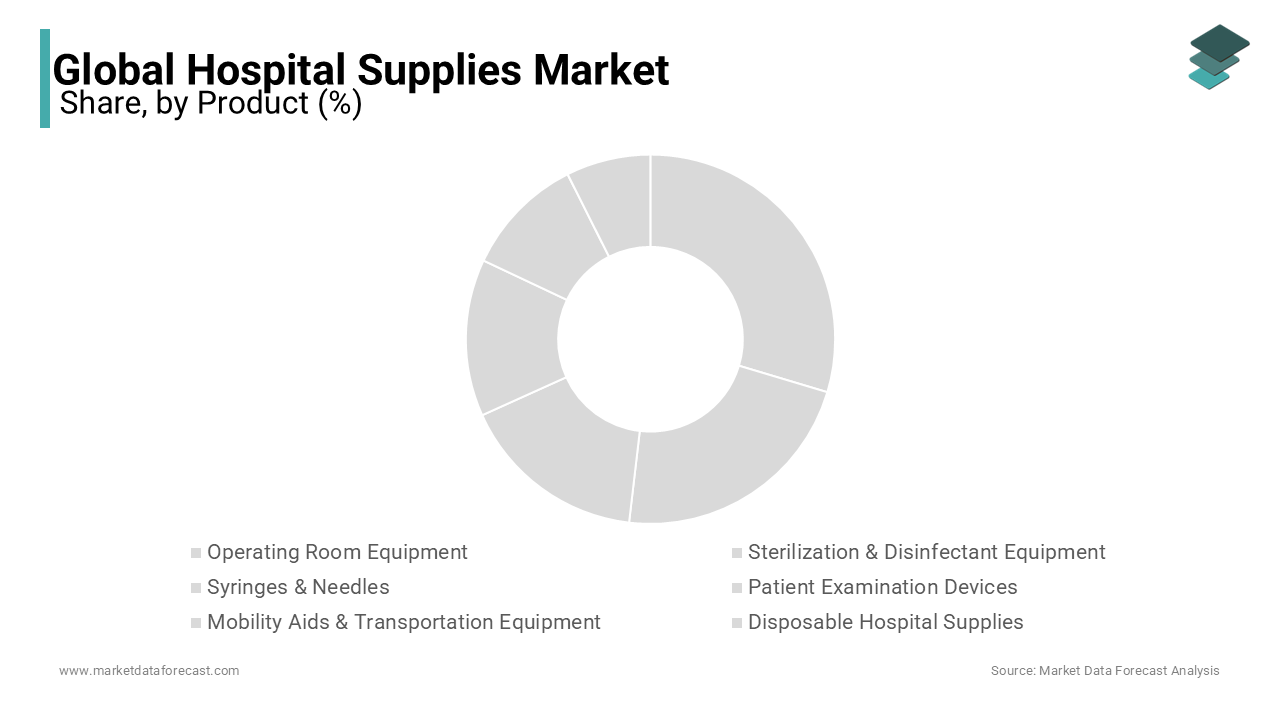
On the other side, the sterilization and disinfectant equipment segment is expected to expand at a CAGR of 8.23% over the forecast period in the global market owing to the increasing complexity of medical instruments and the rising threat of multidrug-resistant organisms, which require advanced sterilization technologies. According to the Association for the Advancement of Medical Instrumentation, the prevalence of biofilm formation on surgical instruments necessitates more rigorous cleaning and sterilization protocols, driving investment in automated washer-disinfectors and low-temperature sterilizers. The emergence of superbugs such as methicillin-resistant Staphylococcus aureus has heightened awareness among hospital administrators regarding the importance of terminal cleaning and instrument sterility. According to MedTech Europe, healthcare-associated infections cost the European Union approximately €5.5 billion per year, prompting hospitals to invest in state-of-the-art sterilization infrastructure to mitigate financial and clinical risks. Furthermore, the expansion of outpatient surgery centers requires compact and efficient sterilization units that can handle high throughput with quick turnaround times. Technological advancements such as hydrogen peroxide plasma sterilization and ultraviolet light disinfection systems are gaining traction due to their efficacy and material compatibility. As regulatory bodies tighten standards for instrument reprocessing, hospitals are compelled to upgrade their existing equipment to comply with new guidelines. This combination of clinical necessity, regulatory pressure, and technological innovation fuels the robust growth of the sterilization and disinfectant equipment segment.
REGIONAL ANALYSIS
North America Hospital Supplies Market Analysis
North America dominated the market by holding the largest share of the global market in 2025 and is poised to continue its dominance in the global hospital supplies market, maintaining the largest share through advanced healthcare infrastructure and significant public and private investment over the next few years. The region benefits from a well-established network of hospitals and ambulatory surgical centers that prioritize patient safety and infection control. According to the American Hospital Association, there are nearly 6000 registered hospitals in the United States, creating a massive and consistent demand for high-quality medical supplies. The presence of major manufacturers and distributors in the region ensures a robust supply chain and rapid adoption of innovative products such as smart inventory systems and eco-friendly disposables. Strict enforcement of regulations by the Food and Drug Administration and the Centers for Medicare and Medicaid Services drives hospitals to maintain high standards of supply quality and traceability. Additionally, the high prevalence of chronic diseases and an aging population contribute to increased hospital admissions and surgical volumes, further boosting supply consumption. The region also leads in the adoption of digital health technologies, which integrate with supply chain management to optimize inventory levels and reduce waste. With strong government support for healthcare modernization and a focus on value-based care, North America remains the dominant force in the global hospital supplies market, setting benchmarks for quality and efficiency.
Europe Hospital Supplies Market Analysis
Europe is expected to maintain a steady growth trajectory in the hospital supplies market over the coming years as it continues to prioritize regulatory compliance and sustainable procurement. The European Union’s Medical Device Regulation imposes rigorous requirements for product safety and performance, ensuring high-quality standards for hospital supplies across member states. According to Eurostat, healthcare expenditure in the EU accounts for approximately 10% of GDP, reflecting substantial investment in medical infrastructure and supplies. Countries such as Germany, France, and the United Kingdom have well-developed healthcare systems with high utilization rates of advanced medical devices and disposable products. The region is a pioneer in adopting green healthcare practices, with many hospitals implementing waste reduction programs and sourcing biodegradable supplies to meet circular economy goals. The European Centre for Disease Prevention and Control actively monitors healthcare-associated infections, prompting continuous improvement in hygiene protocols and supply usage. Additionally, the aging demographic in Europe increases the demand for long-term care and hospital services, driving steady consumption of patient care items and mobility aids. Government initiatives to digitize healthcare supply chains further enhance operational efficiency and transparency. With a strong emphasis on regulatory compliance and environmental responsibility, Europe continues to be a key market for high-quality and sustainable hospital supplies.
Asia-Pacific Hospital Supplies Market Analysis
The Asia-Pacific region is likely to sustain its position as the fastest growing market for hospital supplies over the next few years, driven by rapid urbanization and large-scale government health initiatives. Countries such as China, India, Japan, and Australia are witnessing significant upgrades in hospital facilities and medical technology adoption. According to the World Bank, healthcare spending in Asia has been growing at a double-digit rate in many countries as governments prioritize improving access to quality care for their large populations. The rising middle class and increasing health awareness drive higher utilization of hospital services, leading to greater demand for surgical kits, diagnostic supplies, and personal protective equipment. In China, the Healthy China 2030 initiative aims to modernize the healthcare system, resulting in the construction of thousands of new hospitals and clinics. India is experiencing a boom in medical tourism, which requires international standard supplies and sterilization protocols to attract foreign patients. Japan’s advanced aging society creates sustained demand for patient care and mobility products. Additionally, the aftermath of the pandemic has highlighted the need for robust domestic manufacturing of critical supplies, reducing reliance on imports. With supportive policies and a vast untapped potential, the Asia-Pacific region presents immense opportunities for hospital supply manufacturers seeking growth and expansion.
Latin America Hospital Supplies Market Analysis
Latin America is anticipated to experience a period of gradual modernization and market expansion in the hospital supplies sector over the next few years, as healthcare reforms aim to address existing service disparities. Brazil, Mexico, and Argentina are the largest markets in the region with ongoing efforts to improve public healthcare infrastructure and access to medical services. According to the Pan American Health Organization, improving the availability of essential medical supplies is a priority for many Latin American countries to address health disparities and improve patient outcomes. The expansion of private hospital chains in urban centers is driving demand for high-quality disposable products and advanced sterilization equipment. However, economic volatility and currency fluctuations pose challenges for import-dependent markets, affecting the affordability and availability of certain supplies. International collaborations and aid programs are helping to strengthen local supply chains and improve procurement processes. The growing awareness of infection control practices among healthcare professionals is also contributing to increased consumption of personal protective equipment and disinfectants. As healthcare systems continue to evolve and stabilize, Latin America offers promising growth potential for suppliers who can navigate local regulatory landscapes and offer cost-effective solutions tailored to the needs of the region.
Middle East and Africa Hospital Supplies Market Analysis
The Middle East and Africa region is expected to see significant growth in its hospital supplies market over the next few years, largely driven by large-scale infrastructure investments and international public health collaborations. Countries in the Gulf Cooperation Council, such as Saudi Arabia and the United Arab Emirates, are heavily investing in world-class medical cities and hospitals, creating demand for premium hospital supplies and advanced sterilization technologies. According to the World Health Organization, improving access to essential health services is a key goal for many African nations, leading to increased demand for basic disposable supplies and infection control products. In the Middle East, the focus on medical tourism and specialized care drives the adoption of high-quality single-use items and surgical instruments. In Africa, the challenge lies in establishing reliable supply chains and ensuring the quality of imported products to prevent the circulation of counterfeit goods. Non-governmental organizations and international donors play a crucial role in supplying essential medical items to remote and underserved areas. As political stability improves and healthcare spending increases, the region is expected to witness steady growth in the adoption of standardized hospital supplies, supported by capacity building and infrastructure development initiatives.
COMPETITIVE LANDSCAPE
The competition in the hospital supplies market is intense and characterized by the presence of large multinational corporations specialized manufacturers and regional distributors who compete on price quality and service reliability. Major players leverage their extensive product portfolios and global distribution networks to offer comprehensive solutions that meet diverse healthcare needs. The market sees frequent mergers and acquisitions as companies seek to expand their capabilities and consolidate market presence. Price competition is significant particularly for commoditized items such as gloves and syringes where margins are thin. However differentiation through innovative safety features sustainability credentials and integrated digital services helps premium suppliers maintain higher margins. The shift towards value based care has intensified competition as hospitals prioritize cost effectiveness and operational efficiency. Regulatory compliance across different regions adds complexity requiring companies to maintain flexible and adaptable supply chains. Supply chain resilience has become a key competitive advantage as disruptions can significantly impact hospital operations. Companies that successfully balance innovation cost efficiency and reliability are best positioned to thrive in this dynamic and essential market sector.
KEY MARKET PLAYERS
Companies playing a promising role in the global hospital supplies market profiled in this report are
- Advanced Sterilization Products Services Inc.
- Dickinson and Company
- Cardinal Health, Inc.
- Kimberly-Clark Corporation
- Becton
- 3M Health Care
- B. Braun Melsungen AG
Top Players in the Global Hospital Supplies Market
Becton Dickinson and Company
Becton Dickinson and Company is a global medical technology leader providing a vast portfolio of hospital supplies including syringes needles infusion systems and personal protective equipment. The company strengthens its market position through continuous innovation in safety engineered devices that reduce needlestick injuries and healthcare associated infections. Recent actions include expanding manufacturing capacity for critical care products and investing in digital health solutions that integrate with supply chain management systems. Becton Dickinson focuses on sustainability by developing eco friendly packaging and reducing plastic waste in its product lines. The company collaborates with healthcare providers to optimize clinical workflows and improve patient safety outcomes. By leveraging its extensive distribution network and strong brand reputation Becton Dickinson ensures reliable access to essential hospital supplies while driving technological advancements in medication management and infection prevention globally.
Cardinal Health Inc
Cardinal Health Inc is a major distributor and manufacturer of hospital supplies offering comprehensive solutions for pharmacies hospitals and ambulatory surgery centers. The company provides a wide range of disposable products surgical instruments and sterilization equipment through its robust logistics network. Cardinal Health strengthens its position by enhancing its digital platforms for inventory management and procurement automation helping healthcare facilities reduce costs and improve efficiency. Recent initiatives include expanding its private label offerings to provide cost effective alternatives for standard hospital supplies. The company also invests in data analytics to predict demand patterns and optimize stock levels across its distribution centers. By focusing on supply chain resilience and customer centric services Cardinal Health supports healthcare providers in maintaining operational continuity and delivering high quality patient care while adapting to evolving market dynamics and regulatory requirements.
Medtronic plc
Medtronic plc is a prominent player in the hospital supplies market particularly in surgical innovations and sterile procedure packs. The company offers advanced surgical tools staplers sutures and energy devices that enhance precision and safety in operating rooms. Medtronic strengthens its market position through strategic acquisitions and partnerships that expand its product portfolio and technological capabilities. Recent actions include launching next generation surgical platforms that integrate robotics and artificial intelligence to improve surgical outcomes. The company emphasizes training and education for healthcare professionals to ensure proper use of its complex devices. Medtronic also focuses on sustainability by implementing circular economy principles in its manufacturing processes. By combining clinical expertise with innovative technology Medtronic delivers high value solutions that support minimally invasive procedures and improve recovery times for patients worldwide while maintaining strict quality and safety standards.
Top Strategies Used by Key Market Participants
Key players in the hospital supplies market employ several strategic approaches to maintain competitiveness and drive growth. Product innovation is a primary strategy where companies develop safety engineered devices and eco friendly materials to meet evolving regulatory and environmental standards. Strategic partnerships with healthcare providers allow firms to co create customized solutions that optimize clinical workflows and reduce costs. Geographic expansion is another critical approach enabling companies to establish local manufacturing and distribution networks in emerging markets to serve growing demand efficiently. Additionally companies focus on digital transformation by integrating artificial intelligence and Internet of Things technologies into supply chain management to enhance visibility and predictive analytics. Sustainability initiatives are increasingly important as manufacturers adopt circular economy practices and reduce plastic waste. These strategies collectively help market participants adapt to changing healthcare needs regulatory requirements and economic conditions while delivering value to customers.
RECENT MARKET HAPPENINGS
- In 2022, the NuVent™ Eustachian tube dilation balloon was launched by Medtronic plc, which has been approved by the U.S. Food and Drug Administration (FDA) for treating chronic obstructive Eustachian Tube Dysfunction. The surgeons used the NuVent™ balloon to deliver treatment.
- The bold fibered detachable coil, used to reduce the blood flow rate in the peripheral vasculature, was approved by the Food and Drug Administration and announced by Boston Scientific Corporation in 2022. This device is mainly used in the United States for embolization procedures to stop hemorrhaging, prevent aneurysm ruptures, and reduce the size of certain tumors.
- In 2022, Cardinal Health partnered with the nation's largest independent healthcare accreditation organization to help customers of Cardinal Health pursue accreditation for their specialty pharmacies and practices.
- In 2022, Becton, Dickinson, and Company, the global leader in medical technology, had an agreement with Frazier Healthcare Partners to acquire Parata Systems, an innovative provider of pharmacy automation solutions.
MARKET SEGMENTATION
This market research report on the global hospital supplies market has been segmented and sub-segmented based on the product and region.
By Product
- Operating Room Equipment
- Sterilization & Disinfectant Equipment
- Syringes & Needles
- Patient Examination Devices
- Mobility Aids & Transportation Equipment
- Disposable Hospital Supplies
By Region
- North America
- Europe
- Asia-Pacific
- Latin America
- Middle East and Africa