- Product Description Description
- Table of Contents TOC
- List of Table & Figure LOT
- Get Free Sample PDF Sample PDF
Market Size, 2025
$3.08 BnMarket Estimate, 2026
$3.41 BnMarket Forecast, 2034
$7.72 BnCAGR, 2026–2034
10.76%Executive Summary: Middle East and Africa Hospital Supplies Market
- Market Scope: Comprehensive regional assessment covering distinct product types (operating room equipment, sterilization & disinfectant equipment, syringes & needles, patient examination devices, mobility aids & transportation equipment, disposable hospital supplies) and exhaustive country breakdowns across the Middle East and Africa.
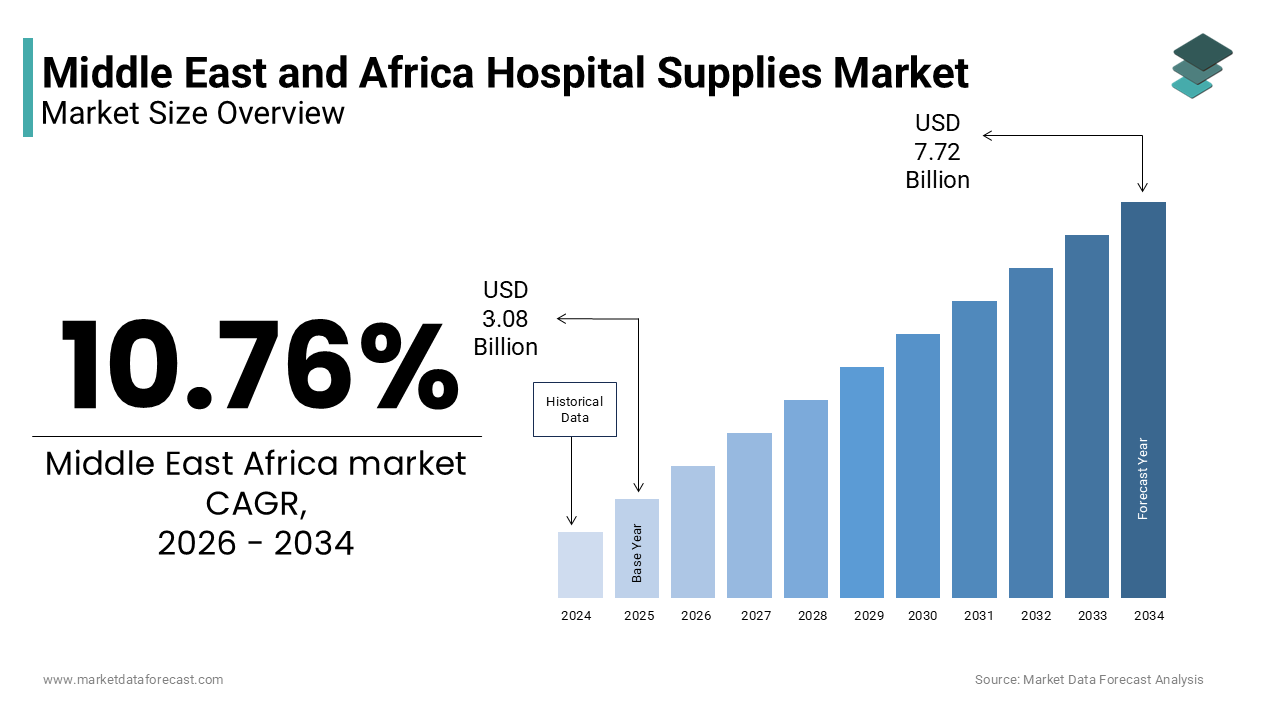
- Market Valuation: Valued at USD 3.08 billion (2025), estimated at USD 3.41 billion (2026), and projected to reach USD 7.72 billion by 2034, registering a robust compound annual growth rate (CAGR) of 10.76% during the forecast period from 2026 to 2034.
- Primary Growth Drivers: Heightened public awareness regarding hospital-acquired infections, rising occurrences of communicable and chronic diseases, expanding healthcare infrastructure, and increased government initiatives and funding to upgrade medical facilities across the GCC and African nations.
Key Market Segment Metrics (2026–2034)
| Category | Leading Segment Focus | Fastest-Growing / Key Structural Trends |
|---|---|---|
| By Product Type | Disposable Hospital Supplies & Operating Room Equipment (holding major revenue shares due to frequent clinical utility and strict infection control mandates) | Sterilization & Disinfectant Equipment (experiencing high demand driven by the urgent need to mitigate hospital-acquired infections and cross-contamination) |
| By Country / Sub-Region | South Africa (leads regional revenue generation, backed by established healthcare frameworks and high volume of trauma/emergency cases) & GCC Countries (strong demand driven by advanced hospital investments) | Nigeria, Kenya, & Rest of MEA (exhibiting accelerated growth momentum fueled by healthcare infrastructure expansions and rising government health investments) |
Major Market Players & Market Structure
Market Structure: A competitive marketplace characterized by prominent global medical technology and supply corporations competing through advanced product portfolios, strategic hospital partnerships, and extensive regional distribution networks.
Key Companies: Advanced Sterilization Products Services Inc., Becton, Dickinson and Company, Cardinal Health, Inc., Kimberly-Clark Corporation, 3M Health Care, and B. Braun Melsungen AG.
Middle East and Africa Hospital Supplies Market Size
The Middle East and Africa Hospital Supplies Market size was valued at USD 3.08 billion in 2025 and is anticipated to reach USD 3.41 billion in 2026 from USD 7.72 billion by 2034, growing at a CAGR of 10.76% during the forecast period from 2026 to 2034.
Hospital supplies are a broad array of essential consumables and equipment required for daily clinical operations across the region. This sector includes surgical instruments, wound care products, diagnostic kits, and personal protective equipment vital for maintaining hygiene and patient safety. According to the World Health Organization, the African region bears 25% of the global burden of disease yet possesses only 3% of the world’s health workers. This disparity necessitates robust supply chains to support healthcare facilities in delivering effective care with limited human resources. As per the United Nations Economic Commission for Africa, public health expenditure in many sub-Saharan countries remains below 5% of gross domestic product. Such financial constraints drive demand for cost-effective and durable hospital supplies that maximize operational efficiency. Governments are increasingly prioritizing primary healthcare infrastructure development to improve accessibility in rural areas. The rising prevalence of infectious diseases such as malaria and tuberculosis further amplifies the need for specialized diagnostic and treatment supplies. Private healthcare providers are expanding their networks in urban centers, creating additional demand for high-quality medical consumables. Regulatory bodies are strengthening standards for medical device imports to ensure product safety and efficacy. These dynamics collectively shape a market characterized by growing necessity and evolving procurement strategies across diverse economic landscapes.
MARKET DRIVERS
Expansion of Healthcare Infrastructure and Facility Upgrades
The expansion of healthcare infrastructure majorly drives the Middle East and Africa hospital supplies market expansion. The Saudi Vision 2030 initiative aims to increase the number of hospital beds to 2.7 per 1,000 population by enhancing private sector participation in healthcare delivery. This ambitious target drives substantial procurement of surgical disposables, bedding, and sterilization equipment for new medical facilities. Similarly, the African Union Agenda 2063 emphasizes the development of resilient health systems capable of handling pandemics and chronic diseases. Countries like Kenya and Nigeria are constructing new district hospitals equipped with modern operating theaters, requiring comprehensive supply packages. According to the World Bank, infrastructure investment in health sectors across Sub-Saharan Africa has increased by 15% annually over the past five years. This capital influx directly translates into higher demand for consumables and maintenance supplies. Private hospital chains are also expanding their footprint in Gulf Cooperation Council countries to cater to medical tourism. These facilities require premium-quality supplies to meet international accreditation standards. Government tenders for hospital construction projects often include bundled supply contracts, ensuring steady revenue streams for manufacturers. The focus on upgrading existing rural clinics with basic surgical capabilities further broadens the market base. Such structural developments create a sustained need for diverse hospital supplies across the region.
Rising Prevalence of Infectious and Chronic Diseases
The escalating burden of infectious and chronic diseases is further contributing to the growth of the Middle East and Africa hospital supplies market. According to the World Health Organization, malaria caused an estimated 608,000 deaths globally, with 94% of these occurring in the African region. This staggering statistic necessitates the continuous availability of diagnostic rapid test kits, intravenous fluids, and antimalarial administration supplies in healthcare facilities. Additionally, as per the International Diabetes Federation, the Middle East and North Africa region has the highest comparative prevalence of diabetes at 16.2% among adults. Managing this condition requires regular monitoring supplies, such as glucose test strips, lancets, and sterile syringes. Hospitals face increasing patient volumes, leading to higher consumption of wound care products for diabetic foot ulcers. The rise in noncommunicable diseases like hypertension and cardiovascular disorders further strains healthcare resources. Public health campaigns promoting vaccination drive demand for syringes and cold-chain storage materials. Outbreaks of diseases such as cholera in Yemen and Sudan create sudden spikes in demand for rehydration salts and protective gear. Healthcare providers must maintain adequate stock levels to manage both routine care and emergency responses. This dual burden of communicable and noncommunicable diseases ensures consistent and growing consumption of essential hospital supplies throughout the region.
MARKET RESTRAINTS
Supply Chain Disruptions and Logistical Challenges
Supply chain disruptions pose a significant barrier to the efficient distribution of hospital supplies in the Middle East and Africa. The World Bank Logistics Performance Index indicates that several countries in Sub-Saharan Africa rank in the bottom quartile globally due to inadequate transport infrastructure and customs inefficiencies. Poor road networks and limited port capacity lead to delays in the delivery of time-sensitive medical consumables. Political instability in regions such as the Sahel and Horn of Africa further exacerbates logistical bottlenecks, disrupting regular supply routes. According to the United Nations Conference on Trade and Development, landlocked African countries face transit costs that are 50% higher than coastal nations. These elevated costs reduce the affordability of essential hospital supplies for budget-constrained healthcare facilities. Currency fluctuations in countries like Egypt and Nigeria make import planning difficult for distributors relying on foreign suppliers. Stockouts of critical items such as gloves and sutures occur frequently due to unpredictable lead times. Healthcare providers struggle to maintain optimal inventory levels amidst these uncertainties. The lack of integrated regional trade agreements hinders the cross-border movement of medical goods. Manufacturers face challenges in establishing reliable distribution networks in remote areas. Until infrastructure improves and political stability enhances, the supply chain will remain a critical restraint on market growth.
Limited Healthcare Budgets and Funding Constraints
Limited healthcare budgets severely restrict the purchasing power for hospital supplies in many parts of the Middle East and Africa. According to the World Health Organization, out-of-pocket expenditure accounts for more than 40% of total health spending in many low-income African countries. This financial burden limits the ability of public hospitals to procure high-quality consumables regularly. Governments often prioritize pharmaceutical drugs over medical supplies due to immediate patient needs, leaving gaps in essential item availability. The International Monetary Fund highlights that debt distress in several African nations forces austerity measures that cut public health allocations. Reduced funding leads to reliance on donor aid, which can be inconsistent and tied to specific programs rather than general supply needs. Private hospitals in emerging markets face pressure to keep costs low to remain accessible to the middle class. This pricing pressure squeezes margins for manufacturers, forcing them to compromise on quality or volume. The lack of reimbursement mechanisms for certain procedures discourages the use of advanced disposable supplies. Healthcare administrators must make difficult trade-offs between staffing, equipment, and consumables. The absence of sustainable financing models for primary care facilities perpetuates shortages. These economic constraints hinder the adoption of standardized hygiene practices and modern surgical protocols across the region.
MARKET OPPORTUNITIES
Localization of Manufacturing and Production
The localization of manufacturing is a significant opportunity for the Middle East and Africa hospital supplies market. The African Union launched the Pharmaceutical Manufacturing Plan for Africa, which encourages the local production of medical products, including consumables, to reduce import dependency. Countries like South Africa and Egypt have established industrial zones offering tax incentives for companies setting up production facilities for gloves, syringes, and dressings. According to the World Bank, local manufacturing can reduce the cost of medical supplies by up to 30% by eliminating tariffs and shipping expenses. This cost advantage makes locally produced items more accessible to public healthcare systems with tight budgets. Governments are implementing policies that prefer local content in public procurement tenders, favoring domestic suppliers. Regional trade agreements such as the African Continental Free Trade Area facilitate the movement of locally made goods across borders. Investors are recognizing the potential for scalable production units serving multiple neighboring countries. Technology transfer partnerships with global manufacturers enable local firms to adopt international quality standards. Creating jobs in the manufacturing sector aligns with national development goals, attracting government support. Local production also enhances supply chain resilience against global disruptions. As technical capabilities improve, the region can become a net exporter of basic hospital supplies. This shift towards self-sufficiency opens lucrative avenues for both domestic and foreign investors.
Adoption of Digital Procurement and Inventory Management Systems
The adoption of digital procurement and inventory management systems offers a transformative opportunity for optimizing hospital supply chains in the region. According to the International Telecommunication Union, mobile broadband penetration in Africa has reached 40%, enabling wider access to digital health solutions. Cloud-based platforms allow hospitals to track inventory levels in real time, reducing waste from expiration and theft. Automated ordering systems ensure the timely replenishment of critical supplies, minimizing stockouts during peak demand periods. The World Health Organization advocates for digital health interventions to strengthen health system efficiency and accountability. Private hospital groups in the Gulf region are leading the adoption of enterprise resource planning software integrated with supplier networks. These systems provide data analytics that help administrators forecast demand based on historical usage patterns. Startups in Kenya and Nigeria are developing mobile applications that connect small clinics with verified suppliers for bulk purchasing. This aggregation model lowers costs for smaller facilities that lack bargaining power. Digital records improve transparency in procurement processes, reducing corruption and inefficiency. Donors and governments are increasingly requiring digital tracking for funded supplies to ensure proper utilization. As internet connectivity improves and digital literacy rises, the uptake of these technologies will accelerate. This modernization streamlines operations and enhances the reliability of supply availability across healthcare facilities.
MARKET CHALLENGES
Regulatory Fragmentation and Compliance Complexities
Regulatory fragmentation poses a major challenge for manufacturers and distributors operating in the Middle East and Africa Hospital Supplies Market. Each country has its own registration requirements, quality standards, and approval timelines, creating a complex compliance landscape. According to the World Health Organization, only 20% of African countries have fully functional regulatory authorities for medical devices. This weakness leads to inconsistent enforcement of safety standards, allowing substandard products to enter the market. Manufacturers must navigate diverse documentation processes for each jurisdiction, increasing administrative burdens and costs. The lack of harmonized regulations delays the introduction of innovative supplies that could improve patient outcomes. Counterfeit medical products remain a significant issue, with the World Health Organization estimating that 10% of medical products in low- and middle-income countries are substandard or falsified. This prevalence undermines trust in legitimate suppliers and poses serious health risks to patients. Distributors struggle to verify the authenticity of products in informal markets. Regulatory changes can occur without notice, disrupting established supply chains. Small and medium enterprises lack the resources to manage multi-country compliance effectively. The absence of mutual recognition agreements means that approval in one country does not facilitate entry into another. These regulatory hurdles impede market integration and limit the availability of high-quality hospital supplies across the region.
Shortage of Skilled Healthcare Personnel
The shortage of skilled healthcare personnel challenges the effective utilization of hospital supplies in the Middle East and Africa. According to the World Health Organization, a global shortfall of 10 million health workers is projected by 2030, with the African region facing the most acute deficit. Insufficient numbers of nurses and technicians lead to improper handling and wastage of medical consumables. A lack of training on sterile techniques increases the risk of hospital-acquired infections, necessitating higher usage of protective supplies. The brain drain phenomenon sees many qualified professionals migrating to Europe and North America for better opportunities. This exodus leaves remaining staff overworked and less able to adhere to strict inventory management protocols. Medical education institutions in the region struggle to produce enough graduates to meet growing healthcare demands. The resulting skill gap affects the adoption of advanced disposable products that require specific handling procedures. Hospitals in rural areas often rely on community health workers with limited technical training. This limitation restricts the range of supplies that can be safely used in primary care settings. Training programs are often underfunded and irregular, failing to keep pace with technological advancements. Without adequate human resources, the efficiency of supply consumption remains low. Addressing this workforce crisis is essential for optimizing the use of hospital supplies and improving overall care quality.
REPORT COVERAGE
| REPORT METRIC | DETAILS |
| Market Size Available | 2025 to 2034 |
| Base Year | 2025 |
| Forecast Period | 2026 to 2034 |
| CAGR | 10.76% |
| Segments Covered | By Product Type and Region. |
| Various Analyses Covered | Global, Regional & Country Level Analysis, Segment-Level Analysis, DROC, PESTLE Analysis, Porter’s Five Forces Analysis, Competitive Landscape, Analyst Overview of Investment Opportunities |
| Regions Covered | KSA, UAE, Israel, the rest of GCC countries, South Africa, Ethiopia, Kenya, Egypt, Sudan, and Rest of MEA. |
| Market Leaders Profiled | Advanced Sterilization Products Services Inc., Becton, Dickinson and Company, Cardinal Health, Inc., Kimberly-Clark Corporation, 3M Health Care, and B. Braun Melsungen AG |
SEGMENTAL ANALYSIS
By Product Type Insights
The disposable hospital supplies segment dominated the market by capturing the highest share of the Middle East and Africa hospital supplies market in 2025 due to the critical need for infection prevention and control in healthcare settings. The high burden of infectious diseases necessitates strict adherence to hygiene protocols, which drives the consistent consumption of single-use items. According to the World Health Organization, healthcare-associated infections affect hundreds of millions of patients globally each year, with a disproportionate impact in low-resource settings. This statistic underscores the urgent requirement for reliable disposable products such as gloves, gowns, masks, and drapes to break chains of transmission. Additionally, as per the Centers for Disease Control and Prevention, proper use of personal protective equipment can reduce infection rates by up to 70% in clinical environments. Healthcare facilities across the region are increasingly prioritizing patient safety standards to meet international accreditation requirements. The rise in surgical procedures for both elective and emergency care further amplifies demand for sterile disposable kits. Public health campaigns during disease outbreaks create sudden spikes in procurement volumes for protective gear. Governments are mandating the use of disposable items in public hospitals to minimize cross-contamination risks. The convenience and cost-effectiveness of disposables compared to reusable alternatives make them attractive for budget-constrained institutions. Supply chain improvements have enhanced the availability of quality disposable products in remote areas. These factors collectively ensure that disposable supplies remain the largest revenue-generating segment in the market.
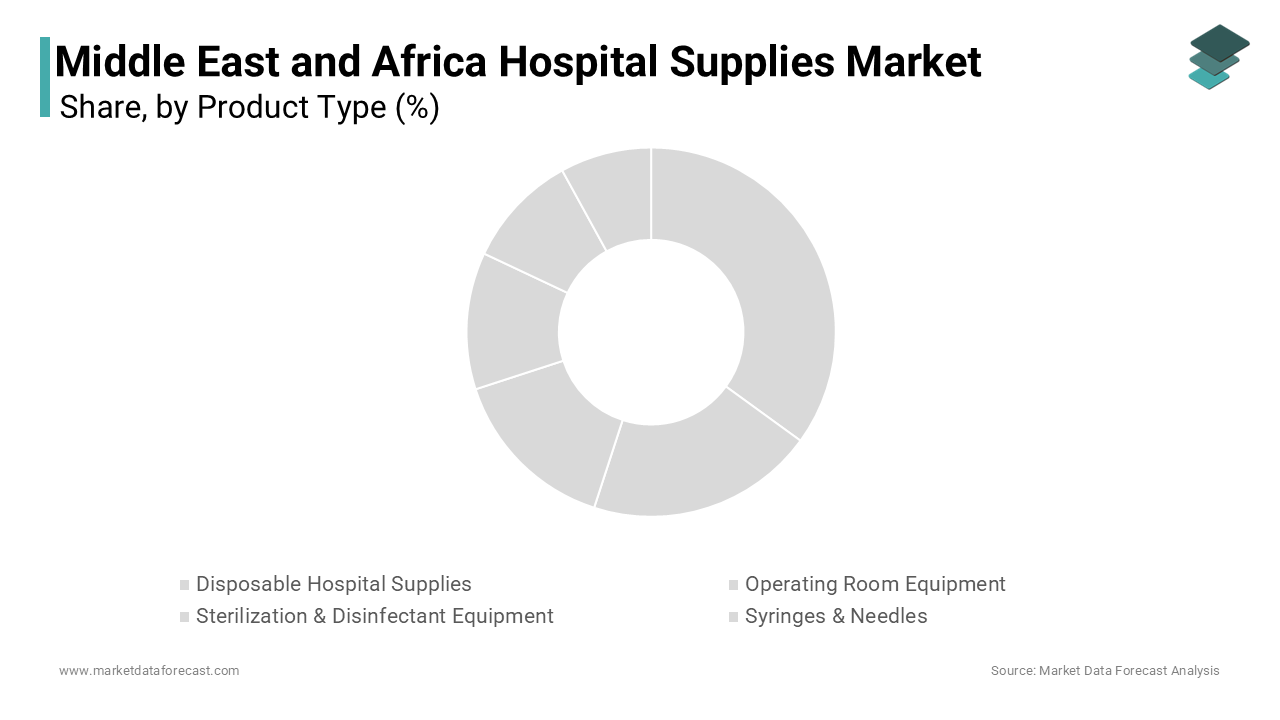
However, the sterilization and disinfectant equipment segment is anticipated to showcase a healthy CAGR of 7.04% in this regional market over the forecast period owing to the expansion of surgical capabilities and rising safety standards and increased investment in central sterile supply departments. According to the World Health Organization, only 50% of healthcare facilities in low-income countries have access to functional sterilization equipment, creating a massive backlog of unmet needs. Addressing this gap requires substantial procurement of autoclaves, washers, and chemical disinfectants. Additionally, as per the International Society for Infectious Diseases, proper sterilization reduces surgical site infections by 40%, which is crucial for improving patient outcomes. Hospitals are upgrading from manual to automated sterilization systems to ensure consistency and traceability. The rise in complex surgeries such as orthopedics and cardiovascular procedures demands higher standards of instrument sterility. Government initiatives to equip primary health centers with basic sterilization units further drive market expansion. Manufacturers are introducing energy-efficient and compact devices suitable for facilities with limited infrastructure. Training programs on proper sterilization techniques increase the effective utilization of these machines. The focus on reducing hospital-acquired infections through better equipment adoption fuels rapid growth. As healthcare systems mature, the demand for advanced sterilization technologies will continue to accelerate significantly.
COUNTRY ANALYSIS
Saudi Arabia Hospital Supplies Market Analysis
Saudi Arabia dominated the hospital supplies market in Middle East and Africa by accounting for the major share of the regional market in 2025 and is likely to experience sustained market leadership driven by ambitious national transformation initiatives and extensive healthcare infrastructure investments over the next few years. The Ministry of Health reports that the kingdom aims to increase private sector participation in healthcare delivery to 35% by 2030 under Vision 2030. This strategic shift drives extensive procurement of hospital supplies for new private facilities and upgraded public hospitals. The government has launched several mega-projects, including the construction of specialized medical cities requiring comprehensive supply contracts. The Saudi Food and Drug Authority maintains rigorous quality standards, ensuring that only certified products enter the market. The high prevalence of diabetes and cardiovascular diseases increases the demand for chronic care supplies and surgical disposables. The kingdom serves as a regional hub for medical distribution due to its advanced logistics infrastructure. Local manufacturing initiatives under the National Industrial Strategy encourage domestic production of basic consumables. Government tenders for hospital supplies are transparent and competitive, attracting global manufacturers. The focus on digital health integration supports the adoption of smart inventory management systems. Medical tourism initiatives further boost demand for premium-quality hospital supplies in private sectors. The stable economic environment and strong currency facilitate consistent import activities. Saudi Arabia continues to lead the region in terms of value and volume of hospital supply consumption.
United Arab Emirates Hospital Supplies Market Analysis
United Arab Emirates is projected to register accelerated growth propelled by widespread digital health integration and its status as a premier medical tourism destination in the coming years. The United Arab Emirates maintains a sophisticated position in the Middle East and Africa Hospital Supplies Market, characterized by high adoption of advanced medical technologies. The Department of Health Abu Dhabi reports that the emirate has achieved 100% electronic health record coverage, facilitating efficient supply chain management. This digital infrastructure enables precise tracking of hospital supply usage and reduces wastage. The country is a premier destination for medical tourism, attracting patients seeking high-quality care, which drives demand for premium disposable and surgical supplies. The Dubai Health Strategy 2026 focuses on enhancing patient experience and safety, leading to strict procurement standards. Hospitals in the UAE prioritize internationally accredited brands to maintain their reputation and compliance. The prevalence of lifestyle-related diseases such as obesity and diabetes increases the need for specialized surgical and monitoring supplies. Free zones in Dubai and Abu Dhabi serve as logistical hubs for re-exporting supplies to neighboring regions. The government encourages the local assembly of medical devices to boost economic diversification. Regulatory harmonization with international standards simplifies market entry for global suppliers. High healthcare spending per capita ensures steady demand for high-quality hospital consumables. The UAE sets benchmarks for supply chain efficiency and quality assurance in the region.
Israel Hospital Supplies Market Analysis
Israel is expected to witness steady expansion anchored by cutting-edge medical R&D and advanced clinical density over the next few years. Israel plays a unique and technologically advanced role in the Middle East and Africa Hospital Supplies Market. The Ministry of Health reports that Israel has one of the highest densities of physicians and hospital beds per capita in the OECD. This robust infrastructure supports high consumption of specialized surgical and diagnostic supplies. The country is a global leader in medical innovation, producing cutting-edge hospital equipment and disposables for export. Domestic manufacturers focus on high-value products such as advanced wound care and minimally invasive surgical tools. The universal health coverage system ensures equitable access to essential hospital supplies for all citizens. Strict regulatory oversight by the Ministry of Health guarantees high safety and efficacy standards. Research and development collaborations between hospitals and tech firms drive continuous product improvement. The aging population increases demand for geriatric care supplies and home healthcare products. Israel serves as a knowledge hub for best practices in hospital supply management and infection control. Export opportunities to African markets are expanding through diplomatic and health cooperation agreements. The market is characterized by high technical sophistication and an emphasis on innovation. Israel contributes significantly to regional advancements in medical supply technology and standards.
COMPETITIVE LANDSCAPE
The competition in the Middle East and Africa hospital supplies market features a mix of global multinational corporations and emerging local manufacturers vying for dominance. International players leverage their established brand reputation and extensive product ranges to secure contracts with large private hospital groups and government tenders. Local companies compete effectively by offering cost effective alternatives and leveraging their understanding of regional regulatory requirements and cultural nuances. The market is characterized by fragmented demand due to diverse healthcare systems and varying levels of economic development across countries. Price sensitivity remains a critical factor especially in public healthcare sectors where budgets are constrained. Strategic alliances with logistics providers are essential for overcoming infrastructure challenges and ensuring timely delivery to remote areas. Innovation in product design and digital supply chain solutions serves as a key differentiator among competitors. Regulatory harmonization efforts within regional blocs are gradually reducing barriers to entry but compliance complexities persist. Companies that demonstrate reliability quality and local engagement tend to gain competitive advantage. The rise of medical tourism in Gulf nations intensifies competition for premium quality supplies. Consolidation activities are increasing as larger firms seek to expand their footprint and achieve economies of scale in this growing market.
KEY MARKET PLAYERS
A few of the noteworthy companies in the MEA hospital supplies market include
- Advanced Sterilization Products Services Inc.
- Becton, Dickinson and Company
- Cardinal Health, Inc.
- Kimberly-Clark Corporation
- 3M Health Care
- B. Braun Melsungen AG
Top Players in the Middle East and Africa Hospital Supplies Market
Becton Dickinson and Company
Becton Dickinson and Company contributes significantly to the Middle East and Africa hospital supplies market through its extensive portfolio of medical devices and consumables. The company focuses on improving patient safety and infection control by providing high quality syringes needles and protective equipment. Recent actions include expanding its distribution network in South Africa and Egypt to enhance accessibility for public healthcare facilities. Becton Dickinson collaborates with local governments to implement training programs on safe injection practices and waste management. These initiatives strengthen trust and ensure proper utilization of their products across diverse clinical settings. The company also invests in digital solutions for inventory tracking which helps hospitals reduce waste and optimize supply chains. Their commitment to quality and regulatory compliance positions them as a preferred partner for major healthcare institutions in the region.
Cardinal Health Inc
Cardinal Health Inc plays a vital role in the Middle East and Africa hospital supplies market by offering comprehensive supply chain solutions and medical products. The company provides a wide range of disposable items surgical instruments and pharmaceutical distribution services tailored to regional needs. Recent efforts involve partnering with logistics providers in the Gulf Cooperation Council countries to improve delivery efficiency and reduce lead times. Cardinal Health supports healthcare facilities with data analytics tools that enhance procurement planning and cost management. The company also engages in corporate social responsibility projects aimed at strengthening primary healthcare infrastructure in underserved areas. By focusing on operational excellence and customer support Cardinal Health strengthens its market presence and builds long term relationships with healthcare providers across the region.
Medtronic plc
Medtronic plc is a key contributor to the Middle East and Africa hospital supplies market with its advanced medical technologies and surgical supplies. The company offers innovative solutions for chronic disease management including diabetes care and cardiovascular interventions. Recent actions include establishing training centers in Saudi Arabia and Kenya to educate healthcare professionals on the use of specialized medical devices. Medtronic collaborates with local distributors to ensure consistent availability of essential surgical disposables and implants. The company actively participates in public health initiatives addressing noncommunicable diseases which drives demand for their therapeutic supplies. Medtronic also leverages digital health platforms to monitor patient outcomes and optimize supply usage. Their focus on innovation and education enhances clinical capabilities and solidifies their leadership in the regional healthcare sector.
Major Strategies Used by Key Market Participants
Key players in the Middle East and Africa hospital supplies market employ strategic partnerships with local distributors to navigate complex regulatory environments and enhance last mile delivery capabilities. Companies invest in localized manufacturing facilities to reduce costs and mitigate supply chain disruptions caused by global logistics challenges. Digital transformation initiatives are prioritized to implement smart inventory management systems that improve transparency and reduce waste in healthcare facilities. Educational programs targeting healthcare workers ensure proper usage of medical supplies and foster brand loyalty among clinical staff. Mergers and acquisitions allow firms to expand their product portfolios and gain access to new geographic markets within the region. Pricing strategies are adapted to accommodate varying economic conditions ensuring affordability for public sector clients while maintaining premium positioning for private hospitals. These multifaceted approaches enable manufacturers to build resilience and sustain growth in a dynamic and diverse market landscape.
MARKET SEGMENTATION
This research report on the MEA hospital supplies market has been segmented and sub-segmented into the following categories
By Product Type
- Disposable Hospital Supplies
- Operating Room Equipment
- Sterilization & Disinfectant Equipment
- Syringes & Needles
- Patient Examination Devices
- Mobility Aids & Transportation Equipment
By Country
- KSA
- UAE
- Israel
- Rest Of GCC Countries
- South Africa
- Ethiopia
- Kenya
- Egypt
- Sudan
- Rest Of MEA