- Product Description Description
- Table of Contents TOC
- List of Table & Figure LOT
- Get Free Sample PDF Sample PDF
Market Size, 2025
$11.79 BnMarket Estimate, 2026
$12.59 BnMarket Forecast, 2034
$21.24 BnCAGR, 2026–2034
6.76%Global Medical Tapes and Bandages Market Size
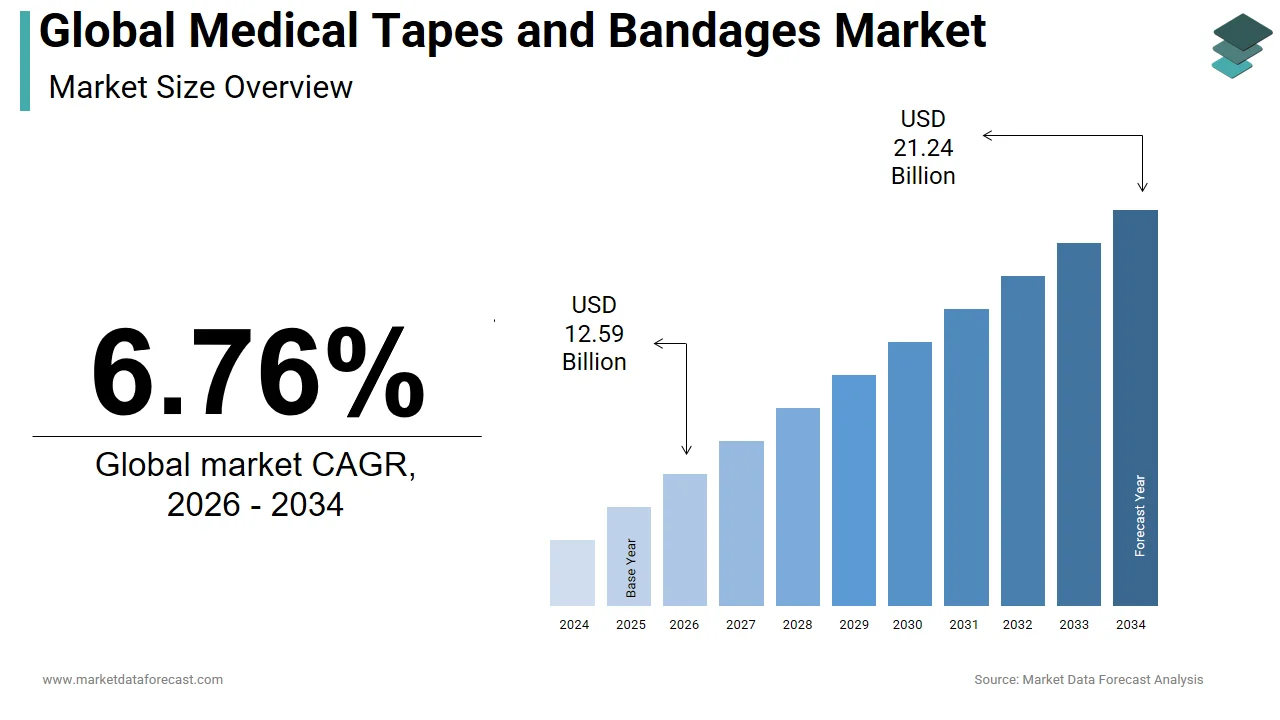
The global medical tapes and bandages market was valued at USD 11.79 billion in 2025. This market is expected to grow at a CAGR of 6.76% from 2026 to 2034 and be worth USD 21.24 billion by 2034, up from USD 12.59 billion in 2026.
Medical tapes and bandages are essential components of wound care and post-injury management, playing a crucial role in both clinical and home healthcare settings. These products include a wide range of materials such as adhesive tapes, cohesive bandages, compression wraps, surgical dressings, and elastic support bandages, all designed to protect wounds, support healing, and immobilize injured areas. With advancements in material science and increasing emphasis on infection control, modern medical tapes and bandages now offer improved breathability, hypoallergenic properties, and antimicrobial coatings.
The demand for these products has surged due to rising incidences of chronic wounds, growing elderly populations, and an increase in surgical procedures globally.
According to the World Health Organization (WHO), over 300 million surgical procedures are performed annually worldwide, necessitating extensive use of medical tapes and bandages in pre- and post-operative care.
Moreover, the rise in sports-related injuries and trauma cases has contributed to increased adoption across outpatient clinics and rehabilitation centers. With telemedicine and home healthcare gaining traction, especially post-pandemic, there is a growing preference for easy-to-use, skin-friendly, and non-irritant bandaging solutions. This evolving landscape underscores the significance of medical tapes and bandages as indispensable tools in modern healthcare systems.
MARKET DRIVERS
Rising Incidence of Chronic Wounds and Diabetic Ulcers
Among the primary drivers of the medical tapes and bandages market is the escalating prevalence of chronic wounds, particularly diabetic foot ulcers (DFUs).
According to the International Diabetes Federation (IDF), over 537 million adults were living with diabetes in 2021, with this number expected to reach 643 million by 2030. A significant proportion of these patients develop foot ulcers due to impaired circulation and nerve damage, requiring long-term wound care interventions.
As per the World Union of Wound Healing Societies (WUWHS), nearly 25% of individuals with diabetes will experience a foot ulcer at some point in their lives, often necessitating frequent dressing changes and specialized bandaging materials. These wounds require advanced products that provide moisture balance, microbial protection, and gentle adhesion to fragile skin. The increasing hospitalization rates related to DFUs have led to higher consumption of medical tapes and bandages in both inpatient and homecare settings.
Additionally, regulatory bodies and health organizations are emphasizing early wound intervention to prevent amputations. This growing awareness is encouraging healthcare providers to adopt high-performance wound dressings and securement tapes, directly fueling market expansion.
Growth in Surgical Procedures and Ambulatory Care Settings
The increasing volume of surgical procedures globally is another key factor propelling the medical tapes and bandages market. According to the World Health Organization (WHO), more than 310 million surgical interventions are conducted annually, many of which require preoperative skin preparation, intraoperative fixation, and postoperative wound coverage using medical tapes and bandages.
In addition to traditional hospitals, ambulatory surgical centers (ASCs) and day-care clinics are witnessing rapid growth, contributing to higher demand for cost-effective and efficient wound care products. These settings rely heavily on self-adhesive bandages, sterile tapes, and breathable dressings that allow mobility while ensuring wound protection.
Moreover, the shift toward minimally invasive surgeries (MIS) has increased the need for precision wound closure and securement solutions. These procedures often result in smaller incisions that still require medical tapes for stabilization and reduced scarring.
MARKET RESTRAINTS
Regulatory Scrutiny and Compliance Requirements
A major restraint affecting the medical tapes and bandages market is the stringent regulatory environment governing product approval and quality assurance. Regulatory agencies such as the U.S. Food and Drug Administration (FDA), European Medicines Agency (EMA), and Japan’s Pharmaceuticals and Medical Devices Agency (PMDA) impose rigorous compliance standards to ensure patient safety and product efficacy.
According to the Global Regulatory Affairs Network (GRAN), the average approval timeline for new wound care products can extend beyond 18 months, delaying commercialization and increasing development costs for manufacturers.
Apart from these, evolving regulatory frameworks, such as the EU’s Medical Device Regulation (MDR) implemented in 2021, have heightened documentation and post-market surveillance requirements. As per the British Healthcare Trades Association (BHTA), compliance with MDR has led to product withdrawals and supply chain disruptions, particularly among small and mid-sized suppliers lacking the resources to meet updated standards.
These regulatory complexities create entry barriers for new players and limit innovation speed, posing a challenge to market expansion despite the rising clinical demand for wound care solutions.
Skin Sensitivity and Allergic Reactions to Adhesives
Skin irritation and allergic reactions associated with adhesive-based medical tapes pose a significant constraint on market growth. Many conventional medical tapes contain acrylic or silicone adhesives that can cause contact dermatitis, erythema, or even blistering in sensitive individuals.
This issue is particularly pronounced in pediatric and geriatric populations, where skin integrity is more fragile. As per the National Eczema Association (NEA), neonatal intensive care units frequently encounter challenges in securing medical lines and dressings without causing skin trauma. Similarly, elderly patients with thin or compromised skin are at higher risk of adhesive-related injuries, limiting the applicability of standard medical tapes.
To address these concerns, manufacturers have introduced hypoallergenic alternatives; however, these products often come at a premium price, restricting their adoption in budget-constrained healthcare settings. Until broader affordability and formulation improvements are achieved, adverse skin reactions will continue to hinder the widespread use of certain types of medical tapes and bandages.
MARKET OPPORTUNITIES
Expansion of Home Healthcare and Telemedicine Services
The rapid expansion of home healthcare services and the integration of telemedicine into chronic wound management represent a significant opportunity for the medical tapes and bandages market.
According to the World Health Organization (WHO), the global home healthcare sector is projected to grow at a compound annual rate exceeding 9% through 2030, driven by aging populations and the need for cost-effective care delivery models.
Telemedicine platforms are increasingly being used to monitor wound healing remotely, enabling clinicians to guide caregivers and patients in selecting appropriate dressings and securement methods. As per the American Telemedicine Association (ATA), remote wound assessments have improved treatment adherence and reduced hospital readmissions, particularly for patients with pressure ulcers, venous leg ulcers, and post-surgical wounds.
This shift toward decentralized care has spurred demand for user-friendly, self-application bandages and breathable adhesive tapes that facilitate ease of use outside clinical environments. Apart from these, e-commerce channels and direct-to-consumer sales of medical supplies have expanded access to a wider variety of wound care products, including hydrocolloid dressings, cohesive wraps, and antimicrobial bandages.
Manufacturers are responding by developing smart bandages with integrated sensors and breathable materials tailored for home use. As per the European Wound Management Association (EWMA), these innovations align with the growing emphasis on patient-centered care and are expected to drive sustained market expansion in the coming years.
Development of Biodegradable and Eco-Friendly Products
With increasing environmental concerns surrounding medical waste, the development of biodegradable and sustainable medical tapes and bandages presents a promising opportunity for market growth. According to the United Nations Environment Programme (UNEP), healthcare facilities generate over 14 million tons of waste annually, with single-use wound care products contributing significantly to landfill accumulation.
To address this issue, several manufacturers are investing in bio-based materials derived from natural fibers, plant starches, and compostable polymers.
Regulatory bodies and sustainability advocates are also pushing for greener alternatives. The European Commission’s Circular Economy Action Plan encourages the substitution of petroleum-based plastics in medical consumables, prompting industry-wide innovation in sustainable packaging and product composition.
Consumer demand for environmentally responsible healthcare products is growing, particularly in North America and Western Europe. This shift in preference is expected to drive continued investment in green technologies, positioning sustainability as a key differentiator in the competitive medical tapes and bandages market.
MARKET CHALLENGES
Product Standardization and Quality Consistency Across Regions
One of the foremost challenges facing the medical tapes and bandages market is the lack of uniform product standards and quality consistency across different geographic regions. While developed markets adhere to strict regulatory guidelines enforced by agencies such as the FDA and EMA, emerging economies often lack comprehensive oversight, resulting in disparities in product quality and performance.
According to the World Health Organization (WHO), inconsistencies in manufacturing practices and inadequate enforcement of quality controls have led to instances of substandard medical tapes and bandages entering the market, particularly in parts of Africa, South Asia, and Latin America. These variations can compromise patient safety and treatment efficacy, undermining confidence in wound care products.
Furthermore, differences in labeling requirements, material specifications, and biocompatibility testing complicate international trade and distribution. As per the International Medical Device Regulators Forum (IMDRF), harmonizing regulatory frameworks remains a complex task due to varying national priorities and resource limitations.
Efforts to establish common benchmarks, such as those proposed by the Global Harmonization Task Force (GHTF), aim to streamline compliance but face implementation delays. Until greater alignment is achieved, the challenge of maintaining consistent product quality across diverse markets will persist, impacting consumer trust and market expansion strategies.
Cost Constraints in Low-Income and Developing Economies
Cost remains a critical barrier to widespread adoption of advanced medical tapes and bandages, particularly in low-income and developing economies where healthcare budgets are limited. According to the World Bank, nearly half of the global population resides in countries where out-of-pocket healthcare expenses exceed 30% of total expenditures, making high-quality wound care products less accessible.
Many modern wound care solutions, such as antimicrobial dressings and silicone-based adhesive tapes, are priced significantly higher than conventional gauze and cotton bandages.
Additionally, procurement inefficiencies and fragmented supply chains in developing nations contribute to inflated pricing and inconsistent availability. As per the Pan American Health Organization (PAHO), inefficient distribution networks in parts of Sub-Saharan Africa and Southeast Asia lead to shortages of essential wound care supplies, even when funding is available.
Addressing this challenge requires innovative pricing models, government subsidies, and partnerships between manufacturers and non-profit organizations to ensure equitable access to safe and effective wound management products across all income levels.
REPORT COVERAGE
| REPORT METRIC | DETAILS |
| Market Size Available | 2025 to 2034 |
| Base Year | 2025 |
| Forecast Period | 2026 to 2034 |
| Segments Covered | By Product, Application, End-user, and Region. |
| Various Analyses Covered | Global, Regional and Country-Level Analysis, Segment-Level Analysis, Drivers, Restraints, Opportunities, Challenges; PESTLE Analysis; Porter’s Five Forces Analysis, Competitive Landscape, Analyst Overview of Investment Opportunities |
| Regions Covered | North America, Europe, Asia-Pacific, Latin America, the Middle East, and Africa |
| Market Leaders Profiled | Urgo Medical, Molnlycke Health Care AB, Ethicon Inc. (JOHNSON & JOHNSON), Medtronic, 3M, Beiersdorf AG, Winner Medical Group, Dynarex Corporation, McKesson Corporation, Cardinal Health, 3L Medicinal Products Group, B. Braun Melsungen AG, Paul Hartmann AG, Smith & Nephew PLC, and others. |
SEGMENTAL ANALYSIS
By Product Insights
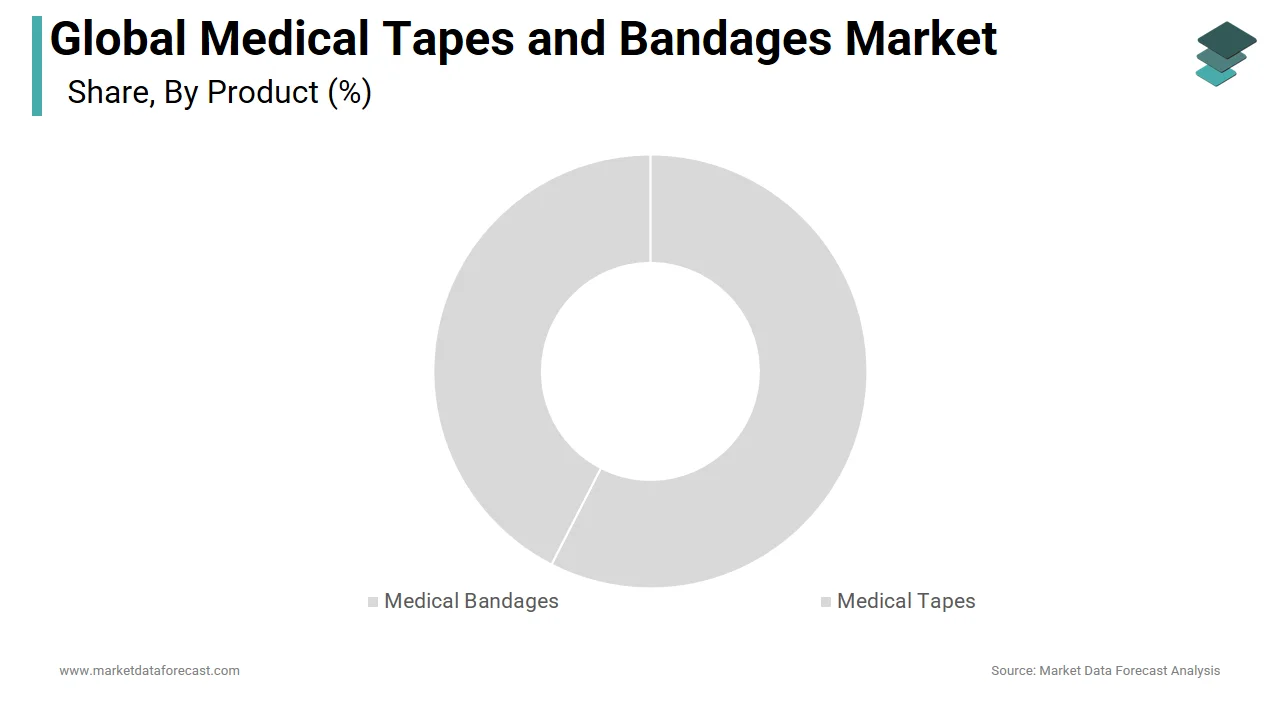
Medical bandages represented the largest segment in the global medical tapes and bandages market, accounting for 64.3% of total market revenue in 2024. This dominance is primarily attributed to the widespread use of bandages in wound care settings across hospitals, clinics, homecare environments, and ambulatory surgical centers.
One of the key factors driving this segment’s leadership is the high demand for compression bandages in managing chronic conditions such as venous leg ulcers and lymphedema. These bandages are essential for improving blood circulation and reducing swelling, making them a staple in both clinical and post-discharge care.
Besides, the prevalence of traumatic injuries and burn cases has further boosted consumption. With increasing awareness of proper wound management and growing healthcare expenditure, medical bandages continue to hold a dominant position in the industry.
Medical tapes are emerging as the fastest-growing product segment in the medical tapes and bandages market, projected to expand at a CAGR of 7.8%. This growth is driven by the rising adoption of specialized adhesive products in surgical and wound care applications where securement, breathability, and skin compatibility are crucial.
A major factor fueling this expansion is the increased usage of medical tapes in minimally invasive surgeries (MIS). Silicone-based and hypoallergenic tapes are increasingly preferred for securing catheters, sensors, and lightweight dressings without damaging delicate skin.
Moreover, the surge in sports-related injuries has led to higher demand for kinesiology tapes and athletic strapping products. With ongoing innovations in breathable, waterproof, and antimicrobial formulations, medical tapes are poised for sustained growth across diverse healthcare and rehabilitation settings.
By Application Insights
Traumatic wound treatment commanded the application segment in the medical tapes and bandages market, capturing 32.6% of total market share in 2024. This is attributed to the high incidence of road accidents, falls, industrial injuries, and combat-related trauma globally.
In emergency settings, rapid wound coverage is critical to preventing infections and facilitating early healing, making trauma wound management a top priority in pre-hospital and hospital care.
Furthermore, the rise in urbanization and motor vehicle usage has contributed to an increase in road traffic accidents (RTAs). The WHO Global Status Report on Road Safety indicates that over 1.3 million people die each year due to RTAs, while millions more sustain non-fatal injuries requiring extensive wound care. Military and disaster response agencies also rely heavily on durable, absorbent bandages and adhesive tapes for field triage and stabilization.
With advancements in trauma care protocols and greater availability of first-aid supplies, the demand for high-performance wound dressings and securement materials continues to grow, solidifying traumatic wound treatment as the leading application area in the market.
Ulcer treatment is the fastest-growing application segment in the medical tapes and bandages market, expected to expand at a CAGR of 8.2%. This rapid growth is primarily driven by the rising prevalence of chronic wounds such as diabetic foot ulcers, pressure ulcers, and venous leg ulcers, particularly among aging populations.
Proper ulcer management involves the use of specialized dressings, compression bandages, and non-adherent tapes that maintain a moist healing environment while preventing maceration and infection.
In addition, regulatory bodies and health organizations are emphasizing early intervention to reduce amputation risks. This has prompted healthcare providers to adopt advanced ulcer-specific bandaging solutions that offer antimicrobial properties and improved adherence. With the growing burden of chronic diseases and increasing investments in wound care infrastructure, the ulcer treatment segment is positioned for accelerated growth across both developed and emerging healthcare markets.
By End-User Insights
Hospitals led the end-user segment of the medical tapes and bandages market, holding 41.5% of total market share in 2024. This lead position is attributable to the high volume of surgical procedures, emergency treatments, and inpatient wound care services conducted within hospital settings.
Hospitals serve as primary centers for complex wound management, including burn injuries, trauma cases, and chronic ulcer treatments, all of which necessitate extensive use of medical tapes and bandages.
Also, hospital-acquired infections (HAIs) remain a significant concern, prompting the adoption of antimicrobial-coated and sterile wound care products. As reported by the Centers for Disease Control and Prevention (CDC), nearly 1 in 31 hospital patients has at least one HAI on any given day, reinforcing the need for high-quality, infection-preventive bandaging materials.
Moreover, government initiatives promoting standardized wound care protocols have bolstered procurement of medical tapes and bandages by public and private hospitals. With continuous advancements in surgical techniques and post-operative recovery strategies, hospitals remain the most significant consumer segment in the medical tapes and bandages market.
Homecare settings are the fastest-growing end-user segment in the medical tapes and bandages market, projected to expand at a CAGR of 9.1%. This growth is primarily fueled by the rising preference for outpatient wound care and the increasing geriatric population requiring long-term wound management.
With limited access to frequent hospital visits, these patients increasingly rely on home-based wound care solutions, including easy-to-use bandages and self-adhesive tapes.
The expansion of telemedicine platforms has further facilitated remote wound monitoring, allowing caregivers and patients to manage wounds effectively at home. Also, virtual consultations have significantly improved patient compliance with prescribed wound care regimens, boosting demand for user-friendly medical tapes and bandages.
Besides, e-commerce growth and direct-to-consumer sales of medical supplies have made wound care products more accessible outside clinical environments. With rising healthcare costs and a shift toward decentralized care models, home care settings are set to drive substantial market expansion in the coming decade.
REGIONAL ANALYSIS
North America maintained a leading position in the global medical tapes and bandages market, contributing 33.6% of total market revenue in 2024. The region's dominance is underpinned by its well-developed healthcare infrastructure, high healthcare expenditure, and strong presence of major manufacturers such as 3M Health Care, Johnson & Johnson, and Medline Industries. In addition, the rising prevalence of chronic diseases, including diabetes and obesity, has increased the demand for advanced wound care products. The growing adoption of biocompatible and hypoallergenic tapes, coupled with favorable reimbursement policies, further supports market expansion. With continuous innovation in wound care technologies and a robust regulatory framework ensuring product quality, North America remains a pivotal market for medical tapes and bandages.

Europe accounts for a significant portion of the global medical tapes and bandages market. The region’s demand is primarily driven by an aging population, increasing incidence of chronic wounds, and the expansion of home healthcare services. Countries like Germany, France, and the UK have well-established healthcare systems that emphasize infection control and patient safety, fostering the adoption of high-quality wound care products. According to the European Wound Management Association (EWMA), over 10% of hospital budgets in Europe are allocated to treating chronic wounds, highlighting the significance of effective bandaging and securement solutions. Moreover, the implementation of stringent regulatory standards such as the EU Medical Device Regulation (MDR) has ensured product reliability and traceability. With growing awareness of advanced wound management practices and rising investments in telehealth-enabled home care, Europe continues to be a key growth engine for the medical tapes and bandages industry.
Asia Pacific is the fastest-growing region in the medical tapes and bandages market. Rapid urbanization, rising disposable incomes, and expanding healthcare infrastructure are key drivers behind this growth. Countries such as India, China, and Japan are witnessing a surge in surgical procedures and chronic disease prevalence, necessitating increased use of wound care products. According to the World Bank, healthcare spending in APAC is growing at an annual rate of over 7%, supporting broader access to modern medical supplies. In addition, government initiatives aimed at improving rural healthcare access and promoting preventive care are enhancing product penetration. The rise in sports participation and workplace injuries has also contributed to higher demand for kinesiology tapes and elastic bandages.
Middle East & Africa is still emerging markets. The region is experiencing steady growth due to improvements in healthcare infrastructure and increasing awareness of proper wound care practices. Gulf Cooperation Council (GCC) countries such as Saudi Arabia, the UAE, and Qatar are investing heavily in upgrading their medical facilities, leading to greater adoption of advanced wound management products. According to the World Health Organization (WHO), the Middle East has seen a notable rise in diabetes-related foot ulcers, necessitating the use of specialized dressings and securement tapes. Meanwhile, sub-Saharan Africa faces challenges related to limited healthcare funding and supply chain inefficiencies; however, international aid programs and partnerships with NGOs are helping improve access to basic wound care products.
Latin America holds decent share of tthe otal global medical tapes and bandages market revenues. Brazil, Mexico, and Argentina are the primary contributors, driven by rising healthcare expenditures and an expanding network of ambulatory care centers. In addition, the growing popularity of aesthetic and reconstructive surgeries in countries like Brazil and Colombia has spurred demand for post-operative dressings and adhesive tapes. Despite economic fluctuations and regulatory complexities, Latin America offers promising growth prospects due to ongoing healthcare modernization efforts and increasing consumer awareness of advanced wound management solutions.
COMPETITIVE LANDSCAPE
The competitive landscape of the medical tapes and bandages market is characterized by the presence of well-established global players alongside a growing number of regional manufacturers striving to capture market share. While multinational corporations dominate due to their extensive R&D capabilities, brand recognition, and wide distribution networks, smaller firms are leveraging cost advantages and localized production to challenge incumbents. This dynamic fosters a highly competitive environment where differentiation is driven by product innovation, material advancements, and enhanced usability.
A key aspect of competition lies in the development of next-generation wound care products that address specific challenges such as skin sensitivity, microbial resistance, and patient mobility. Companies are increasingly investing in biocompatible adhesives, breathable materials, and antimicrobial coatings to meet evolving clinical demands. Additionally, there is a growing emphasis on sustainability, with manufacturers launching eco-friendly packaging and biodegradable options to align with global environmental initiatives.
Market participants are also strengthening their positions through strategic partnerships, geographic expansion, and digital integration. Telemedicine compatibility, e-commerce penetration, and direct-to-consumer marketing are becoming essential components of competitive strategy. As demand for wound care continues to rise globally, the battle for market leadership will intensify, driving sustained investment in product development, customer engagement, and operational efficiency.
KEY MARKET PLAYERS
Urgo Medical, Molnlycke Health Care AB, Ethicon Inc. (JOHNSON & JOHNSON), Medtronic, 3M, Beiersdorf AG, Winner Medical Group, Dynarex Corporation, McKesson Corporation, Cardinal Health, 3L Medicinal Products Group, B. Braun Melsungen AG, Paul Hartmann AG, and Smith & Nephew PLC are some of the notable companies in the global medical tapes and bandages market profiled in this report.
TOP LEADING PLAYERS IN THE MARKET
- 3M Health Care is a global leader in medical tapes and bandages, offering a diverse portfolio of wound care products designed for both clinical and home settings. The company’s expertise lies in developing innovative adhesive technologies that provide securement without compromising patient comfort. With a strong emphasis on research and development, 3M continuously introduces advanced solutions such as hypoallergenic tapes and breathable dressings tailored for sensitive skin. Its products are widely used in surgical units, emergency departments, and rehabilitation centers across the world. By maintaining a balance between quality, performance, and accessibility, 3M has solidified its position as a trusted name in the wound care industry.
- Smith & Nephew is a key player known for its comprehensive range of advanced wound care and orthopedic support products. The company focuses on integrating cutting-edge materials with clinical insights to deliver effective medical tapes and bandages that enhance healing outcomes. Through strategic partnerships and continuous product innovation, Smith & Nephew has established a strong presence in both developed and emerging markets. The company also invests heavily in education and training programs for healthcare professionals, ensuring optimal use of its products. Its commitment to sustainability and patient-centric design further strengthens its leadership in the medical tapes and bandages market.
- Medtronic, through its legacy business from the acquisition of Covidien, plays a pivotal role in the global medical tapes and bandages market. The company offers a broad spectrum of wound management solutions, including surgical dressings, elastic wraps, and self-adherent fixation tapes. Medtronic emphasizes integration of its wound care products into broader post-operative care pathways, enhancing recovery outcomes for patients. Its focus on combining clinical efficacy with ease of application has made its products popular among clinicians and caregivers alike. With a robust distribution network and a long-standing reputation for reliability, Medtronic remains a major force in shaping the modern landscape of wound care solutions.
TOP STRATEGIES USED BY KEY MARKET PARTICIPANTS
One of the primary strategies employed by leading players in the medical tapes and bandages market is product innovation and development of advanced wound care solutions. Companies are focusing on introducing biocompatible, hypoallergenic, and antimicrobial-impregnated products that cater to diverse patient needs while minimizing adverse reactions. These innovations not only improve clinical outcomes but also enhance user experience, especially in homecare environments.
Another critical approach is strategic collaborations, mergers, and acquisitions to expand product portfolios and geographic reach. Major companies are partnering with research institutions, startups, and regional distributors to accelerate technology integration and gain access to emerging markets. These alliances help firms strengthen their supply chains and offer more comprehensive wound management solutions tailored to local healthcare demands.
Lastly, expansion into digital health platforms and telemedicine-enabled wound monitoring systems is gaining momentum. By integrating smart wound care solutions with remote diagnostics, manufacturers are enabling real-time tracking of healing progress, thereby improving treatment adherence and reducing hospital readmissions. This digital transformation is reshaping how medical tapes and bandages are utilized in modern healthcare.
GLOBAL MEDICAL TAPES AND BANDAGES MARKET NEWS
- In February 2024, 3M Health Care introduced a new line of ultra-thin, high-strength medical tapes designed specifically for neonatal and geriatric patients, aiming to reduce skin trauma while ensuring reliable adhesion during prolonged wear.
- In May 2024, Smith & Nephew launched a digital wound tracking platform integrated with RFID-enabled bandages, allowing healthcare providers to monitor healing progress remotely and optimize dressing change schedules based on real-time data.
- In August 2024, Mölnlycke Health Care expanded its manufacturing facility in Malaysia to increase production capacity for absorbent wound dressings and compression bandages, supporting growing demand in the Asia Pacific region.
- In November 2024, Johnson & Johnson announced a partnership with a European biotech firm to develop bioactive wound dressings infused with regenerative peptides, aimed at accelerating chronic wound healing in diabetic patients.
- In January 2025, BSN medical unveiled an all-in-one wound care kit tailored for home healthcare settings, featuring a curated selection of cohesive bandages, silicone tapes, and moisture-retaining dressings to simplify at-home treatment protocols.
MARKET SEGMENTATION
This research report on the global medical tapes and bandages market has been segmented and sub-segmented into the following categories.
By Product
- Medical Bandages
- Adhesive Bandages
- Cohesive And Elastic Bandages
- Medicinal Bandages
- Gauze Bandages
- Other Medical Bandages
- Medical Tapes
- Plastic Tapes
- Paper Tapes
- Fabric Tapes
- Others
By Application
- Traumatic Wound Treatment
- Surgical Wound Treatment
- Ulcer Treatment
- Sports Injury Treatment
- Burn Injury Treatment
- Others
By End-User
- Ambulatory Care Centers
- Hospitals
- Clinics
- Homecare Settings
By Region
- North America
- Europe
- Asia Pacific
- Latin America
- Middle East and Africa