- Product Description Description
- Table of Contents TOC
- List of Table & Figure LOT
- Get Free Sample PDF Sample PDF
Market Size, 2025
$698.08 MnMarket Estimate, 2026
$773.68 MnMarket Forecast, 2034
$1,761.25 MnCAGR, 2026–2034
10.83%Executive Summary: Middle East and Africa Anti-Microbial Additives Market
- Market Scope: Comprehensive regional analysis of the Middle East and Africa anti-microbial additives market covering agent types (inorganic, organic), applications (plastics, paints and coatings), end-user segments (packaging, healthcare), and country-level developments across Saudi Arabia, the UAE, Israel, South Africa, and the broader MEA region.
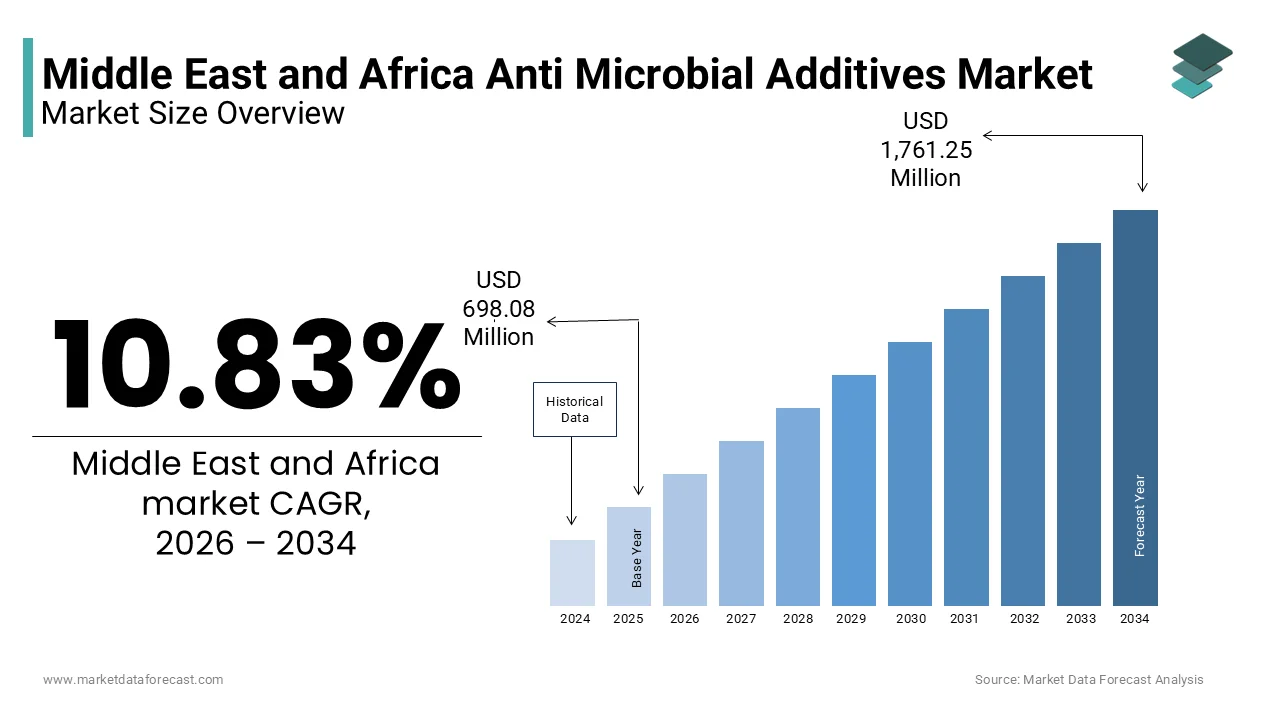
- Market Valuation: Valued at USD 698.08 million in 2025, reaching USD 773.68 million in 2026, and projected to hit USD 1,761.25 million by 2034, registering a robust CAGR of 10.83% from 2026 to 2034.
- Primary Growth Drivers: Extreme climatic conditions (high temperatures and humidity) accelerating material degradation and preservation needs, coupled with stringent hygiene regulations in healthcare and food packaging sectors. Key restraints include the high cost of advanced technologies and a shortage of local technical expertise.
Key Market Segment Metrics (2026–2034)
| Category | Leading Segment (2025 Position) | Fastest-Growing Segment |
|---|---|---|
| By Type | Inorganic Additives (dominant due to superior thermal stability and long-lasting metal-based protection under intense heat) | Organic Additives (fastest CAGR of 7.4% driven by demand for bio-based, non-toxic, and sustainable solutions) |
| By Application | Plastics (led the market via extensive integration in retail packaging, food containers, and consumer goods) | Paints and Coatings (fastest CAGR of 8.1% propelled by green building initiatives and indoor air quality concerns) |
| By End User | Packaging (captured the largest share due to stringent food safety rules and shelf-life extension demands) | Healthcare (promising CAGR of 8.2% driven by rigorous hospital-acquired infection control measures) |
| By Country / Region | Saudi Arabia (held the major share backed by Vision 2030 infrastructure mega-projects and strict building codes) | United Arab Emirates (sophisticated urban development, medical tourism, and luxury hospitality standards) |
Major Market Participants & Market Structure
Market Structure: Highly competitive landscape comprising major multinational chemical giants supplying high-performance preservation technologies to cater to demanding climatic and regulatory regional standards.
Key Companies: BASF SE, Biocote Limited, Sanitized AG, A. Schulman, Inc., PolyOne Corporation, Clariant AG, Microban International, The Dow Chemical Company, King Plastic Corporation, and Steritouch Ltd.
Middle East and Africa Anti Microbial Additives Market Size
The Middle East and Africa anti microbial additives market size was valued at USD 698.08 million in 2025 and is projected to reach USD 1,761.25 million by 2034 from USD 773.68 million in 2026, growing at a CAGR of 10.83%.
The hot and humid environment of Middle East and Africa accelerates microbial degradation, making these protective agents indispensable for maintaining quality and safety standards. As per the World Health Organization, infectious diseases remain a significant public health concern in many African nations, driving stricter hygiene protocols in healthcare and consumer goods manufacturing. The United Nations Industrial Development Organization emphasizes that industrial development in the Middle East is increasingly focusing on durability and sustainability, which necessitates advanced preservation technologies. Furthermore, the Gulf Cooperation Council countries have implemented rigorous building codes that require materials to withstand extreme weather without biological deterioration. This regulatory push ensures that construction and infrastructure projects utilize treated materials to prevent mold and structural weakness. The rising urbanization rate, which the United Nations Department of Economic and Social Affairs estimates will reach 60 percent in the region by 2030, fuels demand for durable housing and infrastructure. Consequently, manufacturers are prioritizing anti-microbial solutions to meet these evolving standards. The market is also influenced by the growing textile industry in Egypt and Morocco, where anti odour and anti-bacterial finishes are becoming standard for export quality garments. These factors collectively create a robust foundation for the adoption of anti-microbial additives across diverse industrial applications in the Middle East and Africa.
MARKET DRIVERS
Extreme Climatic Conditions Accelerate Material Degradation and Preservation Needs
The harsh climatic conditions prevalent across the Middle East and parts of Africa are a key factor driving the Middle East and Africa anti-microbial additives market growth. High temperatures combined with humidity in coastal regions create an ideal environment for rapid microbial growth, leading to the deterioration of plastics, textiles, and construction materials. According to the World Meteorological Organization, average temperatures in the Gulf region frequently exceed 45 degrees Celsius during summer months, while humidity levels in coastal areas can surpass 80%. These conditions significantly accelerate the breakdown of organic and synthetic materials, causing discoloration, odor, and structural weakness. The International Energy Agency notes that cooling demands are rising, but indoor environments still face moisture issues that promote mold growth on walls and furnishings. To combat this, manufacturers incorporate anti-microbial agents into paints, sealants, and polymer compounds to ensure longevity and aesthetic appeal. In the construction sector, the Saudi Arabian Standards Organization mandates specific durability criteria for building materials used in large scale infrastructure projects. This regulatory requirement forces contractors to use treated materials that resist biological attack. Additionally, the textile industry in North Africa faces challenges with sweat induced bacterial growth in fabrics, prompting brands to integrate anti-microbial finishes for sportswear and uniforms. The African Development Bank highlights that infrastructure maintenance costs are high due to environmental wear, making preventive treatments economically viable. These environmental pressures ensure a consistent and growing demand for effective anti-microbial solutions that protect assets and enhance product performance in extreme weather conditions.
Stringent Hygiene Regulations in Healthcare and Food Packaging Sectors Drive Adoption
The implementation of stringent hygiene regulations in the healthcare and food packaging sectors is a significant catalyst for the expansion of the anti-microbial additives market in the Middle East and Africa. Governments and regulatory bodies are increasingly enforcing strict standards to prevent hospital acquired infections and foodborne illnesses, which remain prevalent in many parts of the region. As per the World Health Organization, healthcare associated infections affect millions of patients globally, with higher rates observed in developing regions due to inadequate sterilization practices. In response, countries like the United Arab Emirates and South Africa have updated their medical device and facility guidelines to require surfaces and equipment with inherent anti-microbial properties. The Gulf Standardization Organization has established rigorous criteria for food contact materials, mandating that packaging prevents microbial contamination throughout the supply chain. The Food and Agriculture Organization of the United Nations reports that post-harvest losses in Africa are substantial, often exceeding 30% for perishable goods due to spoilage. Anti-microbial additives in packaging films and containers help mitigate these losses by inhibiting bacterial and fungal growth. Furthermore, the rise of modern retail chains and supermarkets in urban centers has increased consumer expectations for safe and long lasting food products. Retailers are pressuring suppliers to adopt advanced preservation technologies to reduce waste and ensure compliance with safety audits. The Egyptian Drug Authority also enforces strict controls on pharmaceutical packaging to maintain drug efficacy. These regulatory frameworks create a mandatory demand for anti-microbial additives, driving manufacturers to innovate and integrate these solutions into their production processes to meet legal and safety requirements.
MARKET RESTRAINTS
High Cost of Advanced Anti-Microbial Technologies Limits Widespread Adoption
The high cost associated with advanced anti-microbial technologies is primarily hindering the expansion of the Middle East and Africa anti-microbial additives market. Many small and medium sized enterprises in the region operate with tight profit margins and lack the financial resources to invest in premium preservation solutions. According to the World Bank, access to finance remains a critical challenge for businesses in Sub Saharan Africa, with interest rates often prohibitively high for capital intensive upgrades. Anti-microbial additives, particularly those based on silver ions or specialized organic compounds, are considerably more expensive than conventional preservatives. As per the International Monetary Fund, inflationary pressures in several African countries have increased input costs, forcing manufacturers to prioritize essential expenses over value added features. In the plastics and packaging industry, price sensitivity is acute, as buyers often choose the lowest cost option to remain competitive. This economic reality limits the penetration of high performance anti-microbial agents to only premium segments or export oriented companies. Furthermore, the lack of local production facilities for these specialized chemicals means that most additives must be imported, incurring additional tariffs and logistics costs. The African Continental Free Trade Area aims to reduce trade barriers, but non-tariff obstacles and currency fluctuations continue to impact pricing stability. Small scale textile producers in Morocco and Tunisia often revert to cheaper, less effective alternatives to keep garment prices low for mass markets. This cost barrier prevents the broader integration of anti-microbial technologies, restricting market growth to larger multinational corporations and high end applications while leaving the majority of the market underserved.
Lack of Technical Expertise and Awareness Hinders Effective Implementation
The lack of technical expertise and awareness regarding the benefits and proper application of anti-microbial additives hinders their effective implementation across various industries in the Middle East and Africa, which is further impeding the regional market growth. Many local manufacturers and processors are unfamiliar with the latest preservation technologies and do not fully understand the long term economic benefits of preventing microbial degradation. As per the United Nations Educational Scientific and Cultural Organization, there is a significant skills gap in the industrial sector, with limited training programs available for chemical engineering and material science professionals. This knowledge deficit leads to improper usage, such as incorrect dosage or incompatible formulations, which can render the additives ineffective or even cause product defects. The African Union highlights that technology transfer from developed nations is often slow due to intellectual property concerns and lack of collaborative frameworks. In the construction industry, contractors may overlook the importance of anti-microbial treatments in favor of immediate cost savings, lacking awareness of the future maintenance burdens. The World Health Organization notes that public health campaigns often focus on immediate disease treatment rather than preventive material science, leaving industrial stakeholders uninformed about hygiene enhancing technologies. Additionally, there is limited local research and development capacity to customize anti-microbial solutions for specific regional challenges, such as unique fungal strains or extreme heat conditions. This reliance on generic imported solutions often results in suboptimal performance. Without adequate education and technical support, potential users remain skeptical or indifferent, slowing down market penetration. Bridging this knowledge gap requires sustained investment in training and demonstration projects, which are currently insufficient in many parts of the region.
MARKET OPPORTUNITIES
Expansion of Green Building Initiatives Creates Demand for Sustainable Solutions
The expansion of green building initiatives across the Middle East and Africa presents a substantial opportunity for the Middle East and Africa anti-microbial additives market growth. Governments and private developers are increasingly prioritizing environmentally responsible construction practices to reduce carbon footprints and improve indoor air quality. As per the United Nations Environment Programme, the building sector accounts for nearly 40% of global energy related carbon emissions, prompting a shift toward sustainable materials. In the Middle East, countries like the United Arab Emirates and Saudi Arabia have launched ambitious green building codes under visions such as Vision 2030, which mandate the use of non-toxic and durable materials. Anti-microbial additives derived from natural sources, such as plant extracts or chitosan, align with these sustainability goals by offering effective protection without harmful volatile organic compounds. The Green Building Council of South Africa promotes certifications that reward the use of healthy building materials, encouraging architects and builders to specify anti-microbial paints and coatings. These initiatives create a niche market for bio based additives that appeal to environmentally conscious consumers and corporate clients. Furthermore, the rise of smart cities in the region, such as NEOM in Saudi Arabia, demands innovative materials that ensure long term hygiene and minimal maintenance. Manufacturers who develop certified green anti-microbial solutions can differentiate themselves and capture premium contracts in these high profile projects. The European Union’s green deal also influences export markets, pushing African manufacturers to adopt sustainable practices to maintain access to international buyers. This regulatory and cultural shift toward sustainability opens new avenues for innovation and growth in the anti-microbial additives sector.
Growth in Personal Care and Hygiene Products Offers New Application Avenues
The rapid growth in the personal care and hygiene products sector offers new and lucrative application avenues for anti-microbial additives in the Middle East and Africa. Rising disposable incomes and increasing health awareness are driving demand for soaps, sanitizers, lotions, and cosmetics that offer enhanced protection against pathogens. According to the Euromonitor International, the personal care market in the Middle East and Africa is expanding at a steady pace, with consumers seeking products that provide both aesthetic and functional benefits. Anti-microbial agents such as triclosan alternatives and natural essential oils are being incorporated into deodorants, wipes, and skincare formulations to prevent odor and infection. The World Health Organization emphasizes the importance of hand hygiene in preventing disease transmission, which has boosted the sales of antibacterial soaps and sanitizers since the recent global health crises. In Africa, the rise of local beauty brands is creating opportunities for customized formulations that cater to specific skin types and climatic conditions. These brands are increasingly using anti-microbial additives to extend product shelf life and ensure safety in hot climates where preservation is challenging. The Gulf Cooperation Council countries have seen a surge in luxury personal care imports, driving local manufacturers to upgrade their formulations to compete. Additionally, the baby care segment is growing, with parents demanding gentle yet effective anti-microbial protection in diapers and wipes. This trend encourages innovation in mild and safe additives that meet strict dermatological standards. By tapping into this expanding consumer base, additive manufacturers can diversify their portfolios and achieve higher value growth in the personal care domain.
MARKET CHALLENGES
Regulatory Fragmentation and Compliance Complexities Impede Market Entry
Regulatory fragmentation and compliance complexities are a significant challenge for the Middle East and Africa anti-microbial additives market. The region lacks a unified regulatory framework, with each country having its own distinct standards and approval processes for chemical substances. According to the World Trade Organization, non-tariff barriers such as differing technical regulations create significant hurdles for cross border trade. In the Gulf Cooperation Council, standards are harmonized to some extent, but enforcement varies, while African nations often rely on disparate national agencies with limited resources. The European Chemicals Agency regulations influence exports, but local adaptations are required, adding to the compliance burden. Manufacturers must navigate multiple registration procedures, testing requirements, and labeling rules, which increases time to market and operational costs. The African Union has attempted to harmonize pharmaceutical and chemical regulations, but progress is slow due to political and logistical challenges. This uncertainty discourages smaller players from entering the market and limits the availability of innovative products. Furthermore, frequent changes in import duties and customs procedures add another layer of complexity. According to the International Chamber of Commerce, inconsistent regulatory environments increase business risks and deter foreign direct investment. Companies must maintain dedicated legal and compliance teams to manage these variations, which strains resources. The lack of transparency in some jurisdictions also leads to delays and unpredictable outcomes. Until greater harmonization is achieved, market participants will continue to face significant administrative and financial barriers that hinder efficient distribution and growth across the region.
Supply Chain Disruptions and Raw Material Volatility Affect Production Stability
Supply chain disruptions and raw material volatility is further challenging the regional market expansion. The region relies heavily on imports for key chemical precursors and specialized ingredients, making it vulnerable to global logistical bottlenecks and price fluctuations. According to the United Nations Conference on Trade and Development, shipping delays and port congestion have significantly impacted import timelines in recent years. Political instability in certain parts of Africa and the Middle East further exacerbates these issues, leading to unpredictable border closures and transport interruptions. According to the World Bank, infrastructure deficits, such as poor road networks and limited cold storage facilities, increase the risk of spoilage and damage during transit. Raw material prices for silver, zinc, and organic compounds are subject to global market dynamics, including currency exchange rates and geopolitical tensions. The International Monetary Fund highlights that inflation and currency devaluation in several African countries make importing expensive inputs financially challenging for local manufacturers. This volatility forces companies to hold larger inventories, tying up capital and increasing storage costs. Additionally, the lack of local production capabilities for high purity chemicals means that any disruption in global supply chains directly affects domestic production schedules. Manufacturers struggle to maintain consistent quality and delivery times, which can erode customer trust. Diversifying supply sources is difficult due to limited regional alternatives. These logistical and economic uncertainties create a fragile operating environment that requires constant adaptation and risk management strategies to ensure business continuity.
REPORT COVERAGE
| REPORT METRIC | DETAILS |
| Market Size Available | 2025 to 2034 |
| Base Year | 2025 |
| Forecast Period | 2026 to 2034 |
| CAGR | 10.83% |
| Segments Covered | By Type, Application, End User, and Region |
| Various Analyses Covered | Global, Regional, & Country Level Analysis; Segment-Level Analysis; DROC; PESTLE Analysis; Porter’s Five Forces Analysis; Competitive Landscape; Analyst Overview of Investment Opportunities |
| Regions Covered | KSA, UAE, Israel, South Africa, And Ethiopia, Kenya, Egypt, Sudan, Rest of GCC Countries, and Rest of MEA |
| Market Leaders Profiled | BASF SE, Biocote Limited, Sanitized AG, A. Schulman, Inc., Polyone Corporation, Clariant AG , Microban International, The Dow Chemical Company, King Plastic Corporation, and Steritouch Ltd. |
SEGMENTAL ANALYSIS
By Type Insights
The inorganic segment dominated the market by commanding for the highest share of the regional market in 2025. The dominance of inorganic segment in the regional market is attributed to its superior thermal stability and long lasting efficacy. These metal based agents are highly resistant to high temperatures, which is making them ideal for integration into plastics and coatings that undergo rigorous manufacturing processes. According to the International Copper Association, copper ions exhibit broad spectrum antimicrobial activity that remains effective even under extreme heat conditions common in the Gulf region. This durability ensures that the protective properties do not degrade during extrusion or molding, providing consistent performance throughout the product lifecycle. The World Health Organization recognizes silver as a potent antimicrobial agent with a low risk of resistance development, which enhances its appeal for medical and hygiene applications. In the construction sector, zinc oxide is widely used in paints and concrete to prevent mold growth on surfaces exposed to humidity. The Saudi Arabian Standards Organization mandates specific durability standards for building materials, favoring inorganic additives that offer permanent protection rather than temporary solutions. Furthermore, inorganic additives do not volatilize or leach out easily, ensuring sustained protection over many years. This longevity reduces the need for frequent reapplication or replacement, offering cost savings for industrial users. According to the African Development Bank, infrastructure projects require materials with minimal maintenance needs, further driving the preference for robust inorganic solutions. These technical advantages ensure that inorganic additives remain the preferred choice for demanding industrial applications across the region.
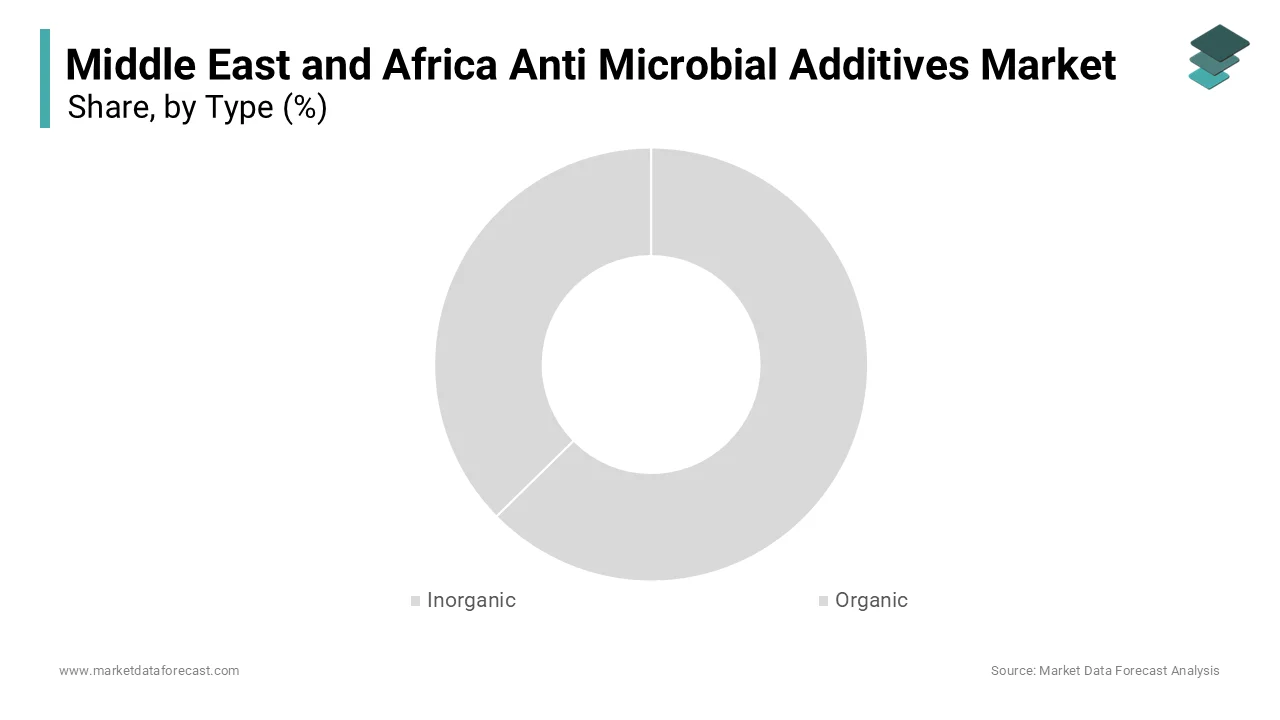
However, the organic additives segment is projected to register the highest CAGR of 7.4% over the forecast period in the regional market owing to the rising demand for bio based and non-toxic solutions. Consumers and manufacturers are increasingly shifting away from heavy metal based additives due to environmental concerns and potential toxicity issues. According to the United Nations Environment Programme, there is a global push to reduce the release of persistent pollutants, which is prompting industries to seek biodegradable alternatives. Organic antimicrobials derived from plant extracts, essential oils, and chitosan offer effective protection while aligning with sustainability goals. The European Union’s restrictions on certain biocides have influenced import standards in the Middle East, encouraging the adoption of safer organic options. In the personal care and textile sectors, brands are marketing products as natural and eco-friendly, which requires the use of organic preservatives. The African Union promotes green industrialization strategies that favor renewable and non-hazardous inputs and this supports the growth of this segment. Furthermore, organic additives are often compatible with a wider range of materials and do not cause discoloration, making them attractive for aesthetic sensitive applications. The Global Wellness Institute reports that consumers are willing to pay a premium for products free from synthetic chemicals, driving innovation in this space. As awareness of environmental health grows, the demand for organic antimicrobial solutions continues to accelerate, outpacing traditional inorganic categories in terms of growth rate.
By Application Insights
The plastics segment led the market by accounting for the major share of the regional market in 2025. The growth of the plastics segment in the regional market can be credited to its extensive use in packaging and consumer goods. Plastic materials are ubiquitous in the region, used for everything from food containers to household items, making them a primary target for microbial contamination. According to Plastics Europe, global plastic production continues to rise, with significant consumption in emerging markets. In the Middle East, the growing retail sector demands durable and hygienic packaging solutions to protect products during distribution and storage. Anti-microbial additives are incorporated into polyethylene, polypropylene, and polystyrene to prevent bacterial growth and odor formation. The Gulf Cooperation Council countries have strict food safety regulations that encourage the use of treated packaging to minimize contamination risks. The World Health Organization notes that proper packaging is critical for preventing foodborne illnesses, which are prevalent in warmer climates. Additionally, the rise of single use plastics in healthcare settings, such as syringes and IV bags, requires inherent antimicrobial protection to ensure patient safety. The African Continental Free Trade Area facilitates the movement of packaged goods, increasing the volume of plastic products that require preservation. Manufacturers prefer integrating additives during the compounding stage, as it offers uniform protection and does not alter the physical properties of the plastic. This widespread application across diverse plastic products ensures that this segment remains the largest contributor to market revenue, driven by the sheer volume of plastic consumption in the region.
However, the paints and coatings segment is anticipated to witness a promising CAGR of 8.1% during the forecast period in the regional market due to the green building initiatives and indoor air quality concerns. Governments and developers in the Middle East are increasingly adopting sustainable construction practices that prioritize healthy living environments. According to the United Nations Environment Programme, indoor air pollution is a significant health risk, with mold and bacteria contributing to respiratory issues. Anti-microbial coatings are essential for preventing microbial growth on walls and ceilings, especially in air conditioned spaces where moisture can accumulate. The United Arab Emirates and Saudi Arabia have implemented green building codes that encourage the use of low volatile organic compound and antimicrobial paints. The Green Building Council of South Africa promotes certifications that reward the use of healthy materials, driving demand for specialized coatings. Furthermore, the post pandemic emphasis on hygiene has heightened awareness of surface cleanliness in homes and offices. Consumers are actively seeking paints that offer continuous protection against pathogens, reducing the need for frequent cleaning. As per the World Health Organization, the importance of clean indoor environments for public health and this is supporting regulatory measures that favor antimicrobial solutions. As urbanization increases, the demand for high quality housing grows, bringing more attention to interior finishes. These factors combine to drive rapid adoption of antimicrobial paints and coatings, making this segment the fastest growing application area in the region.
By End User Insights
The packaging segment dominated the market by capturing the largest share of the regional market in 2025. The leading position of packaging segment is primarily attributed to the stringent food safety regulations and the critical need for shelf life extension. Food spoilage is a major challenge in the region due to high temperatures and limited cold chain infrastructure. According to the Food and Agriculture Organization of the United Nations, post-harvest losses in Africa can reach up to 40% for perishable goods and this indicates the urgency for better preservation solutions. Anti-microbial additives in packaging films, bottles, and containers help inhibit the growth of bacteria and fungi, significantly extending the freshness of food products. The Gulf Standardization Organization enforces strict hygiene standards for food contact materials, mandating the use of safe and effective preservation technologies. Retailers and supermarkets are increasingly demanding packaging that ensures product safety and reduces waste, which is driving adoption among manufacturers. The World Health Organization emphasizes the role of packaging in preventing foodborne diseases, which remain a public health concern in many African countries. Furthermore, the growth of the processed food industry in urban centers creates a steady demand for protected packaging solutions. Consumers are becoming more aware of food safety issues, preferring products with visible protection claims. This regulatory and consumer pressure ensures that the packaging segment remains the largest end user of anti-microbial additives, as it directly impacts food security and public health.
However, the healthcare segment is a promising segment and is estimated to showcase a CAGR of 8.2% over the forecast period in the regional market owing to the rigorous hospital acquired infection control measures. Healthcare associated infections pose a significant burden on medical systems in the Middle East and Africa, prompting stricter hygiene protocols. According to the World Health Organization, hundreds of millions of patients are affected by healthcare associated infections globally, with higher prevalence in developing regions. Hospitals and clinics are increasingly incorporating antimicrobial additives into medical devices, surfaces, and textiles to reduce transmission risks. The Gulf Cooperation Council countries have implemented national infection prevention programs that mandate the use of antimicrobial materials in healthcare facilities. The African Union supports initiatives to strengthen health systems, including the procurement of safer medical equipment. Anti-microbial coatings on bed rails, door handles and surgical instruments provide continuous protection, complementing regular cleaning routines. The Centers for Disease Control and Prevention guidelines influence local practices, encouraging the adoption of evidence based infection control strategies. Furthermore, the rise of medical tourism in countries like the United Arab Emirates and South Africa drives demand for world class hygiene standards. Patients expect high levels of safety and cleanliness, pressuring healthcare providers to invest in advanced antimicrobial solutions. These factors combine to drive rapid adoption of anti-microbial additives in the healthcare sector, making it the fastest growing end user segment.
REGIONAL ANALYSIS
Saudi Arabia Market Analysis
The Saudi Arabia held the major share of the regional market in 2025 and is likely to experience robust expansion and maintain a leading trajectory over the next few years. The dominance of Saudi Arabia is attributed to the infrastructure projects, stringent health regulations and high government spending on construction and healthcare under Vision 2030, which prioritizes quality and sustainability. According to the General Authority for Statistics, the construction sector is expanding rapidly, with numerous mega projects requiring durable and hygienic materials. The Saudi Food and Drug Authority enforce strict standards for medical devices and food packaging, mandating the use of effective antimicrobial solutions. The hot climate needs robust protection for building materials and plastics, driving demand for inorganic additives. The Ministry of Health has initiated programs to reduce hospital acquired infections, promoting the use of antimicrobial surfaces in healthcare facilities. Additionally, the growing retail and food processing industries require advanced packaging to ensure food safety and extend shelf life. The Saudi Arabian Standards Organization collaborates with international bodies to align local regulations with global best practices, facilitating the import of high quality additives. These factors combine to create a robust and dynamic market environment, positioning Saudi Arabia as the primary engine of growth for anti-microbial additives in the region.
United Arab Emirates Market Analysis
The United Arab Emirates is expected to witness steady growth and sophisticated development in the coming years owing to its advanced healthcare system and luxury retail sector and high consumer awareness of hygiene and quality, influenced by a large expatriate population and tourism industry. According to the Dubai Department of Economy and Tourism, the hospitality sector demands high standards of cleanliness, driving the use of antimicrobial coatings and textiles in hotels and restaurants. The UAE Ministry of Health and Prevention implements rigorous infection control protocols in hospitals, encouraging the adoption of antimicrobial medical devices. The country’s focus on smart cities and sustainable building practices, such as those in Dubai and Abu Dhabi, promotes the use of green antimicrobial solutions. The Emirates Authority for Standardisation and Metrology ensures that imported additives meet safety and efficacy standards, fostering trust in premium products. The growing e commerce sector also increases demand for protective packaging to ensure product integrity during delivery. These dynamics create a sophisticated market that values innovation and performance, positioning the UAE as a key hub for high value anti-microbial additive applications.
Israel Market Analysis
Israel is projected to maintain a steady and innovative growth path over the next few years due to its advanced technology sector, strong research and development capabilities and innovation in biomedical and agricultural applications, with a focus on high efficiency and sustainability. According to the Central Bureau of Statistics, Israel invests heavily in research and development, leading to the development of novel antimicrobial technologies such as nanoparticle based solutions. The Ministry of Health regulates medical products strictly, ensuring high safety standards for antimicrobial devices and coatings. The agricultural sector utilizes antimicrobial additives in irrigation systems and packaging to enhance food security and export quality. The Israeli Standards Institution aligns with international norms, facilitating trade and technology exchange. The country’s startup ecosystem fosters innovation in green chemistry, producing bio based antimicrobial agents that appeal to global markets. These factors position Israel as a leader in technological advancement within the regional market, driving continuous adoption.
COMPETITIVE LANDSCAPE
The competition in the Middle East and Africa anti microbial additives market is characterized by the presence of global chemical giants and specialized regional players who vie for dominance through innovation and strategic alliances. Large multinational corporations leverage their extensive research and development capabilities to introduce advanced formulations that address specific climatic and regulatory challenges in the region. They benefit from established supply chains and strong brand recognition which facilitate entry into new markets. Local and regional companies compete by offering cost effective solutions and personalized customer service tailored to specific industry needs. The market sees intense rivalry in sectors such as construction and packaging where price sensitivity is high. Differentiation is achieved through product performance sustainability credentials and regulatory compliance. Collaborations with local distributors are crucial for navigating logistical complexities and cultural nuances. The entry of new players focusing on natural and organic additives adds further complexity to the competitive landscape. Companies must continuously innovate and adapt to changing consumer preferences and regulatory requirements to maintain their market position. This dynamic environment fosters continuous improvement and drives the adoption of newer safer and more effective antimicrobial technologies across various industrial applications in the region.
KEY MARKET PLAYERS
Some of the key players in the Middle East and Africa anti microbial additives market are
- BASF SE
- Biocote Limited
- Sanitized AG
- A. Schulman, Inc.
- Polyone Corporation
- Clariant AG
- Microban International
- The Dow Chemical Company
- King Plastic Corporation
- Steritouch Ltd.
Top Players in the Market
- BASF SE maintains a strong presence in the Middle East and Africa anti microbial additives market through its comprehensive portfolio of high performance chemical solutions. The company leverages its global expertise to provide innovative additives for plastics, coatings, and textiles that meet regional hygiene standards. Recent actions include the expansion of its technical service centers in Dubai and Johannesburg to offer localized support and custom formulation services. BASF actively collaborates with local manufacturers to develop sustainable and bio based antimicrobial agents that align with green building initiatives. The company invests heavily in research and development to create novel silver and zinc based compounds that offer superior thermal stability. By focusing on regulatory compliance and product safety, BASF strengthens its reputation as a trusted partner for industrial clients. Its commitment to sustainability and innovation ensures continued growth and leadership in the dynamic MEA market landscape.
- Clariant AG contributes significantly to the Middle East and Africa anti microbial additives market by specializing in specialty chemicals for diverse industrial applications. The company offers a wide range of antimicrobial masterbatches and liquid additives designed for plastics and personal care products. Recent efforts include the launch of new plant based antimicrobial solutions that cater to the growing demand for natural and eco friendly ingredients. Clariant has strengthened its distribution network across key markets such as Saudi Arabia and South Africa to ensure timely delivery and customer support. The company engages in strategic partnerships with local distributors to enhance market reach and brand visibility. By emphasizing quality and reliability, Clariant builds long term relationships with manufacturers in the packaging and healthcare sectors. These initiatives reinforce its position as a key innovator and supplier in the region.
- Microban International plays a pivotal role in the Middle East and Africa anti microbial additives market by providing advanced antimicrobial technology for consumer and industrial products. The company licenses its proprietary technology to major manufacturers in the region, enabling them to integrate antimicrobial protection into their goods. Recent actions include collaborations with leading paint and coating companies in the Gulf to develop products that resist mold and bacteria in humid climates. Microban actively promotes awareness of the benefits of built in antimicrobial protection through educational campaigns and industry events. The company focuses on expanding its application scope to include textiles and healthcare surfaces. By offering proven efficacy and regulatory support, Microban helps partners differentiate their products and meet stringent hygiene requirements. This approach drives adoption and strengthens its influence in the MEA market.
Top Strategies Used by Key Market Participants
Key players in the Middle East and Africa anti microbial additives market employ several strategic initiatives to maintain competitiveness and drive growth. Product innovation remains a primary focus with companies developing bio based and sustainable formulations to meet environmental regulations. Strategic partnerships with local distributors and manufacturers enhance market access and facilitate technology transfer. Companies invest in technical support centers to provide customized solutions and ensure proper application of additives. Regulatory compliance is prioritized to navigate complex approval processes across different countries. Marketing campaigns emphasize health benefits and durability to educate consumers and industrial buyers. Mergers and acquisitions allow larger corporations to expand their product portfolios and geographic reach. Sustainability initiatives including eco friendly packaging and green chemistry are increasingly used to appeal to environmentally conscious stakeholders. These multifaceted strategies enable participants to adapt to changing preferences and secure long term success in the dynamic market environment.
MARKET SEGMENTATION
This research report on the Middle East and Africa anti microbial additives market is segmented and sub-segmented into the following categories.
By Type
- Inorganic
- Silver
- Copper
- Zinc
- Organic
- OBPA
- DCOIT
By Application
- Plastics
- Paint and Coating
- Pulp and Paper
By End User
- Healthcare
- Construction
- Food and Beverages
- Packaging
By Country
- KSA
- UAE
- Israel
- rest of GCC countries
- South Africa
- Ethiopia
- Kenya
- Egypt
- Sudan
- rest of MEA