- Product Description Description
- Table of Contents TOC
- List of Table & Figure LOT
- Get Free Sample PDF Sample PDF
Market Size, 2025
$0.23 BnMarket Estimate, 2026
$0.25 BnMarket Forecast, 2034
$0.51 BnCAGR, 2026–2034
9.35%Middle East and Africa Anti-Snoring Devices Market Report: Size, Share, Trends & Forecast (2026–2034)
- Market Scope: Comprehensive regional industry analysis covering product categories, surgical and non-surgical procedures, country-level breakdowns across the Middle East and Africa (MEA), and healthcare infrastructure frameworks.
- Market Valuation: Valued at USD 0.23 billion in 2025, estimated at USD 0.25 billion in 2026, and projected to reach USD 0.51 billion by 2034, registering a strong CAGR of 9.35% from 2026 to 2034.
- Primary Growth Drivers: High regional prevalence rates of obesity and metabolic disorders (with GCC adult obesity exceeding 30%), increasing public and clinical awareness of sleep apnea health risks, and the expanding adoption of telehealth and digital health platforms.
Middle East and Africa Anti-Snoring Devices Market Segment Metrics (2026–2034)
| Category | Leading Segment / Position | Fastest-Growing Segment |
|---|---|---|
| By Product Type | Mandibular Advancement Devices (MADs) (dominated due to non-invasive efficacy and comfort) | Nasal Dilators (predicted to witness the highest CAGR of 8.5% due to low cost and over-the-counter availability) |
| By Surgical Procedures | Uvulopalatopharyngoplasty (UPPP) (led market share for severe obstructive sleep apnea cases) | Radiofrequency Ablation (estimated to register the fastest CAGR due to minimally invasive outpatient benefits) |
| By Country | Saudi Arabia (top performer with a commanding share driven by Vision 2030 and high sleep disorder prevalence) | United Arab Emirates (ranking second via thriving medical tourism, wellness centers, and high healthcare spending) |
Major MEA Anti-Snoring Market Players & Industry Structure
Market Structure: A growing competitive market featuring international medical device corporations and regional distributors focusing on custom oral appliances, continuous positive airway pressure (CPAP) options, and accessible over-the-counter wellness solutions.
Key Companies: ResMed Inc., Fisher & Paykel Healthcare, SomnoMed, Apnea Sciences Corporation, Sleeping Well LLC, Tomed Dr Toussaint Gmbh, AccuMED Corp, ImThera Medical Inc., Sleep Well Enjoy Life, Ltd., MEDiTAS Ltd, and Nasal Devices.
 Download Free Sample Report
Middle East and Africa Anti Snoring Devices Market Size
The size of the Middle East and Africa anti-snoring devices market was worth USD 0.23 billion in 2025. The regional market is anticipated to grow at a CAGR of 9.35% from 2026 to 2034 and be worth USD 0.51 billion by 2034 from USD 0.25 billion in 2026.

Anti-snoring devices are products designed to prevent throat and airway tissues from vibrating or collapsing during sleep. These devices include mandibular advancement devices, tongue retaining devices, nasal dilators, and continuous positive airway pressure machines tailored for home use. The region faces a significant burden of sleep-disordered breathing due to high prevalence rates of obesity and lifestyle-related health conditions. As per the World Health Organization, obesity rates in several Gulf Cooperation Council countries exceed 30 percent of the adult population, creating a substantial at-risk demographic for sleep-related respiratory issues. Furthermore, according to the International Diabetes Federation, adult diabetes prevalence in the Middle East and North Africa region reached 16.2% in 2021, representing the highest regional prevalence recorded globally. Cultural factors also play a role, as traditional sleeping positions and dietary habits contribute to airway obstruction during rest. Healthcare infrastructure in urban centers across Saudi Arabia, the United Arab Emirates, and South Africa is increasingly prioritizing sleep medicine, leading to greater diagnostic capabilities. The growing awareness regarding the systemic health impacts of untreated snoring, including cardiovascular strain and daytime fatigue, drives individuals to seek non-invasive solutions. This market segment is evolving from niche medical applications to broader consumer wellness categories, reflecting a shift in public perception towards proactive sleep health management.
MARKET DRIVERS
Rising Prevalence of Obesity and Metabolic Disorders
The escalating rates of obesity and metabolic disorders drive the growth of the Middle East and Africa anti-snoring devices market. Excess adipose tissue around the neck and throat physically narrows the airway, causing vibrations during sleep that manifest as snoring or progress to obstructive sleep apnea. According to the World Health Organization, the Eastern Mediterranean Region has some of the highest obesity rates globally, with countries like Kuwait and Qatar reporting adult obesity prevalence exceeding 35%. This physiological reality creates a large addressable population requiring intervention for sleep-related breathing disturbances. As per the National Department of Health of South Africa, public health indicators confirm that approximately 68% of adult women and 31% of adult men in the country are classified as overweight or obese. According to the National Institutes of Health, formal clinical epidemiological data demonstrate that a 10% gain in baseline body weight is linked to a sixfold increase in the risk of obstructive sleep apnea progression. As healthcare providers in the region increasingly screen for sleep disorders during routine metabolic checkups, patients are being directed toward therapeutic options. Mandibular advancement devices and nasal strips offer non-surgical alternatives for individuals who may not qualify for or desire invasive procedures. The chronic nature of obesity means that the demand for these devices remains consistent and grows in parallel with public health trends. Consequently, the intersection of metabolic health crises and sleep medicine provides a robust foundation for market expansion in this region.
Increasing Awareness of Sleep Apnea Health Risks
Growing public and clinical awareness regarding the serious health consequences of untreated snoring and sleep apnea significantly propels the expansion of the Middle East and Africa anti-snoring devices market. Historically viewed as a mere nuisance, snoring is now recognized as a potential indicator of obstructive sleep apnea, a condition linked to hypertension, stroke, and heart failure. According to the Saudi Thoracic Society, clinical guidelines focus on expanding the implementation of diagnostic screening paths to evaluate patients at high risk for obstructive sleep apnea across the Kingdom. Recent government-led health campaigns in the United Arab Emirates have focused on preventive care, educating citizens about the link between poor sleep quality and chronic disease. As per the World Health Organization, cardiovascular diseases represent a significant health burden in South Africa, while medical bodies prioritize managing underlying metabolic and respiratory dependencies to lower mortality rates. This medical consensus drives patients to seek diagnostic testing and subsequent treatment options. Consumer education initiatives by private healthcare providers and insurance companies have demystified sleep studies, making them more accessible. The shift in perception from accepting snoring as normal to treating it as a medical condition encourages investment in personal health solutions. Individuals are increasingly willing to purchase over-the-counter devices such as nasal dilators and mouthguards as first-line interventions before seeking clinical therapy. This behavioral change, supported by medical endorsement, creates a sustainable demand curve for anti-snoring products across both urban and semi-urban populations in the region.
MARKET RESTRAINTS
Limited Healthcare Infrastructure in Rural Areas
The uneven distribution of healthcare infrastructure, particularly in rural and remote regions, is a major restraint on the Middle East and Africa anti-snoring devices market. While urban centers in countries like Saudi Arabia and South Africa boast advanced sleep clinics and diagnostic facilities, vast rural areas lack basic access to specialized medical care. According to the World Health Organization, the systemic density of active medical doctors across the Sub-Saharan Africa region averages roughly 2.3 professionals per 10,000 people, signifying severe localized clinical shortages. Without proper diagnosis through polysomnography or home sleep tests, patients remain unaware of their condition and thus do not seek anti-snoring devices. As per the World Bank, structural access inequalities persist in rural areas of Egypt, where socioeconomic constraints and localized infrastructure gaps limit the availability of specialized public healthcare providers. This diagnostic gap prevents the conversion of symptomatic individuals into active consumers of anti-snoring solutions. Furthermore, the lack of trained sleep specialists means that even when patients present with symptoms, they may be misdiagnosed or offered inadequate treatment options. The logistical challenges of distributing medical-grade devices to remote locations also hinder market penetration. Supply chain inefficiencies and higher distribution costs make these products less affordable and accessible outside major metropolitan areas. Thus, the market remains concentrated in wealthy urban demographics, limiting its overall growth potential until healthcare accessibility improves across the broader geographical landscape of the Middle East and Africa.
High Cost of Advanced Diagnostic and Treatment Options
The high financial burden associated with advanced diagnostic procedures and premium anti-snoring devices is a substantial barrier to the expansion of the Middle East and Africa market. Polysomnography, the gold standard for diagnosing sleep apnea, is expensive and often not covered by basic insurance plans in many countries within the region. According to the World Health Organization, the severe financial burden of out-of-pocket medical expenditure across various developing countries can lead to catastrophic health spending, forcing households to defer essential chronic treatments. Even when diagnosed, the cost of continuous positive airway pressure machines can range from 500 to 1500 USD, which is prohibitive for a significant portion of the population. In countries like Nigeria and Kenya, where average monthly incomes are relatively low, such expenses represent a considerable financial strain. While over-the-counter devices are cheaper, consumers often hesitate to invest without professional validation due to fear of ineffective purchases. The lack of widespread insurance coverage for sleep therapy devices further exacerbates this issue. In the Gulf Cooperation Council countries, although insurance coverage is improving, many policies still exclude durable medical equipment for sleep disorders unless severe complications are proven. This financial barrier restricts the market to high-income individuals who can afford both diagnosis and treatment. Therefore, the majority of the population suffering from snoring and mild sleep apnea remains untreated, limiting the total addressable market for manufacturers and retailers operating in the Middle East and Africa.
MARKET OPPORTUNITIES
Expansion of Telemedicine and Digital Health Platforms
The rapid expansion of telemedicine and digital health platforms offers a significant opportunity for the Middle East and Africa anti-snoring devices market. This helps to bridge the gap between patients and specialists. Digital health solutions enable remote screening and monitoring of sleep patterns, allowing individuals in underserved areas to receive preliminary assessments without visiting physical clinics. According to the Global System for Mobile Communications Association (GSMA), mobile internet penetration in Sub-Saharan Africa reached approximately 27% at the end of 2023, leaving a significant usage gap across the region despite expanding telecom coverage footprint networks. Companies in the United Arab Emirates and Saudi Arabia are integrating artificial intelligence-driven sleep analysis tools into their telehealth offerings, providing personalized recommendations for anti-snoring devices based on user data. This digital approach reduces the need for expensive in-person consultations and makes initial diagnosis more affordable and accessible. Furthermore, e-commerce platforms are increasingly partnering with healthcare providers to offer curated selections of anti-snoring products with virtual consultation support. As per the Dubai Health Authority, the emirate's medical sector exhibits robust growth, with licensed healthcare facilities expanding by over 8% in 2025 to scale up the availability of innovation-driven virtual and physical health services. This trend allows manufacturers to reach a broader audience through targeted online marketing and direct-to-consumer sales models. By leveraging digital channels, companies can educate consumers about the benefits of early intervention and provide convenient purchasing options. The integration of wearable technology with anti-snoring device ecosystems also creates opportunities for bundled offerings, enhancing user engagement and long-term adherence to therapy.
Growth of Medical Tourism and Wellness Centers
The burgeoning medical tourism and wellness industry in the Middle East offers a lucrative avenue for promoting and selling these products within the Middle East and Africa anti-snoring devices market. Countries like the United Arab Emirates, Turkey, and South Africa have positioned themselves as global hubs for health and wellness tourism, attracting millions of visitors annually seeking comprehensive health evaluations. According to Dubai Tourism and Health Authority industry records, private hospital expansions and aggressive healthcare campaigns aim to attract 1 million international medical tourists to the city by 2026. These high-end wellness centers often include sleep health assessments as part of their holistic packages, identifying guests with snoring issues and recommending appropriate devices. Luxury hotels and resorts are increasingly incorporating sleep optimization programs, featuring partnerships with medical device manufacturers to provide guests with trial access to anti-snoring solutions. This exposure introduces international travelers to advanced products they may purchase for home use. Additionally, the regional focus on preventive health aligns with the value proposition of anti-snoring devices as tools for improving overall vitality and performance. As per the Saudi Commission for Health Specialties, the regulatory body established a formal structured National Sleep Medicine Fellowship Program to train accredited medical professionals and address the growing clinical care requirements across the Kingdom. This convergence of tourism, luxury hospitality, and preventive medicine creates a unique distribution channel that bypasses traditional retail constraints. Manufacturers can leverage these partnerships to build brand prestige and demonstrate product efficacy in a controlled, high-service environment, driving both immediate sales and long-term brand loyalty.
MARKET CHALLENGES
Cultural Stigma and Lack of Sleep Health Prioritization
The cultural stigma associated with sleep disorders and the general lack of prioritization given to sleep health are persistent challenges in the Middle East and Africa anti-snoring devices market. In many communities, snoring is traditionally viewed as a sign of deep sleep or masculinity rather than a medical condition requiring intervention. This cultural perception discourages individuals from seeking help or discussing their symptoms with healthcare providers. According to the National Institutes of Health (NIH) database, low diagnosis levels for obstructive sleep disorders in regional populations stem primarily from minimal diagnostic tool availability and poor public clinical literacy rather than explicit behavioral fears of weakness. This stigma is compounded by a broader societal tendency to deprioritize sleep in favor of work and social obligations, particularly in fast-growing urban economies. As per the World Health Organization and global sleep medicine reviews, primary healthcare professionals across multiple emerging markets receive limited structured training regarding sleep medicine frameworks, which limits early therapeutic intervention paths. Without adequate awareness, consumers do not perceive anti-snoring devices as necessary health investments. Furthermore, the communal living arrangements common in many African and Middle Eastern households can make the use of certain devices, such as continuous positive airway pressure machines, socially awkward or impractical. This social discomfort limits the willingness of patients to adhere to prescribed therapies. Overcoming these deeply ingrained cultural attitudes requires sustained educational efforts and community engagement strategies that reframe sleep health as a cornerstone of overall well-being rather than a source of shame or inconvenience.
Regulatory Heterogeneity and Approval Complexities
The fragmented regulatory landscape across the region is a serious operational hurdle for manufacturers within the Middle East and Africa anti-snoring devices market. Each country maintains distinct medical device registration requirements, approval timelines, and compliance standards, creating a complex and costly entry barrier for market players. In the Gulf Cooperation Council, while there is movement toward harmonization through the Gulf Medical Device Regulatory Network, individual member states still retain specific labeling and documentation mandates that delay product launches. According to the World Health Organization, national medical agencies frequently experience systemic technical resource limitations, leading to an expansion of parallel evaluation pipelines for imported technologies. This uncertainty complicates supply chain planning and inventory management for distributors. Furthermore, the classification of anti-snoring devices varies, with some categorized as general wellness products and others as class II medical devices, subjecting them to different levels of scrutiny. As per industry analyses, the lack of clear guidelines for over-the-counter sleep aids results in inconsistent enforcement and market confusion. Manufacturers must invest significantly in local regulatory expertise and legal counsel to ensure compliance, increasing operational costs. These regulatory hurdles discourage smaller players from entering the market and limit the diversity of available products, ultimately restricting consumer choice and slowing the overall adoption of effective anti-snoring solutions across the region.
REPORT COVERAGE
| REPORT METRIC | DETAILS |
| Market Size Available | 2025 to 2034 |
| Base Year | 2025 |
| Forecast Period | 2026 to 2034 |
| Segments Covered | By Product Type and Surgical Procedures, and Region. |
| Various Analyses Covered | Global, Regional and Country-Level Analysis, Segment-Level Analysis, Drivers, Restraints, Opportunities, Challenges; PESTLE Analysis; Porter’s Five Forces Analysis, Competitive Landscape, Analyst Overview of Investment Opportunities |
| Countries Covered | KSA, UAE, Israel, rest of GCC countries, South Africa, Ethiopia, Kenya, Egypt, Sudan, rest of Middle East and Africa |
| Market Leaders Profiled | Sleeping Well LLC, Apnea Sciences Corporation, Tomed Dr Toussaint Gmbh, AccuMED Corp, Fisher & Paykel Healthcare, ImThera Medical Inc., ResMed Inc., SomnoMed, Sleep Well Enjoy Life, Ltd., MEDiTAS Ltd and Nasal Devices. |
SEGMENTAL ANALYSIS
By Product Type Insights
The mandibular advancement devices segment dominated the Middle East and Africa anti-snoring devices market and accounted for a substantial share in 2025. This dominance of the segment was driven by its proven clinical efficacy and non-invasive nature. These oral appliances function by repositioning the lower jaw forward to maintain airway patency during sleep, offering a viable alternative for patients who cannot tolerate continuous positive airway pressure therapy. The dominance of this segment is driven by the high prevalence of mild to moderate obstructive sleep apnea in the region, where patients prefer discreet and portable solutions. According to the American Academy of Sleep Medicine and the American Academy of Dental Sleep Medicine, sleep physicians are advised to prescribe oral appliances, such as mandibular advancement devices, for adult patients who request treatment for primary snoring or who are intolerant of continuous positive airway pressure therapy. As per the Saudi Society of Sleep Medicine, active medical frameworks seek to boost interdisciplinary diagnostic paths and expand specialized training to elevate early clinical recognition of sleep-disordered breathing. Furthermore, advancements in digital dentistry have enabled custom-fitted devices with higher comfort levels, reducing dropout rates. The growing number of trained dental sleep professionals in urban centers like Dubai and Riyadh facilitates proper fitting and follow-up care, ensuring therapeutic success. As per sources, long-term adherence to custom oral appliances remains highly variable and is determined by single-patient anatomical boundaries, structural device titration features, and secondary occlusal side effects. The availability of both custom-made and bite variants caters to diverse income groups, further expanding market penetration across the Middle East and Africa.
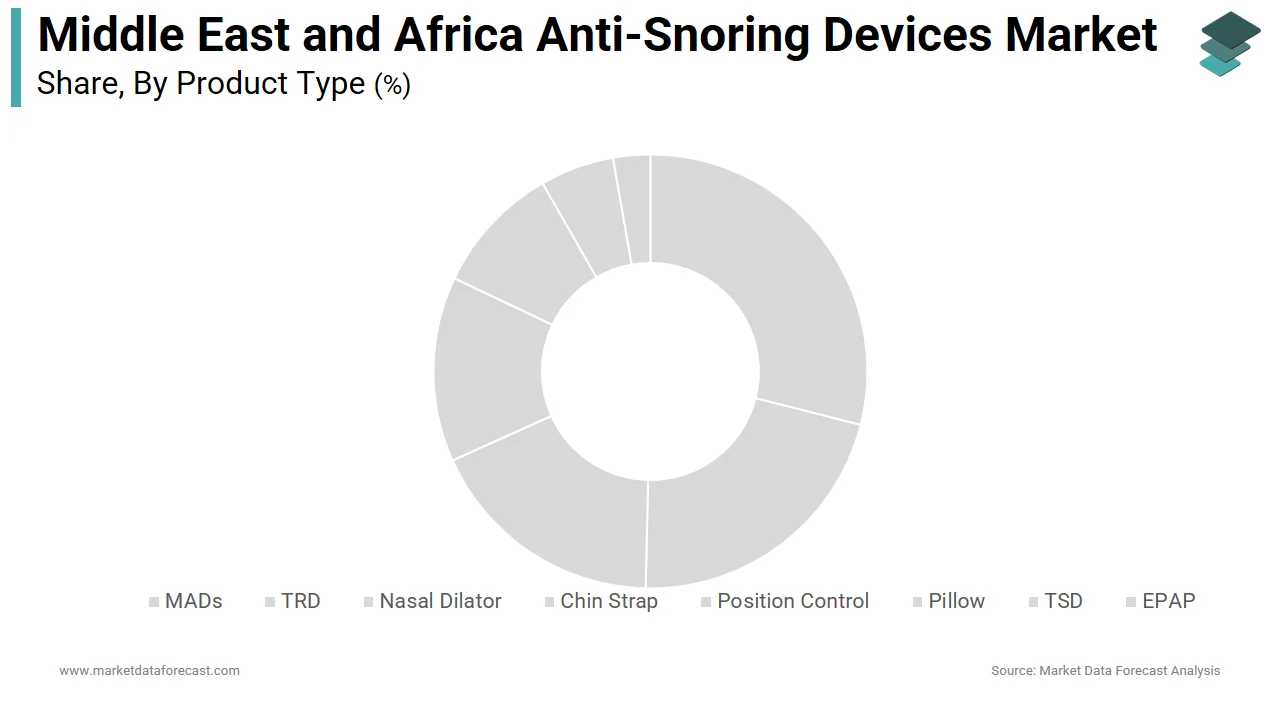
On the other hand, the nasal dilators segment is predicted to witness the highest CAGR of 8.5% during the forecast period owing to the increasing awareness of nasal obstruction as a primary cause of snoring and the low cost barrier associated with these devices. Nasal dilators work by mechanically widening the nasal passages to improve airflow, addressing snoring at its source for individuals with nasal congestion or structural abnormalities. The rising incidence of allergic rhinitis and sinusitis in the region, exacerbated by environmental factors such as dust and pollution, drives demand for immediate relief solutions. According to the World Allergy Organization, allergic rhinitis affects approximately 20 percent of the population in the Middle East, creating a large base of potential users for nasal dilation products. The convenience of over-the-counter availability allows consumers to self-manage mild snoring without medical consultation, appealing to the younger demographic. E-commerce platforms in countries like Egypt and South Africa have significantly improved access to various nasal strip and internal dilator brands, facilitating impulse purchases. As per research, over-the-counter mechanical dilators and nasal accessories show an upward commercial trajectory driven by rising consumer preference for non-invasive self-care options. The non-invasive and drug-free nature of nasal dilators aligns with the growing preference for natural health interventions, further accelerating adoption among health-conscious consumers in urban areas.
By Surgical Procedures Insights
The uvulopalatopharyngoplasty segment remained in the lead in 2025 and captured a significant share of the Middle East and Africa anti-snoring devices market. This leading position of the segment was attributed to its established history and widespread availability in regional hospitals. Moreover, this procedure involves the removal of excess tissue from the soft palate and uvula to widen the airway, offering a permanent solution for severe obstructive sleep apnea cases where conservative therapies fail. The dominance of this segment is driven by the high volume of severe sleep apnea cases in the region linked to obesity, where surgical intervention becomes medically necessary. According to the Egyptian Society of Ear, Nose, Throat and Allied Sciences, clinical configurations integrate various modified palatoplasty approaches and targeted uvulopalatopharyngoplasty methods to handle localized collapse patterns at the soft palate level. The procedure is covered by many national health insurance schemes in Gulf Cooperation Council countries for patients with documented severe apnea, reducing financial barriers for eligible individuals. Experienced ENT surgeons in tertiary care centers across Saudi Arabia and South Africa possess extensive expertise in performing this surgery, ensuring consistent outcomes and patient trust. As per Otolaryngology Clinical Registries, long-term objective success rates for classic uvulopalatopharyngoplasty show extreme fluctuations depending on precise pre-operative anatomical staging, body mass index limits, and multi-level airway collapse profiles. The lack of widespread adoption of minimally invasive alternatives in rural healthcare settings further consolidates the position of traditional surgical methods. Government-funded healthcare programs in several African nations prioritize cost-effective and proven surgical interventions, sustaining the demand for uvulopalatopharyngoplasty as the primary surgical option for treating severe snoring and sleep apnea.
However, the radiofrequency ablation segment is estimated to register the fastest CAGR from 2026 to 2034 due to its minimally invasive nature and quicker recovery times. This technique uses radiofrequency energy to shrink excess tissue in the soft palate and tongue base, reducing airway obstruction with minimal pain and bleeding. The growth of this segment is fueled by the increasing demand for outpatient procedures that allow patients to return to work quickly, appealing to the economically active population in urban centers. Private healthcare providers in the United Arab Emirates and Israel are heavily investing in advanced ENT equipment, making radiofrequency ablation more accessible to affluent patients seeking premium care. The procedure requires only local anesthesia, reducing the risks associated with general anesthesia and making it suitable for older patients or those with comorbidities. According to sources, targeted thermal ablation approaches offer minimal tissue trauma and accelerated localized healing timelines. The growing awareness of minimally invasive options through medical tourism campaigns further accelerates adoption. Patients traveling to regional hubs for cosmetic and functional ENT procedures often choose radiofrequency ablation for its dual benefits of aesthetic improvement and snoring reduction, driving segment expansion.
COUNTRY LEVEL ANALYSIS
Saudi Arabia Anti Snoring Devices Market Analysis
Saudi Arabia was the top performer in the Middle East and Africa anti-snoring devices market and occupied a commanding share in 2025. This supremacy of the segment was driven by its robust healthcare infrastructure and high prevalence of sleep disorders. The kingdom has made significant investments in sleep medicine as part of its Vision 2030 healthcare transformation strategy, establishing specialized sleep centers across major cities. The government mandates health insurance coverage for sleep studies and related treatments, improving accessibility for citizens and residents. High obesity rates, exceeding 35 percent among adults, further exacerbate the need for effective anti-snoring interventions. The presence of leading international medical device distributors in Riyadh and Jeddah ensures wide availability of both continuous positive airway pressure machines and oral appliances. Local manufacturing initiatives under the National Industrial Strategy aim to produce medical devices domestically, potentially reducing costs in the future. The cultural shift towards preventive health care encourages individuals to seek early diagnosis and treatment for snoring. According to the Saudi Ministry of Health, the expansion of general and specialized clinical capabilities across the Kingdom's hospital networks is structured to address the rising demand for respiratory care and diagnostic services. The combination of high disease prevalence, strong purchasing power, and supportive regulatory frameworks positions Saudi Arabia as the dominant market leader in the region.
United Arab Emirates Anti Snoring Devices Market Analysis
The United Arab Emirates was positioned second in the regional market because of high consumer spending on health and wellness products and a thriving medical tourism sector. Dubai and Abu Dhabi serve as hubs for advanced sleep care, attracting patients from across the Middle East and Africa seeking premium treatment options. According to the Dubai Health Authority, strategic healthcare frameworks focus on upgrading medical regulatory models, standardizing clinical pathways, and advancing specialized care delivery across the emirate. The prevalence of lifestyle-related diseases, including diabetes and obesity, drives demand for anti-snoring devices among the expatriate and local populations. The UAE government promotes healthy living through national wellness campaigns, raising awareness about the importance of quality sleep. Private insurance plans often cover comprehensive sleep assessments, encouraging early intervention. The retail sector offers a wide range of over-the-counter anti-snoring products, catering to consumers who prefer self-management solutions. As per International Trade Administration data, the United Arab Emirates medical device market exhibits steady single-digit annual growth, supported by substantial investments in advanced hospital equipment and home sleep therapy technologies. The integration of digital health apps with wearable technology allows users to monitor snoring patterns and adjust therapy accordingly. The presence of luxury wellness resorts incorporating sleep optimization programs further stimulates demand for high-end anti-snoring devices among affluent tourists and residents.
South Africa Anti Snoring Devices Market Analysis
South Africa is a significant contributor to the Middle East and Africa anti-snoring devices market due to a well-developed private healthcare sector and increasing awareness of sleep health issues. The country has a high burden of cardiovascular diseases, with sleep apnea recognized as a significant risk factor by medical professionals. According to the South African Medical Research Council, sleep-disordered breathing and obstructive sleep apnea represent highly underdiagnosed public health challenges linked closely to the country's growing obesity epidemic. The private healthcare system, which serves about 16 percent of the population, provides access to advanced diagnostic tools and treatment options, including continuous positive airway pressure therapy and oral appliances. Public health initiatives aim to integrate sleep screening into primary care services to address the disparity in access. The growing middle class in cities like Johannesburg and Cape Town drives demand for affordable over-the-counter anti-snoring solutions. Local pharmacies and online retailers have expanded their offerings of nasal strips and mouthguards, making them more accessible. As per South African Medical Journal research, consumer spending on preventive health, home wellness tracking accessories, and sleep support devices shows a broad upward trend driven by growing health literacy. The presence of international medical device companies ensures a steady supply of innovative products. Challenges remain in rural areas due to limited infrastructure, but urban demand continues to propel market growth.
Egypt Anti Snoring Devices Market Analysis
Egypt holds a significant position in the regional market owing to its large population and increasing focus on non-communicable diseases. The country faces a high prevalence of obesity and respiratory conditions, contributing to the burden of sleep-disordered breathing. According to the Egyptian Ministry of Health, efforts are underway to improve diagnostic capabilities for sleep apnea in public hospitals, although access remains limited in rural areas. The private healthcare sector in Cairo and Alexandria offers advanced sleep studies and treatment options for affluent patients. Rising awareness among physicians about the link between snoring and hypertension drives referrals for sleep evaluations. The market for over-the-counter anti-snoring devices is growing as consumers seek affordable solutions for mild symptoms. Local manufacturers produce basic nasal dilators and chin straps, catering to price-sensitive segments. As per research, digital distribution systems and cross-border commercial platforms broaden the availability of imported personal care and therapeutic devices in emerging markets. The government’s universal health insurance rollout aims to include sleep disorder management, which could significantly boost market penetration in the coming years. Cultural attitudes towards snoring are gradually shifting, with more individuals seeking professional advice. The large youth population presents a future growth opportunity as awareness campaigns target younger demographics. Despite economic challenges, the essential nature of sleep health ensures steady demand for basic anti-snoring aids.
Israel Anti Snoring Devices Market Analysis
Israel stands out in the regional market due to its advanced medical technology sector and high per capita healthcare spending. The country is a global leader in sleep research and device innovation, with several startups developing novel anti-snoring technologies. According to the Israeli Ministry of Health, sleep medicine is well integrated into the national healthcare system, ensuring broad access to diagnostic services. The high prevalence of sleep apnea among the aging population drives demand for both clinical and home-based solutions. Israeli consumers are early adopters of digital health tools, using apps and wearables to monitor sleep quality and adjust therapy. The strong export orientation of local medical device companies influences the domestic market, with residents having access to cutting-edge products before they reach other regions. Private insurance coverage for sleep therapy is comprehensive, removing financial barriers for patients. As per Israel Innovation Authority records, digital health capital inflows concentrate significantly on artificial intelligence triage tools, remote patient monitoring systems, and advanced diagnostic software architectures. The culture of health consciousness and preventive care encourages proactive management of snoring. Collaboration between academic institutions and industry players accelerates the development of personalized anti-snoring solutions. While the market size is smaller compared to larger nations, its technological sophistication and high adoption rates make it a key influencer in the Middle East and Africa landscape.
COMPETITIVE LANDSCAPE
The competitive landscape of the Middle East and Africa anti-snoring devices market is characterized by the presence of established global medical technology companies alongside emerging local distributors. Major international players dominate the premium segment with advanced continuous positive airway pressure systems and custom oral appliances, while smaller firms compete in the over-the-counter category with nasal strips and basic mouthguards. Competition is intensifying as companies strive to differentiate through technological innovation such as artificial intelligence-driven sleep tracking and personalized therapy adjustments. Strategic collaborations with healthcare providers and insurance companies are crucial for gaining market access and building trust among consumers. The lack of standardized regulations across different countries creates a fragmented environment where agility and local knowledge provide competitive advantages. Price sensitivity remains a significant factor, particularly in lower-income regions, prompting manufacturers to develop cost-effective solutions without compromising quality. Brand reputation and after-sales service quality are critical determinants of customer loyalty in this growing market sector.
KEY MARKET PLAYERS
The leading companies operating in the Middle East and Africa anti-snoring devices market include:
- Sleeping Well LLC
- Apnea Sciences Corporation
- Tomed Dr Toussaint GmbH
- AccuMED Corp
- Fisher & Paykel Healthcare
- ImThera Medical Inc.
- Philips
- ResMed Inc.
- SomnoMed
- Sleep Well Enjoy Life, Ltd.
- MEDiTAS Ltd
- Nasal Devices
TOP PLAYERS IN THE MARKET
- ResMed maintains a strong presence in the Middle East and Africa through its comprehensive portfolio of sleep therapy solutions, including continuous positive airway pressure devices and masks. The company actively collaborates with local healthcare providers to enhance patient education and adherence programs across key markets like Saudi Arabia and South Africa. Recent initiatives include launching digital health platforms that allow remote monitoring of therapy data, enabling clinicians to adjust treatment plans efficiently. ResMed invests heavily in training local respiratory therapists, ensuring proper device usage and maintenance. Their commitment to innovation is evident in the introduction of quieter and more compact devices tailored for user comfort. By partnering with regional distributors, they ensure widespread availability of spare parts and accessories. This strategic focus on service quality and technological advancement solidifies their reputation as a trusted provider in the region.
- Philips contributes significantly to the anti-snoring market by integrating advanced sleep technology with broader health ecosystem solutions. The company emphasizes connected care models, allowing seamless data exchange between patients and healthcare professionals in urban centers. Philips recently expanded its distribution network in the Gulf Cooperation Council countries to improve access to premium sleep therapy devices. They engage in public awareness campaigns highlighting the risks of untreated sleep apnea and the benefits of early intervention. Their product lineup features smart masks with adaptive pressure settings that enhance user compliance. Philips also supports local medical conferences and workshops to educate physicians on the latest diagnostic and treatment protocols. By leveraging their global expertise and local partnerships, they deliver high-quality solutions that meet the specific needs of diverse populations in the Middle East and Africa.
- Fisher & Paykel Healthcare focuses on delivering innovative and comfortable sleep therapy solutions designed to improve patient outcomes. The company has strengthened its footprint in the Middle East by establishing dedicated support teams that provide technical assistance and clinical training. They recently introduced new mask designs with improved fit and reduced leak rates, addressing common user complaints. Fisher & Paykel collaborates with local hospitals to implement comprehensive sleep disorder management programs. Their emphasis on humidification technology helps mitigate side effects associated with dry air in arid climates prevalent in the region. The company actively participates in regional healthcare exhibitions to showcase their latest advancements. By prioritizing user experience and clinical efficacy, they build long-term relationships with healthcare providers and patients. Their strategic investments in local infrastructure ensure reliable supply chains and timely service delivery across key markets.
TOP STRATEGIES USED BY KEY MARKET PARTICIPANTS
Key players in the Middle East and Africa anti-snoring devices market primarily employ strategic partnerships with local distributors to navigate complex regulatory landscapes and ensure efficient product availability. Companies focus on extensive educational campaigns targeting both healthcare professionals and consumers to raise awareness about sleep disorders and available treatments. Investment in digital health integration allows firms to offer remote monitoring capabilities, enhancing patient adherence and satisfaction. Product localization strategies involve adapting devices to suit regional climatic conditions and cultural preferences, such as designing masks for specific facial structures. Pricing strategies often include tiered offerings to cater to varying income levels, ensuring broader market penetration. Additionally, manufacturers engage in continuous research and development to introduce minimally invasive and user-friendly solutions that appeal to modern consumers seeking convenience and comfort in their therapy options.
MARKET SEGMENTATION
This research report on the Middle East & Africa anti-snoring devices market has been segmented and sub-segmented into the following categories.
By Product Type
- MADs
- TRD
- Nasal Dilator
- Chin Strap
- Position Control
- Pillow
- TSD
- EPAP
By Surgical Procedures
- UP3
- LAUP
- RFA
- Sclerotherapy
- Pillar
- Others
By Country
- KSA
- UAE
- Israel
- Rest of GCC Countries
- South Africa
- Ethiopia
- Kenya
- Egypt
- Sudan
- Rest of MEA