- Product Description Description
- Table of Contents TOC
- List of Table & Figure LOT
- Get Free Sample PDF Sample PDF
Market Size, 2025
$166 MnMarket Estimate, 2026
$172 MnMarket Forecast, 2034
$234 MnCAGR, 2026–2034
3.88%Middle East and Africa Chocolate Based Spreads Market Size
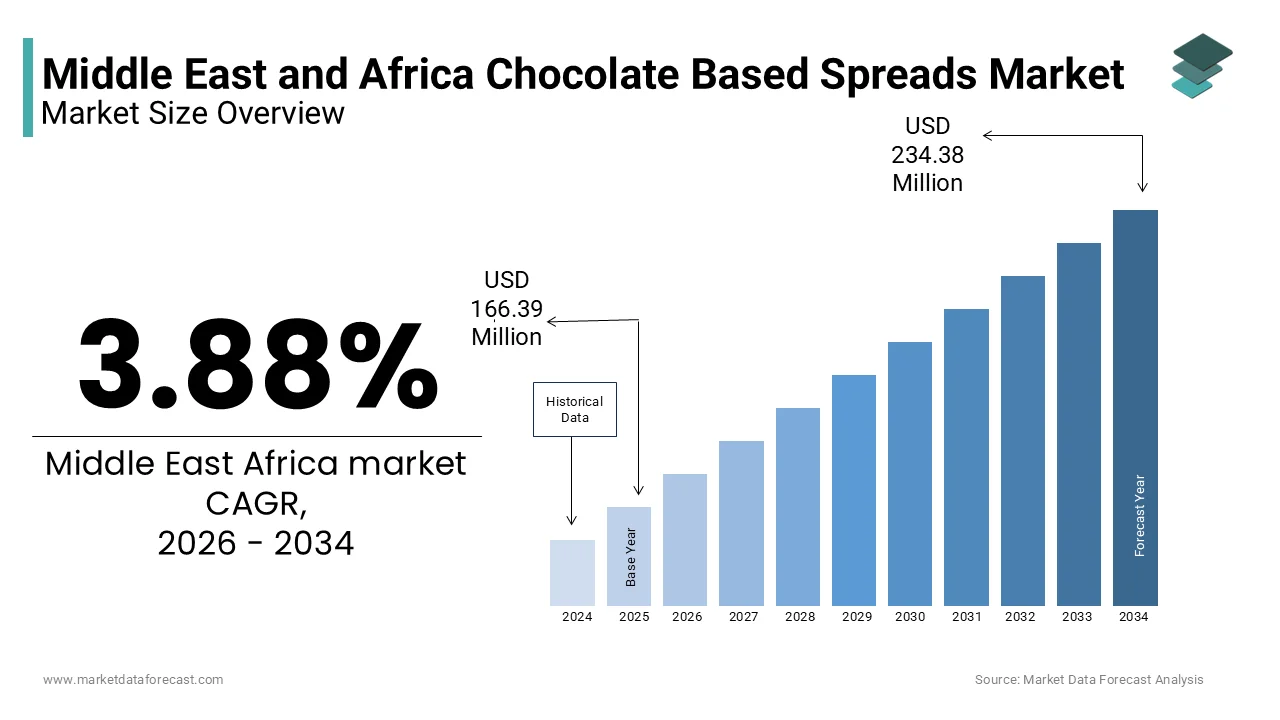
The Middle East and Africa chocolate-based spreads market size was valued at 166.39 million in 2025, and is expected to reach USD 234.38 million by 2034 from USD 172.85 million in 2026. The market is growing at a CAGR of 3.88% during the forecast period.
Chocolate spread is a sweet chocolate-flavoured paste that is eaten mostly spread on toasts and bread or similar grain products such as waffles, muffins, pancakes, and pitas. Although chocolate spreads taste, smell, and look like chocolate, they do not solidify, even at room temperature. The paste typically contains cocoa and palm or vegetable oil, and is also likely to contain sugar, milk, and additional flavours. At times, it also includes nuts such as ground hazelnuts or honey. Chocolate spread is normally sold in plastic tubs or glass jars.
The key driving factors of the Middle East and African Chocolate-Based Spreads market are shifting consumer taste preferences and growing spending on chocolate and other confectionery products. Growing urbanization, widespread availability of chocolate, and growing awareness about the various health benefits which can be obtained from the consumption of chocolate and derived products will remain another key factor fuelling the market for chocolate-based spreads s the Middle East and Africa. The chief constraint of the market is the uncertain economy of the cocoa supply, which is likely to raise chocolate prices.
REPORT COVERAGE
| REPORT METRIC | DETAILS |
| Market Size Available | 2025 to 2034 |
| Base Year | 2025 |
| Forecast Period | 2026 to 2034 |
| CAGR | 3.88% |
| Segments Covered | By Type, Frequency of Sale, Distribution Channel, and Region |
| Various Analyses Covered | Global, Regional, & Country Level Analysis; Segment-Level Analysis; DROC, PESTLE Analysis; Porter’s Five Forces Analysis; Competitive Landscape; Analyst Overview of Investment Opportunities |
| Regions Covered | South Africa, Ethiopia, Kenya, Egypt, Sudan, rest of MEA |
| Market Leaders Profiled | J.M. Smucker, Kraft Foods, Unilever Group, ConAgra Foods Inc, Ferrero Group, Hershey Co., B & G Foods Inc, Nestle, Wellness Food, Premier Foods, among others |
KEY MARKET PLAYERS
Key Players in Middle East and Africa Chocolate Based Spreads Market are J.M. Smucker, Kraft Foods, Unilever Group, ConAgra Foods Inc, Ferrero Group, Hershey Co., B & G Foods Inc, Nestle, Wellness Food, Premier Foods, among others.
MARKET SEGMENTATION
This Research Report on the Middle East and Africa chocolate-based spreads Market is segmented into the following categories.
By Type
- Milk Chocolate
- Dark Chocolate
- White Chocolate
By Frequency Of Sale
- Premium Chocolate
- Daily Chocolate
- Seasonal Chocolate
By Distribution Channel
- Supermarkets
- Hypermarkets
- Grocery Stores
- Speciality Stores
- Online Retail
By Region
- UAE
- Israel
- KSA
- South Africa
- Egypt