- Product Description Description
- Table of Contents TOC
- List of Table & Figure LOT
- Get Free Sample PDF Sample PDF
Market Size, 2025
$5.56 BnMarket Estimate, 2026
$5.94 BnMarket Forecast, 2034
$10.08 BnCAGR, 2026–2034
6.83%Middle East and Africa Commercial Greenhouse Market Size, Growth, Trends & Forecast (2026–2034)
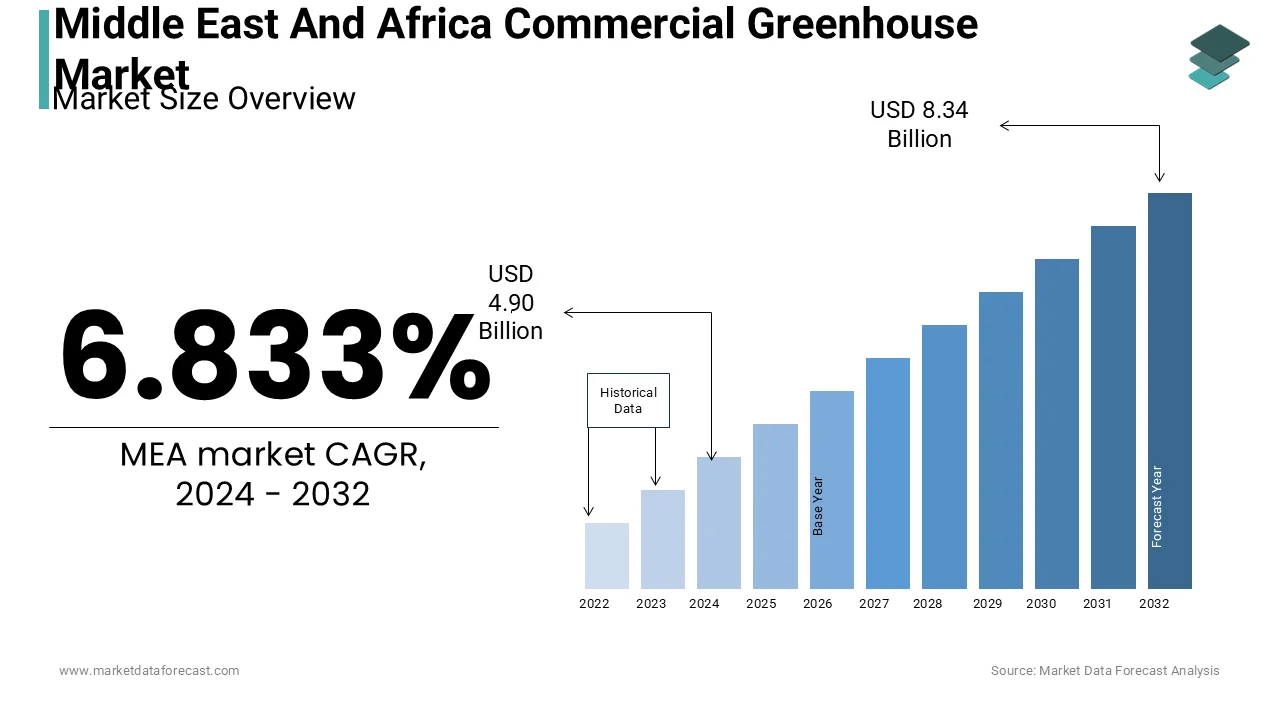
The Middle East and Africa commercial greenhouse market size was valued at USD 5.56 billion in 2025, is anticipated to reach USD 5.94 billion in 2026, and is projected to expand up to USD 10.08 billion by 2034, registering a compound annual growth rate (CAGR) of 6.83% during the forecast period from 2026 to 2034. Growth is driven by acute water scarcity, extreme arid climates necessitating controlled environments, comprehensive government food security initiatives, and the adoption of energy-efficient and renewable power solutions.
Key Executive Metrics (At-a-Glance)
- 2025 Base Valuation: USD 5.56 Billion
- 2026 Current Valuation: USD 5.94 Billion
- 2034 Forecast Valuation: USD 10.08 Billion
- Compound Annual Growth Rate (CAGR): 6.83% (2026–2034)
- Dominant Equipment Segment: Cooling Systems (31.6% share in 2025)
- Fastest-Growing Equipment Segment: Heating Systems (9.2% CAGR, 2026–2034)
- Dominant Type Segment: Plastic Greenhouses (60.3% share in 2025)
- Fastest-Growing Type Segment: Glass Greenhouses (8.5% CAGR, 2026–2034)
- Dominant Crop Type Segment: Fruits and Vegetables (55.2% share in 2025)
Core Market Drivers
- Severe Water Scarcity & Arid Climates: Extreme heat (>45°C) and limited renewable freshwater resources forcing agricultural transitions toward high-efficiency drip irrigation and closed-loop recycling.
- Government Food Security Blueprints: Aggressive national strategies (e.g., Saudi Vision 2030, Oman Vision 2040) allocating massive investments to localize food production and reduce import reliance.
Primary Market Restraints & Challenges
- High Capital Outlays & Energy Intensity: Substantial setup expenses ($100,000–$150,000 per hectare in Sub-Saharan Africa) and heavy power consumption required for mechanical cooling and fan-and-pad systems.
- Technical Expertise Deficit & Import Dependence: Acute shortages of skilled horticultural labor and reliance on imported high-tech greenhouse materials leading to supply chain vulnerabilities.
Middle East and Africa Commercial Greenhouse Market Segmentation Breakdown
| Segment Category | Largest (Dominant) Sub-Segment | Fastest-Growing Sub-Segment |
|---|---|---|
| By Equipment | Cooling Systems (31.6% share, 2025) | Heating Systems (9.2% CAGR) |
| By Type | Plastic Greenhouses (60.3% share, 2025) | Glass Greenhouses (8.5% CAGR) |
| By Crop | Fruits and Vegetables (55.2% share, 2025) | -- |
| By Region / Country | KSA, UAE, Israel, South Africa, Egypt, Kenya, Ethiopia, Sudan, etc. | -- |
Major Industry Players Profiled
Key corporations dominating the regional commercial greenhouse sector include Richel Group SA, Certhon, Argus Control Systems Ltd., Logiqs, Lumigrow, Keder Greenhouse, Agra Tech, Inc., Hort Americas, LLC, Rough Brothers Inc., and Heliospectra AB.
 Download Free Sample Report
Middle East and Africa Commercial Greenhouse Market Size
The Middle East and Africa commercial greenhouse market was valued at USD 5.56 billion in 2025 and is anticipated to reach USD 5.94 billion in 2026 from USD 10.08 billion in 2034, growing at a CAGR of 6.83% from 2026 to 2034.
Introduction and Market Definition
A commercial greenhouse isa critical agricultural infrastructure sector designed to mitigate the adverse effects of arid climates water scarcity and extreme temperatures on crop production. This market includes the design construction and operation of controlled environment agriculture facilities that utilize advanced technologies such as hydroponics drip irrigation and climate control systems to optimize yield and resource efficiency. These structures are essential for ensuring food security in regions where traditional open field farming is increasingly unsustainable due to environmental degradation. According to data from the World Bank and the Food and Agriculture Organization (FAO), approximately 89% of the Middle East and North Africa (MENA) region consists of drylands, with 60% classified as hyper-arid desert, severely restricting arable land to less than 5% of the total territory. As per the World Bank, the Middle East and North Africa region experiences the highest global levels of water scarcity, with per capita renewable water resources declining by over 50% over the last four decades due to rapid population growth and climate-induced depletion. The definition of this market extends beyond simple plastic tunnels to include high tech glasshouses equipped with automated shading cooling and nutrient delivery systems. Governments across the Gulf Cooperation Council countries and nations like Kenya and South Africa are actively promoting these facilities to reduce reliance on food imports. The integration of renewable energy sources such as solar power further enhances the sustainability of these operations. This sector plays a pivotal role in transforming regional agriculture from subsistence based models to commercially viable and technologically advanced enterprises capable of meeting the demands of growing urban populations.
MARKET DRIVERS
Severe Water Scarcity And Need For Efficient Irrigation Technologies Drive Adoption
Severe water scarcity is a key factor driving the growth of the Middle East and Africa commercial greenhouse market. This necessitates the adoption of highly efficient irrigation technologies that minimize waste. Traditional flood irrigation methods lose up to 60 percent of water through evaporation and seepage which is unsustainable in regions facing acute drought conditions. According to the United Nations Economic and Social Commission for Western Asia (UN ESCWA), the Arab region faces an absolute water crisis where 90% of the population lives in water-scarce countries (below 1,000 cubic meters per capita annually), requiring localized water re-allocation and modern agritech to manage a rapidly collapsing per capita freshwater supply. As per the International Water Management Institute greenhouse systems utilizing drip irrigation and hydroponics can reduce water consumption by up to 90 percent compared to open field farming making them indispensable for sustainable crop production. Countries such as Saudi Arabia and the United Arab Emirates have implemented strict regulations limiting water usage in agriculture thereby forcing farmers to transition to controlled environment solutions. The ability of commercial greenhouses to recycle nutrient rich water within closed loop systems further enhances their appeal to resource conscious operators. Additionally the rising cost of desalinated water which is a primary source for agriculture in Gulf states incentivizes investments in technologies that maximize every drop. This economic and environmental pressure creates a robust demand for greenhouse infrastructure that offers superior water use efficiency. Farmers and agribusinesses recognize that adopting these technologies is not merely an option but a necessity for long term viability in water stressed environments. Thus, the market experiences steady growth as stakeholders prioritize resource conservation alongside productivity.
Government Initiatives and Food Security Strategies Promote Local Production
Government initiatives and comprehensive food security strategies are fuelling the expansion of the Middle East and Africa commercial greenhouse market. This provides financial incentives and regulatory support for local agricultural development. Many nations in the region rely heavily on food imports which exposes them to global supply chain disruptions and price volatility. Gulf nations have independently launched aggressive agritech blueprints, such as Oman targeting a 30% increase under Vision 2040 and Saudi Arabia localizing 85% of food processing. As per the Saudi Vision 2030 framework the government has allocated billions of dollars to support the establishment of high tech farms and greenhouses to reduce dependence on imported vegetables and fruits. Similarly, the Egyptian government has launched national projects to reclaim desert lands using greenhouse technology aiming to expand cultivated areas by millions of acres. These policies often include subsidies for greenhouse construction equipment imports and technical training for farmers which lowers the barrier to entry for private investors. In Africa countries like Kenya and Morocco have introduced tax exemptions for agricultural inputs and machinery encouraging the expansion of commercial horticulture. The strategic imperative to achieve self sufficiency in staple crops drives public private partnerships that accelerate market growth. By aligning national security goals with agricultural innovation governments create a favorable ecosystem for greenhouse developers. This sustained political will ensures consistent demand for commercial greenhouse solutions as nations strive to build resilient and independent food systems capable of withstanding external shocks.
MARKET RESTRAINTS
High Initial Capital Investment and Operational Costs Limit Market Penetration
High initial capital investment and substantial operational costs are impeding the growth of the Middle East and Africa commercial greenhouse market. This limits accessibility for small and medium scale farmers. Constructing a high tech commercial greenhouse requires significant expenditure on structural materials climate control systems irrigation infrastructure and automation technologies. According to the African Development Bank the average cost of setting up a hectare of modern greenhouse facility in Sub Saharan Africa ranges from 100000 to 150000 US dollars which is prohibitive for many local entrepreneurs. Greenhouse feasibility data compiled by regional bodies like the International Center for Biosaline Agriculture (ICBA) confirms that pad-and-fan cooling systems consume massive amounts of power, sometimes making up 40% or more of ongoing facility operational expenses. The need for specialized maintenance and skilled labor further adds to the financial burden making it difficult for operators to achieve break even points quickly. Limited access to affordable financing options exacerbates this issue as banks often perceive agricultural projects as high risk ventures. In many African nations the lack of credit guarantee schemes prevents farmers from securing loans for greenhouse infrastructure. Consequently the market remains dominated by large corporate entities and government backed projects leaving a vast segment of potential users underserved. This financial barrier slows down the widespread adoption of greenhouse technology despite its proven benefits. Market growth will remain constrained to wealthy investors and subsidized initiatives until financing mechanisms become more inclusive. Consequently, costs must decrease through local manufacturing to unlock broader expansion.
Lack Of Technical Expertise and Skilled Labor Hinders Efficient Operations
The lack of technical expertise and skilled labor further restricts the expansion of the Middle East and Africa commercial greenhouse market. This hinders the efficient operation and maintenance of advanced agricultural systems. Modern greenhouses require specialized knowledge in horticulture engineering and data analytics to optimize climate conditions and manage nutrient solutions effectively. The Middle East and Africa Commercial Greenhouse Market Report highlights a critical shortage of skilled local labor to manage climate-insulated farms. The complexity of automated systems means that minor errors in programming or maintenance can lead to catastrophic crop losses. Educational institutions in the region often lag behind in updating curricula to include modern greenhouse technologies resulting in a skills gap. Reliance on foreign experts for installation and troubleshooting increases costs and creates dependency. Local farmers accustomed to traditional methods struggle to adapt to the precision required in commercial greenhouses. This human capital deficit limits the scalability of greenhouse operations and reduces overall productivity. Without substantial investment in vocational training and knowledge transfer programs the industry will continue to face operational inefficiencies. Addressing this skills shortage is crucial for sustaining long term growth and ensuring the success of greenhouse investments across the region.
MARKET OPPORTUNITIES
Integration Of Renewable Energy Solutions Offers Sustainable Cost Reduction
The integration of renewable energy solutions is a key growth area for the Middle East and Africa commercial greenhouse market. This addresses high energy costs and enhances sustainability. The region boasts abundant solar radiation making photovoltaic systems an ideal power source for running pumps fans and lighting in greenhouses. According to the International Renewable Energy Agency the Middle East has the potential to generate over 2000 gigawatts of solar energy which can significantly offset operational expenses for agricultural facilities. The synergy between agriculture and energy sectors allows operators to achieve energy independence and protect against fluctuating fuel prices. Governments are increasingly offering incentives for green energy adoption in agriculture including feed in tariffs and grants for solar installations. The use of solar thermal energy for heating during cooler nights further optimizes climate control efficiency. Additionally battery storage technologies are becoming more affordable enabling continuous operation even during non sunny hours. This transition to renewable energy not only lowers costs but also enhances the environmental credentials of produce appealing to eco conscious consumers and export markets. By leveraging native natural resources greenhouse operators can create economically viable and environmentally responsible business models. This opportunity drives innovation in hybrid energy systems tailored specifically for agricultural applications in arid regions.
Expansion Into Untapped Rural and Semi Urban Areas Creates New Markets
Proliferation into untapped rural and semi-urban areas creates significant opportunities for the Middle East and Africa commercial greenhouse market. This accesses new customer bases and reduces logistics costs. While current market activity is concentrated in major cities and industrial zones vast rural regions possess suitable land and labor resources for greenhouse cultivation. According to urban-rural tracking metrics compiled by The World Bank, approximately 53.4% of the population in Sub-Saharan Africa resides in rural areas, facing steep localized post-harvest waste and price spikes because of fragmented regional cold-chain transport corridors. As per the Kenyan Ministry of Agriculture decentralized greenhouse hubs in rural counties have shown potential to increase local vegetable availability by 40 percent while creating employment opportunities. Establishing smaller modular greenhouses in these areas allows for proximity to consumers reducing post harvest losses and carbon footprints associated with long distance transport. Micro financing models and cooperative farming structures can enable smallholder farmers in these regions to adopt greenhouse technology collectively. The rise of mobile connectivity facilitates remote monitoring and management of rural greenhouse operations bridging the technical gap. Governments and NGOs are increasingly focusing on rural development programs that include agricultural infrastructure upgrades. This decentralization strategy diversifies revenue streams for greenhouse providers and contributes to regional food security. By tapping into these underserved markets companies can drive volume growth and foster inclusive economic development. This geographic expansion represents a lucrative avenue for scaling operations beyond saturated urban centers.
MARKET CHALLENGES
Extreme Climatic Conditions Require Advanced and Costly Cooling Systems
Extreme climatic conditions are a severe challenge to the Middle East and Africa commercial greenhouse market. This necessitates advanced and costly cooling systems to maintain optimal growing temperatures. Summer temperatures in the Gulf region frequently exceed 45 degrees Celsius which can cause heat stress and crop failure if not properly managed. According to the King Abdullah University of Science and Technology traditional evaporative cooling methods are insufficient in high humidity coastal areas requiring energy intensive mechanical refrigeration. As per data from the UAE Ministry of Climate Change and Environment cooling accounts for nearly 60 percent of the total energy consumption in commercial greenhouses during peak summer months. The high ambient temperatures also accelerate the degradation of greenhouse covering materials such as plastic films reducing their lifespan and increasing replacement frequency. Dust storms common in the region reduce light transmission and clog ventilation systems requiring frequent cleaning and maintenance. These environmental factors drive up both capital and operational expenditures making profitability difficult to achieve. Designing greenhouses that can withstand such harsh conditions without compromising internal climate stability requires sophisticated engineering and expensive materials. The lack of standardized solutions for extreme heat forces operators to rely on custom designs which are costly and time consuming to implement. Until more energy efficient and robust cooling technologies become widely available and affordable the industry will continue to grapple with these environmental constraints. This challenge limits the types of crops that can be grown economically and restricts market expansion in the hottest regions.
Supply Chain Disruptions and Import Dependence Increase Project Risks
Supply chain disruptions and heavy dependence on imports for greenhouse components increase project risks and delay implementation in the Middle East and Africa commercial greenhouse market. Most high-tech greenhouse materials such as specialized glass aluminum profiles sensors and climate control software are imported from Europe Asia or North America. As per the Logistics Performance Index many countries in the region suffer from inefficient customs procedures and port congestion which further delays the delivery of critical components. Currency fluctuations and foreign exchange shortages in several African nations make it difficult for importers to secure goods at stable prices. The lack of local manufacturing capabilities for advanced greenhouse technologies means that any global disruption directly impacts project timelines and budgets. Maintenance spare parts are also subject to these delays causing prolonged downtime when equipment fails. This vulnerability undermines investor confidence and discourages long term commitments to large scale greenhouse projects. Developing local supply chains is a slow process requiring significant industrial investment and policy support. Until regional manufacturing capacities improve the market will remain exposed to external shocks. This structural weakness complicates planning and execution forcing developers to build larger contingencies into their financial models.
REPORT COVERAGE
| REPORT METRIC | DETAILS |
| Market Size Available | 2025 to 2034 |
| Base Year | 2025 |
| Forecast Period | 2026 to 2034 |
| CAGR | 6.83% |
| Segments Covered | By Equipment, Type, Crop, and Region. |
| Various Analyses Covered | Global, Regional & Country Level Analysis, Segment-Level Analysis, DROC, PESTLE Analysis, Porter’s Five Forces Analysis, Competitive Landscape, Analyst Overview of Investment Opportunities |
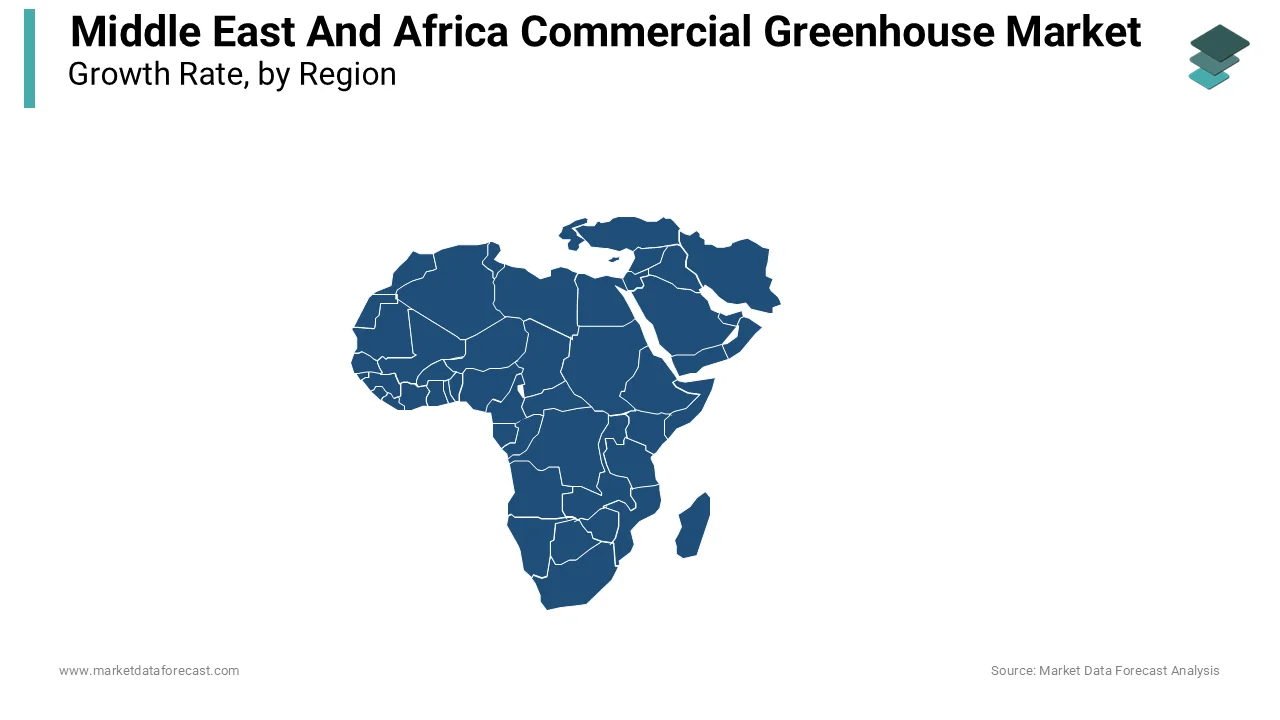
| Regions Covered | KSA, UAE, Israel, rest of GCC countries, South Africa, Ethiopia, Kenya, Egypt, Sudan, rest of MEA |
| Market Leaders Profiled | ichel Group SA (France), Certhon (U.S.), Argus Control Systems Ltd. (U.S), Logiqs (The Netherlands), Lumigrow (U.S.), Keder Greenhouse (UK), Agra Tech, Inc. (U.S.), Hort Americas, LLC (U.S.), Rough Brothers Inc. (U.S.), and Heliospectra AB (Sweden) |
SEGMENT ANALYSIS
By Equipment Insights
Cooling Systems
The cooling systems segment led the Middle East and Africa commercial greenhouse market and captured a 31.6% share in 2025. This leading position of the segment was attributed to the extreme ambient temperatures prevalent across the region which necessitate rigorous temperature control for crop survival. In countries like Saudi Arabia the United Arab Emirates and Egypt summer temperatures frequently exceed 45 degrees Celsius creating heat stress conditions that are lethal to most commercial crops without active intervention. According to the King Abdullah University of Science and Technology passive ventilation is insufficient in arid climates during peak summer months requiring mechanical or evaporative cooling systems to maintain internal greenhouse temperatures below 30 degrees Celsius. The high solar radiation intensity in the region further exacerbates heat buildup inside greenhouse structures making cooling equipment a non negotiable component of infrastructure. Unlike heating systems which are seasonal or limited to specific high altitude areas cooling is required for the majority of the year in most parts of the Middle East and North Africa. The energy intensity of these systems also contributes to their higher market value compared to other equipment categories. Investors prioritize robust cooling solutions to protect their capital investment in crops and infrastructure from climate related risks. This consistent and critical demand ensures that cooling systems remain the dominant segment in terms of revenue and installation volume across the region.

Extreme ambient temperatures and the urgent need for heat stress mitigation are major accelerators for the dominance of cooling systems. The physiological limits of most high value crops such as tomatoes cucumbers and bell peppers are exceeded when ambient temperatures rise above 35 degrees Celsius leading to reduced pollination fruit drop and lower yields. According to the Food and Agriculture Organization heat stress can reduce vegetable yields by up to 50 percent in unprotected environments in arid regions making climate control essential for commercial viability. As per research published by the Journal of Arid Environments the use of fan and pad cooling systems can lower internal greenhouse temperatures by 10 to 15 degrees Celsius compared to outside conditions ensuring continuous production even during the hottest months. The economic loss associated with crop failure due to heat is significantly higher than the operational cost of running cooling systems prompting growers to invest heavily in this equipment. In regions like Lower Egypt and the Sudanese Nile Valley where summer heat is intense and prolonged cooling infrastructure is the backbone of agricultural productivity. The increasing frequency of heatwaves due to climate change further amplifies the reliance on advanced cooling technologies. Growers are upgrading from basic shading nets to automated misting and fogging systems to achieve precise temperature regulation. This technological escalation driven by environmental necessity solidifies the leading position of cooling systems in the market.
Heating Systems
The heating systems segment is predicted to witness the highest CAGR of 9.2% from 2026 to 2034. This rapid expansion is propelled by the increasing cultivation of high value crops in cooler regions and during winter months in North African countries such as Morocco, Tunisia, and northern Egypt. According to the Moroccan Ministry of Agriculture, Maritime Fisheries, Rural Development and Waters and Forests, protected agriculture footprint is steadily rising. However, Moroccan export cultivation relies almost entirely on passive solar plastic tunnels rather than active artificially heated greenhouse infrastructure, capitalizing on natural winter warmth to service European buyers. As per the Egyptian Agricultural Research Center winter temperatures in the Nile Delta can drop to levels that inhibit growth of sensitive crops requiring supplemental heating to maintain productivity. The adoption of energy efficient heating technologies such as biomass boilers and solar thermal systems is accelerating growth by reducing operational costs. Additionally the expansion of commercial greenhouse projects in higher altitude areas of East Africa including Kenya and Ethiopia where nights can be cold drives demand for heating solutions. The shift toward year round production cycles to meet consistent domestic and export demand necessitates reliable heating infrastructure. Government subsidies for energy efficient agricultural technologies in several North African nations further incentivize the adoption of modern heating systems. This combination of geographic expansion into cooler zones and the economic imperative for continuous production fuels the rapid growth of the heating systems segment.
The expansion of winter production and export oriented agriculture is driving the rapid growth of heating systems. European markets demand fresh vegetables and flowers during their winter months creating a lucrative export opportunity for North African producers who can leverage their geographical proximity. According to the Tunisian Export Promotion Center (CEPEX) and regional agricultural strategies, Tunisian farmers successfully capture lucrative, early-season European price windows by tapping into natural geothermal water resources to passively heat greenhouses in southern oases like Kebili and Tozeur, rather than operating traditional fuel-fired heating facilities. To meet strict European quality standards and delivery schedules producers must guarantee uninterrupted growth which is only possible with reliable heating systems during cold spells. The investment in heating infrastructure is viewed as a strategic requirement to access premium international markets rather than just a local consumption tool. Furthermore the development of new greenhouse clusters in the Atlas Mountains and northern coastal regions where temperatures fluctuate significantly requires robust heating solutions. The availability of natural gas infrastructure in Egypt and Algeria also supports the adoption of gas fired heating systems which are cost effective for large scale operations. This market driven push for export competitiveness ensures sustained investment in heating technologies.
By Type Insights
Plastic Greenhouses
The plastic greenhouses segment was the largest in the Middle East and Africa commercial greenhouse market and occupied a 60.3% share in 2025. Its lower initial investment cost flexibility and suitability for the region’s climatic conditions have contributed to the prominence of this segment. Polyethylene films and polycarbonate sheets are widely used because they are lightweight easy to install and provide adequate insulation and light diffusion for most crops. According to the International Fund for Agricultural Development plastic covered greenhouses account for approximately 75 percent of total greenhouse area in Sub Saharan Africa due to their affordability for small and medium scale farmers. As per data from the Saudi Arabian General Investment Authority the majority of new greenhouse projects in the Kingdom utilize multi span plastic structures equipped with cooling systems as they offer the best balance between cost and performance in hot climates. Plastic materials are also easier to replace and maintain compared to glass which is prone to breakage during sandstorms common in the region. The versatility of plastic allows for various designs including tunnel houses and shade houses which are popular for flower and vegetable production. Additionally the lower weight of plastic structures reduces the need for heavy steel frameworks further lowering construction costs. This economic advantage makes plastic greenhouses accessible to a broader range of investors including cooperatives and individual entrepreneurs. The widespread availability of local distributors for agricultural plastics also supports this segments dominance. Consequently plastic greenhouses remain the preferred choice for scaling up agricultural production in resource constrained environments.
Affordability and adaptability to local environmental conditions are the primary drivers for the dominance of plastic greenhouses. The high cost of glass and the specialized labor required for its installation make it prohibitive for many agricultural projects in developing economies. According to the World Bank the average cost of constructing a plastic greenhouse is 40 to 60 percent lower than that of a glass greenhouse making it a viable option for farmers with limited capital. The flexibility of plastic films allows them to withstand minor structural shifts caused by soil movement or wind without cracking unlike rigid glass panels. In regions prone to dust storms such as the Sahara and Arabian Peninsula plastic covers can be easily cleaned or replaced at a low cost ensuring consistent light transmission. The ability to use different types of plastic films with varying UV protection and thermal properties allows growers to customize their greenhouses for specific crops and microclimates. This adaptability ensures that plastic greenhouses can be deployed effectively across diverse geographical zones from the humid coastlines of West Africa to the arid interiors of the Middle East. This practical and economic suitability cements their leading position in the market.
Glass Greenhouses
The glass greenhouses segment is estimated to register the fastest CAGR of 8.5% over the forecast period owing to the increasing establishment of high tech flagship projects in Gulf Cooperation Council countries and South Africa that prioritize longevity aesthetics and maximum light transmission. According to the UAE Ministry of Climate Change and Environment several mega greenhouse projects utilizing Dutch style glass technology have been launched in Abu Dhabi and Dubai to boost local food security. Glass structures offer better insulation and longer lifespan compared to plastic reducing long term replacement costs for large commercial operators. The prestige associated with glass greenhouses also attracts tourism and educational initiatives integrating agriculture with leisure. Advances in tempered and coated glass technologies have improved their resistance to heat and impact making them more suitable for harsh climates. Government support for flagship agricultural projects that showcase technological prowess further accelerates the adoption of glass structures. Although the initial cost is high the long term operational benefits and brand value drive this segments rapid expansion among corporate and state backed entities.
The demand for high tech flagship projects and superior durability is a major factor for the swift growth of glass greenhouses. Governments and large conglomerates in the region are investing in state of the art agricultural facilities to demonstrate technological leadership and achieve strategic food security goals. According to the Saudi Press Agency the National Agricultural Development Company has commissioned several large scale glass greenhouse complexes that utilize automated climate control and robotics to maximize yield per square meter. Glass greenhouses provide a stable environment with minimal temperature fluctuations which is crucial for high precision agriculture and research purposes. Their transparency and aesthetic appeal also make them suitable for agritourism ventures which are gaining popularity in the United Arab Emirates and Qatar. The long lifespan of glass structures exceeding 20 years offers a better return on investment for large scale operations despite higher upfront costs. The ability to integrate seamlessly with sophisticated automation systems makes glass the preferred material for next generation smart farms. This strategic focus on quality and innovation drives the accelerated adoption of glass greenhouses in the region.
By Crop Insights
Fruits And Vegetables
In 2025, the fruits and vegetables segment held the majority share of 55.2% of the Middle East and Africa commercial greenhouse market because of its critical role in regional food security and high daily consumption rates. Staples such as tomatoes cucumbers peppers and strawberries are grown extensively in greenhouses to ensure year round supply and reduce reliance on imports. According to FAO food balance sheets, cereals (like wheat and rice) constitute nearly 50% of the daily dietary energy supply in the MENA region. While vegetable consumption in parts of the Middle East slightly exceeds the global minimum recommendation of 400g/day, it does not constitute 40% of total dietary intake. The high perishability of these crops makes local greenhouse production economically advantageous by reducing post harvest losses associated with long distance transportation. Consumers increasingly prefer fresh locally grown produce over imported alternatives which may have spent weeks in transit. The ability of greenhouses to protect these sensitive crops from pests and extreme weather ensures higher quality and yield consistency. Government initiatives promoting self sufficiency in staple vegetables further support this segments dominance. The high turnover rate of vegetable crops allows farmers to generate regular cash flow making them an attractive option for commercial greenhouse operators. This fundamental demand for daily nutrition ensures that fruits and vegetables remain the largest crop segment in the market.
High perishability and national import substitution goals are the primary drivers for the dominance of fruits and vegetables. Fresh vegetables lose nutritional value and quality rapidly during transport making local production essential for maintaining high standards. According to the World Health Organization post harvest losses for fresh vegetables in the region can reach up to 40 percent due to inadequate cold chain infrastructure highlighting the need for local greenhouse production. Greenhouses enable the production of high quality pesticide free vegetables that meet strict safety standards demanded by health conscious consumers. The ability to control growing conditions allows for the cultivation of premium varieties that command higher prices in retail markets. Retail chains in the Gulf and North Africa are increasingly sourcing directly from local greenhouse operators to ensure freshness and support sustainability claims. This direct supply chain model reduces intermediaries and improves profit margins for growers. The strategic importance of securing fresh food supplies against global supply chain disruptions further reinforces the focus on vegetable production. This combination of quality assurance and strategic policy support sustains the leading position of this crop segment.
Flowers and Ornamentals
The flowers and ornamentals segment is anticipated to witness the fastest CAGR of 10.5% between 2026 and 2034. This quick surge of the segment is fueled by rising disposable incomes urbanization and the growing culture of gifting and interior decoration in the region. According to data from the Dubai Flower Centre and Dubai Municipality, the UAE's floral market has expanded significantly, positioning Dubai as a primary regional re-export hub handling massive volumes of perishable flora for the Middle East and beyond. The hospitality and events industry in Gulf countries consumes large volumes of fresh flowers for hotels weddings and corporate events creating steady demand. Greenhouse technology allows for the precise control of humidity and temperature required for delicate flower species such as roses orchids and lilies. The shift toward value added agriculture encourages farmers to switch from traditional crops to high margin floriculture. Government support for export oriented horticulture in countries like Ethiopia and Kenya further accelerates growth. The aesthetic appeal and emotional value of flowers drive consistent consumer spending regardless of economic fluctuations. This dynamic market environment supports rapid expansion in the flowers and ornamentals segment.
Rising disposable incomes and robust demand from the hospitality sector are propelling the rapid growth of the flowers and ornamentals segment. As middle class populations expand in countries like Saudi Arabia and South Africa spending on lifestyle and luxury items including fresh flowers has increased substantially. The proliferation of high end hotels and resorts in the region creates a consistent B2B demand for premium quality cut flowers and potted plants. Greenhouses enable the production of exotic and out of season varieties that cater to this upscale market. The ability to guarantee consistent quality and supply through controlled environment agriculture makes greenhouse growers preferred suppliers for major hospitality chains. Additionally the rise of e commerce platforms for flower delivery has expanded market reach to individual consumers. This convergence of lifestyle trends and industrial demand ensures sustained high growth for the floriculture segment.
COUNTRY LEVEL ANALYSIS
Saudi Arabia Commercial Greenhouse Market Analysis
Saudi Arabia was the top performer in the Middle East and Africa commercial greenhouse market and accounted for a 25.8% share in 2025. This dominance of the market in the country was driven by its ambitious Vision 2030 strategy which prioritizes food security and agricultural diversification. The Kingdom is investing heavily in large scale high tech greenhouse projects to reduce its dependence on food imports which currently account for a substantial portion of its consumption. According to the Ministry of Environment, Water and Agriculture (MEWA), Saudi Arabia aims to achieve a 40% self-sufficiency target for vegetables by 2030 by backing technology upgrades and covering up to half of greenhouse construction costs. Premier mega-scale Dutch-tech hydroponic complexes covering over 100 hectares in Al Kharj are operated by DAVA Agricultural Co. The availability of subsidized energy and water resources supports the operation of energy intensive cooling systems required in the desert climate. Government incentives including land grants and soft loans encourage private sector participation in the agricultural sector. The focus on sustainable agriculture has led to the adoption of hydroponics and vertical farming within greenhouse structures. The growing population and increasing health consciousness among consumers drive demand for fresh locally produced produce. Strategic partnerships with international agricultural technology firms facilitate knowledge transfer and capacity building. This strong political will and financial backing position Saudi Arabia as a leading market for commercial greenhouses in the region.
United Arab Emirates Commercial Greenhouse Market Analysis
The United Arab Emirates was the next prominent country in the Middle East and Africa commercial greenhouse market by leveraging its status as a global hub for innovation and trade. The country faces extreme climatic challenges but compensates with cutting edge greenhouse technologies including solar powered cooling and AI driven climate control. According to the Abu Dhabi Agriculture and Food Safety Authority the UAE has invested over 1 billion dirhams in food security technologies including controlled environment agriculture. As per the Dubai Municipality urban farming initiatives utilizing rooftop and vertical greenhouses are expanding to enhance local food resilience. The presence of major international greenhouse manufacturers and technology providers in the UAE facilitates access to the latest innovations. The countrys strategic location serves as a re export hub for agricultural produce and technology to neighboring markets. High consumer purchasing power supports the demand for premium organic and locally grown vegetables. Government regulations promoting sustainable farming practices encourage the use of resource efficient greenhouse systems. The integration of agritourism with commercial greenhouses adds a new revenue stream for operators. This blend of technological sophistication and strategic vision ensures the UAE remains at the forefront of the regional market.
Israel Commercial Greenhouse Market Analysis
Israel maintains a significant position in the Middle East and Africa commercial greenhouse market due to its pioneering advancements in agricultural science. It leads in innovation and technology export within the regional landscape. The country is a global leader in drip irrigation precision farming and greenhouse automation technologies which are widely adopted across the region. As per data from the Volcani Center Israeli research institutions continuously develop new crop varieties and cultivation methods suited for arid conditions which are licensed to farmers in Africa and the Middle East. The expertise gained from decades of operating in water scarce environments makes Israeli technology highly relevant to the region. Many commercial greenhouse projects in Jordan Egypt and the Gulf states utilize Israeli equipment and consulting services. Government supported international cooperation programs facilitate the transfer of know how to developing nations. The focus on maximizing yield per drop of water aligns perfectly with regional needs. This technological leadership ensures Israel plays a pivotal role in shaping the future of commercial greenhouse farming in the Middle East and Africa.
South Africa Commercial Greenhouse Market Analysis
South Africa is a mature player in the Middle East and Africa commercial greenhouse market, with a strong export orientation. Its market growth reveals well-established infrastructure and skilled labor. The country is a major producer of deciduous fruits berries and flowers grown in greenhouses for both domestic consumption and export to Europe and Asia. Protected cropping infrastructure is expanding across South Africa to hedge against climate risk. According to the Western Cape Department of Agriculture, berries have surged into a highly lucrative export sector. However, they are primarily grown under open shade netting and plastic tunnels to protect crops from wind and sunburn, rather than inside fully sealed climate-controlled glass greenhouses. The availability of advanced agricultural research institutions and extension services supports continuous improvement in farming practices. Energy challenges have prompted the adoption of solar powered greenhouse systems enhancing sustainability. The well developed logistics and cold chain infrastructure facilitate efficient distribution of perishable goods. Local manufacturing of greenhouse components reduces dependency on imports and lowers costs. The competitive nature of the market drives efficiency and innovation among growers. This robust ecosystem positions South Africa as a key player in the African segment of the market.
Ethiopia Commercial Greenhouse Market Analysis
Ethiopia is expected to grow notably in the Middle East and Africa commercial greenhouse market over the forecast period. It benefits from favorable climatic conditions and government support. The country has become one of the largest exporters of cut flowers in Africa primarily roses grown in large scale greenhouses around Lake Ziway. According to the Ethiopian Horticulture Producer Exporters Association flower exports have grown by 12 percent annually generating significant foreign exchange earnings. As per the Ministry of Agriculture the government provides tax incentives and land leases to attract foreign investment in the horticulture sector. The availability of abundant low cost labor and geothermal energy for greenhouse heating reduces operational costs. Improvements in airport logistics and cold storage facilities have enhanced the reliability of exports. International development agencies support smallholder farmers in adopting greenhouse technologies for vegetable production to improve local food security. The success of the floriculture sector has spurred interest in expanding greenhouse cultivation to other high value crops. This momentum positions Ethiopia as a rapidly growing market with significant potential for future expansion.
COMPETITIVE LANDSCAPE
The competition in the Middle East And Africa Commercial Greenhouse Market is characterized by a mix of international technology leaders and regional specialists creating a dynamic and fragmented landscape. Global players leverage their advanced engineering capabilities and brand reputation to secure high value contracts for flagship projects in Gulf countries. These firms compete on technological superiority offering integrated smart farming solutions that optimize resource efficiency and yield. Regional competitors often focus on cost effective plastic greenhouse structures catering to small and medium scale farmers in North and Sub Saharan Africa. Price sensitivity is higher in African markets where financing constraints limit investment in high tech glasshouses. The market sees increasing collaboration between equipment manufacturers and agricultural consultants to provide holistic services. Regulatory support for local manufacturing in some countries encourages joint ventures and technology transfer agreements. Innovation in cooling technologies and water conservation methods serves as a key differentiator. As demand for food security grows competition intensifies around reliability after sales support and adaptability to local climatic conditions. This environment drives continuous improvement in product quality and service delivery across the region.
KEY MARKET PLAYERS
The top players in the market include
- Richel Group SA (France)
- Certhon (U.S.)
- Argus Control Systems Ltd. (U.S)
- Netafim Ltd
- Logiqs (The Netherlands)
- Lumigrow (U.S.)
- Keder Greenhouse (UK)
- Agra Tech, Inc (U.S.)
- HorInAmericasas, LLC (U.S.)
- Rough Brothers Inc. (U.S.)
- Heliospectra AB (Sweden).
Top Players In The Market
- Richel Group is a prominent French manufacturer of greenhouses and agricultural equipment with a significant footprint in the Middle East and Africa. The company specializes in designing high tech plastic and glass greenhouse structures tailored to arid climates. Richel has strengthened its market position by partnering with local distributors in Saudi Arabia and Egypt to provide turnkey solutions including irrigation and climate control systems. Recent actions include the installation of large scale multi span greenhouses for vegetable production in North Africa which demonstrate their expertise in heat management. The firm focuses on sustainability by integrating energy efficient cooling technologies and water recycling systems into its designs. By offering customized engineering services Richel addresses specific regional challenges such as sandstorms and extreme temperatures. Their commitment to quality and after sales support builds long term relationships with commercial growers and government entities seeking to enhance food security through modern agricultural infrastructure.
- Certhon Building Solutions is a leading global provider of high tech greenhouse constructions with a strong presence in the Middle East particularly in the Gulf Cooperation Council countries. The company is known for its innovative glass greenhouse designs that maximize light transmission while minimizing energy consumption. Certhon has recently executed several landmark projects in the United Arab Emirates and Qatar focusing on sustainable urban farming and food security initiatives. Their recent actions include the deployment of advanced climate computer systems and automated harvesting technologies in large commercial facilities. By collaborating with local agricultural developers Certhon ensures that its structures meet stringent regional standards for durability and efficiency. The company emphasizes knowledge transfer by training local technicians in greenhouse management. This strategic focus on technology integration and local capacity building reinforces Certhons reputation as a premium partner for state of the art agricultural projects in the region.
- Netafim Ltd is a global leader in precision irrigation and smart farming solutions with extensive operations across the Middle East and Africa. Although primarily known for drip irrigation the company plays a crucial role in the commercial greenhouse market by providing integrated water and nutrient management systems. Netafim has strengthened its position by launching specialized hydroponic solutions for greenhouse growers in Kenya South Africa and Israel. Recent actions include the expansion of its digital farming platform which allows greenhouse operators to monitor crop health and optimize resource usage in real time. The company collaborates with greenhouse manufacturers to offer bundled packages that include structure irrigation and software. By focusing on water efficiency Netafim addresses the critical scarcity issues prevalent in the region. Its robust distribution network and technical expertise make it an indispensable partner for commercial greenhouse operators aiming to achieve high yields with minimal environmental impact.
Top Strategies Used By Key Market Participants
Key players in the Middle East And Africa Commercial Greenhouse Market employ several strategic approaches to maintain competitiveness and drive growth in this evolving sector. Companies focus on forming strategic partnerships with local governments and agricultural developers to secure large scale infrastructure projects aligned with national food security goals. They invest heavily in research and development to create climate resilient greenhouse designs that can withstand extreme heat and sandstorms common in the region. Diversification of service offerings to include integrated solutions such as irrigation climate control and automation software adds value for clients seeking turnkey projects. Emphasis on sustainability through the integration of solar power and water recycling systems appeals to environmentally conscious stakeholders and reduces operational costs. Capacity building initiatives including training programs for local farmers and technicians help bridge the skills gap and ensure successful project implementation. Expanding distribution networks in emerging markets like East Africa allows firms to tap into new growth opportunities. These combined strategies enable companies to differentiate themselves and build resilient business models in a challenging environment.
MARKET SEGMENTATION
This research report on the Middle East and Africa commercial greenhouse market is segmented and sub-segmented based on Equipment, Type, Crop, and Country.
By Equipment
- Heating systems
- Cooling systems
- Others
By Type
- Glass greenhouse
- Plastic greenhouse
- Others
By Crop
- Fruits and vegetables
- Flowers and ornamentals
- Nursery crops
- Others crops
By Country
- KSA
- UAE
- IsraelThe
- The rest of the GCC countries
- South Africa
- Ethiopia
- Kenya
- Egypt
- Sudan
- rest of MEA