- Product Description Description
- Table of Contents TOC
- List of Table & Figure LOT
- Get Free Sample PDF Sample PDF
Market Size, 2025
$0.86 BnMarket Estimate, 2026
$0.88 BnMarket Forecast, 2034
$1.08 BnCAGR, 2026–2034
2.5%Middle East & Africa IV Equipment Market Size, Share, & Growth Analysis (2025–2034)
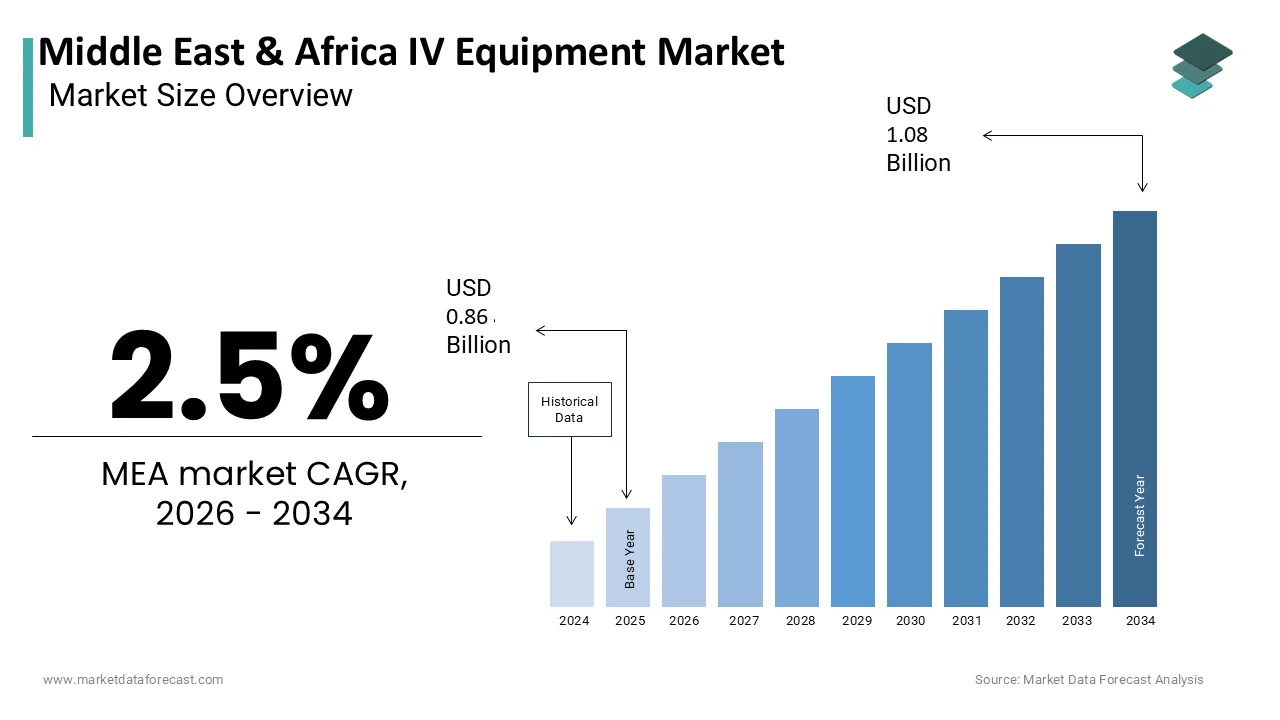
The Middle East & Africa IV equipment market was valued at USD 0.86 billion in 2025, estimated at USD 0.88 billion in 2026, and is projected to reach USD 1.08 billion by 2034, registering a CAGR of 2.5% during the forecast period from 2026 to 2034. The market is shaped by a distinct medical dichotomy between high-tech Gulf Cooperation Council (GCC) healthcare cities and resource-constrained facilities across Sub-Saharan Africa.
- Market Valuation: USD 0.88 billion (2026) to USD 1.08 billion by 2034 (2.5% CAGR).
- Primary Growth Drivers: Escalating prevalence of noncommunicable chronic diseases requiring long-term infusion, and sovereign-backed healthcare modernization initiatives.
- Key Market Restraints: Supply chain volatility, foreign exchange constraints, and a severe deficit of trained biomedical engineering professionals.
Middle East & Africa IV Equipment Market Segment Metrics (2026–2034)
| Category | Leading Segment Focus | Segment Overview & Key Details | Alternative / Growth Focus |
|---|---|---|---|
| By Product | IV Sets & Infusion Pumps | IV sets hold a dominant share due to mandatory single-use frequency; IV infusion pumps represent the fastest-growing segment at an 11.4% CAGR driven by precision dosing needs. | IV catheters, accessories, and specialized safety-engineered delivery lines. |
| By End User | Hospitals & Home Care Settings | Hospitals command a major share via acute care concentration and accreditation standards; home care settings represent the fastest-growing segment at a 13.8% CAGR due to bed shortages and subacute migration. | Ambulatory surgical centers and specialized outpatient clinics. |
| By Application | Gastroenterology & Oncology | Gastroenterology leads volume via fluid resuscitation and rehydration protocols; oncology is the fastest-growing segment at a 14.2% CAGR driven by treatment infrastructure expansion. | Cardiology, neurology, and general clinical pediatrics. |
| By Region / Country | Saudi Arabia & UAE | Saudi Arabia leads the region (26.5% share in 2025) backed by Vision 2030 initiatives, followed by the UAE (19.7% share) and Israel. | South Africa, Egypt, and the wider Rest of Middle East and Africa. |
Major Market Players & Market Structure
Market Structure: Highly competitive landscape balancing international multinational medical device corporations with specialized regional distribution networks and public procurement tenders.
Key Companies: Baxter International Inc., Fresenius SE & Co. KGaA, ICU Medical, Inc., Terumo Corporation, C. R. Bard, Inc., Smiths Medical, Moog, Inc., Becton, Dickinson and Company, and B. Braun Melsungen AG.
Middle East & Africa IV Equipment Market Size
The Middle East & Africa IV Equipment Market is projected to grow from USD 0.86 billion in 2025 to USD 0.88 billion in 2026 and reach USD 1.08 billion by 2034, registering a CAGR of 2.5% from 2026 to 2034.
IV equipment refers to the medical tools and supplies used to deliver fluids, nutrition, or medicine directly into a patient's vein. This process is known as intravenous (IV) therapy. It allows treatments to work fast because they go straight into the blood. This market is fundamentally shaped by a dichotomy between advanced medical cities in the Gulf Cooperation Council nations and resource-constrained rural facilities across Sub-Saharan Africa requiring vastly different technological specifications. According to the World Health Organization, millions of individuals live with viral hepatitis in the Eastern Mediterranean Region, driving regional action campaigns for medical supply safety, early detection, and strict infection prevention strategies across healthcare systems. As per the United Nations Children's Fund, diarrheal diseases remain a leading cause of under-five child mortality in Sub-Saharan Africa, accelerating regional distribution programs for oral rehydration salts and clinical fluid management equipment to lower childhood morbidity. According to the African Development Bank, comprehensive healthcare infrastructure guidelines launched with international partners aim to transform inclusive medical facility development and utility access across African regions. Consequently, this market is defined not merely by device sales but by the ongoing public health imperative to standardize parenteral therapy safety and efficacy across fragmented regulatory landscapes and varying levels of clinical maturity.
MARKET DRIVERS
Expansion of Chronic Disease Management Requiring Long-Term Infusion Therapy
The escalating prevalence of noncommunicable diseases across the region is driving the growth of the Middle East and Africa IV equipment market. This is fundamentally altering demand patterns for sophisticated IV equipment designed for long-term and home-based administration rather than solely acute hospital use. According to the International Diabetes Federation, the Middle East and North Africa region records an age-adjusted diabetes prevalence of 16.2% among adults, accelerating market demand for medical monitoring equipment and specialized supplies across regional diagnostic and therapeutic centers. As per the World Health Organization, rising oncological disease burdens in Sub-Saharan Africa drive regional policy actions to expand medical device availability, access to essential therapies, and specialized care infrastructure. According to the Ministry of Health of Saudi Arabia, national integrated health frameworks target extensive efficiency optimization and private investments to transform local healthcare infrastructure and primary disease management solutions. The epidemiological transition transforms IV equipment from episodic emergency tools into continuous care necessities. Healthcare systems are consequently upgrading from basic gravity-fed systems to volumetric pumps with dose error reduction systems to manage complex medication regimens outside intensive care units, ensuring patient safety while expanding treatment capacity beyond tertiary hospital walls.
Government-Led Healthcare Infrastructure Modernization Programs
Sovereign wealth-funded healthcare modernization initiatives across the Gulf Cooperation Council and emerging African economies further propel the expansion of the Middle East and Africa IV equipment market. These projects are one of the accelerators of advanced IV equipment adoption through direct capital expenditure and facility expansion. As per the African Development Bank, sovereign infrastructure and logistics credit allocations prioritize regional transit, shipyard modernizations, and macro-facility development to generate sustainable economic employment opportunities. According to the Universal Health Insurance Authority of Egypt, public funding flows and national health provider structures govern standardized facility registration and universal coverage implementation to enhance medical service delivery. These state-led interventions de-risk procurement decisions and create guaranteed volume channels independent of organic consumer demand. Unlike markets driven by insurance reimbursement dynamics, growth here stems from top-down capital planning, where IV equipment acquisition is bundled into broader construction and digitalization contracts,s establishing baseline technological standards across previously underserved regions.
MARKET RESTRAINTS
Supply Chain Volatility and Foreign Exchange Constraints
Persistent supply chain fragility and currency instability limit the growth of the Middle East and Africa IV equipment market. This severely restricts consistent access to imported IV equipment across many nations in the region despite documented clinical need. According to the World Bank, severe macro-fiscal imbalances and sovereign debt servicing pressures across several low-income Sub-Saharan nations constrain total foreign exchange reserves and delay general import pipelines for essential clinical medical supplies. As per the United Nations Conference on Trade and Development, geographic isolation and high transit border costs for landlocked developing countries double their total international trade and shipping expenses compared to coastal neighbors, increasing the final market pricing of advanced hospital hardware. The volatility prevents manufacturers from maintaining reliable inventory levels and discourages long-term service contracts essential for complex pump maintenance. Consequently, facilities often revert to cheaper non-compliant alternatives or delay necessary upgrades, creating a cycle of equipment obsolescence that undermines quality of care regardless of budgetary allocations made at central government levels.
Critical Shortage of Biomedical Engineering Workforce
A severe deficit of trained biomedical engineers and clinical technicians fundamentally constrains the effective deployment and maintenance of advanced IV equipment throughout the region, which impedes the expansion of the Middle East and Africa IV equipment market. As per the World Health Organization, systemic deficits in technical health workforce training programs across the African region limit localized repair capacity, causing high percentages of sophisticated electronic medical instrumentation to become prematurely nonfunctional. According to the Eastern Mediterranean Public Health Network, targeted clinical workshops and regional disease surveillance frameworks aim to improve workplace safety protocols and prevent cross-contamination vectors inside local healthcare units. As per the Department of Health of South Africa, public sector hospital recruitment initiatives focus on addressing operational staff shortfalls and vacancy pressures to minimize technical machinery downtime across regional therapeutic wards. The human capital gap shows that acquiring sophisticated equipment does not translate to improved patient outcomes without parallel workforce development. Manufacturers face higher total cost of ownership as they must provide extensive remote training or fly in specialists for basic servicing,g eroding margins and limiting market penetration to urban centers with adequate technical infrastructure.
MARKET OPPORTUNITIES
Adoption of Solar Powered and Low Resource Adapted Devices
The unreliable electricity grid across vast portions of Sub-Saharan Africa creates substantial opportunity for solar-powered and battery-efficient IV equipment, which is likely to fuel the growth of the Middle East and Africa IV equipment market. This technology is specifically engineered for off-grid clinical environments. According to the International Energy Agency, close to 600 million people in Sub-Saharan Africa lacked access to electricity as of 2024, driving regional microgrid expansions and energy-autonomous adaptations to secure critical power lines for vulnerable medical and clinical operations. As per the World Health Organization, international quality prequalification protocols evaluate active pharmaceutical treatments, complex biotherapeutic substances, and specific solution concentrates for infusion to secure global healthcare supplies for non-communicable and infectious disease outbreaks. According to the Ministry of Health of Kenya, comprehensive national neonatal survival policies and clinical care guidelines target localized county healthcare updates to systematically mitigate infant sepsis and expand emergency maternal therapeutic equipment. Manufacturers developing ruggedized, energy-autonomous platforms can capture first-mover advantage in rural primary healthcare expansion programs funded by Global Fund and Gavi partnerships that prioritize sustainability over the lowest unit price, creating a differentiated market-entry strategy distinct from saturated urban hospital segments.
Integration With Digital Health Ecosystems and Telemedicine
Rapid expansion of digital health infrastructure across the region unlocks potential for connected IV equipment in the Middle East and Africa market. This equipment integrates with telemedicine platforms and electronic health records, enabling remote monitoring and data-driven care. As per the International Telecommunication Union, structural network upgrades and spectrum optimization programs aim to expand universal telecommunications access and modern mobile broadband networks across emerging global regions to facilitate connected service delivery. According to the World Health Organization, strategic regional frameworks for digital healthcare deployment prioritize integrated health data infrastructure, interoperable communication baselines, and country-level governance structures across member states. As per the Ministry of Health of Rwanda, structural hospital modernization milestones focus on upgrading centralized clinical reporting loops, electronic information tracking systems, and nursing performance frameworks within regional medical facilities. The convergence transforms IV equipment from isolated mechanical devices into nodes within broader digital care networks. Early movers offering open API compatibility with regional health platforms gain preferential procurement status as governments seek to avoid vendor lock-in and build longitudinal patient datasets supporting evidence-based policymaking and resource optimization across fragmented health systems.
MARKET CHALLENGES
Regulatory Fragmentation and Harmonization Delays
Extreme regulatory fragmentation across jurisdictions in the region creates prohibitive compliance burdens, which is a serious obstacle for the Middle East and Africa IV equipment market. This prevents efficient scaling of IV equipment products and delays patient access to innovative technologies. According to the African Union Development Agency, the African Medicines Regulatory Harmonisation Programme accelerates continent-wide technical alignment and standardizes manufacturing policies to reduce regulatory fragmentation for pharmaceutical and medical supplies. As per the South African Health Products Regulatory Authority, mandatory compliance frameworks enforce national safety requirements for medical electrical equipment via international IEC 60601-1 standards to govern market entry. Until mutual recognition agreements mature and regional pooled assessment mechanisms become operational, each country remains an isolated market fragment, sustaining inefficiencies that ultimately harm patients through delayed technology access.
Proliferation of Substandard and Counterfeit Medical Devices
Widespread circulation of substandard and counterfeit IV equipment poses severe patient safety risks, which slows down the growth of the Middle East and Africa IV equipment market. This problem also undermines legitimate market participants through unfair price competition across the region. According to the World Health Organization, extensive post-market surveillance alerts and global safety reports identify circulating substandard or falsified medical products to help national authorities mitigate therapeutic risks. As per the United Nations Office on Drugs and Crime, cross-border intelligence strategies and regional law enforcement networks actively target transnational criminal rings to intercept illicit, falsified, and non-compliant clinical goods. The illicit trade distorts procurement decisions as cash-constrained facilities opt for cheaper, unsafe alternatives,s eroding trust in formal supply chains. Legitimate manufacturers face margin compression and reputational damage when counterfeit versions of their brands circulate. Addressing this requires strengthened post-market surveillance, serialization technologies, and cross-border enforcement cooperation that currently lags behind pharmaceutical anti-counterfeiting efforts, leaving the IV equipment sector particularly vulnerable.
REPORT COVERAGE
| REPORT METRIC | DETAILS |
| Market Size Available | 2025 to 2034 |
| Base Year | 2025 |
| Forecast Period | 2026 to 2034 |
| Segments Covered | By Product, End User, and Region. |
| Various Analyses Covered | Global, Regional, and Country-Level Analysis, Segment-Level Analysis, Drivers, Restraints, Opportunities, Challenges; PESTLE Analysis; Porter’s Five Forces Analysis, Competitive Landscape, Analyst Overview of Investment Opportunities |
| Countries Covered | Saudi Arabia |
| Market Leaders Profiled |
|
SEGMENTAL ANALYSIS
By Product Type Insights
In 2025, the IV sets segment held the majority share in the Middle East and Africa IV equipment market because of its mandatory single-use nature, which generates continuous recurring demand directly proportional to patient admission volumes across all healthcare settings. According to the World Health Organization, approximately 16 billion injections are administered worldwide each year, emphasizing the extensive global demand for sterile medical consumables and standard sharps management to mitigate health-care waste hazards. As per the United Nations Children's Fund, standard treatment protocols for childhood diarrhea prioritize oral rehydration salts and zinc supplementation to combat severe dehydration and reduce child mortality across vulnerable sub-Saharan African communities. This segment’s dominance is structurally embedded because every infusion therapy episode consumes at least one set, while pumps and catheters may serve multiple patients or remain unused during low census periods. Even in facilities lacking advanced infrastructure, IV sets remain indispensable, making this segment resilient to budget cuts and technological disruption,n ensuring sustained market leadership through sheer utilization frequency rather than unit value.
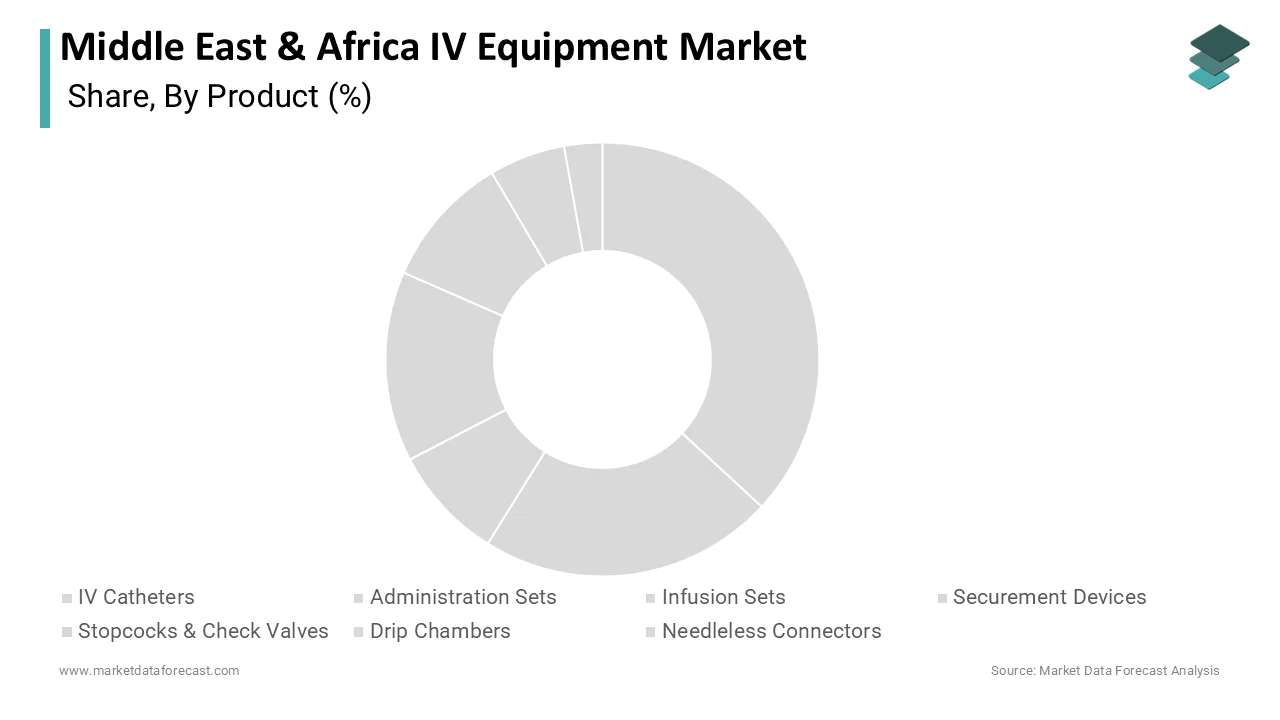
The foremost factor securing this segment's leading position is an accelerating transition toward safety-engineered designs, mandated by infection control regulations responding to high rates of needlestick injuries and bloodborne pathogen transmission across the region. As per the World Health Organization, unsafe injection practices in medical settings cause hundreds of thousands of avoidable deaths annually from blood-borne pathogens, driving global policy guidelines on the mandatory deployment of safety-engineered syringe innovations. According to the Ministry of Health and Population of Egypt, comprehensive patient safety frameworks enforce standardized injection safety guidelines and specialized clinical oversight throughout the state's public healthcare infrastructure. The regulatory-driven upgrade cycle transforms IV sets from commoditized disposables into value-added safety devices. Manufacturers offering compliant products capture a disproportionate share as procurement shifts from lowest price to total cost of ownership models incorporating occupational health savings and legal liability reduction across increasingly regulated Middle East and Africa healthcare environments.
The IV infusion pumps segment is anticipated to witness the fastest CAGR of 11.4% from 2026 to 2034, due to the rising complexity of chronic disease management requiring precise volumetric dosing unachievable through manual gravity methods. According to the World Health Organization, the ongoing development of national cancer country profiles serves to highlight resource requirements, clinical access disparities, and essential therapeutic delivery gaps across sub-Saharan African member states. As per the Ministry of Health of Kenya, national healthcare development strategies prioritize upgrading equipment baselines and medical technology arrays within regional oncology centers to enhance long-term chronic care delivery. The clinical necessity converts pumps from luxury items into mandatory infrastructure for modern specialty care. Growth accelerates as treatment protocols align with international standards requiring device-enabled precision, making pump adoption a function of clinical capability expansion rather than discretionary spending decisions across diverse Middle East and Africa healthcare systems.
The fast development of this segment is heightened by integration with digital health ecosystems that enable remote monitoring and nursing workflow optimization, addressing critical workforce shortages plaguing regional healthcare delivery. According to the World Health Organization, chronic health workforce deficits across low-resource settings complicate standard medical delivery, necessitating structural investments in education and retention to optimize local clinical operations. As per the Ministry of Health of Saudi Arabia, the rapid expansion of the Seha Virtual Hospital platform provides remote clinical support and specialized digital medicine consults across a connected national network of regional hospitals. This operational efficiency translates directly into return on investment, justifying capital expenditure even in resource-constrained settings where labor savings offset device costs within 18 months. Growth reflects recognition that smart pumps solve systemic human resource challenges beyond mere dosing accuracy, positioning them as workforce multipliers rather than isolated medical devices in digitally transforming Middle East and Africa health systems.
By End User Insights
The hospitals segment led the Middle East and Africa IV equipment market and captured a significant share in 2025. This leading position of the segment was attributed to the concentration of acute care services and complex procedures requiring intravenous access. According to the World Bank, significant variations in hospital bed densities between the Gulf Cooperation Council economies and Sub-Saharan African regions underscore disparate clinical infrastructure baselines and distinct public health priorities. As per the African Development Bank, regional infrastructure financing strategic plans prioritize the comprehensive structural transformation of decentralized primary care facilities to ensure universal community health access. The institutional concentration creates predictable, high-volume demand channels where purchasing decisions follow standardized protocols rather than individual clinician preferences. Unlike fragmented ambulatory or home care markets requiring distributed sales efforts, hospitals offer efficient B2B engagement models with longer contract cycles and higher average transaction values, securing their dominant position despite emerging alternative care site growth across the region.
Hospitals maintain US segment leadership through mandatory accreditation requirements that establish minimum IV equipment specifications as a condition for licensure, reimbursement eligibility,y and international certification. As per Joint Commission International, international hospital survey protocols evaluate multi-disciplinary patient care processes, clinical safety guidelines, and leadership operational management frameworks to award health facility accreditations. According to the Saudi Health Council, unified healthcare regulations and upgraded clinical licensing frameworks establish comprehensive national patient safety indicators across intensive care units and public surgical environments. These regulatory frameworks transform IV equipment from clinical choice into administrative necessity insulated from budget fluctuations. Hospitals cannot defer upgrades without risking operational closure, re making this segment more stable than voluntary adoption markets. Consequently, manufacturers prioritize hospital channel relationships,ips knowing that compliance deadlines create non-negotiable demand windows independent of broader economic sentiment or competitive pricing pressures.
The home care settings segment is on the rise and is expected to be the fastest-growing segment in the market, witnessing a CAGR of 13.8% during the forecast period. This growth is fuelled by severe hospital bed shortages, which are forcing the migration of subacute and chronic infusion therapies to domestic environments. According to the United Nations Population Division, demographic shifts and accelerating life expectancy trends in the Middle East drive systemic long-term policy strategies to expand national geriatric care resources. As per the Ministry of Health and Prevention of the United Arab Emirates, national continuous care initiatives and institutional digital health programs focus on expanding home-based medical treatments and optimizing acute clinical hospital capacity. The economic imperative accelerates adoption as payers recognize home infusion as a cost-containment strategy. Growth stems not from consumer preference but from system necessity, making portable pumps and disposable sets essential infrastructure for managing demographic and epidemiological transitions across resource-constrained Middle East and Africa health systems.
The swift expansion of this segment gains further momentum as growing insurance coverage and government subsidy programs remove financial barriers that historically restricted home IV therapy to affluent populations. According to the Insurance Authority of Saudi Arabia, comprehensive operational insurance guidelines establish private sector funding baselines and structured medical benefit coverage plans to regulate therapeutic services. As per the National Department of Health of South Africa, foundational universal healthcare legislative updates outline institutional funding models and national public sector resource optimization pathways to improve medical coverage. The policy interventions convert latent clinical need into effective demand by aligning payment with care site shift. Unlike hospital procurement driven by capital budgets, home care growth depends on recurring revenue models enabled by reimbursement, making segment expansion sustainable beyond donor-funded pilots. Manufacturers adapting business models to rental and service contracts capture this emerging opportunity aligned with regional universal health coverage aspirations.
By Application Insights
The gastroenterology segment was the largest in 2025 and occupied a commanding share of the Middle East and Africa IV equipment market. This supremacy of the segment was credited to the persistent burden of dehydration from diarrheal diseases, cholera outbreaks, and malnutrition requiring massive volumes of fluid resuscitation therapy. According to the World Health Organization, diarrheal disease is a leading cause of under-five child mortality globally, driving the widespread deployment of standard oral rehydration salts and clinical intravenous fluid replacement strategies. As per the United Nations Children's Fund, emergency response operations for major regional cholera outbreaks prioritize the rapid deployment of specialized water, sanitation, hygiene infrastructure, and essential medical rehydration kits to mitigate mortality. The epidemiological reality makes gastroenterology the foundational application driving baseline IV equipment consumption regardless of technological sophistication. Even in facilities lacking oncology or cardiology capabilities, gastrointestinal fluid management remains a universal service, ensuring this segment maintains volume leadership through public health necessity rather than specialty care expansion across diverse Middle East and Africa contexts.
The leading position of this segment is bolstered by systematic integration of IV nutrition support into malnutrition treatment protocols, addressing widespread stunting and wasting across the region. As per the World Food Programme, conflict-driven nutrition emergencies and acute hunger shocks necessitate localized, large-scale delivery of therapeutic foods, vital nutrient supplements, and multi-agency humanitarian relief supply lines. According to the Lancet Child and Adolescent Health, severe childhood wasting and complicated malnutrition recovery protocols require highly managed clinical stabilization phases to prevent critical metabolic and electrolyte imbalances. The protocol-driven demand creates predictable consumption patterns tied to nutritional surveillance data rather than discretionary clinical decisions. Unlike oncology or neurology applications concentrated in tertiary centers, gastroenterological IV therapy occurs at all health system levels, from community clinics to national hospitals,s ensuring broad geographic distribution of equipment demand that sustains segment dominance despite the emergence of higher-value specialty applications.
The oncology segment is likely to experience the fastest CAGR of 14.2% between 2026 and 2034. This quick surge of the segment is propelled by rapidly increasing cancer incidence coupled with unprecedented investment in treatment infrastructure previously absent across much of the region. According to the International Agency for Research on Cancer, long-term projections indicate a steep rise in global oncology incidence driven by demographic aging, highlighting an urgent need to build regional treatment infrastructure. As per the African Organisation for Research and Training in Cancer, clinical workshops and professional education networks focus on standardizing oncology nursing competencies and improving patient safety controls during drug infusions. The supply side expansion unlocks previously suppressed demand as patients gain access to therapies that were geographically or financially inaccessible. Growth reflects a catch-up phase where infrastructure development enables clinical demand realization, creating a multi-year acceleration cycle distinct from mature markets with established oncology networks.
The fast development of this segment is heightened by stringent safety regulations governing hazardous drug handling that mandate specialized IV equipment incompatible with general-purpose alternatives, thereby creating forced upgrade cycles across newly established and existing cancer programs. As per the United States Pharmacopeia, official guidelines for handling hazardous drugs establish stringent containment thresholds, environmental safety barriers, and specialized clinical closed-system transfer equipment to minimize healthcare worker exposure. According to the Ministry of Health and Population of Egypt, national medical directives enforce strict clinical protocols for electronic medication safety systems to prevent therapeutic dosing errors across institutional public hospital wards. These regulatory requirements transform oncology IV equipment from clinical preference into legal obligation, insulating demand from budget constraints. Manufacturers offering compliant integrated solutions capture a disproportionate share, as facilities cannot substitute cheaper general-purpose devices without risking regulatory sanctions or malpractice liability in an increasingly litigious environment.
COUNTRY LEVEL ANALYSIS
Kingdom Of Saudi Arabia IV Equipment Market Analysis
The Kingdom of Saudi Arabia dominated the Middle East and Africa IV equipment market and accounted for a 26.5% share in 2025. This dominance of the Saudi market was driven by Vision 2030 healthcare transformation and the highest per capita health expenditure in the region. According to the Ministry of Health of Saudi Arabia, national healthcare transformation initiatives allocate a comprehensive $65 billion budget to modernize infrastructure, restructure clinical facilities, and expand digital health networks under Vision 2030. As per the General Authority for Statistics of Saudi Arabia, sustained expansion in the kingdom's real Gross Domestic Product per capita underpins accelerated private and public sector healthcare modernization budgets for advanced medical equipment. According to the National Unified Procurement Company, unified government healthcare tenders aggregate nationwide institutional volume to maximize public expenditure efficiency and streamline pharmaceutical and medical device supply chains. Saudi Arabia’s market leadership stems from sovereign wealth enabling simultaneous infrastructure, workforce,e and digital investment, creating a comprehensive ecosystem unmatched elsewhere, though sustainability depends on maintaining fiscal commitment beyond the current planning horizon and successful private sector participation model implementation.
United Arab Emirates IV Equipment Market Analysis
The United Arab Emirates was positioned second in the Middle East and Africa IV equipment market and captured a 19.7% share in 2025, because of its advanced, private-sector-dominated healthcare system, medical tourism hub status, and the expatriate population driving demand for international-standard IV services. According to the Dubai Health Authority, updated health facility design frameworks and clinical equipment standards mandate strict safety, engineering, and maintenance protocols for all therapeutic devices across registered medical units. The country’s mandatory health insurance framework in Abu Dhabi and Dubai covers advanced infusion therapies, including biologics and home parenteral nutrition, creating predictable reimbursement streams supporting continuous technology refresh cycles. As per the Ministry of Health and Prevention of the United Arab Emirates, strategic national health frameworks drive active investments across highly specialized clinical centers to advance regional medical tourism and therapeutic services. However, the transient expatriate population creates churn challenges, with residence durations of several years limiting long-term service contract viability and training return on investment. Emirati nationals show different utilization patterns, preferring public sector facilities with separate procurement channels. United Arab Emirates market functions as a premium tier, serving an internationally mobile population, while the public system addresses citizen needs through parallel pathways, creating dual market dynamics requiring differentiated commercial strategies.
Israel IV Equipment Market Analysis
Israel plays a key role in the Middle East and Africa IV equipment market due to universal health coverage, a mature domestic medtech innovation ecosystem, and a strong export-oriented manufacturing base. According to the International Trade Administration, Israel's National Health Insurance Law establishes a universal health basket guaranteeing that all eligible residents retain full clinical access to necessary services, medications, and medical equipment. The country’s robust biomedical engineering sector produces indigenous IV pump manufacturers supplying the domestic market while exporting to numerous countries, generating technology spillovers and competitive pricing pressure on imports. As per the National Institutes of Health, bidirectional smart pump and electronic health record integration improves automated clinical record matching to enhance patient safety and optimize hospital billing claims. However, the ongoing security situation creates cyclical demand surges for trauma-related IV supplies, straining inventory during conflict periods while diverting resources from elective care upgrades. Arab Israeli populations show lower advanced IV technology utilization than Jewish Israelis despite identical coverage,e reflecting cultural and linguistic barriers requiring targeted outreach. Israel’s market strength lies in systemic integration and domestic production capacity, ty creating resilience against external supply shocks,cks though geopolitical volatility introduces unique operational uncertainties absent in Gulf states.
South Africa IV Equipment Market Analysis
South Africa occupies a notable share of the Middle East and Africa IV equipment market, owing to the most developed private healthcare sector in Sub-Saharan Africa, yet a persistent public-private divide creates dual-speed market dynamics. According to the National Department of Health of South Africa, the state-funded public sector delivers healthcare to approximately 84% of the population, whereas the private medical sector serves the remaining 16%. As per the Council for Scientific and Industrial Research, South African multidisciplinary development hubs utilize specialized public funding and legislative mandates to accelerate localized engineering innovations and technical manufacturing capabilities. According to the Council for Scientific and Industrial Research, public research initiatives and clinical engineering programs in South Africa coordinate structural resource deployments to strengthen operational tech capacity across rural medical infrastructures. However, thelload-sheddingelectricity crisis causes frequent pump battery failures and equipment damage. South Africa’s market exemplifies an inequality paradox where world-class private care coexists with an underfunded public system, requiring bifurcated commercial approaches addressing both premium innovation and frugal access segments simultaneously.
COMPETITIVE LANDSCAPE
Competition in the Middle East and Africa IV equipment market occurs across multiple ttierseflecting extreme economic and infrastructural heterogeneity across the region. Multinational innovator companies compete primarily in high-income Gulf states and private sectors of middle-income countries where premium pricing is viable and regulatory pathways are established. Generic manufacturers from India, China, and regional players dominate public sector tenders and lower-income markets through cost leadership and WHO prequalification status, enabling participation in donor-funded procurement. Local assemblers leverage government incentives and preferential procurement policies to capture protected market segments despite limited technological capabilities. Competition increasingly centers on access enablers, including supply chain reliability, clinical training, and after-sales service, rather than product differentiation alone, since most IV equipment is commoditized. Humanitarian organizations function as both competitors and customers,r s creating complex dynamics where commercial and aid objectives intersect unpredictably. Regulatory fragmentation prevents pan-regional strategies, forcing participants to maintain country-specific approaches, increasing operational complexity and cost structures. Success requires balancing scale efficiencies with local responsiveness, making this market uniquely challenging compared to homogeneous regions where standardized approaches suffice, and margins remain predictable without constant adaptation to volatile political and economic conditions.
KEY MARKET PLAYERS
Some of the companies that are playing a dominating role in the Middle East & Africa IV Equipment Market include:
- Baxter International Inc.
- Fresenius SE & Co. KGaA
- ICU Medical, Inc.
- Terumo Corporation
- C. R. Bard, Inc.
- Smiths Medical
- Moog, Inc.
- Becton, Dickinson and Company
- B. Braun Melsungen AG
TOP LEADING PLAYERS IN THE MARKET
- Baxter International maintains significant involvement in the Middle East and Africa IV equipment market through comprehensive infusion therapy portfolios spanning consumables, pumps, and clinical education programs addressing diverse regional needs. The company operates manufacturing facilities in Egypt and South Africa, ensuring localized supply resilience against import disruptions and currency volatility affecting neighboring markets. Baxter recently partnered with Saudi Arabia’s National Unified Procurement Company to standardize safety-engineered IV sets across public hospitals, reducing needlestick injuries and improving infection control metrics. Their initiatives demonstrate commitment to adapting global technologies for local infrastructure constraints while strengthening supply chain reliability and clinical capacity building across fragmented Middle East and Africa healthcare landscapes requiring contextually appropriate solutions rather than standardized global offerings.
- B Braun Melsungen contributes specialized IV therapy expertise to the Middle East and Africa market through a focus on safety-engineered devices and professional training programs addressing workforce capacity gaps. B Braun collaborated with Egypt’s Ministry of Health to implement national safe injection protocols including auto-disable syringes and retractable cannulas, covering millions of citizens uunder th universalhealth insurance rollout. Their actions reflect a strategy prioritizing knowledge transfer and regulatory alignment alongside product supply,y recognizing that sustainable market development requires building clinical ecosystems rather than merely distributing devicesacross resource-constrainedd Middle East and Africa environments where human capital deficits limit technology adoption regardless of availability.
- Terumo Corporation strengthens the Middle East and Africa IV equipment market through affordable safety catheter portfolios and innovative access models tailored to price-sensitive public sector procurement. Terumo recently collaborated with Ethiopia’s Federal Ministry of Health to establish a local assembly facility, reducing import dependence and foreign exchange exposure while creating skilled manufacturing jobs aligned with industrialization goals. These initiatives demonstrate commitment to frugal innovation and public health partnership,p positioning Terumo as an essential infrastructure provider rather than a conventional commercial vendor in humanitarian and development contexts across the Middle East and Africa, where affordability and reliability determine actual therapeutic reach more than technological sophistication alone.
TOP STRATEGIES USED BY KEY MARKET PARTICIPANTS
Key players in the Middle East and Africa IV equipment market prioritize local manufacturing partnerships or facility acquisitions,s reducing currency exposure and import clearance delays that frequently cause stockouts in import-dependent markets. Companies increasingly pursue tiered pricing strategies, offering differentiated price points across income segments,s enabling public sector access while maintaining private sector profitability through cross-subsidization models. Strategic focus on healthcare professional education addresses clinical competency gaps, creating sustainable demand through improved utilization rather than promotional activities alone. Manufacturers actively engage with international procurement agencies and donor-funded programs, securing volume commitments that justify market entry despite uncertain domestic reimbursement environments. Regulatory engagement strategies emphasize alignment with national health plans,s positioning companies as implementation partners rather than external vendors. Supply chain diversification through multiple sourcing and regional buffer stocks mitigates geopolitical and logistical disruptions endemic to fragile states. Digital health integration enables remote monitoring, ng extending therapeutic reach beyond physical infrastructure limitations. Product portfolio adaptation includes solar-powered and ruggedized devices for off-grid settings, acknowledging infrastructure heterogeneity. These multifaceted approaches recognize that success requires balancing commercial viability with developmental imperatives across extraordinarily diverse operating environments where pure profit maximization fails systematically.
MARKET SEGMENTATION
This research report on the Middle East & Africa IV Equipment Market has been segmented and sub-segmented into the following categories.
By Product
- IV Catheters
- Administration Sets
- Infusion Sets
- Securement Devices
- Stopcocks & Check Valves
- Drip Chambers
- Needleless Connectors
- Others
By End User
- Hospitals & Clinics
- Home Care
- Ambulatory Care Centers
By Country
- KSA
- UAE
- Israel
- rest of GCC countries
- South Africa
- Ethiopia
- Kenya
- Egypt
- Sudan, Rest of MEA