- Product Description Description
- Table of Contents TOC
- List of Table & Figure LOT
- Get Free Sample PDF Sample PDF
Market Size, 2025
$4.05 BnMarket Estimate, 2026
$4.34 BnMarket Forecast, 2034
$7.54 BnCAGR, 2026–2034
7.15%Global Multiplex Assays Market Report Summary
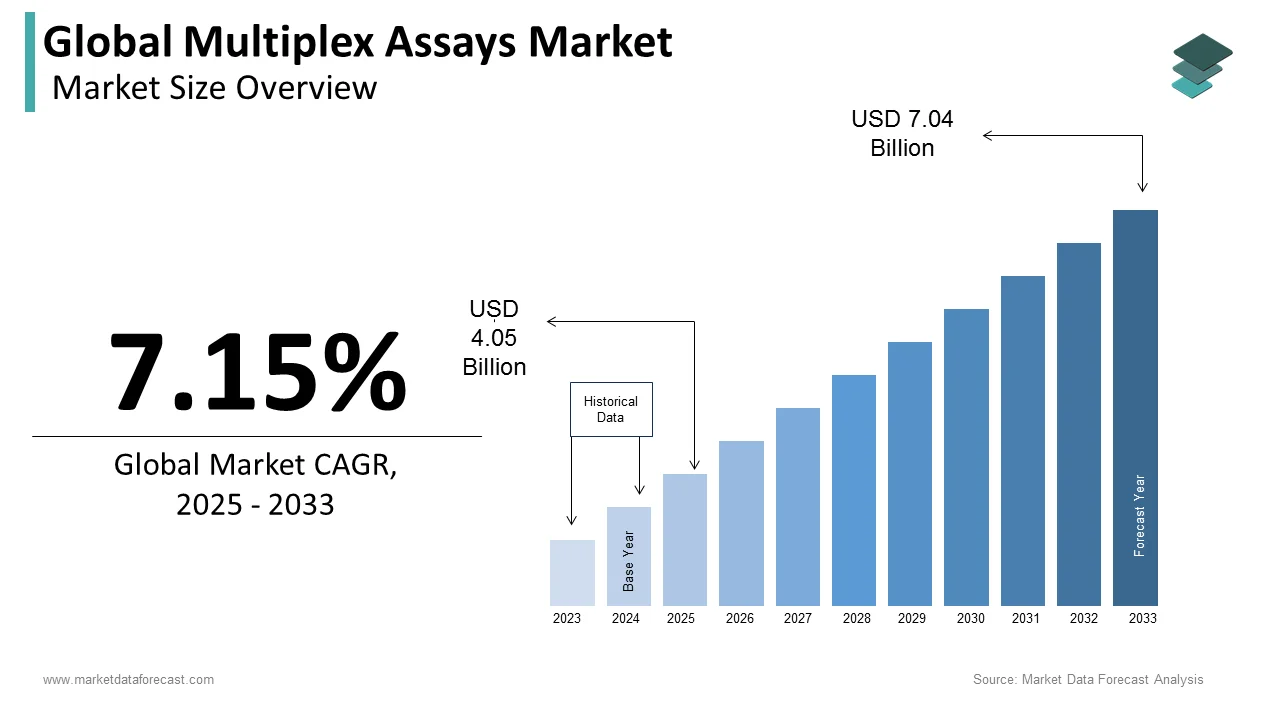
The global multiplex assays market was valued at USD 4.05 billion in 2025, is estimated to reach USD 4.34 billion in 2026, and is projected to reach USD 7.54 billion by 2034, growing at a CAGR of 7.15% from 2026 to 2034. Market growth is driven by increasing demand for high-throughput screening, rising focus on biomarker discovery, and growing adoption of advanced diagnostic technologies. Multiplex assays enable simultaneous detection of multiple analytes, improving efficiency, reducing costs, and accelerating research and clinical diagnostics. The expansion of precision medicine, increasing prevalence of chronic diseases, and advancements in molecular diagnostics are further fueling market growth globally.
Key Market Trends
- Increasing adoption of high-throughput and multi-analyte testing technologies.
- Growing demand for biomarker discovery and personalized medicine.
- Rising use of multiplex assays in clinical diagnostics and research.
- Advancements in molecular and proteomic technologies.
- Expansion of pharmaceutical and biotechnology research activities.
Segmental Insights
- Based on product type, the consumables segment dominated the global multiplex assays market by capturing 51.5% share in 2025, driven by recurring demand for reagents and kits.
- Based on type, the protein-based multiplex assays segment led the market with 54.9% share in 2025, supported by extensive use in proteomics and biomarker analysis.
- Based on end user, the pharmaceutical and biotechnology companies segment held the largest share of 37.7% in 2025, driven by increasing R&D investments and drug discovery activities.
Regional Insights
The global multiplex assays market is witnessing steady growth across major regions due to increasing research activities and healthcare advancements.
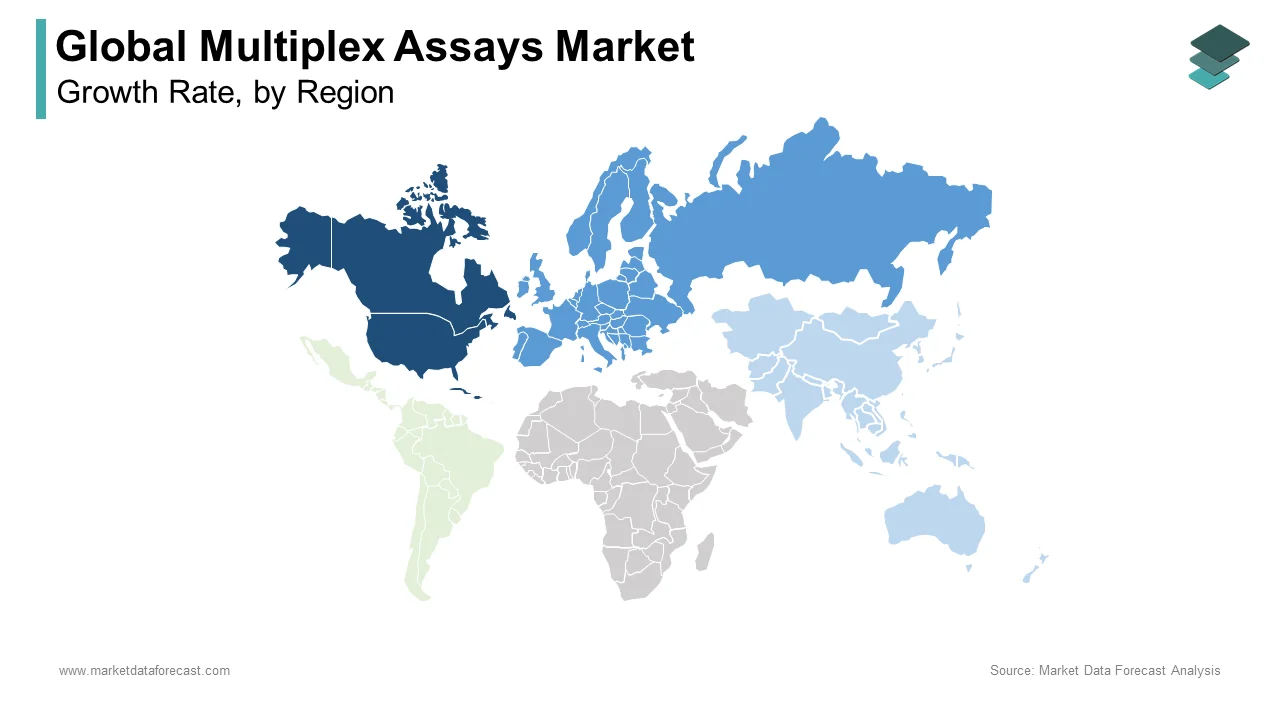
- North America led the market in 2025 with 41.9% share, supported by strong research infrastructure and high adoption of advanced technologies.
- Europe holds a significant share, driven by collaborative research networks and standardized regulatory frameworks.
- Asia-Pacific is expected to register a strong CAGR due to expanding research capabilities and increasing adoption of advanced diagnostic technologies.
Competitive Landscape
The global multiplex assays market is highly competitive, with the presence of leading biotechnology and diagnostic companies. Market players are focusing on product innovation, expanding assay portfolios, and enhancing technological capabilities. Strategic collaborations, mergers, and investments in R&D are shaping competitive dynamics across the market.
Prominent companies operating in the global multiplex assays market include Luminex Corporation, Thermo Fisher Scientific Inc., Illumina Inc., Bio-Rad Laboratories Inc., QIAGEN N.V., Abcam Plc, Becton, Dickinson and Company, Merck KGaA, Meso Scale Diagnostics, Randox Laboratories Ltd, and Seegene Inc.
Global Multiplex Assays Market Size
The size of the global multiplex assays market was worth USD 4.05 billion in 2025. The global market is anticipated to grow at a CAGR of 7.15% from 2026 to 2034 and be worth USD 7.54 billion by 2034 from USD 4.34 billion in 2026.
Multiplex assays comprise advanced analytical technologies capable of simultaneously quantifying multiple analytes within a single sample volume, fundamentally transforming high-throughput screening and diagnostic precision. These systems utilize diverse detection modalities, including fluorescence, chemiluminescence, and electrochemical sensors, to profile complex biological signatures such as cytokines, hormones, and genetic markers with exceptional efficiency. The criticality of this technology has surged as modern biomedical research shifts from reductionist single-parameter analysis to holistic system biology approaches. As per the National Institutes of Health, the human proteome consists of tens of thousands of distinct proteins, yet traditional methods often analyze them individually, which creates a bottleneck in understanding disease mechanisms. According to the World Health Organization, noncommunicable diseases, including cancer and diabetes, account for the majority of global deaths, which requires comprehensive biomarker panels for early detection that multiplexing can provide efficiently. As per the European Centre for Disease Prevention and Control, surveillance of emerging pathogens requires the simultaneous detection of multiple viral strains, which is a task not feasible with sequential singleplex testing. Furthermore, as per the Human Genome Project, while sequencing costs have dropped dramatically, functional validation of genetic variants through protein expression remains costly and time-intensive without parallel analysis capabilities. This convergence of complex disease etiology and the need for rapid data generation establishes multiplex assays as an indispensable pillar of contemporary life sciences and clinical diagnostics.
MARKET DRIVERS
Escalating Demand for Comprehensive Biomarker Profiling in Precision Medicine
The paradigm shift in clinical oncology and drug development toward precision medicine that demands the simultaneous evaluation of extensive biomarker panels to guide therapeutic decisions is majorly driving the expansion of the global multiplex assays market. Modern targeted therapies and immune-oncology treatments rely on the identification of specific molecular signatures rather than single markers, necessitating technologies that can profile hundreds of analytes from limited patient samples. According to the American Society of Clinical Oncology, many new cancer drugs approved in recent years require companion diagnostic testing involving multiple genetic or protein markers to determine patient eligibility. As per the National Cancer Institute, tumor heterogeneity means a single biopsy must yield maximum data, making multiplexing essential to preserve precious tissue while generating robust datasets. According to the Pharmaceutical Research and Manufacturers of America, the high cost of bringing a new drug to market drives pharmaceutical companies to adopt multiplex assays in early clinical trials to reduce attrition rates. By analyzing multiple signalling pathways concurrently, researchers can identify resistance mechanisms and predict patient responses with greater accuracy. As per the European Society for Medical Oncology, standard of care guidelines now increasingly recommend multi-gene profiling for breast and lung cancers, directly increasing the volume of multiplex tests performed. This clinical imperative to extract maximal information from minimal sample volumes ensures sustained and growing demand for high-plexity assay platforms across global healthcare systems.
Surge in Infectious Disease Surveillance and Pathogen Detection Capabilities
The growing global focus on infectious disease surveillance and the urgent need for rapid differentiation among numerous pathogens following recent pandemic events are further propelling the growth of the multiplex assays market. Public health agencies and clinical laboratories now prioritize syndromic testing panels that can detect dozens of viruses, bacteria, and fungi in a single run to enable immediate isolation and treatment protocols. According to the Centers for Disease Control and Prevention, respiratory infections account for a large number of outpatient visits annually, and the ability to distinguish between influenza, SARS-CoV-2, and respiratory syncytial virus simultaneously is critical for effective patient management. As per the World Health Organization, antimicrobial resistance causes a significant number of deaths globally each year, necessitating rapid multiplex assays that can identify both the pathogen and its resistance genes to guide antibiotic stewardship. According to the European Centre for Disease Prevention and Control, the implementation of multiplex molecular panels in hospitals has reduced turnaround time for sepsis diagnosis, significantly improving survival rates. Furthermore, the emergence of novel variants requires flexible platforms that can be rapidly updated to include new targets without redesigning entire workflows. As per the Global Fund to Fight AIDS, Tuberculosis, and Malaria, multiplex technologies are supported in resource-limited settings to monitor co-infections efficiently. This relentless pressure to enhance diagnostic speed and breadth in the face of evolving biological threats solidifies multiplex assays as a cornerstone of global health security infrastructure.
MARKET RESTRAINTS
High Complexity of Data Analysis and Interpretation Barriers
The profound complexity associated with analyzing and interpreting the massive datasets generated by simultaneous multi-analyte detection is primarily hampering the expansion of the multiplex assays market. Unlike singleplex tests that yield straightforward binary results, multiplex platforms produce intricate data matrices requiring sophisticated bioinformatics tools and specialized statistical expertise to decipher meaningful biological signals from noise. According to Nature Methods, cross-reactivity between antibodies or probes in highly multiplexed environments can lead to false positives or skewed quantification, necessitating rigorous validation protocols that many clinical laboratories lack the resources to perform. As per the American Association for Clinical Chemistry, many laboratories hesitate to implement high-plexity assays due to the shortage of personnel trained in advanced data analytics and computational biology. According to the European Bioinformatics Institute, the integration of multiplex data into electronic health records remains challenging due to incompatible data formats and the lack of standardized reporting frameworks. Furthermore, the sheer volume of data can overwhelm clinicians who are accustomed to simple reference ranges, leading to decision paralysis or misinterpretation of subtle correlation patterns. As per the World Health Organization, in low-resource settings, the absence of robust IT infrastructure makes the deployment of data-intensive multiplex technologies practically unfeasible. Until user-friendly software solutions and automated interpretation algorithms become universally available, this analytical bottleneck will continue to restrict market penetration, particularly among smaller diagnostic facilities and community hospitals.
Stringent Regulatory Hurdles and Reimbursement Uncertainties
Navigating the regulatory landscape and securing consistent reimbursement coverage is further hindering the global multiplex assays market growth. Regulatory bodies such as the Food and Drug Administration and the European Medicines Agency require exhaustive validation data for every individual analyte within a multiplex panel, effectively multiplying the workload and cost of approval compared to single-target tests. According to the Diagnostic Innovation Council, the average time to secure regulatory clearance for a novel multiplex diagnostic can be lengthy, during which time the underlying technology may become obsolete. As per the Centers for Medicare and Medicaid Services, comprehensive multiplex panels are often categorized as investigational or luxury services, resulting in high denial rates for reimbursement claims and forcing patients to bear substantial out-of-pocket costs. According to the European Health Technology Assessment network, significant disparities exist in coverage policies across member states, with some nations reimbursing only single analyte tests while rejecting bundled panels despite their clinical utility. As per the World Bank, in developing economies, the high upfront cost of multiplex instruments combined with uncertain payment models discourages public health systems from investing in these technologies. This financial and regulatory ambiguity creates a risky environment for manufacturers, stifling innovation and limiting the availability of advanced diagnostic tools to only the wealthiest healthcare institutions, thereby slowing overall market growth.
MARKET OPPORTUNITIES
Integration of Artificial Intelligence and Machine Learning for Data Decoding
The seamless integration of artificial intelligence and machine learning algorithms into multiplex assay workflows is a promising opportunity for the multiplex assays market. These advanced computational tools can automatically correct for cross-reactivity, normalize complex datasets, and identify subtle biomarker patterns that escape human detection, thereby enhancing diagnostic accuracy and clinical utility. According to the Journal of Medical Internet Research, AI-driven analysis platforms have demonstrated the ability to improve the sensitivity of multiplex immunoassays by filtering out background noise and optimizing signal thresholds. As per the International Data Corporation, cognitive systems are expected to process vast amounts of diagnostic data to support real-time clinical decision making. In Europe, the European Commission has launched initiatives to foster AI adoption in health diagnostics, aiming to validate algorithms that can interpret multiplex results instantly at the point of care. This technological convergence enables the development of predictive models that stratify patients based on multi-parameter risk profiles derived from a single drop of blood or tissue sample. Furthermore, AI can automate the reporting process, translating complex heatmaps into actionable clinical insights for physicians without specialized training. By removing the analytical burden from laboratory staff and clinicians, AI integration makes high-plexity testing accessible to a broader range of healthcare providers, opening new markets and driving widespread adoption of sophisticated multiplex solutions.
Expansion of Point of Care Testing and Decentralized Diagnostics
The burgeoning trend toward decentralizing diagnostics and expanding point-of-care testing capabilities offers a substantial growth avenue for the multiplex assays market by bringing complex laboratory testing directly to the patient's bedside or remote clinics. Miniaturization of microfluidic technologies and the development of portable cartridge-based systems now allow for the simultaneous detection of multiple pathogens or biomarkers outside traditional laboratory settings. As per the Global Point of Care Diagnostics Market analysis, shipments of portable diagnostic devices are expected to increase, driven by the need for rapid triage in emergency rooms and rural health centers. The World Health Organization advocates for decentralized testing to improve access in low-resource settings, where transporting samples to central labs causes critical delays in treatment initiation. According to the Bill and Melinda Gates Foundation, pilot programs using handheld multiplex devices have successfully diagnosed malaria, HIV, and tuberculosis co-infections in sub-Saharan Africa, with results available quickly. Furthermore, the rise of telehealth services creates a demand for home-based or clinic-based multiplex kits that can transmit data remotely to specialists for interpretation. This shift reduces the burden on centralized laboratories and empowers frontline healthcare workers to make informed decisions immediately. By democratizing access to high complexity testing, the expansion of point-of-care multiplex solutions addresses critical gaps in global health equity and opens vast new consumer segments for manufacturers.
MARKET CHALLENGES
Technical Challenges of Cross-Reactivity and Signal Interference
The technical difficulty of managing cross-reactivity and signal interference when detecting numerous analytes within a confined reaction volume is a major challenge to the multiplex assays market growth. As the number of targets increases, the probability of antibodies binding to non-specific epitopes or fluorescent labels overlapping spectrally rises exponentially, potentially compromising the accuracy and reliability of results. According to the Analytical Chemistry journal, studies have shown that in panels with high-plexity, cross-talk between channels can lead to quantification errors if not meticulously optimized. As per the National Institute of Standards and Technology, the lack of universal standards for multiplex calibration makes it difficult to compare results across different platforms or laboratories, hindering reproducibility essential for clinical adoption. According to the Clinical Chemistry journal, matrix effects from complex sample types like whole blood or serum can disproportionately affect certain analytes in a multiplex mix, requiring extensive sample preparation that negates the speed advantage. As per the International Organization for Standardization, validating each interaction pair in a high-plex assay is a resource-intensive process that many manufacturers struggle to complete comprehensively. Furthermore, the dynamic range of different analytes often varies widely, making it challenging to detect low-abundance markers in the presence of high-abundance ones without signal saturation. Until robust chemistries and universal normalization methods are developed to eliminate these interferences, the reliability of ultra-high plex assays will remain a concern for clinicians, limiting their use in critical diagnostic scenarios.
Scarcity of Skilled Personnel and Specialized Training Requirements
The acute scarcity of skilled personnel capable of operating sophisticated multiplex instruments and interpreting their complex outputs is further challenging the global market expansion. Unlike traditional immunoassays that require basic laboratory training, multiplex systems demand expertise in fluidics, optics, bioinformatics, and advanced quality control protocols that are currently in short supply globally. As per the American Society for Clinical Pathology, there is a projected deficit of medical laboratory scientists in the United States by 2030, a gap that is even more pronounced in specialized molecular diagnostics. The World Health Organization reports that many low and middle-income countries have very few laboratory technicians relative to their populations, making the deployment of high-maintenance multiplex platforms impractical without extensive training programs. According to the European Federation of Clinical Chemistry and Laboratory Medicine, continuing education curricula have struggled to keep pace with the rapid evolution of multiplex technologies, leaving many existing staff ill-equipped to troubleshoot instrument errors or validate new panels. The complexity of troubleshooting failed runs in a multiplex environment, where a single reagent failure can compromise an entire panel, requires a level of expertise that is rare in routine hospital labs. This workforce bottleneck forces institutions to rely on reference laboratories or vendor support, increasing costs and turnaround times. Without a concerted global effort to expand educational pipelines and simplify instrument operation, the human resource gap will remain a formidable barrier to market expansion.
REPORT COVERAGE
| REPORT METRIC | DETAILS |
| Market Size Available | 2025 to 2034 |
| Base Year | 2025 |
| Forecast Period | 2026 to 2034 |
| Segments Covered | By Product, Type, Application, Technology, End-User, and Region. |
| Various Analyses Covered | Global, Regional, and Country-Level Analysis, Segment-Level Analysis, Drivers, Restraints, Opportunities, Challenges; PESTLE Analysis; Porter’s Five Forces Analysis, Competitive Landscape, Analyst Overview of Investment Opportunities |
| Regions Covered | North America, Europe, APAC, Latin America, Middle East & Africa |
| Market Leaders Profiled | Luminex Corporation, Thermo Fisher Scientific Inc., Illumina Inc., Bio-Rad Laboratories Inc., QIAGEN N.V., Abcam Plc, Becton, Dickinson and Company, Luminex Corporation, Meso Scale Diagnostics, Randox Laboratories Ltd, and Seegene Inc. |
SEGMENTAL ANALYSIS
By Product Insights
The consumables segment led the market by commanding the highest share of 51.5% of the global market in 2025. The dominance of the consumables segment in the global market is attributed to the recurring nature of purchases required for daily laboratory operations, as reagents, kits, and probes are single-use items that must be constantly replenished to sustain high-throughput screening. The sheer volume of biological samples processed globally for drug discovery and clinical diagnostics that need a continuous supply of specialized reagents is further contributing to the dominance of the consumables segment in the global market. Every multiplex run requires specific buffers, antibodies, primers, and detection substrates that cannot be reused, which creates a steady stream of operational expenditure for end users. According to the National Institutes of Health, biomedical research laboratories in the United States process a very large number of samples annually for proteomic and genomic studies, generating massive demand for disposable assay components. As per the Pharmaceutical Research and Manufacturers of America, pharmaceutical companies run thousands of multiplex assays during the preclinical and clinical phases of drug development to validate biomarkers, consuming vast quantities of reagent kits. Furthermore, the shift toward longitudinal studies, where patient samples are tested repeatedly over time, multiplies the consumption rate per subject. According to the European Federation of Pharmaceutical Industries and Associations, consumables often account for a significant portion of the total cost of ownership for multiplex platforms, highlighting their financial centrality. Unlike instruments, which are capital expenditures purchased infrequently, the depletion of consumables ensures a predictable and robust revenue cycle that outpaces other product categories in the market landscape.
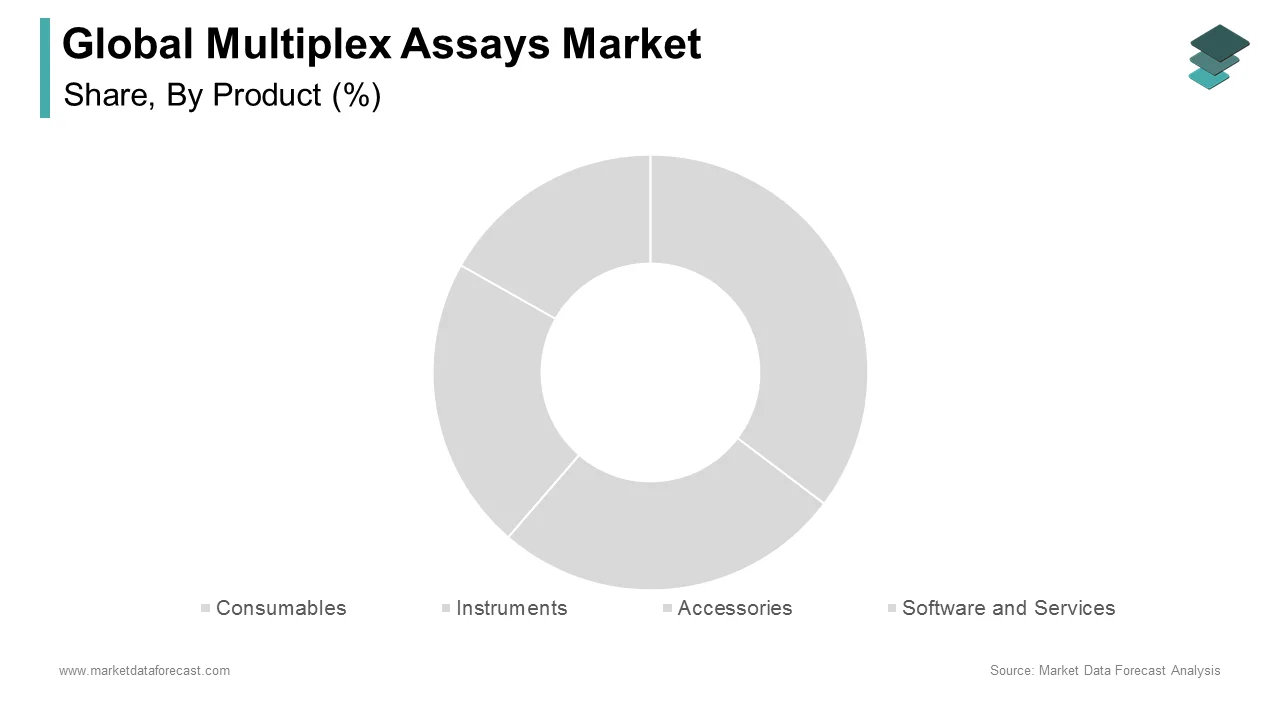
However, the software and services segment is projected to register the highest CAGR of 10.1% over the forecast period, owing to the critical need to manage, analyze, and interpret the complex high-dimensional data generated by multiplex technologies, alongside the growing trend of outsourcing technical expertise. The overwhelming complexity of data produced by multiplex assays that requires sophisticated bioinformatics tools for accurate interpretation is further contributing to the growth of the software and services segment in the global market. Unlike single-analyte tests, multiplex platforms generate massive datasets involving correlations between dozens or hundreds of variables, necessitating advanced algorithms to distinguish signal from noise and identify meaningful biological patterns. According to Nature Methods, many researchers cite data analysis as the primary bottleneck in adopting high plexity technologies, driving urgent demand for automated analytical software suites. As per the International Data Corporation, the global market for life sciences informatics is expected to grow significantly as laboratories seek to integrate artificial intelligence and machine learning modules that can automatically correct for cross-reactivity and normalize data across batches. Furthermore, regulatory bodies like the Food and Drug Administration increasingly require robust data audit trails and standardized reporting formats, which modern software solutions provide seamlessly. According to the European Bioinformatics Institute, the integration of cloud-based analytics allows for real-time collaboration and scalable computing power, making it easier for smaller labs to handle big data without investing in local infrastructure. As the complexity of assays increases, the reliance on intelligent software to transform raw fluorescence or luminescence signals into actionable clinical insights becomes indispensable, propelling this segment to the fastest growth rates.
By Type Insights
The protein-based multiplex assays segment accounted for the major share of 54.9% of the global market in 2025 due to the central role of proteins as functional effectors in biological systems and their direct relevance as therapeutic targets and diagnostic biomarkers. The fundamental biological reality that proteins execute most cellular functions and serve as the primary targets for the vast majority of approved therapeutics is further boosting the domination of the protein-based multiple assays segment in the global market. While genomics provides the blueprint, proteomics reveals the actual physiological state, which is making protein quantification essential for understanding disease progression and drug efficacy. According to the Human Proteome Organization, mRNA levels do not always correlate directly with corresponding protein abundance, necessitating direct protein measurement for accurate phenotypic characterization. As per the Food and Drug Administration, most current drugs target proteins such as receptors, enzymes, or antibodies, making the profiling of these molecules critical for pharmacodynamics and safety assessments. According to the American Society of Clinical Oncology, protein biomarkers like HER2, PD-L1, and PSA are widely used for diagnosing and monitoring major cancers, driving immense volume in clinical testing. Furthermore, the dynamic nature of the proteome, which changes rapidly in response to environmental stimuli and treatment, requires the high-throughput capabilities of multiplex assays to capture temporal snapshots of disease states. As per the World Health Organization, protein-based diagnostics are crucial for managing infectious diseases and chronic conditions, ensuring that this segment remains the cornerstone of the multiplex market due to its direct clinical utility.
On the other hand, the nucleic acid-based multiplex assays segment is anticipated to witness the fastest growth and register a CAGR of 11.4% over the forecast period, owing to the exploding demand for comprehensive genetic profiling, pathogen detection, and the integration of next-generation sequencing validation workflows. The global imperative for rapid and comprehensive pathogen detection, particularly in the wake of recent pandemics and the rise of antimicrobial resistance are further propelling the expansion of the nucleic acid-based multiple assays segment in the global market. Syndromic panels that can simultaneously detect dozens of viral, bacterial, and fungal targets from a single sample have become the gold standard in emergency medicine and infectious disease control. According to the Centers for Disease Control and Prevention, syndromic panels have reduced diagnostic turnaround times compared to traditional culture methods, leading to widespread adoption in hospitals worldwide. As per the World Health Organization, the ability to detect co-infections and antimicrobial resistance genes in a single run is critical for stewardship programs aiming to curb deaths caused by resistant bacteria. According to the European Centre for Disease Prevention and Control, the deployment of multiplex PCR and isothermal amplification assays has become mandatory in many national surveillance networks to track emerging variants in real time. Furthermore, the flexibility of nucleic acid assays allows for rapid redesign of primers and probes to address new threats, a speed advantage that protein assays cannot match. As healthcare systems prioritize preparedness and rapid triage, the demand for high-plex nucleic acid tests will continue to surge, which is driving this segment to outpace others in growth rate.
By End User Insights
The pharmaceutical and biotechnology companies segment accounted for the major share of 37.7% of the global market in 2025 due to the intensive use of multiplex technologies in drug discovery, target validation, and clinical trial biomarker analysis to reduce development costs and timelines. The critical role multiplex assays play in the early stages of drug discovery, where researchers must screen thousands of compounds against multiple biological targets simultaneously to identify promising candidates, is further fuelling the leading position of the pharmaceutical and biotechnological companies segment in the global market. The high-throughput nature of multiplexing allows pharmaceutical giants to evaluate efficacy and toxicity profiles across diverse pathways in a single experiment, drastically accelerating the lead optimization process. According to the Pharmaceutical Research and Manufacturers of America, the high cost to develop a new drug creates immense pressure to fail fast and eliminate ineffective candidates early using comprehensive data. As per the National Institutes of Health, most new drug failures occur due to lack of efficacy or safety issues that could have been predicted with better biomarker screening, driving heavy investment in multiplex platforms. According to the European Federation of Pharmaceutical Industries and Associations, large pharma companies operate numerous automated multiplex stations to profile cytokine storms, which are signalling cascades, and off target affects during preclinical toxicology studies. Furthermore, the rise of biologics and cell therapies requires complex characterization of protein interactions that only multiplex assays can provide efficiently. This relentless drive to optimize R&D pipelines and de-risk investments ensures that pharmaceutical and biotechnology firms remain the largest consumers of multiplex assay technologies globally.
On the other hand, the clinical laboratories segment is projected to register a promising CAGR of 12.2% over the forecast period, owing to the transition of multiplex technologies from research settings into routine clinical diagnostics, driven by the need for faster turnaround times and comprehensive patient profiling. The leading factor for the accelerated growth of the clinical laboratories segment is the widespread adoption of multiplex assays for routine diagnostic testing, particularly in the form of syndromic panels for infectious diseases and autoimmune disorders. Hospitals and reference labs are increasingly replacing sequential singleplex testing with simultaneous multiplex panels to deliver results faster, reduce sample volume requirements, and lower overall testing costs per patient. According to the American Association for Clinical Chemistry, the implementation of multiplex panels has reduced hospital length of stay by enabling quicker initiation of appropriate therapy. As per the Centers for Medicare and Medicaid Services, reimbursement codes for certain multiplex diagnostic tests have expanded, improving the financial viability for laboratories to adopt these technologies. According to the College of American Pathologists, many clinical microbiology labs in the US now utilize multiplex PCR or immunoassay platforms as their primary method for pathogen detection. Furthermore, the push for value-based care models encourages providers to order comprehensive panels upfront rather than iterative tests, aligning perfectly with the capabilities of multiplex systems. As clinical guidelines evolve to recommend broader testing scopes, independent and hospital-based laboratories are rapidly upgrading their infrastructure, which is driving this segment to grow faster than the research-focused sectors.
REGIONAL ANALYSIS
North America Multiplex Assays Market Analysis
North America led the market by accounting for 41.9% of the global market share in 2025. The dominance of North America in the global market is attributed to its robust pharmaceutical industry, advanced healthcare infrastructure, and high adoption rates of cutting-edge diagnostic technologies. The United States serves as the primary engine, driven by significant government funding for biomedical research and a strong culture of precision medicine. According to the National Institutes of Health, the US invests heavily in biomedical research, fostering a vibrant ecosystem for multiplex assay development and application. Furthermore, the presence of major market players and leading academic institutions creates a dense network of innovation and collaboration. As per the Centers for Medicare and Medicaid Services, favorable reimbursement policies for advanced molecular diagnostics encourage the widespread use of multiplex panels in clinical settings. The region also benefits from a high prevalence of chronic diseases and cancer, which drives the demand for comprehensive biomarker profiling. The early adoption of automation and artificial intelligence in laboratory workflows further solidifies North America's position as the most mature and lucrative market globally, setting the benchmark for technological standards and regulatory frameworks.
Europe Multiplex Assays Market Analysis
Europe held a promising share of the global market in 2025 due to a strong emphasis on collaborative research networks and standardized regulatory frameworks. The region's market status is defined by high penetration rates in countries like Germany, France, and the United Kingdom, where public healthcare systems prioritize efficient and accurate diagnostics. According to the European Commission, the Horizon Europe program allocates significant funding to health research, specifically supporting projects that utilize high-throughput omics technologies, including multiplex assays. The implementation of the In Vitro Diagnostic Regulation has harmonized standards across member states, boosting confidence in diagnostic quality and facilitating cross-border trade of assay kits. As per the European Federation of Clinical Chemistry and Laboratory Medicine, the region leads in adopting personalized medicine guidelines, which mandate extensive biomarker testing for various cancer types. Additionally, the presence of renowned academic medical centers and collaborative consortia fosters innovation in novel assay formats. The growing trend of centralized laboratory services in Nordic countries is improving efficiency and access to advanced multiplex testing. Despite economic variations, the universal healthcare coverage in most European nations ensures equitable access to essential diagnostic services, sustaining steady market growth and fostering a strong environment for scientific advancement.
Asia Pacific Multiplex Assays Market Analysis
The Asia Pacific region is emerging as a dynamic and rapidly expanding market and is estimated to showcase a prominent CAGR in the global market during the forecast period, owing to the basic research to advanced clinical applications, driven by improving healthcare access, rising disposable incomes, and increasing government support for biotechnology. China and India are the key contributors, where massive populations and rising disease burdens are creating urgent demand for efficient diagnostic solutions. According to the World Health Organization, the incidence of cancer and infectious diseases in the Asia Pacific is rising faster than in other regions, necessitating the adoption of high-throughput multiplex assays for effective surveillance and management. Furthermore, government initiatives in countries like Japan, South Korea, and Singapore are heavily investing in precision medicine programs and domestic manufacturing of diagnostic reagents. As per the Asian Development Bank, improvements in insurance coverage for diagnostic tests are making advanced multiplex panels more affordable for the middle class. The proliferation of contract research organizations in the region is attracting global pharmaceutical companies to outsource clinical trial biomarker analysis, further boosting demand. Additionally, the rapid expansion of private diagnostic chains and the adoption of telemedicine are overcoming geographical barriers. This confluence of demographic shifts, economic growth, and policy support positions the Asia Pacific as the next frontier for market expansion.
Latin America Multiplex Assays Market Analysis
Latin America is expected to exhibit a notable CAGR in the multiplex assays market during the forecast period, owing to the increasing health consciousness and gradual improvements in medical infrastructure. The market in this region is characterized by a dichotomy between urban centers with advanced diagnostic capabilities and rural areas with limited access, though the gap is narrowing. Brazil and Mexico are the dominant markets, fueled by rising cancer incidence rates and government efforts to strengthen oncology care networks. According to the Pan American Health Organization, non-communicable diseases have become a leading cause of death in the region, prompting ministries of health to prioritize early diagnosis and screening programs that benefit from multiplex efficiencies. The rising prevalence of infectious diseases such as dengue and the Zika virus stimulates demand for multiplex pathogen detection panels in both public and private sectors. As per the Inter American Development Bank, healthcare spending has steadily increased, correlating with higher adoption of advanced diagnostic technologies. Additionally, the expansion of international diagnostic chains and partnerships with global equipment manufacturers is improving product availability and service quality. While challenges regarding cost sensitivity and fragmented healthcare systems remain, the region's growing middle class and increasing focus on public health initiatives provide a solid foundation for steady market growth.
Middle East and Africa Multiplex Assays Market Analysis
The Middle East and Africa region represents a nascent but gradually evolving landscape with significant untapped potential. The MEA market is currently concentrated in Gulf Cooperation Council countries like Saudi Arabia and the UAE, where high healthcare expenditure and government vision plans support medical device adoption. According to the World Health Organization, the prevalence of diabetes and genetic disorders in the Middle East is among the highest globally, creating a pressing need for comprehensive genetic and metabolic profiling via multiplex assays. In Africa, while access remains limited in many areas, urbanization and the growth of private healthcare sectors in nations like South Africa, Nigeria, and Kenya are beginning to open new avenues for advanced diagnostics. As per the African Development Bank, investment in health infrastructure is increasing, gradually improving distribution networks for medical supplies and diagnostic equipment. The establishment of specialized reference laboratories and the introduction of national disease control plans are fostering a conducive environment for market development. Furthermore, international aid and collaborations with global health organizations are helping to introduce affordable multiplex solutions for infectious disease monitoring in resource-limited settings. Although the overall share is currently small, the combination of rising disease burden and improving economic conditions suggests a trajectory of gradual but meaningful expansion in the coming years.
COMPETITIVE LANDSCAPE
The competition within the multiplex assays market is intense and characterized by the presence of several large multinational corporations alongside numerous specialized niche players striving for technological superiority. Major companies compete vigorously by leveraging their extensive research and development capabilities to introduce innovative instruments and proprietary reagent kits that offer superior sensitivity and higher plexity. The landscape is further complicated by the critical importance of data analysis software, which forces manufacturers to integrate advanced artificial intelligence algorithms that can interpret complex datasets accurately and quickly. Brand loyalty plays a significant role as laboratories prefer established vendors who provide reliable instruments and consistent reagent quality to minimize experimental variability and ensure reproducible results. Price competition exists but is often secondary to the value provided by integrated workflow solutions and comprehensive technical support services. The emergence of single-cell analysis and spatial omics has introduced a new dimension to rivalry as firms race to develop platforms that combine multiplexing with high-resolution spatial context. Smaller entities often focus on specific biomarkers or novel chemistries to carve out distinct market segments before potentially being acquired by larger conglomerates seeking to diversify their offerings. This dynamic environment necessitates continuous innovation and strategic agility to sustain long-term success.
KEY MARKET PARTICIPANTS
Some of the notable companies leading the global multiplex assays market profiled in this report are
- Luminex Corporation
- Thermo Fisher Scientific Inc.
- Illumina Inc.
- Bio-Rad Laboratories Inc.
- QIAGEN N.V.
- Abcam Plc
- Becton, Dickinson and Company
- Luminex Corporation
- Merck KGaA
- Meso Scale Diagnostics
- Randox Laboratories Ltd
- Seegene Inc.
TOP PLAYERS IN THE MARKET
- Thermo Fisher Scientific Inc stands as a preeminent global leader providing comprehensive multiplex assay solutions through its extensive portfolio of reagents, instruments, and software. The company significantly contributes to the market by offering advanced platforms like the Luminex xMAP technology, which enables high-throughput simultaneous detection of multiple analytes for research and clinical applications. Recent actions to strengthen its position include the continuous expansion of its custom panel capabilities and the integration of artificial intelligence-driven data analysis tools into its workflow systems. Thermo Fisher has also focused on strategic collaborations with pharmaceutical giants to develop companion diagnostics that utilize multiplex technologies for patient stratification in clinical trials. By investing heavily in research and development, the firm consistently launches novel assays targeting emerging biomarkers in oncology and infectious diseases. These initiatives ensure it remains at the forefront of innovation while addressing the growing demand for precise and efficient multi-parameter testing across diverse biological fields.
- Merck KGaA operates as a vital force in the multiplex assays sector, leveraging its strong heritage in life science performance materials to deliver high-quality reagents and detection technologies. The company plays a crucial role in the global market by supplying validated antibody beads and assay kits that support complex proteomic and genomic studies for academic and industrial clients. Recent efforts to bolster its market stance involve the acquisition of specialized biotechnology firms to enhance its portfolio of single-cell analysis and spatial biology solutions, which complement traditional multiplexing. Merck KGaA has also launched automated workflows designed to reduce manual errors and increase reproducibility in high-plexity experiments. Furthermore, the company actively engages in educational programs to train researchers on best practices for multiplex data interpretation. By focusing on sustainability and developing eco-friendly reagent formulations, Merck KGaA appeals to environmentally conscious laboratories while maintaining its reputation for scientific excellence and reliability in demanding experimental conditions.
- Bio Rad Laboratories Inc is a key participant known for its innovative digital droplet PCR and protein profiling systems that facilitate precise multiplex quantification of nucleic acids and proteins. The company contributes substantially to the global market by providing robust instruments and consumables that serve clinical diagnostics, drug discovery, and basic research sectors worldwide. Recent actions to enhance its competitive position include the introduction of next-generation microfluidic chips that allow for higher plexity and lower sample volumes without compromising sensitivity. Bio-Rad has also strengthened its presence by expanding its global distribution network to ensure rapid delivery of critical assay components to remote laboratories. Additionally, the firm has invested in cloud-based data management platforms that enable seamless sharing and analysis of complex multiplex datasets among collaborative research teams. These strategic developments underscore its commitment to empowering scientists with cutting-edge tools that accelerate breakthroughs in understanding complex biological systems and disease mechanisms.
TOP STRATEGIES USED BY KEY MARKET PARTICIPANTS
Key players in the multiplex assays market primarily employ strategic acquisitions and partnerships to rapidly expand their technological portfolios and enter new application areas. Companies frequently acquire innovative startups specializing in niche detection chemistries or bioinformatics software to integrate advanced capabilities into their existing platforms efficiently. Another major strategy involves heavy investment in research and development to create automated high-throughput systems that reduce manual labor and improve data reproducibility for users. Manufacturers also focus on developing custom assay panels tailored to specific therapeutic areas such as oncology or immunology to meet the unique needs of pharmaceutical clients. Expanding into emerging markets through localized manufacturing and distribution networks helps firms capture growth in regions with rising healthcare investments. Additionally, participants are increasingly adopting subscription-based models for reagents and software updates to generate recurring revenue streams. These combined approaches enable companies to maintain competitive advantages and drive sustained innovation in a rapidly evolving industry landscape.
MARKET SEGMENTATION
This market research report on the global multiplex assays market has been segmented and sub-segmented based on the product, type, application, technology, end-user, and region.
By Product
- Consumables
- Instruments
- Accessories
- Software and Services
By Type
- Nucleic Acid-Based Multiplex Assays
- Planar Nucleic Acid Assays
- Bead-Based Nucleic Acid Assays
- Protein-Based Multiplex Assays
- Planar Protein Assays
- Bead-Based Protein Assays
By Application
- Research & Development
- Drug Development
- Biomarker Discovery and Validation
- Infectious Diseases
- Cancer
- Cardiac Diseases
- Autoimmune Diseases
- Alzheimer’s Disease
- Allergies
- Companion Diagnostics
- Other Applications
By Technology
- Multiplex PCR
- Multiplex Arrays
- Multiplex Planar Arrays
- Multiplex Bead-Based Array
- Other Technologies
By End-User
- Pharmaceutical & Biotechnology Companies
- Academic & Research Institutes
- Clinical Laboratories
- Hospitals
- Other End Users
By Region
- North America
- Europe
- Asia Pacific
- Latin America
- The Middle East and Africa