- Product Description Description
- Table of Contents TOC
- List of Table & Figure LOT
- Get Free Sample PDF Sample PDF
Market Size, 2025
$2.17 BnMarket Estimate, 2026
$2.53 BnMarket Forecast, 2034
$8.92 BnCAGR, 2026–2034
17.03%Executive Summary: North America Cancer Vaccines Market
- Market Scope: Comprehensive North American cancer vaccines market analysis covering cancer types, vaccine technologies, end-user settings, and country-level leadership dynamics.
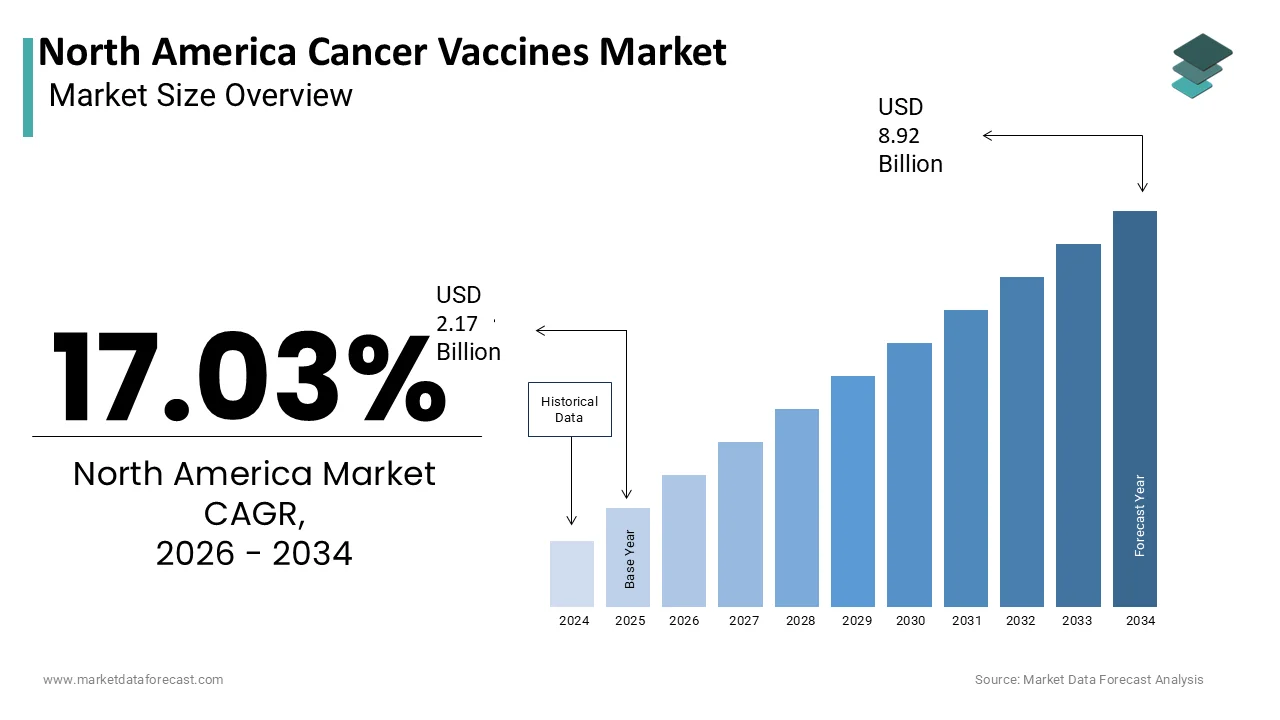
- Market Valuation: Valued at USD 2.17 billion (2025), estimated at USD 2.53 billion (2026), and projected to reach USD 8.92 billion by 2034, registering a robust CAGR of 17.03% (2026–2034).
- Primary Growth Drivers: High prevalence of cancer cases and aging geriatric populations in the United States and Canada, rising demand for effective alternative solutions to traditional therapies, and intensive R&D investments by key biopharmaceutical players.
Key Market Segment Metrics (2026–2034)
| Category | Leading Segment (2025 Position) | Fastest-Growing Segment (2026–2034) |
|---|---|---|
| By Cancer Type | Cervical and Prostate Cancer (dominate regional market adoption due to high clinical trial volumes and commercialized vaccine pipelines) | Colorectal and Throat Cancers (expanding rapidly with targeted immunotherapies and personalized neoantigen vaccines) |
| By Vaccine Type | Protein and Peptide-based Vaccines (hold significant share owing to established manufacturing frameworks and immunogenic stability) | Genetic and Dendritic Cell Vaccines (experiencing high growth driven by advancements in mRNA and personalized cellular immunotherapies) |
| By End User | Cancer Treatment Centres (command the major market share through specialized oncology care administration) | Research Institutes (growing swiftly as clinical trials and early-phase vaccine studies expand across the region) |
| By Country | The United States (dominates the regional market with high healthcare expenditure, major industry leaders, and extensive clinical trial infrastructure) | Canada (expanding steadily due to rising cancer mortality ratios and government-backed early detection awareness initiatives) |
Major Market Players & Market Structure
Market Structure: Highly dynamic and innovation-driven landscape characterized by prominent commercial market leaders and an extensive pipeline of biotechnology firms advancing clinical-stage cancer vaccine candidates.
Key Companies: Dendreon, GlaxoSmithKline, Merck, Inovio Pharmaceuticals, Bavarian Nordic, Celldex Therapeutics, CureVac, Oxford BioMedica, Northwest Biotherapeutics, Agenus, and Transgene.
 Download Free Sample Report
North America Cancer Vaccines Market Size
The North America Cancer Vaccines Market is projected to grow from USD 2.17 billion in 2025 to USD 2.53 billion in 2026 and reach USD 8.92 billion by 2034, registering a CAGR of 17.03% from 2026 to 2034.
The North America cancer vaccines market represents a transformative sector within oncology focused on prophylactic and therapeutic immunizations designed to prevent virus-induced malignancies or stimulate immune responses against existing tumors. This domain encompasses vaccines for human papillomavirus and hepatitis B, as well as emerging personalized neoantigen therapies. Approximately 36,500 HPV-associated cancers are diagnosed annually in the United States, underscoring the critical need for preventive measures, according to the Centers for Disease Control and Prevention. Hepatitis B and hepatitis C infections are recognized as important causes of liver cancer, highlighting the persistent burden of vaccine-preventable viral diseases, as per the American Cancer Society. These epidemiological realities directly drive the adoption of established prophylactic vaccines while creating a fertile ground for therapeutic innovations. Accelerated pathways for novel cancer vaccine approvals have been provided by regulatory bodies such as the Food and Drug Administration, reflecting the urgent clinical demand. The integration of mRNA technology has revolutionized the development pipeline, enabling rapid customization of therapeutic agents. Healthcare systems are increasingly prioritizing immunization programs to reduce long-term cancer incidence. This market signifies a pivotal shift from reactive treatment to proactive prevention and precision immunotherapy, offering hope for improved survival rates and reduced healthcare burdens across the region.
MARKET DRIVERS
High Incidence of Virus-Associated Cancers Driving Prophylactic Demand
The high prevalence of virus-associated malignancies majorly drives the expansion of the North America cancer vaccines market by sustaining robust demand for prophylactic immunizations. Human papillomavirus causes approximately 36,500 new cancer cases annually in the United States, including cervical, oropharyngeal, and anal cancers, according to the Centers for Disease Control and Prevention. This substantial disease burden compels public health authorities to prioritize vaccination campaigns targeting adolescents and young adults. Vaccine-type HPV infections declined by 88% among females aged 14 to 19 years and by 81% among females aged 20 to 24 years during 2015 to 2018 compared with the pre-vaccination period, according to the Centers for Disease Control and Prevention. These statistics demonstrate the direct efficacy of vaccines in preventing oncogenic viral transmission and subsequent tumor development. Healthcare providers actively recommend these vaccines during routine visits, ensuring high coverage rates in insured populations. School entry requirements in several states further mandate immunization, and this drives consistent procurement volume. Pharmaceutical manufacturers benefit from this institutional support through stable revenue streams from government contracts and private insurance reimbursements. The proven track record of prophylactic vaccines in reducing cancer incidence reinforces their status as standard care. Parents and patients increasingly recognize the long-term health benefits, leading to higher acceptance rates. This sustained focus on prevention creates a reliable foundation for market growth. The alignment of clinical evidence with public policy ensures continued dominance of prophylactic segments.
Advancements in mRNA Technology Accelerating Therapeutic Development
Breakthroughs in messenger RNA technology further support the North America cancer vaccines market growth by enabling the rapid development of highly personalized therapeutic vaccines. An early-phase study of the personalized mRNA vaccine mRNA-4157 in melanoma reported an objective response rate of 50% among evaluated patients, according to a review published in the National Library of Medicine. This speed is crucial for patients with rapidly progressing diseases where traditional drug development timelines are prohibitive. The ability to encode multiple tumor-specific antigens enhances the immune system's ability to recognize and destroy cancer cells. Flexible frameworks for evaluating these novel modalities are being provided by regulatory agencies, recognizing their potential. Hospitals are establishing specialized centers for personalized medicine to manage the complex logistics of autologous vaccine production. Patients benefit from treatments tailored to their unique genetic profiles, improving efficacy and reducing off-target effects. The success of mRNA platforms in infectious diseases has built manufacturing infrastructure that can be leveraged for oncology. This technological synergy accelerates market entry for innovative therapies. The versatility of mRNA ensures sustained innovation and competitive differentiation.
MARKET RESTRAINTS
High Cost of Personalized Therapies Limiting Accessibility
Exorbitant costs associated with personalized therapeutic vaccines impede the North America cancer vaccines market expansion by restricting access for a significant portion of the patient population. Some cancer survivors report spending more than 20% of their annual income on medical care, demonstrating the financial burden associated with cancer treatment, according to the National Cancer Institute. This financial barrier prevents equitable access to cutting-edge immunotherapies despite their clinical promise. 88% of oncology providers surveyed had observed increased patient out-of-pocket costs associated with prior authorization processes, as reported by the American Society of Clinical Oncology. These statistics highlight the severe economic strain on households and the healthcare system. Insurance providers often hesitate to cover experimental or newly approved therapies without extensive real-world evidence of cost-effectiveness. Hospitals struggle to recover costs for complex personalized vaccine production, which requires specialized laboratory facilities and skilled personnel. The lack of standardized pricing models creates uncertainty for payers and providers alike. Small biotech companies face challenges in securing reimbursement agreements that reflect the high research and development expenses. This affordability crisis limits market volume and slows the adoption of innovative solutions. Manufacturers must navigate complex negotiation processes with multiple payers across different states. Consequently, the market fails to reach its full potential as economic barriers prevent widespread utilization of advanced therapeutic vaccines among vulnerable populations.
Stringent Regulatory Requirements Delaying Product Launches
Complex and rigorous regulatory frameworks further hamper the North America cancer vaccines market growth by prolonging approval timelines and increasing compliance costs for developers. Accelerated approval provides a pathway for drugs addressing serious conditions based on surrogate endpoints that can predict clinical benefit, while post-approval studies are required to verify clinical benefit, according to the Food and Drug Administration. This regulatory framework can support earlier access while maintaining requirements for evidence generation. Clinical development timelines remain lengthy for oncology products because of complex trial design and evidence requirements, as noted by the Clinical Trials Transformation Initiative. These extended timelines hinder rapid commercialization and limit the ability of companies to recoup investments quickly. The variability in regulatory expectations for personalized medicines creates uncertainty regarding trial design and endpoints. Small and medium enterprises often lack the resources to navigate these complex requirements, leading to consolidation or exit from the market. The need for continuous monitoring and post-marketing studies adds to the operational burden. Delays in approval also mean that patients continue to suffer without access to newer, more effective interventions during the waiting period. The administrative burden diverts resources from research and development to compliance activities, slowing the pace of innovation. This regulatory complexity acts as a significant impediment to market growth, preventing the timely availability of advanced vaccine solutions.
MARKET OPPORTUNITIES
Integration of Artificial Intelligence Optimizing Antigen Selection
The integration of artificial intelligence into vaccine design is a significant opportunity for the North America cancer vaccines market by enhancing the precision of antigen selection. Machine learning and artificial intelligence approaches are increasingly being applied to neoantigen prediction and cancer vaccine design to improve the identification of tumor-specific targets, according to research published in Nature Biotechnology. This capability can reduce the failure rate of clinical trials and accelerate the development of effective therapeutic vaccines. Machine learning models can analyze vast genomic datasets to identify patterns that can support biomedical discovery, as noted by the Association for the Advancement of Artificial Intelligence. These technological synergies create new value propositions for manufacturers who can offer highly optimized personalized treatments. Healthcare providers benefit from faster turnaround times for vaccine customization, enabling timely initiation of therapy. The ability to process complex biological data improves patient stratification, ensuring that only likely responders receive the treatment. Computational biology infrastructure is being invested in by governments, supporting the adoption of AI-driven drug discovery. This supportive environment encourages collaboration between tech firms and pharmaceutical companies, fostering innovation. Patients gain access to more effective therapies with fewer side effects due to precise targeting. The convergence of AI and immunology opens new revenue streams through software licensing and data analytics services. This opportunity transforms vaccine development from empirical to predictive, driving market expansion.
Expansion of Combination Therapy Protocols Enhancing Efficacy
The expansion of combination therapy protocols offers a substantial opportunity for the North America cancer vaccines market by improving overall treatment outcomes. Cancer vaccines are being investigated in combination with immune checkpoint inhibitors and other immunotherapies across multiple clinical trials, according to the National Cancer Institute. This research drives demand for integrated treatment regimens that leverage synergistic mechanisms of action. Ongoing research into cancer vaccines and combination immunotherapy approaches to improve immune responses against tumors is highlighted by the Society for Immunotherapy of Cancer. These scientific advancements encourage pharmaceutical companies to develop co-formulation strategies and partnership agreements. Healthcare systems are preparing infrastructure to administer complex combination protocols safely. Patients with advanced disease gain new hope through multimodal approaches that attack tumors from multiple angles. Payers are beginning to recognize the long-term value of combinations that induce durable remissions. Regulatory approvals for combination indications are accelerating based on robust clinical data. The diversity of therapeutic mechanisms allows for personalized treatment strategies tailored to individual tumor profiles. This therapeutic evolution creates opportunities for market growth beyond standalone vaccine sales. The focus on holistic immune activation represents a transformative shift in cancer management.
MARKET CHALLENGES
Tumor Heterogeneity Complicating Vaccine Design
The inherent complexity of tumor heterogeneity is a significant challenge for the North America cancer vaccines market by making it difficult to identify universal targets for vaccine development. Tumors can contain genetically and biologically distinct cell populations, creating challenges for treatments that target only selected tumor characteristics, according to the National Cancer Institute. This variability can lead to immune escape, where untreated cell clones continue to proliferate despite vaccination. Tumor heterogeneity as a major obstacle to the development of broadly effective cancer therapies is highlighted by the American Association for Cancer Research. Such biological complexity hinders the standardization of vaccine formulations and limits their applicability across diverse patient populations. Pharmaceutical companies face high failure rates in clinical trials due to inadequate target selection. The lack of consistent biomarkers for all cancer subtypes restricts the addressable market for specific vaccine products. Healthcare providers must rely on complex genomic profiling to guide treatment, which is not universally available. Regulatory bodies require extensive subgroup analyses to approve vaccines for heterogeneous diseases, prolonging development timelines. This scientific challenge acts as a persistent barrier to market efficiency. Manufacturers must invest heavily in multi-epitope designs to overcome resistance. The inability to fully address heterogeneity reduces the overall effectiveness of current vaccines.
Shortage of Specialized Manufacturing Infrastructure
A critical shortage of specialized manufacturing capacity is another major challenge for the North American cancer vaccine market,y impeding the scalable production of personalized therapies. Personalized cancer vaccines require individualized tumor sequencing, antigen selection, vaccine manufacturing, and quality control processes, creating substantial logistical and manufacturing requirements, according to the National Cancer Institute. This workforce and infrastructure gap directly limits the number of patients who can receive timely treatments. Personalized vaccine production can involve multiple manufacturing and quality control steps that create bottlenecks compared with standardized vaccines. These delays are detrimental for patients with aggressive cancers who require immediate intervention. Training programs for specialized technicians are limited, resulting in a slow pipeline of qualified personnel. Hospitals struggle to establish in-house manufacturing units due to high capital costs and regulatory complexities. The lack of standardized automation tools increases the risk of human error and batch variability. Supply chain disruptions for raw materials further exacerbate production delays. This operational constraint prevents the scaling up of vaccine services to meet growing demand. Addressing this challenge requires significant investment in decentralized manufacturing models, which remains insufficient. The bottleneck restricts market growth and limits patient access to innovative therapies.
REPORT COVERAGE
| REPORT METRIC | DETAILS |
| Market Size Available | 2025 to 2034 |
| Base Year | 2025 |
| Forecast Period | 2026 to 2034 |
| Segments Covered | By Cancer Type, Vaccine Type, End User, and Country. |
| Various Analyses Covered | Global, Regional,l and Country-Level Analysis, Segment-Level Analysis, Drivers, Restraints, Opportunities, Challenges; PESTLE Analysis; Porter’s Five Forces Analysis, Competitive Landscape, Analyst Overview of Investment Opportunities |
| Countries Covered | The United States, Canada, Rest of North America |
| Market Leaders Profiled |
|
SEGMENTAL ANALYSIS
By Cancer Type Insights
The cervical cancer segment led the market by holding the highest share of the global market in 2025, and the dominance of the cervical cancer segment is primarily driven by robust public health mandates and school entry requirements for human papillomavirus vaccination across North America. 78.2% of adolescents aged 13 to 17 years in the United States had received at least one HPV vaccine dose in 2024, and 62.9% were up to date with the recommended series, according to the Centers for Disease Control and Prevention. This regulatory framework ensures substantial coverage among the target adolescent population, directly stimulating consistent vaccine procurement. 84% of 14-year-old adolescents in Canada received at least one HPV vaccine dose in 2021, while 76.1% of adolescents aged 14 years in participating provinces and territories had received at least one dose in 2023, according to the Public Health Agency of Canada. These statistics demonstrate the direct impact of immunization programs on disease prevention efforts. Healthcare providers rely on these guidelines to standardize care and recommend vaccines during routine wellness visits. Pharmaceutical manufacturers benefit from predictable demand patterns driven by government contracts and insurance reimbursements. The proven efficacy of prophylactic vaccines in preventing cervical dysplasia reinforces their status as essential preventive care. Public awareness campaigns further support adoption by highlighting the link between HPV and cancer. This structural reliance on mandated immunization establishes cervical cancer vaccines as the cornerstone of the market. The alignment of clinical evidence with public policy ensures continued leadership of this segment.
However, the prostate cancer segment is experiencing the fastest growth and is estimated to register a promising CAGR of 12.2% over the forecast period owing to the significant advancements in therapeutic vaccine research. Sipuleucel-T is approved for the treatment of asymptomatic or minimally symptomatic metastatic castration-resistant prostate cancer, demonstrating an established therapeutic cancer vaccine application in prostate cancer, according to the Food and Drug Administration. This clinical progress attracts substantial investment from biotechnology firms seeking to expand beyond prophylactic markets. Research into personalized cancer vaccines and other immunotherapies for prostate cancer is supported by the Prostate Cancer Foundation. These initiatives create a robust pipeline of potential new products that could transform standard care. Patients with advanced disease are increasingly seeking immunotherapy options when conventional treatments fail. Regulatory agencies are providing expedited pathways for breakthrough therapies targeting unmet needs in prostate oncology. The aging male population in North America increases the prevalence of prostate cancer, driving demand for innovative solutions. Healthcare systems are preparing infrastructure to administer complex therapeutic regimens. The potential for combining vaccines with hormone therapy enhances their appeal to clinicians. This dynamic research environment positions prostate cancer vaccines as an important developing sector. The focus on improving quality of life drives rapid adoption of experimental therapies.
By Vaccine Type Insights
The protein-based vaccines segment held the leading share in the market in 2025 due to their well-established safety profile and extensive clinical history. Licensed recombinant vaccines include established products used for the prevention of virus-associated cancers, including the recombinant HPV vaccine Gardasil 9, according to the Food and Drug Administration. This track record builds trust among healthcare providers and patients, facilitating widespread adoption. HPV vaccination can prevent more than 90% of cancers caused by HPV, validating the effectiveness of established prophylactic vaccination, according to the Centers for Disease Control and Prevention. These figures underscore the reliability of protein platforms in inducing robust immune responses without live viral components. Manufacturers benefit from streamlined production processes that are scalable and cost-effective. Regulatory approvals for new indications are faster due to the familiarity of authorities with this technology. Hospitals prefer protein vaccines for their stability and ease of storage compared to more fragile modalities. The ability to conjugate proteins with adjuvants enhances immunogenicity, further supporting their use. Insurance reimbursement policies are well defined for these established products, ensuring financial viability. This stability secures the dominance of protein-based vaccines in the current market landscape. The focus on proven efficacy ensures continued preference over newer, unproven technologies.
However, the genetic vaccines segment is the fastest-growing segment and is expected to exhibit a CAGR of 15.4% over the forecast period. Personalized mRNA cancer vaccines have demonstrated objective responses in early-phase melanoma studies, according to research published in the National Library of Medicine. This speed is a major advantage over traditional protein-based methods, which require months for development. Personalized mRNA neoantigen vaccines are being evaluated across multiple solid tumors and have generated encouraging immune response data, as noted by the Journal for ImmunoTherapy of Cancer. These results validate the potential of genetic platforms for therapeutic applications. Investors are pouring capital into biotech startups specializing in mRNA oncology, fostering innovation. Regulatory agencies are adapting frameworks to accommodate the unique characteristics of genetic vaccines. Hospitals are investing in cold-chain infrastructure to support the distribution of temperature-sensitive mRNA products. The flexibility of the platform allows for easy modification of antigens to target different cancer types. This versatility drives rapid expansion of the genetic vaccine segment. The focus on personalized medicine ensures sustained growth momentum.
COUNTRY LEVEL ANALYSIS
United States Cancer Vaccines Market Analysis
The United States is likely to maintain its leading position in the North America cancer vaccines market over the next few years because of its extensive oncology research infrastructure, high HPV vaccination uptake, and established therapeutic cancer vaccine development programs. 78.2% of U.S. adolescents aged 13 to 17 years had received at least one HPV vaccine dose in 2024, and 62.9% were up to date with the series, according to the Centers for Disease Control and Prevention. This high uptake drives robust demand for prophylactic vaccines. Extensive research into therapeutic vaccines is funded by the National Cancer Institute, fostering innovation. The presence of major pharmaceutical companies facilitates rapid launch of new products. High insurance coverage rates ensure patient access to expensive targeted therapies. The adoption of personalized medicine is highest in this region due to the availability of genomic testing. Patient advocacy groups play a crucial role in raising awareness and funding research. The regulatory environment is supportive of breakthrough therapies. Academic medical centers lead in implementing precision medicine protocols. The focus on quality of life drives demand for supportive care products. The United States serves as a benchmark for clinical excellence and technological adoption. The mature market continues to grow through innovation and expanded indications.
Canada Cancer Vaccines Market Analysis
Canada is likely to maintain steady growth in the North America cancer vaccines market over the next few years as publicly funded immunization programs and collaborative cancer research continue to support preventive vaccination and oncology innovation. 84% of 14-year-old adolescents across Canada received at least one HPV vaccine dose in 2021, according to the Public Health Agency of Canada. This systematic approach ensures equitable access to preventive vaccines across the country. Among participating provinces and territories, 76.1% of adolescents aged 14 years received at least one HPV vaccine dose, and 66.8% received two doses in 2023, as per the Public Health Agency of Canada. Research into novel therapeutic vaccines through grants and partnerships is supported by the Canadian Cancer Society. National health services provide comprehensive coverage for standard treatments, including vaccines for high-risk groups. The focus on cost-effectiveness drives the adoption of generic drugs and biosimilars. Research consortia promote collaboration across provinces and with international partners. Patient registries provide valuable data for epidemiological studies. The aging population increases the prevalence of cancer, driving demand for vaccines. Telemedicine is being integrated to improve access in rural areas. The emphasis on equitable care ensures broad access to essential treatments. Canada balances innovation with affordability in its market approach. The region remains a key player in global clinical research.
TOP LEADING PLAYERS IN THE MARKET
- Merck & Co Inc. is a dominant leader in the North America Cancer Vaccines Market primarily through its portfolio of human papillomavirus vaccines. The company has significantly expanded its manufacturing capabilities to meet the surging demand for prophylactic immunizations across the United States and Canada. Recent regulatory approvals for broader age indications have strengthened its therapeutic offerings and market reach. Merck actively collaborates with public health agencies to support vaccination campaigns and education initiatives. The company invests heavily in clinical research to explore new viral targets and combination therapies. Its commitment to global health ensures that innovative vaccines reach underserved populations effectively. Merck also focuses on digital health tools to improve patient tracking and adherence. These strategic efforts reinforce its leadership in preventive oncology care. The integration of robust supply chain management supports consistent product availability. This comprehensive approach drives sustained growth and public health impact in the region.
- GlaxoSmithKline plc contributes significantly to the market through its advanced adjuvant technology and strong presence in prophylactic vaccines. The company’s flagship HPV vaccine remains a cornerstone in preventing cervical and other virus-associated cancers. GlaxoSmithKline has recently focused on expanding its pipeline with novel therapeutic candidates targeting various solid tumors. The integration of its proprietary adjuvant systems enhances immune responses, making vaccines more effective. The company actively partners with academic institutions to advance understanding of tumor immunology. GlaxoSmithKline has expanded its distribution networks to ensure timely delivery of vaccines to remote areas. It also engages in robust patient support programs that provide educational resources and financial assistance. Its focus on real-world evidence generation helps refine vaccination protocols and improve outcomes. The company leverages its extensive global network to accelerate the adoption of innovative prevention strategies. These actions solidify its position as a key innovator in cancer prevention.
- BioNTech SE plays a vital role in the emerging therapeutic segment through its pioneering messenger RNA technology platform. The company is developing personalized neoantigen vaccines designed to stimulate specific immune responses against individual tumor profiles. BioNTech has recently initiated multiple clinical trials in collaboration with major pharmaceutical partners to validate efficacy in melanoma and other cancers. The company leverages its successful mRNA infrastructure from infectious disease vaccines to accelerate oncology development. BioNTech focuses on identifying predictive biomarkers to enhance patient selection for immunotherapy. Its global access initiatives aim to reduce disparities in cancer care across different regions. The company also invests in digital solutions that facilitate data sharing and collaborative research. BioNTech’s commitment to scientific excellence drives continuous innovation in treatment paradigms. The integration of diverse therapeutic modalities offers comprehensive solutions for complex cases. These strategic moves enhance its competitive edge and clinical relevance in the market.
COMPETITIVE LANDSCAPE
The competition in the North America Cancer Vaccines Market is characterized by intense rivalry among established pharmaceutical giants and innovative biotechnology firms. Major players leverage their extensive clinical data and broad distribution networks to maintain leadership positions in prophylactic segments. However, the landscape is shifting towards personalized medicine, where smaller agile companies introduce novel therapeutic agents using mRNA and dendritic cell technologies. Intellectual property protection plays a crucial role as patents expire and biosimilars enter the market, creating price pressure. Companies differentiate themselves through superior clinical outcomes in specific molecular subgroups and robust patient support services. Collaboration between diagnostics and therapeutics developers is becoming essential to guide treatment decisions effectively. Regulatory hurdles remain high, requiring substantial investment in clinical trials to prove efficacy and safety. The focus on overcoming drug resistance drives continuous innovation and combination therapy development. Pricing strategies are increasingly scrutinized by payers, necessitating demonstration of cost-effectiveness and value-based care models. This dynamic environment encourages constant adaptation and strategic agility among participants striving to improve survival rates and quality of life for patients with this challenging disease while balancing profitability and public health goals.
KEY MARKET PLAYERS
Some of the companies that are playing a dominating role in the North America Cancer Vaccines Market include
- Dendreon
- GlaxoSmithKline
- Merck
- Aduro Biotech
- Advantagene
- Advaxis
- Agenus
- Altor BioScience
- Argos Therapeutics
- AVAX Technologies
- Bavarian Nordic
- Biothera
- Celldex Therapeutics
- CureVac
- Galena Biopharma
- Genexine
- GlobeImmune
- Gradalis
- Heat Biologics
- Immatics
- ImmunoCellular Therapeutics
- Inovio Pharmaceuticals
- ISA Pharmaceuticals
- Juvaris Biotherapeutics
- NewLink Genetics
- Northwest Biotherapeutics
- NovaRx
- OncoThyreon
- Oncovir
- Oxford BioMedica
- Prima BioMed
- Sotio
- Transgene
- Ubivac
- Vaccinogen
- Vaxon Biotech
TOP STRATEGIES USED BY KEY MARKET PARTICIPANTS
Key players in the North America Cancer Vaccines Market employ diverse strategies to maintain competitiveness and drive innovation. Product pipeline expansion remains a primary focus as companies invest heavily in researching novel mechanisms such as mRNA platforms and personalized neoantigen targets. Strategic collaborations with academic institutions and biotechnology firms facilitate access to cutting-edge science and accelerate clinical development. Regulatory engagement is prioritized to secure fast-track approvals for breakthrough therapies targeting unmet needs in oncology. Companies also focus on companion diagnostic development to enable precision medicine and improve patient selection accuracy. Market access strategies include negotiating favorable reimbursement terms and implementing patient assistance programs to enhance affordability. Geographic expansion into underserved areas allows firms to tap into growing patient populations with increasing healthcare access. Digital health integration supports remote monitoring and real-world data collection to demonstrate long-term value. These multifaceted approaches ensure sustained growth and improved patient outcomes in a highly competitive landscape.
MARKET SEGMENTATION
This research report on the North America Cancer Vaccines Market has been segmented & sub-segmented into the following categories.
By Cancer Type
- Prostate
- Cervical
- Colorectal
- Throat
- Others
By Vaccine Type
- Protein
- Peptide-based
- Tumor cell
- Dendritic cell
- Genetic vaccines
- Others
By End User
- Cancer Treatment Centres
- Research Institutes
By Country
- The United States
- Canada
- Rest of North America