- Product Description Description
- Table of Contents TOC
- List of Table & Figure LOT
- Get Free Sample PDF Sample PDF
Market Size, 2025
$19.39 BnMarket Estimate, 2026
$20.84 BnMarket Forecast, 2034
$37.18 BnCAGR, 2026–2034
7.5%Executive Summary: North America Corn Seeds Market
- Market Scope: Comprehensive North American corn seeds market analysis covering product types, end-product applications, country-level frameworks (United States, Canada, and Rest of North America), and advanced agricultural integration.
- Market Valuation: Valued at USD 19.39 billion in 2025, estimated at USD 20.84 billion in 2026, and projected to reach USD 37.18 billion by 2034, registering a CAGR of 7.5% (2026–2034). The region captures 45% of the global market.
- Primary Growth Drivers: Rising demand for ethanol production driving hybrid seed adoption, extensive government subsidies and agricultural support programs enhancing seed investment capacity, and the expansion of digital agriculture platforms enabling data-driven seed selection. Key restraints include stringent regulatory approval processes and climate variability.
Key Market Segment Metrics (2026–2034)
| Category | Leading Segment (2025 Position) | Fastest-Growing Segment |
|---|---|---|
| By Type | Field corn (largest segment, accounting for 46.3% of the North American market share in 2025 due to animal feed and industrial processing use) | Sweet corn (projected to witness a fastest CAGR of 4.2% driven by rising consumer preference for fresh, nutritious vegetables) |
| By End Products | Animal feed (largest segment, holding 40.2% of the market share in 2025 due to the region's substantial livestock industry) | Corn starch (projected to witness a fastest CAGR of 3.8% driven by expanding industrial applications like biodegradable packaging and bioplastics) |
| By Country | United States (top performer holding 78.3% of share in 2025 due to vast arable land, Corn Belt output, and biotech adoption exceeding 90%) | Canada (ranked second with 14.3% share, focusing on high-quality seed production for domestic use and export in variable climates) |
Major Market Players & Market Structure
Market Structure: Intense competitive landscape featuring established multinational corporations and specialized regional breeders vying for farmer loyalty through technological superiority, integrated digital agronomy ecosystems, and robust R&D investments.
Key Companies: Monsanto (Bayer CropScience), DuPont Pioneer (Corteva Agriscience), Bayer CropScience, Hefei Fengbao, Syngenta, Nuziweedu Seeds, China National Seeds, and DLF Trifolium.
North America Corn Seeds Market Size
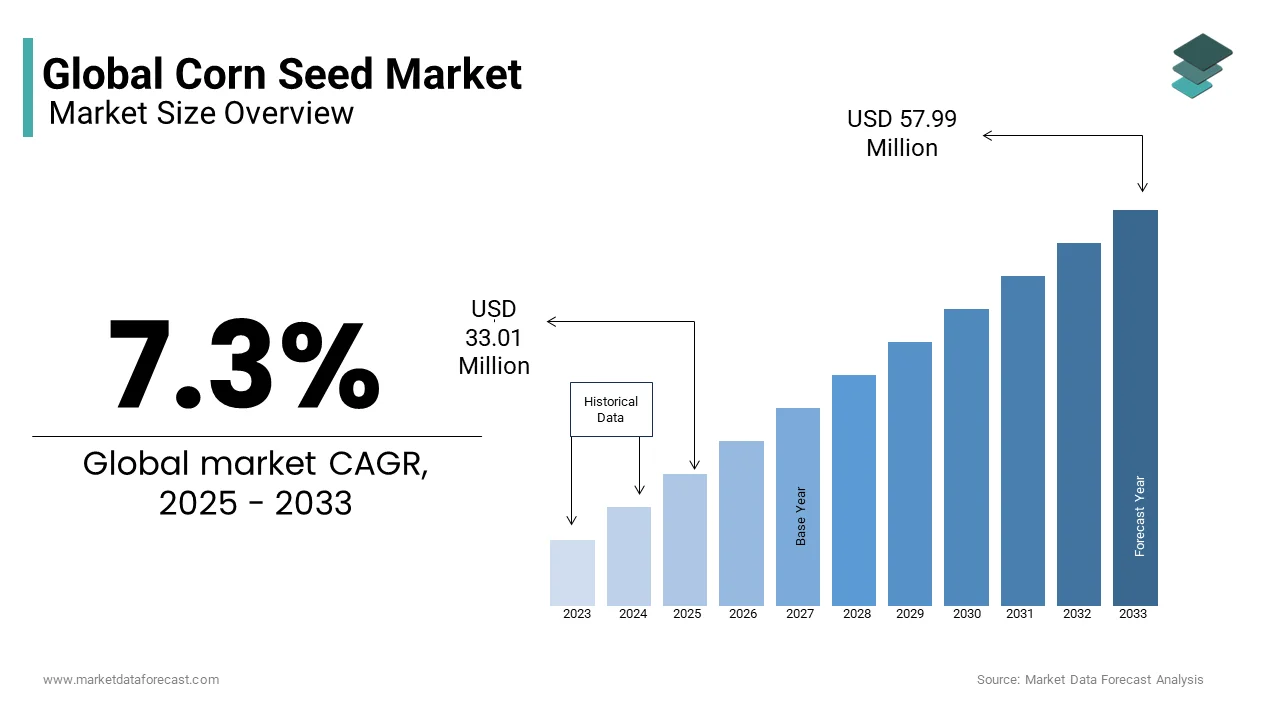
The North American corn seeds market was valued at USD 19.39 billion in 2025 and is anticipated to reach USD 20.84 billion in 2026 from USD 37.18 billion by 2034, growing at a CAGR of 7.5% during the forecast period from 2026 to 2034. It captures 45% of the global market.
Introduction to the North America Corn Seeds Market
The corn seeds are agricultural biotechnology, focusing on the development, distribution, and sale of genetically enhanced and conventional maize varieties, across the United States, and Canada. Corn serves as a foundational crop for food security, animal feed, and industrial applications, such as biofuel production. The region benefits from advanced agronomic practices, extensive research infrastructure, and favorable climatic conditions that support high yield potential. As per the United States Department of Agriculture, the United States alone planted approximately 36.8 million hectares of corn in 2025. Canada contributes significantly with over 1.4 million hectares dedicated to corn production, primarily in Ontario and Quebec, as stated by Statistics Canada. The integration of precision agriculture technologies and digital farming tools has transformed seed selection processes by enabling farmers to optimize genetic traits for specific soil and weather conditions. Regulatory frameworks governing genetically modified organisms vary across these nations, influencing product availability and farmer preferences.
MARKET DRIVERS
Rising Demand for Ethanol Production Drives Hybrid Seed Adoption
The expanding ethanol industry for the adoption of high yielding hybrid corn seeds is majorly accelerating the growth of the North America corn seeds market. Ethanol production requires vast quantities of corn starch by creating consistent and large scale demand for maize crops with superior fermentable content. According to the Renewable Fuels Association, the United States produced approximately 59.4 billion liters of ethanol in 2025, utilizing nearly 40% of the total domestic corn harvest for this purpose. This substantial industrial consumption necessitates corn varieties that deliver maximum starch content per hectare, while maintaining resilience against field stresses. Seed companies have responded by developing specialized hybrids optimized for ethanol conversion efficiency, featuring enhanced carbohydrate profiles and robust stalk strength to support higher biomass yields. The Canadian ethanol sector also contributes to this dynamic, with facilities in Ontario and Alberta processing millions of bushels annually. Farmers recognize that selecting premium hybrid seeds directly impacts their profitability when supplying ethanol plants, as these facilities often offer price premiums for corn meeting specific quality standards. The geographic concentration of ethanol refineries in the Midwest United States creates localized demand hotspots where seed distributors prioritize advanced trait packages.
Government Subsidies and Agricultural Support Programs Enhance Seed Investment Capacity
The extensive government financial support mechanisms to invest in premium corn seed technologies is additionally promoting the growth of the North America corn seeds market. Federal and provincial programs provide direct payments, crop insurance subsidies, and conservation incentives that reduce the economic risk associated with adopting new seed varieties. As per the United States Department of Agriculture Economic Research Service, federal farm program payments totaled approximately 28.5 billion dollars in 2025, with substantial portions allocated to commodity support including corn production. These financial safety nets enable farmers to purchase higher priced genetically modified seeds that offer integrated pest management and herbicide tolerance traits without fearing catastrophic losses from adverse weather or market fluctuations. Such policy frameworks effectively lower the barrier to entry for advanced seed technologies, particularly benefiting mid-sized farming operations that might otherwise struggle with upfront capital requirements. The predictability of government support encourages long term planning and investment in soil health and precision planting equipment that complements high performance seed varieties. This institutional backing creates a stable environment where seed companies can confidently introduce innovative products knowing that farmers possess the financial flexibility to adopt them.
MARKET RESTRAINTS
Stringent Regulatory Approval Processes Delay New Trait Commercialization
Complex and lengthy regulatory review procedures by delaying the introduction of novel genetic traits is hindering the growth of the North America corn seeds market. Developers must navigate multi agency approval systems that evaluate environmental safety, food and feed safety, and potential cross contamination risks before commercial release. According to the International Service for the Acquisition of Agri Biotech Applications, obtaining full regulatory approval for a new genetically modified corn trait in the United States typically requires 5 to 7 years and costs between 120 million and 150 million dollars. This extended timeline restricts the speed at which seed companies can respond to emerging pest threats or climate challenges with updated genetic solutions. Canada employs equally rigorous assessment protocols through the Canadian Food Inspection Agency and Health Canada, adding further complexity for products intended for cross border trade. Mexico maintains its own biosafety regulations under the Biosafety Law of Genetically Modified Organisms, requiring separate approvals that may not align with timelines in neighboring countries. These asynchronous regulatory frameworks create market access uncertainties that discourage investment in certain trait developments. Small and medium sized seed breeders face disproportionate burdens since they lack the resources to manage parallel approval processes across multiple jurisdictions. The resulting delay means that farmers continue using older generation seeds even when superior alternatives exist in development pipelines.
Climate Variability and Extreme Weather Events Disrupt Seed Performance Predictability
Increasing frequency and intensity of extreme weather patterns is also hampering the growth of the North America corn seeds market. Unpredictable precipitation, prolonged droughts, and severe storms undermine the reliability of genetic traits bred for specific historical climate conditions. As per the National Oceanic and Atmospheric Administration, the United States experienced 28 separate billion dollar weather and climate disasters in 2025, many affecting major corn producing states in the Midwest and Great Plains. These events cause widespread crop stress that exceeds the tolerance thresholds of even advanced hybrid varieties, leading to significant yield volatility. Seed companies struggle to develop varieties that maintain performance stability across such wide ranging and rapidly changing environmental conditions. Farmers encounter difficulty in selecting appropriate hybrids when historical weather data becomes less reliable for predicting future growing conditions. This uncertainty increases production risk and complicates inventory management for seed distributors, who must stock varieties suited to unpredictable local conditions.
MARKET OPPORTUNITIES
Advancements in Gene Editing Technologies Unlock Precision Trait Development
Emerging gene editing platforms, such as CRISPR Cas9 for developing corn varieties with precisely targeted improvements is setting up new opportunities for the growth of the North America corn seeds market. Unlike traditional genetic modification methods that insert foreign DNA, gene editing allows scientists to make specific changes to existing plant genomes, potentially facing less stringent regulatory scrutiny in certain jurisdictions. This accelerated timeline enables seed companies to respond more rapidly to evolving pest pressures and climate challenges. Researchers have successfully demonstrated gene edited corn lines with enhanced nitrogen use efficiency, reducing fertilizer requirements by up to 20%, while maintaining yield levels as reported in peer reviewed publications from leading agricultural universities. The United States Department of Agriculture has clarified that certain gene edited plants will not be subject to additional regulation beyond standard variety testing requirements. Seed breeders can now stack multiple beneficial traits with greater precision, developing varieties that simultaneously address drought tolerance, disease resistance, and nutritional enhancement.
Expansion of Digital Agriculture Platforms Enables Data Driven Seed Selection
The rapid adoption of digital farming technologies for optimizing corn seed selection and placement decisions is eventually to escalate the growth of the North America corn seeds market. Integrated farm management software platforms now combine soil mapping, weather forecasting, and historical yield data to recommend specific hybrid varieties for individual field zones. These digital tools analyze micro variations in soil composition, drainage patterns, and nutrient availability to match seed genetics with optimal growing conditions at sub field levels. Seed companies partner with technology providers to embed variety specific performance algorithms into these platforms, allowing farmers to visualize projected outcomes before planting. This data driven approach reduces guesswork in seed selection, improving return on investment by ensuring that each planted seed matches its environmental context. Variable rate planting technologies enabled by these platforms allow simultaneous deployment of multiple hybrids within single fields by maximizing overall productivity. The resulting performance transparency builds trust between seed suppliers and growers, while generating valuable feedback loops that accelerate breeding program improvements based on real world field results rather than controlled trial conditions alone.
MARKET CHALLENGES
Consolidation in Seed Industry Limits Farmer Choice and Increases Pricing Power
High levels of corporate consolidation within the global seed industry constrain competitive dynamics and reduce available options is one of the major challenge for the growth of the North America corn seeds market. This oligopolistic structure limits independent breeding programs and reduces the diversity of genetic material accessible to farmers. Farmers face bundled product offerings that combine seeds with specific chemical inputs, restricting their ability to source components separately from different suppliers. Smaller regional seed companies struggle to compete against the research and development budgets of industry giants by leading to gradual exit from the market and further concentration. Canada monitors this trend through competition bureau investigations but finds limited remedies available under current intellectual property frameworks. The reduced genetic diversity inherent in consolidated breeding programs also increases systemic risk if widely planted varieties prove susceptible to emerging diseases or pests.
Intellectual Property Enforcement Complexities Hinder Innovation Collaboration
The intricate intellectual property protection regimes surrounding corn genetics create legal and operational challenges that impede collaborative innovation efforts is another factor fuelling the growth of the North America seeds market. Patents on specific genes, traits, and breeding methods generate overlapping ownership claims that complicate research activities and commercial product development. Seed companies frequently engage in costly litigation to defend their intellectual property portfolios or challenge competitor claims, diverting resources away from actual breeding work. The Canadian Intellectual Property Office reports similar trends with increasing patent applications in agricultural biotechnology straining examination capacities and creating uncertainty for innovators. Farmers encounter confusion regarding saved seed rights and replanting restrictions, with some facing legal action for unintentional patent infringement through pollen drift or accidental mixing. Academic institutions hesitate to share germplasm materials due to fears of violating licensing agreements or triggering infringement claims. This restrictive environment discourages open innovation models that historically accelerated crop improvement through collaborative breeding networks. Small breeders lack resources to conduct comprehensive freedom to operate analyses before launching new varieties, increasing their legal exposure.
REPORT COVERAGE
| REPORT METRIC | DETAILS |
| Market Size Available | 2025 to 2034 |
| Base Year | 2025 |
| Forecast Period | 2026 to 2034 |
| CAGR | 7.5% |
| Segments Covered | By Type, End-Products, and Region. |
| Various Analyses Covered | Global, Regional, & Country Level Analysis; Segment-Level Analysis; DROC, PESTLE Analysis; Porter’s Five Forces Analysis; Competitive Landscape; Analyst Overview of Investment Opportunities |
| Regions Covered | The USA, Canada, Etc. |
| Market Leaders Profiled | Monsanto, DuPont Pioneer, Bayer CropScience, Hefei Fengbao, Syngenta, Nuziweedu Seeds, China National Seeds, and DLF Trifolium. |
SEGMENT ANALYSIS
By Type Insights
The field corn segment was the largest by accounting for 46.3% of the North America corn seeds market share in 2025 due to its extensive utilization in animal feed production and industrial processing applications. The sheer scale of this cultivation drives massive seed demand as growers replace varieties annually to maintain genetic vigor and trait performance. The remaining majority supports ethanol refineries starch manufacturers and export by creating consistent downstream pull that sustains high planting intentions. Seed companies prioritize field corn breeding programs because the large addressable justifies substantial research investments in yield enhancement and stress tolerance traits. Farmers view field corn, as a reliable commodity crop with established marketing channels and government support mechanisms reducing financial risk. The integration of advanced biotechnology traits, such as insect resistance and herbicide tolerance further amplifies field corn dominance by offering tangible agronomic benefits that protect yields and simplify weed management.
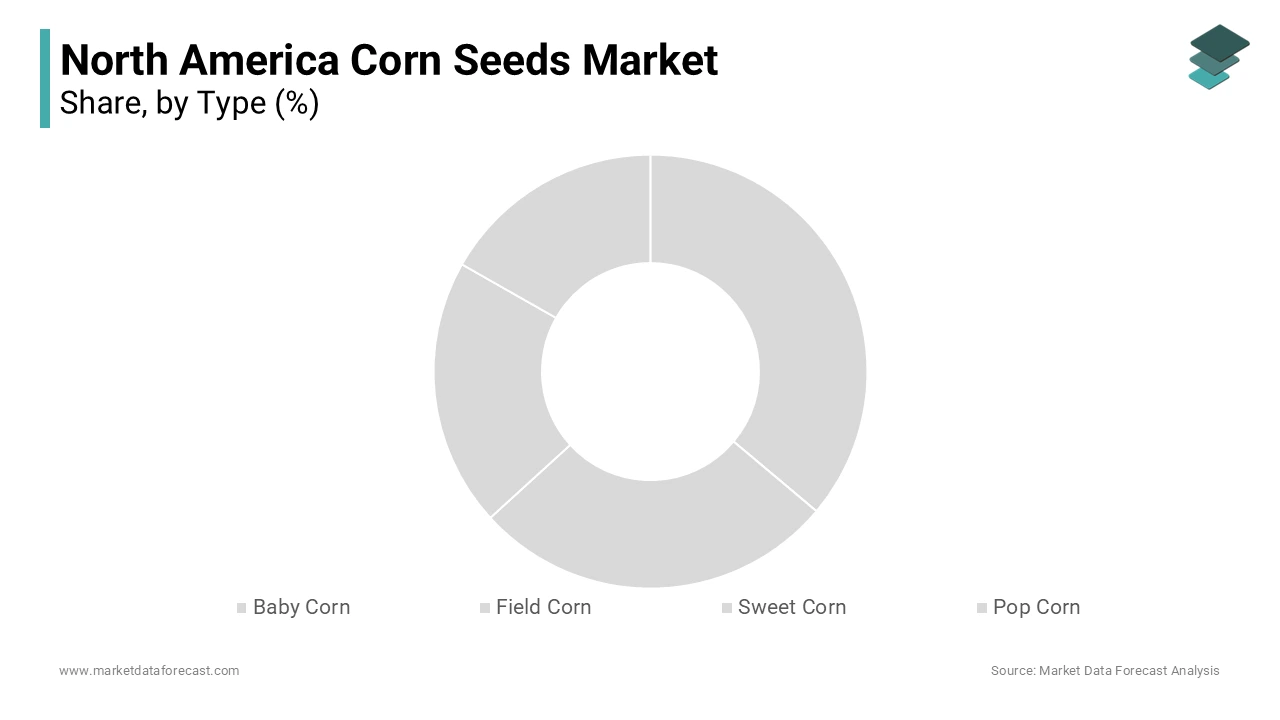
The sweet corn segment is likely to witness a fastest CAGR of 4.2% throughout the forecast period owing to the rising consumer preference for fresh nutritious vegetables and increased availability of premium supersweet varieties. Health-conscious shoppers increasingly select sweet corn for its natural sugar content fiber and essential vitamins driving retail demand that encourages farmers to allocate more acreage to this high value crop. Improved seed genetics have extended shelf life and enhanced flavor profiles making sweet corn more appealing to supermarkets and food service operators. Seed breeders focus on developing varieties with uniform kernel size disease resistance and extended harvest windows to meet commercial buyer specifications. The higher profit margins associated with sweet corn compared to field corn incentivize farmers to adopt specialized seed technologies despite higher upfront costs.
By End Products Insights
The animal feed segment was the largest by holding 40.2% of the North America corn seeds market share in 2025 due to the regions substantial livestock industry requiring consistent high energy feed sources. The United States alone maintains a cattle inventory exceeding 87 million head requiring millions of tons of corn-based rations annually, according to National Agricultural Statistics Service data. Poultry production consumes significant quantities, as well with broiler chickens converting corn efficiently into protein for domestic areas. The economic efficiency of corn as an energy dense feed ingredient ensures its continued dominance over alternative grains in ration formulations. Seed companies develop hybrids specifically optimized for feed quality parameters such as starch digestibility and protein content aligning genetic improvements with nutritional requirements of modern livestock genetics. The stability of feed demand provides predictable market signals that encourage farmers to maintain or expand corn acreage securing ongoing seed procurement cycles. Government policies supporting livestock exports further reinforce this dynamic by creating additional outlets for meat products thereby sustaining upstream feed grain needs.
The corn starch segment is likely to witness a fastest CAGR of 3.8% during the forecast period with the expanding industrial applications beyond traditional food uses. Manufacturers increasingly utilize corn starch as a biodegradable alternative to petroleum-based materials in packaging adhesives textiles and pharmaceutical products. The global shift toward sustainable materials favors corn starch due to its renewable origin and compostability characteristics appealing to environmentally conscious brands and regulators. Bioplastic production represents a particularly dynamic application area with companies investing heavily in polylactic acid manufacturing facilities that rely on fermented corn starch as primary feedstock. Seed breeders respond by developing high amylose corn varieties that yield starch with superior functional properties for industrial processing. These specialized genetics command premium prices creating attractive opportunities for farmers willing to contract production with processors.
COUNTRY LEVEL ANALYSIS
United States Corn Seeds Market Analysis
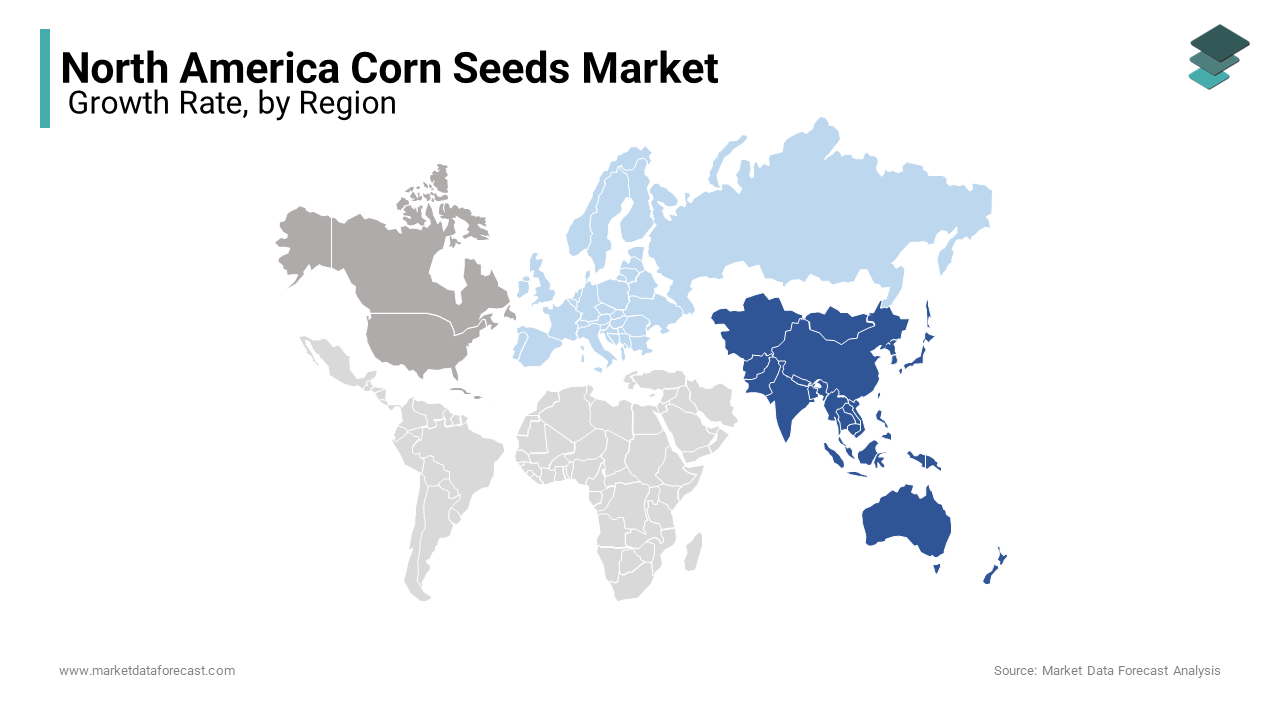
The United States was the top performer of the North America corn seeds market by holding 78.3% of share in 2025 due to its vast arable land base and advanced agricultural infrastructure. The Midwest Corn Belt comprising states like Iowa Illinois Nebraska and Minnesota generates the majority of output benefiting from deep fertile soils and favorable growing conditions. Extensive adoption of genetically modified traits exceeds 90% of planted acres, according to the study. Major seed corporations concentrate research and development activities in the United States by leveraging proximity to large test environments and regulatory agencies. The country exports substantial volumes of corn seeds to Latin America and other regions generating foreign revenue that supports domestic breeding programs. Precision agriculture penetration remains highest globally with variable rate planting and soil mapping guiding seed selection decisions on millions of hectares. Strong intellectual property protections safeguard innovation incentives allowing companies to recoup substantial development costs. The integration of digital platforms with seed recommendations creates feedback loops that accelerate genetic improvement cycles maintaining the United States competitive advantage in corn seed technology and market influence.
Canada Corn Seeds Market Analysis
Canada corn seeds market was ranked second by holding 14.3% of share in 2025. Canadian farmers cultivated 1.4 million hectares of corn primarily in Ontario and Quebec during 2025, according to the study. The country emphasizes high quality seed production for both domestic use and export particularly to European and Asian markets seeking non genetically modified or specific trait varieties. Canadian seed companies benefit from rigorous regulatory standards that enhance international credibility and facilitate market access agreements. Government support through the Canadian Agricultural Partnership provides funding for research institutions developing cold tolerant corn varieties suited to shorter growing seasons in northern latitudes as stated by Agriculture and Agri Food Canada. Provinces offer additional incentives for sustainable farming practices encouraging adoption of seed traits that reduce environmental impact. Canada serves as a testing ground for new genetics before broader North American release due to its diverse climatic zones ranging from humid continental to subarctic conditions.
COMPETITIVE LANDSCAPE
The competitive landscape of the North America corn seeds market features intense rivalry among established multinational corporations and specialized regional breeders vying for farmer allegiance through technological superiority and service excellence. Major players differentiate themselves by offering integrated solutions that combine advanced genetic traits with precision agriculture tools creating sticky ecosystems that discourage switching to competitors. Innovation speed serves as a critical battleground where companies race to commercialize drought tolerant and disease resistant varieties that address pressing climate challenges. Price competition remains secondary to value proposition as farmers prioritize yield security and risk mitigation over initial cost savings. Regulatory compliance capabilities provide significant barriers to entry protecting incumbent advantages while limiting new participant threats. Collaborative networks with universities and public research institutions further strengthen proprietary knowledge bases enabling continuous improvement cycles. Customer relationship management through dedicated agronomist support teams enhances brand loyalty and facilitates feedback loops that inform future breeding directions ensuring sustained competitive relevance in this dynamic agricultural sector.
KEY MARKET PLAYERS
The North American corn seed market is dominated by major players, including
- Monsanto (Bayer CropScience)
- DuPont Pioneer (Corteva Agriscience)
- Bayer CropScience
- Hefei Fengbao
- Syngenta
- Nuziweedu Seeds
- China National Seeds,
- DLF Trifolium.
Top Players In The Market
- Corteva Agriscience stands as a premier innovator in corn genetics leveraging its extensive research network to develop advanced hybrid varieties. The company focuses on integrating digital agronomy tools with seed offerings to enhance farmer decision making capabilities. Recent initiatives include launching new drought tolerant hybrids that maintain yield stability under water stressed conditions across the Midwest United States. Corteva actively collaborates with local distributors to ensure broad accessibility of its premium trait packages while investing heavily in gene editing technologies to accelerate breeding cycles. Their commitment to sustainability drives the development of nitrogen use efficient varieties that reduce environmental impact while supporting profitable farming operations throughout North America.
- Bayer Crop Science maintains a strong presence through its renowned Dekalb and Channel brands offering diverse genetic solutions for varied growing environments. The company emphasizes integrated pest management traits that simplify field operations and protect yield potential against evolving insect pressures. Bayer recently expanded its digital platform capabilities allowing farmers to access real time field data and personalized seed recommendations. Strategic investments in biologicals complement their chemical portfolio providing holistic crop protection solutions. The organization continues to refine its breeding pipelines focusing on resilience characteristics that address climate variability challenges faced by North American growers seeking reliable performance outcomes.
- Syngenta Group delivers robust corn seed portfolios under the NK and Golden Harvest brands targeting specific regional needs across the continent. The company prioritizes high yielding genetics combined with superior standability traits to facilitate efficient harvest operations. Syngenta recently introduced advanced root health technologies that improve nutrient uptake efficiency and stress tolerance in challenging soil conditions. Their global research infrastructure enables rapid deployment of innovative traits tailored to local pest and disease profiles. The firm strengthens its market position through strategic partnerships with agricultural retailers ensuring timely delivery of technical support and product availability to farmers during critical planting windows.
Top Strategies Used By Key Market Participants
Key players in the North America corn seeds market primarily employ aggressive research and development investments to create differentiated genetic traits that offer tangible agronomic benefits. Companies focus heavily on merging digital agriculture platforms with seed sales to provide data driven planting recommendations that optimize yield potential for individual fields. Strategic acquisitions of smaller biotechnology firms allow major corporations to integrate novel gene editing capabilities and expand their intellectual property portfolios rapidly. Partnerships with agricultural retailers and distributors ensure extensive market reach and enhanced customer support services that build long term loyalty among farming communities. Additionally, manufacturers emphasize sustainability narratives by developing varieties that require fewer chemical inputs thereby appealing to environmentally conscious consumers and regulatory bodies while reducing production costs for growers.
MARKET SEGMENTATION
This research report on the North American corn seed market is segmented and sub-segmented into the following categories.
By Type
- Baby Corn
- Field Corn
- Sweet Corn
- Pop Corn
By End Products
- Animal Feed
- Corn Flour or meal
- Corn Starch
- Corn Syrup
By Country
- The United States
- Canada
- Rest of North America