- Product Description Description
- Table of Contents TOC
- List of Table & Figure LOT
- Get Free Sample PDF Sample PDF
Market Size, 2025
$5.98 BnMarket Estimate, 2026
$6.57 BnMarket Forecast, 2034
$13.94 BnCAGR, 2026–2034
9.86%North America Smoothies Market Summary
The North America smoothies market was valued at USD 5.98 billion in 2025, is projected to reach USD 6.57 billion in 2026, and is expected to expand to USD 13.94 billion by 2034, growing at a CAGR of 9.86% from 2026 to 2034. The growth of the North America smoothies market is driven by rising consumer demand for healthy, functional beverages, increasing adoption of plant-based and dairy-free smoothie options, and growing availability of smoothies across retail and foodservice channels. Expanding awareness of clean-label and natural ingredients is further supporting market expansion.
Key Market Trends
- Increasing demand for fruit-based smoothies as a natural and nutrient-rich option.
- The rising popularity of functional smoothies enriched with proteins, probiotics, and superfoods.
- Expansion of supermarkets and hypermarkets as leading retail distribution channels.
- Growth in on-the-go consumption trends and single-serve packaging.
- Rising focus on vegan, organic, and dairy-free smoothies.
Segmental Insights
- Based on product, the fruit-based smoothies segment dominated the North American smoothies market with 63.1% share in 2025, reflecting strong consumer preference for fresh and natural fruit blends.
- Based on distribution channel, the supermarkets segment led with 54.5% share in 2025, driven by wide product availability and convenient access for consumers.
Regional Insights
- The United States held the dominant position in the North American smoothies market in 2025, accounting for 86.2% of the regional share, supported by strong demand for functional beverages, widespread retail penetration, and the presence of leading smoothie brands.
- Canada is showing steady growth, driven by rising consumer adoption of health-focused drinks and expanding product variety.
- Mexico represents an emerging market, supported by increasing urbanization, growing middle-class incomes, and demand for convenient, nutritious beverage options.
Competitive Landscape
Key players in the North America smoothies market include Smoothie King, Maui Wowi Hawaiian Coffees & Smoothies, Suja Juice, Innocent Drinks, Bolthouse Farms, Jamba Juice Company, Ella’s Kitchen Ltd., Barfresh Food Group Inc., and Tropical Smoothie Cafe. These companies are focusing on product innovation, clean-label formulations, and expansion across retail and foodservice channels to strengthen their regional presence.
North America Smoothies Market Size
The smoothies market size in North America was valued at USD 5.98 billion in 2025 and is predicted to be worth USD 13.94 billion by 2034 from USD 6.57 billion in 2026 and grow at a CAGR of 9.86% from 2026 to 2034.
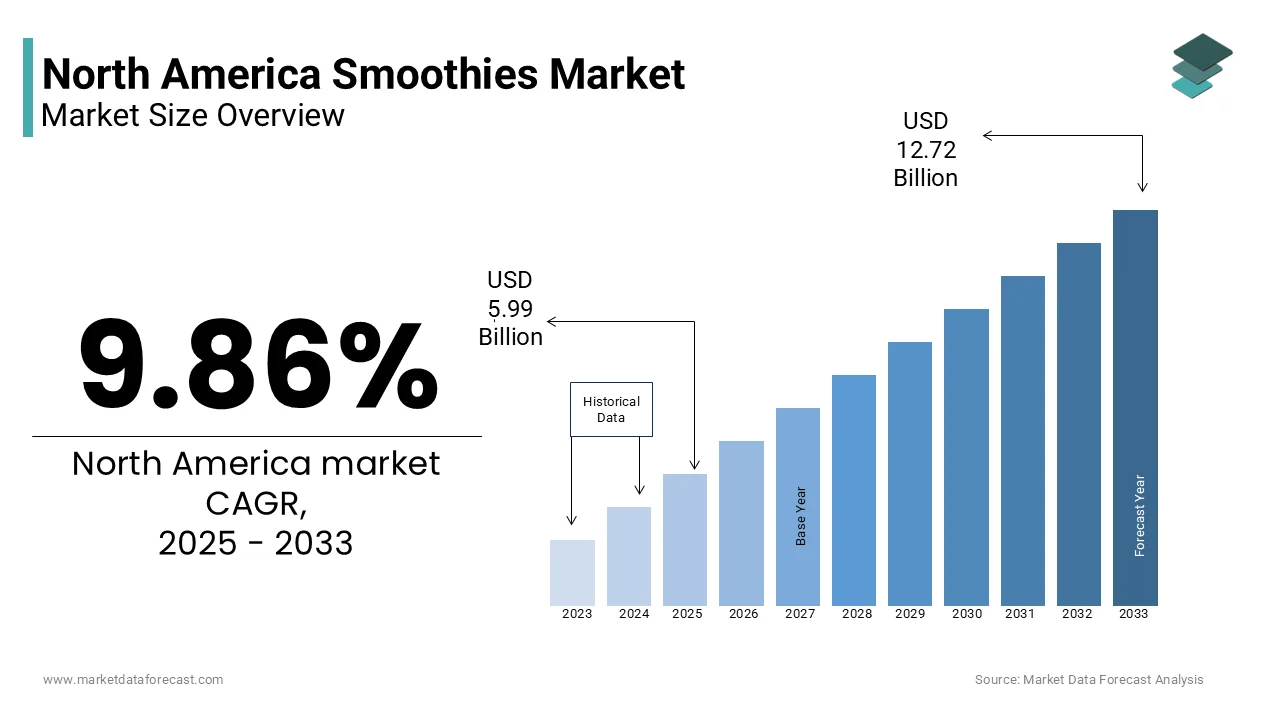
Smoothies are defined by blended fruit, vegetable, dairy, or plant-based formulations designed to deliver nutrition, convenience, and sensory satisfaction. These beverages, consumed as meal replacements, snacks, or post-exercise refreshments, reflect evolving consumer priorities toward health-conscious, on-the-go nourishment.
Like, a notable share of American households purchased ready-to-drink smoothies at least once a month, highlighting their integration into daily dietary habits. In Canada, the proportion of consumers citing immune support as a primary reason for smoothie consumption rose, underscoring a shift toward preventive wellness. As per the U.S. Department of Agriculture, per capita consumption of fruits and vegetables remains below recommended levels, with only some portion of adults meeting daily intake guidelines, creating a demand for alternative delivery methods such as smoothies. Retail innovation has further expanded access, with major grocery chains like Kroger and Walmart dedicating chilled sections to premium and organic smoothie brands. Additionally, smoothie bars and juice cafes have become standard fixtures in urban food courts and fitness centers, reflecting their cultural alignment with active lifestyles. These developments position smoothies not merely as beverages but as functional food vehicles addressing nutritional gaps in modern diets.
MARKET DRIVERS
Rising Consumer Emphasis on Preventive Health and Nutritional Density
The growing consumer focus on preventive healthcare and nutrient-rich diets, particularly in response to chronic disease prevalence and post-pandemic wellness consciousness, is a pivotal force propelling the North America Smoothies Market. According to the Centers for Disease Control and Prevention (CDC), more than 60% of American adults live with at least one chronic condition, such as obesity, diabetes, or cardiovascular disease, driving demand for dietary interventions that support long-term health. Smoothies, often formulated with superfoods, antioxidants, fiber, and plant-based proteins, are perceived as accessible tools for improving daily nutrition. As per the American Heart Association, only 1 in 10 adults consumes the recommended daily intake of fruits and vegetables, making blended beverages a practical solution for bridging nutritional deficits. Brands like Suja and Bolthouse Farms have responded by fortifying their offerings with turmeric, ginger, and MCT oil to target inflammation and cognitive health. Furthermore, the Harvard T.H. Chan School of Public Health emphasizes that liquid nutrition, when properly balanced, can improve dietary adherence among time-constrained individuals. As consumers increasingly view food as medicine, smoothies are gaining traction as a scientifically backed, palatable method of delivering essential micronutrients, reinforcing their role in mainstream wellness regimens.
Expansion of Distribution Channels and Retail Accessibility
The proliferation of smoothies across diverse retail and service environments has significantly amplified their availability and consumption frequency. Major convenience store chains, including 7-Eleven and Circle K, have introduced premium smoothie coolers in large number of locations across North America. This expansion enables impulse purchases and caters to commuters and fitness enthusiasts seeking quick, nutritious options. Additionally, the integration of smoothies into meal delivery platforms such as DoorDash and Uber Eats has broadened access, with smoothie bar orders through these channels increasing between 2021 and 2023. In institutional settings, hospitals and corporate campuses are incorporating smoothie stations into cafeterias to promote employee and patient wellness. The presence of smoothies in gyms, yoga studios, and college campuses further reinforces their association with active lifestyles. This multi-channel distribution strategy ensures that smoothies are no longer niche products but readily available staples, seamlessly embedded into the daily routines of health-conscious consumers.
MARKET RESTRAINTS
High Sugar Content and Misalignment with Clean-Label Expectations
Many commercially available smoothies contain elevated levels of natural and added sugars, undermining their perceived nutritional value and deterring health-conscious consumers. The Center for Science in the Public Interest analyzed 50 leading smoothie brands in 2023 and found that 60% exceeded 20 grams of sugar per serving, with some surpassing 60 grams, equivalent to four candy bars. This sugar density contradicts the clean-label movement, which emphasizes minimal processing, low sugar, and transparent ingredient sourcing. A notable share of consumers avoid products with high sugar content, even if labeled as “natural” or “organic.” While some brands have reformulated products to reduce sweetness, the inherent reliance on fruit bases makes sugar reduction challenging without compromising taste. As regulatory scrutiny on front-of-package labeling intensifies, particularly in Canada’s updated nutrition facts panel, misleading health claims are being reevaluated, potentially eroding consumer trust and limiting market growth.
Environmental Impact of Single-Use Packaging and Cold Chain Logistics
The environmental footprint associated with smoothie production and distribution poses a growing constraint on market expansion, particularly as sustainability becomes a decisive factor in consumer purchasing behavior. Most ready-to-drink smoothies are sold in single-serve plastic bottles or pouches, many of which are not recyclable due to multi-layer materials or contamination from organic residues. Additionally, the requirement for refrigerated storage and transport increases the carbon footprint. Consumer sentiment reflects this unease: an increasing share of Americans are more likely to avoid brands with excessive plastic packaging. While some companies have introduced recyclable glass bottles or reusable container programs, scalability remains limited. Without systemic innovation in packaging materials and distribution efficiency, the smoothie industry risks reputational damage and regulatory pressure, particularly in environmentally progressive markets like California and British Columbia.
MARKET OPPORTUNITIES
Integration of Functional Ingredients and Personalized Nutrition
The incorporation of scientifically backed functional ingredients presents a transformative opportunity for differentiation and premiumization within the North America Smoothies Market. Consumers are increasingly seeking products that offer targeted health benefits beyond basic nutrition, such as immune support, cognitive enhancement, and gut health. According to the Council for Responsible Nutrition (CRN), 77% of U.S. adults use dietary supplements, indicating a readiness to adopt fortified foods and beverages. Smoothie manufacturers are responding by integrating adaptogens like ashwagandha, nootropics such as lion’s mane mushroom, and clinically studied probiotics into their formulations. Also, personalized nutrition is gaining traction, with DNA-based diet recommendations influencing consumer choices. Startups like Zest and Daily Dose are pioneering customizable smoothie blends based on individual health goals, leveraging AI-driven platforms to tailor macronutrient profiles and functional additives. Additionally, the inclusion of plant-based proteins, such as pea, hemp, and brown rice, caters to flexitarian and athletic demographics. As scientific validation grows and consumers demand evidence-based wellness solutions, smoothies are poised to evolve from general health products into precision nutrition tools, unlocking new market segments and premium pricing potential.
Expansion into Underserved and Institutional Markets
The penetration of smoothies into non-traditional and institutional settings offers a significant growth avenue, particularly in healthcare, education, and corporate wellness environments. Also, corporate wellness programs are integrating smoothie bars into office campuses. These institutional adoptions not only expand market reach but also enhance credibility, positioning smoothies as medically and educationally endorsed nutritional solutions rather than mere consumer beverages.
MARKET CHALLENGES
Ingredient Sourcing Volatility and Seasonal Supply Constraints
The reliance on fresh, perishable, and often organic produce exposes the North America Smoothies Market to significant supply chain vulnerabilities, particularly in the face of climate variability and agricultural disruptions. Additionally, the seasonality of ingredients limits consistent formulation, forcing manufacturers to alter recipes frequently, which can affect taste and consumer loyalty. Supply chain delays also increase spoilage risks. Without diversified sourcing strategies, long-term contracts, or investment in controlled-environment agriculture, smoothie producers face ongoing operational instability and margin pressure.
Intensifying Competition from Alternative Functional Beverages
The North America Smoothies Market faces mounting pressure from a growing array of competing functional beverages that offer similar health benefits with greater convenience or lower caloric content. Brands like Huel, Soylent, and Olipop have captured consumer interest by offering nutritionally complete, shelf-stable options with lower sugar and higher protein content. Additionally, the rise of powdered smoothie mixes and at-home blending kits, such as those from Daily Harvest and Splendid Spoon, challenges the dominance of ready-to-drink formats by offering customization and reduced environmental impact. Moreover, energy drinks fortified with vitamins and botanicals, such as Celsius and REIZE, are positioning themselves as wellness beverages, further fragmenting the market. To retain relevance, smoothie brands must innovate beyond taste and convenience, emphasizing clinical validation, transparency, and unique formulation advantages to differentiate in an increasingly crowded functional beverage landscape.
REPORT COVERAGE
| REPORT METRIC | DETAILS |
| Market Size Available | 2025 to 2034 |
| Base Year | 2025 |
| Forecast Period | 2026 to 2034 |
| CAGR | 9.86% |
| Segments Covered | By Product, Distribution Channel, and Region |
|
Various Analyses Covered | Regional & Country Level Analysis, Segment-Level Analysis, DROC, PESTLE Analysis, Porter’s Five Forces Analysis, Competitive Landscape, Analyst Overview on Investment Opportunities |
| Regions Covered | The United States, Canada, Mexico, and Rest of North America |
| Market Leaders Profiled | Smoothie King, Maui Wowi Hawaiian Coffees & Smoothies, Suja Juice, Innocent Drinks, Bolthouse Farms, Jamba Juice Company, Ella’s Kitchen Ltd, Barfresh Food Group, Inc, Tropical Smoothie Cafe, and others |
SEGMENTAL ANALYSIS
By Product Insights
The fruit-based smoothies segment dominated the North America Smoothies Market by capturing an estimated 63.1% of total share in 2025. This lead position is primarily driven by widespread consumer preference for natural, plant-forward nutrition and the alignment of fruit-based formulations with clean-label and vegan dietary trends. One major factor behind its dominance is the perception of fruit smoothies as inherently healthier and more aligned with daily fruit intake recommendations. Brands like Bolthouse Farms and Suja have capitalized on this gap by marketing fruit-based smoothies as a practical way to meet daily nutritional goals. The versatility of fruit bases, compatible with spinach, kale, chia seeds, and protein powders, allows for nutrient-dense formulations without compromising taste. This cultural embedding of fruit smoothies as a wellness staple, combined with their broad demographic appeal and compatibility with dietary restrictions, solidifies their position as the most dominant product category.
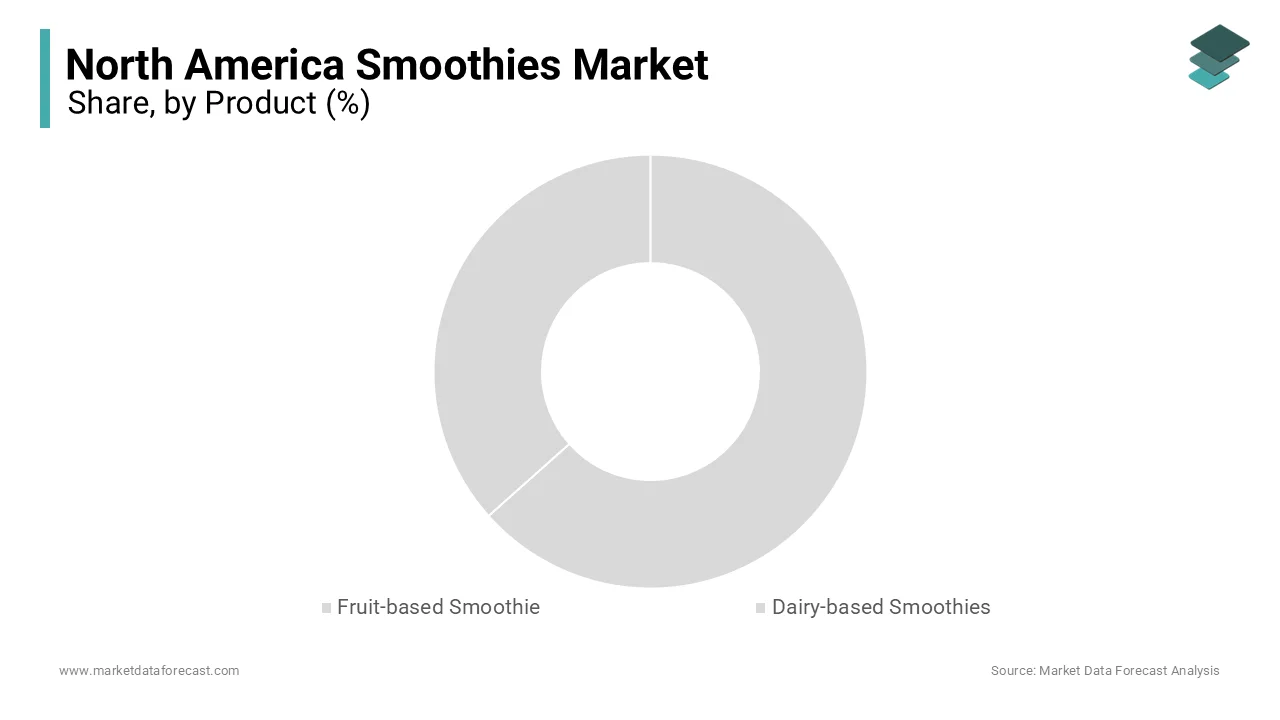
The dairy-based smoothies segment is experiencing the fastest growth within the product classification and is projected to expand at a CAGR of 7.4% from 2026 to 2034. This acceleration is fueled by rising demand for high-protein, satiating beverages among fitness-conscious consumers and athletes. A further key driver is the growing recognition of dairy as a high-quality protein source; the National Dairy Council points out that whey and casein proteins in yogurt and milk contain all nine essential amino acids, making them ideal for muscle recovery and sustained energy. Brands such as Yoplait Smoothies and Fairlife have introduced high-protein variants with 20–30 grams of protein per serving, targeting post-workout recovery and weight management. Furthermore, innovations in lactose-free and ultra-filtered milk technologies have expanded accessibility for lactose-intolerant consumers. As consumers prioritize functional nutrition over mere convenience, dairy-based smoothies are gaining traction as scientifically supported, performance-oriented beverages.
By Distribution Channel Insights
The supermarkets segment led the North America Smoothies Market by distribution channel by accounting for 54.5% of total sales in 2025. This dominance is driven by the widespread availability, brand variety, and consumer preference for at-home consumption of ready-to-drink smoothies. Major grocery chains such as Kroger, Safeway, and Loblaws have expanded their chilled functional beverage sections, dedicating shelf space to premium, organic, and refrigerated smoothie brands. The convenience of bulk purchasing and integration into weekly grocery routines enhances consumer loyalty and repeat purchases. The rise of health-focused store layouts, featuring wellness aisles and nutrition signage, further encourages impulse buys. With e-commerce platforms like Instacart and Shipt enabling home delivery of perishable smoothies, supermarkets have extended their reach beyond physical stores, solidifying their role as the primary access point for smoothie consumers across North America.
The convenience stores segment is emerging as the fastest-growing distribution channel and is projected to grow at a CAGR of 8.2% from 2026 to 2034. This growth is fueled by the increasing demand for quick, nutritious options among on-the-go consumers, particularly commuters, students, and shift workers. A further driver is the strategic expansion of fresh and refrigerated offerings in convenience stores. Additionally, the integration of smoothies into morning and afternoon snack routines has been supported by partnerships with brands like Naked and Evolution Fresh, which supply portion-controlled, single-serve bottles ideal for grab-and-go consumption. With store layouts evolving to prioritize health and freshness, and digital kiosks enabling personalized recommendations, convenience stores are transforming from impulse-driven outlets into trusted sources of functional nutrition, accelerating the segment’s expansion.
REGIONAL ANALYSIS
The U.S. Smoothies Market Analysis
The United States held the dominant position in the North American smoothies market by commanding an estimated 86.2% of the regional share in 2025. The country’s position is underpinned by a mature health and wellness culture, extensive retail infrastructure, and a high prevalence of lifestyle-related chronic diseases, driving preventive nutrition choices. According to the Centers for Disease Control and Prevention (CDC), a notable share of American adults are obese, intensifying demand for nutrient-dense, portion-controlled food and beverage alternatives. Smoothies are increasingly viewed as a viable solution, with many U.S. consumers citing “better nutrition” as a primary reason for purchase. Additionally, the U.S. Food and Drug Administration’s updated Nutrition Facts labeling has prompted brands to reformulate products to reduce sugar and highlight protein content, improving consumer trust. With major manufacturers headquartered in the U.S. and a robust network of distributors, the country serves as the innovation and commercialization hub for the regional market, setting trends in flavor, functionality, and packaging.
Canada Smoothies Market Analysis
Canada held a notable share of the North American smoothies market, establishing itself as a rapidly growing secondary market driven by rising health consciousness and government-supported nutrition initiatives. The country’s updated Food Guide, released by Health Canada, emphasizes plant-based eating and whole foods, aligning with the core ingredients of most commercial smoothies. Major retailers like Loblaws and Sobeys have expanded chilled beverage sections in urban centers, with sales of organic and functional smoothies increasing between 2021 and 2023. The integration of smoothies into workplace wellness programs and university campuses has further accelerated adoption. With a growing immigrant population introducing diverse fruit preferences and a strong e-commerce infrastructure enabling home delivery, Canada is evolving into a sophisticated, health-driven market with increasing influence on regional product development.
KEY MARKET PLAYERS AND COMPETITIVE LANDSCAPE
Leading key players mentioned in the North American smoothies market are Smoothie King, Maui Wowi Hawaiian Coffees & Smoothies, Suja Juice, Innocent Drinks, Bolthouse Farms, Jamba Juice Company, Ella’s Kitchen Ltd, Barfresh Food Group, Inc., and Tropical Smoothie Cafe.
The competitive landscape of the North America Smoothies Market is marked by a convergence of specialized chains, foodservice giants, and retail brands vying for dominance in a category defined by health, convenience, and sensory appeal. Unlike commoditized beverage segments, competition here centers on differentiation through formulation integrity, functional benefits, and brand ethos. Established players like Smoothie King and Jamba face pressure from private-label offerings by major retailers and innovative startups introducing plant-based, low-sugar, or powdered alternatives. The rise of at-home blending kits and cold-pressed juice brands has further fragmented consumer attention, compelling smoothie companies to innovate beyond taste and convenience. Digital engagement has become a battleground, with brands investing in mobile apps, personalized nutrition tools, and subscription models to enhance retention. Sustainability is another key differentiator, as consumers increasingly scrutinize packaging and sourcing practices. Meanwhile, restaurant chains outside the smoothie niche—such as fast-casual health concepts and coffee shops—are incorporating smoothies into their menus, increasing cross-category rivalry. The market is also witnessing a shift from impulse-driven purchases to habitual consumption, requiring brands to align with long-term wellness identities. As consumer expectations evolve toward transparency, efficacy, and environmental responsibility, competition is no longer just about flavor or availability but about building trusted, values-driven relationships with health-conscious consumers.
TOP PLAYERS IN THE MARKET
- Smoothie King has redefined the functional smoothie landscape by positioning its offerings as performance-driven nutritional solutions rather than mere beverages. Originating in the U.S., the brand pioneered the concept of purpose-based smoothies, categorizing products by health goals such as energy, immune support, and weight management. Its integration into fitness centers and wellness communities has elevated the perception of smoothies as tools for holistic health. By aligning with athletic trainers and medical wellness programs, Smoothie King has influenced how functional beverages are marketed and consumed globally. The brand’s emphasis on clean ingredients, high protein content, and science-backed formulations has set a benchmark for the industry, inspiring similar approaches in Europe and Asia. Its franchise model has also demonstrated the scalability of specialized smoothie concepts, making it a reference point for health-focused foodservice innovation worldwide.
- Jamba has played a transformative role in mainstreaming smoothies by blending taste, convenience, and wellness into a cohesive consumer experience. Initially known for its fruit-forward flavors, the company evolved into a leader in functional nutrition by introducing plant-based proteins, probiotics, and superfood blends. Its presence in airports, shopping malls, and college campuses has normalized smoothie consumption as part of daily routines. Jamba’s early adoption of digital ordering, loyalty programs, and sustainability initiatives has influenced operational standards across the quick-service sector. By partnering with wellness influencers and launching educational campaigns on nutrition, Jamba has helped shape consumer expectations for transparency and efficacy in functional beverages. Its model of balancing indulgence with health has been replicated in emerging markets, where brands seek to bridge the gap between flavor and nutritional integrity.
- Bolthouse Farms revolutionized the ready-to-drink smoothie market by leveraging its agricultural expertise to ensure ingredient quality and supply chain integrity. Known for its vertically integrated production, the company controls everything from farming to bottling, ensuring freshness and consistency. Its iconic orange-based smoothies became synonymous with natural nutrition, setting a precedent for clean-label branding. Bolthouse’s shift from a produce supplier to a consumer-facing brand demonstrated the viability of farm-to-bottle storytelling in functional beverages. The company’s packaging innovations and refrigerated distribution model have influenced cold-chain logistics across the industry. By prioritizing sustainability and nutritional transparency, Bolthouse has become a model for how agricultural businesses can transition into trusted consumer health brands, inspiring similar transformations globally.
TOP STRATEGIES USED BY KEY PLAYERS
One major strategy employed by leading smoothie brands is the integration of science-backed formulations to enhance product credibility. Companies are collaborating with nutritionists, dietitians, and research institutions to develop blends that support specific health outcomes such as immune function, gut health, or muscle recovery. This approach elevates smoothies from casual beverages to functional nutrition tools, increasing consumer trust and justifying premium pricing.
Another key strategy is the expansion into non-traditional consumption environments. Top players are embedding their products in fitness centers, hospitals, corporate campuses, and educational institutions, positioning smoothies as essential components of wellness programs. This institutional penetration not only increases volume but also reinforces the perception of smoothies as medically and nutritionally endorsed.
A third critical approach is brand differentiation through ingredient transparency and sustainability. Leading firms emphasize clean labels, organic sourcing, and eco-conscious packaging to appeal to environmentally aware consumers. By communicating their supply chain ethics and environmental impact, companies build deeper emotional connections with health-conscious audiences, fostering long-term loyalty in a competitive market.
RECENT HAPPENINGS IN THE MARKET
- In March 2023, Smoothie King launched a partnership with the American Council on Exercise to co-develop a line of fitness-targeted smoothies for gym-goers and trainers. This collaboration is anticipated to enhance product credibility and expand Smoothie King’s presence in fitness facilities across the U.S.
- In July 2023, Jamba introduced a new plant-based protein smoothie series formulated with pea and pumpkin seed protein, developed in consultation with registered dietitians. This launch is expected to attract vegan and flexitarian consumers seeking high-protein, dairy-free nutrition.
- In October 2023, Bolthouse Farms implemented a recyclable bottle redesign using 100% post-consumer recycled plastic across its smoothie product line. This initiative is anticipated to reduce environmental impact and strengthen the brand’s sustainability positioning.
- In January 2025, Smoothie King opened its first medical wellness location inside a Cleveland Clinic-affiliated health center, offering clinically aligned smoothies for patients. This move is expected to elevate the brand’s role in preventive healthcare and expand its institutional footprint.
- In May 2025, Jamba partnered with a national corporate wellness platform to provide discounted smoothies to employees of Fortune 500 companies. This integration is anticipated to boost brand visibility and drive recurring consumption in professional environments.
MARKET SEGMENTATION
This research report on the North American smoothies market has been segmented and sub-segmented into the following categories.
By Product
- Fruit-based Smoothies
- Organic Smoothies
- Inorganic Smoothies
- Dairy-based Smoothies
By Distribution Channel
- Restaurants
- Smoothie Bars
- Supermarkets
- Convenience Stores
By Country
- U.S
- Canada
- Mexico
- Rest of North America