- Product Description Description
- Table of Contents TOC
- List of Table & Figure LOT
- Get Free Sample PDF Sample PDF
Market Size, 2025
$3.37 BnMarket Estimate, 2026
$4.22 BnMarket Forecast, 2034
$25.29 BnCAGR, 2026–2034
25.10%Executive Summary: North America Synthetic Biology Market
- Market Scope: Comprehensive regional market evaluation of synthetic biology in North America covering tools, enabling/enabled technologies, applications, and country-level distribution frameworks.
- Market Valuation: Valued at USD 3.37 billion in 2025, estimated at USD 4.22 billion in 2026, and projected to reach USD 25.29 billion by 2034, registering a robust CAGR of 25.10% from 2026 to 2034.
- Primary Growth Drivers: Wide agricultural and medical applications, substantial private/public R&D funding, genetic engineering advancements, rising demand for synthetic cells and genes, and government initiatives lowering DNA sequencing costs.
Key Market Segment Metrics (2026–2034)
| Category | Leading Segment (2025 Position) | Segment Framework |
|---|---|---|
| By Tool | Oligonucleotide Synthesis & Enzymes (crucial for DNA fabrication and genetic construction) | Chassis Organisms, Cloning & Assembly Kits, Oligonucleotide Synthesis, Enzymes, and Xeno Nucleic Acid |
| By Technology | Gene Synthesis, Genome Engineering & Next-Generation Sequencing | Enabling: Gene Synthesis, Cloning/Sequencing, Genome Engineering, Bioinformatics, Nanotechnology, Site-Directed Mutagenesis, Microfluidics, Measurement & Modelling Enabled: Next-Generation Sequencing, Pathway Engineering |
| By Application | Medical (dominant market share driven by therapeutics, vaccines, and drug development) | Medical, Environmental, and Industrial |
| By Country / Region | The United States & Canada (North America leads globally due to high concentrations of synthetic biology firms, advanced R&D infrastructure, and government support) | |
Major Market Players & Market Structure
Market Structure: Highly competitive, innovation-heavy North American synthetic biology landscape featuring biotechnology pioneers and life science giants competing on DNA/RNA synthesis efficiency, gene-editing precision, and commercial scale-up for healthcare and industrial applications.
Key Companies: Dupont, Intrexon Corporation, Amyris, Inc., Genscript USA, Inc., Integrated DNA Technologies (IDT), Inc., Novozymes, Royal DSM N.V., New England Biolabs, Inc., Synthetic Genomics, Inc., and Thermo Fisher Scientific, Inc.
North America Synthetic Biology Market Size
The North America synthetic biology market was valued at USD 3.37 billion in 2025, is estimated to reach USD 4.22 billion in 2026, and is projected to reach USD 25.29 billion by 2034, growing at a CAGR of 25.10% from 2026 to 2034.
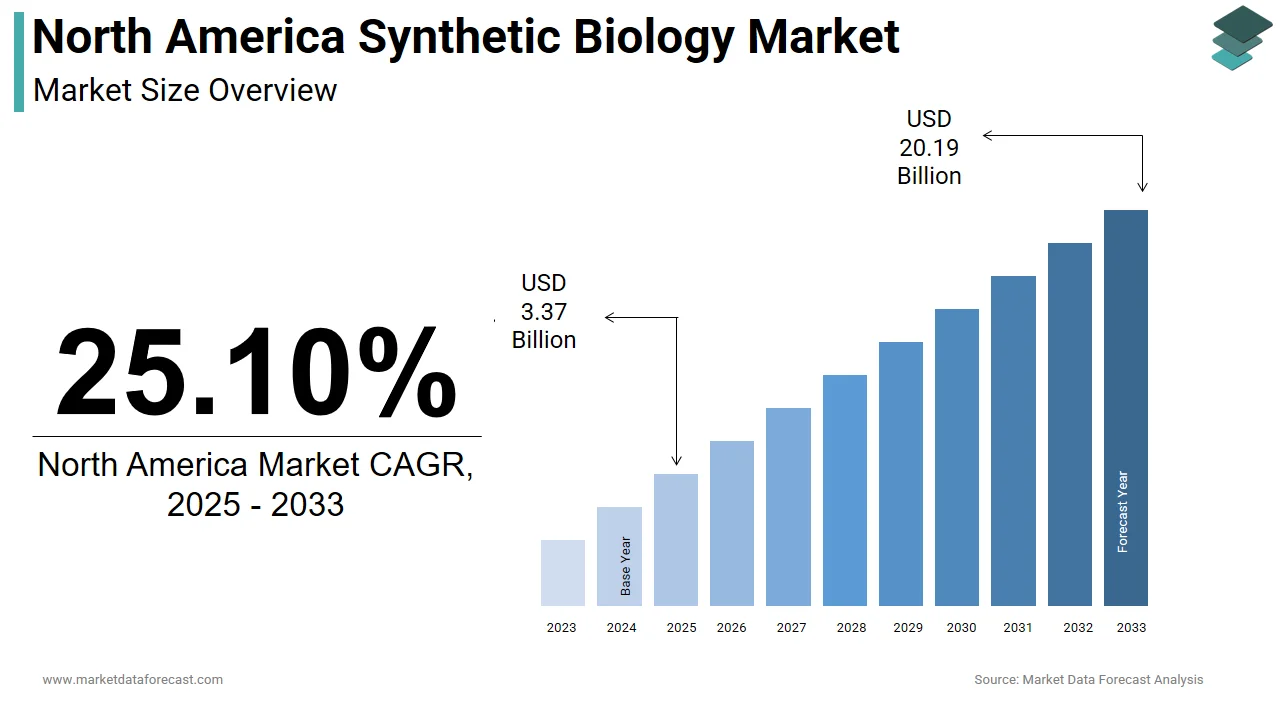
Synthetic biology is the design and construction of new biological parts, devices, and systems for applications in healthcare, agriculture, and industrial manufacturing. As per the National Institutes of Health, the United States accounts for over 40% of global biomedical research funding, providing a robust foundation for innovation in genetic engineering and synthetic biology. The region is characterized by a dense ecosystem of academic institutions, startups, and established pharmaceutical companies driving rapid technological advancements. According to the United States Department of Energy, bio-based products could potentially replace 30% of petroleum-based chemicals by 2030, highlighting the significant industrial potential of synthetic biology. Furthermore, the increasing prevalence of chronic diseases and the need for personalized medicine accelerate the adoption of synthetic biology tools in drug discovery and development. With strong regulatory frameworks and substantial venture capital investment, North America remains the global leader in this sector, fostering an environment where scientific breakthroughs are rapidly translated into commercial solutions that address critical societal challenges in health, energy, and environmental sustainability.
MARKET DRIVERS
Surging Demand for Personalized Medicine and Advanced Therapeutics Drives Innovation
The escalating demand for personalized medicine and advanced therapeutic solutions, as healthcare providers seek more effective and targeted treatments for complex diseases, is a major factor fuelling the growth of the North America synthetic biology market. Synthetic biology enables the precise engineering of cells and genes to develop personalized treatments, such as CAR T cell therapy and gene editing, which tailor medical interventions to individual patient profiles. As per the Food and Drug Administration, the number of approved gene and cell therapies has increased over the past five years, reflecting the growing clinical validation and regulatory acceptance of these technologies. The ability of synthetic biology to produce complex biologics and vaccines rapidly, as demonstrated during recent global health crises, further underscores its strategic importance in public health. Consequently, the emergence of genomic data, advanced manufacturing capabilities, and regulatory support drives substantial investment in synthetic biology platforms that can accelerate drug discovery and deliver customized medical solutions, positioning this sector as a cornerstone of modern healthcare innovation.
Government Initiatives and Funding for Bioeconomic Development
The strong government support and strategic initiatives aimed at developing a robust bioeconomy are significantly propelling the growth of the North American synthetic biology market. This policy framework encourages collaboration between academia, industry, and government agencies to accelerate the commercialization of synthetic biology technologies. As per the National Science Foundation, federal grants for biological engineering and synthetic biology research have increased by 25% annually since 2020, fostering a vibrant ecosystem of innovation and talent development. Additionally, the Department of Energy’s Bioenergy Technologies Office supports projects that utilize synthetic biology to produce sustainable fuels and chemicals by aligning with national climate goals. These coordinated efforts create a favorable regulatory and financial environment that lowers barriers to entry for startups and encourages large corporations to invest in bio-based solutions. The alignment of national security, economic competitiveness, and environmental sustainability goals with synthetic biology ensures sustained momentum and long-term growth for the market across the continent.
MARKET RESTRAINTS
High Regulatory Complexity and Uncertainty Hinders Commercialization
The intricate and evolving regulatory landscape surrounding synthetic biology products creates uncertainty for developers and delays commercialization timelines, which is restricting the growth of the North America synthetic biology market. The complexity increases compliance costs and creates ambiguity for companies developing novel organisms or gene-edited products, particularly in agriculture and environmental applications. As per the Biotechnology Innovation Organization, the average time to obtain regulatory approval for a new synthetic biology product can exceed five years, significantly impacting return on investment and discouraging smaller firms from entering the market. Furthermore, the lack of clear definitions for certain synthetic biology techniques, such as gene drives and self-replicating systems, poses challenges for risk assessment and public acceptance. The absence of harmonized international standards also complicates global trade and collaboration, limiting market access for North American companies.
Ethical Concerns and Public Skepticism Regarding Genetic Modification
The persistent ethical concerns and public awareness regarding genetic modification and synthetic biology, influencing consumer acceptance and policy decisions that is additionally hindering the growth of the North America synthetic biology market. Americans express serious concern about the ethical implications of gene editing in humans and animals, citing fears of unintended consequences and moral boundaries. This public apprehension translates into resistance against the adoption of synthetic biology products, particularly in food and agriculture, where consumers often prefer natural or organic alternatives. Misinformation and lack of understanding about synthetic biology technologies contribute to negative perceptions by making it difficult for companies to build trust and market their products effectively. High-profile controversies involving gene-edited crops or organisms have further fueled debate, leading to stricter labeling requirements and marketing restrictions in some jurisdictions. The fear of biosafety risks, such as the accidental release of engineered organisms into the environment, also raises liability concerns for manufacturers. Consequently, companies must invest heavily in public education and transparency initiatives to address these concerns, which increases operational costs and slows market penetration. Without broader societal acceptance and clear ethical guidelines, public awareness will remain a formidable challenge to the growth of the synthetic biology industry.
MARKET OPPORTUNITIES
Expansion into Sustainable Industrial Manufacturing and Bio Materials
The transition toward sustainable industrial manufacturing and the development of bio-based materials, driven by corporate sustainability goals and consumer demand for eco-friendly products, is certainly expected to foster new opportunities for the growth of the North America synthetic biology market. According to the study, the global shift toward a circular economy is driving demand for bio-based alternatives to plastics and chemicals, with the bioplastics market expected to grow by 15% annually over the next decade. Synthetic biology enables the production of high-performance materials, such as biodegradable polymers and spider silk proteins, using renewable feedstocks and low-energy processes. Major chemical companies are increasingly investing in biofabrication technologies to reduce their carbon footprint and meet regulatory targets for emissions reduction. The ability of synthetic biology to engineer microbes that convert agricultural waste into valuable chemicals offers a cost-effective and sustainable alternative to petroleum-based production. Furthermore, government incentives for green manufacturing and carbon neutrality encourage industries to adopt bio-based solutions.
Integration of Artificial Intelligence and Machine Learning in Design Processes
The integration of artificial intelligence and machine learning into synthetic biology design processes to accelerate innovation and reduce development costs is another factor to escalate the growth of the North America synthetic biology market. As per the study, the emergence of AI and synthetic biology is expected to unlock new possibilities in drug discovery, materials science, and metabolic engineering, creating a new wave of high-value products. Companies are increasingly adopting cloud-based platforms that combine computational modeling with automated laboratory workflows, enhancing efficiency and scalability. This technological synergy allows researchers to tackle complex biological problems that were previously intractable, opening new markets and applications.
MARKET CHALLENGES
Biosafety Risks and Potential for Misuse
The inherent biosafety risks associated with engineered organisms and the potential for misuse in malicious activities is a major challenge for the growth of the North America synthetic biology market. The ease of accessing DNA synthesis services and genetic engineering tools raises concerns about the accidental or intentional creation of harmful pathogens or toxins. This dual-use dilemma necessitates rigorous oversight and security measures, which can increase operational costs and limit access to certain technologies for legitimate researchers. There have been increasing incidents of biosecurity breaches and theft of biological materials, accelerating the vulnerability of research facilities and supply chains. The lack of universal standards for screening DNA orders and monitoring laboratory practices further exacerbates these risks by creating liability issues for companies and institutions. Furthermore, the potential for engineered organisms to escape containment and disrupt ecosystems poses long-term environmental threats that are difficult to predict and mitigate. These safety and security concerns require continuous investment in biosecurity infrastructure and training, diverting resources from research and development.
Talent Shortage and Interdisciplinary Skills Gap
The acute shortage of skilled professionals with interdisciplinary expertise in biology, engineering, and computer science is also to hinder the growth of the North America Synthetic Biology Market. This talent gap hinders the ability of companies to scale operations and innovate rapidly, as they struggle to find personnel capable of integrating complex biological systems with digital tools. Many existing educational programs lack the comprehensive curriculum needed to train students in the practical applications of synthetic biology, resulting in a workforce that is theoretically knowledgeable but practically inexperienced. The competition for top talent among academia, startups, and large corporations drives up salary costs and increases employee turnover, further destabilizing research teams. Additionally, the rapid pace of technological change requires continuous upskilling, which is often not supported by current professional development frameworks.
REPORT COVERAGE
| REPORT METRIC | DETAILS |
| Market Size Available | 2025 to 2034 |
| Base Year | 2025 |
| Forecast Period | 2026 to 2034 |
| Segments Covered | By Tool, Technology, Application, and Region. |
| Various Analyses Covered | Global, Regional and Country-Level Analysis, Segment-Level Analysis, Drivers, Restraints, Opportunities, Challenges; PESTLE Analysis; Porter’s Five Forces Analysis, Competitive Landscape, Analyst Overview of Investment Opportunities |
| Countries Covered | United States, Canada, Mexico, Rest of North America |
| Market Leaders Profiled | Dupont, Intrexon Corporation, Amyris, Inc., Genscript USA, Inc., Integrated Dna Technologies (IDT), Inc., Twist Bioscience, Ginkgo Bioworks, Novozymes, Royal DSM N.V, New England Biolabs, Inc., Synthetic Genomics, Inc. and Thermo Fisher Scientific, Inc. |
SEGMENTAL ANALYSIS
By Tool Insights
The enzymes segment was the largest by holding 44.3% of the North America Synthetic Biology Market share in 2025, as these biological catalysts are indispensable for nearly every step of genetic engineering, from DNA cutting and pasting to amplification and modification. This universal applicability ensures consistent and high-volume demand across academic, pharmaceutical, and industrial sectors. As per the study, the average synthetic biology project requires hundreds of enzymatic reactions to validate a single genetic construct, creating a recurring revenue stream for manufacturers. The development of high-fidelity and thermostable enzyme variants has further expanded their utility in complex applications such as CRISPR gene editing and next-generation sequencing library preparation. Furthermore, the shift toward automated laboratory platforms increases the consumption of standardized enzyme kits that ensure reproducibility and efficiency. The critical nature of enzyme quality in determining the success of synthetic biology experiments means that researchers prioritize premium products, sustaining high-value sales.
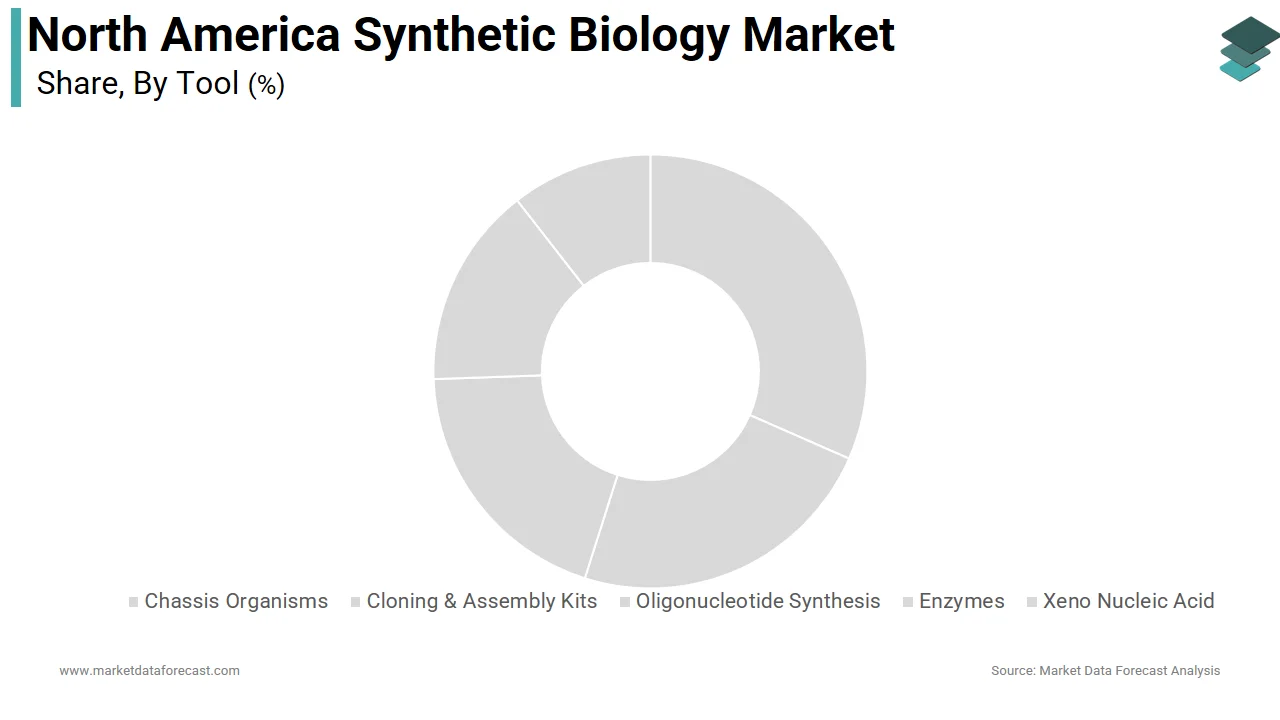
The xeno nucleic acid segment is anticipated to witness the fastest CAGR of 22.5% during the forecast period, driven by breakthroughs in creating alternative genetic systems that offer enhanced stability and novel functionalities compared to natural DNA and RNA. Xeno nucleic acids such as HNA and TNA are increasingly used in the development of aptamers and therapeutic agents that resist degradation by natural enzymes, providing significant advantages in drug delivery and diagnostics. The ability of these synthetic genetic polymers to store information and evolve independently of natural biological systems opens new avenues for data storage and biosensing applications. Furthermore, advancements in enzymatic synthesis methods have reduced the cost and complexity of producing xeno nucleic acids by making them more accessible to researchers. The unique properties of these molecules, including orthogonal replication and resistance to nucleases, make them ideal for creating secure biological systems and robust diagnostic tools.
By Technology Insights
The enabling technologies segment held a prominent share of the North America Synthetic Biology Market in 2025, as they provide the essential tools and platforms required to design, construct, and test synthetic biological systems. These technologies form the backbone of the design build test learn cycle, allowing researchers to rapidly iterate and optimize biological designs. As per the Department of Energy, advancements in enabling technologies have reduced the cost of gene synthesis by 90% over the last decade, democratizing access to synthetic biology tools and accelerating innovation across various industries. The integration of automation and robotics in laboratories further enhances the efficiency of enabling technologies, allowing for high throughput screening and data generation. Furthermore, the continuous improvement of software algorithms for protein folding and metabolic pathway prediction enables more accurate and reliable design outcomes.
The bioinformatics segment is expected to grow at the fastest CAGR of 21.8% during the forecast period, with the exponential increase in biological data and the need for advanced computational tools to analyze and interpret it. The volume of genomic data generated globally is doubling every seven months, creating an urgent demand for sophisticated bioinformatics platforms that can manage and extract insights from massive datasets. The ability of bioinformatics software to simulate metabolic pathways and predict gene expression patterns reduces the need for extensive experimental trial and error, saving time and resources. Furthermore, cloud-based bioinformatics platforms are becoming increasingly popular by offering scalable computing power and collaborative features for distributed research teams. The growing complexity of synthetic biology projects requires specialized analytical tools that can handle multi-omics data, driving adoption among both academic and industrial users.
By Application Insights
The medical segment was the largest, holding 44.9% of the North America Synthetic Biology Market share in 2025, with the high value of pharmaceutical products and the urgent need for innovative treatments for chronic and rare diseases. Synthetic biology enables the production of complex biologics, vaccines, and gene therapies that are difficult or impossible to produce using traditional chemical synthesis methods. The number of approved cell and gene therapies has increased significantly in recent years, with many relying on synthetic biology techniques for manufacturing and optimization. The ability to engineer cells to target specific disease mechanisms offers personalized treatment options with higher efficacy and fewer side effects. Furthermore, the rapid response capability of synthetic biology platforms was demonstrated during the pandemic, where mRNA vaccines were developed and deployed at unprecedented speeds. The high regulatory barriers and intellectual property protections in the medical sector also contribute to higher profit margins, attracting significant investment.
The industrial segment is likely to grow at the fastest CAGR of 19.5% from 2026 to 2034 with the global shift toward sustainable manufacturing and the demand for bio-based alternatives to petroleum-derived products. The circular economy model is gaining traction among major corporations, with many committing to replacing fossil fuel-based materials with renewable bio-based alternatives by 2030. Synthetic biology enables the engineering of microbes to produce chemicals, materials, and fuels from renewable feedstocks such as agricultural waste and carbon dioxide. Companies are increasingly investing in biofabrication facilities to scale up production of biodegradable plastics, specialty chemicals, and textile fibers. The ability of synthetic biology to create novel materials with superior properties, such as strength and durability, also opens new market opportunities in aerospace and automotive industries. Furthermore, government incentives for green manufacturing and carbon neutrality encourage industrial adoption of bio-based solutions.
COUNTRY LEVEL ANALYSIS
U.S. Synthetic Biology Market Analysis
The United States was the top performer in the North America Synthetic Biology Market by occupying 88.3% share in 2025, with a robust ecosystem of research institutions, venture capital, and established biotechnology companies. The presence of major hubs such as Boston, San Francisco, and San Diego fosters collaboration and talent attraction, driving rapid technological advancements. The strong regulatory framework provided by the Food and Drug Administration and Environmental Protection Agency ensures safety while facilitating commercialization. Additionally, the large domestic sector for healthcare and industrial products provides ample opportunities for scaling synthetic biology solutions.
Canada Synthetic Biology Market Analysis
Canada synthetic biology market was ranked second, holding a 12.2% share in 2025, with a strong academic research base and government support for sustainable technologies. Canadian institutions are leaders in areas such as metabolic engineering and environmental biotechnology, contributing to global scientific knowledge. The government’s focus on clean technology and climate change mitigation encourages the development of synthetic biology solutions for carbon capture and biofuel production. Furthermore, favorable immigration policies attract top international talent, strengthening the workforce.
COMPETITIVE LANDSCAPE
The competition in the North America Synthetic Biology Market is characterized by a dynamic mix of established biotechnology giants and agile startups vying for dominance through innovation and specialization. Large corporations leverage their extensive resources and distribution networks to offer comprehensive platforms, while niche players compete by providing highly specialized tools or unique biological designs. The market exhibits moderate fragmentation with no single entity holding absolute control, leading to intense rivalry in terms of technological superiority and service quality. Companies are increasingly focusing on forming strategic alliances with pharmaceutical and industrial partners to validate and scale their technologies. The entry of new players offering AI-driven design tools further intensifies competitive pressure by accelerating development cycles. Established firms respond by investing in proprietary automation and expanding their foundry capacities to maintain speed and cost advantages.
KEY MARKET PLAYERS
The leading companies operating in the North America synthetic biology market include:
- DuPont
- Intrexon Corporation
- Amyris, Inc.
- GenScript USA, Inc.
- Integrated DNA Technologies (IDT), Inc.
- Twist Bioscience
- Ginkgo Bioworks
- Novozymes
- Royal DSM N.V.
- New England Biolabs, Inc.
- Synthetic Genomics, Inc.
- Thermo Fisher Scientific, Inc.
TOP PLAYERS IN THE MARKET
- Ginkgo Bioworks operates as a leading platform organization in the synthetic biology sector, providing automated cell programming and biosecurity services to diverse industries. The company leverages its proprietary Biofoundry to design and test biological systems at scale, enabling rapid development of custom organisms for clients. Recently, Ginkgo expanded its partnership with major pharmaceutical companies to accelerate drug discovery and vaccine development using advanced genetic engineering tools. This strategic collaboration enhances its revenue streams and solidifies its role in critical healthcare applications. The company also invested in expanding its computational biology capabilities to improve design accuracy and efficiency.
- Twist Bioscience specializes in high-throughput DNA synthesis and gene editing tools, serving as a supplier for the global synthetic biology ecosystem. The company utilizes proprietary semiconductor-based technology to produce high-quality genetic material at lower costs and faster speeds than traditional methods. Recently, Twist launched new enzymatic DNA synthesis platforms that reduce environmental impact and increase production capacity significantly. This technological advancement allows the company to meet growing demand from research institutions and biotech firms while maintaining competitive pricing. Twist also expanded its portfolio of synthetic biology tools, including CRISPR libraries and variant libraries to support complex research needs.
- Synthetic Genomics focuses on developing innovative solutions for energy, health, and sustainability through advanced genomic engineering and synthetic biology techniques. The company applies its expertise in genome design and construction to create microorganisms capable of producing biofuels and valuable chemicals from renewable resources. Recently, Synthetic Genomics partnered with industrial manufacturers to scale up production of sustainable materials, demonstrating the commercial viability of its technologies. This collaboration expands its market reach and validates its approach to green manufacturing. The company also continues to invest in research for next-generation therapeutics and diagnostic tools, leveraging its deep understanding of genetic systems.
TOP STRATEGIES USED BY KEY MARKET PARTICIPANTS
Key players in the North America Synthetic Biology Market primarily focus on strategic partnerships and continuous technological innovation to maintain their competitive edge. Companies frequently collaborate with academic institutions and industry leaders to co-develop new applications and share research insights. They also engage in mergers and acquisitions to expand their product portfolios and gain access to proprietary technologies or specialized talent. Geographic expansion into emerging markets is another common strategy as firms seek to capitalize on global demand for sustainable solutions. Manufacturers invest heavily in automation and artificial intelligence to enhance efficiency and reduce costs in DNA synthesis and cell programming. Additionally, companies prioritize regulatory compliance and biosafety standards to build trust and ensure access.
MARKET SEGMENTATION
This research report on the North American synthetic biology market has been segmented & sub-segmented into the following categories:
By Tool
- Chassis Organisms
- Cloning & Assembly Kits
- Oligonucleotide Synthesis
- Enzymes
- Xeno Nucleic Acid
By Technology
- Enabling technologies
- Gene Synthesis
- Cloning and Sequencing
- Genome Engineering
- Bioinformatics
- Nanotechnology
- Site-Directed Mutagenesis
- Microfluidics
- Measurement and Modelling
- Enabled technologies
- Next-Generation Sequencing
- Pathway Engineering
By Application
- Medical
- Environmental
- Industrial
By Country
- The United States
- Canada
- Rest of North America