- Product Description Description
- Table of Contents TOC
- List of Table & Figure LOT
- Get Free Sample PDF Sample PDF
Market Size, 2025
$1.22 BnMarket Estimate, 2026
$1.32 BnMarket Forecast, 2034
$2.41 BnCAGR, 2026–2034
7.84%Executive Summary: Nebulizer Market
- Market Scope: Comprehensive global nebulizer market analysis covering device types, modalities, regional leadership frameworks, and clinical respiratory adoption metrics.
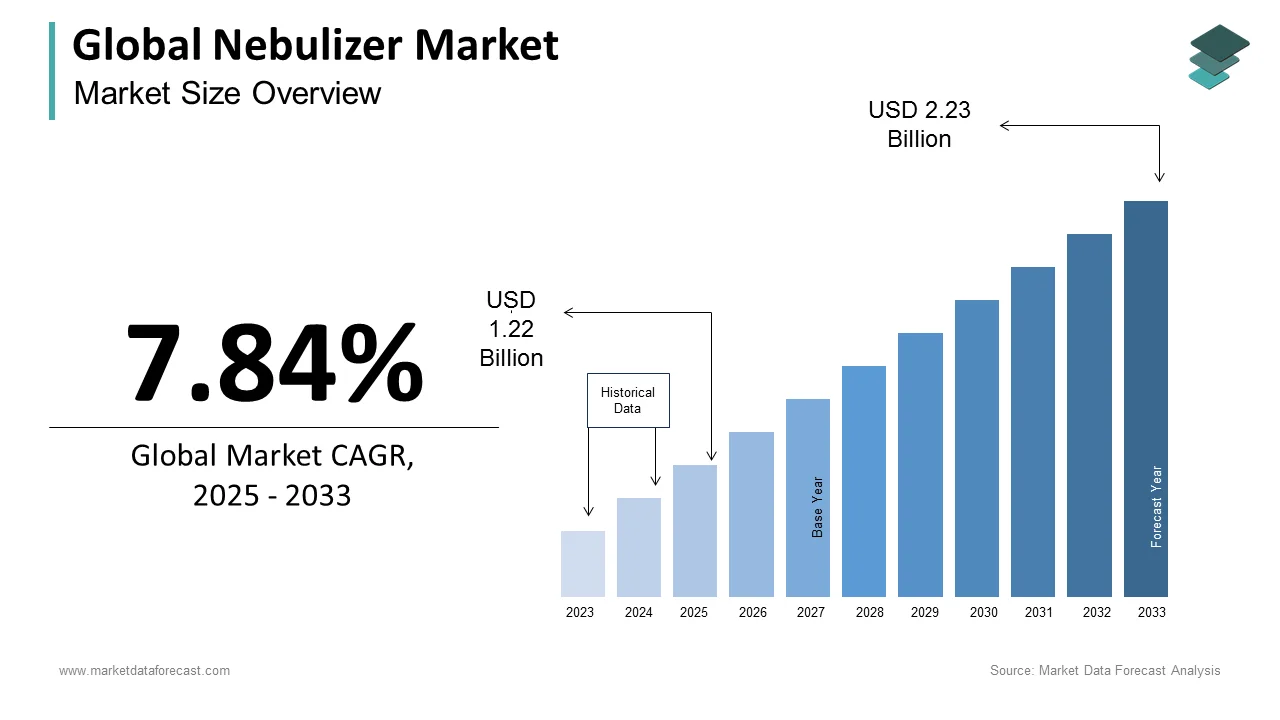
- Market Valuation: Valued at USD 1.22 billion (2025), estimated at USD 1.32 billion (2026), and projected to reach USD 2.41 billion by 2034, registering a robust CAGR of 7.84% (2026–2034).
- Primary Growth Drivers: High prevalence of chronic respiratory conditions, growing geriatric demographic, and technological innovations in portable drug delivery. Key epidemiological highlights include an estimated 262 million people affected by asthma (resulting in 455,000 deaths) and COPD accounting for 3.23 million deaths globally, alongside substantial healthcare budgetary allocations in regions like the European Union (~8% of healthcare budgets spent on respiratory disease management).
Key Market Segment Metrics (2026–2034)
| Category | Leading Segment (2025 Position) | Fastest-Growing Segment |
|---|---|---|
| By Device Type & Modality | Tabletop Devices (lead by modality) & Mesh Nebulizers (substantial market share due to portability and ease of use) | Portable & Connected Smart Mesh Nebulizers |
| By Indication / Disease Type | Chronic Obstructive Pulmonary Disease (COPD) & Asthma Management | Specialized Cystic Fibrosis & Acute Respiratory Infection Care |
| By End User / Care Setting | Hospitals, Clinics, and Traditional Outpatient Facilities | Home Healthcare Settings (driven by patient-centric and remote monitoring trends) |
| By Region / Country | North America (captured 36.4% of the global market in 2025; U.S. growing at a steady 7.42% CAGR) | Asia-Pacific (fastest-growing regional market, led by China and high regional demand); Europe (projected at a 9.08% CAGR) |
Major Market Players & Market Structure
Market Structure: Highly competitive global respiratory medical device landscape featuring established multinational health equipment manufacturers and specialized device innovators competing intensely on aerosol delivery speed, compact design, particle size control, digital adherence monitoring, and home-care accessibility. Recent innovations feature advanced small-volume nebulizers capable of drastically cutting treatment times by up to 70% while heightening drug delivery volume per minute.
Key Companies: Briggs Healthcare, Besco Medical, Ca-Mi, De Vilbiss Healthcare, Feellife Health, Flyp, Invacare, Omron, Philips Respironics, and Pari Medical.
Global Nebulizer Market Size
The size of the global nebulizer market was worth USD 1.22 billion in 2025. The global market is anticipated to grow at a CAGR of 7.84% from 2026 to 2034 and be worth USD 2.41 billion by 2034 from USD 1.32 billion in 2026.
The nebulizer market is rapidly growing since the outbreak of COVID-19. Vibrating mesh ones are the latest innovation in respiratory care, operating silently to create aerosols directly to patients. Today’s nebulizers generate fine aerosol particles that facilitate deep lung delivery of medication for treating cystic fibrosis, COPD, asthma, and other breathing conditions.
Moreover, it presents an alternative method for administering inhaled therapy to people, functioning alongside DPIs and pMDIs, given that the drug is available and stable in liquid form, contributing to the market growth. However, the market also faces some disadvantages associated with nebulizers (like varying treatment lengths and the necessity of daily cleaning). Existing evidence suggests that he effectiveness of remedies delivered via this product for patients suffering from moderate to severe COPD is on par with those of pMDIs and DPIs.
MARKET DRIVERS
The growing burden of chronic respiratory diseases, such as asthma, chronic obstructive pulmonary disease (COPD), and cystic fibrosis, and the increasing adoption of a sedentary lifestyle are propelling the growth of the global nebulizer market.
According to the World Health Organization (WHO) statistics, an estimated 262 million people lived with asthma in 2019, and 455,000 died. COPD is causing a significant number of mortalities across the world. According to the American Lung Association, 12.5 million adults in the United States suffer from COPD. According to the WHO, 3.23 million people died due to COPD in 2019. Cystic fibrosis is one of the notable genetic diseases in the United States. According to the American Lung Association, 30,000 people from the U.S. and an estimated 70,000 worldwide live with cystic fibrosis. COPD accounts for 60% of total respiratory diseases worldwide. In addition, YOY growth in population, the rise in air pollution levels causing breathing difficulties, and the growing population who smoke in developing economies are expected to escalate the incidence of respiratory diseases in emerging countries, which is expected to reflect in the greater demand for nebulizers. Moreover, the changes in the asthma pattern with age and the rise in the incidence of childhood asthma are likely to boost the usage of nebulizers and promote market growth. Furthermore, the growing emphasis of market participants on R&D activities to introduce innovative products is expected to boost the global nebulizer market growth.
In addition, the increasing initiatives and funding from governments and reimbursement policies to promote early diagnosis and treatment are expected to favor the market’s growth rate. For instance, the European Union spends almost 8% of the healthcare budget on managing respiratory diseases yearly. Moreover, the increasing costs of hospitals and other healthcare facilities have promoted the adoption of nebulizers. The use of portable nebulizers also drives the market. Emerging markets such as the Asia Pacific region are anticipated to showcase promising growth opportunities for the market participants.
MARKET RESTRAINTS
The fierce competition from alternative solutions for nebulizers is expected to hamper the market’s growth rate. Inhalers are easy to use and cost-effective; hence the adoption of inhalers is increasing, which is expected to impact the nebulizer market growth negatively. Moreover, the wastage of drugs in nebulizer therapy is another notable challenge to the growth of the nebulizer market.
MARKET OPPORTUNITIES
The effectiveness and versatility of nebulizers are present for a diverse range of unique and current therapies. This aids the development of phenotype-targeted pharmacotherapies in the administration of chronic respiratory illnesses. This gives potential opportunities for the expansion of the nebuliser market.
Latest findings in the review published in PubMed revealed that new breakthroughs in nebulised therapeutic delivery systems for chronic obstructive pulmonary disease (COPD) and various lasting pulmonary diseases, focusing on enhancements in this device, the physiological benefits associated with this delivery method, and the extensive adaptability of existing and emerging nebuliser-based treatments.
Despite pressurized metered dose inhalers (pMDIs) and dry powder inhalers (DPIs) being the most frequently utilised devices for medication delivery, they are not sufficient in several clinical cases (e.g., hospitalised, the cognitively impaired, and the elderly patients). With the increasing availability of drugs in solution formulations, both people suffering from COPD and their caregivers are expressing higher satisfaction with nebulised drug administration. This offers advantages similar to those of the handheld inhalers in terms of symptom management and enhanced quality of life.
MARKET CHALLENGES
Product recalls and associated issues are one of the key challenges hindering the expansion of the nebulizer market. Medical recalls have been and continue to be one of the major factors impeding the growth of the pharma companies. The recall procedure by the Food and Drug Administration was a main subject in 2024 for the medical device industry.
- For instance, in July 2024, Baxter International Inc. announced the withdrawal of its Life2000 ventilators along with a joint battery charger dongle. This urgent medical device recall is because of the reports that the systems fail to charge correctly when the battery charger dongle is compromised or damaged. Moreover, in the past few years, this product has witnessed problems associated with oxygen desaturation in 2023, the inability to charge batteries caused by a faulty charger dongle in 2024, and again in 2024, a malfunction in the low gas pressure alarm under specific conditions.
Similarly, in January 2024¸, Philips Respironics reported the suspension of sales of its complete line of breathing machines across the United States. This decision was made after the company’s settlement with the FDA regarding the persistent issues with the devices. After the recall of over 15 million respiratory devices by Philips, the company’s stocks and the market were impacted.
Another factor derailing the growth trajectory of this market is contamination. According to a study published in PubMed, 50 per cent of aerosols, medication cups, and saline were contaminated with potentially pathogenic microorganisms (Escherichia coli, Serratia, Pseudomonas, Enterobacter, Klebsiella). The working pressure of the nebulizer and compressor was less than the requirements in over 50 per cent of the jet nebulizers. Furthermore, it was observed that a significant surge in aerodynamic mass median diameter occurred as the nebulizer aged. In 6 out of 10 cases, the size ofthe particle measured was below 5 microns.
REPORT COVERAGE
| REPORT METRIC | DETAILS |
| Market Size Available | 2025 to 2034 |
| Base Year | 2025 |
| Forecast Period | 2026 to 2034 |
| Segments Covered | By Product, Modality, End-User, and Region |
| Various Analyses Covered | Global, Regional & Country Level Analysis, Segment-Level Analysis, Drivers, Restraints, Opportunities, Challenges; PESTLE Analysis; Porter's Five Forces Analysis, Competitive Landscape, Analyst Overview of Investment Opportunities |
| Regions Covered | North America, Europe, Asia Pacific, Latin America, Middle East & Africa |
| Market Leader Profiled | Briggs Healthcare, Besco Medical, Ca-Mi, De Vilbiss Healthcare, Feellife Health |
SEGMENTAL ANALYSIS
By Product Insights
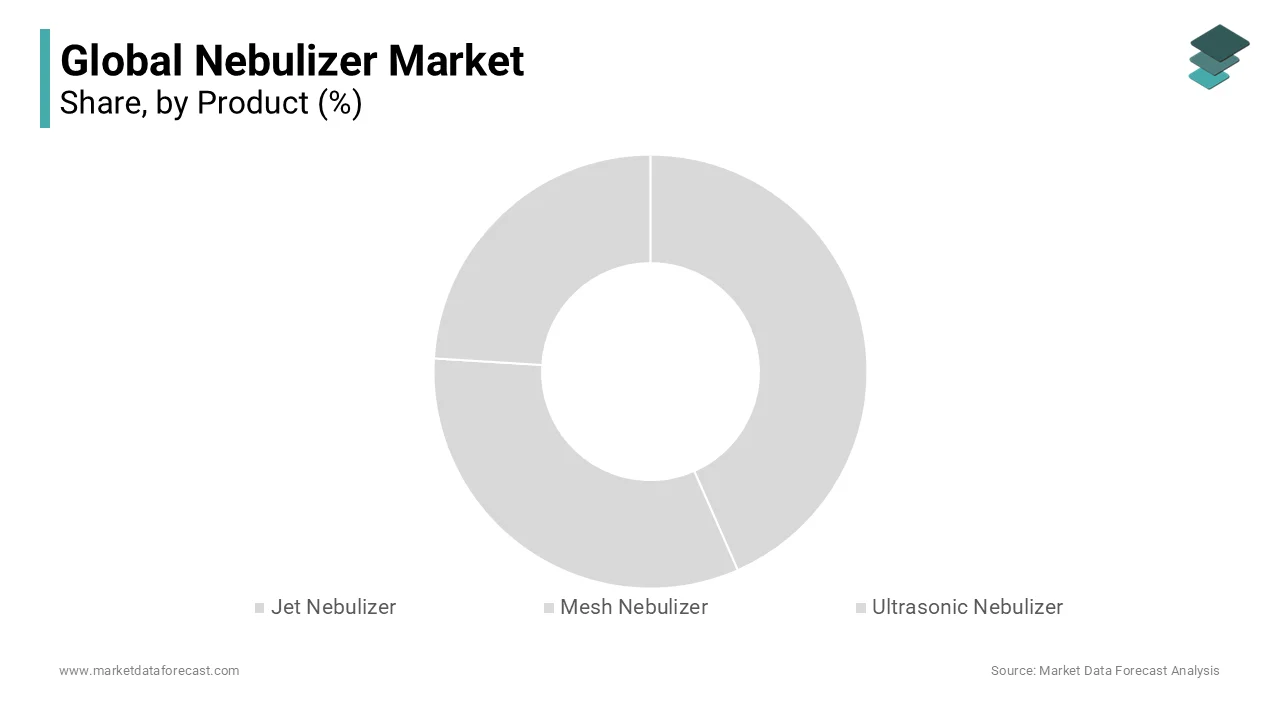
The mesh nebulizer segment is predicted to hold a considerable share of the global market during the forecast period, owing to the growing adoption of technological advancements in manufacturing these devices. In addition, mesh nebulizers are portable and easy to use, further boosting the adoption and favoring the segment's growth. Moreover, a meta-analysis and systematic review published in PubMed concluded that a vibrating mesh nebulizer (VMN) is considerably better than a jet nebulizer on the basis of administration of medicines and use in the therapy of people suffering from COPD.
The jet nebulizer (JN) segment is anticipated to register a steady CAGR during the forecast period. This product type is usually the preferred approach for the treatment of patients with respiratory and pulmonary diseases, and the drugs are often larger and need a power source to operate. On the other hand, the ultrasonic nebulizer (UN) has several restrictions compared to the JN. Different from JN, they cannot provide suspensions. Hence, they should not be utilised with suspension medicine formulations.
By Modality Insights
Based on modality, the tabletop devices segment is forecasted to lead the global market during the forecast period. The benefits associated with table-top devices and the increased market participants with a greater portfolio of table-top devices favor the growth of the table-top segment.
The portable segment is estimated to witness a healthy CAGR during the forecast period. This is because portable devices can be used at home and are easy to use, which promotes the demand for these products and results in the segment's growth. In addition, the growing aging population and increasing demand for traditional treatments are expected to fuel the segment’s growth rate. According to the World Aging report of the United Nations, the aging population worldwide is anticipated to reach 1.5 billion by 2050.
By End-User Insights
The home care settings segment is experiencing a surge in its application and is expected to further grow during the forecast period. The use of nebulizers at home is on the rise, particularly among elderly people suffering from chronic respiratory diseases. Moreover, many studies have shown that home ones are effective for supportive therapy and are favoured by several patients and caregivers due to their user-friendlyness and the capability to deliver drugs without requiring specific inhalation techniques.
Hospitals and clinics continue to use this for acute treatments, especially in emergency care scenarios, but the trend is leaning towards aftercare and home usage for long-term management.
REGIONAL ANALYSIS
North America Nebulizer Market Analysis
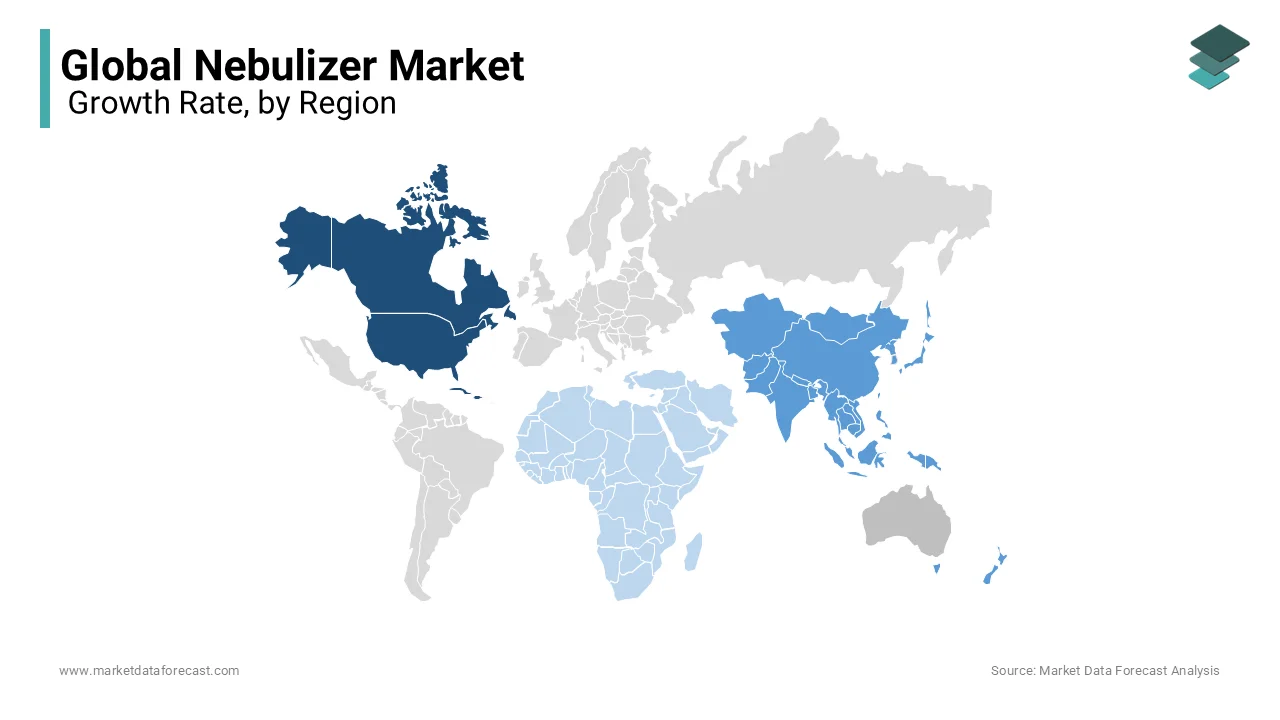
The North American region captured 36.4% global market share in 2025 and is expected to showcase a healthy growth rate during the forecast period owing to the growing volume of patients suffering respiratory diseases, increasing efforts of various governments, favorable reimbursement policies, growing awareness among people regarding the usage of nebulizers, and well-established healthcare infrastructure.
In addition, the growing adoption of technological developments in manufacturing nebulizers is further propelling regional market growth. Countries such as the U.S. and Canada contributed significantly to the North American region and helped North America register its domination in the global market. The U.S. nebulizer market is estimated to grow at a CAGR of 7.42% during the forecast period. The market growth in the United States is attributed to favorable reimbursement policies, technological advancements, and the presence of key market players.
Asia Pacific Nebulizer Market Analysis
However, the Asia Pacific nebulizer market is estimated to be the fastest-growing regional market worldwide over the forecast period due to the growing geriatric population, increasing focus on preventive care, and government initiatives promoting technological innovations. China recorded the largest share of the APAC market in 2025.
Europe Nebulizer Market Analysis
The European nebulizer market is forecasted to rise at a CAGR of 9.08% during the forecast period. The growing adoption of nebulizers in multiple applications, such as postoperative and delivery rooms and care units for respiratory devices, propels market growth in Europe.
Latin America Nebulizer Market Analysis
On the other hand, the Latin American nebulizer market is expected to showcase a healthy CAGR during the forecast period. In this region, Brazil, followed by Mexico, is expected to register prominent growth in the future. This is because a large population base in Brazil is affected by pulmonary disorders, such as asthma and COPD, requiring management with nebulizers.
KEY MARKET PLAYERS
In this report, the most promising companies that dominate the global nebulizer market are
- Briggs Healthcare
- Besco Medical
- Ca-Mi
- De Vilbiss Healthcare
- Feellife Health
- Flyp
- Invacare
- Omron
- Philips Respironics
- Pari Medical
GLOBAL NEBULIZER MARKET NEWS
- In June 2024, Verona Pharma plc reported via press release the approval from the US Food and Drug Administration (FDA) for Ohtuvayre (ensifentrine) for the supportive treatment of chronic obstructive pulmonary disease (COPD) in mature patients. Moreover, Ohtuvayre is administered directly to the lungs using a conventional jet nebulizer. This eliminates the requirement for high inspiratory flow rates or intricate hand-breath coordination. Further, they aimed to introduce this in the 3rd quarter of 2024, maintaining Ohtuvayre is accessible to assist the millions of people who continue to experience COPD symptoms.
- In May 2024, Medline announced the introduction of its latest drug delivery nebulizer, “Hudson RCI TurboMist small-volume nebulizer” for respiratory therapy. It can administer medication in only 3 minutes, positioning it as the quickest small-volume nebuliser in this field. Moreover, the company devised the product to give 2.5 times greater drug per minute compared to a standard one and considerably lowers the treatment period to facilitate close to 70 per cent more rapid remedy than the conventional one.
MARKET SEGMENTATION
This research report on the global Nebulizer Market has been segmented and sub-segmented based on the product, modality, end-user, and region.
By Product
- Jet Nebulizer
- Mesh Nebulizer
- Ultrasonic Nebulizer
By Modality
- Portable
- Table-top
By End-User
- Hospitals
- Clinics
- Home care settings
By Region
- North America
- Europe
- Asia Pacific
- Latin America
- Middle East and Africa