- Product Description Description
- Table of Contents TOC
- List of Table & Figure LOT
- Get Free Sample PDF Sample PDF
Market Size, 2025
$32.8 BnMarket Estimate, 2026
$34.28 BnMarket Forecast, 2034
$48.74 BnCAGR, 2026–2034
4.5%Global Respiratory Inhaler Market Report Summary
The global respiratory inhaler market was valued at USD 32.8 billion in 2025 and is projected to grow from USD 34.28 billion in 2026 to USD 48.74 billion by 2034, registering a CAGR of 4.5% from 2026 to 2034. Market growth is driven by the rising prevalence of chronic respiratory diseases such as asthma and chronic obstructive pulmonary disease (COPD), increasing air pollution, and growing awareness of respiratory disease management. Continuous advancements in inhaler technologies, increasing adoption of smart inhalers, and expanding access to respiratory healthcare services are further supporting market expansion.
Key Market Trends
- Increasing prevalence of asthma, COPD, and other chronic respiratory diseases.
- Growing adoption of smart inhalers with digital monitoring capabilities.
- Rising demand for portable, user-friendly, and combination inhaler therapies.
- Expansion of home-based respiratory care and self-administered treatment solutions.
- Increasing focus on environmentally sustainable inhaler technologies and low-carbon propellants.
Segmental Insights
- Based on product type, the metered-dose inhalers (MDIs) segment dominated the global respiratory inhaler market by accounting for 44.3% market share in 2025, driven by their widespread clinical use, affordability, ease of administration, and effectiveness in delivering bronchodilators and corticosteroids.
- Based on end user, the home care settings segment held the largest share of the market in 2025, supported by increasing preference for self-administered respiratory therapies, growing adoption of home healthcare services, and improved patient convenience.
Regional Insights
The global respiratory inhaler market continues to expand across major regions, supported by increasing respiratory disease prevalence, healthcare investments, and technological advancements.
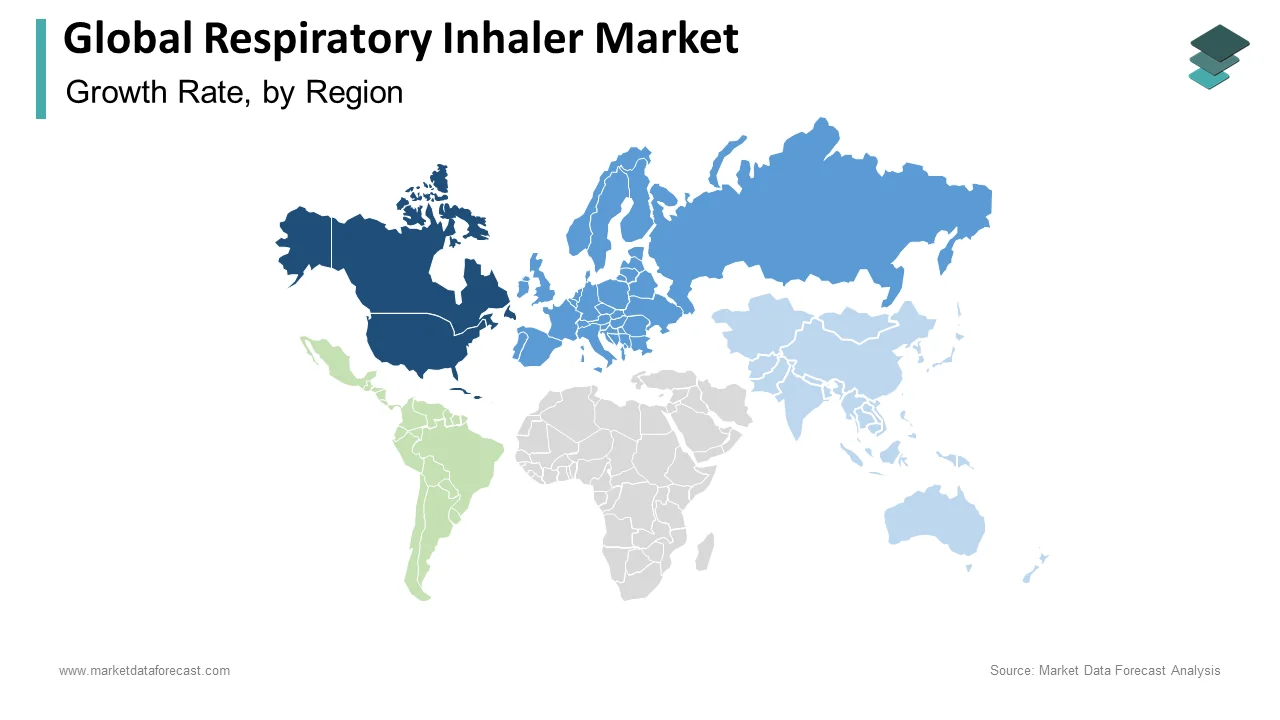
- North America dominated the global market in 2025 by accounting for 35.3% share, driven by advanced healthcare infrastructure, high prevalence of asthma and COPD, favorable reimbursement policies, and strong adoption of innovative inhaler technologies.
- Europe held the second-largest position with 30.3% share in 2025, supported by stringent environmental regulations encouraging the transition from hydrofluoroalkane (HFA) propellants to environmentally friendly alternatives, along with strong respiratory disease management programs.
- Asia-Pacific is projected to register the fastest growth during the forecast period, driven by increasing healthcare access, rising air pollution levels, growing awareness of respiratory health, and expanding patient populations in China, India, Japan, and Australia.
Competitive Landscape
The global respiratory inhaler market is highly competitive, with leading pharmaceutical and medical device companies focusing on innovative inhaler formulations, smart inhaler technologies, and environmentally sustainable delivery systems. Market participants are investing in digital health integration, combination therapies, and patient-centric respiratory care solutions to strengthen their market position. Strategic partnerships, product launches, regulatory approvals, and continuous research and development continue to shape the competitive landscape.
Prominent companies operating in the global respiratory inhaler market include AstraZeneca, Beximco Pharmaceuticals Ltd., Boehringer Ingelheim GmbH, Cipla Ltd., GlaxoSmithKline plc, Koninklijke Philips N.V., Merck & Co., Inc., OMRON Healthcare Europe B.V., PARI Medical Holding, and Teva Pharmaceutical Industries Ltd.
Global Respiratory Inhaler Market Size
The global respiratory inhaler market was worth US$ 32.8 billion in 2025 and is anticipated to reach a valuation of US$ 48.74 billion by 2034 from US$ 34.28 billion in 2026, and it is predicted to register a CAGR of 4.5% during the forecast period 2026 to 2034.

Respiratory inhalers are medical devices designed to deliver therapeutic agents directly into the lungs for the management of chronic and acute respiratory conditions. These devices encompass metered dose inhalers, dry powder inhalers, and soft mist inhalers, each engineered to optimize drug deposition in the lower airways while minimizing systemic exposure. The clinical necessity of these devices is underscored by the global burden of obstructive lung diseases, which affect hundreds of millions of individuals worldwide. According to the World Health Organization, chronic obstructive pulmonary disease affects approximately 392 million people globally, making it the third leading cause of death. Clinical guidelines from the National Institute for Health and Care Excellence emphasize the importance of proper inhaler technique by noting that up to 90% of patients use their devices incorrectly without adequate training. The evolution of inhaler technology has shifted towards patient-centric designs that incorporate dose counters and feedback mechanisms to enhance adherence. This rising disease burden necessitates continuous innovation in inhaler design to improve efficacy, ease of use, and patient compliance across diverse demographic groups.
MARKET DRIVERS
Escalating prevalence of chronic obstructive pulmonary disease drives device demand
The rising global incidence of chronic obstructive pulmonary disease for respiratory inhalers across healthcare systems is fuelling the growth of the respiratory inhaler market. Chronic obstructive pulmonary disease is characterized by persistent respiratory symptoms and airflow limitation due to airway and alveolar abnormalities, typically caused by significant exposure to noxious particles or gases. According to the Centers for Disease Control and Prevention, more than 16 million adults in the United States have been diagnosed with this condition, while millions remain undiagnosed. The World Health Organization projects that annual deaths from chronic obstructive pulmonary disease will increase to over 5 million by 2030. Smoking remains the leading risk factor, but increasing exposure to indoor and outdoor air pollution contributes significantly to disease progression in non-smokers. Clinical studies indicate that regular use of maintenance inhalers reduces exacerbation rates by 30% and improves quality of life scores substantially. Healthcare providers increasingly prescribe combination inhalers containing long-acting beta agonists and corticosteroids to manage moderate to severe cases effectively. The economic burden of untreated chronic obstructive pulmonary disease, including hospitalizations and emergency visits, motivates payers to support access to advanced inhaler therapies.
Increasing awareness of proper inhaler technique enhances adoption rates
The growing emphasis on patient education and proper inhaler usage techniques with the adoption of advanced respiratory inhaler devices with built-in feedback mechanisms is additionally propelling the growth of the respiratory inhaler market. Errors, such as inadequate inspiratory flow or failure to coordinate actuation with breathing, reduce drug deposition in the lungs by up to 50%. Medical societies including the American Thoracic Society have launched initiatives to standardize training protocols for healthcare providers and patients alike. The introduction of smart inhalers equipped with sensors that monitor usage patterns and provide real-time feedback has gained traction among clinicians seeking to improve adherence. Insurance providers in several countries now reimburse for digital health tools that support chronic disease management, lowering financial barriers for patients. Pharmaceutical companies invest heavily in user-friendly designs that simplify the inhalation process, such as breath-activated dry powder inhalers that eliminate the need for coordination. Public health campaigns focusing on asthma and chronic obstructive pulmonary disease management raise awareness about the importance of correct technique. These educational and technological advancements collectively enhance patient confidence and clinical outcomes, driving preference for sophisticated inhaler systems.
MARKET RESTRAINTS
High cost of branded inhalers limits accessibility in developing regions
The substantial financial burden associated with branded respiratory inhalers, particularly in low- and middle-income countries, is hindering the growth of the respiratory inhaler market. Proprietary inhaler devices often cost between 50 and 300 dollars per month, depending on the medication class and dosage, which exceeds the affordable threshold for many patients without comprehensive insurance coverage. According to the study, out-of-pocket expenses for respiratory medications account for nearly 40% of total healthcare spending for chronic lung disease patients in certain regions. Generic alternatives remain limited due to complex regulatory requirements for demonstrating bioequivalence in inhalation products, which involve intricate pharmacokinetic and pharmacodynamic studies. Many patients in low-income countries have consistent access to essential asthma medications. Patent protections on specific device mechanisms further restrict competition, allowing manufacturers to maintain premium pricing structures. Government reimbursement policies in some nations do not fully cover newer combination inhalers by forcing patients to choose between affordability and optimal therapy. The high cost leads to medication rationing, where patients skip doses or delay refills, resulting in increased exacerbations and hospitalizations. This cycle of poor control and acute care utilization imposes a greater overall burden on healthcare systems.
Environmental concerns regarding propellants restrict product formulations
Increasing regulatory scrutiny and environmental concerns regarding hydrofluoroalkane propellants used in metered dose inhalers are additionally hampering the growth of the respiratory inhaler market. Hydrofluoroalkanes are potent greenhouse gases with a global warming potential thousands of times higher than carbon dioxide, prompting international agreements to phase out their use in various applications. According to the research, the healthcare sector is under pressure to transition to more environmentally friendly propellants, such as hydrofluoroolefins or dry powder formulations. The European Union has implemented strict regulations limiting the use of high global warming potential substances, forcing manufacturers to reformulate existing products or develop new device platforms. Reformulation requires extensive clinical trials to ensure equivalent efficacy and safety, involving significant time and financial investment. The Global Alliance against Chronic Respiratory Diseases highlights that transitioning away from hydrofluoroalkanes could temporarily disrupt supply chains and increase costs for patients. Some patients may experience differences in taste or throat irritation with new propellants, affecting acceptance and adherence. Manufacturers face technical challenges in maintaining particle size distribution and drug stability with alternative propellants. Regulatory bodies require rigorous data to approve these changes, delaying market entry for updated products. These environmental mandates create uncertainty and operational complexity for industry players, potentially slowing the introduction of new innovations while managing the transition of legacy products.
MARKET OPPORTUNITIES
Integration of digital health technologies creates new value propositions
The incorporation of digital health technologies into respiratory inhalers opens substantial opportunities for improving patient monitoring and personalized care management, which is expected to bolster new opportunities for the growth of the respiratory inhaler market. Smart inhalers equipped with Bluetooth connectivity and sensors can track usage frequency, timing, and technique, transmitting data to mobile applications for review by patients and clinicians. According to the research, the connected inhaler segment is expected to grow significantly as healthcare systems prioritize remote patient monitoring solutions. Clinical studies indicate that digital feedback loops improve medication adherence by up to 30% by reducing the frequency of acute exacerbations and emergency department visits. Insurance companies and employers are increasingly interested in these technologies for their potential to lower overall healthcare costs through better disease control. The integration of artificial intelligence algorithms allows for predictive analytics that can identify early signs of deterioration based on usage patterns and environmental data. Pharmaceutical companies partner with technology firms to develop comprehensive digital ecosystems that support holistic chronic disease management. Regulatory pathways for software as a medical device are becoming clearer, facilitating faster approval of digital companions for inhalers. Patient engagement improves when individuals can visualize their progress and receive personalized tips via smartphone interfaces. These digital enhancements transform inhalers from simple drug delivery devices into intelligent health management tools by creating new revenue streams and strengthening brand loyalty in a competitive market.
Expansion into pediatric and geriatric-specific designs drives innovation
The development of specialized inhaler designs tailored to the unique physiological and cognitive needs of pediatric and geriatric populations will additionally escalate the growth of the respiratory inhaler market. Children often struggle with the coordination required for metered dose inhalers, while elderly patients may have reduced inspiratory flow capacity or dexterity issues. According to pediatric respiratory guidelines, the use of spacers with face masks is recommended for young children, yet compliance remains low due to inconvenience and stigma. Manufacturers are innovating with breath-activated devices that require minimal effort to operate, ensuring adequate drug delivery even with weak inhalation. Geriatric-focused designs incorporate larger mouthpieces, easier-to-press actuators, and clear visual indicators for dose remaining to accommodate vision and mobility impairments. Clinical trials focusing on these demographics demonstrate higher satisfaction and adherence when devices are ergonomically optimized. Healthcare providers are increasingly aware of the importance of matching device type to patient capability, driving demand for diverse product portfolios. Regulatory incentives for orphan drugs and pediatric exclusivity encourage investment in these niche segments.
MARKET CHALLENGES
Complexity of regulatory approval for generic inhalers hinders market entry
The intricate regulatory requirements for approving generic inhalers are limiting competition and keeping prices high, which is a major challenge for the growth of the respiratory inhaler market. Unlike oral solid dosage forms, demonstrating bioequivalence for inhaled products requires complex in vitro and in vivo studies that assess aerodynamic particle size distribution, plume geometry, and lung deposition patterns. The generic inhaler applicants must conduct costly comparative clinical endpoint trials involving hundreds of patients to prove therapeutic equivalence. These studies can cost millions of dollars and take several years to complete, deterring smaller manufacturers from entering the market. The lack of standardized testing methods across different regulatory jurisdictions further complicates global development strategies. The limited generic competition in the inhaler market allows brand-name manufacturers to maintain monopoly pricing for extended periods. Patent thickets surrounding device mechanisms and formulation technologies create additional legal hurdles for generic entrants. Delays in regulatory review processes extend the time to market, reducing the period of exclusivity for generic producers. This regulatory complexity results in fewer affordable alternatives for patients, exacerbating access issues. Industry stakeholders advocate for streamlined pathways that rely more on robust in vitro data, but consensus on scientific standards remains elusive.
Patient non-adherence and incorrect usage persist despite technological advances
Despite advancements in inhaler design and digital monitoring, patient non-adherence and incorrect usage are another factor contributing to the decline in the growth of the respiratory inhaler market. Studies indicate that approximately 50% of patients with chronic respiratory conditions do not take their medication as prescribed, leading to poor disease control and increased healthcare utilization. Common reasons for non-adherence include forgetfulness, fear of side effects, and misunderstanding of the chronic nature of the disease. Even with smart inhalers, behavioral change is difficult to sustain without ongoing support and motivation from healthcare providers. Incorrect technique, such as failing to exhale fully before inhalation or not holding breath after dosing, significantly reduces drug delivery to the target site. Clinical audits reveal that many primary care physicians lack the time or resources to regularly check and correct inhaler technique during routine visits. The complexity of multiple inhaler regimens for patients with comorbidities adds to the burden, increasing the likelihood of errors. Psychological factors such as denial of illness severity or depression also contribute to inconsistent use. Manufacturers face the challenge of designing devices that are not only technically superior but also intuitive enough to minimize user error without constant supervision.
REPORT COVERAGE
| REPORT METRIC | DETAILS |
| Market Size Available | 2025 to 2034 |
| Base Year | 2025 |
| Forecast Period | 2026 to 2034 |
| Segments Covered | By Product, Technology, Disease Indication, and Region. |
| Various Analyses Covered | Global, Regional and Country-Level Analysis, Segment-Level Analysis, Drivers, Restraints, Opportunities, Challenges; PESTLE Analysis; Porter’s Five Forces Analysis, Competitive Landscape, Analyst Overview of Investment Opportunities |
| Regions Covered | North America, Europe, Asia Pacific, Latin America, Middle East & Africa |
| Market Leaders Profiled | AstraZeneca, Beximco Pharmaceuticals Ltd, Boehringer Ingelheim GmbH, Cipla Ltd, GlaxoSmithKline plc, Koninklijke Philips N.V, Merck & Co., Inc, OMRON Healthcare Europe B.V., PARI Medical Holding, Teva Pharmaceutical Industries Ltd, and Others. |
SEGMENTAL ANALYSIS
By Product Insights
The metered dose inhalers segment was the largest by holding 44.3% of the respiratory inhaler market share in 2025 due to their long-established history, widespread availability, and cost-effectiveness. These devices deliver a specific amount of medication in aerosol form, making them suitable for a wide range of patients, including children and the elderly, when used with spacers. According to the Global Initiative for Asthma, metered dose inhalers remain the most prescribed device type globally, accounting for approximately 60% of all inhaler prescriptions. The versatility of metered dose inhalers allows them to deliver various classes of medications, including short-acting beta agonists, corticosteroids, and combination therapies. The relatively low manufacturing cost compared to dry powder or soft mist inhalers makes them accessible in both developed and developing healthcare systems. Clinical guidelines from the National Institute for Health and Care Excellence continue to recommend metered dose inhalers as first-line therapy for many patients due to their proven efficacy and safety profile. The availability of generic versions further drives their dominance, as payers and patients seek affordable alternatives to branded products. Manufacturers have improved the propellant formulations to reduce environmental impact while maintaining performance. The familiarity of healthcare providers with these devices ensures consistent prescribing patterns.

The dry powder inhalers segment is projected to register the fastest CAGR of 7.5% throughout the forecast period owing to the increasing preference for breath-activated devices that eliminate the need for propellants and coordination between actuation and inhalation. According to studies, dry powder inhalers demonstrate higher patient satisfaction scores due to their ease of use and portability. The absence of hydrofluoroalkane propellants aligns with growing environmental regulations and sustainability goals within the pharmaceutical industry. The European Respiratory Society notes that dry powder inhalers are particularly effective for patients who can generate sufficient inspiratory flow, which includes the majority of adults and older children. Technological advancements have led to the development of multi-dose reservoirs and single-dose capsules that improve convenience and dose accuracy. The introduction of combination therapies in dry powder formats, such as long-acting beta agonists and anticholinergics, has expanded their utility in chronic obstructive pulmonary disease management. Pharmaceutical companies are investing heavily in next-generation dry powder platforms that offer resistance optimization for diverse patient populations. These innovations position dry powder inhalers as the preferred choice for modern respiratory care, driving their accelerated growth trajectory.
REGIONAL ANALYSIS
North America Respiratory Inhaler Market Analysis
North America was the top performer in the respiratory inhalers market, accounting for 35.3% of the share in 2025. The United States respiratory inhalers market is likely to grow with high healthcare expenditure, widespread prevalence of respiratory diseases, and advanced reimbursement infrastructure. According to the American Lung Association, over 25 million Americans suffer from asthma, creating a substantial base for inhaler consumption. The presence of major pharmaceutical manufacturers and research institutions in the region fosters continuous innovation in inhaler technology. Private insurance coverage and government programs like Medicare ensure broad access to both branded and generic inhalers. The high adoption rate of smart inhalers and digital health solutions in North America further distinguishes the market. Regulatory pathways through the Food and Drug Administration are well established, facilitating timely product launches. The region benefits from strong patient advocacy groups that promote awareness and adherence. High levels of air pollution in urban areas and smoking rates in certain demographics contribute to the disease burden.
Europe Respiratory Inhaler Market Analysis
Europe respiratory inhaler market held the second position with a 30.3% share in 2025, with the stringent environmental regulations that are driving the transition from hydrofluoroalkane propellants to greener alternatives. According to the European Respiratory Society, countries such as Germany, the United Kingdom, and France have high prevalence rates of chronic obstructive pulmonary disease due to aging populations and historical smoking trends. National health services in many European countries prioritize cost-effective treatments, leading to high uptake of generic metered dose inhalers. The European Union’s F-Gas Regulation imposes strict limits on greenhouse gas emissions, compelling manufacturers to innovate sustainable inhaler designs. Universal healthcare systems ensure equitable access to respiratory medications across socioeconomic groups. Clinical guidelines in Europe emphasize stepwise therapy and regular review of inhaler technique. The region is a hub for clinical research on respiratory diseases, influencing global treatment standards. These regulatory and healthcare dynamics maintain Europe's strong competitive position in the global market.
Asia Pacific Respiratory Inhaler Market Analysis
The Asia Pacific respiratory inhalers market is growing at the fastest CAGR in the coming years. China, India, Japan, and Australia drive this growth through increasing healthcare access, rising pollution levels, and growing awareness of respiratory health. According to the World Health Organization, the Asia Pacific region bears a significant burden of tuberculosis and chronic respiratory diseases, creating urgent demand for effective treatments. Rapid urbanization and industrialization have led to deteriorating air quality, exacerbating asthma and chronic obstructive pulmonary disease rates. Governments in countries like China and India are implementing national action plans to combat air pollution and improve respiratory care infrastructure. The expanding middle class is increasingly able to afford branded inhalers and advanced therapies. Local manufacturing capabilities are reducing costs and improving availability. International pharmaceutical companies are expanding their presence in the region through partnerships and local production.
Latin America Respiratory Inhaler Market Analysis
Latin America respiratory inhaler market growth is likely to grow with the improving healthcare infrastructure and increasing diagnosis rates. Brazil and Mexico are major contributors in this region. Public health systems in these countries face challenges in providing consistent access to expensive branded inhalers, which are leading to high reliance on generics. Non-communicable disease initiatives are raising awareness about asthma and chronic obstructive pulmonary disease, encouraging earlier diagnosis and treatment. The prevalence of smoking and biomass fuel exposure in rural areas contributes to the disease burden. Private insurance penetration is growing in urban centers, enabling access to newer inhaler technologies. Regional regulatory harmonization efforts are streamlining approval processes for new products. Patient assistance programs by pharmaceutical companies help bridge the affordability gap.
Middle East and Africa Respiratory Inhaler Market Analysis
The Middle East and Africa respiratory inhaler market growth is being propelled by the high prevalence of respiratory allergies and infectious diseases. Gulf Cooperation Council countries, including Saudi Arabia and the United Arab Emirates, lead in adoption, leveraging substantial healthcare investments to import advanced inhaler technologies. The high rates of asthma and allergic rhinitis in these nations drive consistent demand. In sub-Saharan Africa, access to inhalers remains limited due to economic constraints and supply chain challenges, though tuberculosis treatment programs utilize some inhaler-based therapies. Urbanization and indoor air pollution from cooking fuels contribute to respiratory issues in many African nations. International aid organizations work to improve access to essential respiratory medications.
COMPETITIVE LANDSCAPE
The competitive landscape of the respiratory inhaler market features established pharmaceutical giants competing through technological innovation and portfolio diversification. Market participants differentiate themselves by offering advanced delivery systems such as soft mist and dry powder inhalers that enhance drug deposition and ease of use. The barrier to entry remains high due to stringent regulatory requirements for demonstrating bioequivalence and device performance. Companies engage in aggressive marketing campaigns targeting healthcare professionals to promote the clinical benefits of their specific devices. Pricing strategies vary significantly between premium branded combinations and affordable generic alternatives. Collaboration with patient advocacy groups helps build brand loyalty and trust among chronic disease sufferers. The market witnesses frequent launches of next generation devices incorporating digital connectivity for remote monitoring. Intellectual property protection plays a vital role as firms secure patents for unique formulation and device mechanisms. Service and support quality becomes a critical differentiator as manufacturers provide comprehensive training resources.
KEY MARKET PLAYERS
Some of the notable companies operating in the global respiratory inhalers market profiled in this report are
- AstraZeneca
- Beximco Pharmaceuticals Ltd
- Boehringer Ingelheim GmbH
- Cipla Ltd
- GlaxoSmithKline plc
- Koninklijke Philips N.V
- Merck & Co., Inc
- OMRON Healthcare Europe B.V.
- PARI Medical Holding
- Teva Pharmaceutical Industries Ltd
TOP PLAYERS IN THE MARKET
- GlaxoSmithKline plc stands as a dominant force in the respiratory inhaler market through its extensive portfolio of branded and generic products for asthma and chronic obstructive pulmonary disease. The company leverages its deep expertise in respiratory medicine to develop innovative combination therapies that improve patient outcomes. GlaxoSmithKline recently focused on transitioning its product lines to environmentally friendly propellants to align with global sustainability goals. Their strategic investments in digital health platforms enable better patient monitoring and adherence support. The company actively collaborates with healthcare providers to enhance education on proper inhaler technique. GlaxoSmithKline emphasizes robust clinical research to validate the efficacy of its next-generation dry powder and soft mist inhalers.
- AstraZeneca PLC contributes significantly to the respiratory inhaler market by offering a wide range of advanced treatments for severe asthma and chronic lung diseases. The company focuses on biologic therapies and small molecule drugs delivered via state-of-the-art inhaler devices. AstraZeneca recently expanded its manufacturing capabilities to ensure a consistent supply of critical respiratory medications across global markets. Their partnership with technology firms has led to the development of smart inhalers that track usage and provide real-time feedback. The company prioritizes patient-centric innovation by designing user-friendly devices that simplify administration for elderly and pediatric populations. AstraZeneca engages in extensive clinical trials to demonstrate the long-term benefits of their therapeutic regimens. These initiatives strengthen their position as a key provider of comprehensive respiratory health solutions.
- Boehringer Ingelheim International GmbH is a major player in the respiratory inhaler market known for its pioneering work in anticholinergic and combination therapies. The company offers a diverse array of metered dose and dry powder inhalers tailored to different patient needs. Boehringer Ingelheim recently launched new formulations that reduce dosing frequency while maintaining therapeutic efficacy. Their commitment to environmental sustainability drives the adoption of green propellants in their product pipeline. The company invests heavily in patient support programs that educate users on disease management and device handling. Boehringer Ingelheim collaborates with global health organizations to improve access to respiratory care in underserved regions. Their focus on innovation and accessibility ensures a strong presence in the competitive global respiratory landscape.
TOP STRATEGIES USED BY KEY MARKET PARTICIPANTS
Key players in the respiratory inhaler market primarily focus on product innovation and sustainability to maintain competitive advantages. Companies invest heavily in developing eco-friendly propellants and dry powder technologies to meet environmental regulations. Strategic partnerships with digital health firms enable the integration of smart sensors into inhalers for improved adherence tracking. Expansion into emerging markets represents another crucial strategy as companies seek to capitalize on growing healthcare infrastructure in Asia Pacific and Latin America. Manufacturers prioritize regulatory approvals for generic versions of blockbuster drugs to capture cost-conscious segments. Training and education initiatives form an integral part of corporate strategies to address improper usage rates among patients. Mergers and acquisitions allow larger corporations to diversify their respiratory portfolios and acquire novel delivery technologies.
MARKET SEGMENTATION
This research report on the global respiratory inhaler market has been segmented and sub-segmented into the following categories.
By Product
- Dry Powder Inhaler
- Metered Dose Inhaler
- Nebulizer
- Compressed Air Nebulizers
- Ultrasonic Nebulizers
- Mesh Nebulizer
By Technology
- Manually Operated Inhaler Devices
- Digitally Operated Inhaler Devices
- Validation Biomarkers
By Disease Indication
- Asthma
- COPD
- Pulmonary Arterial Hypertension
- Others Respiratory Disease
By Region
- North America
- The United States
- Canada
- Rest of North America
- Europe
- UK
- Germany
- Italy
- Spain
- France
- Rest of E.U.
- Asia-Pacific
- India
- China
- Japan
- Australia
- New Zealand
- South Korea
- Rest of APAC
- Latin America
- Mexico
- Brazil
- Argentina
- Chile
- Rest of Latin America
- Middle East
- Africa