- Product Description Description
- Table of Contents TOC
- List of Table & Figure LOT
- Get Free Sample PDF Sample PDF
Market Size, 2025
$43.22 BnMarket Estimate, 2026
$45.08 BnMarket Forecast, 2034
$63.13 BnCAGR, 2026–2034
4.3%Global Pulmonary Drug Delivery Devices Market Size, Growth, Trends & Forecast (2026–2034)
The size of the global pulmonary drug delivery devices market was valued at USD 43.22 billion in 2025, is anticipated to reach USD 45.08 billion in 2026, and is projected to scale up to USD 63.13 billion by 2034, registering a compound annual growth rate (CAGR) of 4.3% during the forecast period from 2026 to 2034. Driven by the rising geriatric population, surging prevalence of chronic respiratory diseases such as COPD and asthma, and technological innovations in non-invasive inhalation systems, the market continues to expand steadily worldwide.
Key Executive Metrics (At-a-Glance)
- 2025 Base Valuation: USD 43.22 Billion
- 2026 Current Valuation: USD 45.08 Billion
- 2034 Forecast Valuation: USD 63.13 Billion
- Compound Annual Growth Rate (CAGR): 4.3% (2026–2034)
- Dominant Product Segment: Metered Dose Inhalers (MDIs) (holding the major market share due to high clinical acceptance and novel product formulations)
- Fastest-Growing Product Segment: Dry Powder Inhalers (DPIs) (accelerating rapidly due to cost-effectiveness, ease of administration, and shorter preparation time)
- Dominant Application Segment: Chronic Obstructive Pulmonary Disease (COPD) & Asthma (leading via high incidence rates, mortality burdens, and favorable reimbursement policies)
- Dominant Region: North America (leading the global market supported by advanced healthcare infrastructure, high disease prevalence, and major key players)
Core Market Drivers
- Chronic Respiratory Diseases: Increasing global cases of asthma, COPD, bronchitis, and cystic fibrosis requiring targeted pulmonary therapies.
- Non-Invasive Delivery Benefits: Superior drug penetrability, rapid absorption via large surface areas, high blood circulation, and minimum dosage requirements compared to oral alternatives.
- E-commerce & Accessibility: Expanding online retail platforms improving the global reach and availability of respiratory care devices.
Primary Market Restraints & Challenges
- High Costs & Training Needs: Expensive device pricing, the requirement for medically trained supervisors, and strict regulatory compliance guidelines.
Global Pulmonary Drug Delivery Devices Market Segmentation Breakdown
| Segment Category | Leading Sub-Segment (2025 Base) | Fastest-Growing Sub-Segment (2026–2034) |
|---|---|---|
| By Product | Metered Dose Inhalers (MDIs) (dominant share backed by widespread adoption and global key player manufacturing) | Dry Powder Inhalers (DPIs) (fastest-growing category due to ease of use and cost-effectiveness) |
| By Application | Chronic Obstructive Pulmonary Disease (COPD) & Asthma (leading share driven by high incidence and mortality rates) | Cystic Fibrosis & Others (expanding due to targeted precision therapy developments) |
| By Distribution Channel | Hospital Pharmacies (dominant share supported by comprehensive treatments and quick insurance reimbursements) | E-commerce (fastest-growing channel driven by convenience and improved digital healthcare infrastructure) |
| By Region | North America (leading regional share supported by advanced healthcare facilities and high chronic illness prevalence) | Asia-Pacific (fastest-growing regional market driven by rising geriatric demographics, pollution, and healthcare focus) |
Major Industry Players Profiled
Key enterprises shaping the competitive global pulmonary drug delivery devices market include AstraZeneca plc., Boehringer Ingelheim GmbH, GlaxoSmithKline plc, Clement Clarke International, Briggs Healthcare, Novartis AG, Koninklijke Philips N.V., 3M Company, Actelion Pharmaceuticals Ltd, and Aerogen.
Global Pulmonary Drug Delivery Devices Market Size
The size of the global pulmonary drug delivery devices market was worth USD 43.22 billion in 2025. The global market is anticipated to grow at a CAGR of 4.3% from 2026 to 2034 and be worth USD 63.13 billion by 2034 from USD 45.08 billion in 2026.
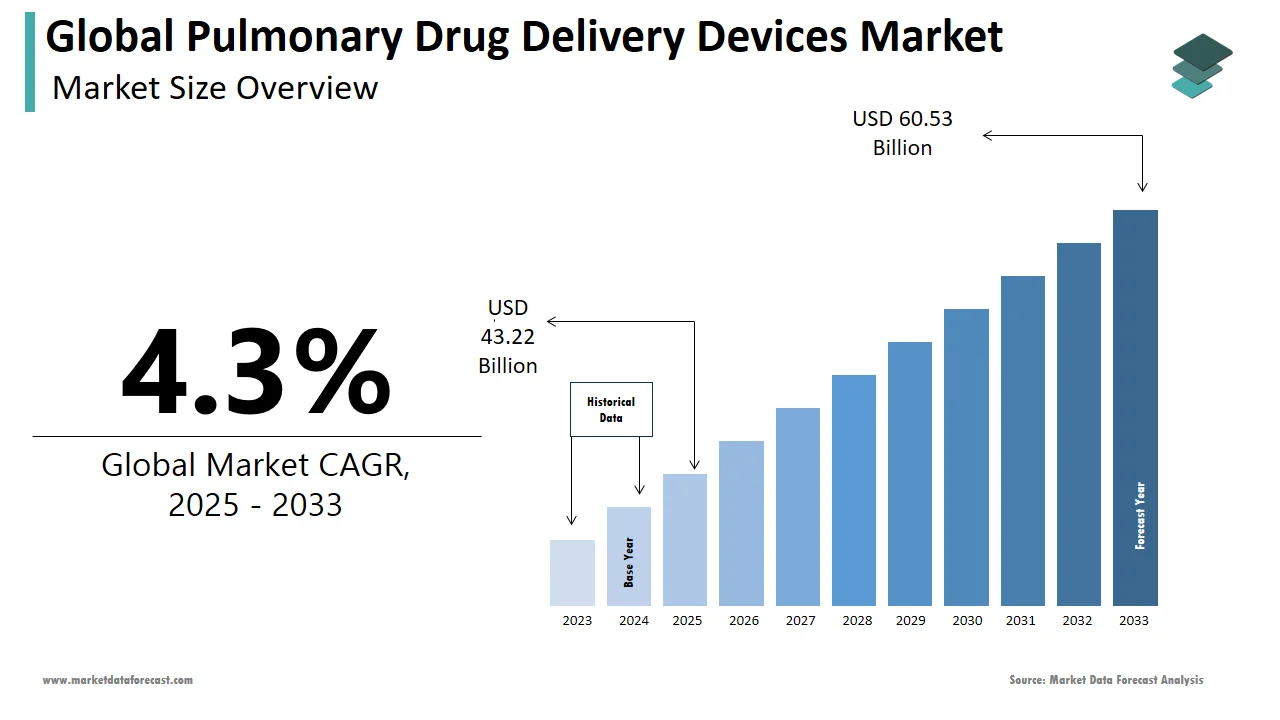
Pulmonary drug delivery devices are specific systems used to deliver drugs to the lungs to treat diseases of the respiratory tract. They are extensively monitored, as the process can be fatal if not performed correctly. This drug delivery method is often preferred because of its non-invasive nature and the fact that the process gives faster results due to speedier administration. The benefits of a large surface area for absorption, high blood circulation, and higher permeability rate have attracted many takers to the method.
MARKET DRIVERS
The growing geriatric population worldwide and the rising prevalence of chronic diseases such as tuberculosis, bronchitis, and chronic obstructive pulmonary disease have helped the pulmonary drug delivery devices market.
The global pulmonary drug delivery devices market is currently divided into nebulizers, dose inhalers, powder inhalers, etc. And these products today are readily available in hospitals, clinics, pharmacies, etc. However, the growing market for medical health and the ever-increasing possibilities in the online market for the same have helped the market reach out to a broader audience. Many attempts are also being made to make the policies more streamlined and more affordable to the government by investing in this industry's research. The limitations of other drug delivery systems compared to the benefits of the pulmonary drug delivery system, like the better penetrability of the drug, minimum dosage requirement, and growing technological advancements, have helped the global pulmonary drug delivery devices market grow worldwide scale.
MARKET RESTRAINTS
However, a few hindrances are a part of the global pulmonary drug delivery devices market. Its high prices, the need for medically trained supervisors, and many regulatory policies must be followed.
REPORT COVERAGE
| REPORT METRIC | DETAILS |
| Market Size Available | 2025 to 2034 |
| Base Year | 2025 |
| Forecast Period | 2026 to 2034 |
| Segments Covered | By Product, Application, Distribution Channel, and Region. |
| Various Analyses Covered | Global, Regional, and Country-Level Analysis, Segment-Level Analysis, Drivers, Restraints, Opportunities, Challenges; PESTLE Analysis; Porter’s Five Forces Analysis, Competitive Landscape, Analyst Overview of Investment Opportunities |
| Regions Covered | North America, Europe, Asia Pacific, Latin America, Middle East & Africa |
| Market Leaders Profiled | AstraZeneca plc., Boehringer Ingelheim Gmbh, GlaxoSmithKline plc, Clement Clarke International, Briggs Healthcare, Novartis AG, Koninklijke Philips N.V., 3M Company, Actelion Pharmaceuticals Ltd, Aerogen, and Others. |
SEGMENTAL ANALYSIS
By Product Insights
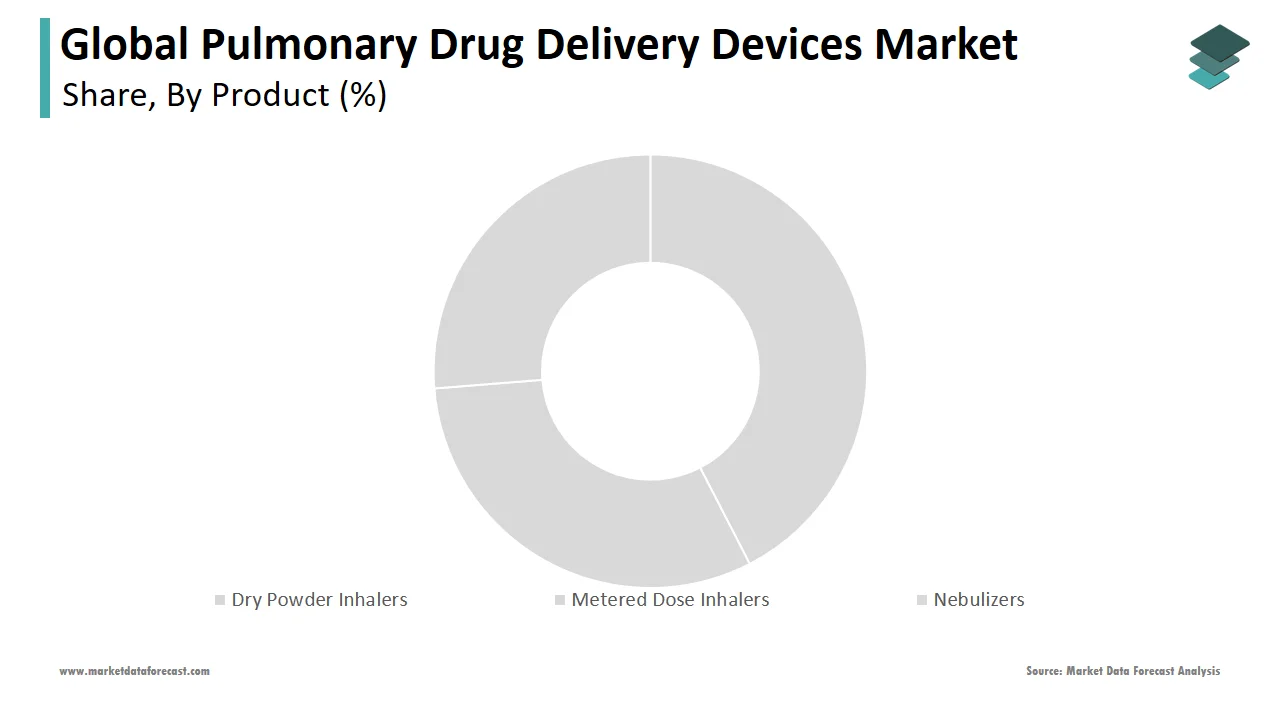
The Metered Dose Inhalers (MDI) segment had the highest market share of 66.7% of the worldwide market in 2022 based on the product. The high acceptance rate of these devices in developing regions such as the Asia Pacific and Latin America and the involvement of global key players in the production of novel MDIs contribute to the segment's revenue. The Dry Powder Inhaler (DPI) market is expected to rise at a healthy pace in the coming years. End users are likely to use these inhalers more due to benefits such as cost-effectiveness, ease of administration, and preparation time, among others.
By Application Insights
Based on the applications, chronic obstructive pulmonary disease is regarded as having the most substantial value in the market share in the forecast period. COPD's exponential rise can be attributed to the disease's high incidence and mortality rates. Revenue created by this segment is growing due to favorable reimbursement policies for COPD treatment and an increase in the number of government and non-government organizations that provide COPD treatment. The asthma segment had the highest market share. Asthma management is thought to begin with an effective inhalation therapy that involves DPIs and MDIs. For many people who have asthma, the demand for and use of asthma management devices such as MDIs and DPIs, boost this application's growth.
By Distribution Channel Insights
By distribution channel, the hospital pharmacies segment dominated the global pulmonary drug delivery device market. Patients prefer hospital pharmacies because they have extensive treatments, care, quick reimbursements, and insurance policies. Furthermore, the segment's growth is expected to be supported by a rise in hospitalizations. However, the e-commerce section is likely to expand with a remarkable growth rate in the coming years. Various factors, such as enhanced healthcare infrastructure in emerging regions and ease of purchase compared to retail or hospital pharmacies, have significantly helped the growth of this distribution channel.
REGIONAL ANALYSIS
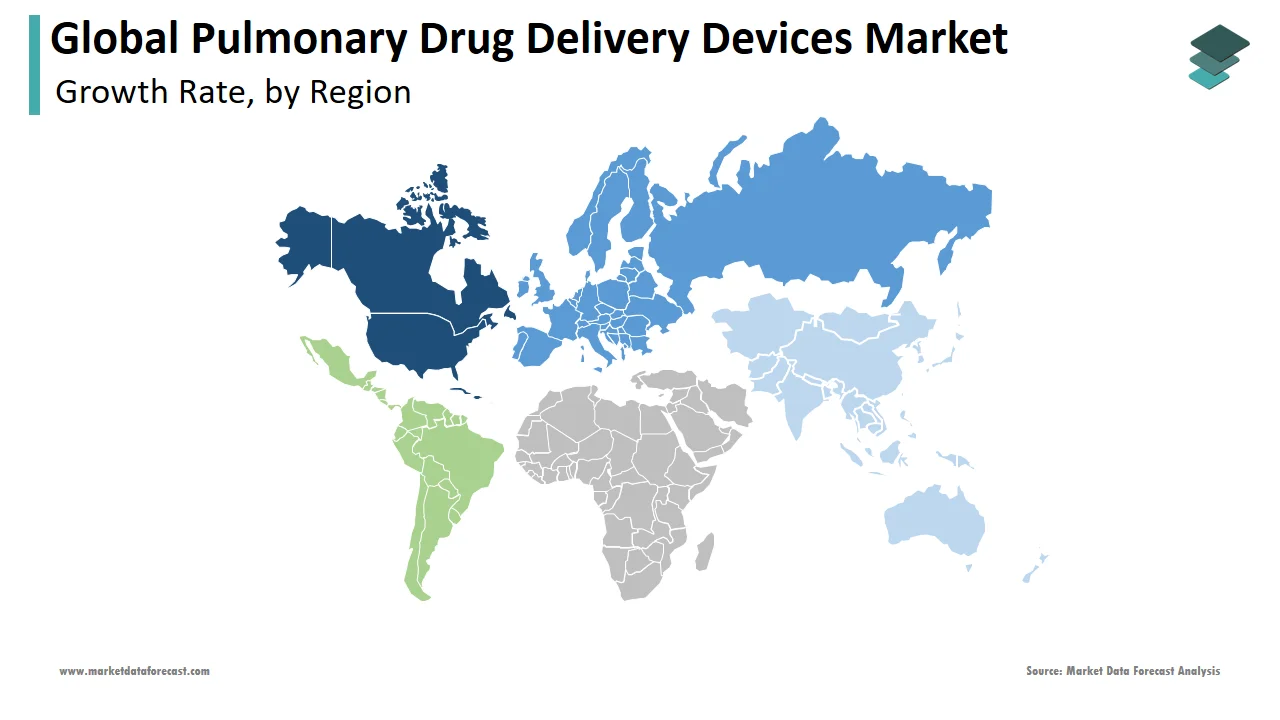
The market for these pulmonary drug delivery devices has been established in developed regions like North America and Europe. North America accounted for the majority of PDDS in 2022, with a market value of USD 14.9 billion. The rising prevalence of diseases like COPD (Chronic Obstructive Pulmonary Disease) and asthma is likely to boost the growth rate of the market. As the number of patients affected by these diseases grows, so does the demand for diagnostic devices like PDDS (Pulmonary Drug Delivery Systems), boosting the region's growth. Furthermore, major pharmaceutical and medical device companies in the area and advanced healthcare infrastructure, an aging population, high disposable income, and lifestyle changes contribute to the market's overall growth in North America.
The Asia Pacific has soon been catching on owing to the growing focus on healthcare in this region. Due to the high prevalence of COPD, which indicates a significant socioeconomic burden in this area, the Asia Pacific region is expected to rise at an exponential rate of 6.2 percent. The continuous rise in the number of asthmatic and allergic rhinitis patients is another major factor expected to boost PDDS market demand in the Asia Pacific region over the forecast period. Additionally, an increase in the number of supporting non-governmental organizations, such as the Asia Pacific Association of Allergy, Asthma, and Clinical Immunology (APAAACI), is expected to raise patient awareness about respiratory treatment disorders, resulting in market development. The Asia Pacific region's growth is also expected to be aided by an increase in R&D activities by key market players to develop novel respiratory devices.
KEY MARKET PLAYERS
Companies leading the global pulmonary drug delivery devices market profiled in this report are
- AstraZeneca plc.
- Boehringer Ingelheim GmbH
- GlaxoSmithKline plc
- Clement Clarke International
- Briggs Healthcare
- Novartis AG
- Koninklijke Philips N.V.
- 3M Company
- Actelion Pharmaceuticals Ltd
- Aerogen
MARKET SEGMENTATION
This research report on the global pulmonary drug delivery devices market has been segmented and sub-segmented based on the product, application, distribution channel, and region.
By Product
- Dry Powder Inhalers
- Single-Dose Inhalers
- Multi-Dose Inhalers
- Metered Dose Inhalers
- Manually-Actuated Pressurized Inhaler
- Breath-Actuated Pressurized Inhaler
- Nebulizers
- Jet Nebulizers
- Ultrasonic Wave Nebulizers
- Vibrating Mesh Nebulizers
By Application
- Asthma
- Chronic Obstructive Pulmonary Disease (COPD)
- Cystic Fibrosis
- Others
By Distribution Channel
- Retail Pharmacies
- Hospital Pharmacies
- E-commerce
By Region
- North America
- The United States
- Canada
- Rest of North America
- Europe
- UK
- France
- Spain
- Germany
- Italy
- Rest of EU
- Asia Pacific
- India
- China
- Japan
- South Korea
- Australia & New Zealand
- Rest of APAC
- Latin America
- Brazil
- Mexico
- Argentina
- Chile
- Rest of LATAM
- Middle East
- Africa