- Product Description Description
- Table of Contents TOC
- List of Table & Figure LOT
- Get Free Sample PDF Sample PDF
Market Size, 2025
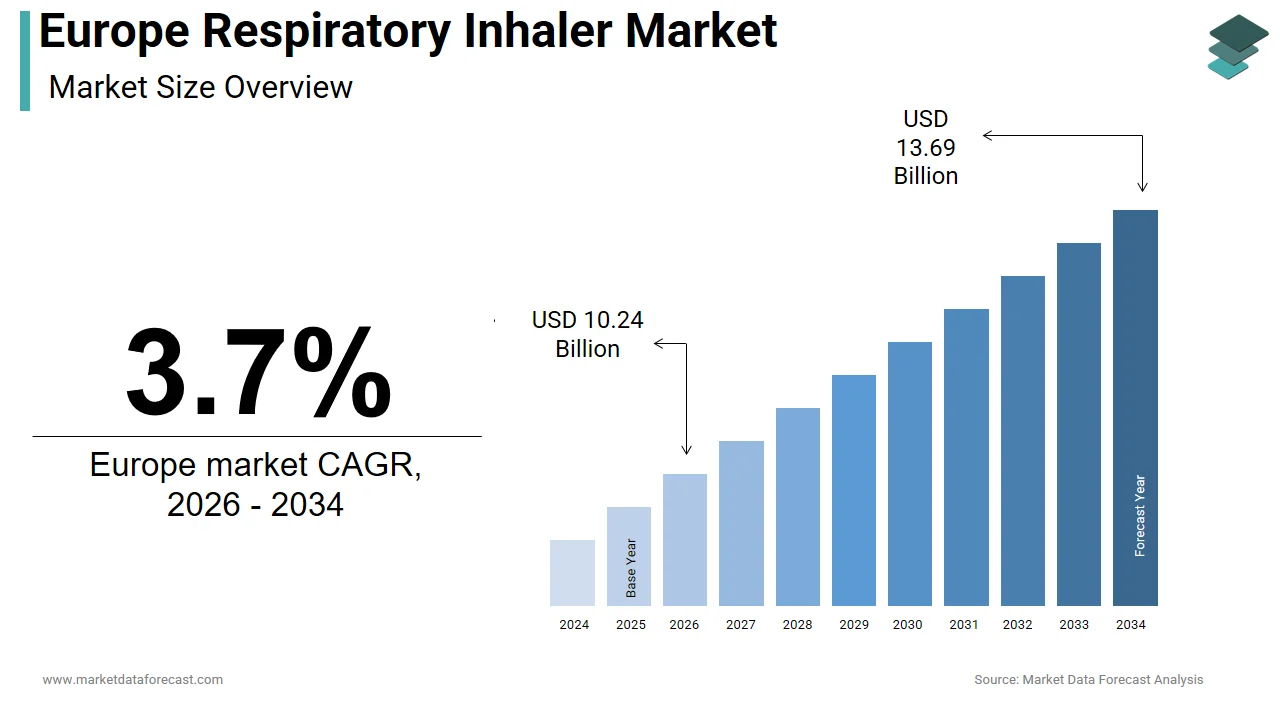
$9.87 BnMarket Estimate, 2026
$10.24 BnMarket Forecast, 2034
$13.69 BnCAGR, 2026–2034
3.7%Europe Respiratory Inhaler Market Report Summary
The Europe respiratory inhaler market was valued at USD 9.87 billion in 2025, is estimated to reach USD 10.24 billion in 2026, and is projected to reach USD 13.69 billion by 2034, growing at a CAGR of 3.7% from 2026 to 2034. The growth of the market is driven by the rising burden of chronic respiratory diseases such as asthma and COPD, Europe’s aging population, and strong clinical reliance on inhaled therapies for long-term disease management. Despite improvements in air quality, most urban populations remain exposed to harmful particulate matter, reinforcing the need for effective inhalation-based treatments. Advanced healthcare infrastructure, standardized treatment guidelines, and expanding access to inhalers across both primary and specialist care settings continue to sustain market growth across the region.
Key Market Trends
- Increasing prevalence of asthma and COPD across European populations.
- Growing demand for elderly-friendly inhaler designs with improved ergonomics and dose accuracy.
- Gradual shift toward propellant-free dry powder inhalers to meet environmental goals.
- Expansion of digital and connected inhalers for adherence monitoring and remote care.
- Rising availability of biosimilar inhaled corticosteroids to improve affordability.
Segmental Insights
Based on product, the metered dose inhalers (MDIs) segment dominated the Europe respiratory inhaler market by holding 48.5% share in 2024. This dominance is driven by long-standing clinical familiarity, rapid drug delivery, and widespread inclusion in national treatment guidelines. MDIs are commonly prescribed across the UK, Germany, and France and are often used with spacer devices to improve usability among children and elderly patients.
Based on technology, the manually operated inhaler devices segment held the largest market share in 2024 due to their simplicity, affordability, and wide accessibility. These devices require no digital infrastructure and remain the preferred option in cost-conscious public healthcare systems.
Based on disease indication, the asthma segment led the market with 54.5% share in 2024, supported by high prevalence, early diagnosis, and standardized treatment protocols across all age groups. Urban air pollution and school-based screening programs continue to drive inhaler usage.
Regional Insights
The Europe respiratory inhaler market is witnessing steady growth across major economies, supported by strong healthcare systems, high disease awareness, and evolving environmental policies.
- Germany was the largest contributor, capturing 22.7% of the market share in 2024, driven by broad reimbursement coverage, standardized treatment guidelines, and growing adoption of environmentally friendly inhalers.
- The United Kingdom followed with 16.1% share, supported by NHS-led asthma management programs, a shift toward low-carbon inhalers, and strict pharmacovigilance systems.
- France remains a key market due to universal healthcare coverage, inhaler standardization policies, and strong pharmaceutical manufacturing presence.
Competitive Landscape
The Europe respiratory inhaler market is characterized by intense competition among multinational pharmaceutical companies, regional generic manufacturers, and emerging digital health players. Established brands maintain dominance through strong regulatory compliance, extensive distribution networks, and long-term clinical validation. Meanwhile, generic and biosimilar inhalers are gaining traction in cost-sensitive markets, increasing price competition and accessibility. Environmental regulations on propellants, fragmented reimbursement policies, and the rise of connected inhalers are reshaping competitive strategies. Companies that combine sustainability, digital innovation, and patient-centric design are best positioned to succeed in Europe’s evolving respiratory care ecosystem.
Prominent companies in the Europe respiratory inhaler market include AstraZeneca, Beximco Pharmaceuticals Ltd., Koninklijke Philips N.V., Merck & Co., Inc., OMRON Healthcare Europe B.V., PARI Medical Holding, Teva Pharmaceutical Industries Ltd., Boehringer Ingelheim GmbH, Cipla Ltd., and GlaxoSmithKline plc.
Europe Respiratory Inhaler Market Size
The size of the Europe respiratory Inhaler market was valued at USD 9.87 billion in 2025. This market is expected to grow at a CAGR of 3.7% from 2026 to 2034 and be worth USD 13.69 billion by 2034 from USD 10.24 billion in 2026.
Respiratory inhalers are portable, handheld medical devices designed to deliver medication directly into the lungs through the act of breathing. Unlike systemic treatments, inhalers minimize adverse effects by delivering medication directly to the lungs, thereby improving patient adherence and quality of life. According to sources, chronic respiratory diseases, including asthma and COPD, represent a substantial and persistent health burden for a significant portion of the adult population across the European Union, with high rates of underdiagnosis and significant impacts on quality of life. Despite long-term improvements in air quality, the vast majority of Europe's urban population continues to be exposed to concentrations of fine particulate matter that exceed the strict health-based guidelines recommended by the World Health Organization. This epidemiological reality, coupled with aging demographics and advanced healthcare infrastructure, has entrenched inhalers as indispensable tools in both primary and specialist respiratory care across the continent.
MARKET DRIVERS
Rising Burden of Chronic Respiratory Diseases Drives Clinical Necessity
The escalating prevalence of asthma and chronic obstructive pulmonary disease across the region propels the growth of the Europe respiratory inhaler market. These conditions impose a substantial public health burden with long-term management heavily reliant on inhaled pharmacotherapy. According to research, A significant portion of the European Union adult population continues to live with diagnosed asthma and COPD, representing a substantial burden of chronic respiratory disease. Data from the Robert Koch Institute indicates that a high number of adults in Germany are affected by asthma, with women experiencing higher prevalence rates than men. Urbanization and environmental degradation have exacerbated this trend. The European Environment Agency emphasizes that the vast majority of people living in urban areas within the European Union are exposed to air pollution levels that exceed World Health Organization health-based guidelines. This prolonged exposure correlates with increased airway inflammation and heightened susceptibility to respiratory exacerbations. Consequently, National treatment guidelines in the UK emphasize the use of inhalers as a foundational, first-line therapy for managing patients across the spectrum of asthma and COPD severity. The resulting clinical imperative ensures sustained and growing utilization of inhalation devices in both community and hospital settings.
Aging Population Intensifies Demand for Self-Managed Chronic Therapies
The region’s rapidly aging demographic structure significantly amplifies the need for user-friendly and reliable respiratory inhalers, which in turn fuels the expansion of the Europe respiratory inhaler market. This is because older adults constitute a high-risk group for chronic respiratory conditions. The population in the European Union is experiencing an increase in the proportion of older individuals, a trend expected to continue over the coming years. Older age groups are associated with a higher prevalence of Chronic Obstructive Pulmonary Disease (COPD). A significant majority of COPD diagnoses within Europe are found in older adults. Age-related decline in lung function, compounded by decades of environmental or occupational exposure, necessitates lifelong pharmacological intervention. Inhalers offer a practical solution enabling independent disease management at home, thus reducing hospitalization pressure. As per studies, a portion of Europeans aged 65 and above manage at least two chronic conditions simultaneously, making adherence and dosing accuracy critical. In response, manufacturers have engineered inhalers with enhanced ergonomics, dose counters, and audio feedback features tailored to elderly users with reduced dexterity or cognitive capacity. National health systems across France, Italy, and Sweden now routinely prescribe dry powder inhalers with low inspiratory resistance to accommodate age-related declines in peak inspiratory flow, ensuring effective drug deposition and therapeutic outcomes.
MARKET RESTRAINTS
Stringent Environmental Regulations on Propellants Limit Formulation Flexibility
The European Union’s aggressive phase-down of hydrofluoroalkane propellants due to their high global warming potential has constrained formulation options for pressurized metered dose inhalers, which remain the most widely prescribed inhaler type. This restricts the growth of the Europe respiratory inhaler market. Propellants historically used in inhalation products are subject to increased oversight under existing environmental regulations. The ongoing use of specific chemical agents in medical devices is being assessed alongside broader strategies to control atmospheric emissions. Regulatory approval for HFOs in pulmonary applications is still pending, hampered by concerns over their long-term stability and respiratory impact. This regulatory bottleneck forces manufacturers to either maintain legacy propellant systems under tightening quotas or shift investment toward dry powder or soft mist platforms, which require entirely different drug formulations and device engineering. Consequently, product development cycles have lengthened, and reformulation costs have risen.
Complex Device Handling Reduces Real-World Treatment Efficacy
Many patients across Europe fail to use respiratory inhalers correctly, which directly affects clinical outcomes and contributes to avoidable exacerbations, and thereby hinders the expansion of the Europe respiratory inhaler market. According to a study, a large-scale observational study indicated that a significant majority of patients with chronic respiratory conditions fail to use their inhalers correctly, frequently committing errors that compromise effective medication delivery. These errors, such as inadequate inhalation force, poor coordination, or failure to exhale before actuation, result in suboptimal drug deposition in the lungs. The problem is particularly acute among elderly and pediatric populations. Evidence suggests that a considerable proportion of older patients with chronic obstructive pulmonary disease struggle to generate the necessary inspiratory force required for optimal dry powder inhaler performance. This gap between intended and actual drug delivery leads to poor symptom control, increased rescue medication use, and higher hospital admission rates. National health authorities. The consequence is a persistent disconnect between therapeutic potential and real-world effectiveness, which not only diminishes patient quality of life but also inflates healthcare costs across the region.
MARKET OPPORTUNITIES
Integration of Digital Health Technologies Creates New Value-Based Care Pathways
The incorporation of connected inhalers with embedded sensors and mobile health applications is opening novel opportunities for personalized respiratory management and outcome-based reimbursement models, which are anticipated to drive the growth of the Europe respiratory inhaler market. These smart devices automatically record dose timing, inhalation flow, and adherence patterns, then transmit data to clinicians via cloud platforms, enabling proactive intervention. Several nations have begun implementing healthcare agreements that connect the payment for medical devices to measurable improvements in patient wellness and consistent usage patterns. Regional health databases are increasingly incorporating information from networked medical tools to provide a more comprehensive view of respiratory care. Health insurance providers in certain regions have expanded their coverage to include digital platforms that assist individuals in managing chronic respiratory conditions. Regulatory bodies are increasingly acknowledging the role of connected technology in supporting clinical outcomes for specialized patient populations. The integration of real-time data into health monitoring systems is becoming a recognized method for managing patient care and resource utilization. Device manufacturers have responded by partnering with telehealth providers and electronic health record vendors to ensure seamless data interoperability. This convergence of pharmaceutical devices and digital ecosystems positions connected inhalers as a cornerstone of next-generation respiratory care in Europe.
Expansion of Biosimilar Inhaled Corticosteroids Lowers Treatment Barriers
The emergence of biosimilar and off-patent inhaled corticosteroids is significantly broadening access to essential respiratory therapy across the region, particularly in cost-constrained healthcare systems, which creates potential prospects for the Europe respiratory inhaler market. The expiration of intellectual property protections for primary treatment molecules has facilitated the introduction of alternative pharmaceutical versions. Increased competition within the pharmaceutical market has led to a noticeable downward trend in the cost of specific respiratory formulations. Reductions in medication costs have allowed public health systems to broaden the scope of available treatment options for patients. Regulatory bodies have expanded their approved medication lists to include a more diverse range of therapeutic choices. There is a visible shift in prescription patterns toward more cost-effective treatment options across several regional healthcare markets. Enhanced affordability not only improves medication adherence among low-income populations but also allows physicians to initiate combination therapy earlier in the disease course. This democratization of access is transforming inhalers from premium specialty products into foundational public health tools across diverse European settings.
MARKET CHALLENGES
Counterfeit and Substandard Inhalers Undermine Treatment Safety
The proliferation of falsified respiratory inhalers, particularly through unregulated online pharmacies, poses a serious threat to patient safety and therapeutic integrity across the region, which ultimately hampers the growth of the Europe respiratory inhaler market. These illicit products often contain incorrect drug concentrations, inactive ingredients, or microbial contaminants that can trigger life-threatening bronchospasm or systemic toxicity. Authorities have observed a pattern where unauthorized medical devices frequently imitate high-demand respiratory treatments used for conditions like asthma. International enforcement efforts indicate that respiratory products have become a significant portion of illicitly distributed medications across the continent. Disparities in regulatory monitoring across certain regions appear to correlate with a higher prevalence of substandard medical goods in unofficial supply chains. A shift in the illicit market suggests that basic medical inhalers are increasingly targeted for distribution through informal channels. Analysis of seized materials suggests that quality control issues are a persistent concern within unregulated pharmaceutical markets. Patients often cannot distinguish authentic from fake devices due to sophisticated packaging replication. This underground trade not only endangers lives but also erodes trust in legitimate inhalation therapy and complicates pharmacovigilance efforts by introducing untraceable adverse events into the healthcare system.
Incomplete Harmonization of Reimbursement Policies Hampers Equitable Access
Significant disparities in inhaler reimbursement criteria across European Union member states create inequitable access to optimal respiratory care and fragment market predictability for manufacturers, which constrains the expansion of the Europe respiratory inhaler market. Coverage for smart and combination inhalers is widespread in countries like Germany and the Netherlands, but elsewhere, access is limited by stringent, cost-conscious, or severity-based criteria. Across the European Union, a majority of member states still do not fully reimburse advanced dry powder inhalers with built-in counters, leading to inconsistent patient access to technology that improves treatment adherence. In Greece and Portugal, for example, patients must pay out of pocket for newer inhaler platforms unless they meet narrow clinical thresholds, such as two hospitalizations in the past year. This patchwork approach leads to treatment delays and suboptimal outcomes. In European countries with lower reimbursement rates for maintenance medications, patients are significantly more likely to rely on quick-relief bronchodilators rather than consistent, long-term anti-inflammatory inhalers. The lack of harmonized health technology assessment frameworks further discourages investment in next-generation inhalation systems in smaller markets. The EU’s objective of providing universal, high-quality respiratory care will remain compromised by regional disparities until reimbursement frameworks are synchronized with established clinical standards.
REPORT COVERAGE
| REPORT METRIC | DETAILS |
| Market Size Available | 2025 to 2034 |
| Base Year | 2025 |
| Forecast Period | 2026 to 2034 |
| Segments Covered | By Product, Technology, Disease Indication, and Country. |
| Various Analyses Covered | Global, Regional and Country-Level Analysis, Segment-Level Analysis, Drivers, Restraints, Opportunities, Challenges; PESTLE Analysis; Porter’s Five Forces Analysis, Competitive Landscape, Analyst Overview of Investment Opportunities |
| Countries Covered | UK, France, Spain, Germany, Italy, Russia, Sweden, Denmark, Switzerland, Netherlands, Turkey, Czech Republic, and the rest of Europe |
| Market Leaders Profiled | AstraZeneca, Beximco Pharmaceuticals Ltd., Koninklijke Philips N.V., Merck & Co., Inc., OMRON Healthcare Europe B.V., PARI Medical Holding, and Teva Pharmaceutical Industries Ltd, Boehringer Ingelheim GmbH, Cipla Ltd., and GlaxoSmithKline plc. |
SEGMENTAL ANALYSIS
By Product Insights
The metered dose inhalers segment was the largest in the Europe respiratory inhaler market by holding a 48.5% share in 2024. The dominance of the metered dose inhalers segment is driven by decades of clinical familiarity, rapid drug delivery, and widespread inclusion in national treatment guidelines. In the UK, metered-dose inhalers are the predominant type of inhaler prescribed to patients. The format’s compatibility with spacer devices further enhances usability among children and elderly patients. Valved holding chambers are frequently recommended in conjunction with metered-dose inhalers for pediatric asthma patients to facilitate proper medication delivery. Additionally, these devices benefit from extensive generic availability following the expiration of key patents, which has reduced out-of-pocket costs for patients in publicly funded systems. Across several large European countries, including Germany, the number of prescribed pressurized metered-dose inhaler doses has been significantly higher compared to dry powder inhalers in recent years.
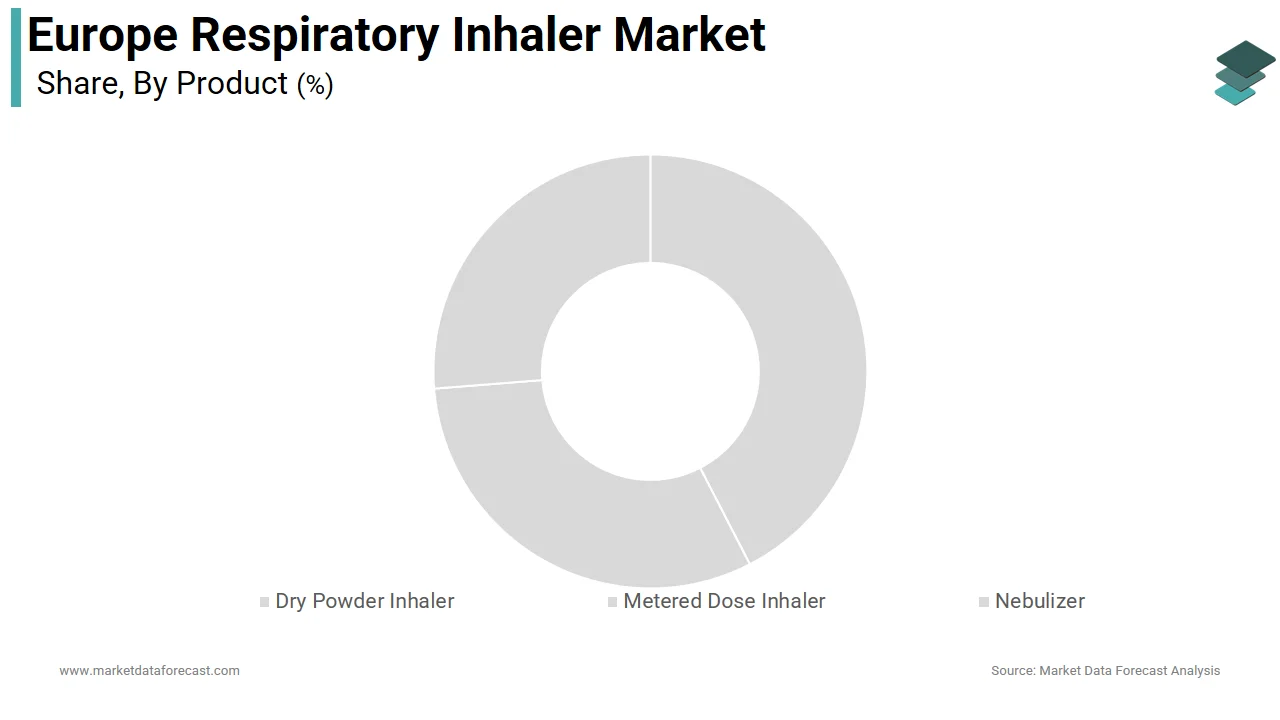
The dry powder inhalers segment is likely to experience the fastest CAGR of 8.7% between 2025 and 2033 due to environmental sustainability advantages, the absence of propellants, and superior patient adherence in real-world settings. Dry powder inhalers are associated with significantly lower carbon emissions per dose compared to hydrofluoroalkane-based metered dose inhalers, aligning with efforts to reduce the environmental footprint of healthcare products. Some European countries are increasingly prioritizing dry powder inhalers for chronic obstructive pulmonary disease management. Policy shifts in various nations indicate a trend toward adopting dry powder platforms as a preferred option for new patient initiations when clinically appropriate. Furthermore, clinical evidence supports better long-term outcomes. Major pharmaceutical companies have responded by launching next-generation devices with dose counters, low resistance airflow, and integrated digital sensors, further boosting adoption across outpatient clinics.
By Technology Insights
The manually operated inhaler devices segment dominated the Europe respiratory inhaler market by accounting for a substantial share in 2024. The supremacy of the manually operated inhaler devices segment is attributed to universal accessibility, low manufacturing complexity, and seamless integration into existing healthcare workflows. General practitioners in several European nations often prioritize traditional manual inhalation devices as the primary treatment for respiratory conditions, largely due to their proven reliability, ease of use, and accessibility across diverse, rural, or underserved patient populations. These devices require no batteries, software updates, or connectivity infrastructure, making them resilient in regions with limited digital health support. Data from French health authorities indicates that conventional, non-digital inhalers continue to make up the vast majority of reimbursed devices, driven by public health system efforts to control expenditure and manage long-term, costly diseases. Additionally, patient familiarity built over decades of use ensures high acceptance, particularly among older adults who may find digital interfaces challenging. This operational simplicity, combined with robust supply chains and generic competition, sustains manual inhalers as the backbone of respiratory care across Europe.
The digitally operated inhaler devices segment is on the rise and is expected to be the fastest-growing segment in the market by witnessing a CAGR of 21.3% during the forecast period, owing to the EU’s strategic push toward value-based healthcare, predictive analytics, and remote patient monitoring. Several European nations are piloting reimbursement models that link funding for inhalers to data regarding patient usage. In Germany, a major statutory health insurer has introduced a digital program for severe asthma patients that covers smart inhalers, following a pilot that indicated fewer hospital readmissions. Sweden has incorporated real-time inhaler usage data into its national registry, allowing clinicians to potentially act before exacerbations take place. These initiatives reflect a broader shift toward using connected device data to manage asthma treatment and support clinical decision-making. Device manufacturers have accelerated innovation through partnerships with telehealth firms. These developments position digitally operated inhalers as catalysts for precision respiratory medicine across Europe.
By Disease Indication Insights
The asthma segment led the Europe respiratory inhaler market by capturing a 54.5% share in 2024. The prominence of the asthma segment is credited to high prevalence, early diagnosis, and standardized treatment protocols across all age groups. Asthma represents a significant, widespread chronic disease burden, affecting a large portion of both adult and child populations across the European Union. National guidelines such as those from the UK’s National Institute for Health and Care Excellence consistently position inhaled corticosteroids as the cornerstone of maintenance therapy, leading to sustained inhaler utilization from childhood through adulthood. School-based screening programs have further expanded diagnosis. A high proportion of German children with asthma are managed using regular, prescribed inhaler medication. Urban air pollution also plays a role. Living in urban areas with high traffic-related pollution, particularly high nitrogen dioxide concentrations, is associated with a greater, established risk of children developing persistent asthma compared to those in cleaner environments. This confluence of epidemiological, clinical, and environmental factors ensures asthma remains the primary driver of inhaler demand across the region.
The chronic obstructive pulmonary disease segment is expected to exhibit a noteworthy CAGR of 7.9% from 2025 to 2033. The rapid growth of the chronic obstructive pulmonary disease segment is propelled by Europe’s aging demographic, rising smoking legacy effects, and improved diagnostic recognition in primary care. An aging population in Europe contributes to a higher prevalence of chronic lung conditions among older age groups. Certain southern European countries have documented higher-than-average rates of airflow limitation among older residents, while a notable increase in objective lung function testing in general practice has been observed recently, correlating with earlier identification of COPD. Increased awareness is shifting diagnostic patterns, leading to more cases being identified. Consequently, long-acting bronchodilators and combination inhalers are being initiated sooner in the disease trajectory. Reimbursement expansion supports this trend. French health authorities have accelerated widespread access to advanced, combination inhalers, driving adoption among newly diagnosed, high-risk individuals and establishing modern, pharmacological maintenance as a rapidly growing segment of care for chronic respiratory conditions.
COUNTRY-LEVEL ANALYSIS
Germany Respiratory Inhaler Market Analysis
Germany was the top performer in the Europe respiratory inhaler market, accounting for a share of 22.7% in 2024. The dominance of the German market is driven by its robust healthcare infrastructure, high disease awareness, and advanced reimbursement policies. The country’s statutory health insurance system covers a significant share of the population, ensuring broad access to both generic and innovative inhalers. The Federal Joint Committee ensures that essential inhaler treatments are widely and extensively covered by statutory health insurance in Germany, though the specific level of reimbursement can vary depending on the product and patient co-payments. The nation also leads in clinical implementation of treatment guidelines. Healthcare professionals are increasingly being encouraged to follow standardized guidelines and algorithms when selecting inhalers to improve patient outcomes and ensure clinically appropriate choices. Environmental regulations further shape the market. There is a growing awareness and focus within German environmental and health sectors on reducing the carbon footprint of healthcare, including promoting the use of more climate-friendly inhaler types, such as dry powder inhalers, when clinically appropriate. Additionally, the country hosts major R and D centers for pharmaceutical companies, driving local innovation in inhalation technology and digital integration.
United Kingdom Respiratory Inhaler Market Analysis
The United Kingdom followed closely in the Europe respiratory inhaler market by capturing a 16.1% share in 2024. The growth of the UK market is fuelled by its integrated National Health Service and strong emphasis on asthma prevention and management. The United Kingdom continues to have one of the highest levels of asthma prevalence in Europe, with a large portion of the population requiring regular, active treatment for the condition. In line with national environmental goals, the UK healthcare system is actively shifting away from conventional, higher-emission inhalers toward lower-carbon alternatives, with a growing preference for breath-actuated devices. National clinical guidance now prioritizes the regular assessment of inhaler techniques during respiratory consultations, aiming to reduce device errors and improve patient care outcomes. Furthermore, the UK’s Medicines and Healthcare products Regulatory Agency actively monitors real-world effectiveness through its Yellow Card pharmacovigilance system, enhancing post market safety oversight and reinforcing public trust in inhalation therapy.
France Respiratory Inhaler Market Analysis
France holds a significant position in the Europe respiratory inhaler market due to universal healthcare coverage, proactive screening, and strong pharmaceutical manufacturing presence. France’s national health system continues to show high usage of inhaled medications for chronic respiratory conditions, with a significant majority of dispensed treatments consisting of combination therapies to improve patient adherence and disease control. The country’s Haute Autorité de Santé has championed inhaler standardization, mandating that all new prescriptions include devices with dose counters and low error potential. Environmental considerations are also influential. Driven by national and European environmental goals, France is actively implementing strategies to lower the carbon footprint of respiratory care, accelerating the transition from propellant-based inhalers to environmentally friendly, propellant-free alternatives. Additionally, Sanofi and other domestic manufacturers collaborate with hospital pharmacies to conduct inhaler training workshops. This triad of policy, industry, and education sustains France as a high-compliance and high-innovation market.
Italy Respiratory Inhaler Market Analysis
Italy witnessed a steady growth in the Europe respiratory inhaler market owing to an aging population high smoking legacy, and regional healthcare disparities. In Italy, the older population represents a significant and growing demographic, with a high prevalence of chronic obstructive pulmonary disease (COPD) among individuals aged sixty-five and over. The Ministry of Health’s 2023 respiratory guidelines have focused on expanding the reimbursement of crucial long-acting bronchodilators to improve accessibility in underserved regions, including the south. Despite these advancements in access, poor inhaler technique remains a critical issue; in response, a nationwide initiative has been launched to train patients on correct inhaler usage directly within community pharmacies. Italy also hosts key manufacturing sites for international pharmaceutical firms, enabling rapid distribution of both generic and branded inhalers across Southern Europe.
Sweden Respiratory Inhaler Market Analysis
Sweden is anticipated to expand in the Europe respiratory inhaler market from 2025 to 2033 due to its leadership in sustainable healthcare and digital integration. The transition to specific types of inhalers for new respiratory patients is aligning with broader environmental sustainability initiatives within the healthcare sector. Prescription data systems are enabling the tracking of device usage in relation to patient health outcomes and adherence. The utilization of smart, connected devices appears to correlate with a reduction in urgent care visits for individuals with complex asthma conditions. Mandated environmental disclosures for medical devices are influencing a shift in prescription patterns away from certain propellant-based systems. Sweden’s combination of data-driven care, environmental policy, and patient-centric design positions it as a model for future-oriented respiratory therapy in Europe.
COMPETITIVE LANDSCAPE
The Europe respiratory inhaler market features intense competition among multinational pharmaceutical leaders, regional generic manufacturers, and emerging digital health entrants. Established players leverage decades of clinical validation, robust regulatory dossiers, and extensive distribution networks to maintain dominance, particularly in Western Europe. Simultaneously, generic and biosimilar inhalers are gaining traction in cost-sensitive markets like Italy, Spain, and Eastern Europe, pressuring pricing and accelerating market penetration of affordable alternatives. Innovation remains a key differentiator with companies competing on device usability, environmental impact, and digital enablement. Regulatory complexity adds another layer as firms navigate divergent national reimbursement policies and evolving propellant restrictions under EU climate directives. The rise of connected inhalers has also attracted tech health startups, creating new partnerships and competitive threats. This multifaceted landscape drives continuous investment in R and D, patient education, and sustainability initiatives as companies strive to balance therapeutic excellence with public health and planetary responsibility.
KEY MARKET PLAYERS
The leading companies operating in the Europe respiratory inhaler market include:
- AstraZeneca
- Beximco Pharmaceuticals Ltd.
- Koninklijke Philips N.V.
- Merck & Co., Inc.
- OMRON Healthcare Europe B.V.
- PARI Medical Holding
- Teva Pharmaceutical Industries Ltd.
- Boehringer Ingelheim GmbH
- Cipla Ltd.
- GlaxoSmithKline plc
TOP PLAYERS IN THE MARKET
- GlaxoSmithKline maintains a leading role in the Europe respiratory inhaler market through its extensive portfolio of branded and generic inhalation therapies, including Advair and Trelegy. The company has significantly advanced dry powder inhaler technology with its proprietary Ellipta platform, known for consistent dose delivery and user-friendly design. It has also partnered with European health systems to integrate digital adherence tools into its inhalers, enabling real-time monitoring for clinicians. These initiatives reinforce GSK’s position as an innovator in both therapeutic efficacy and environmental responsibility within the European respiratory care landscape.
- AstraZeneca contributes prominently to the Europe respiratory inhaler market with its Symbicort and Fasenra franchises, which target both asthma and COPD through differentiated mechanisms of action. The company has pioneered the use of digital health by embedding sensors into its Pressair and Breezhaler devices to track usage and inhalation technique. It also invested in next-generation formulations that reduce particle size for enhanced lung deposition. These actions underscore AstraZeneca’s strategy to merge pharmaceutical science with digital innovation to improve real-world patient outcomes across Europe.
- Boehringer Ingelheim plays a critical role in the Europe respiratory inhaler market through its Spiriva and Striverdi products delivered via the Respimat soft mist inhaler platform. This device offers slow-moving aerosol clouds that improve lung deposition, especially in elderly patients with low inspiratory flow. The company has expanded access by securing full reimbursement for Respimat in multiple Southern and Eastern European countries. It also reinforced its environmental commitment by eliminating chlorofluorocarbon propellants decades ahead of regulation. These efforts highlight its focus on patient-centric design and public health partnerships across European healthcare systems.
TOP STRATEGIES USED BY THE KEY MARKET PARTICIPANTS
Key players in the Europe respiratory inhaler market prioritize the development of propellant-free and low-carbon inhaler platforms to comply with stringent environmental regulations. They actively integrate digital sensors and mobile health applications to enable adherence monitoring and remote patient management aligned with value-based care models. Companies are expanding access through strategic reimbursement negotiations and inclusion in national treatment guidelines across diverse healthcare systems. Investment in next-generation drug formulations enhances lung deposition and reduces dosing frequency, improving patient compliance. Collaborations with pharmacies, hospitals, and telehealth providers strengthen real-world implementation and technique training. Additionally, firms are tailoring device ergonomics for elderly and pediatric populations to address real-world usage errors and ensure therapeutic effectiveness across all age groups.
MARKET SEGMENTATION
This Europe respiratory Inhaler market research report is segmented and sub-segmented into the following categories.
By Product
- Dry Powder Inhaler
- Metered Dose Inhaler
- Nebulizer
By Technology
- Manually Operated Inhaler Devices
- Digitally Operated Inhaler Devices
By Disease Indication
- Asthma
- COPD
- Pulmonary Arterial Hypertension
- Other Respiratory Disease
By Country
- UK
- France
- Spain
- Germany
- Italy
- Russia
- Sweden
- Denmark
- Switzerland
- Netherlands
- Turkey
- Czech Republic
- Rest of Europe