- Product Description Description
- Table of Contents TOC
- List of Table & Figure LOT
- Get Free Sample PDF Sample PDF
Market Size, 2025
$2.61 BnMarket Estimate, 2026
$2.76 BnMarket Forecast, 2034
$4.27 BnCAGR, 2026–2034
5.62%Global Non-Dairy Creamer Market Size, Share, Trends & Forecast (2026-2034)
- Market Scope: Comprehensive global beverage and food ingredient intelligence tracking non-dairy creamers across form, nature, flavour, end use, sales channel, and regional frameworks.
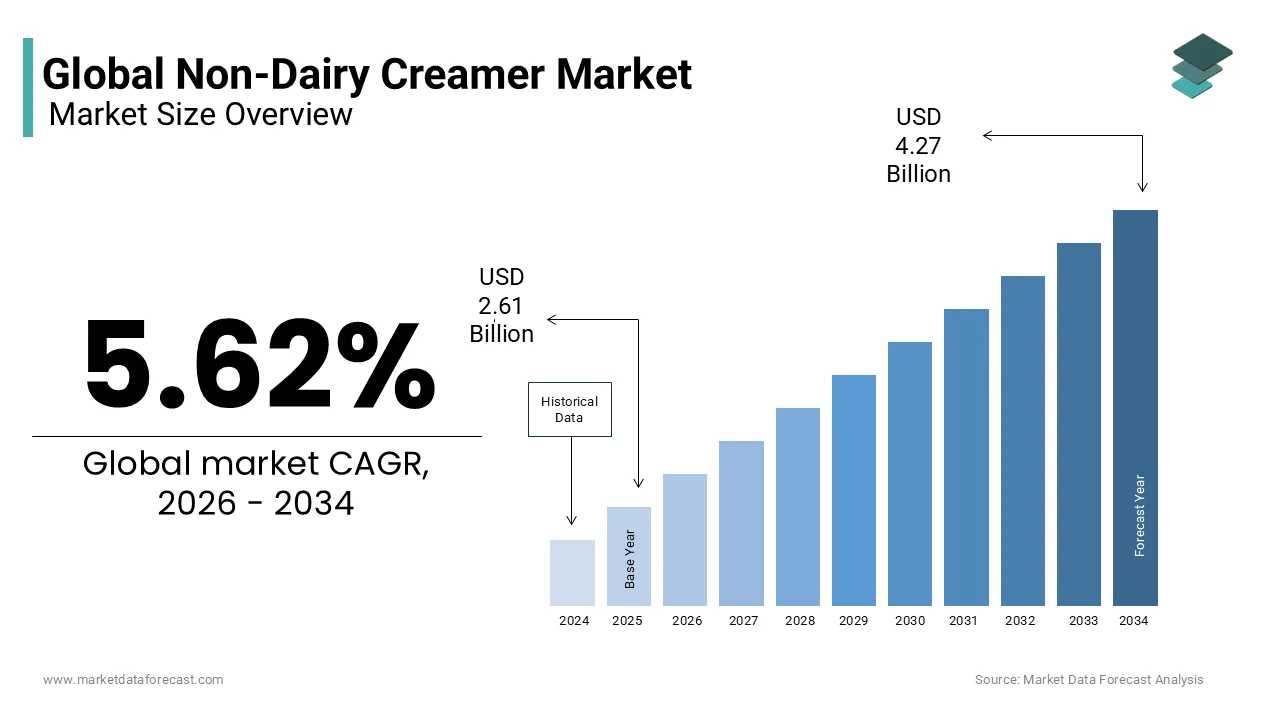
- Market Valuation: Valued at USD 2.61 billion in 2025, estimated at USD 2.76 billion in 2026, and projected to reach USD 4.27 billion by 2034, growing at a steady CAGR of 5.62% from 2026 to 2034.
- Primary Growth Drivers: Exponential rise in global coffee and tea consumption habits, increasing prevalence of lactose intolerance, and expanding adoption of vegan and plant-based diets.
Key Global Non-Dairy Creamer Segment Metrics (2026–2034)
| Category | Leading Segment (2025/2026 Position) | Fastest-Growing Segment |
|---|---|---|
| By Form | Powdered (dominating due to superior cost efficiency, extended shelf life, and logistical ease) | Liquid (projected at a CAGR of 6.8% driven by clean-label preferences and specialty coffee culture) |
| By Nature | Conventional (holding a major share due to affordability and widespread mass-market retail availability) | Organic (growing at a CAGR of 10.1% fueled by demand for chemical-free and sustainable products) |
| By Flavour | Original (capturing majority share via universal beverage pairing and cost-effective manufacturing) | Hazelnut (expanding at a CAGR of 9.8% driven by gourmet beverage trends and natural flavor extracts) |
Major Industry Players & Market Structure
Market Structure: Competitive global landscape featuring multinational food processing corporations, dairy alternative specialists, and ingredient suppliers competing on clean-label reformulations, cost efficiency, and natural flavour innovation.
Key Market Players: Rich Products Co., The Whitewave Foods Company, Wenhui Food, Sugar Foods Corporation, Bigtree Group, Yearrakarn Co. Ltd, FrieslandCampina, PT. Menara Sumberdaya, Pulmuone Foods USA, Nestle, and PT. Santos Premium Krimer.
Global Non-Dairy Creamer Market Size
The global non-dairy creamer market size was valued at USD 2.61 billion in 2025 and is expected to reach USD 4.27 billion by 2034 from USD 2.76 billion in 2026. The market is growing at a CAGR of 5.62% during the forecast period.
A non-dairy creamer is a liquid or powder food item used to replace milk or cream in drinks like tea and coffee. It adds a rich, milky taste and makes beverages look creamier. These products primarily utilise ingredients such as corn syrup solids, vegetable oils, and sodium caseinate or, increasingly, plant proteins from soy, almonds and oats to provide richness without lactose. The sector serves critical industries including coffee shops, tea houses, bakeries, and food service establishments where consistency, shelf stability and cost efficiency are paramount. According to the International Coffee Organisation, global coffee consumption expanded to 177 million bags during the 2023/2024 coffee year, driven primarily by non-producing countries. As per the Food and Agriculture Organisation, rapid urbanisation and expanding household incomes in China and India remain the primary structural drivers boosting global tea consumption volumes. Regulatory bodies such as the Food and Drug Administration maintain strict labelling standards to distinguish between dairy-derived and plant-based ingredients, ensuring consumer transparency. The evolution of clean label trends has prompted manufacturers to reformulate products to remove hydrogenated oils and artificial additives. This convergence of dietary necessity, cultural preference, and industrial utility defines the current landscape of the non-dairy creamer industry.
MARKET DRIVERS
Surging Global Coffee and Tea Consumption Habits
The exponential growth in coffee and tea consumption worldwide is a primary driving factor for the Non Dairy Creamer Market. Coffee shops and quick service restaurants rely heavily on creamers to standardise flavour profiles and enhance customer experience. According to the International Coffee Organisation, global coffee exports fell by 5.7% during the cumulative 2022/23 coffee year to July due to macroeconomic shifts affecting trade flows. As per the China Coffee Association in Beijing, the annual growth rate of coffee consumption in China reaches 15% due to expanding urban markets and the introduction of new retail models. Tea remains a staple in many Asian and Middle Eastern cultures where adding creamer is a traditional practice. According to the UK Tea and Infusions Association, regular black tea remains the most popular drink consumed in Britain apart from tap water, with over 100 million cups enjoyed every day. Consumers increasingly prefer the convenience of single-serve packets and liquid creamers, which offer longer shelf life than fresh milk. The expansion of café chains in Southeast Asia and Latin America further amplifies this trend. Baristas and home users alike seek products that foam well and resist curdling in hot acidic beverages. This consistent daily consumption pattern ensures a stable and growing revenue stream for creamer manufacturers. The integration of creamers into ready-to-drink bottled beverages also expands the application scope beyond hot drinks.
Rising Prevalence of Lactose Intolerance and Veganism
The increasing awareness of lactose intolerance and the ethical shift toward veganism further boost the expansion of the Non Dairy Creamer Market. As per the National Institutes of Health, approximately 65% of the world's population loses the ability to properly digest lactose after childhood, altering global consumer demands for traditional dairy products. According to a systematic review published in The Lancet Gastroenterology & Hepatology, the prevalence of lactose malabsorption in East Asia ranges between 90% and 100% among adults, accelerating regional market penetration of plant-based milks. As per the European Commission, the quantity of European Union fresh dairy products in net trade is projected to reach just over 1.08 million tonnes in 2030, marking an ongoing volume expansion across standard dairy sectors. Consumers actively seek products free from animal derivatives due to concerns about animal welfare and environmental sustainability. Major food service providers are reformulating menus to include oat-, almond, and soy-based creamers to cater to these dietary restrictions. The availability of certified vegan and non-GMO labels influences purchasing decisions among health-conscious buyers. Social media campaigns and celebrity endorsements have normalized plant based diets, reducing stigma and encouraging trial. This demographic shift is not limited to niche groups but has entered the mainstream, compelling manufacturers to diversify their ingredient sources. The demand for allergen-free options further supports this driver as consumers avoid milk proteins for medical reasons.
MARKET RESTRAINTS
Health Concerns Regarding Trans Fats and Artificial Additives
Stringent regulatory actions and growing consumer aversion to trans fats and artificial ingredients are major limitations on the traditional segment in the Non Dairy Creamer Market. Many conventional creamers rely on partially hydrogenated vegetable oils, which are a primary source of industrial trans fats linked to cardiovascular diseases. According to the World Health Organisation, a strategic partnership accelerated progress toward the global elimination of industrially produced trans fats by 2023, prompting policy implementations across several member nations. As per the Food and Drug Administration, a final determination released in June 2015 established that partially hydrogenated oils are not generally recognised as safe for use in human food. However, replacing these fats with healthier alternatives often increases production costs and alters the texture and stability of the creamer. Consumers are increasingly scrutinising ingredient lists, avoiding products with high sugar content, corn syrup solids, and artificial flavours. According to an International Food Information Council survey, up to 60% of consumers in European markets prioritise food and beverages with natural formulations to actively avoid artificial ingredients. This pressure forces companies to invest in expensive research and development to create clean-label versions that maintain performance. The higher price point of these healthier alternatives can deter price-sensitive consumers, particularly in developing markets. Negative publicity surrounding the health impacts of processed food ingredients continues to dampen enthusiasm for standard non-dairy creamers.
Volatility in Raw Material Prices and Supply Chain Disruptions
Fluctuations in the prices of key raw materials, such as vegetable oils, corn syrup, and plant proteins, also inhibit the stability of the Non Dairy Creamer Market. The non-dairy creamer industry is highly dependent on agricultural commodities, which are subject to weather conditions, geopolitical tensions, and trade policies. According to the Food and Agriculture Organisation, the global benchmark food price index rose by 14.3% for 2022 as a whole due to systemic supply chain pressures and conflict in key agricultural exporting nations. Palm oil, coconut oil, and soybean oil prices remain volatile, affecting profit margins for manufacturers who struggle to pass costs onto consumers. Corn syrup solids, another primary ingredient, are influenced by ethanol demand and crop yields, leading to unpredictable cost structures. Supply chain bottlenecks exacerbated by global logistics challenges have delayed the delivery of essential inputs, increasing inventory holding costs. Small and medium-sized enterprises lack the financial resilience to absorb these shocks, leading to market consolidation. Inflationary pressures reduce consumer disposable income, prompting a shift toward cheaper private label brands or elimination of creamers altogether. The inability to guarantee stable pricing undermines long-term contracts with food service clients. Manufacturers face the dual challenge of maintaining quality while managing erratic input costs, which restricts market expansion and innovation investment.
MARKET OPPORTUNITIES
Innovation in Plant-Based and Functional Ingredients
The development of advanced plant-based formulations and functional ingredients offers a significant opportunity for the expansion of the Non Dairy Creamer Market. Manufacturers are leveraging ingredients such as oat, pea, and flaxseed proteins to create creamers that offer nutritional benefits beyond mere texture enhancement. Oat milk-based creamers have gained popularity due to their creamy texture and neutral flavour profile, appealing to a broad consumer base. According to a study, US retail sales of alternative milks show that oat milk remains the primary volume growth driver within the plant-based dairy category despite a broader stabilisation in total organic beverage demand. Companies are incorporating functional additives such as collagen, probiotics and vitamins to position creamers as wellness products. These value-added features allow brands to command premium prices and differentiate themselves in a crowded marketplace. The rise of clean label trends encourages the use of simple, recognisable ingredients, which aligns with consumer preferences for transparency. Technological advancements in emulsification and spray drying enable the creation of stable plant-based powders that mimic the performance of dairy. Partnerships with agricultural startups facilitate the sourcing of sustainable and novel ingredients. This innovation trajectory opens new distribution channels in health food stores and online platforms. Functional non-dairy creamers offer a unique value proposition. They bridge indulgence and nutrition as consumers seek holistic health solutions.
Expansion of E-Commerce and Direct-to-Consumer Channels
The rapid growth of e-commerce platforms provides a lucrative prospect for brands in the Non Dairy Creamer Market. This paves the way to reach niche audiences and expand geographic reach. Online retail allows specialised brands to bypass traditional supermarket gatekeepers and connect directly with health-conscious and vegan consumers. As per the United Nations Conference on Trade and Development, worldwide business e-commerce sales reached approximately 27 trillion USD across prominent developed and developing economies as digital ordering channels transform global retail infrastructures. Subscription models for coffee and tea accessories often include premium non-dairy creamers, fostering customer loyalty and recurring revenue. Digital marketing enables targeted advertising based on dietary preferences and lifestyle choices, increasing conversion rates. Direct-to-consumer channels facilitate immediate feedback, allowing companies to iterate products quickly based on consumer reviews. The convenience of home delivery appeals to busy professionals who prioritise efficiency. Emerging markets in Asia and Latin America are seeing increased internet penetration, enabling broader access to international brands. Social commerce initiatives on platforms like Instagram and TikTok drive viral trends for specific creamer types such as matcha or turmeric-infused variants. This digital transformation reduces dependency on physical retail space and lowers entry barriers for new entrants. Brands can leverage data analytics to optimise inventory and personalise offerings, enhancing customer satisfaction and retention.
MARKET CHALLENGES
Regulatory Complexity and Labelling Standards
Navigating the complex web of international labelling regulations and food safety standards is a major constraint for manufacturers in the Non Dairy Creamer Market. Different countries have varying definitions of what constitutes a non-dairy product, particularly regarding the use of sodium caseinate, a milk derivative. In the European Union, strict guidelines govern the use of dairy terms on plant-based products, requiring clear differentiation to prevent consumer confusion. According to the European Court of Justice, a definitive 2017 legal ruling prohibits marketing plant-based alternatives using strictly reserved dairy terms like milk, butter, or whey to protect consumers from potential marketplace confusion. As per the Food and Drug Administration, the Food Allergen Labelling and Consumer Protection Act mandates plain-English labelling of major food allergens such as milk on packaging, ensuring clear risk communication regardless of whether an ingredient is derived natively or as an isolated protein fraction like casein. Compliance with these diverse regulations requires significant legal and operational resources, increasing overhead costs. Small exporters often struggle to meet the documentation requirements for multiple jurisdictions, limiting their global reach. Changes in regulatory frameworks can occur abruptly, forcing rapid reformulation and relabeling efforts. The lack of harmonisation across borders creates inefficiencies in supply chain management. Manufacturers must stay vigilant about evolving standards to avoid recalls and legal penalties. This regulatory uncertainty slows down product launches and increases time to market for innovative formulations.
Intense Competition from Fresh Plant-Based Milks
The rising availability and affordability of fresh plant-based milks, such as almond, oat, and soy milk, are significant competitive challenges to powdered and liquid non-dairy creamers and ultimately slow down the expansion of the global market. Consumers increasingly perceive fresh plant milks as healthier and more natural alternatives to processed creamers. According to the Plant Based Foods Association, retail dollar sales of plant-based milks reached 2.9 billion USD following a period of performance stabilisation, with refrigerated varieties successfully commanding over 80% of total product volume. Fresh milks offer versatility for both drinking and cooking, reducing the need for specialised creamer products. The convenience of using a single product for cereal, coffee and baking appeals to minimalist consumers. Improved cold chain logistics have extended the shelf life of fresh plant milks, making them more accessible in remote areas. Baristas and home users often prefer the taste and texture of fresh oat or almond milk over powdered alternatives. This substitution effect erodes the market share of traditional non-dairy creamers, particularly in developed markets where fresh options are widely available. Manufacturers of powdered creamers face the challenge of proving the superior stability and convenience of their products. The perception of processed powders as less healthy further complicates marketing efforts. Competing with the fresh appeal of plant milks requires significant investment in brand education and product differentiation.
REPORT COVERAGE
| REPORT METRIC | DETAILS |
| Market Size Available | 2025 to 2034 |
| Base Year | 2025 |
| Forecast Period | 2026 to 2034 |
| CAGR | 5.62% |
| Segments Covered | By Form, Nature, Flavour, End Use, Sales Channel, & Region. |
| Various Analyses Covered | Global, Regional and Country Level Analysis; Segment-Level Analysis; DROC; PESTLE Analysis; Porter’s Five Forces Analysis; Competitive Landscape; Analyst Overview of Investment Opportunities |
| Regions Covered | North America, Europe, APAC, Latin America, Middle East & Africa |
| Market Leaders Profiled | Rich Products, Co, The Whitewave Foods Company, Wenhui Food, Sugar Foods Corporation, Bigtree Group, Yearrakarn Co. Ltd, FrieslandCampina, PT. Menara Sumberdaya, Pulmuone Foods USA, Nestle, PT. Santos Premium Krimer. |
SEGMENTAL ANALYSIS
By Form Insights
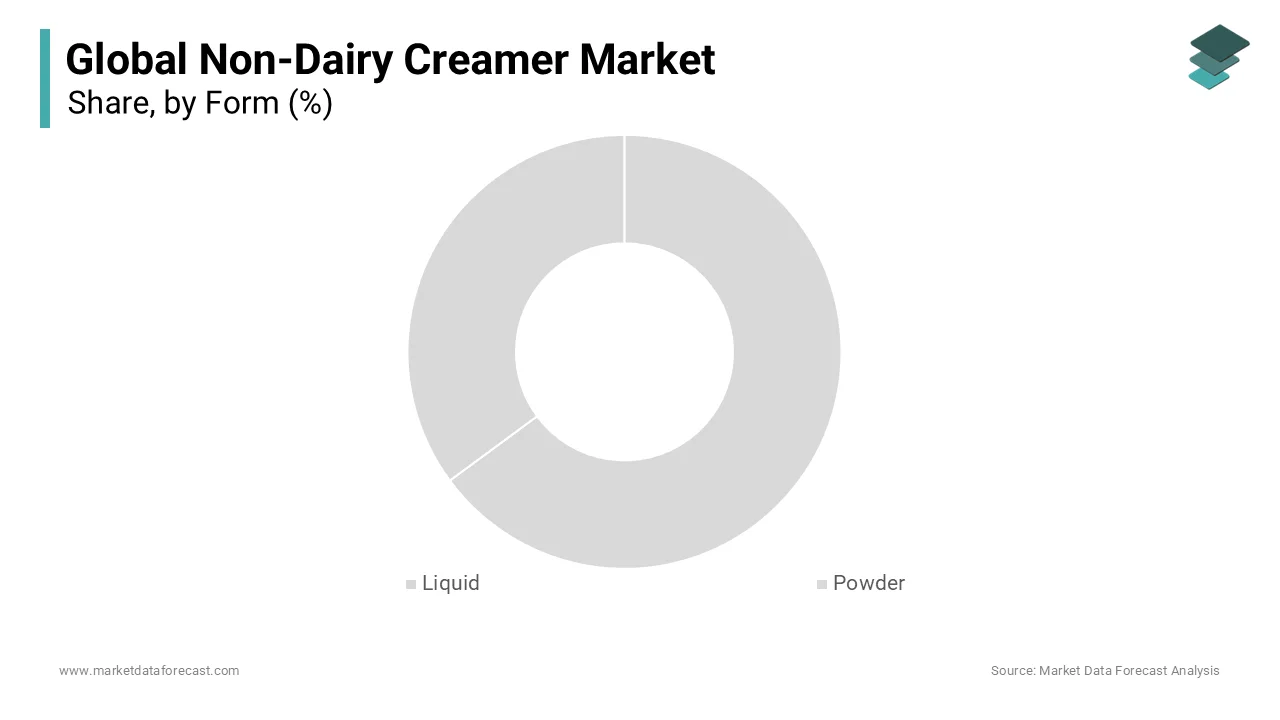
The powdered segment led the global Non Dairy Creamer Market and captured a significant share in 2025. This leading position of the segment was attributed to its superior cost efficiency and extended shelf life compared to liquid alternatives. The removal of water through spray drying significantly reduces transportation and storage costs, allowing manufacturers to distribute products globally with minimal logistical burden. According to the United States Department of Agriculture, non-fat dry powdered milk can retain its nutrient value and remain usable for up to 2 to 10 years when stored properly, while standard commercial packages typically list a shorter shelf life. This longevity is crucial for retailers and consumers in regions with limited cold chain infrastructure such as parts of Asia and Africa. The production process for powder is also less energy intensive than maintaining refrigerated supply chains for liquid products. In developing economies where price sensitivity is high, powdered creamers offer an affordable way to add richness to beverages without the premium cost of fresh milk or refrigerated plant-based options. The ease of portion control with single-serve packets further appeals to food service operators who seek to minimise waste. Major coffee chains in emerging markets prefer powdered formats for their consistency and ease of inventory management. The ability to stockpile large quantities without spoilage risk makes powder the preferred choice for institutional buyers and households alike, ensuring its continued market leadership.
The versatility of powdered non-dairy creamers across diverse industrial and home applications solidifies their market dominance. Powder forms are integral to the manufacturing of instant coffee mixes, tea premixes and baking ingredients where moisture content must be strictly controlled. According to the International Coffee Organisation, global soluble coffee exports experienced a significant contraction of 28.2% year-over-year toward the end of 2024 as tightening raw material access altered standard trade volume flows. In the bakery industry, powdered creamers improve dough texture and extend product freshness without altering moisture balance. Home consumers appreciate the convenience of powder, which does not require refrigeration and can be easily stored in pantries. This accessibility drives higher penetration in rural and semi-urban areas where refrigerator ownership may be lower. According to sources, rapid growth in Southeast Asian modern convenience retail formats is driving a substantial expansion in consumer packaged creamers, milk alternatives, and localised beverage formulations. The format allows for easy customisation of strength and flavour by adjusting the amount added to beverages. Manufacturers can also fortify powders with vitamins and minerals more effectively than liquids, enhancing their nutritional profile. This multifunctional utility ensures that powdered creamers remain indispensable in both commercial food processing and daily household consumption.
The liquid segment is likely to experience the fastest CAGR of 6.8% from 2026 to 2034 due to consumer preference for premium clean-label and minimally processed products. Modern consumers perceive liquid creamers as fresher and closer to natural milk than powdered alternatives, which often contain anticaking agents and stabilisers. This growth is fueled by the rise of speciality coffee culture where baristas and home enthusiasts demand creamers that foam well and integrate smoothly without clumping. Liquid oat and almond creamers have gained significant traction due to their creamy texture and neutral taste profiles. According to the Plant Based Foods Association, plant-based creamers grew in both overall dollar sales and physical unit sales from 2021 through 2023, defying broader volume drops caused by marketplace inflation. The availability of organic and non-GMO certified liquid options appeals to health-conscious buyers willing to pay a premium. Retailers are expanding shelf space for these products, reflecting strong consumer demand. The perception of liquid creamers as healthier and more natural drives their adoption among millennials and Gen Z demographics. This shift toward quality over convenience marks a significant change in purchasing behaviour favouring liquid formats.
Improvements in cold chain infrastructure and widespread retail availability are accelerating the adoption of liquid non-dairy creamers. Advances in refrigeration technology and logistics have reduced spoilage rates and expanded the geographic reach of perishable dairy alternatives. According to the European Retail Round Table, major corporate grocery operators are aggressively modernising their multi-deck fresh food departments and chill chains to maximise shopper dwell times and total customer basket sizes. This visibility increases impulse purchases and trial among new users. The growth of online grocery shopping has further facilitated access to liquid creamers, with same-day delivery services ensuring product freshness. Food service establishments are increasingly switching to liquid creamers for their ease of use and consistent quality in high-volume settings. The ability to pour directly into beverages without mixing enhances operational efficiency in cafes and restaurants. As cold chain networks expand in emerging markets like India and Brazil, the barrier to entry for liquid creamers lowers. This infrastructural support creates a favourable environment for sustained growth in the liquid segment.
By Nature Insights
The conventional segment dominated the Non Dairy Creamer Market and accounted for a substantial share in 2025. This dominance of the segment was driven by its affordability and widespread availability in mass market channels. Produced using standard agricultural inputs such as corn syrup solids and palm oil, conventional creamers are significantly cheaper than organic alternatives. According to the Food and Agriculture Organisation, the global benchmark price index for vegetable oils fell by 25.7% from its 2022 historic highs due to expanding production cycles and relaxed logistical bottlenecks. In developing regions where disposable income is limited, conventional creamers provide an accessible way to enhance beverage flavour without financial strain. Major multinational brands rely on conventional formulations to maintain competitive pricing and high-volume sales. Supermarkets and convenience stores predominantly stock conventional options, ensuring they reach the widest possible audience. As per studies, the total coffee category, inclusive of standard creamers, ready-to-drink options, and localised beverage formats, serves as the primary innovation and volume sales driver within United States grocery layouts. The established supply chains for conventional ingredients ensure consistent availability and stable pricing. Institutional buyers such as schools, hospitals and offices prefer conventional creamers for their cost-effectiveness in bulk purchases. This economic advantage secures the leading position of conventional creamers despite growing interest in premium segments.
Decades of marketing and consistent product quality have built strong brand loyalty for conventional non-dairy creamers. Consumers are accustomed to the specific taste and texture of traditional creamers, which often include vanilla and sweeteners. Major brands like Coffee Mate and International Delight have entrenched themselves in household routines, creating high switching costs for competitors. According to research, nearly half of all consumers actively prioritise long-established dessert and confection flavour profiles that invoke personal childhood nostalgia to ensure guaranteed taste consistency. Conventional creamers offer a predictable experience that many users find comforting and reliable. The widespread use of these products in food service establishments reinforces their popularity as customers encounter them regularly outside the home. Marketing campaigns emphasising indulgence and richness resonate with mainstream audiences who prioritise flavour over ingredient sourcing. The extensive distribution networks of established brands ensure that conventional creamers are available in virtually every retail outlet. This ubiquity makes it difficult for niche organic brands to gain significant market share quickly. The emotional connection and habit formation associated with conventional creamers sustain their dominance in the global market.
The organic segment is expected to exhibit a noteworthy CAGR of 10.1% during the forecast period owing to increasing health consciousness and demand for chemical-free products. Consumers are actively avoiding synthetic pesticides, genetically modified organisms and artificial additives in their diets. Organic creamers made from ingredients like organic coconut oil, oats and almonds appeal to buyers seeking clean label options. Parents are particularly inclined to choose organic products for their families to minimise exposure to potential toxins. According to the United States Department of Agriculture, the European Union organic product marketplace began to recover as consumer purchasing confidence strengthened across dominant regional economies. Certification labels such as USDA Organic and EU Organic provide assurance of quality and sustainability, influencing purchasing decisions. Health-focused retailers and speciality stores are expanding their organic offerings to meet this rising demand. The perception of organic products as safer and more nutritious drives premium pricing acceptance. This trend is supported by extensive media coverage on the benefits of organic farming and its impact on personal health.
The emphasis on environmental sustainability and ethical sourcing is propelling the growth of organic non-dairy creamers. Organic farming practices promote soil health, biodiversity and water conservation, aligning with the values of eco-conscious consumers. According to a study, approximately 73% of consumers state they would definitely or probably change their consumption habits to reduce their overall footprint on the environment. Organic creamer brands often highlight their commitment to fair trade practices and sustainable agriculture, attracting socially responsible buyers. As per the Plant Based Foods Association, mainstream market entry of plant-based milks reached 16% of total retail dollar sales within the domestic grocery dairy department. Companies are investing in transparent supply chains to verify the origin and quality of their organic ingredients. Certifications such as Rainforest Alliance and Fair Trade further enhance brand credibility. The reduction of the carbon footprint associated with organic production appeals to climate-aware individuals. Government incentives for organic farming in countries like India and France support the availability of raw materials. This alignment with broader sustainability goals ensures sustained growth for the organic segment.
By Flavour Insights
In 2025, the original flavoured non-dairy creamers segment held the majority share in the global market because of its universal appeal and versatility in pairing with various beverages. Unlike specialised flavours, original creamers do not overpower the natural taste of coffee or tea, making them suitable for a wide range of preferences. The majority of coffee drinkers prefer to enhance the richness of their brew without altering its fundamental flavour profile. According to the National Coffee Association, over two-thirds of coffee consumers in the United States use a whitener such as cream, milk, or a non-dairy alternative to customise their beverage. Original creamers are also essential in culinary applications such as soups, sauces, and desserts where neutral flavour is required. Food manufacturers prefer original variants for their adaptability in diverse product formulations. The simplicity of original creamers reduces the risk of consumer rejection associated with bold or unusual flavours. In institutional settings such as offices and hotels, original creamers are the standard offering to accommodate diverse tastes. This broad applicability ensures consistent high-volume sales across all demographic groups. The lack of flavour constraints allows original creamers to serve as a staple item in household pantries.
The production of original flavoured creamers is more cost-effective and simpler than flavoured variants, driving their market leadership. Manufacturing original creamers requires fewer ingredients and eliminates the need for expensive flavourings and colourants. This reduction in complexity lowers production costs and minimises the risk of quality inconsistencies. According to Food Processing Magazine, transition frameworks away from synthetic additives to clean-label natural substitutes require elevated usage rates and complex formulation planning. These savings are passed on to consumers, making original creamers more affordable. Retailers benefit from higher turnover rates and lower inventory risks associated with staple products. The streamlined production process allows manufacturers to scale up output efficiently to meet global demand. In emerging markets where price sensitivity is high, original creamers are the primary choice for first-time buyers. The economic advantage of original formulations ensures their dominance in both retail and food service sectors. This cost efficiency supports aggressive pricing strategies that maintain market share against competitors.
The hazelnut-flavoured non-dairy creamers segment is predicted to witness the highest CAGR of 9.8% between 2026 and 2034. This rapid growth of the segment is fuelled by the rising popularity of speciality coffee and gourmet trends. Consumers are increasingly experimenting with unique and indulgent flavours to elevate their daily coffee experience. Hazelnut offers a rich nutty aroma that complements coffee beans exceptionally well, appealing to discerning palates. According to the National Coffee Association, consumer metrics reflect a historic surge where past-day consumption of speciality coffee reached its highest recorded levels within the domestic marketplace. Social media platforms showcase creative coffee recipes featuring hazelnut creamers influencing consumer behaviour. Cafés and bakeries are introducing hazelnut-infused drinks, driving demand for home-use equivalents. In Europe, hazelnut is a traditional flavour profile in confectionery and beverages, boosting its acceptance in creamers. The association of hazelnut with luxury and sophistication enhances its appeal among affluent consumers. Brands are launching premium hazelnut creamers with real nut extracts to differentiate from artificial alternatives. This trend toward gourmetification drives rapid growth in the hazelnut segment.
Advancements in natural flavour extraction technologies are accelerating the growth of hazelnut creamers by improving taste authenticity. Modern methods allow manufacturers to capture the true essence of hazelnuts without using artificial synthetics. Consumers are increasingly demanding natural ingredients and rejecting artificial flavours. According to sources, 40% of global consumers state that traditional flavour profiles directly influence their food and beverage choices in the sweet flavour category. Hazelnut creamers made with real nut oils or extracts offer superior sensory experiences that drive repeat purchases. The availability of allergen-friendly hazelnut alternatives using natural flavour compounds expands the target audience. Manufacturers are investing in research to stabilise natural hazelnut flavours in liquid and powder formats. These technological improvements enhance product quality and shelf life, making hazelnut creamers more viable for mass distribution. The combination of authentic taste and clean label credentials positions hazelnut as a top choice for flavour innovation. This technical progress supports the rapid expansion of the hazelnut segment.
By End Use Insights
The food and beverage processing segment was the largest in the Non Dairy Creamer Market and occupied a commanding share in 2025. This prominence of the segment was credited to massive industrial-scale demand and strict standardisation requirements. Manufacturers of instant coffee, tea mixes, and packaged soups rely on non-dairy creamers to ensure consistent texture and flavour across large production batches. According to Fortune Business Insights, the global instant coffee industry value surpassed a significant level, expanding raw material procurement requirements across the commercial beverage formulation sector. Industrial buyers prioritise ingredients that offer long shelf stability and ease of handling in automated processes. Powdered creamers are preferred in this sector for their low moisture content and uniform particle size. Food processors benefit from the cost efficiency of bulk purchasing and the reliability of established suppliers. Regulatory compliance and quality certifications are critical for industrial ingredients, driving preference for reputable brands. The integration of creamers into ready-to-eat meals and snacks further expands usage. This segment accounts for the largest volume of creamer consumption globally due to the sheer scale of processed food production. The need for consistent quality in branded products ensures long-term contracts with major creamer manufacturers.
Non-dairy creamers offer exceptional versatility in product formulation, making them indispensable for food and beverage processors. They can be used in a wide range of applications including baked goods, confectionery, dairy alternatives and savoury dishes. The ability to customise fat content and solubility allows manufacturers to tailor creamers to specific product needs. In the bakery industry, creamers improve crumb structure and extend the shelf life of cakes and pastries. As per the American Society of Baking, corporate shortening applications use 100% fat formulations to successfully reduce starch retrogradation and optimise gluten networks. Creamers also enhance the mouthfeel of plant-based yoghurts and ice creams, providing a creamy texture without dairy. This functional flexibility enables processors to innovate and launch new products rapidly. The neutral flavour of original creamers allows them to blend seamlessly with other ingredients. This adaptability ensures that non-dairy creamers remain a core component in industrial food manufacturing.
The ready-to-drink beverages segment is estimated to register the fastest CAGR of 11.7% over the forecast period. This swift expansion of the segment is propelled by the surge in convenience and on-the-go consumption. Busy lifestyles and urbanisation have increased demand for bottled coffees, teas and smoothies that require no preparation. According to sources, the ready-to-drink coffee segment across the Asia Pacific region expanded at a significant rate to drive accessible beverage options. Non-dairy creamers are essential in these products to provide richness and stability during shelf life. Liquid creamers are increasingly used in RTD formulations to ensure smooth integration and prevent separation. Consumers prefer the convenience of grabbing a pre-mixed beverage from vending machines or convenience stores. The rise of cold brew coffee has further amplified demand for creamy RTD options. Brands are launching premium RTD drinks with oat and almond creamers to attract health-conscious buyers. This shift toward convenience drives rapid growth in the RTD beverage segment.
Technological innovations in shelf-stable plant-based formats are propelling the growth of non-dairy creamers in RTD beverages. Advanced sterilisation and packaging techniques allow manufacturers to produce creamy plant-based drinks that remain stable at room temperature. UHT processing ensures that oat and almond creamers retain their texture and flavour for months. According to research, the total coffee category remains the primary volume growth driver within supermarket layouts as consumer preferences demand expanded functional beverage formulations. These innovations enable wider distribution and reduce reliance on cold chains. Consumers appreciate the availability of high-quality plant-based options in remote locations. The development of clean-label shelf-stable creamers addresses health concerns while maintaining convenience. This technological progress supports the rapid expansion of the RTD beverage segment.
REGIONAL ANALYSIS
North America Non-Dairy Creamer Market Analysis
North America was the top performer in the global Non Dairy Creamer Market and accounted for a 35.5% share in 2025. This dominance of the regional market was driven by high coffee consumption and a strong culture of customisation in beverages. According to the National Coffee Association, daily coffee consumption among United States adults remains historically strong, with 66% of the adult population drinking coffee every day. The prevalence of lactose intolerance and veganism has accelerated the shift toward plant-based creamers. Major brands dominate the retail landscape with extensive distribution networks. The demand for clean-label and organic products is particularly strong in this region. Innovation in oat- and almond-based creamers is led by North American companies. The food service sector extensively uses powdered creamers for cost efficiency. Regulatory standards for labelling and ingredients are stringent, ensuring high product quality. The region sees high adoption of liquid creamers in speciality coffee shops. E-commerce channels contribute significantly to sales growth. The mature market status drives competition through product differentiation and premiumization.
Europe Non-Dairy Creamer Market Analysis
Europe followed closely behind in the Non Dairy Creamer Market and captured a 25.2% share in 2025. This growth of the European market was propelled by strong tea and coffee cultures. Countries like the United Kingdom, Germany, and France are key contributors. The UK consumes vast amounts of tea, often with milk or creamer alternatives. As per the European Food Safety Authority, food products sold inside the European Union are legally restricted to a strict limit of less than 2 grams of industrially produced trans fat per 100 grams of total fat. Demand for organic and sustainable products is higher in Europe than in other regions. According to the Research Institute of Organic Agriculture, retail sales of organic food within European markets continue to follow a long-term upward trajectory led by dominant spending shares in Denmark and Austria. Plant-based diets are gaining popularity, especially in Northern Europe. Local producers focus on high-quality ingredients such as hazelnut and coconut. The region sees significant growth in liquid creamers due to advanced cold chain infrastructure. Retailers are expanding private label organic creamer lines. Consumer awareness of environmental impact influences purchasing decisions. The market is mature but continues to grow through innovation in natural ingredients.
Asia Pacific Non-Dairy Creamer Market Analysis
Asia Pacific is the fastest-growing region in the Non Dairy Creamer Market, due to rising disposable incomes and changing lifestyles. China, India and Japan are major markets. Tea culture in India and China drives massive demand for powdered creamers. As per the Food and Agriculture Organisation, global tea consumption and overall output indicators continue to experience robust expansion due to immense, surging domestic demand from China and India. Urbanisation has led to increased coffee shop culture in cities like Shanghai and Mumbai. Young consumers are adopting Western habits, including latte consumption. The region is price-sensitive, favouring conventional powdered creamers. However, demand for premium plant-based options is rising in urban centres. Local manufacturers are expanding capacity to meet growing demand. E-commerce platforms facilitate access to international brands. The lack of cold chain infrastructure in rural areas sustains powder dominance. Government initiatives to boost dairy alternatives support market growth. The region offers significant untapped potential for future expansion.
Latin America Non-Dairy Creamer Market Analysis
Latin America grew steadily in the global market, with Brazil and Mexico as key drivers. Coffee culture is deeply ingrained in countries like Colombia and Brazil. The region faces economic volatility affecting purchasing power. Conventional powdered creamers remain popular due to affordability. According to the Inter-American Development Bank, standard agricultural productivity growth across Latin America and the Caribbean acts as the vital underpinning to guarantee long-term regional food security. Urbanisation is increasing coffee shop visits in major cities. Local producers compete with international brands on price. Demand for plant-based options is emerging among health-conscious urbanites. Supply chain challenges affect distribution in remote areas. The market is growing steadily but remains smaller than other regions. Cultural preference for strong black coffee limits creamer usage in some areas. However, sweetened coffee traditions in Mexico drive demand. Economic recovery efforts support gradual market expansion.
Middle East and Africa Non-Dairy Creamer Market Analysis
The Middle East and Africa region is likely to expand in the global market from 2026 to 2034. The Gulf Cooperation Council countries drive demand due to high income levels and Western influence. Saudi Arabia and the United Arab Emirates have growing coffee cultures. Tea is a staple in many African nations, often consumed with milk or creamer. As per the World Bank development reports, accelerating urban growth patterns throughout sub-Saharan Africa stimulate rapid shifts in processing dynamics and domestic food supply lines. Imported brands dominate the market due to limited local production. Price sensitivity is high in sub-Saharan Africa, favouring low-cost powders. The region sees potential for growth as infrastructure improves. Religious dietary laws influence ingredient choices favoring halal certified products. Limited cold chain infrastructure restricts liquid creamer adoption. The market is nascent but offers long-term opportunities. Investment in local manufacturing could reduce costs and increase accessibility.
COMPETITIVE LANDSCAPE
The competition in the non dairy creamer market is intense characterized by a mix of large multinational corporations and agile niche players specializing in plant based alternatives. Established giants leverage economies of scale and extensive distribution networks to dominate the mass market while smaller brands differentiate through organic clean label and specialty ingredients. Innovation in texture and flavor is a primary battleground as companies strive to replicate the sensory experience of dairy cream. Price competition remains fierce in the conventional powdered segment prompting manufacturers to focus on value added services and technical support. Consumer preferences are shifting rapidly toward healthier and more sustainable options forcing competitors to adapt quickly. Regulatory compliance regarding labeling and trans fat bans creates barriers to entry but also drives standardization. Brand loyalty is built through consistent quality and effective marketing campaigns that highlight ethical sourcing. The rise of private label products in retail stores adds pressure on branded manufacturers to justify premium pricing. Collaborative relationships with coffee chains and food service providers are essential for securing long term contracts. This dynamic environment requires continuous investment in research and agile supply chain management to maintain market relevance.
KEY MARKET PLAYERS
Some of the key players in the non-dairy creamer market are
- Rich Products, Co
- The Whitewave Foods Company
- Wenhui Food
- Sugar Foods Corporation
- Bigtree Group
- Yearrakarn Co. Ltd
- FrieslandCampina
- PT. Menara Sumberdaya
- Pulmuone Foods USA
- Nestle
- PT. Santos Premium Krimer
Top Players in the Market
- Kerry Group is a global leader in taste and nutrition providing high quality non dairy creamer solutions for food service and industrial applications. The company leverages its extensive expertise in dairy alternatives to create plant based creamers using oat coconut and almond ingredients. It strategic expansion enhances their supply chain resilience and allows faster delivery to key markets. Kerry focuses on innovation in texture and stability ensuring their products perform well in hot beverages. Their commitment to sustainability drives the sourcing of responsibly grown raw materials. These actions strengthen their position as a preferred partner for major coffee chains and food manufacturers globally.
- Ingredion Incorporated contributes significantly to the non dairy creamer market through its advanced texturizing and stabilizing technologies. The company offers specialized ingredients that improve the mouthfeel and shelf stability of plant based creamers. Its innovation addresses consumer demand for simple ingredient lists without compromising performance. Ingredion collaborates with customers to develop customized formulations that meet specific regional preferences. Their global network of application centers supports rapid product development and testing. By focusing on functional excellence and sustainability Ingredion maintains a strong competitive edge in the evolving landscape of dairy alternatives.
- Cargill Incorporated plays a vital role in the non dairy creamer market by providing sustainable plant based ingredients and solutions. The company utilizes its vast agricultural supply chain to source high quality coconut palm and soy ingredients for creamer production. Cargill invests heavily in research to improve the solubility and flavor profile of plant based powders. Their focus on traceability and responsible sourcing builds trust with brands and consumers. These initiatives reinforce Cargill’s reputation as a reliable and innovative supplier in the global non dairy creamer industry.
Top Strategies Used by Key Market Participants
Key players in the non dairy creamer market prioritize product innovation to meet the growing demand for clean label and plant based options. Companies are investing heavily in research and development to create formulations using oat almond and coconut that mimic the texture of dairy. Strategic partnerships with agricultural suppliers ensure sustainable sourcing of raw materials and reduce supply chain risks. Expansion into emerging markets through local manufacturing facilities helps companies cater to regional tastes and reduce logistics costs. Digital marketing and direct to consumer channels are utilized to build brand loyalty and educate consumers about the benefits of non dairy alternatives. Mergers and acquisitions allow firms to acquire specialized technologies and broaden their product portfolios. Sustainability initiatives including carbon footprint reduction and eco friendly packaging are central to corporate strategies to align with regulatory expectations and consumer values.
MARKET SEGMENTATION
This research report on the global non-dairy creamer market has been segmented and sub-segmented based on form, nature, flavour, end use, sales channel, & region.
By Form
- Liquid
- Powder
By Nature
- Conventional
- Organic
By Flavour
- Hazelnut
- Coconut
- Chocolate
- French Vanilla
- Original
By End Use
- Prepared and Packaged Food
- Infant Food
- RTD Beverages
- Bakery Products and Ice Creams
- Food and Beverage Processing
By Sales Channel
- Indirect
- Hypermarkets and Supermarkets
- Modern Supermarkets
- Specialty stores
- Online Retail
- Others
- Direct
By Region
- North America
- Europe
- The Asia Pacific
- Latin America
- The Middle East and Africa