- Product Description Description
- Table of Contents TOC
- List of Table & Figure LOT
- Get Free Sample PDF Sample PDF
Market Size, 2025
$0.67 BnMarket Estimate, 2026
$0.71 BnMarket Forecast, 2034
$1.06 BnCAGR, 2026–2034
5.23%North America Cranio-Maxillofacial (CMF) Fixation Market Summary
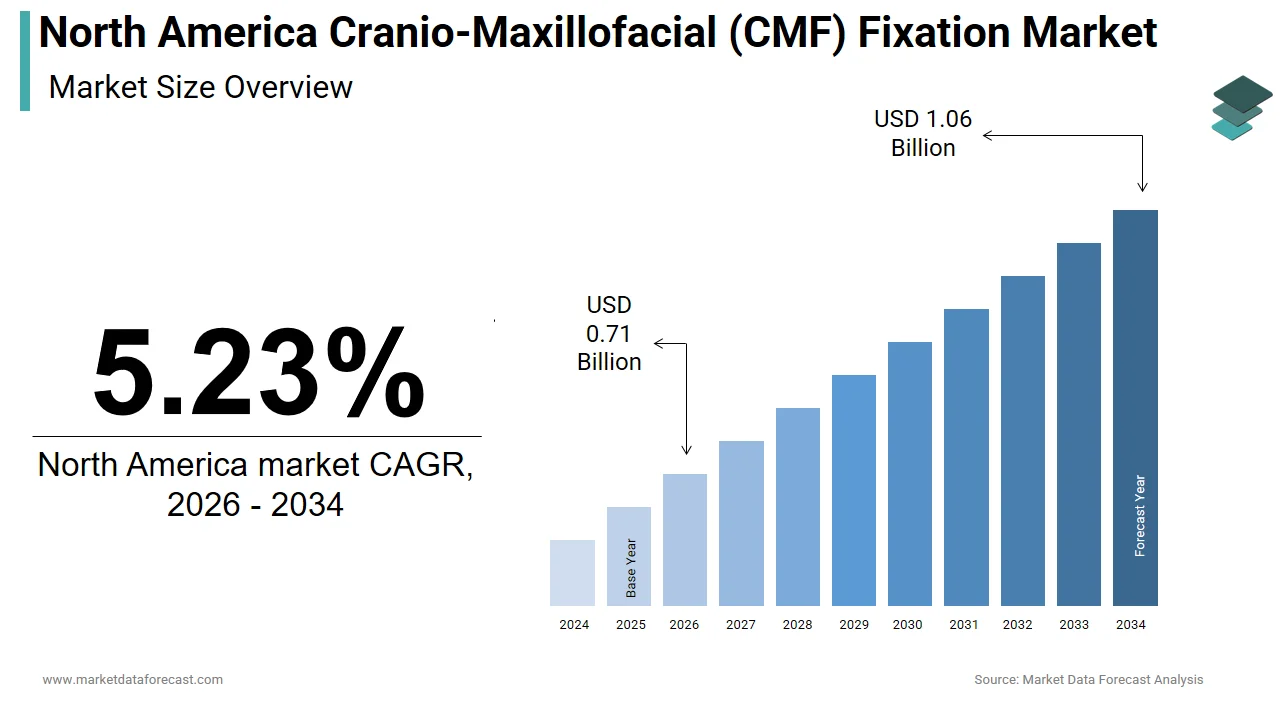
The North America cranio-maxillofacial (CMF) fixation market size was USD 0.67 billion in 2025, is anticipated to be USD 0.71 billion in 2026, and is projected to reach USD 1.06 billion by 2034, registering a CAGR of 5.23% from 2026 to 2034. Increasing incidence of facial trauma, advancements in 3D-printed and patient-specific implants, and the growing adoption of minimally invasive plating systems are key growth factors.
Key Market Trends & Insights
- United States held the largest share of the market in 2025.
- Canada is witnessing rising adoption of digital planning and patient-specific implants.
- Based on technique, the MF Plate & Screw Fixation was the leading segment in 2025.
- Based on material, the metal segment dominated the market in 2025.
- Based on application, the Neurosurgery & ENT accounted for the largest share in 2025.
Market Size & Forecast
- 2025 Market Size: USD 0.67 Billion
- 2026 Market Size: USD 0.71 Billion
- 2034 Projected Market Size: USD 1.06 Billion
- CAGR (2026–2034): 5.23%
- United States: Largest market in 2025
- Canada: Growing adoption of advanced CMF technologies
North America Cranio-Maxillofacial (CMF) Fixation Market Size
The North America cranio-maxillofacial fixation market was valued at USD 0.67 billion in 2025, is estimated to reach USD 0.71 billion in 2026, and is projected to reach USD 1.06 billion by 2034, growing at a CAGR of 5.23% from 2026 to 2034.
The cranio-maxillofacial (CMF) fixation is are medical device designed to stabilize and repair fractures or deformities in the skull, facial bones, and jaw following trauma, congenital defects, or surgical interventions. The clinical complexity of CMF injuries, combined with the biomechanical demands of facial structures, necessitates precision-engineered solutions tailored to patient-specific anatomies.
MARKET DRIVERS
Rising Incidence of Facial Trauma Due to Accidents and Sports Injuries
The escalating prevalence of craniofacial injuries stemming from motor vehicle accidents, occupational hazards, and high-impact sports is propelling the growth of the North America cranio-maxillofacial (CMF) fixation market. According to the Centers for Disease Control and Prevention, unintentional injuries account for nearly 200,000 annual hospitalizations due to facial trauma in the United States, with motor vehicle collisions representing the leading cause, responsible for approximately 40% of severe maxillofacial fractures. The Insurance Institute for Highway Safety reports that despite improvements in automotive safety, over 38,000 traffic fatalities occurred in 2022, many involving craniofacial damage requiring surgical intervention. Additionally, the National Electronic Injury Surveillance System indicates a 27% year-on-year increase in sports-related facial injuries among adolescents and young adults between 2018 and 2024 in contact sports such as American football and ice hockey. These trends necessitate reliable, biomechanically sound fixation solutions capable of withstanding masticatory forces and promoting osseointegration. The growing adoption of minimally invasive plating systems and patient-specific implants, as evidenced by increasing utilization in level I trauma centers, reflects the clinical response to this rising trauma burden. Moreover, public awareness campaigns and stricter enforcement of protective gear regulations in athletic domains have not fully mitigated injury rates, ensuring sustained procedural demand.
Advancements in 3D-Printed and Patient-Specific Implants
The technological innovation in the domain of 3D-printed and patient-matched CMF implants has significantly enhanced surgical precision and postoperative outcomes by acting as a robust driver for market growth. Traditional off-the-shelf fixation systems often fail to accommodate the complex geometries of facial anatomy, leading to suboptimal alignment and prolonged operative times. However, the integration of computed tomography (CT) scanning with computer-aided design and additive manufacturing has enabled the production of customized implants tailored to individual patient anatomy. As per data from the National Institutes of Health, the use of patient-specific implants in CMF reconstruction has reduced operative time by up to 35% and decreased revision rates by nearly 50% in complex craniofacial cases. Companies such as Stryker and Zimmer Biomet have expanded their portfolios with FDA-cleared 3D-printed titanium mesh systems, which demonstrate superior fit and structural integrity in orbital and midface reconstructions. The U.S. Food and Drug Administration has cleared over 60 patient-specific CMF devices since 2020, reflecting regulatory endorsement and growing clinical confidence. Hospitals with dedicated craniofacial units, including the Mayo Clinic and Massachusetts General Hospital, have reported a 60% increase in the adoption of digital surgical planning platforms between 2020 and 2023.
MARKET RESTRAINTS
High Cost of Advanced Fixation Systems and Limited Reimbursement Coverage
The widespread adoption of sophisticated cranio-maxillofacial fixation devices is restraining the growth of the North America cranio-maxillofacial (CMF) fixation market. A single patient-specific titanium plate or 3D-printed mesh implant can exceed $5,000, with complete fixation sets for complex reconstructions reaching upwards of $15,000, according to pricing data from Vizient, Inc., a leading healthcare performance improvement company. These costs are particularly burdensome in outpatient and non-academic medical centers, where budgetary constraints limit procurement of premium devices. Although Medicare and major private insurers cover CMF procedures, reimbursement for custom-fabricated implants remains variable. As per the American Medical Association’s 2023 analysis of Current Procedural Terminology (CPT) coding updates, only 38% of patient-matched implant procedures received full reimbursement, with the remainder subject to prior authorization delays or partial coverage.
Risk of Postoperative Complications and Implant-Related Infections
The adoption of cranio-maxillofacial fixation systems is the persistent risk of postoperative complications, particularly implant-associated infections and hardware failure, which is impeding the growth of the North America cranio-maxillofacial (CMF) fixation market. Titanium plates, while biocompatible, are non-resorbable and may require secondary removal surgeries in up to 30% of pediatric patients to prevent growth restriction, as documented by the Children’s National Hospital in Washington, D.C. additionally, stress shielding and corrosion at screw-plate interfaces have been reported in long-term follow-ups, with radiographic loosening observed in 9% of patients within five years post-implantation. The U.S. Food and Drug Administration’s MAUDE database recorded over 1,200 adverse event reports related to CMF fixation devices between 2020 and 2023, with infection and mechanical failure accounting for 64% of submissions. These complications not only compromise patient outcomes but also increase healthcare costs, with revision surgeries adding an average of $12,000 per case, as per the Society of Hospital Medicine.
MARKET OPPORTUNITIES
Expansion of Resorbable and Bioactive Fixation Systems
The development and commercialization of resorbable and bioactive cranio-maxillofacial fixation systems is greatly influencing the growth of the North America cranio-maxillofacial (CMF) fixation market. Traditional metallic systems, while mechanically robust, pose risks such as palpability, growth interference in pediatric patients, and MRI incompatibility. In contrast, resorbable plates and screws made from polymers like poly-L-lactic acid (PLLA) and copolymers of polylactide and polyglycolide degrade over 12 to 24 months, gradually transferring load to healing bone. As per clinical data from Boston Children’s Hospital, the use of resorbable fixation in pediatric craniofacial procedures has reduced the need for secondary removal surgeries by 78%, significantly lowering complication rates and healthcare burden. Furthermore, the U.S. Department of Health and Human Services has funded multiple grants under the National Institute of Biomedical Imaging and Bioengineering to accelerate the development of smart resorbable implants with antimicrobial properties.
Integration of Artificial Intelligence in Surgical Planning and Implant Design
The incorporation of artificial intelligence (AI) into preoperative planning and implant customization has potential to fuel the growth of North American CMF fixation market. AI-driven algorithms can analyze volumetric CT data to segment bone structures, simulate fracture reduction, and optimize implant geometry with submillimeter precision. As per a 2023 study conducted by Stanford University School of Medicine, AI-assisted surgical planning reduced preoperative planning time by 60% and improved implant fit accuracy by 33% compared to manual methods. Platforms such as Materialise’s Mimics Innovation Suite and Stryker’s AI-powered CMF planning module are being adopted in over 150 U.S. hospitals, enabling automated generation of patient-specific cutting guides and fixation templates. The Veterans Health Administration has implemented AI-based craniofacial reconstruction protocols across 12 major medical centers, reporting a 45% decrease in intraoperative adjustments and a 29% reduction in blood loss. Additionally, machine learning models trained on thousands of CMF cases can predict postoperative facial symmetry and functional outcomes, aiding surgical decision-making.
MARKET CHALLENGES
Regulatory Hurdles and Lengthy Approval Processes for Novel Devices
The development and market entry of advanced cranio-maxillofacial fixation technologies are significantly hampered by stringent regulatory requirements, and protracted approval timelines are likely to hinder the growth of the North America cranio-maxillofacial (CMF) fixation market. The U.S. Food and Drug Administration classifies most CMF fixation devices as Class II or Class III medical devices, necessitating rigorous premarket notifications (510(k)) or premarket approval (PMA) pathways, which can extend from 12 to 36 months. According to the FDA’s Center for Devices and Radiological Health, the average review time for a 510(k) submission in the orthopedic and maxillofacial category was 197 days in 2023, with 42% of initial submissions requiring additional information, further delaying clearance. For novel technologies such as bioresorbable composites or AI-integrated surgical systems, the evidentiary burden is even greater, often requiring extensive clinical trials. The MedTech Conference 2023 revealed that small and mid-sized innovators spend an average of $30 million per device to achieve FDA approval, a cost that disproportionately affects startups lacking venture backing. Additionally, post-market surveillance requirements, including mandatory reporting of adverse events through the MAUDE system, impose ongoing compliance burdens. The lack of harmonization between U.S. and international regulatory standards further complicates global commercialization strategies.
Shortage of Specialized Surgeons and Training Disparities
The scarcity of surgeons formally trained in complex reconstructive techniques is also to degrade the growth of the North America cranio-maxillofacial (CMF) fixation market. CMF surgery requires expertise in anatomy, biomechanics, and implant handling, yet the number of certified craniofacial surgeons in North America remains limited. According to the American Board of Oral and Maxillofacial Surgery, there are fewer than 6,000 board-certified oral and maxillofacial surgeons in the United States, with only a subset possessing advanced fellowship training in craniofacial reconstruction. The American Society of Maxillofacial Surgeons estimates that less than 15% of U.S. hospitals have dedicated craniofacial teams capable of performing complex 3D-guided reconstructions. This shortage is exacerbated in rural and underserved regions, where access to specialized care is constrained. Training disparities further hinder adoption; a 2023 survey by the Association of American Medical Colleges found that only 28% of maxillofacial surgery residency programs include formal instruction in patient-specific implant design and navigation systems. Consequently, many surgeons rely on traditional techniques, limiting the uptake of innovative fixation technologies. Academic medical centers such as Johns Hopkins and the University of California, San Francisco, have initiated simulation-based training modules using virtual reality and 3D-printed models, but these programs remain localized.
REPORT COVERAGE
| REPORT METRIC | DETAILS |
| Market Size Available | 2025 to 2034 |
| Base Year | 2025 |
| Forecast Period | 2026 to 2034 |
| Segments Covered | By Technique, Material, Application, and Region. |
| Various Analyses Covered | Global, Regional and Country-Level Analysis, Segment-Level Analysis, Drivers, Restraints, Opportunities, Challenges; PESTLE Analysis; Porter’s Five Forces Analysis, Competitive Landscape, Analyst Overview of Investment Opportunities |
| Countries Covered | United States, Canada, Mexico, Rest of North America |
| Market Leaders Profiled | Stryker Corporation, Johnson & Johnson, Acumed LLC, Zimmer Biomet Holdings Inc., and Medtronic Plc. |
SEGMENTAL ANALYSIS
By Technique Insights
The MF Plate and Screw Fixation (Maxillofacial Plate and Screw Fixation) segment accounted in holding 43.2% of the share in 2024, owing to the technique’s foundational role in managing mandibular, zygomatic, and orbital fractures among the most common types of facial trauma. The widespread clinical reliance on rigid internal fixation using titanium or resorbable plates and screws stems from its proven biomechanical stability and adaptability across diverse fracture patterns. According to the American Association of Oral and Maxillofacial Surgeons, over 180,000 maxillofacial plating procedures are performed annually in the United States, primarily for trauma-related fractures. Moreover, the modularity of plating systems allows surgeons to customize constructs based on anatomical location and load-bearing requirements, enhancing procedural versatility. Hospitals and ambulatory surgery centers continue to stock extensive inventories of pre-contoured plates, particularly for the miniplate system, which has become the standard of care in midface and mandibular fixation.
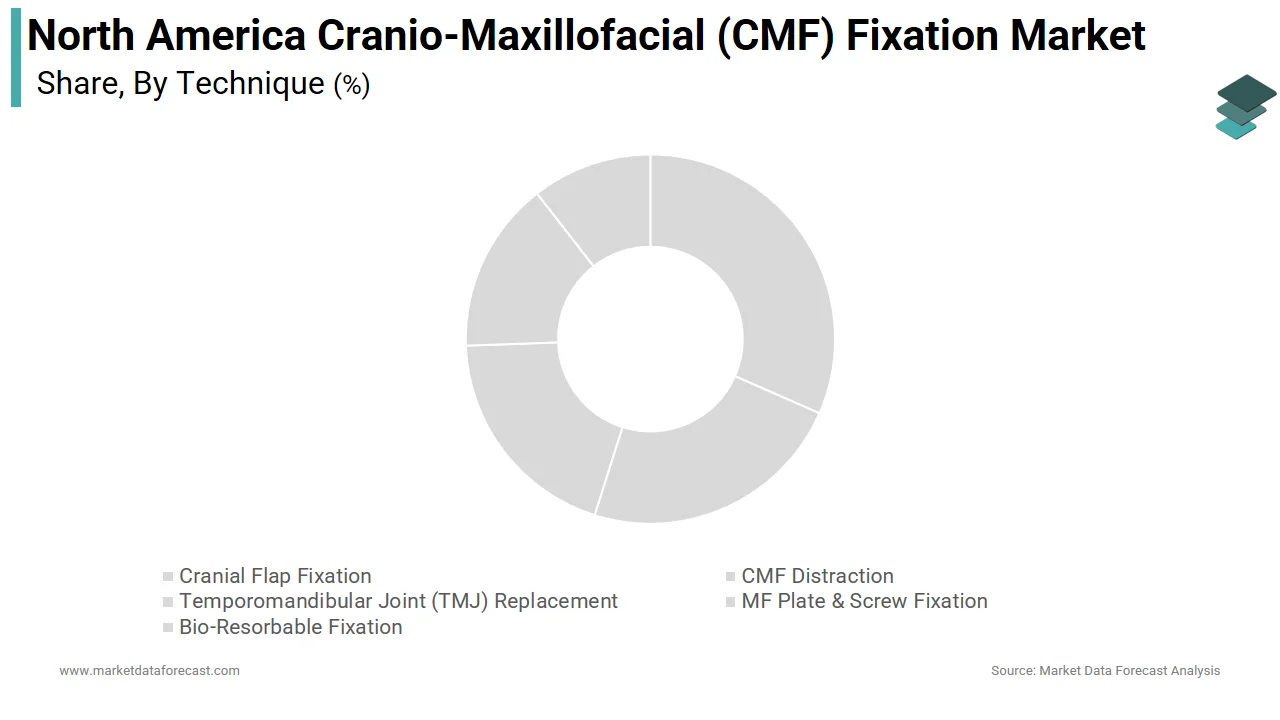
The CMF Distraction Osteogenesis segment is projected to expand at a CAGR of 9.8% from 2026 to 2034, owing to its increasing application in pediatric craniofacial anomalies and adult airway reconstruction. Unlike traditional bone grafting, distraction osteogenesis enables gradual bone lengthening through controlled mechanical stimulation, preserving vascularity and reducing donor site morbidity. The Children’s Hospital of Philadelphia has observed a 40% increase in distraction procedures between 2019 and 2023, citing improved outcomes in airway patency and facial symmetry. As per a 2022 multicenter study published in Plastic and Reconstructive Surgery, internal distraction devices demonstrated a complication rate of only 14%, compared to 31% for external frames. Furthermore, the integration of 3D virtual surgical planning has increased the precision of vector control during distraction, minimizing malalignment.
By Material Insights
The metal segment held a dominant share of the North American CMF fixation market in 2025 due to titanium’s exceptional biomechanical properties, including a high strength-to-density ratio, corrosion resistance, and MRI compatibility. Titanium plates and screws maintain structural integrity under masticatory loads, which can exceed 700 Newtons in the posterior mandible, as measured in biomechanical studies conducted at the University of Michigan’s Oral Biomechanics Laboratory. The material’s osteoconductive surface promotes bone apposition, reducing micromotion and enhancing early fixation stability. According to data from the American Academy of Craniomaxillofacial Surgeons, over 85% of rigid fixation procedures in adult trauma patients utilize titanium-based systems due to their long-term reliability. Furthermore, the reusability and sterilizability of titanium instruments and implants make them economically viable for high-volume surgical centers.
The biomaterials segment is expected to register a CAGR of 10.3% throughout the forecast period, owing to the increasing demand for growth-compatible solutions in pediatric craniofacial surgery and a growing emphasis on minimizing long-term implant complications. Unlike metallic systems, resorbable biomaterials gradually degrade over 12 to 24 months by eliminating the need for secondary removal surgeries, which are required in up to 35% of pediatric patients with titanium implants due to growth restriction, as documented by Boston Children’s Hospital. Additionally, advancements in composite biomaterials such as those reinforced with hydroxyapatite or tricalcium phosphate have improved mechanical strength, enabling their use in weight-bearing regions. The U.S. Food and Drug Administration has cleared over 25 resorbable CMF devices since 2021, including Bacterin International’s OsteoPure® and KLS Martin’s RESORB-X, reflecting growing regulatory confidence. Hospitals such as Cincinnati Children’s and Texas Children’s have reported a 50% reduction in postoperative infections when using antimicrobial-coated resorbable systems.
By Application Insights
The Neurosurgery & ENT (Otolaryngology) segment accounted in holding 46.5% of the North American CMF fixation market share in 2024, with the high volume of cranial and skull base procedures performed for trauma, tumor resection, and congenital malformations. The increasing incidence of brain tumors, which affects nearly 80,000 individuals each year, as reported by the Central Brain Tumor Registry of the United States, necessitates the frequent use of fixation systems to secure bone flaps post-resection. A 2023 survey by the American Rhinologic Society found that 78% of academic medical centers now use titanium or resorbable fixation in transnasal skull base reconstructions to prevent cerebrospinal fluid leaks. Furthermore, the aging population, which faces higher risks of falls and intracranial pathologies, amplifies procedural demand.
The plastic surgery segment is anticipated to grow with a CAGR of 9.6% from 2026 to 2034, with the rising prevalence of aesthetic and reconstructive facial procedures, particularly in post-oncologic and post-traumatic deformity correction. The American Society of Plastic Surgeons reports that over 180,000 facial reconstruction procedures were performed in 2023, a 22% increase from 2018, with CMF fixation playing a role in mandibular, orbital, and midface contouring. Institutions like MD Anderson Cancer Center have adopted integrated digital workflows, combining 3D imaging with custom fixation, resulting in 30% shorter operative times and improved facial symmetry, as documented in a 2023 clinical audit. Additionally, the rise in gender-affirming facial surgery, which grew by 47% between 2020 and 2023, according to the World Professional Association for Transgender Health, has created new demand for precise skeletal reshaping.
COUNTRY-LEVEL ANALYSIS
United States Cranio-Maxillofacial (CMF) Fixation Market Insights
The United States was the largest contributor in the North American cranio-maxillofacial fixation market with 89.3% of the share in 2024. The country's extensive network of Level I trauma centers, academic hospitals, and specialized craniofacial units creates a high-volume procedural ecosystem. According to the American College of Surgeons, over 1.4 million trauma admissions occur annually in verified trauma centers, with facial injuries constituting a significant proportion. The presence of leading device manufacturers such as Stryker, Zimmer Biomet, and Integra LifeSciences fosters the rapid commercialization of advanced fixation systems. Additionally, the U.S. Food and Drug Administration’s robust yet adaptive regulatory framework enables the timely clearance of novel technologies, including 3D-printed and AI-integrated devices. Medicare and private insurers cover a wide range of CMF procedures, although reimbursement variability persists.
Canada Cranio-Maxillofacial (CMF) Fixation Market Insights
Canada CMF fixation market held 11.2% of the share in 2024. The country performs over 8,000 CMF procedures annually, including trauma repairs, orthognathic surgeries, and congenital reconstructions, as reported by the Canadian Institute for Health Information. Canadian surgeons exhibit strong adoption of digital planning and patient-specific implants, particularly in academic hospitals, where collaboration with U.S. institutions facilitates technology transfer. However, procurement is often constrained by centralized purchasing models and budgetary limitations within provincial health authorities. Additionally, rising awareness of facial trauma in sports and motor vehicle incidents, coupled with investments in telemedicine and rural surgical outreach, is expanding access to specialized care.
COMPETITIVE LANDSCAPE
The competitive landscape of the North America cranio-maxillofacial fixation market is characterized by a blend of technological differentiation, clinical specialization, and strategic innovation. Major players continuously refine their portfolios to align with evolving surgical demands, emphasizing precision, biocompatibility, and procedural efficiency. The market is marked by a shift from generic plating systems to advanced, patient-specific solutions enabled by digital planning and additive manufacturing. Companies are increasingly investing in surgeon-centric platforms that integrate imaging, simulation, and implant design to deliver seamless workflows. Differentiation is achieved not only through product performance but also through comprehensive training programs, clinical support, and long-term partnerships with healthcare institutions. While a few global corporations dominate through scale and innovation, niche players maintain relevance by focusing on specialized applications such as pediatric distraction or resorbable biomaterials. The convergence of engineering, digital health, and regenerative medicine has intensified competition, pushing firms to adopt agile development models and responsive commercialization strategies.
KEY MARKET PLAYERS
Noteworthy Companies dominating the North America Cranio-maxillofacial fixation market profiled in the report are
- Stryker Corporation
- Johnson & Johnson
- Acumed LLC
- Zimmer Biomet Holdings Inc.
- Medtronic Plc.
TOP LEADING PLAYERS IN THE MARKET
- Stryker Corporation is a dominant force in the cranio-maxillofacial fixation landscape, renowned for its innovation in surgical technology and integrated digital solutions. The company offers a comprehensive portfolio of fixation systems, including patient-specific implants, 3D-printed titanium meshes, and advanced plating platforms. Stryker’s strength lies in its seamless integration of imaging, planning software, and implant design, enabling surgeons to execute complex reconstructions with enhanced precision. Its collaboration with leading academic institutions and investment in AI-driven surgical navigation have positioned it as a pioneer in next-generation CMF care. The company’s global footprint and robust distribution network ensure widespread clinical adoption in trauma and oncologic reconstruction settings.
- Zimmer Biomet holds a prominent position in the market through its specialized CMF division, which focuses on both traditional and cutting-edge fixation technologies. The company is recognized for its resorbable and titanium-based implant systems, designed for maxillofacial trauma, orthognathic surgery, and cranial applications. Zimmer Biomet emphasizes biomechanical excellence and long-term functional outcomes, supported by extensive clinical research and surgeon education programs. Its commitment to digital transformation is evident in its adoption of 3D planning tools and patient-matched solutions.
- KLS Martin is a leading innovator in CMF fixation, particularly known for its high-precision instrumentation and advanced biomaterials. The company specializes in resorbable fixation systems and distraction osteogenesis devices, catering to both pediatric and adult reconstructive needs. KLS Martin distinguishes itself through engineering excellence and a focus on ergonomic design, enabling minimally invasive approaches and improved surgical efficiency. Its dedication to sustainability and biocompatibility has driven the development of bioactive and absorbable implants that align with evolving clinical preferences.
TOP STRATEGIES USED BY KEY MARKET PARTICIPANTS
One of the primary strategies employed by leading companies is the integration of digital ecosystems into their product offerings, combining 3D imaging, virtual surgical planning, and patient-specific implant design into cohesive platforms. This end-to-end digital workflow enhances surgical accuracy and reduces operative time, strengthening clinical reliance on their systems. Another key approach is strategic collaboration with academic medical centers and surgical societies to drive clinical validation, training, and adoption of novel technologies. These partnerships foster innovation and build trust among surgeons. Additionally, companies are focusing on expanding their biomaterials portfolio, particularly resorbable and bioactive implants, to meet the growing demand for growth-compatible and infection-resistant solutions in pediatric and reconstructive applications.
RECENT MARKET DEVELOPMENTS
- In March 2023, Stryker acquired OrthoSensor, a company specializing in digital orthopedic sensing technology, to enhance real-time surgical feedback in CMF procedures by enabling more precise implant placement and alignment.
- In June 2023, Zimmer Biomet launched its next-generation patient-specific cranial implant system, integrating AI-based segmentation software to streamline preoperative planning and improve anatomical accuracy.
- In September 2023, KLS Martin introduced a new line of bioactive resorbable plates reinforced with calcium phosphate, which is designed to promote bone integration and reduce infection risks in maxillofacial reconstructions.
- In January 2024, Stryker partnered with a leading craniofacial research institute to develop machine learning algorithms for predicting postoperative facial symmetry in complex trauma cases.
- In May 2024, Zimmer Biomet expanded its digital surgery training academy to include immersive virtual reality modules for CMF fixation techniques that aimed at increasing surgeon proficiency and adoption.
MARKET SEGMENTATION
This North America Cranio-maxillofacial fixation market research report is segmented and sub-segmented into the following categories.
By Technique
- Cranial Flap Fixation
- CMF Distraction
- Temporomandibular Joint (TMJ) Replacement
- MF Plate & Screw Fixation
- Bio-Resorbable Fixation
- Others
By Material
- Titanium & Titanium Alloys
- Stainless Steel
- Bio-Resorbable Polymers (PLA, PGA, PDO)
- Bio-Ceramics (Hydroxyapatite, Tricalcium Phosphate)
- Patient-Specific 3-D Printed Composites
By Application
- Neurosurgery & ENT
- Orthognathic & Dental Surgery
- Plastic & Aesthetic Surgery
- Paediatric Craniosynostosis Repair
- Others
By Country
- United States
- Canada
- Mexico
- Rest of North America