- Product Description Description
- Table of Contents TOC
- List of Table & Figure LOT
- Get Free Sample PDF Sample PDF
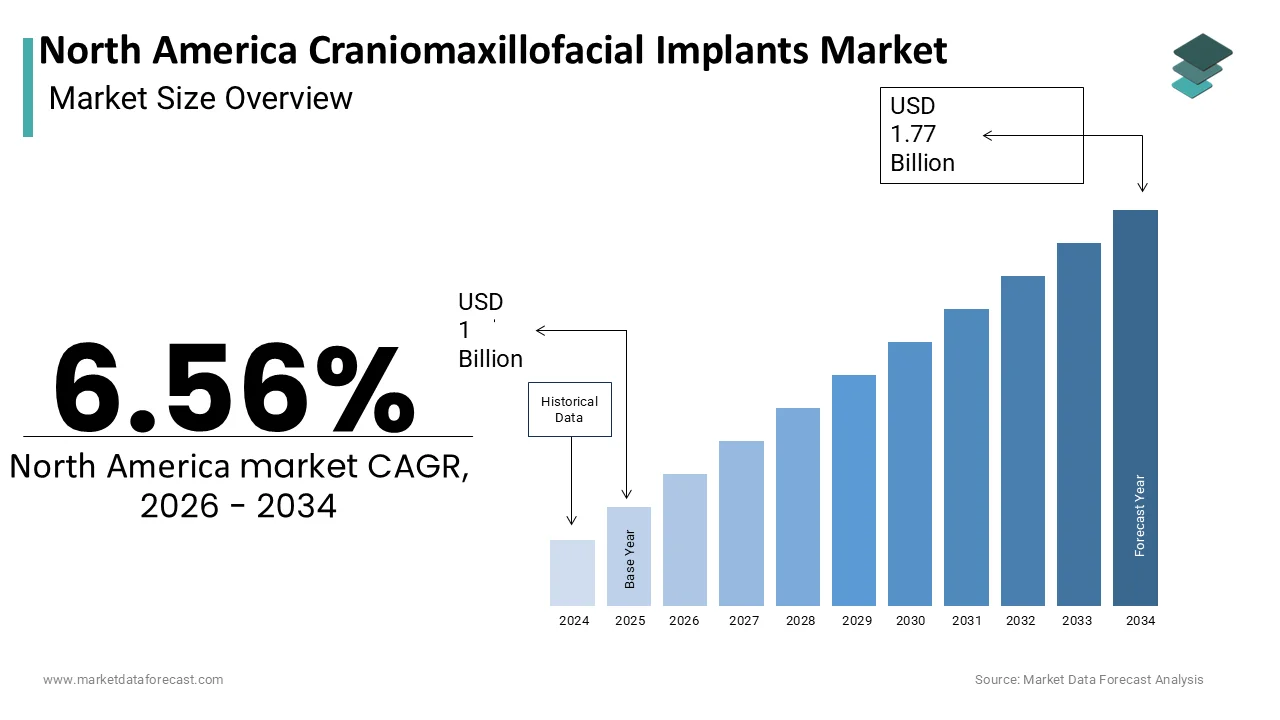
Market Size, 2025
$1 BnMarket Estimate, 2026
$1.07 BnMarket Forecast, 2034
$1.77 BnCAGR, 2026–2034
6.56%North America Craniomaxillofacial Implants Market Report Summary
The North America Craniomaxillofacial Implants Market was valued at USD 1 billion in 2025 and is projected to reach USD 1.77 billion by 2034, growing from USD 1.07 billion in 2026 at a CAGR of 6.56% during the forecast period. Growth is driven by rising traumatic injury incidence, advancements in additive manufacturing for patient-specific implants, and expansion into aesthetic and reconstructive procedures. High device costs and reimbursement complexities are shaping market dynamics.
Key Market Trends
- Rising adoption of 3D-printed patient-specific implants to reduce operative time
- Growing integration of digital surgery platforms and robotic assistance
- Increasing use of bioresorbable polymer implants to eliminate secondary removal surgeries
- Expansion of craniomaxillofacial implants into elective aesthetic contouring procedures
- Rising adoption of porous titanium mesh for cranioplasty and cranial vault reconstruction
Segmental Insights
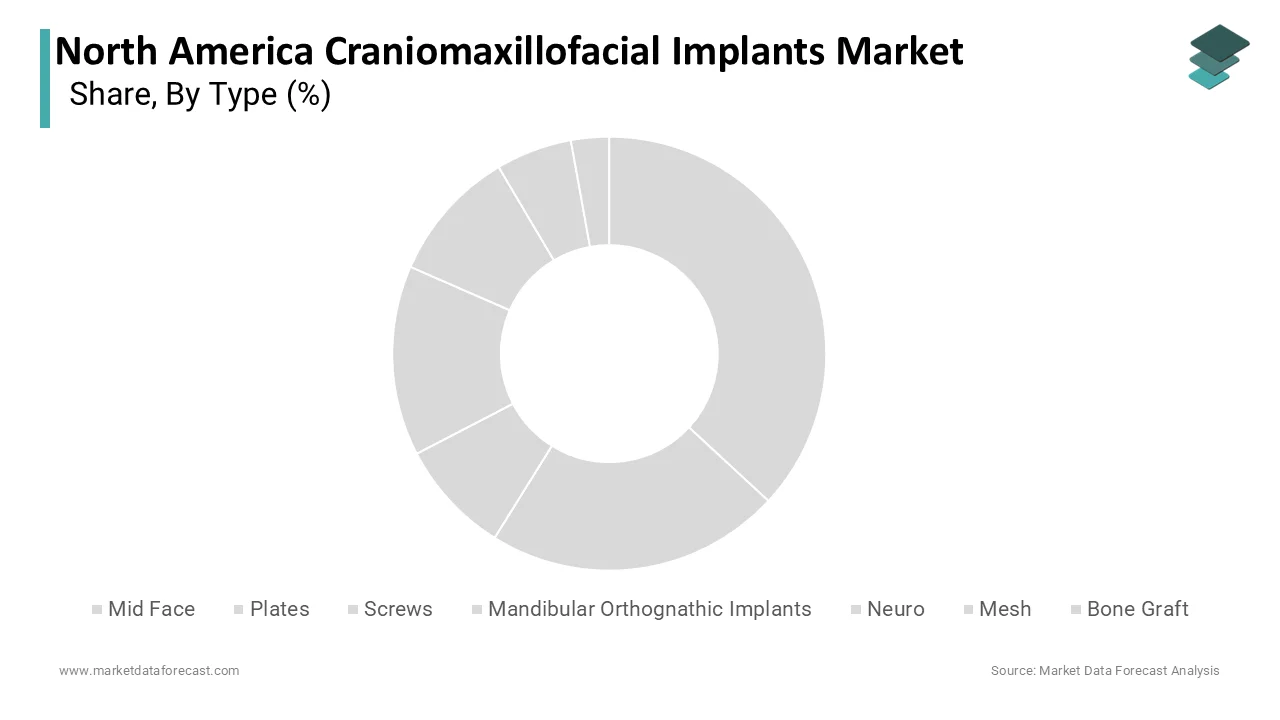
- Based on type, plates led the market in 2025, driven by their essential role in rigid internal fixation for facial fractures and reconstructive surgeries.
- Based on material of construction, titanium held the majority share in 2025, supported by its biocompatibility and success rate exceeding 95% over ten years.
- Based on property, non-absorbable fixators dominated the market in 2025, driven by their long-term stability and high load-bearing capacity.
Regional Insights
- United States led the market in 2025 by holding 84.8% of the regional market share, supported by advanced healthcare infrastructure and high facial trauma incidence.
- Canada holds a significant share, driven by publicly funded healthcare and growing adoption of 3D printing in academic medical centers.
- Mesh is the fastest-growing implant type, projected at a CAGR of 9.2%, driven by increasing use in cranial vault reconstruction and sports-related head injury treatment.
Competitive Landscape
The market is highly competitive, with manufacturers focusing on digital planning integration, material science innovation, and patient-specific solutions. Companies are investing in surgeon education programs and strategic partnerships with academic medical centers to strengthen clinical adoption.
Prominent players in the market include Stryker Corporation, DePuy Synthes (Johnson & Johnson), Integra LifeSciences Holdings Corporation, OsteoMed LLC, Medartis AG, Matrix Surgical USA, Calavera Surgical Design, Zimmer Biomet Holdings Inc., Medtronic plc, and KLS Martin Group.
North America Craniomaxillofacial Implants Market Size
The North America Craniomaxillofacial Implants Market was valued at USD 1 billion in 2025, is expected to have a 6.56% CAGR from 2026 to 2034, and be worth USD 1.77 billion by 2034 from USD 1.07 billion in 2026.
Craniomaxillofacial Implants (CMFs) are a specialized array of medical devices designed for the reconstruction and repair of skeletal defects in the skull, face, and jaw. These implants include plates, screws, meshes, andcustom-fabricatedd solutions utilized in trauma surgery, oncological resection, and congenital defect correction. The region represents a mature healthcare ecosystem where advanced surgical techniques intersect with high patient expectations for aesthetic and functional restoration. The Centers for Disease Control and Prevention (CDC) confirms that traumatic brain injuries and associated cranial trauma comprise a leading driver of emergency medical visits, hospitalizations, and surgical interventions across the United States. This high incidence of craniofacial trauma creates a consistent clinical demand for fixation systems that ensure structural stability during healing. As per data from the American Cancer Society, head and neck cancers diagnose over 66000 new cases each year in the United States, necessitating complex reconstructive procedures following tumor removal. The aging demographic further contributes to market dynamics as older adults are more susceptible to facial fractures due to falls and osteoporosis. In addition, the National Council on Aging (NCOA) reveals that one in four Americans aged 65 and older suffers a fall each year, highlighting a significant demographic risk factor for traumatic physical impacts that require surgical stabilization. Regulatory oversight by the Food and Drug Administration ensures rigorous safety standards while fostering innovation in biocompatible materials such as titanium alloys and resorbable polymers. The integration of digital planning tools andthree-dimensionall printing has transformed preoperative preparation, allowing for precise implant customization that reduces operative time and improves patient outcomes.
MARKET DRIVERS
Rising Incidence Of Traumatic Injuries And Accidents Drives Demand
Traumatic injuries are a primary driver for the North American craniomaxillofacial implants market. This is due to the high volume of accidents involving motor vehicles, sports, and interpersonal violence. According to the National Highway Traffic Safety Administration, motor vehicle crashes resulted in over 38000 fatalities and millions of non-fatal injuries in the United States in recent years, with a significant proportion involving facial fractures. These high-energy impacts often cause complex comminuted fractures of the mandible, maxilla, and orbital bones that require rigid internal fixation using titanium plates and screws. The National Institutes of Health (NIH) indicates that maxillofacial fractures comprise a distinct portion of emergency skeletal injury admissions, driving the need for specialized craniofacial repair. The prevalence of contact sports such as football, hockey, and boxing also contributes to this burden, with thousands of athletes sustaining facial injuries annually that necessitate surgical repair. Data from the National Collegiate Athletic Association indicates that facial injuries represent a substantial portion of reported athletic trauma requiring immediate and often delayed reconstructive surgery. The complexity of these injuries demands high-quality implants that offer superior biomechanical strength and biocompatibility to prevent infection and ensure proper bone union. Emergency trauma centers in major urban areas are equipped with specialized craniomaxillofacial teams who rely on comprehensive implant systems to manage diverse fracture patterns. The increasing use of seat belts and airbags has changed the pattern of facial injuries but has not reduced the overall volume of cases requiring surgical intervention. This steady stream of trauma cases ensures consistent demand for fixation devices across hospitals and ambulatory surgical centers.
Advancements In Additive Manufacturing and Patient-Specific Implants
Technological advancements in additive manufacturing have revolutionized the design and production of patient-specific implants, which further accelerates the expansion of the North American craniomaxillofacial implants market. Consequently, this drives market growth by improving clinical outcomes and surgical efficiency. According to research published by the Journal of Craniofacial Surgery, the use ofthree-dimensionall printed custom implants has reduced operative time by an average of 25 percent compared to traditional intraoperative bending of stock plates. This reduction in surgery duration lowers anesthesia exposure and hospital costs while enhancing precision in complex reconstructions. As per data from the Radiological Society of North America, the integration of computed tomography data with computer-aided design software allows for the creation of implants that perfectly match individual patient anatomy. This level of customization is particularly valuable in oncological resections where large segments of bone are removed and need to be replaced with structurally sound alternatives. The ability to pre-plan screw trajectories and plate contours minimizes the risk of damage to surrounding nerves and vessels during surgery. Major medical device manufacturers have established dedicated digital laboratories in North America to support rapid prototyping and production of these customized solutions. The regulatory pathway for patient-specific devices has become more streamlined, encouraging wider adoption among surgeons. The superior fit and finish of additively manufactured implants also contribute to better aesthetic results,s which is a critical factor for patient satisfaction in facial reconstruction.
MARKET RESTRAINTS
High Cost Of Advanced Implant Systems And Surgical Procedures
The high cost associated with advanced CMF systems and the corresponding surgical procedures hampers the growth of the North American craniomaxillofacial implants market. This limits access for uninsured or underinsured patients. According to cost analysis from the Healthcare Cost and Utilization Project, the average hospital charge for complex craniofacial reconstruction exceeds 50000 dollars, including implant costs, surgeon fees, and facility charges. Custom patient-specific implants can cost several thousand dollars more than standard off-the-shelf components, creating financial barriers for healthcare providers operating under fixed reimbursement rates. Medicaid reimbursement rates in many states are insufficient to cover the full cost of premium implant systems,s forcing hospitals to absorb losses or limit their use to essential cases only. Statistics from the American Hospital Association indicate that uncompensated care for trauma patients remains a significant financial burden for safety net hospitals, which often serve populations with higher injury rates. The economic pressure encourages some providers to opt for less expensive generic implants, which may lack the advanced features of branded systems. Budget constraints in public health systems further restrict the adoption of innovative technologies such as resorbable plates, which offer long-term benefits but come at a higher initial price point. This financial disparity creates inequities in access to high-quality reconstructive care across different socioeconomic groups. Manufacturers face pressure to reduce prices while maintaining profitability, which can limit investment in research and development fornext-generationn products.
Stringent Regulatory Requirements And Approval Timelines
Stringent regulatory requirements imposed by the Food and Drug Administration create substantial barriers to entry for new products and delay the commercialization of innovative implant technologies, which constrains the expansion of the North American craniomaxillofacial implants market. The U.S. Food and Drug Administration (FDA) categorizes the vast majority of craniomaxillofacial fixation plates and custom structural implants as Class II medical devices, which typically require 510(k) clearance rather than full Premarket Approval clinical trials. This process can take several years and cost millions of dollars, rs discouraging smaller companies from entering the market and limiting competition. MD+DI Online shows that standard Class II 510(k) clearances for orthopedic and facial fixation devices average 5 to 9 months from initial submission to final decision. The requirement for long-term follow-up data to demonstrate safety and efficacy adds further delays and costs to the development cycle. Statistics from the Government Accountability Office highlight that regulatory uncertainties can stifle innovation by creating unpredictable timelines for product launches. Manufacturers must navigate changing regulatory landscapes and additional post-market surveillance requirements, which increase operational burdens. The high cost of compliance is often passed on to healthcare providers and patients, contributing to the overall expense of care. Smaller innovators may struggle to secure funding due to the lengthy approval process, thus reducing the diversity of available solutions. The focus on risk mitigation sometimes slows the adoption of beneficial technologies that could improve patient outcomes. Companies must balance regulatory compliance with commercial viability,ity which can be challenging in a highly scrutinized market environment.
MARKET OPPORTUNITIES
Integration Of Digital Surgery And Robotics Creates New Avenues
The integration of digital surgery platforms and robotic assistance presents a significant opportunity for the North American craniomaxillofacial implants market. This enhances precision and expands the scope of treatable conditions. Clinical technology assessments documented in the Journal of Robotic Surgery via Springer confirm a steady annual increase in robotic assistance for complex head and neck interventions, driven by a clinical need for enhanced anatomical visualization and micro-dexterity. These systems allow for minimally invasive approaches that reduce tissue trauma and accelerate recovery times, making them attractive to patients and payers. As per clinical studies cited by the American Academy of Otolaryngology, robot-assisted surgery enables more precise placement of implants in hard-to-reach areas of the skull base and orbit. The synergy between robotic platforms and custom implants creates a comprehensive solution for complex reconstructions that was previously unattainable. Statistics from the Society of University Neurosurgeons indicate that institutions investing in digital surgery infrastructure see increased referral volumes for complex craniofacial cases. Manufacturers have the opportunity to develop implants specifically designed for robotic insertion, which could streamline workflows and improve consistency. The data generated during robotic procedures can be used to refine implant designs and surgical protocols, ls creating a feedback loop for continuous improvement. Telemedicine and remote planning capabilities further extend the reach of specialized care to rural areas. The convergence of hardware and software solutions offers a differentiated value proposition that can command premium pricing. Early adopters of these technologies gain a competitive advantage in attracting top surgical talent and discerning patients.
Expansion Into Aesthetic And Reconstructive Cosmetic Procedures
The surging demand for aesthetic and reconstructive cosmetic procedures is a key growth area for the NorAmericanica craniomaxillofacial implants market. This development is beyond traditional trauma and oncology applications. The American Society of Plastic Surgeons (ASPS) demonstrates that tens of thousands of structural facial contouring implants, including chin and cheek augmentations, are performed annually in the United States, supporting market demand for custom facial hardware. This trend is driven by increasing social acceptance of cosmetic enhancements and the desire for facial symmetry and definition. As per research, the non-surgical and surgical facial rejuvenation landscape is expanding rapidly, with patients seeking long-lasting solutions that provide structural support. Custom implants made from biocompatible materials offer superior aesthetic outcomes compared to injectable fillers, which require frequent maintenance. The aging population is also seeking restorative procedures to counteract volume loss and sagging tissues,s creating demand for subperiosteal implants. In addition, the Aesthetic Society shows a steady rise in male patients seeking elective facial bone contouring and structural augmentations, broadening the core commercial customer base for reconstructive materials. Manufacturers can leverage their expertise in craniofacial reconstruction to develop specialized aesthetic implants that meet the unique needs of this segment. Partnerships with plastic surgeons and aesthetic clinics can facilitate market penetration and brand recognition. Thehigh-marginn nature of elective procedures provides financial stability that can offset fluctuations in the trauma sector. Marketing efforts focused on natural-looking results and minimal downtime resonate well with consumers. The crossover between medical necessity and aesthetic desire creates a versatile market dynamic.
MARKET CHALLENGES
Reimbursement Complexities And Coding Variations
Reimbursement complexities and variations in coding practices are major challenges for manufacturers and providers in the North American craniomaxillofacial implants market. According to analysis from the American Medical Association, inconsistent application of Current Procedural Terminology codes for craniofacial reconstruction leads to claim denials and delayed payments. The distinction between medically necessary reconstructive surgery and elective cosmetic procedures is often blurred,d causing disputes with insurance carriers. As per the Centers for Medicare and Medicaid Services, prior authorization requirements for high-cost implants have become more stringent, requiring extensive clinical documentation that burdens administrative staff. The lack of standardized coverage policies across different private insurers creates uncertainty for patients and providers alike. Some payers impose arbitrary limits on the types of implants covered, favoring lower-cost options over advanced custom solutions. This fragmentation forces manufacturers to maintain large reimbursement support teams to assist providers with coding and billing issues. The administrative burden diverts resources from clinical care and innovation. Changes in federal healthcare policy can further disrupt reimbursement structures, requiring constant vigilance and adaptation. Providers may hesitate to adopt new technologies if reimbursement status is unclear,r slowing market adoption. The complexity of the payment landscape requires strategic navigation to ensure financial viability.
Supply Chain Disruptions And Raw Material Volatility
Supply chain disruptions and volatility in raw material prices pose significant impediments to the consistent availability and affordability of CMFs, which slows down the expansion of the North American craniomaxillofacial implants market. According to the Institute for Supply Management, global shortages ofmedical-gradee titanium and specialized polymers have led to extended lead times for implant manufacturing. Geopolitical tensions and trade restrictions further exacerbate these issues by limiting access to key suppliers in international markets. Economic indexes curated by the U.S. Bureau of Labor Statistics (BLS) indicate that the producer price index for surgical and medical instrument manufacturing has sustained steady upward inflationary adjustments, reflecting elevated overhead for device producers. These cost increases are difficult to pass on to customers due to fixed reimbursement rates and competitive pricing pressures. Manufacturers must invest in redundant supply chains and inventory buffers, which tie up capital and increase operational costs. The just-in-time manufacturing model prevalent in the industry is ill-suited to handle sudden shocks, leading to stockouts of essential items. Hospitals face difficulties in planning surgeries when implant availability is uncertain, potentially compromising patient care. The environmental impact of mining and processing raw materials also faces increasing scrutiny, requiring sustainable sourcing practices that may be more expensive. Navigating these supply chain complexities requires robust risk management strategies and strong supplier relationships.
REPORT COVERAGE
| REPORT METRIC | DETAILS |
| Market Size Available | 2025 to 2034 |
| Base Year | 2025 |
| Forecast Period | 2026 to 2034 |
| Segments Covered | By Type, Material of Construction, Property, and Region |
| Various Analyses Covered | Global, Regional and Country-Level Analysis, Segment-Level Analysis, Drivers, Restraints, Opportunities, Challenges; PESTLE Analysis; Porter’s Five Forces Analysis, Competitive Landscape, Analyst Overview of Investment Opportunities |
| Countries Covered | US, Canada, Rest of North America |
| Market Leaders Profiled |
|
SEGMENTAL ANALYSIS
By Type Insights
The plates segment led the North America craniomaxillofacial implants market and captured a significant share in 2025. Its fundamental role in rigid internal fixation for facial fractures and reconstructive surgeries has contributed to the leading position of this segment. According to data from the American Association of Oral and Maxillofacial Surgeons, mandibular and maxillary fractures are among the most common facial injuries requiring surgical intervention,n with plates providing the necessary stability for bone healing. The versatility of plating systems allows them to be used in various anatomical regions, including the midface, mandible, and cranial vault, making them indispensable in trauma centers. As per the Centers for Disease Control and Prevention, falls and motor vehicle accidents result in hundreds of thousands of facial fractures annually in the United States,s creating a consistent demand for reliable fixation devices. Titanium plates are preferred for their biocompatibility and strength,th which minimizes the risk of rejection and ensures long-term structural integrity. The standardization of plating techniques across surgical training programs further reinforces their dominance, as surgeons are highly proficient in their application. Manufacturers offer a wide range of plate designs, including locking and non-locking variants, to address specific clinical needs such as comminuted fractures or osteoporotic bone. The widespread availability of these systems in hospital inventory ensures they remain the first line of defense in facial trauma management. Regulatory approvals for new plate designs are streamlined due to their established safety profile, facilitating continuous innovation without significant market entry barriers. This entrenched position ensures that plates will continue to drive the majority of revenue in the craniomaxillofacial sector.
Beyond trauma applications, plates are extensively used in reconstructive surgery following tumor resection and congenital defect correction, which sustains their market leadership. According to the American Cancer Society, head and neck cancers account for a significant portion of cancer diagnoses requiring complex reconstruction that often involves bone grafts secured with plates. These procedures demand high precision and durability, which modern plating systems provide through advanced engineering and material science. As per clinical guidelines from the National Comprehensive Cancer Network, rigid fixation is recommended for mandibular reconstruction to restore function and aesthetics,s improving patient quality of life. The aging population is also contributing to increased demand for orthognathic surgeries, es where plates are used to stabilize corrected jaw positions. Statistics from the American Society of Plastic Surgeons indicate a steady rise in reconstructive procedures driven by improved survival rates for cancer patients and greater awareness of treatment options. The development of patient-specific plates using three-dimensional printing technology has enhanced their appeal by offering a customized fit and reduced operative time. Surgeons value the ability to pre-bend or order custom plates that match individual anatomy, reducing intraoperative adjustments. The integration of plates with other implant types such as meshes and screws creates comprehensive solution packages that manufacturers promote to healthcare providers. This multifaceted utility ensures that plates remain central to craniomaxillofacial surgical practices across North America.
The mesh segment is experiencing the fastest growth, with a CAGR of 9.2% during the forecast period due to its increasing adoption in cranial vault reconstruction and soft tissue support applications. Moreover, the Journal of Neurosurgery highlights that titanium mesh systems are increasingly utilized in cranioplasty procedures because they provide superior contours and handling compared to traditional autologous bone flaps. Mesh implants provide a lightweight yet strong barrier that protects the brain while allowing for natural skull curvature restoration. As per the Congress of Neurological Surgeons, traumatic brain injuries often require decompressive craniectomy followed by delayed cranioplasty,y where mesh serves as an ideal material due to its ease of shaping and integration. The growing incidence of sports-related head injuries and military combat trauma has expanded the patient pool requiring such interventions. Statistics from the Department of Defense indicate that improved survival rates from blast injuries have led to a higher number of veterans seeking cranial reconstruction using advanced mesh systems. The aesthetic benefits of mesh implants are also driving their adoption in cosmetic craniofacial surgery, where patients seek to correct skull deformities. Manufacturers are introducing porous mesh designs that promote bone ingrowth,h enhancing long-term stability and reducing the risk of migration. The minimal invasiveness of mesh placement compared to bulkier implants appeals to both surgeons and patients seeking faster recovery times. These factors collectively contribute to the rapid expansion of the mesh segment in the North American market.
Technological advancements in mesh design, including the development of porous and bioactive surfaces,s are accelerating market growth by improving clinical outcomes and patient satisfaction. These innovations address previous limitations associated with smooth surface meshes, es which were prone to shifting or causing soft tissue irritation. As per regulatory clearances from the Food and Drug Administration, several new mesh products featuring enhanced radiolucency and magnetic resonance imaging compatibility have been approved, allowing for better postoperative monitoring. The ability to visualize surrounding tissues without artifact interference is crucial for detecting complications early. The integration of mesh with computer-aided design software enables surgeons to plan reconstructions with greater precision, ensuring optimal fit and function. Custom mesh implants produced via additive manufacturing are gaining traction for complex defects where standard sizes are insufficient. The reduction in operative time and improved aesthetic results associated with these technologies drive their adoption in high-volume centers. Surgeons are increasingly trained in mesh handling techniques, further supporting market expansion. The combination of material innovation and digital planning tools positions mesh as a key growth driver in the craniomaxillofacial implants sector.
By Material Of Construction Insights
In 2025, the titanium segment held the majority share of the North America craniomaxillofacial implants market because of its exceptional biocompatibility,y corrosion resistance,ce and mechanical strength,gth which are critical for long-term implant success. A study notes that while titanium alloys possess a higher modulus of elasticity than cortical bone, they offer the closest mechanical compatibility among traditional metals, minimizing severe stress-shielding risks. This property minimizes the risk of bone resorption and implant loosening, which are common complications with stiffer materials. As per the International Journal of Oral and Maxillofacial Surgery, titanium implants demonstrate a success rate exceeding 95 percent over ten years, making them the gold standard for facial reconstruction. The material's inert nature prevents allergic reactions and inflammatory responses, ensuring patient safety even in sensitive facial regions. Statistics from the Food and Drug Administration show that the majority of cleared craniomaxillofacial devices are made from titanium,m reflecting its established safety profile. Surgeons prefer titanium for its ease of handling and ability to be contoured intraoperatively to match complex facial geometries. The widespread availability of titanium processing infrastructure ensures consistent supply and quality control across manufacturers. Its radiopacity allows for clear visualization of X-rays, ys aiding postoperative assessment and follow-up care. The long track record of successful outcomes builds trust among clinicians and patients, reinforcing its dominant market position. Despite the emergence of alternative materials, titanium remains the benchmark against which innovations are measured.
The well-established manufacturing infrastructure for titanium implants contributes to their market leadership by ensuring cost efficiency and scalability for producers. The mature supply chain for medical-grade titanium reduces lead times and ensures consistent availability of raw materials for implant fabrication. As per sources, the standardized nature of titanium implants simplifies inventory management and reduces storage costs compared to specialized alternatives. Manufacturers have invested heavily in automated machining and finishing processes for titanium, which enhances product consistency and reduces defect rates. The familiarity of regulatory bodies with titanium facilitates faster approval processes for new device variations,s encouraging continuous product development. Surgeons benefit from extensive training resources and clinical literature supporting titanium use,se which lowers the learning curve for new techniques. The recyclability of titanium scrap during manufacturing also aligns with sustainability goals, appealing to environmentally conscious healthcare institutions. These operational advantages create a robust ecosystem that supports the continued dominance of titanium in the craniomaxillofacial implants market.
The polymer segment is growing at a CAGR of 8.5% owing to the demand for radiolucent and aesthetically superior implant solutions that do not interfere with diagnostic imaging. According to research from the Journal of Biomedical Materials Research, polymers such as polyetheretherketone and polylactic acid offer excellent radiolucency, allowing for clear computed tomography and magnetic resonance imaging scans post surgery. This feature is particularly valuable in neurosurgical applications where monitoring brain tissue is critical for detecting complications. The aesthetic advantage of polymers, which can be color matched to bone or tissue, also appeals to patients undergoing visible facial reconstruction. Statistics from plastic surgery journals indicate that patient satisfaction scores are higher for polymer implants in aesthetic zones due to their natural appearance and lack of palpability under thin skin. The lightweight nature of polymers reduces the burden on surrounding tissues,s enhancing comfort and reducing the risk of erosion. Manufacturers are developing high-strength polymer composites that match the mechanical properties of bone while retaining these beneficial characteristics. The ability to mold polymers into complex shapes using injection molding techniques allows for cost-effective production of custom implants. These attributes are driving increased adoption in both trauma and elective reconstructive procedures.
Advancements in bioresorbable polymer technologies are fueling the growth of the polymer segment by offering temporary fixation solutions that eliminate the need for secondary removal surgeries. According to studies in the Annals of Plastic Surgery, bioresorbable plates and screws made from polylactic glycolic acid degrade safely within the body over 12 to 18 months, transferring load to healed bone gradually. This feature is particularly advantageous in pediatric craniofacial surgery, where growing skulls require implants that do not restrict development. The elimination of second surgeries reduces healthcare costs and patient morbidity, making it an attractive option for payers and families. Manufacturers are improving the mechanical strength of bioresorbable polymers to expand their use in adult trauma cases where initial fixation strength is critical. Regulatory approvals for new polymer formulations are accelerating as clinical evidence supports their efficacy and safety. The environmental benefit of reduced medical waste from removed implants also aligns with sustainable healthcare initiatives. These technological strides position polymers as a rapidly expanding segment in the craniomaxillofacial market.
By Property Insights
The non-absorbable fixators segment dominated the North America craniomaxillofacial implants market and accounted for a substantial share in 2025. This dominance of the segment was driven by its provenlong-termm stability and high load-bearing capacity, which are essential for complex facial reconstructions. According to the Journal of Oral and Maxillofacial Surgery,titanium-based non-absorbable screws and plates provide superior fixation strength compared to resorbable alternatives, especially in high-stress areas like the mandible. This reliability ensures that bones remain aligned during the healing process, reducing the risk of malunion or nonunion. Clinical guidelines published by the American Association of Oral and Maxillofacial Surgeons (AAOMS) establish that non-absorbable titanium fixators remain the definitive standard for adult trauma patients requiring immediate, rigid mechanical stabilization. The permanence of these devices eliminates concerns about premature degradation or loss of fixation strength over time. Statistics from trauma registries indicate that revision surgery rates are lower for patients treated with non-absorbable fixators compared to those with resorbable systems in high-impact fractures. Surgeons trust the predictable performance of non-absorbable materials, which have been used successfully for decades. The wide range of sizes and configurations available allows for precise customization to different fracture patterns. The cost-effectiveness of non-absorbable fixators also contributes to their dominance, as they do not require expensive specialized materials. Their established role in standard surgical protocols ensures continued high usage across North American healthcare facilities.
The widespread familiarity of surgeons with non-absorbable fixators and the existence of established clinical protocols reinforce their market leadership. Core educational milestones mandated by the Accreditation Council for Graduate Medical Education (ACGME) require that oral, maxillofacial, and plastic surgery residency programs provide comprehensive training in rigid non-absorbable internal fixation to ensure graduating surgeon proficiency. This educational foundation creates a large base of practitioners who are comfortable and confident in applying these devices. As per hospital procurement records, non-absorbable fixators are stocked in nearly all emergency departments and operating rooms due to their universal applicability. The simplicity of their insertion technique reduces operative time and complexity, which is crucial in emergency trauma settings. Statistics from surgical efficiency studies show that procedures using non-absorbable fixators have shorter learning curves for junior surgeons compared to newer resorbable systems. The extensive library of clinical literature supporting their safety and efficacy provides strong evidence for their continued use. Regulatory pathways for non-absorbable devices are well understood, reducing administrative burdens for manufacturers and hospitals. The lack of need for special storage conditions or handling precautions further simplifies their integration into clinical workflows. These operational and educational advantages ensure thatnon-absorbablee fixators remain the standard of care for the majority of craniomaxillofacial procedures.
The re-absorbable fixators segment is anticipated to witness a CAGR of 7.8% from 2026 to 2034. This quick surge of the segment is mainly propelled by the fact that they eliminate the need for secondary surgeries to remove hardware, which enhances patient convenience and reduces healthcare costs. The financial benefit is significant for both insurers and patients who face high deductibles. The gradual degradation of these fixators transfers stress to the healing bone,e naturally promoting stronger remodeling. Statistics from pediatric craniofacial centers show that absorbable fixators are now the standard of care for children,n as they do not interfere with skull growth or require future extraction. The reduction in surgical risks associated with second procedures, es such as infection or nerve damage, further drives their adoption. Manufacturers are marketing these benefits aggressively to healthcare providers, emphasizing value-based care metrics. The alignment with patient-centered care models makes reabsorbable fixators an attractive option for elective and reconstructive surgeries. This trend is expected to continue as awareness of their advantages spreads among clinicians and consumers.
Technological improvements in the degradation profiles and mechanical strength of reabsorbable fixators are accelerating their market growth by expanding their applicability to more demanding clinical scenarios. According to materials science research from the University of Michigan, new copolymer formulations offer higher initial tensile strength and more predictable degradation rates than earlier generations. These advancements allow reabsorbable fixators to be used in adult trauma cases where higher loads are present during the initial healing phase. Clinical trials published in the Journal of Craniofacial Surgery establish that modern resorbable fixation systems maintain sufficient mechanical strength for 8 to 12 weeks to support stable bone union. The reduction in inflammatory responses associated with newer materials has also improved their safety profile. Statistics from regulatory filings indicate an increase in approvals for high-strength reabsorbable devices, reflecting confidence in their performance. Surgeons are becoming more comfortable using these fixators in complex fractures due to improved handling characteristics and reliability. The development of composite materials that combine polymers with ceramic particles enhances osteoconductivity,y promoting faster bone healing. These technical enhancements are breaking down previous barriers to adoption and positioning re absorbable fixators as a viable alternative to metal in a broader range of procedures. The continuous innovation in this segment ensures sustained growth momentum.
COUNTRY LEVEL ANALYSIS
The United States Craniomaxillofacial Implants Market Analysis
The United States was the top performer in the North America craniomaxillofacial implants market and secured an 84.8% share in 2025. This supremacy of the segment was propelled by its advanced healthcare infrastructure, re high prevalence of facial trauma,uma and robust reimbursement mechanisms. According to data from the Centers for Disease Control and Prevention, the United States experiences millions of injury-related emergency visits annually, with a significant portion involving facial fractures that require surgical intervention. The presence of leading medical device manufacturers and research institutions fosters rapid innovation and adoption of new technologies such aspatient-specificc implants and robotic-assisted surgery. As per the American College of Surgeons (ACS), the geographical distribution of accredited trauma networks establishes systemic national access to immediate craniomaxillofacial and reconstructive surgical teams. The aging population is contributing to increased demand for reconstructive procedures following cancer resections and degenerative conditions. Insurance coverage for medically necessary reconstructive surgery is comprehensive, although prior authorization requirements can create administrative hurdles. The strong intellectual property protection framework encourages investment in research and development, maintaining the country's competitive edge. Medical tourism for complex facial reconstruction also brings international patients to US centers, boosting market volume. The integration of digital health tools and telemedicine is expanding access to specialist consultations in rural areas. Government initiatives to improve trauma care systems further support market growth. The high disposable income of patients facilitates access to premium aesthetic implants. These factors collectively sustain the United States leadership in the global craniomaxillofacial implants landscape.
Canada Craniomaxillofacial Implants Market Analysis
Canada was positioned second in the regional market due to a publicly funded healthcare system that prioritizes equitable access to essential surgical services. According to data from Statistics Canada, the incidence of facial trauma is consistent with that of other developed nations, driving steady demand for craniomaxillofacial implants in public hospitals. The provincial health plans cover reconstructive surgeries for trauma and congenital defects, ensuring that financial barriers do not prevent access to care. Moreover, the adoption of advanced technologies such as three-dimensional printing is growing in major academic centers like those in Toronto and Vancouver. Regulatory approval by Health Canada is rigorous but aligned with international standards, facilitating the entry of innovative products. The aging demographic is increasing the prevalence of head and neck cancers,s which necessitates complex reconstruction using implants. Statistics from the Canadian Cancer Society indicate rising incidence rates driving demand for oncological reconstruction devices. The shortage of specialized surgeons in rural areas remains a challenge,ge but telemedicine is helping to bridge the gap. Government investments in healthcare infrastructure are improving capacity in urban centers. The focus on cost containment encourages the use of cost-effective implant solutions. Collaborative research initiatives with universities support local innovation. These dynamics shape a stable but slowly growing market environment.
COMPETITIVE LANDSCAPE
The competition in the North American craniomaxillofacial implants market is characterized by the presence of established multinational corporations and specialized niche players who compete on technology quality and service. Major companies leverage their extensive product portfolios and global resources to dominate the market, while smaller firms focus on innovative niche solutions such as bioresorbable materials or custom-printed implants. Product differentiation is achieved through advancements in material science, digital planning integration,n and ease of use. Price competition is moderate due to the critical nature of the devices and reimbursement structures, butvalue-basedd purchasing is increasing pressure on manufacturers to demonstrate cost effectiveness. Regulatory barriers to entry are high, requiring significant investment in clinical trials and approvals,s which limits new entrants. Strategic acquisitions and partnerships are common as companies seek to expand their technological capabilities and market reach. Customer loyalty is strong among surgeons who prefer familiar systems, leading to high switching costs. The market is also influenced by trends toward minimally invasive surgery and personalized medicine,e driving demand for advanced solutions. Overall, ll the competitive landscape is dynamic with continuous innovation shaping the future of craniomaxillofacial care.
KEY MARKET PLAYERS
Some of the companies that are playing a dominant role in the North American Craniomaxillofacial Implants Market include
- Stryker Corporation
- DePuy Synthes (Johnson & Johnson)
- Integra LifeSciences Holdings Corporation
- OsteoMed LLC
- Medartis AG
- Matrix Surgical USA
- Calavera Surgical Design
- Zimmer Biomet Holdings, Inc.
- Medtronic plc
- KLS Martin Group
TOP LEADING PLAYERS IN THE MARKET
- Stryker Corporation maintains a robust presence in the North American craniomaxillofacial implants market through its comprehensive portfolio of trauma and reconstruction devices. The company leverages its extensive distribution network to ensure widespread availability of titanium plates, screw,s and meshes across major hospital systems. Stryker recently enhanced its digital surgery capabilities by integrating advanced three-dimensional planning software with its implant offerings, enabling precise patient-specific solutions. This strategic move supports surgeons in complex reconstructions while reducing operative time and improving clinical outcomes. The company also invests heavily in surgeon education programs and clinical workshops to foster loyalty and expertise in using its proprietary systems. By focusing on innovation in minimally invasive techniques and robust supply chain management,nt Stryker continues to solidify its reputation as a trusted partner for healthcare providers seeking reliable and high-quality craniomaxillofacial solutions.
- Medtronic plc contributes significantly to the market by offering a diverse range of cranial and facial fixation systems designed for both trauma and elective reconstructive procedures. The company emphasizes technological integration by combining its implant products with navigation and robotic assistance tools that enhance surgical precision. Medtronic recently expanded its manufacturing capabilities in North America to accelerate the production ofpatient-specificc implants using additive manufacturing technologies. This investment allows for faster turnaround times and customized solutions tailored to individual patient anatomy. The company also engages in strategic collaborations with academic medical centers to conduct clinical research and validate new product innovations. Through continuous improvement in material science and digital health integration, Medtronic strengthens its competitive position and addresses the evolving needs of surgeons and patients in the craniomaxillofacial sector.
- DePSynthesthe,s, a subsidiary of Johnson and Joh,nson is a key player known for high-quality titanium and resorbable implant systems. The company focuses on providing comprehensive solutions for maxillofacial trauma, including locking plates and screws that offer superior stability. DePuy Synthes recently launched next-generation resorbable fixation devices that degrade safely within the body, eliminating the need for secondary removal surgeries. This innovation appeals to pediatric surgeons and patients seeking long-term convenience and reduced healthcare costs. The company also prioritizes regulatory compliance and quality assurance, ensuring that its products meet stringent safety standards. By maintaining strong relationships with key opinion leaders and investing in clinical evidence generation,n DePuy Synthes reinforces its market leadership and drives adoption of its advanced craniomaxillofacial implant technologies across North American healthcare facilities.
TOP STRATEGIES USED BY KEY MARKET PARTICIPANTS
Key players in the North American craniomaxillofacial implants market employ several strategic approaches to maintain competitiveness and drive growth. Companies prioritize continuous innovation in material science and digital integration to enhance product performance and surgical efficiency. Strategic partnerships with academic institutions and hospitals facilitate clinical research and validation of new technologies. Manufacturers also focus on expanding their portfolios of patient-specific implants using three-dimensional printing to address complex anatomical needs. Investment in surgeon education and training programs builds brand loyalty and ensures proper utilization of advanced devices. Regulatory compliance and quality assurance remain central to maintaining trust and market access. Companies also leverage digital marketing and direct sales forces to reach healthcare providers effectively. Supply chain optimization ensures consistent product availability and reduces lead times. These multifaceted strategies enable companies to navigate regulatory complexities and meet the diverse demands of the North American healthcare landscape.
MARKET SEGMENTATION
This research report on the North America Craniomaxillofacial Implants Market has been segmented and sub-segmented into the following categories.
By Type
- Mid Face
- Plates
- Screws
- Mandibular Orthognathic Implants
- Neuro
- Mesh
- Bone Graft
- Dural Repair
By Material of Construction
- Titanium
- Polymer
By Property
- Non-Absorbable Fixators
- Re-absorbable Fixators
By Country
- US
- Canada
- Rest of North America