- Product Description Description
- Table of Contents TOC
- List of Table & Figure LOT
- Get Free Sample PDF Sample PDF
Market Size, 2025
$28.33 BnMarket Estimate, 2026
$29.33 BnMarket Forecast, 2034
$38.74 BnCAGR, 2026–2034
3.54%North America Fire Protection Systems Market Size, Growth, Trends & Forecast (2026–2034)
The North America Fire Protection Systems Market size was calculated to be USD 28.33 billion in 2025, is anticipated to be worth USD 29.33 billion in 2026, and is projected to reach USD 38.74 billion by 2034, registering a compound annual growth rate (CAGR) of 3.54% during the forecast period from 2026 to 2034. Driven by stricter regulatory building codes, rising frequencies of fire-related hazards, and rapid technological integration (such as IoT and AI-enabled detection), the market continues to expand steadily.
Key Executive Metrics (At-a-Glance)
- 2025 Base Valuation: USD 28.33 Billion
- 2026 Current Valuation: USD 29.33 Billion
- 2034 Forecast Valuation: USD 38.74 Billion
- Compound Annual Growth Rate (CAGR): 3.54% (2026–2034)
- Leading Country Market: United States (anchored by mature regulatory frameworks, high urbanization rates, and a dominant presence of major manufacturers)
- Key Growth Engines: Canada and regional expansion hubs in Mexico driven by industrial investments
Core Market Drivers
- Stricter Regulatory Mandates: Evolving building codes (such as NFPA and OSHA standards) requiring mandatory retrofitting and modern fire safety compliance.
- Rising Risk of Wildfires & Industrial Fires: Increasing incidents of large-scale wildfires and complex industrial hazards necessitating robust prevention and suppression systems.
Primary Market Restraints & Challenges
- High Implementation Costs: Substantial capital outlays required for initial installation, recurring maintenance, and complex structural retrofitting.
- Retrofitting Complexities: Difficulties in upgrading pre-1980s or historic buildings due to architectural constraints and outdated structural plumbing.
Market Segmentation: Largest and Fastest-Growing Segments
| Segment Category | Largest Segment | Fastest-Growing Segment |
|---|---|---|
| By Application | Industrial (58.6% share in 2025) | Residential (CAGR of 6.8%) |
| By Service | Installation & Design (62.3% share in 2025) | Managed Services (CAGR of 7.2%) |
| By Product | Detection (55.8% share in 2025) | Analysis (CAGR of 7.5%) |
| By Region | United States (78.5% share in 2025) | Rest of North America / Canada |
Major Industry Players Profiled
Key market participants shaping the North American fire protection systems landscape include Johnson Controls, Honeywell International Inc., Siemens AG, Carrier Global Corporation, Robert Bosch GmbH, Gentex Corporation, Eaton Corporation plc, Halma plc, Hochiki Corporation, and Napco Security Technologies Inc.
North America Fire Protection Systems Market Size
The North America Fire Protection Systems Market Size was calculated to be USD 28.33 billion in 2025 and is anticipated to be worth USD 38.74 billion by 2034, from USD 29.33 billion in 2026, growing at a CAGR of 3.54% during the forecast period.
Fire protection systems are technologies and solutions designed to detect, prevent, and suppress fires in residential, commercial, industrial, and public infrastructure settings. These systems include both active components such as fire sprinklers, extinguishers, smoke detectors, and suppression systems, as well as passive elements like fire-resistant materials, compartmentalization structures, and flame-retardant coatings.
A key factor driving awareness and adoption is the increasing frequency of fire-related incidents across urban and rural areas. According to the National Fire Protection Association (NFPA), U.S. fire departments responded to an estimated 1.3 million fires in 2023, resulting in over 3,800 civilian deaths and billions of dollars in property damage. These figures have prompted both regulatory authorities and private stakeholders to emphasize fire safety compliance and system integration.
Apart from these, rapid urbanization, growing construction activity, and heightened concerns about life safety in high-density environments have further strengthened the demand for comprehensive fire protection systems.
MARKET DRIVERS
Increasing Regulatory Mandates and Building Code Compliance
The tightening of regulatory mandates and the enforcement of updated building codes that require the installation of modern fire safety equipment is one of the primary drivers of the North America fire protection systems market. Both federal and state-level authorities have been progressively updating fire safety standards to align with evolving risk profiles, particularly in densely populated urban centers and industrial zones.
In addition, cities like New York, Los Angeles, and Chicago have introduced localized ordinances requiring retrofitting of older buildings with smoke alarms and automatic suppression systems.
Furthermore, the National Fire Protection Association (NFPA) regularly revises its standards—such as NFPA 13 for sprinkler systems and NFPA 72 for fire alarm systems—to incorporate technological advancements and enhance fire response capabilities. These regulatory updates not only ensure better safety outcomes but also create sustained demand for compliant fire protection systems across various end-use sectors in North America.
Rising Incidence of Wildfires and Industrial Fires
The increasing frequency and severity of wildfires and industrial fires, which have underscored the critical need for robust fire prevention and suppression measures, is another major driver fueling the growth of the North America fire protection systems market. The United States has experienced a notable rise in large-scale wildfires, particularly in western states like California, Oregon, and Colorado, where climate change and prolonged droughts have created ideal conditions for fire outbreaks.
These events have led to significant loss of life, destruction of property, and economic disruption, prompting both government agencies and private homeowners to invest in protective infrastructure such as defensible space planning, fire-resistant materials, and early warning systems.
Similarly, industrial fires in manufacturing, chemical processing, and energy production facilities have surged, emphasizing the importance of specialized fire suppression systems.
MARKET RESTRAINTS
High Installation and Maintenance Costs
The high cost associated with the initial installation and ongoing maintenance of fire safety infrastructure is a significant restraint affecting the North America fire protection systems market. While modern fire protection systems offer enhanced reliability and performance, their implementation often requires substantial capital investment, particularly in retrofitting older buildings and upgrading existing systems.
Besides, regular inspection, testing, and servicing by certified professionals add recurring expenses that many small business owners and residential developers find burdensome.
This financial burden is particularly pronounced in the case of historic buildings, where structural limitations make retrofitting difficult and costly. As per the National Trust for Historic Preservation, retrofitting fire suppression systems in heritage properties can increase overall renovation costs by up to 20%, discouraging widespread adoption.
Lack of Awareness and Inconsistent Enforcement in Certain Regions
The lack of awareness regarding fire safety best practices and inconsistent enforcement of fire regulations, particularly in rural and less-developed regions, is another major constraint impeding the expansion of the North America fire protection systems market. Despite the existence of national fire safety guidelines, compliance levels vary significantly across different jurisdictions due to limited oversight, inadequate training, and insufficient public education campaigns.
According to the National Fire Protection Association (NFPA), nearly one-third of fire-related fatalities occur in areas where fire protection systems are either absent or improperly maintained. This is largely attributed to gaps in knowledge among property owners and occupants regarding the importance of smoke alarms, extinguishers, and evacuation planning.
Moreover, as per the International Association of Fire Chiefs (IAFC), smaller municipalities and unincorporated communities often lack dedicated fire inspectors or resources to conduct routine checks, leading to under-enforcement of fire code requirements.
MARKET OPPORTUNITIES
Integration of Smart Fire Detection and IoT-Enabled Systems
The integration of smart fire detection and Internet of Things (IoT)-enabled fire safety solutions is an emerging opportunity in the North America fire protection systems market. Technological advancements are enabling real-time monitoring, remote diagnostics, and automated alerts that enhance responsiveness and improve incident management efficiency.
Also, the adoption of intelligent fire alarm systems equipped with AI-based analytics and cloud connectivity has grown significantly in recent years, particularly in commercial and high-rise residential buildings. These systems can differentiate between actual fire threats and false alarms with greater accuracy, reducing unnecessary evacuations and operational disruptions.
Moreover, companies like Honeywell, Siemens, and Johnson Controls are expanding their portfolios to include connected fire safety platforms that integrate with broader building automation systems. As per the Consumer Technology Association (CTA), smart home installations incorporating fire sensors saw a 25% year-over-year increase in 2023, indicating rising consumer interest in proactive fire protection.
Growing Demand for Fire Protection in Renewable Energy Infrastructure
The growing demand for fire safety solutions in renewable energy infrastructure, particularly in solar farms, wind turbines, and battery energy storage systems (BESS), is another promising opportunity in the North America fire protection systems market. As the region accelerates its transition toward clean energy, the fire risks associated with these installations have become a pressing concern for operators and regulators alike.
According to the U.S. Department of Energy (DOE), thermal runaway events in lithium-ion battery storage units have led to multiple fire incidents at grid-scale BESS facilities, prompting calls for enhanced fire suppression and containment strategies. Traditional fire protection systems are being adapted to meet the unique challenges posed by high-voltage environments and remote site locations.
Moreover, organizations like the National Renewable Energy Laboratory (NREL) are collaborating with fire safety manufacturers to develop tailored fire detection and suppression technologies for wind turbine nacelles and solar panel arrays.
MARKET CHALLENGES
Complexity in Retrofitting Older Buildings with Modern Fire Protection Systems
The difficulty of retrofitting older buildings with modern fire protection infrastructure is a major challenge facing the North America fire protection systems market. Many structures constructed before the 1980s were not designed with contemporary fire safety standards in mind, making upgrades complex, expensive, and sometimes structurally impractical.
According to the National Institute of Standards and Technology (NIST), retrofitting fire sprinkler systems into pre-existing buildings can be hindered by outdated plumbing infrastructure, limited ceiling height, and architectural constraints. These issues often result in increased labor costs and extended project timelines, discouraging property owners from undertaking necessary modifications.
Further, as per the American Society of Civil Engineers (ASCE), approximately 60% of multi-family residential buildings constructed before 1970 lack adequate fire suppression systems, posing significant risks to occupants.
Municipalities face the added challenge of balancing historical preservation with fire safety mandates, particularly in designated heritage districts where aesthetic and structural integrity must be preserved.
Evolving Nature of Fire Hazards Due to Technological and Material Changes
The evolving nature of fire hazards driven by advancements in technology, changes in building materials, and the proliferation of electronic devices, is another critical challenge impacting the North America fire protection systems market. Traditional fire protection methods are increasingly being tested by new ignition sources, faster-burning materials, and unpredictable combustion behaviors.
According to the UL Firefighter Safety Research Institute (FSRI), modern synthetic furnishings and insulation materials burn significantly faster than those used decades ago, reducing escape times and increasing the intensity of indoor fires. Similarly, the rise in electric vehicles, lithium-ion batteries, and high-density data centers introduces novel fire risks that conventional suppression systems may not effectively mitigate.
In response, fire protection manufacturers must continuously innovate to develop products capable of detecting and suppressing these emerging fire types. However, keeping pace with rapidly changing fire dynamics while ensuring regulatory compliance presents a formidable challenge for product development teams.
REPORT COVERAGE
| REPORT METRIC | DETAILS |
| Market Size Available | 2025 to 2034 |
| Base Year | 2025 |
| Forecast Period | 2026 to 2034 |
| CAGR | 3.54% |
| Segments Covered | By Application, Service, Product, And Region |
| Various Analyses Covered | Global, Regional & Country Level Analysis; Segment-Level Analysis; DROC, PESTLE Analysis; Porter’s Five Forces Analysis; Competitive Landscape; Analyst Overview of Investment Opportunities |
| Regions Covered | Us, Canada, and the Rest of North America |
| Market Leaders Profiled | Johnson Controls, Honeywell International Inc., Siemens AG, Carrier Global Corporation, Robert Bosch GmbH, Gentex Corporation, Eaton Corporation plc, Halma plc, Hochiki Corporation, Napco Security Technologies Inc. |
SEGMENTAL ANALYSIS
By Application Insights
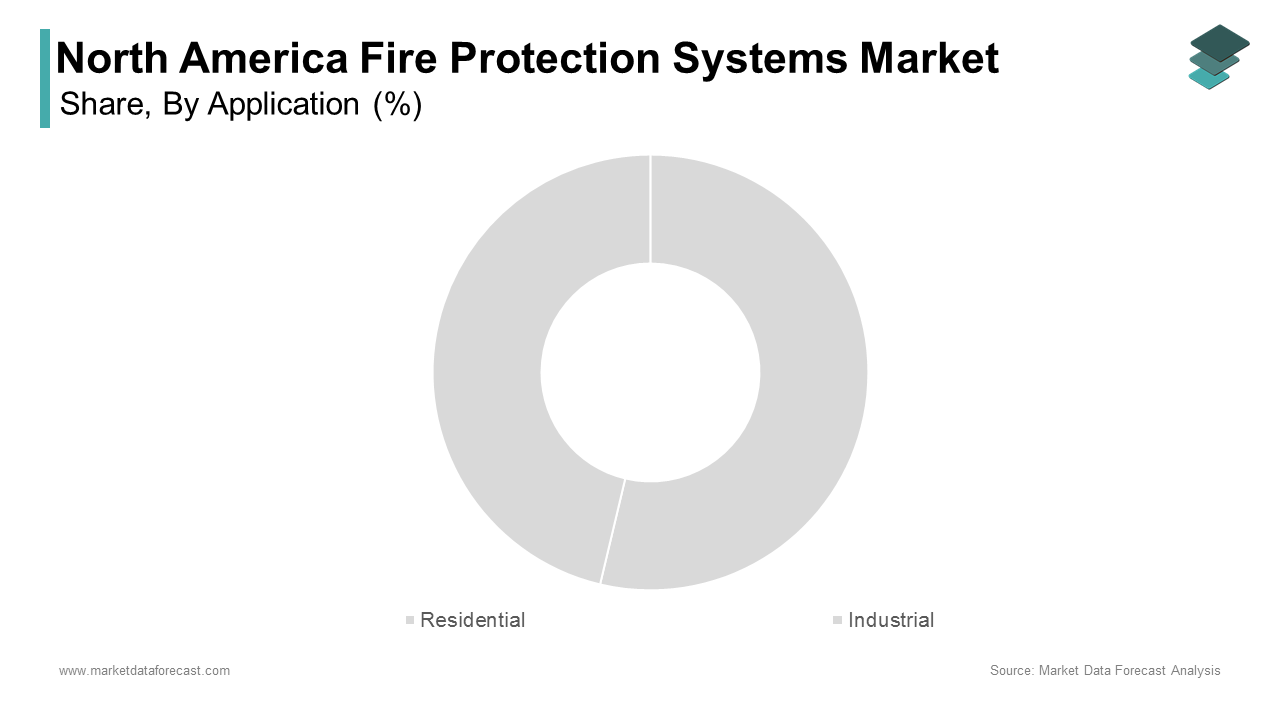
The industrial segment led the North America fire protection systems market in 2025 by contributing a 58.6% of total revenue. The stringent regulatory framework governing fire safety compliance in industrial settings is one key driver of this segment. This dominance is also driven by the high risk of fire incidents in manufacturing plants, chemical processing units, oil & gas facilities, and other heavy industries. For example, OSHA (Occupational Safety and Health Administration) mandates comprehensive fire protection measures across all industrial establishments. In 2022 alone, OSHA issued over 2,100 citations related to fire safety violations, reinforcing the need for robust fire protection systems. Apart from these, as per the National Fire Protection Association (NFPA), industrial fires account for nearly 30% of all fire-related property damage in the U.S., further justifying the investment in advanced fire suppression and detection technologies.
The expansion of energy and manufacturing sectors, particularly in the U.S. is another critical factor. As per the American Petroleum Institute, the U.S. oil and gas industry invested more than $140 billion in infrastructure development in 2023, which inherently includes fire safety installations. As these industries grow, so does the demand for fire protection systems tailored to hazardous environments.
Lastly, the increasing adoption of smart and automated fire protection systems in industrial zones is accelerating growth. Companies like Honeywell and Siemens have reported rising sales of intelligent fire detection systems integrated with building automation platforms, reflecting an industry shift toward predictive maintenance and real-time monitoring.
The residential application segment is projected to register the highest CAGR of 6.8%. This rapid growth is being fueled by increasing awareness about home safety, rising urbanization, and the growing incidence of residential fires.
According to the NFPA, approximately 74% of all fire deaths in the U.S. occur in homes , emphasizing the urgency for improved fire protection in residential buildings. In response, local governments have strengthened building codes. For instance, California mandated automatic fire sprinklers in new single-family homes starting in 2011, a policy that has since been emulated in several other states.
Moreover, the surge in smart home technology adoption has significantly influenced the market. These devices offer remote alerts via mobile apps, increasing their appeal among tech-savvy homeowners.
Besides, rising construction of multi-family housing units —especially in urban areas—is driving demand. The U.S. Census Bureau recorded over 1.3 million housing starts in 2023 , with a significant portion dedicated to apartment complexes that require comprehensive fire safety systems.
Lastly, insurance incentives are playing a role. Major insurers such as Allstate and State Farm offer premium discounts for homes equipped with certified fire protection systems, encouraging homeowners to invest in these life-saving technologies.
By Service Insights
The Installation & Design service segment held the biggest share of the North America fire protection systems market by accounting for 62.3% of total revenue in 2025. The mandatory requirement for fire system installation in new buildings is a primary driver of this segment. This superiority is also largely attributed to the growing number of new construction projects and retrofitting initiatives across commercial, industrial, and residential sectors. The International Building Code (IBC) and NFPA standards mandate that all new structures must have fully functional fire protection systems installed. According to the U.S. Census Bureau, there were over $1.5 trillion in total construction spending in 2023 , with a significant proportion allocated to commercial and industrial developments—each requiring compliant fire system integration.
Secondly, the aging infrastructure in the U.S. and Canada is prompting extensive retrofitting activities. Many buildings constructed before the 1990s lack modern fire safety features, prompting upgrades. The American Society of Civil Engineers gave the U.S. infrastructure a grade of "C-" in its 2023 Infrastructure Report Card , highlighting the urgent need for improvements, including fire safety retrofits in schools, hospitals, and public buildings.
Thirdly, the complexity of fire system design in large-scale projects is boosting demand for professional design services. Projects such as data centers, airports, and high-rise buildings require customized fire protection strategies, often involving collaboration between architects, engineers, and fire safety consultants. Companies like Johnson Controls and Halma have reported increased contracts for turnkey fire system design and installation services.
Lastly, public-private partnerships and government funding programs are facilitating widespread installation of fire systems. For example, the Federal Emergency Management Agency (FEMA) offers grants through the Assistance to Firefighters Grant (AFG) program, supporting the installation of fire protection systems in underserved communities.
The Managed Services segment is expected to witness the fastest growth, with a projected CAGR of 7.2% during the forecast period. The shift toward predictive and remote monitoring technologies is one major factor of the segment. This surge is also being driven by the increasing preference for outsourced fire protection management, especially among commercial and industrial clients seeking cost-effective, reliable solutions. Modern fire protection systems now integrate IoT-enabled sensors and cloud-based platforms that allow real-time monitoring and diagnostics.
The need for continuous compliance and maintenance support is another key driver . Businesses, particularly in healthcare and hospitality sectors, are opting for managed service providers to ensure ongoing adherence to fire safety regulations without the burden of in-house expertise. Furthermore, the cost-efficiency of managed services compared to in-house systems is attracting small and medium-sized enterprises (SMEs). Instead of investing heavily in equipment and personnel, companies can subscribe to monthly service packages that include inspections, updates, and emergency support.
Lastly, the integration of AI and analytics into fire system management is enhancing the value proposition of managed services. Providers like Siemens and UTC Fire & Security are leveraging machine learning to predict potential fire risks and optimize response times, thereby improving safety outcomes while reducing false alarms and operational costs.
By Product Insights
The Detection product segment dominates the North America fire protection systems market by capturing 55.8% of the share in 2025. This lead position is due to the foundational role of detection systems in identifying fire hazards at early stages, enabling timely intervention and minimizing damage.
An additional core driver is the regulatory emphasis on early warning systems . Standards set by the NFPA, particularly NFPA 72 (National Fire Alarm and Signaling Code), mandate the use of smoke and heat detectors in both residential and commercial buildings. According to the NFPA, three out of every five home fire deaths occurred in properties without functioning smoke alarms, reinforcing the importance of detection systems.
Moreover, technological advancements in detection equipment have spurred adoption. The emergence of smart smoke detectors, capable of integrating with home automation systems and sending alerts via smartphone apps, has boosted consumer interest. Google’s acquisition of Nest Labs and subsequent introduction of the Nest Protect detector marked a turning point in this trend.
The expansion of commercial infrastructure also plays a significant role. Large facilities such as office towers, malls, and hospitals require sophisticated detection networks.
Lastly, fire department recommendations and public education campaigns have contributed to higher detection system penetration. Programs such as the "Everyone Out!" initiative by FEMA encourage families to install smoke alarms and practice escape plans, directly influencing consumer behavior and purchasing decisions.
The Analysis segment is emerging as the fastest-growing product category, with a projected CAGR of 7.5% between 2025 and 2033. The growth of this segment is underpinned by the rising deployment of fire analysis systems that leverage artificial intelligence (AI), big data, and thermal imaging to assess fire behavior and optimize response strategies.
A different key driver is the integration of AI and predictive analytics into fire management systems. These technologies enable real-time fire pattern recognition, risk assessment, and simulation modeling, helping emergency responders make informed decisions. For example, IBM's Watson IoT platform is being used in conjunction with fire departments to analyze environmental factors and predict fire spread paths, enhancing evacuation planning.
Another factor is the growing reliance on thermal imaging and video analytics for early fire detection and situational awareness. Thermal cameras can detect abnormal temperature increases before visible flames appear, allowing for faster response. FLIR Systems, a leader in thermal imaging, pointed out a 20% increase in sales of industrial fire detection cameras in 2023 , driven by applications in power generation and chemical plants.
The adoption of digital twins in fire safety planning is another catalyst. Digital twin technology allows organizations to create virtual replicas of buildings and simulate fire scenarios to test evacuation routes and system performance. Deloitte highlights that over 30% of Fortune 500 companies in the energy and manufacturing sectors are using digital twins for fire risk mitigation.
Lastly, government investments in smart city initiatives are fueling the demand for advanced fire analysis tools. Smart cities rely on centralized command centers that aggregate data from multiple sources, including fire sensors and surveillance systems, to manage emergencies efficiently.
REGIONAL ANALYSIS
United States Fire Protection Systems Market Insights
The United States led the North America fire protection systems market by estimated at 78.5% in 2025. As the most developed economy in the region, the U.S. benefits from mature regulatory frameworks, high urbanization rates, and substantial investments in infrastructure and industrial expansion. One key growth driver is the strong presence of leading fire protection manufacturers and service providers . Companies such as Honeywell, Johnson Controls, Siemens, and UTC Fire & Security are headquartered in the U.S. and contribute significantly to innovation and market expansion.
Further, rigorous fire safety regulations enforced by federal and state agencies are propelling market growth. The NFPA regularly updates fire safety codes, while OSHA ensures workplace compliance. As per the NFPA, in 2022, U.S. fire departments responded to an average of 1,300 structure fires per day , reinforcing the necessity of robust fire protection systems.Urbanization and new construction activity are also key contributors. Lastly, the adoption of smart and connected fire protection systems is accelerating due to the proliferation of smart home ecosystems and building automation technologies.
Canada Fire Protection Systems Market Insights
Canada maintains a robust market supported by proactive fire safety policies and steady urban development. A major driver is comprehensive national and provincial fire safety legislation. The National Fire Code of Canada mandates fire protection systems in all new constructions, and provinces like Ontario and British Columbia enforce strict building codes.
The presence of well-established fire departments and emergency response systems also contributes to market growth. Canadian municipalities invest heavily in fire prevention and infrastructure upgrades. In 2023, the Canadian Association of Fire Chiefs highlighted that municipal fire budgets increased by 4.2% year-over-year , with a focus on modernizing equipment and expanding coverage.
An additional important factor is the growth of the commercial and industrial sectors , particularly in Alberta, Ontario, and Quebec. Alberta’s oil sands and Ontario’s automotive industry necessitate advanced fire suppression systems.
Lastly, rising consumer awareness and insurance incentives are promoting residential fire system adoption. Insurance companies such as Intact Financial and Desjardins offer premium discounts for homes equipped with certified fire alarms and sprinkler systems, encouraging uptake.
Rest of North America Fire Protection Systems Market Insights
The Rest of North America (RoNA) , which includes Mexico and Central American territories, represents a smaller but rapidly evolving segment. Though currently less developed compared to the U.S. and Canada, RoNA presents significant future growth potential. One key driver is the expansion of foreign direct investment (FDI) in manufacturing and logistics hubs . Countries like Mexico have become attractive destinations for multinational corporations setting up production facilities. As per the Mexican Ministry of Economy, FDI inflows reached $38 billion in 2023 , much of it directed toward automotive and electronics manufacturing, which require advanced fire protection systems.
Apart from these, urbanization and infrastructure modernization efforts are gaining traction.
However, limited regulatory enforcement and lower public awareness remain challenges. Unlike the U.S. and Canada, fire safety standards in parts of RoNA are not uniformly applied or rigorously enforced. The World Bank ranks Mexico 94th out of 190 countries in terms of regulatory quality, highlighting room for improvement in fire safety governance.
Despite these challenges, international collaborations and technology transfers are helping bridge the gap. Companies like Tyco Fire Protection and Halma have expanded operations into Mexico, offering localized fire safety solutions and training programs to enhance market readiness.
LEADING PLAYERS IN THE NORTH AMERICA FIRE PROTECTION SYSTEMS MARKET
Honeywell International Inc.
Honeywell plays a pivotal role in the fire protection systems market by offering advanced fire detection, suppression, and emergency communication solutions. The company is known for its innovative product portfolio that integrates seamlessly with smart building technologies. Honeywell's commitment to R&D has led to the development of intelligent fire safety systems that are widely adopted across commercial and industrial sectors. Its global presence and strong distribution network have significantly influenced the evolution of modern fire safety standards worldwide.
Johnson Controls International plc
Johnson Controls is a leading player in integrated building technologies, with its fire protection systems forming a core component of its building efficiency solutions. The company’s comprehensive range includes fire alarms, sprinkler systems, and smoke control mechanisms tailored for high-rise buildings, healthcare facilities, and data centers. Through strategic partnerships and continuous innovation, Johnson Controls has reinforced its position as a global benchmark in fire safety engineering and system integration.
Siemens AG
Siemens offers cutting-edge fire safety solutions under its Building Technologies division, combining digitalization with traditional fire protection systems. The company specializes in intelligent fire detection, evacuation guidance, and centralized fire management platforms. Siemens’ focus on IoT-enabled systems and automation has positioned it at the forefront of smart fire safety infrastructure. Its solutions are widely deployed across critical infrastructure sectors, contributing to enhanced safety protocols globally.
TOP STRATEGIES USED BY KEY MARKET PARTICIPANTS
One major strategy employed by key players is product innovation and technological advancement , where companies continuously invest in research and development to introduce smarter, faster, and more reliable fire protection systems. These innovations often integrate with broader building automation ecosystems, enhancing functionality and user experience.
Another key approach is strategic mergers and acquisitions , through which companies aim to expand their product portfolios, enhance technical capabilities, and increase regional market penetration. By acquiring niche firms specializing in software or hardware components, market leaders can accelerate time-to-market and strengthen competitive advantage.
Lastly, expanding service offerings and managed solutions has become a dominant trend. Companies are shifting from purely hardware-based sales to providing end-to-end fire safety services, including monitoring, maintenance, and cloud-based analytics. This model not only improves customer retention but also aligns with evolving industry demands for comprehensive, outsourced fire protection solutions.
KEY MARKET PLAYERS AND COMPETITIVE OVERVIEW
Major Players of the North America fire protection systems market include Johnson Controls, Honeywell International Inc., Siemens AG, Carrier Global Corporation, Robert Bosch GmbH, Gentex Corporation, Eaton Corporation plc, Halma plc, Hochiki Corporation, Napco Security Technologies Inc.
The competition in the North America fire protection systems market is intense and marked by the presence of well-established multinational corporations alongside numerous regional and niche players. Major companies leverage their strong brand recognition, extensive distribution networks, and deep technical expertise to maintain dominance. However, the growing emphasis on digital transformation, regulatory compliance, and sustainability is pushing even industry leaders to innovate continuously. Smaller firms are increasingly focusing on specialized products and localized services to carve out market niches. Besides, the shift toward smart, connected fire protection systems is reshaping competitive dynamics, prompting firms to invest heavily in R&D and strategic partnerships. As demand surges across residential, commercial, and industrial sectors, companies are also expanding their service footprints and exploring new business models such as managed fire safety services. This evolving landscape fosters both collaboration and rivalry, ensuring that innovation remains at the heart of market progression.
RECENT HAPPENINGS IN THE MARKET
- In February 2025, Honeywell launched a next-generation intelligent fire detection platform designed specifically for high-density urban environments, enhancing early warning capabilities and integrating seamlessly with smart city infrastructures.
- In May 2025, Johnson Controls announced a strategic partnership with a leading cybersecurity firm to embed advanced threat protection into its fire alarm control panels, addressing rising concerns over digital vulnerabilities in connected fire systems.
- In July 2025, Siemens introduced a cloud-based fire system management solution that enables remote monitoring, predictive diagnostics, and real-time incident response, marking a significant step toward digitizing fire protection services.
- In September 2025, Tyco Fire & Security expanded its manufacturing facility in Texas to meet growing demand for fire suppression systems in the energy and industrial sectors, reinforcing its supply chain resilience in North America.
- In November 2025, UTC Fire and Security unveiled a new line of eco-friendly fire extinguishing agents, developed to replace traditional chemical suppressants with sustainable alternatives, aligning with global environmental regulations and corporate ESG goals.
MARKET SEGMENTATION
This research report on the North America fire protection systems market has been segmented and sub-segmented based on application, service, product and region.
By Application
- Residential
- Industrial
By Service
- Managed
- Installation & Design
By Product
- Detection
- Analysis
By Region
- US
- Canada
- Rest Of North America