- Product Description Description
- Table of Contents TOC
- List of Table & Figure LOT
- Get Free Sample PDF Sample PDF
Market Size, 2025
$16.82 BnMarket Estimate, 2026
$17.67 BnMarket Forecast, 2034
$26.31 BnCAGR, 2026–2034
5.1%North America Floral Gifting Market Summary
The North America floral gifting market was valued at USD 16.82 billion in 2025 and is projected to reach USD 26.31 billion by 2034, growing at a CAGR of 5.1% from 2026 to 2034, driven by digital commerce expansion, emotional gifting trends, and the rise of subscription-based floral services.
Market Snapshot
2025 Market Size: USD 16.82 billion
2026 Market Size: USD 17.67 billion
2034 Forecast: USD 26.31 billion
CAGR (2026–2034): 5.1%
Base Year: 2025
Forecast Period: 2026–2034
Quick Growth Drivers
- Growing consumer emphasis on emotional and experiential gifting
- Strong social media influence normalizing floral gifting culture
- Rapid e-commerce penetration and same-day delivery infrastructure
- Expansion of subscription-based floral delivery services
- Increased corporate gifting and employee wellness programs
Principal Restraints
- High perishability and cold-chain dependency
- Heavy reliance on flower imports from Latin America
- Limited standardized refrigerated logistics infrastructure
- Environmental concerns related to pesticides and plastic packaging
High-Value Opportunities
- Growth in recurring subscription-based floral services
- Integration of local and sustainably sourced flowers
- Expansion of corporate wellness and B2B gifting programs
- AI-driven personalized gifting recommendations
- Carbon-neutral and eco-certified floral offerings
Key Market Challenges
- Revenue concentration during peak seasons (Valentine’s Day, Mother’s Day, Easter)
- Underutilized infrastructure during off-peak periods
- Rising competition from digital gift cards, wellness kits, and subscription boxes
- Price sensitivity amid inflationary pressures
- Sustainability compliance and packaging reform regulations
Fastest-Growing Segments
- Single Flowers – fastest CAGR driven by micro-gifting and minimalist urban trends
- Corporate Gifting – expanding through employee engagement and client relationship management
- Sympathy Occasions – resilient growth supported by formalized memorial customs
- Online Channels – dominant growth engine due to mobile-first purchasing behavior
Regional Leadership & Dynamics
- United States (89.3%) – Highly digitized market with strong emotional gifting culture and large-scale retail networks
- Canada (8.3%) – Premium, ethically sourced floral demand with multicultural occasion expansion
- Rest of North America – Gradual digital adoption and growing urban gifting trends
What Wins Commercially
- Seamless digital ordering with AI-driven personalization
- Subscription retention models with farm-to-vase transparency
- Sustainable sourcing and biodegradable packaging adoption
- Diversified gifting portfolios beyond flowers (wellness, gourmet, keepsakes)
- Strong last-mile logistics and same-day delivery reliability
Top Strategic Ask for Executives
Strengthen sustainable sourcing partnerships, expand subscription and AI-driven personalization capabilities, and diversify gifting portfolios to reduce seasonal revenue concentration while enhancing long-term customer retention in an increasingly digital and experience-driven marketplace.
Leading Players
Some of the companies that are playing a dominating role in the North America floral gifting market include
- 1-800-Flowers.com Inc.
- Avas Flowers
- Bloomex
- BloomNation Inc.
- Blooms Today (Flowers Today, Inc.)
- Farmgirl Flowers Inc.
- FloraQueen Flowering the World S.L.
- From You Flowers LLC
- Florists' Transworld Delivery (FTD) LLC
- Teleflora (The Wonderful Company)
- The Bouqs Company
- UrbanStems Inc.
- Venus ET Fleur
North America Floral Gifting Market Size
The North America floral gifting market reached USD 16.82 billion in 2025, is expected to grow to USD 17.67 billion in 2026, and is anticipated to touch USD 26.31 billion by 2034, at a CAGR of 5.1% from 2026 to 2034.
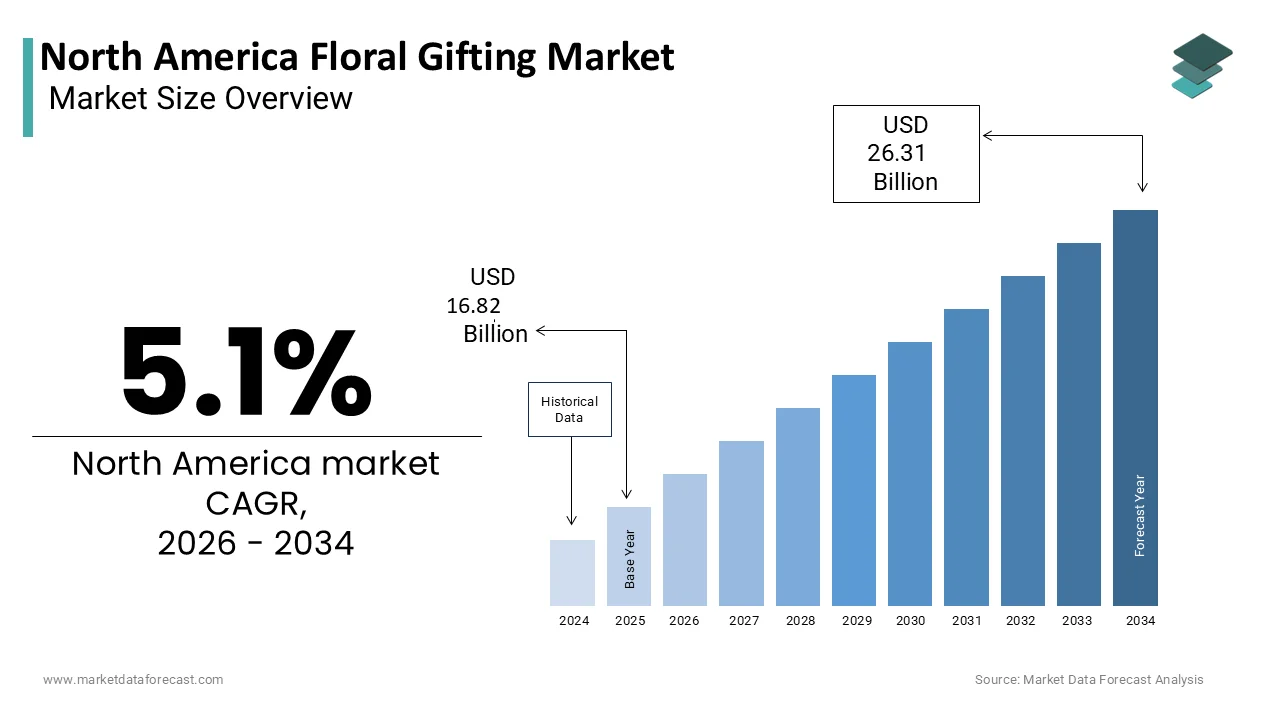
The floral gifting is the commercial exchange of cut flowers, potted plants, and floral arrangements intended as gifts for personal or corporate occasions. The rise of urban gifting cultures in metropolitan hubs like New York, Toronto, and Los Angeles has further amplified demand for premium and customized floral offerings.
MARKET DRIVERS
Escalating Consumer Emphasis on Emotional Gifting and Experiential Consumption
The consumers have increasingly prioritized emotional resonance in gift selection by favoring items that is escalating the growth of the North America floral gifting market. This shift is particularly evident in the floral gifting domain, where flowers are perceived not merely as decorative objects but as symbolic gestures of care, appreciation, and empathy. Platforms like Instagram and Pinterest have normalized floral gifting as a lifestyle expression, with over 12 million posts tagged under #FlowerDelivery in the U.S. alone. This cultural repositioning of flowers from occasional luxuries to emotional conduits has enhanced the demand across non-traditional gifting occasions, including mental health awareness days and remote team appreciation, thereby expanding the market’s consumption base beyond conventional holidays.
Rapid Digitization and E-Commerce Penetration in Floral Retail
The proliferation of digital commerce is propelling the growth of the North America floral gifting market. Online floristry platforms have eliminated traditional barriers of geographic access and operating hours by enabling consumers to send gifts seamlessly across states and borders. Furthermore, integration with social commerce and voice-activated assistants like Amazon Alexa has expanded purchasing touchpoints, particularly among tech-savvy urban consumers. These services appeal to consumers seeking sustained emotional engagement with loved ones in long-distance relationships. Additionally, the rise of direct-to-consumer (DTC) floral brands leveraging Instagram and TikTok for targeted advertising has disrupted traditional retail dominance.
MARKET RESTRAINTS
High Perishability and Fragile Supply Chain Infrastructure
The inherent perishability of floral products and the fragility of the cold chain logistics that support them are hampering the growth of the North American floral gifting market. Cut flowers typically have a post-harvest shelf life of 7 to 14 days, requiring uninterrupted temperature-controlled transportation from farms to end consumers. This vulnerability is exacerbated by the region’s reliance on air cargo from Latin America, where 80% of U.S.-bound cut flowers originate, primarily from Colombia and Ecuador. Moreover, domestic distribution networks lack standardized refrigeration protocols; only 45% of U.S. floral distributors operate fully refrigerated delivery fleets, as per a 2022 study by the Cold Chain Logistics Association. This inconsistency increases spoilage rates, particularly in southern states with high ambient temperatures.
Environmental Concerns and Sustainability Pressures
The growing environmental awareness among North American consumers is increasingly scrutinizing the ecological footprint of the floral gifting industry regarding pesticide use, water consumption, and plastic packaging. These practices have raised concerns about soil degradation and biodiversity loss, prompting environmentally conscious consumers to question the sustainability of their purchases. However, only 30% of floral retailers in North America currently offer certified sustainable options, as reported by the Sustainable Flowers Initiative. Furthermore, packaging remains an issue, with the average floral arrangement is wrapped in 2.3 meters of cellophane, much of which is non-recyclable. While some brands have adopted biodegradable wraps and carbon-neutral shipping, such initiatives remain fragmented and lack industry-wide standardization. Regulatory pressure is also mounting; California’s SB 270 legislation now mandates reduced single-use plastics, which is directly affects floral logistics.
MARKET OPPORTUNITIES
Expansion of Subscription-Based Floral Services
The emergence of subscription-based floral delivery models is shifting consumption from episodic to recurring, which is creating new opportunities for the growth of the North American floral gifting market. These services, which offer weekly, bi-weekly, or monthly flower deliveries, cater to evolving consumer preferences for convenience, personal wellness, and sustained emotional connection. Companies like BloomsyBox and Farmgirl Flowers have capitalized on this trend by offering customizable arrangements with farm-to-vase transparency, contributing to customer retention rates exceeding 65% after six months. Moreover, subscription models enable better demand forecasting and inventory planning, reducing waste and improving supply chain efficiency. Partnerships with wellness platforms and corporate wellness programs also offer expansion avenues. For example, 22% of U.S. companies now include floral subscriptions as part of employee mental health benefits, according to a 2023 Gartner HR survey.
Integration of Local and Sustainable Floral Sourcing
The consumer preference for locally grown, eco-conscious floral products is creating a strategic opening for floriculturists and retailers to differentiate themselves through regional sourcing and sustainable practices. Retailers like FiftyFlowers and Local Petal have leveraged this sentiment by building direct partnerships with regional growers by ensuring traceability and freshness. Additionally, certification programs such as Veriflora and Certified Naturally Grown are gaining traction, with over 1,200 farms now accredited.
MARKET CHALLENGES
Seasonal Volatility and Demand Concentration
The inherently vulnerable to pronounced seasonal fluctuations, with a disproportionate share of annual revenue generated during a few peak periods is impeding the growth of the North American floral gifting market. This concentration creates significant operational and financial challenges for retailers and suppliers, who must scale up inventory, labor, and logistics capacity within narrow timeframes. The inability to maintain consistent demand throughout the year leads to underutilized infrastructure and workforce instability. Furthermore, the pressure to meet peak demand often results in compromised quality control and delivery delays, eroding customer satisfaction.
Intensifying Competition from Non-Traditional Gifting Alternatives
Encountering growing competition from alternative gift categories that offer perceived higher utility, longevity, or digital novelty is also to hamper the growth of the North American floral gifting market. E-gift cards, personalized digital experiences, and subscription boxes for gourmet foods or wellness products are increasingly displacing traditional floral gifts among younger people. Additionally, wellness-focused alternatives such as curated self-care kits, meditation apps, and indoor plants with smart sensors are gaining traction as modern expressions of care. Moreover, artificial intelligence-powered gift recommendation engines on platforms like Amazon and Etsy often prioritize non-floral items due to higher margins and fulfillment ease.
REPORT COVERAGE
| REPORT METRIC | DETAILS |
| Market Size Available | 2025 to 2034 |
| Base Year | 2025 |
| Forecast Period | 2026 to 2034 |
| Segments Covered | By Product Type, Gifting Type, By Occasion, By Distribution Channel, and Country. |
| Various Analyses Covered | Global, Regional and Country-Level Analysis, Segment-Level Analysis, Drivers, Restraints, Opportunities, Challenges; PESTLE Analysis; Porter’s Five Forces Analysis, Competitive Landscape, Analyst Overview of Investment Opportunities |
| Countries Covered | United States, Canada, and the Rest of North America |
| Market Leaders Profiled | 1-800-Flowers.com Inc., Avas Flowers, Bloomex, BloomNation Inc., Blooms Today (Flowers Today, Inc.), Farmgirl Flowers Inc., FloraQueen Flowering the World S.L., Flowerbud.com (Stargazer Barn), From You Flowers LLC, Florists' Transworld Delivery (FTD) LLC, Gotham Florist, H.Bloom, Just Flowers Inc., KaBloom.com Ltd., Teleflora (The Wonderful Company), The Bouqs Company, UrbanStems Inc., and Venus ET Fleur. |
SEGMENTAL ANALYSIS
By Product Type Insights
The bouquets segment accounted in holding a significant share of the North American floral gifting market in 2025 with the bouquet’s intrinsic versatility and emotional resonance, which align with diverse gifting contexts across personal, corporate, and ceremonial occasions. The societal expectation of presenting elaborate floral arrangements during key life events such as weddings, anniversaries, and hospital visits. Moreover, the rise of curated floral design aesthetics, driven by social media platforms like Pinterest and Instagram, has elevated the bouquet into a lifestyle statement. Retailers have responded by investing in artisanal curation and seasonal themes, further entrenching the bouquet’s market prominence. Additionally, e-commerce platforms have optimized bouquet delivery logistics by ensuring freshness and presentation, which has bolstered consumer confidence in remote gifting.
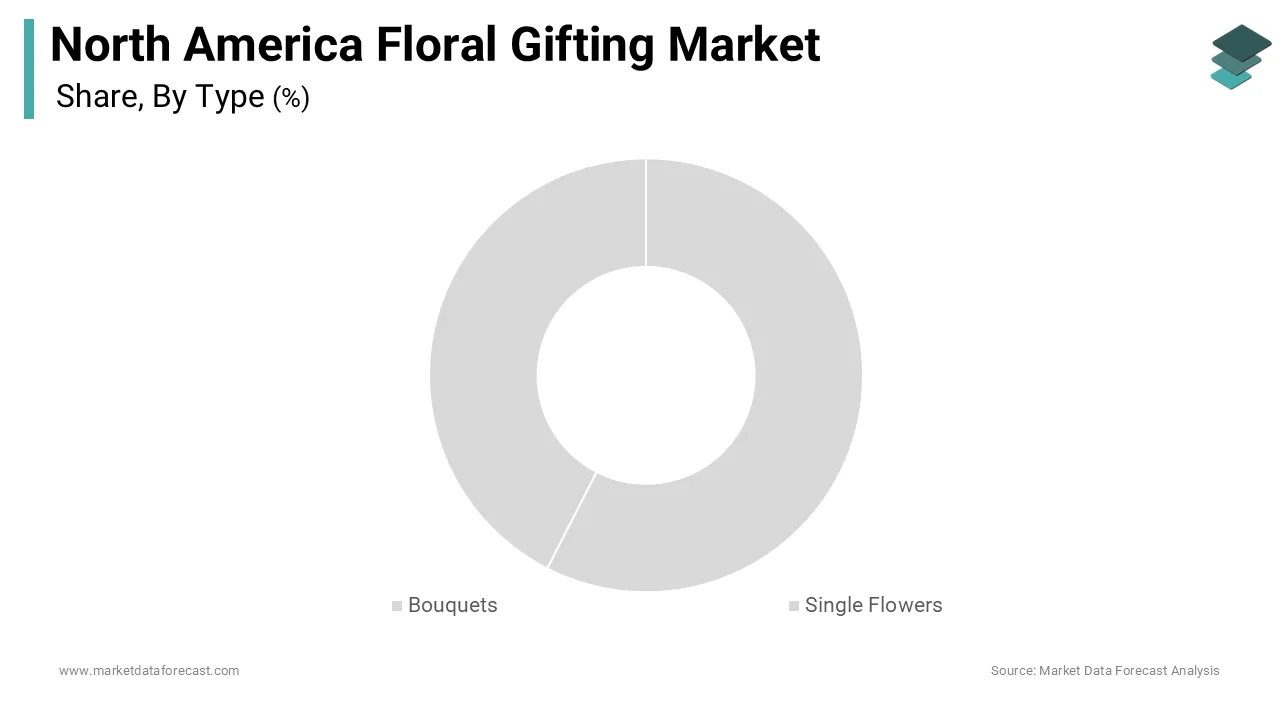
The single flowers segment is swiftly emerging with a CAGR of 9.4% in the coming years, owing to the shifting urban consumption patterns and the normalization of micro-gifting behaviors. Additionally, the affordability and minimalism of single stems appeal to budget-conscious consumers in inflationary economic climates.
By Gifting Type Insights
The personal gifting segment held a significant share of the North American floral gifting market in 2025. Furthermore, the digitization of personal gifting has lowered barriers to access, with mobile apps enabling same-day delivery and personalized messaging. A 2022 report by Deloitte Digital Commerce Insights found that 48% of personal floral orders are placed within four hours of decision-making, a behavior enabled by app-based convenience. The proliferation of digital reminders, such as calendar alerts for birthdays or relationship milestones, has also institutionalized floral gifting as a routine emotional practice. These socio-cultural and technological forces collectively sustain the overwhelming primacy of personal gifting in the market.
The corporate gifting segment is expected to grow with a significant CAGR of 10.2% in the coming years by evolving workplace dynamics and the increasing institutionalization of employee well-being programs. Moreover, floral gifting is increasingly integrated into client relationship management, with law firms and financial institutions using premium arrangements to convey respect and gratitude. The scalability of bulk floral subscriptions and partnerships with DTC brands like UrbanStems has streamlined procurement by reducing administrative friction.
By Occasion Insights
The festive occasion segment accounted in holding 38.2% of the North American floral gifting market share in 2025, with the concentrated demand generated by major annual celebrations such as Valentine’s Day, Mother’s Day, and Easter, which collectively create a predictable and high-volume sales window. Valentine’s Day alone accounts for over 220 million roses sold annually in the U.S., according to the Agricultural Marketing Service of the U.S. Department of Agriculture, making it the single largest floral event of the year. Retailers strategically align inventory, marketing, and logistics to maximize performance during these periods, often achieving 40% of annual revenue in just three weeks. The commercialization of these events through media, advertising, and retail promotions further amplifies consumer participation. The predictability of festive demand also enables better supply chain coordination, with importers pre-booking air cargo capacity months in advance.
The sympathy occasion segment is projected to grow with a CAGR of 11.3% in the coming years by evolving social norms around grief expression and the increasing formalization of memorial rituals in both personal and professional settings. Unlike other occasions that may be influenced by economic fluctuations, sympathy gifting remains relatively resilient, as it is governed by social etiquette and emotional necessity. This reflects a growing preference for personalized, artistically designed memorials over traditional wreaths. Digital platforms have also streamlined the process, enabling remote mourners to send tributes via online funeral portals.
COUNTRY-LEVEL ANALYSIS
United States Floral Gifting Market Insights
The United States was the top performer in the North American floral gifting market with 89.3% of the share in 2025, with a highly developed consumer culture centered on expressive gifting, supported by robust retail infrastructure and digital commerce penetration. The integration of floral gifting into corporate wellness, remote employee engagement, and social media-driven micro-gifting has further expanded consumption beyond traditional holidays.
Canada Floral Gifting Market Insights
Canada was positioned second in the North American floral gifting market with 8.3% of the share in 2025. While smaller in scale, the Canadian market is characterized by high consumer willingness to pay for premium, ethically sourced floral products. Additionally, bilingual marketing and culturally inclusive gifting practices such as floral offerings for Diwali and Eid reflect the country’s multicultural demographics, which is expanding the occasion-based gifting calendar.
KEY MARKET PLAYERS
North America floral gifting market profiled in the report are 1-800-Flowers.com Inc., Avas Flowers, Bloomex, BloomNation Inc., Blooms Today (Flowers Today, Inc.), Farmgirl Flowers Inc., FloraQueen Flowering the World S.L., Flowerbud.com (Stargazer Barn), From You Flowers LLC, Florists' Transworld Delivery (FTD) LLC, Gotham Florist, H.Bloom, Just Flowers Inc., KaBloom.com Ltd., Teleflora (The Wonderful Company), The Bouqs Company, UrbanStems Inc., and Venus ET Fleur.
TOP LEADING PLAYERS IN THE MARKET
1-800-Flowers.com, Inc.
A pioneer in the floral e-commerce space, 1-800-Flowers.com has redefined how consumers send and receive floral gifts across North America. The company has expanded beyond traditional flower arrangements to offer a curated suite of gifting solutions, including gourmet treats, personalized keepsakes, and wellness products, creating a holistic gifting ecosystem. Its strong brand recognition, nationwide delivery network, and seamless digital platform have made it a trusted name in emotional gifting. Its innovation in logistics, including temperature-controlled shipping and real-time tracking, ensures product integrity and enhances user experience. The company’s influence extends globally through its franchise partnerships and licensing agreements by enabling its operational model to inspire floral gifting services in other regions.
The Bouqs Company
The Bouqs Company has emerged as a disruptive force by championing a direct-to-consumer model that connects customers with eco-conscious flower farms. Founded on the principle of sustainability, the company sources blooms directly from farms in Colombia, Ecuador, and California, minimizing intermediaries and reducing environmental impact. Its farm-to-vase approach emphasizes freshness, ethical labor practices, and reduced carbon emissions, appealing to environmentally aware consumers. The brand has cultivated a modern, minimalist aesthetic that resonates with younger, urban demographics seeking authenticity in gifting. Its subscription services and customizable arrangements have reimagined floral gifting as a lifestyle choice rather than a transactional act. Internationally, Bouqs serves as a model for sustainable floral commerce, influencing sourcing standards and inspiring similar ventures in Europe and Asia that prioritize transparency and environmental stewardship.
Teleflora LLC
Teleflora operates as a powerful floral network that links thousands of local florists across North America through a unified digital platform, enabling localized delivery with national reach. Its strength lies in preserving the craftsmanship of independent florists while providing the scalability and reliability of a major brand. The company excels in occasion-based gifting, offering culturally relevant designs for holidays, sympathy, and corporate events. Its emotional branding and commitment to community-based floristry have earned deep consumer trust. Teleflora’s collaborative model has inspired similar floral federations globally, demonstrating how decentralized networks can compete with centralized e-commerce giants.
TOP STRATEGIES USED BY KEY MARKET PARTICIPANTS
One major strategy employed by leading players is the integration of sustainability into core operations, from sourcing to packaging. Companies are increasingly partnering with eco-certified farms, reducing water and pesticide use, and adopting biodegradable materials to align with consumer values. This shift not only enhances brand reputation but also attracts environmentally conscious demographics seeking ethical gifting options.
Another key approach is the expansion of product ecosystems beyond traditional flowers. Market leaders now offer complementary items such as chocolates, candles, plants, and wellness products, transforming floral gifting into a multidimensional experience. This diversification increases average order value and allows brands to participate in a broader range of gifting occasions, reducing dependency on seasonal peaks.
A third pivotal strategy is the enhancement of digital engagement through personalized customer experiences. Brands leverage AI-driven recommendations, mobile app integration, and automated gifting reminders to create seamless, which is emotionally resonant interactions. Subscription models and social media integration further deepen engagement, turning one-time buyers into recurring customers and fostering a sense of emotional continuity in gifting relationships.
COMPETITIVE OVERVIEW
The competitive landscape of the North America floral gifting market is characterized by a dynamic interplay between established industry leaders and agile digital-native brands. Legacy players leverage extensive distribution networks and brand trust, while newer entrants disrupt with innovation in sustainability, design, and customer experience. The market is fragmented in terms of service models, with some companies focusing on national scale and others emphasizing local craftsmanship. This duality fosters a hybrid environment where large networks empower independent florists while direct-to-consumer brands bypass traditional retail altogether. Differentiation is achieved through branding, ethical practices, and technological integration, as companies strive to appeal to emotionally driven consumers. The rise of subscription services and personalized gifting has intensified competition, pushing firms to invest in digital platforms and customer retention strategies. Emotional resonance has become a key battleground, with brands crafting narratives around care, wellness, and connection. Additionally, sustainability and local sourcing are emerging as points of distinction, reshaping consumer expectations. As digital channels lower entry barriers, niche players specializing in eco-friendly or culturally specific arrangements are gaining traction. The result is a highly adaptive and consumer-centric market where innovation, authenticity, and reliability determine competitive advantage.
RECENT MARKET DEVELOPMENTS
- In March 2023, 1-800-Flowers.com launched a new AI-powered gifting assistant on its mobile app, designed to offer personalized floral recommendations based on recipient preferences and past gifting behavior. This innovation is expected to enhance customer engagement and streamline the purchasing experience.
- In June 2023, The Bouqs Company partnered with a network of regenerative farms in California to introduce a line of carbon-negative floral arrangements. This initiative is aimed at reinforcing its sustainability dominance and attracting eco-conscious consumers.
- In September 2023, Teleflora expanded its local florist network by integrating 500 additional independent florists across mid-sized U.S. cities. This move is intended to strengthen last-mile delivery capabilities and preserve community-based floral artistry.
- In January 2025, 1-800-Flowers.com introduced a wellness gifting category featuring floral arrangements paired with mindfulness journals and aromatherapy products. This expansion is designed to tap into the growing demand for holistic emotional gifts.
- In May 2025, The Bouqs Company rolled out a new subscription tier offering seasonal, farm-exclusive blooms with educational content about flower origins. This enhancement is anticipated to deepen customer loyalty and reinforce its farm-to-vase narrative.
MARKET SEGMENTATION
This North America floral gifting market research report is segmented and sub-segmented into the following categories.
By Product Type
- Bouquets
- Single Flowers
- Others (flower boxes, preserved/dried flowers, custom floral arrangements)
By Gifting Type
- Personal Gifting
- Corporate Gifting
By Occasion
- Festive Occasions
- Birthday
- Anniversary
- Sympathy
- Others (graduations, retirement parties, thank-you gifts, housewarming, etc.)
By Distribution Channel
- Supermarkets & Hypermarkets
- Independent Retailers
- Departmental Stores
- Online Channels
- Others
By Country
- United States
- Canada
- Rest Of North America