- Product Description Description
- Table of Contents TOC
- List of Table & Figure LOT
- Get Free Sample PDF Sample PDF
Market Size, 2025
$1.15 BnMarket Estimate, 2026
$1.22 BnMarket Forecast, 2034
$1.90 BnCAGR, 2026–2034
5.76%North America Gluten Feed Market Size, Growth, Trends & Forecast (2026–2034)
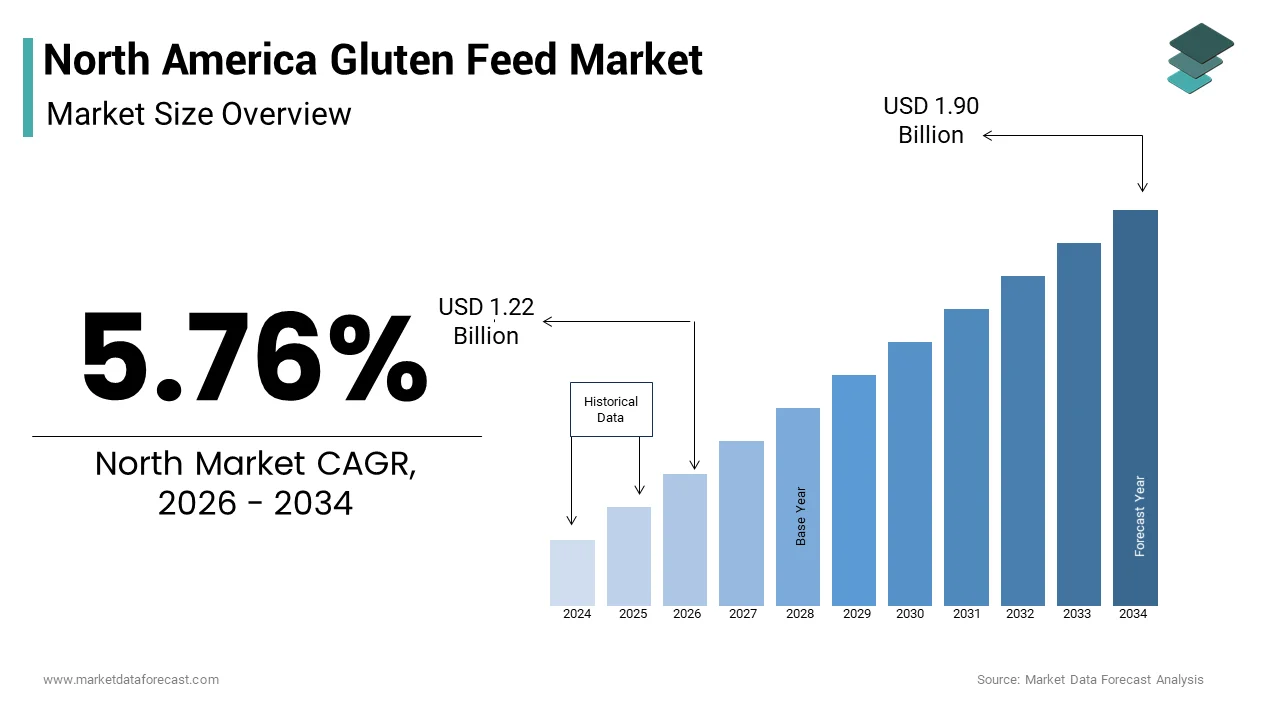
The North American gluten feed market size was valued at USD 1.15 billion in 2025, is anticipated to reach USD 1.22 billion in 2026, and is projected to scale up to USD 1.90 billion by the end of 2034, registering a compound annual growth rate (CAGR) of 5.76% during the forecast period from 2026 to 2034. Driven by massive domestic corn and ethanol production infrastructure, expanding livestock populations, and a strong commercial shift toward sustainable agricultural co-product integration, the market continues to experience steady commercial growth.
Key Executive Metrics (At-a-Glance)
- 2025 Base Valuation: USD 1.15 Billion
- 2026 Current Valuation: USD 1.22 Billion
- 2034 Forecast Valuation: USD 1.90 Billion
- Compound Annual Growth Rate (CAGR): 5.76% (2026–2034)
- Leading Country Market: United States (driven by extensive wet milling and biofuel production)
- Covered Regional Markets: The United States, Canada, and the Rest of North America
Core Market Drivers
- Surging Livestock Population: Large cattle and hog inventories requiring cost-effective, high-protein feed supplements.
- Sustainable Agriculture Initiatives: Government policies, such as the Renewable Fuel Standard and the Sustainable Canadian Agricultural Partnership, promoting industrial waste recycling and circular economy loops.
Primary Market Restraints & Challenges
- Corn Price Volatility: Raw material price fluctuations altering wet milling economics and production throughput consistency.
- Intense Substitute Competition: Dominance of soybean meal, canola meal, and distillers dried grains (DDGS) constraining alternative market penetration.
North America Gluten Feed Market Segmentation Breakdown
| Segment Category | Largest Segment | Fastest-Growing Segment |
|---|---|---|
| By Source | Corn Gluten Feed | Wheat Gluten Feed (6.8% CAGR) |
| By Livestock | Cattle | Aquaculture |
| By Region / Country | United States | Canada |
Major Industry Players Profiled
Key enterprises shaping the North American gluten feed market include Ingredion Incorporated, Archer Daniels Midland Company, The Roquette Group, Cargill Incorporated, Bunge Ltd., Tate & Lyle Plc, Grain Processing Corporation, Commodity Specialists Company, Agrana Group, and Tereos Syral.
North America Gluten Feed Market Size
The North American gluten feed market size was valued at USD 1.15 billion in 2025 and is anticipated to reach USD 1.22 billion in 2026 to reach USD 1.90 billion by 2034, growing at a CAGR of 5.76% during the forecast period from 2026 to 2034.
Introduction to the North America Gluten Feed Market
Gluten feed serves as a vital byproduct derived from the wet milling process of corn, primarily utilized as a high protein ingredient in animal nutrition across North America. This co-product emerges during the extraction of corn starch and ethanol, offering a sustainable solution for livestock producers seeking cost effective protein sources. The agricultural landscape in North America demonstrates robust integration of such byproducts into feeding regimes due to their nutritional density and economic viability. According to the USDA National Agricultural Statistics Service, the United States produced approximately 14.9 billion bushels of corn in 2024, establishing a substantial base for gluten feed generation. The environmental consciousness among farmers has intensified, with many prioritizing circular economy principles that valorize industrial residues. As per the Food and Agriculture Organization of the United Nations, livestock sectors globally consume nearly 36 percent of total grain production, underscoring the critical role of alternative feeds like gluten meal. According to the Canadian Cattle Association, the Canadian cattle industry accounts for over 11 million head of total cattle across its commercial operations, creating a massive, consistent demand for protein-rich feed supplements. The regulatory framework in both the United States and Canada supports the use of such feed ingredients, provided they meet safety standards set by the respective authorities. This market operates within a complex ecosystem influenced by crop yields, processing capacities, and evolving dietary preferences in animal husbandry. The strategic importance of gluten feed extends beyond mere nutrition, contributing significantly to waste reduction and resource optimization in the broader agri-food value chain.
MARKET DRIVERS
Surging Livestock Population Drives Demand for Cost Effective Protein Sources
The expanding livestock population across the region drives the growth of the North America gluten feed market. This is driven by the need for affordable and nutritious protein alternatives. According to the USDA National Agricultural Statistics Service, the total number of cattle and calves in the United States totaled 86.7 million head as of January 1, 2025, continuing a multi-year contraction in national herd sizes. This growth necessitates substantial volumes of feed ingredients to sustain animal health and productivity. Gluten feed offers a compelling value proposition due to its high protein content, typically ranging from 21 percent to 23 percent, which supports muscle development and overall growth in ruminants. As per Statistics Canada, the country’s hog inventory stood at 13.9 million heads in December 2024, further amplifying the requirement for diverse feed components. Farmers increasingly prefer gluten feed over traditional soybean meal due to its competitive pricing and availability, especially during periods of volatile soy markets. The dairy sector also contributes significantly, with the National Milk Producers Federation reporting that the average dairy cow produces approximately 24,000 pounds of milk annually, requiring intensive nutritional support. The integration of gluten feed into ration formulations helps balance amino acid profiles while reducing overall feed costs compared to exclusive use of premium proteins. This economic advantage ensures sustained adoption among large scale commercial operations and smaller family farms alike, reinforcing the structural demand for this commodity.
Government Initiatives Promoting Sustainable Agricultural Practices Boost Adoption
Government policies emphasizing sustainability and waste reduction in agriculture significantly enhance the attractiveness of gluten feed as an eco-friendly feed ingredient, which further propels the expansion of the North American market. As per the U.S. Environmental Protection Agency, federal frameworks focus on structural emission compliance, allowing commercial wet millers to freely recycle processing co-products like corn gluten feed to meet private supply-chain sustainability goals. According to the Sustainable Canadian Agricultural Partnership agreement, federal, provincial, and territorial governments allocated an additional 500 million Canadian dollars over a 5-year investment lifecycle through 2028 to boost sector competitiveness and sustainable farming practices These funds often target projects that improve resource efficiency and reduce environmental footprints, directly benefiting the utilization of corn milling residues. The Renewable Fuel Standard program in the United States mandates increased blending of biofuels, which indirectly boosts corn processing activities and consequently increases gluten feed supply. According to the Minnesota BioFuels Association, ethanol production in the United States reached a record 15.8 billion gallons in 2024, generating massive, highly consistent structural quantities of processing co-products including gluten feed. Regulatory bodies in both nations recognize the role of such ingredients in closing nutrient loops within agricultural systems. The Farm Bill provisions in the United States include incentives for adopting conservation practices, which often involve using locally sourced feed materials to reduce transportation emissions. These policy frameworks create a favorable environment for gluten feed adoption by aligning economic interests with environmental goals. Processors and farmers benefit from tax credits and subsidies when demonstrating reduced waste outputs, thereby accelerating market penetration and ensuring long term viability of this sustainable feed option.
MARKET RESTRAINTS
Volatility in Corn Prices Impacts Production Consistency and Supply Stability
Fluctuations in corn prices present a significant restraint to the North America gluten feed market. This affects the consistency of raw material availability and production economics. According to the Chicago Board of Trade, corn futures experienced price swings of up to 25 percent during the 2024 growing season due to unpredictable weather patterns and geopolitical tensions affecting global grain trade. Such volatility directly influences the cost structure of wet milling operations, which rely heavily on steady corn supplies to maintain profitable gluten feed output. When corn prices surge, processors may reduce throughput or shift focus to higher value primary products like starch or sweeteners, thereby limiting gluten feed generation. As per the USDA Economic Research Service, the season-average farm price for corn trended lower into a tighter window between 4.10 and 4.65 dollars per bushel, resetting baseline cost input variables for downstream feed manufacturers. This instability complicates long-term contracting and inventory planning for livestock producers who depend on reliable gluten feed supplies. Additionally, extreme weather events such as droughts in key producing states like Iowa and Nebraska can diminish crop yields, further tightening raw material availability. According to the National Oceanic and Atmospheric Administration, record-setting thermal anomalies across major growing belts stressed crops during key developmental phases, impacting production yield expectations. These factors collectively undermine the predictability of gluten feed production, forcing buyers to seek alternative protein sources during periods of scarcity. The resulting supply disruptions can lead to price spikes and reduced confidence in gluten feed as a stable component of animal diets.
Competition from Alternative Protein Sources Limits Market Expansion
Intense competition from other protein-rich feed ingredients is a substantial limitation to the growth trajectory of the North America gluten feed market. Soybean meal remains the dominant protein source in animal nutrition, commanding a significant share due to its superior amino acid profile and widespread availability. According to joint data from the USDA and Statistics Canada, soybean meal production in the United States expanded to nearly 52.9 million short tons in 2024 to satisfy shifting livestock demand portfolios. Canola meal and distillers dried grains with solubles also compete directly with gluten feed, offering comparable nutritional benefits at competitive prices. As per Statistics Canada, canola meal production in Canada reached approximately 8.7 million short tons in 2024, maintaining a highly robust presence as a key feed alternative. The nutritional superiority of some alternatives, particularly in terms of lysine content, makes them preferred choices for certain animal species and growth stages. Feed formulators often prioritize ingredients that offer the best balance of cost and nutritional efficiency, which sometimes disadvantages gluten feed despite its fiber benefits. The global trade dynamics further intensify this competition, with imported protein meals entering North American markets at attractive prices. According to the U.S. International Trade Commission, domestic crush expansions have solidified the United States as a net exporter of protein meals, meaning domestic co-product suppliers are insulated from localized import pressure. This competitive landscape forces gluten feed producers to continuously justify their value proposition through pricing strategies and nutritional demonstrations, limiting effortless market expansion.
MARKET OPPORTUNITIES
Expansion of Organic Livestock Farming Creates New Avenues for Non GMO Gluten Feed
The rapid growth of organic livestock farming in the region offers a lucrative opportunity for non-genetically modified organism gluten feed producers to capture premium segments within the North America gluten feed market. According to the Organic Trade Association, total organic sales in the United States reached a new peak of 71.6 billion dollars in 2024, expanding new avenues for compliant non-GMO feed markets. Organic certification standards strictly prohibit the use of genetically modified ingredients, creating a distinct demand for non-GMO corn derived products like gluten feed. As per the Organic Federation of Canada, Canada has solidified its status as the fifth largest global consumer market for organic goods, generating 9 billion dollars in sales and intensifying the call for clean feed sourcing. Producers who can verify the non-GMO status of their gluten feed gain access to these high value markets where price sensitivity is lower and quality assurance is paramount. The United States Department of Agriculture National Organic Program maintains rigorous documentation requirements, ensuring traceability from field to feedlot. This regulatory framework benefits transparent supply chains that can provide verifiable proof of non-GMO sourcing. Organic farmers often pay premiums of 20 percent to 30 percent above conventional prices for certified feed ingredients, enhancing profitability for compliant gluten feed suppliers. The trend toward clean label animal products further amplifies this opportunity, as retailers and consumers increasingly demand transparency in production methods. Companies investing in segregated processing lines and third-party certifications position themselves strategically to capitalize on this growing niche, differentiating their offerings in a crowded commodity market.
Technological Advancements in Feed Processing Enhance Nutritional Value and Palatability
Innovations in feed processing technologies pave the way to improve the nutritional profile and acceptance of gluten feed among various livestock species, which is likely to fuel the expansion of the North America gluten feed market. Advanced fermentation techniques and enzyme treatments can enhance the digestibility of protein and fiber components in gluten feed, making it more suitable for monogastric animals such as poultry and swine. According to the American Society of Animal Science, recent studies indicate that enzymatic treatment can increase protein digestibility in corn gluten feed by up to 15 percent, broadening its application scope beyond ruminants. Pelleting and extrusion technologies further improve palatability and reduce dust, addressing common complaints from feed mill operators and farmers. As per research, the feeding systems market is expanding at an annual growth rate of 8.1% through 2030, accelerating the demand for precisely balanced feed rations like corn gluten feed. These technological improvements allow formulators to optimize ration compositions while maintaining animal performance metrics. The development of value-added products such as pelleted gluten feed blends with added vitamins and minerals creates differentiated offerings that command higher margins. Research institutions including universities in the Midwest continue to explore novel processing methods that unlock additional nutritional benefits from corn co products. The integration of digital monitoring tools in processing plants ensures consistent quality control, building trust among buyers who require uniform product specifications. These advancements transform gluten feed from a basic commodity into a sophisticated nutritional ingredient, opening doors to new customer segments and applications previously dominated by conventional protein sources.
MARKET CHALLENGES
Supply Chain Disruptions Due to Infrastructure Limitations Hinder Efficient Distribution
Infrastructure constraints in transportation and storage facilities hamper the efficient distribution in the North America gluten feed market. According to the American Society of Civil Engineers, the United States freight rail system faces capacity bottlenecks that delay shipments during peak harvest seasons, affecting timely delivery of bulk feed ingredients. Many gluten feed producers rely on rail transport for cost-effective long-distance shipping, but aging infrastructure and limited terminal capacity create logistical hurdles. As per Transport Canada, investment in rural rail networks has lagged behind demand, with some regions experiencing service reductions that complicate supply chain reliability. Storage limitations further exacerbate these issues, as gluten feed requires dry conditions to prevent spoilage and mold growth. According to the USDA Economic Research Service, storage infrastructure constraints often limit producers' capacity to hold grain volumes post-harvest, restricting flexibility during periods of low market valuation. Weather related disruptions such as floods or snowstorms can halt transportation entirely, leaving buyers without critical feed supplies during winter months. The lack of integrated digital tracking systems in many logistics operations reduces visibility and makes it difficult to anticipate delays. These infrastructural weaknesses increase operational costs and reduce the competitiveness of gluten feed compared to locally sourced alternatives. Addressing these challenges requires coordinated investments in modernizing transportation networks and expanding storage capabilities, which remain slow due to funding constraints and regulatory complexities.
Regulatory Compliance Costs Increase Operational Burdens for Small Producers
Stringent regulatory requirements regarding food safety and environmental protection impose substantial compliance costs on producers, particularly affecting small- and medium-sized operations, which inhibit the expansion of the North America gluten feed market. According to the U.S. Food and Drug Administration, animal food processing lines are continuously governed by the structural parameters of the Food Safety Modernization Act to verify safety and manufacturing consistency. These changes necessitate investments in laboratory equipment and qualified personnel, increasing overhead expenses significantly. As per the Canadian Food Inspection Agency, regulatory updates scheduled through 2026 prioritize livestock traceability tracking to strengthen disease prevention, control, and response models. Environmental regulations governing wastewater discharge from wet milling facilities also demand costly upgrades to treatment systems. According to the U.S. Environmental Protection Agency, industrial wastewater discharge limits are governed strictly under national Effluent Limitations Guidelines to enforce modern technology-based pollution control methods across processing plants. These financial pressures force some smaller producers to exit the market or merge with larger entities, reducing competition and diversity in the supply base. The complexity of navigating varying state and provincial regulations further complicates operations for companies selling across multiple jurisdictions. Legal consultations and compliance audits become recurring expenses that erode profit margins. While large corporations can absorb these costs through economies of scale, smaller players struggle to maintain viability. This dynamic potentially leads to market consolidation that limits innovation and local supply options for farmers seeking regional sourcing alternatives.
REPORT COVERAGE
| REPORT METRIC | DETAILS |
| Market Size Available | 2025 to 2034 |
| Base Year | 2025 |
| Forecast Period | 2026 to 2034 |
| CAGR | 5.76% |
| Segments Covered | By Source, Livestock, and Region |
| Various Analyses Covered | Global, Regional & Country Level Analysis, Segment-Level Analysis, DROC, PESTLE Analysis, Porter’s Five Forces Analysis, Competitive Landscape, Analyst Overview of Investment Opportunities |
| Regions Covered | The US, Canada, and the Rest of North America |
| Market Leaders Profiled | Ingredion Incorporated, Archer Daniels Midland Company, The Roquette Group, Cargill Incorporated, Bunge Ltd., Tate & Lyle Plc, Grain Processing Corporation, Commodity Specialists Company, Agrana Group, Tereos Syral. |
SEGMENTAL ANALYSIS
By Source Insights
Corn Gluten Feed
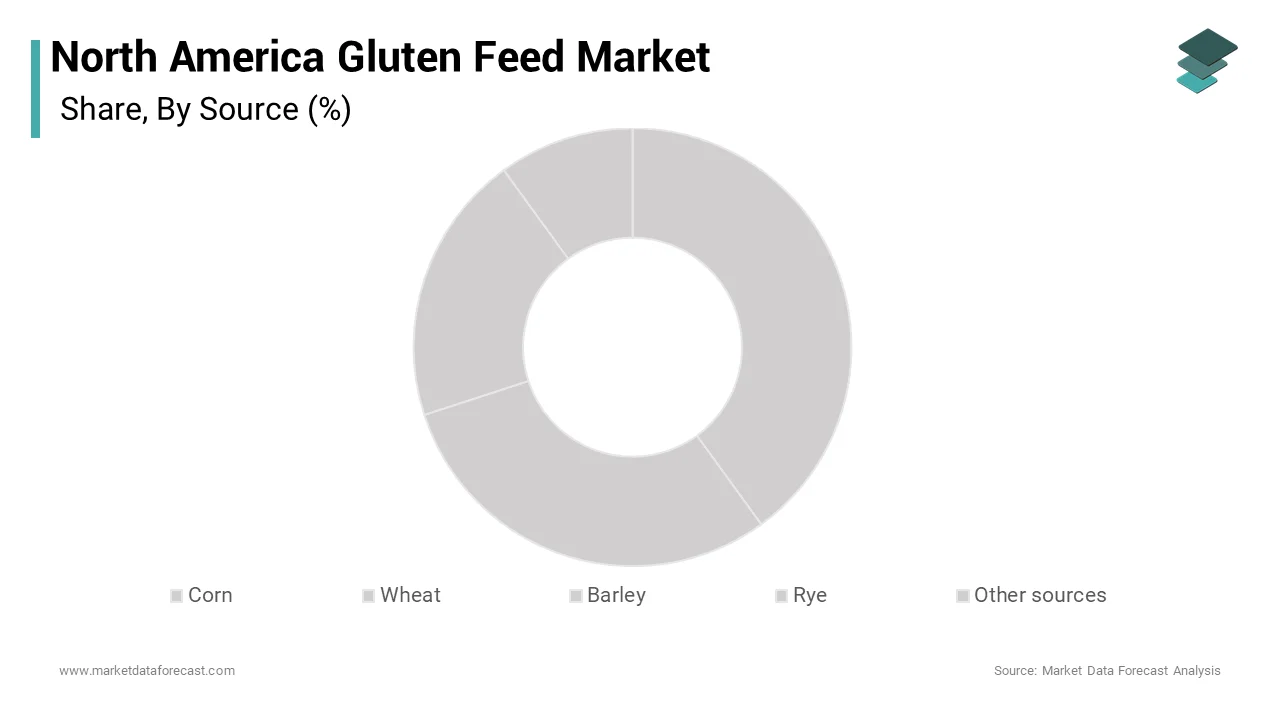
In 2025, the corn gluten feed segment was the largest in the North America market and occupied a commanding share in 2025. This supremacy of the segment was mainly driven by the region's massive scale of corn production and ethanol manufacturing. The United States is the world’s largest producer of corn, creating an immense supply of byproducts from wet milling and dry grinding processes. According to the USDA National Agricultural Statistics Service, American farmers harvested approximately 14.9 billion bushels of corn in 2024, providing a consistent and voluminous raw material base for gluten feed production. This abundance ensures that corn derived feed remains cost competitive compared to other grain based alternatives. The extensive infrastructure supporting corn ethanol production further amplifies this dominance, as gluten feed is a direct co product of biofuel generation. As per the Renewable Fuels Association, the United States produced a record 16.1 billion gallons of ethanol in 2024, generating millions of tons of distillers grains and corn gluten feed simultaneously. The established logistics network for transporting corn from the Midwest to feeding operations across the continent reduces distribution costs significantly. Livestock producers prefer corn gluten feed due to its familiar nutritional profile and widespread availability in local markets. The integration of corn processing facilities with major agricultural hubs ensures minimal supply chain disruptions. This structural advantage makes it difficult for other sources like wheat or barley to compete on volume and price stability, solidifying corn as the undisputed leader in the regional gluten feed landscape.
The mature and highly integrated ethanol industry in North America serves as a critical driver for the continued domination of corn gluten feed. Wet milling facilities, which produce high quality corn gluten feed alongside starch and sweeteners, operate at significant capacities to meet industrial demand. According to the National Corn Growers Association, nearly 45% of the total corn crop use in the United States is processed into ethanol and co-products, ensuring a steady stream of gluten feed into the market. This industrial scale allows for consistent quality control and standardized nutritional specifications that buyers rely on for ration formulation. The economic synergy between fuel production and animal feed creates a resilient business model that withstands fluctuations in individual commodity prices. As per the Department of Energy, federal mandates under the Renewable Fuel Standard require billions of gallons of renewable fuel blending, which indirectly subsidizes the production of corn based co products. This regulatory support ensures that corn processing remains profitable even during periods of low energy prices, thereby maintaining gluten feed output. The technological advancements in milling efficiency have also increased the yield of gluten feed per bushel of corn, enhancing profitability for processors. These factors collectively create a self reinforcing cycle where infrastructure investment leads to higher production volumes, which in turn lowers unit costs and strengthens market leadership against alternative grain sources.
Wheat Gluten Feed
The wheat gluten feed segment is estimated to register the fastest CAGR of 6.8% between 2026 and 2034 owing to increasing consumer preference for non-genetically modified organism and specialty feed ingredients. Unlike corn, which is predominantly genetically modified in North America, wheat offers a non-GMO alternative that appeals to premium livestock sectors such as organic dairy and grass-fed beef operations. According to the Organic Trade Association, demand for organic livestock and agricultural products has scaled with total organic sales passing 71.6 billion dollars, prompting farmers to seek certified non-GMO feed components like wheat gluten. The superior amino acid profile of wheat gluten, particularly its high glutamine content, supports gut health in young animals, making it attractive for swine and poultry starters. As per Statistics Canada data tracked by analysts, wheat production in Canada reached approximately 33.7 million metric tons for the 2024/2025 marketing campaign, providing ample raw material for domestic processing. The rise in value added wheat processing facilities has improved the availability and consistency of wheat gluten feed, reducing historical supply constraints. Farmers are increasingly willing to pay a premium for wheat-based feeds due to perceived benefits in animal health and product quality. This shift in consumer behavior toward clean label animal products drives upstream demand for alternative protein sources. The diversification of feed formulations to include wheat gluten helps mitigate risks associated with corn price volatility, further accelerating its adoption among progressive livestock producers seeking differentiation in competitive markets.
The trend toward premiumization in animal protein diets significantly accelerates the adoption of wheat gluten feed, particularly in specialized feeding programs for high value livestock. Consumers are increasingly concerned about the origin and composition of animal feed, leading to greater scrutiny of ingredient sourcing. Wheat gluten is perceived as a cleaner and more natural ingredient compared to corn derivatives, aligning with marketing claims made by premium meat and dairy brands. According to the Food Marketing Institute, 58 percent of consumers actively seek out products labeled as non GMO or naturally raised, influencing purchasing decisions at the retail level. This downstream pressure forces integrators and large farming operations to reformulate rations with alternative proteins like wheat gluten. The functional properties of wheat gluten, including its binding capacity and digestibility, make it suitable for pelleted feeds and specialized starter diets. As per the American Bakers Association, improvements in milling technology have enhanced the recovery rate of wheat gluten, making it more economically viable for feed applications. The growing interest in reducing anti nutritional factors in animal diets also favors wheat, which lacks certain enzymes inhibitors present in other grains. Research conducted by land grant universities indicates that wheat gluten supplementation can improve feed conversion ratios in specific livestock categories, providing a tangible economic benefit. These technical advantages combined with marketing appeal drive the rapid expansion of wheat gluten feed in niche but high growth segments of the North America market.
By Livestock Insights
Cattle
The cattle segment held the majority share of the North America gluten feed market in 2025, because ruminants efficiently utilize the fiber and protein content found in gluten feed. Beef and dairy cattle constitute the largest livestock population in the region, creating substantial aggregate demand for feed ingredients. According to the USDA National Agricultural Statistics Board, there were approximately 86.7 million head of cattle and calves in the United States in early 2025, maintaining a high-priority base for alternative bulk protein feed supplies. Gluten feed provides an ideal balance of rumen degradable protein and bypass protein, supporting milk production in dairy cows and weight gain in beef cattle. The high fiber content aids in maintaining rumen health and preventing acidosis, a common issue in high grain diets. As per the National Milk Producers Federation, the average dairy cow in the United States produces over 24,000 pounds of milk annually, requiring intensive nutritional support that gluten feed helps provide cost effectively. Feedlot operators favor gluten feed for its ability to replace more expensive protein sources like soybean meal without compromising performance. The geographic concentration of cattle feeding operations in the Midwest and Plains states aligns closely with corn processing hubs, minimizing transportation costs. This logistical proximity ensures a steady supply of fresh gluten feed to feedlots. The established practice of including gluten feed in total mixed rations further cements its role in cattle nutrition. The sheer volume of cattle inventory combined with the physiological suitability of gluten feed for ruminant digestion ensures this segment remains the dominant consumer in the regional market.
The continuous expansion and intensification of the dairy industry in North America drive sustained demand for cattle feed ingredients, particularly gluten feed. Dairy farms are adopting more sophisticated feeding strategies to maximize milk yield and component quality, relying on consistent and nutritious feed supplies. According to the Canadian Dairy Commission, production targets and regulatory quotas are monitored closely to prevent domestic market surpluses, encouraging consistent and steady herd management across provincial networks. Large scale dairy operations require bulk feed ingredients that offer predictable nutritional values to maintain consistent milk output. Gluten feed serves as a reliable source of energy and protein that complements forage-based diets. As per the International Dairy Foods Association, the consumption of cheese and yogurt in the United States continues to rise, incentivizing dairy farmers to optimize feed efficiency to meet processing demands. The use of gluten feed helps balance ration costs while maintaining high levels of dry matter intake. Nutritional studies indicate that replacing a portion of corn silage with gluten feed can improve milk fat percentage, adding value to the final product. The consolidation of dairy farms into larger entities increases purchasing power and standardizes feed procurement practices, favoring established suppliers of gluten feed. Regulatory pressures regarding environmental sustainability also encourage the use of co products like gluten feed to reduce the carbon footprint of dairy operations. These factors collectively ensure that the cattle segment remains the primary driver of gluten feed consumption in North America.
Aquaculture
The aquaculture segment is likely to experience the fastest CAGR over the forecast period due to rising seafood consumption and the need for sustainable plant-based protein sources in fish feeds. As wild fish stocks decline, farmed fish production is expanding rapidly to meet consumer demand for healthy protein options. According to the National Oceanic and Atmospheric Administration, sustainable aquaculture developments support key localized growth in freshwater species like catfish and trout, highlighting opportunities for commercial plant-based feed integrations. Fish feed manufacturers are increasingly replacing fishmeal with plant based proteins to reduce costs and environmental impact. Wheat and corn gluten feeds offer high protein content and good digestibility for certain fish species, making them attractive alternatives. As per the Global Seafood Alliance, strategic shifts in formulation practices have steadily driven the inclusion of diverse plant proteins in aquafeed to stabilize supply lines. The development of specialized extruded feeds for aquaculture allows for better incorporation of gluten ingredients while maintaining water stability. Consumer preference for sustainably sourced seafood encourages producers to adopt feeds with lower marine resource dependency. Research into amino acid supplementation has improved the efficacy of plant-based feeds, addressing previous limitations in growth performance. The expansion of recirculating aquaculture systems in North America further boosts demand for precise and high-quality feed ingredients. These dynamics position aquaculture as a high potential growth area for gluten feed suppliers seeking diversification beyond traditional livestock markets.
Sustainability concerns are propelling a significant shift toward plant based aquafeed solutions, accelerating the adoption of gluten feed in the aquaculture sector. Environmental groups and consumers are increasingly critical of the ecological impact of fishmeal production, which often involves overfishing of small pelagic species. According to the World Wildlife Fund, reducing reliance on wild caught fish for feed is a critical step toward sustainable aquaculture practices. Gluten feed provides a viable terrestrial protein source that reduces the marine footprint of fish farming. As per the Aquaculture Stewardship Council, certification standards for sustainable seafood increasingly favor feeds with high percentages of plant based ingredients. This regulatory and market pressure encourages feed mills to innovate with novel protein sources including wheat and corn gluten. The improved palatability of modern gluten feed formulations ensures that fish accept these diets without significant reductions in feed intake. Technological advancements in feed processing have enhanced the nutrient availability of plant proteins, mitigating issues related to anti nutritional factors. The economic benefit of using locally sourced gluten feed instead of imported fishmeal also appeals to aquaculture operators facing rising input costs. Government grants supporting sustainable aquaculture research further facilitate the transition to plant-based feeds. These combined environmental, economic, and regulatory factors create a robust foundation for the rapid expansion of gluten feed usage in the North America aquaculture industry.
COUNTRY LEVEL ANALYSIS
United States Market Analysis
The United States led the North America gluten feed market and captured a 78.4% share in 2025. This prominence of the US market was attributed to its massive agricultural output and extensive livestock industry. The country’s status as the world’s leading corn producer ensures a plentiful and cost-effective supply of gluten feed from wet milling and ethanol facilities. According to the USDA National Agricultural Statistics Service, the nation harvested 14.9 billion bushels of corn in 2024, creating a vast reservoir of co-products for the feed market. The presence of major agribusiness corporations and advanced processing infrastructure enables efficient production and distribution of gluten feed across the continent. The large-scale beef and dairy sectors in states like Texas, Nebraska, and California consume significant volumes of protein rich feed ingredients to sustain productivity. As per the Census of Agriculture, the United States is home to over 2 million farms, many of which integrate livestock operations that rely on commercial feed supplements. The well-developed transportation network, including rail and barge systems, facilitates the movement of bulk commodities from the Midwest to coastal and southern feeding regions. Federal policies supporting biofuel production indirectly boost gluten feed availability by incentivizing corn processing. The mature market dynamics in the United States feature high competition among suppliers, driving innovation in product quality and service delivery. This combination of abundant raw materials, robust demand, and efficient logistics solidifies the United States as the central hub for gluten feed trade and consumption in North America.
Canada Market Analysis
Canada exhibits steady growth in the North America gluten feed market, supported by its strong export-oriented livestock sector and increasing focus on sustainable farming practices. Although smaller in volume compared to the United States, Canada plays a crucial role in the regional market due to its high-quality agricultural standards and strategic trade relationships. According to Agriculture and Agri-Food Canada, the country's agricultural exports reached 92.2 billion Canadian dollars in 2024, with livestock products constituting a significant portion of this value. Canadian cattle and hog producers utilize gluten feed to enhance animal performance and meet international quality requirements for meat exports. The western provinces, particularly Alberta and Saskatchewan, are key consumption centers due to their concentrated beef feeding operations. As per the Canadian Cattlemen’s Association, beef exports from Canada reached record levels in recent years, driving demand for efficient and cost-effective feed ingredients. The Canadian government’s emphasis on environmental stewardship encourages the use of co products like gluten feed to reduce waste and lower the carbon footprint of agriculture. Import dependencies for certain feed ingredients also create opportunities for domestic corn and wheat gluten feed to capture market share. The integration of Canadian supply chains with United States processors ensures a steady flow of gluten feed across the border. These factors contribute to a resilient and growing market environment in Canada, characterized by quality consciousness and sustainability driven adoption.
COMPETITIVE LANDSCAPE
The competition in the North America gluten feed market is characterized by the presence of large integrated agribusiness corporations that dominate production and distribution channels. These major players leverage economies of scale and extensive logistics networks to offer competitive pricing and reliable supply to customers. The market features moderate consolidation with key participants continuously seeking to expand their processing capacities and geographic reach. Competition is driven largely by product quality consistency nutritional value and cost efficiency rather than just price alone. Smaller regional processors compete by offering specialized services and localized supply advantages to niche customer segments. The barrier to entry remains high due to significant capital requirements for building wet milling facilities and establishing supply chain infrastructure. Innovations in sustainability and traceability are becoming critical differentiators as customers increasingly prioritize environmentally responsible sourcing. Regulatory compliance and adherence to food safety standards further shape the competitive landscape by favoring established companies with robust quality control systems. The dynamic interplay between supply volatility and demand stability requires participants to maintain agile operational strategies.
KEY MARKET PLAYERS
Some of the major companies dominating the market, by their products and services, include
- Ingredion Incorporated
- Archer Daniels Midland Company
- The Roquette Group
- Cargill Incorporated
- Bunge Ltd.
- Tate & Lyle Plc
- Grain Processing Corporation
- Commodity Specialists Company
- Agrana Group
- Tereos Syral.
Top Players In The Market
- Archer Daniels Midland Company operates as a global leader in agricultural processing and food ingredient solutions with significant involvement in the North America gluten feed sector. The company leverages its extensive network of corn processing facilities to produce high quality corn gluten feed for livestock nutrition. Recent actions include expanding its wet milling capacity in the Midwest to enhance production efficiency and meet growing demand. Archer Daniels Midland focuses on sustainable sourcing practices and invests in technologies that improve yield and nutritional consistency. These initiatives strengthen its market position by ensuring reliable supply chains and maintaining product quality standards that appeal to large scale commercial feeders and integrators across the region.
- Cargill Incorporated stands as a major participant in the animal nutrition industry with substantial contributions to the North America gluten feed market through its integrated supply chain. The company utilizes its vast grain origination capabilities to source corn efficiently for its processing operations. Cargill has recently invested in digital farming tools and precision agriculture technologies to optimize raw material quality and reduce environmental impact. These strategic moves enhance its ability to provide consistent and cost effective gluten feed products to customers. By focusing on innovation and sustainability Cargill reinforces its reputation as a trusted partner for livestock producers seeking reliable feed ingredients in a competitive marketplace.
- Ingredion Incorporated plays a critical role in the North America gluten feed market by specializing in value added corn based ingredients derived from its wet milling processes. The company emphasizes research and development to create specialized feed solutions that address specific nutritional needs of various livestock species. Ingredion has recently expanded its portfolio of functional ingredients and strengthened partnerships with feed manufacturers to drive adoption. Its commitment to quality assurance and regulatory compliance ensures that its gluten feed products meet stringent safety standards. These efforts help Ingredion maintain a strong competitive edge by offering differentiated products that support animal health and performance while addressing the evolving demands of modern agriculture.
Top Strategies Used By Key Market Participants
Key players in the North America gluten feed market primarily employ vertical integration strategies to control supply chains and ensure consistent raw material availability. Companies invest heavily in advanced processing technologies to improve yield efficiency and enhance the nutritional profile of their products. Strategic partnerships with livestock producers and feed manufacturers facilitate long term contracts and stable demand. Participants also focus on sustainability initiatives such as water conservation and waste reduction to align with environmental regulations and consumer preferences. Diversification into value added specialty feeds allows firms to capture higher margins and differentiate from commodity competitors. Continuous investment in research and development drives innovation in feed formulations and processing methods. These combined strategies enable market leaders to maintain operational resilience and competitive advantage in a dynamic agricultural landscape.
MARKET SEGMENTATION
This research report on the North American gluten feed market is segmented and sub-segmented into the following categories:
By Source
- Corn
- Wheat
- Barley
- Rye
- Other sources
By Livestock
- Cattle
- Swine
- Poultry
- Aquaculture
- Other livestock
By Country
- United States
- Canada
- Mexico