- Product Description Description
- Table of Contents TOC
- List of Table & Figure LOT
- Get Free Sample PDF Sample PDF
Market Size, 2025
$7.49 BnMarket Estimate, 2026
$7.79 BnMarket Forecast, 2034
$10.66 BnCAGR, 2026–2034
4%Executive Summary: North America Healthcare Cold Chain Logistics Market
- Market Scope: Regional analysis of North America's healthcare cold chain logistics sector, detailing temperature-sensitive biological products, vaccine distribution, supply chain instrumentation, and country-level profiles.
- Market Valuation: Valued at USD 7.49 billion in 2025, reaching USD 7.79 billion in 2026, and projected to expand to USD 10.66 billion by 2034, growing at a robust CAGR of 4.00% from 2026 to 2034.
- Primary Growth Drivers: Expansion of biopharmaceutical and vaccine production, increasing demand for temperature-sensitive specialty drugs, and strict regulatory compliance requirements.
Key Market Segment Metrics
| Category | Leading Segment (Base Position) | Fastest-Growing / High-Growth Segment |
|---|---|---|
| By Product | Biopharmaceuticals (accounted for 48.2% of market share in 2024, driven by biologic drug development and rising prevalence of chronic disorders) | Vaccines (emerging swiftly with a CAGR of 12.3% from 2026 to 2034, accelerated by mRNA and immunization demands) |
| By Solution / Segment | Transportation (dominated with 42.3% share in 2024, ensuring secure long-distance delivery via specialized refrigerated fleets and air cargo) | Instrumentation (projected at a 13.6% CAGR, propelled by real-time IoT monitoring devices and automated sensors) |
| By Country | United States (top performer with a 78.3% share in 2024, backed by massive biologic volumes and major logistics infrastructure) | Canada (key regional player holding around 16% share, driven by national immunization programs and cold chain investments) |
Major Market Players & Industry Landscape
Market Structure: Highly consolidated network of global logistics providers and specialized 3PLs expanding facility footprints and integrating real-time IoT tracking solutions to prevent temperature excursions.
Key Companies: DHL International GmbH, UPS Healthcare, FedEx Corporation (Custom Critical), AmerisourceBergen / World Courier, and Kuehne + Nagel International AG.
 Download Free Sample Report
North America Healthcare Cold Chain Logistics Market Size
The size of the North America healthcare cold chain logistics market was worth USD 7.49 billion in 2025. The regional market is anticipated to grow at a CAGR of 4% from 2026 to 2034 and be worth USD 10.66 billion by 2034 from USD 7.79 billion in 2026.
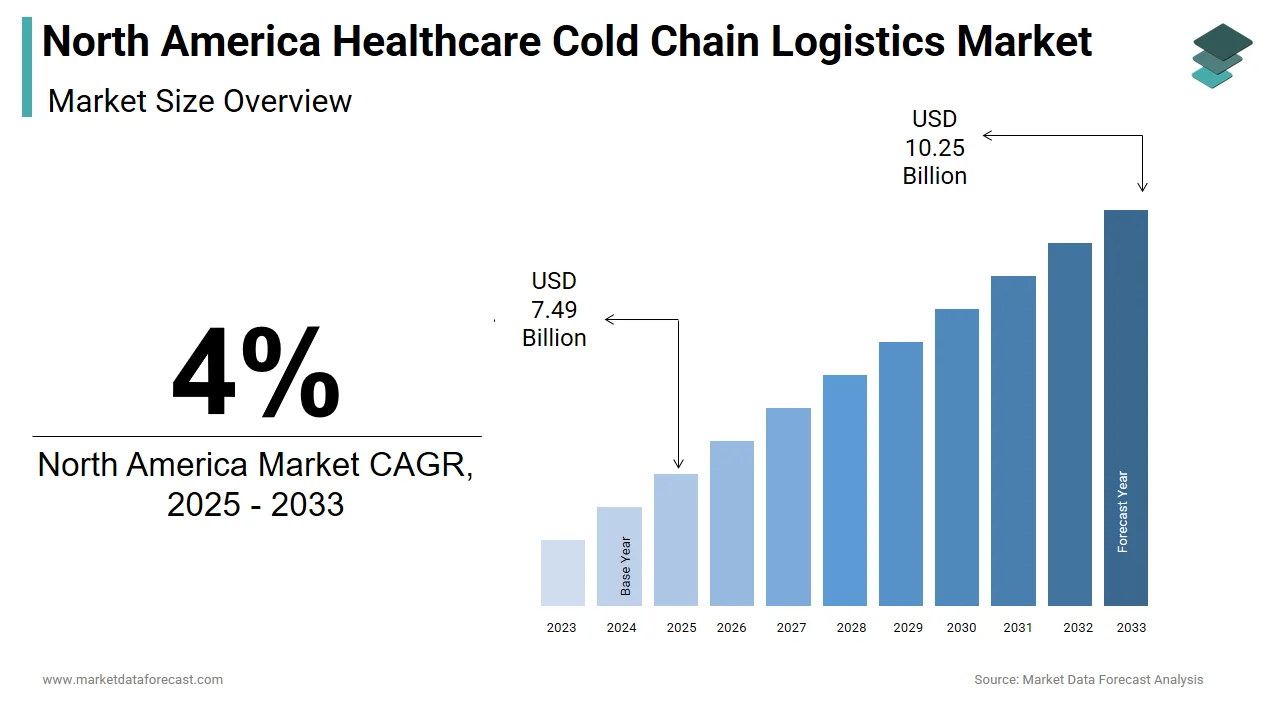
The healthcare cold chain logistics maintains temperature-sensitive medical products such as vaccines, biologics, blood derivatives, and pharmaceuticals. This supply chain infrastructure is crucial for ensuring product integrity, regulatory compliance, and patient safety across the region. The increasing complexity of drug formulations, particularly with the rise of biopharmaceuticals and mRNA-based therapeutics, has amplified the need for advanced cold chain solutions.
Technological advancements, including real-time temperature tracking, IoT-enabled monitoring systems, and automated warehouse management, have transformed the industry landscape. As per the International Society for Pharmaceutical Engineering (ISPE), nearly 70% of pharmaceutical manufacturers in North America have upgraded their cold chain protocols since 2022 to meet evolving regulatory standards.
MARKET DRIVERS
Expansion of Biopharmaceutical and Vaccine Production
The rapid expansion of biopharmaceutical and vaccine production, which requires stringent temperature control throughout the supply chain, is driving the growth of the North America healthcare cold chain logistics market. The development and mass deployment of mRNA-based vaccines during the pandemic significantly increased demand for ultra-low temperature storage and transport solutions. According to the Centers for Disease Control and Prevention (CDC), the U.S. alone administered over 600 million doses of temperature-sensitive vaccines between 2021 and 2023, reinforcing the necessity for robust cold chain infrastructure.
Additionally, the biopharma sector is witnessing unprecedented growth due to advancements in personalized medicine and cell and gene therapies. As reported by the Biotechnology Innovation Organization (BIO), over 900 new biologic drugs were in clinical trials across North America in 2023, most of which required cold or frozen storage conditions. These complex therapies often have short shelf lives and must be transported in tightly controlled environments, further driving investment in cold chain logistics.
Pharmaceutical companies are increasingly partnering with third-party logistics providers (3PLs) specializing in temperature-controlled distribution. This trend is supported by the U.S. Food and Drug Administration (FDA), which continues to enforce strict guidelines on drug storage and transportation, ensuring that cold chain integrity remains a top priority across the healthcare supply chain.
Increasing Demand for Temperature-Sensitive Specialty Drugs
The rising prevalence of chronic diseases and the growing adoption of specialty pharmaceuticals are prompting the growth of the North America temperature-controlled logistics market. Specialty drugs, many of which require refrigeration or freezing to maintain stability, now constitute a large portion of prescription medications dispensed in the U.S. and Canada. Conditions such as diabetes, multiple sclerosis, rheumatoid arthritis, and oncology treatments rely heavily on injectable and infusion-based therapies that cannot tolerate temperature deviations. For instance, biosimilars and monoclonal antibodies, which have become central to cancer treatment, must be stored between 2°C and 8°C. Any deviation can compromise potency and efficacy, which is posing risks to patient health. This growing reliance on temperature-sensitive drugs has prompted pharmacies, hospitals, and home care providers to invest in cold chain-compatible dispensing and delivery systems.
MARKET RESTRAINTS
High Capital and Operational Costs
The high capital and operational costs associated with maintaining temperature-controlled supply chains are attributed to restricting the growth of the North America healthcare cold chain logistics market. Unlike standard logistics, cold chain operations require specialized equipment such as refrigerated warehouses, insulated containers, and real-time monitoring systems, all of which contribute to elevated expenses. According to the International Society for Pharmaceutical Engineering (ISPE), setting up a compliant cold storage facility in the U.S. can cost upwards of $2 million, which excludes ongoing maintenance and energy expenditures. These financial burdens disproportionately affect smaller pharmaceutical firms and regional healthcare providers, limiting their ability to scale operations efficiently. Additionally, fluctuations in energy prices and regulatory compliance requirements further complicate cost predictability.
Complex Regulatory Compliance Requirements
The complexity of regulatory compliance frameworks governing the transportation and storage of temperature-sensitive medical products also limits the growth of the North America healthcare cold chain logistics market. Both the U.S. Food and Drug Administration (FDA) and Health Canada impose strict guidelines under Good Distribution Practices (GDP) and Current Good Manufacturing Practice (CGMP) regulations, which mandate continuous temperature monitoring, documentation, and validation processes.
Compliance with these standards requires extensive documentation, calibration of equipment, and regular audits, all of which add layers of administrative burden. According to the Parenteral Drug Association (PDA), in 2023, nearly 25% of pharmaceutical logistics audits resulted in corrective action requests related to temperature excursions or inadequate data logging practices. Non-compliance can lead to product recalls, legal penalties, and reputational damage, compelling companies to invest heavily in quality assurance systems.
MARKET OPPORTUNITIES
Integration of Real-Time Monitoring and IoT Technologies
The integration of real-time monitoring and Internet of Things (IoT) technologies into supply chain operations is attributed to creating new opportunities for the growth of North America healthcare cold chain logistics market. These innovations enable continuous tracking of temperature, humidity, and location data throughout the transportation and storage lifecycle, enhancing visibility and reducing the risk of product spoilage. Real-time data analytics platforms allow stakeholders to receive alerts in case of deviations from set temperature thresholds, enabling immediate corrective actions. Additionally, cloud-based reporting tools facilitate audit readiness by providing comprehensive logs of environmental conditions during transit. Hospitals, laboratories, and pharmacies are increasingly leveraging these technologies to ensure seamless delivery of critical medications, particularly in remote areas.
Growth of Home Healthcare and Last-Mile Delivery Services
The expanding home healthcare sector in North America is additionally to fuel the growth of the North America healthcare cold chain logistics market. According to the American Telemedicine Association (ATA), home-based healthcare utilization increased by 35% in 2023 compared to the previous year, with the growing reliance on decentralized treatment models.
This shift has prompted pharmaceutical companies and logistics providers to develop tailored cold chain solutions for direct-to-patient deliveries. Companies such as AmerisourceBergen and McKesson have expanded their home infusion service networks, incorporating portable refrigeration units and temperature-monitored packaging to ensure medication safety. Furthermore, e-pharmacy platforms like Amazon Pharmacy and CVS Health have integrated cold chain-ready delivery systems to accommodate temperature-sensitive prescriptions.
MARKET CHALLENGES
Infrastructure Limitations in Rural and Remote Areas
The lack of adequate infrastructure in rural and remote regions, which hampers the efficient distribution of temperature-sensitive medical products, is limiting the growth of the North America healthcare cold chain logistics market. Unlike urban centers, which benefit from well-developed transportation networks and centralized cold storage facilities, rural areas often face logistical hurdles such as limited access to refrigerated transport, unreliable electricity supply, and long distances between healthcare facilities. According to the Federal Office of Rural Health Policy (FORHP), in 2023, over 20% of U.S. counties lacked sufficient cold storage capacity for vaccines and biologics, leading to frequent stockouts and compromised patient care.
Risk of Temperature Excursions During Transportation
Maintaining consistent temperature control during transportation remains one of the most critical challenges in the North America healthcare cold chain logistics market. Even minor deviations from recommended storage conditions can render pharmaceuticals ineffective or unsafe for use, particularly for biologics and vaccines that require narrow thermal ranges. According to the Parenteral Drug Association (PDA), in 2023, approximately 18% of temperature-sensitive drug shipments experienced excursions beyond acceptable limits, which is resulting in costly rejections and potential treatment delays. Factors contributing to this issue include equipment failures, human error, extended transit times, and disruptions at border crossings.
REPORT COVERAGE
| REPORT METRIC | DETAILS |
| Market Size Available | 2025 to 2034 |
| Base Year | 2025 |
| Forecast Period | 2026 to 2034 |
| Segments Covered | By Product, and Region. |
| Various Analyses Covered | Global, Regional and Country-Level Analysis, Segment-Level Analysis, Drivers, Restraints, Opportunities, Challenges; PESTLE Analysis; Porter’s Five Forces Analysis, Competitive Landscape, Analyst Overview of Investment Opportunities |
| Countries Covered | United States, Canada, Mexico, Rest of North America |
| Market Leaders Profiled | DHL International GmbH, UPS Healthcare, FedEx Corporation (Custom Critical), AmerisourceBergen / World Courier, Kuehne + Nagel International AG, DB Schenker, Cardinal Health, VersaCold Logistics Services, Americold Realty Trust, and Congebec Logistics. |
SEGMENTAL ANALYSIS
By Product Insights
The biopharmaceuticals segment accounted in holding 48.2% of the North America healthcare cold chain logistics market share in 2024, with the increasing development and commercialization of biologic drugs that require strict temperature control throughout their lifecycle. Additionally, the rising prevalence of chronic diseases such as cancer, diabetes, and autoimmune disorders has increased reliance on injectable and infusion-based therapies.

The vaccines segment is swiftly emerging with a CAGR of 12.3% from 2026 to 2034. The mass distribution of mRNA vaccines during the global health crisis significantly accelerated investments in cold chain capabilities. According to the Centers for Disease Control and Prevention (CDC), the U.S. administered over 600 million doses of temperature-sensitive vaccines between 2021 and 2023, many of which required storage at -70°C or lower. Moreover, routine immunization programs and the rollout of booster campaigns have sustained demand for cold storage solutions.
Segmental Analysis: North America Healthcare Cold Chain Logistics Market by Segment (Transportation, Packaging, Instrumentation)
The transportation segment dominated the North America healthcare cold chain logistics market by capturing 42.3% of the share in 2024 to ensure safe and timely delivery of biologics, vaccines, and other sensitive medical products. The increasing reliance on specialized refrigerated fleets and air cargo services to maintain product integrity across long distances is. According to the International Society for Pharmaceutical Engineering (ISPE), over 65% of pharmaceutical companies in North America outsourced cold chain transportation to third-party logistics providers (3PLs) in 2023 to meet regulatory compliance and operational efficiency goals. Additionally, the rise in cross-border shipments within North America has intensified demand for compliant transportation solutions.
The instrumentation segment is projected to grow with a CAGR of 13.6% in the coming years with the increasing adoption of real-time monitoring devices, automated sensors, and IoT-enabled tracking systems designed to enhance visibility and control over temperature-sensitive shipments. Furthermore, regulatory bodies such as the U.S. Food and Drug Administration (FDA) have emphasized the importance of traceability and audit readiness, prompting companies to invest heavily in instrumentation solutions.
COUNTRY-LEVEL ANALYSIS
United States Healthcare Cold Chain Logistics Market Insights
The United States was the top performer in the North America healthcare cold chain logistics market with 78.3% of the share in 2024. The high volume of biologic drug development and vaccine distribution is certainly a major factor driving the growth of the North America healthcare cold chain logistics market. According to the Centers for Disease Control and Prevention (CDC), the U.S. distributed over 600 million doses of temperature-sensitive vaccines between 2021 and 2023, which necessitated robust cold chain logistics. Moreover, the presence of leading pharmaceutical companies and third-party logistics providers has fostered a highly integrated cold chain ecosystem.
Canada Healthcare Cold Chain Logistics Market Insights
Canada holds around 16% of the North America healthcare cold chain logistics market. According to the Public Health Agency of Canada (PHAC), in 2023, over 30 million doses of temperature-sensitive vaccines were administered nationwide, including annual flu shots and newer biotech-derived vaccines. Maintaining the cold chain for these products requires significant investment in refrigeration units, transport vehicles, and monitoring systems.
KEY MARKET PLAYERS
Noteworthy Companies dominating the North America healthcare cold chain logistics market profiled in the report are
- DHL International GmbH
- UPS Healthcare
- FedEx Corporation (Custom Critical)
- AmerisourceBergen / World Courier
- Kuehne + Nagel International AG
- DB Schenker
- Cardinal Health
- VersaCold Logistics Services
- Americold Realty Trust
- Congebec Logistics
RECENT MARKET DEVELOPMENTS
- In March 2024, FedEx Express announced the launch of its dedicated "Cold Chain Solutions" service line, which is offering end-to-end temperature-controlled logistics tailored for biopharma clients across North America.
- In June 2024, UPS Healthcare expanded its Louisville-based cold chain facility by adding 50,000 square feet of GMP-compliant storage space by reinforcing its capacity to handle ultra-low temperature vaccines and biologics.
- In September 2024, Sensitech Inc. introduced a new AI-driven cold chain monitoring platform that provides predictive alerts and real-time analytics for pharmaceutical shippers aiming to reduce temperature excursions.
- In November 2024, AmerisourceBergen acquired a regional cold chain logistics provider specializing in last-mile delivery of specialty medications, which is strengthening its ability to serve rural and home healthcare patients.
- In January 2025, Thermo Fisher Scientific launched a series of compact, portable ultra-low freezers designed specifically for decentralized clinical trial sites and remote vaccine administration centers across North America.
MARKET SEGMENTATION
This North America healthcare cold chain logistics market research report is segmented and sub-segmented into the following categories.
By Product
- Biopharmaceuticals
- Vaccines
- Clinical Trials
By Country
- United States
- Canada
- Mexico
- Rest of North America