- Product Description Description
- Table of Contents TOC
- List of Table & Figure LOT
- Get Free Sample PDF Sample PDF
Market Size, 2025
$4.70 BnMarket Estimate, 2026
$4.96 BnMarket Forecast, 2034
$7.57 BnCAGR, 2026–2034
5.43%North America HV Switchgear Market Size
The global ethylene market size was valued at USD 4.70 billion in 2025 and is anticipated to reach USD 4.96 billion in 2026 from USD 7.57 billion by 2034, growing at a CAGR of 5.43% during the forecast period from 2026 to 2034.
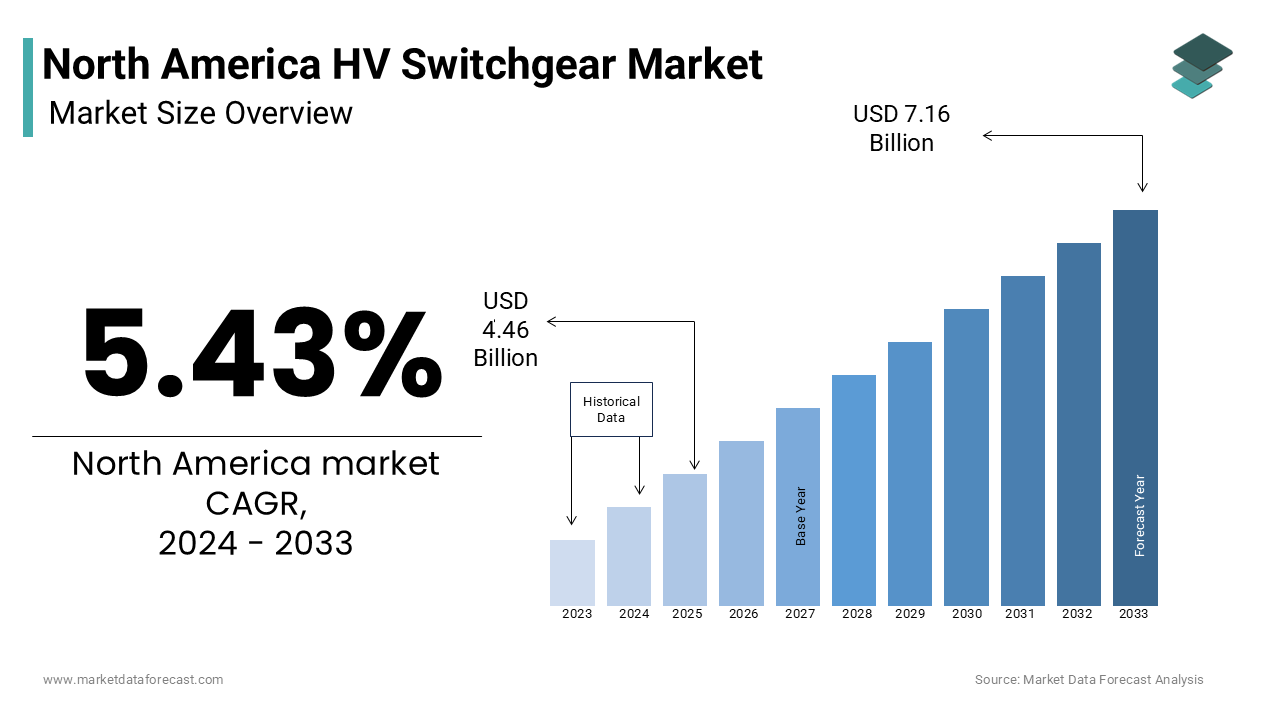
High-voltage (HV) switchgear systems are facilitating safe control, protection, and isolation of electrical equipment operating at voltages exceeding 69 kV. These systems are integral to utilities, industrial complexes, and critical infrastructure such as data centers, hospitals, and transportation hubs. The market is characterized by technological advancements, including the integration of digital monitoring systems and smart grid technologies. Additionally, aging infrastructure in the region necessitates continuous upgrades and replacements. This scenario sets a compelling foundation for sustained demand in the HV switchgear segment.
MARKET DRIVERS
Grid Modernization and Infrastructure Upgrades
The ongoing transformation of North America’s electrical grid is a primary catalyst driving demand for HV switchgear. The existing transmission and distribution infrastructure is aging, with a significant portion having exceeded its intended operational lifespan. These upgrades often involve replacing outdated switchgear systems with advanced, digitally enabled alternatives that offer enhanced reliability, remote monitoring capabilities, and improved fault detection. The initiatives are directly translating into increased procurement activities for HV switchgear units. Furthermore, the integration of renewable energy sources into the grid necessitates the installation of new substations and retrofitting of existing ones, further amplifying market demand.
Rising Demand for Renewable Energy Integration
The increasing adoption of renewable energy sources such as wind and solar power is significantly driving the demand for HV switchgear in North America. As the region transitions toward cleaner energy alternatives, the need for efficient power evacuation and grid connectivity becomes paramount. Each new renewable energy project requires dedicated substation infrastructure equipped with HV switchgear to step up voltage for long-distance transmission. These projects are inherently dependent on reliable switchgear systems to manage power flow and ensure grid stability. Moreover, the growing emphasis on distributed energy resources and microgrids further intensifies the requirement for advanced switchgear solutions that support bidirectional power flows and dynamic load management.
MARKET RESTRAINTS
Supply Chain Disruptions and Component Shortages
Supply chain volatility remains a significant constraint in the North American HV switchgear market. The sector relies heavily on specialized components such as circuit breakers, current transformers, and insulating materials, many of which are sourced globally. The disruptions caused by the pandemic, geopolitical tensions, and logistical bottlenecks have severely impacted the availability of these components. The semiconductor shortage, in particular, has affected the production of smart relays and digital monitoring units embedded in modern switchgear systems. Furthermore, lead times for critical switchgear components have extended since 2020. These delays not only hinder timely project execution but also increase overall project costs. Additionally, the rising prices of copper and steel key materials in switchgear manufacturing have added financial pressure These supply-side challenges are constraining market growth despite rising demand.
Stringent Regulatory and Environmental Compliance Requirements
The HV switchgear market in North America is heavily influenced by stringent regulatory frameworks aimed at ensuring safety, environmental sustainability, and electromagnetic compatibility. Compliance with standards set by bodies such as IEEE, ANSI, and the EPA often necessitates costly design modifications and prolonged certification processes. For instance, the EPA’s regulations on sulfur hexafluoride (SF6), a commonly used insulating gas in switchgear, have prompted manufacturers to explore alternative technologies. This has led to increased scrutiny and the adoption of cleaner, though often more expensive, alternatives like clean air or vacuum-based switchgear. The compliance process also involves extensive testing and certification, which can extend product development cycles by several months. Furthermore, varying state-level regulations in the U.S. and provincial standards in Canada create additional complexities for manufacturers seeking to standardize products across regions. These regulatory hurdles act as a barrier to rapid market expansion.
MARKET OPPORTUNITIES
Digitalization and Smart Grid Technologies
Digital transformation presents a transformative opportunity for the North American HV switchgear market. The integration of sensors, IoT-enabled devices, and real-time monitoring systems into switchgear infrastructure is gaining traction as utilities seek to enhance operational efficiency and grid reliability. Smart switchgear solutions enable predictive maintenance, fault diagnostics, and remote control, reducing downtime and operational costs. The deployment of synchrophasors and advanced control systems is expected to drive demand for digitally equipped switchgear units. Additionally, the rise of smart cities and industrial automation is fueling the need for intelligent power management systems. Cities such as Toronto and Austin have launched smart grid programs, incorporating digital switchgear into their infrastructure. These developments are projected to increase the market value of smart switchgear solutions over the years. Furthermore, government incentives for grid modernization, such as those under the Infrastructure Investment and Jobs Act, are expected to accelerate adoption.
Expansion of Transmission Infrastructure for Renewable Integration
The rapid expansion of renewable energy projects across North America is creating a robust opportunity for HV switchgear deployment in new transmission infrastructure. With wind and solar farms increasingly located in remote areas, extensive transmission networks are required to transport electricity to load centers. Each new transmission line necessitates the installation of substations equipped with HV switchgear, creating a direct demand surge. These developments are driving investments in high-capacity switchgear solutions capable of handling fluctuating power inputs from renewable sources. Additionally, the emergence of offshore wind projects along the U.S. East Coast is expected to require specialized marine-grade switchgear installations.
MARKET CHALLENGES
Skilled Labor Shortage and Technical Expertise Gap
A growing shortage of skilled technicians and engineers poses a significant challenge to the North American HV switchgear market. The installation, maintenance, and operation of HV switchgear systems require specialized knowledge and training, which are increasingly in short supply. This shortage is particularly acute in rural and remote areas where renewable energy projects are concentrated, complicating infrastructure deployment. The complexity of modern digital switchgear systems further exacerbates the issue, as they demand personnel trained in both electrical engineering and digital technologies. Additionally, the retirement of experienced professionals without adequate knowledge transfer is creating a technical expertise gap. This workforce challenge not only delays project timelines but also increases operational risks, as improper handling of HV equipment can lead to safety incidents and equipment failures.
Cybersecurity Risks in Digitally Integrated Systems
As HV switchgear systems become increasingly integrated with digital communication and control technologies, they face heightened cybersecurity risks. The convergence of operational technology (OT) and information technology (IT) in smart grid environments exposes critical infrastructure to potential cyber threats. These threats include ransomware attacks, data breaches, and unauthorized access to control systems, which can disrupt power supply and compromise grid stability. The integration of IoT-enabled devices and cloud-based monitoring platforms expands the attack surface, making it challenging to secure all endpoints. Addressing these risks requires robust cybersecurity frameworks, regular system updates, and continuous monitoring, all of which add to operational complexity and costs. Furthermore, regulatory bodies are imposing stricter cybersecurity standards, such as NERC CIP Version 7, which mandates enhanced protection for critical infrastructure assets. Compliance with these standards necessitates significant investment in secure switchgear technologies and trained cybersecurity personnel, presenting a formidable challenge for market participants.
SEGMENTAL ANALYSIS
By Type Insights
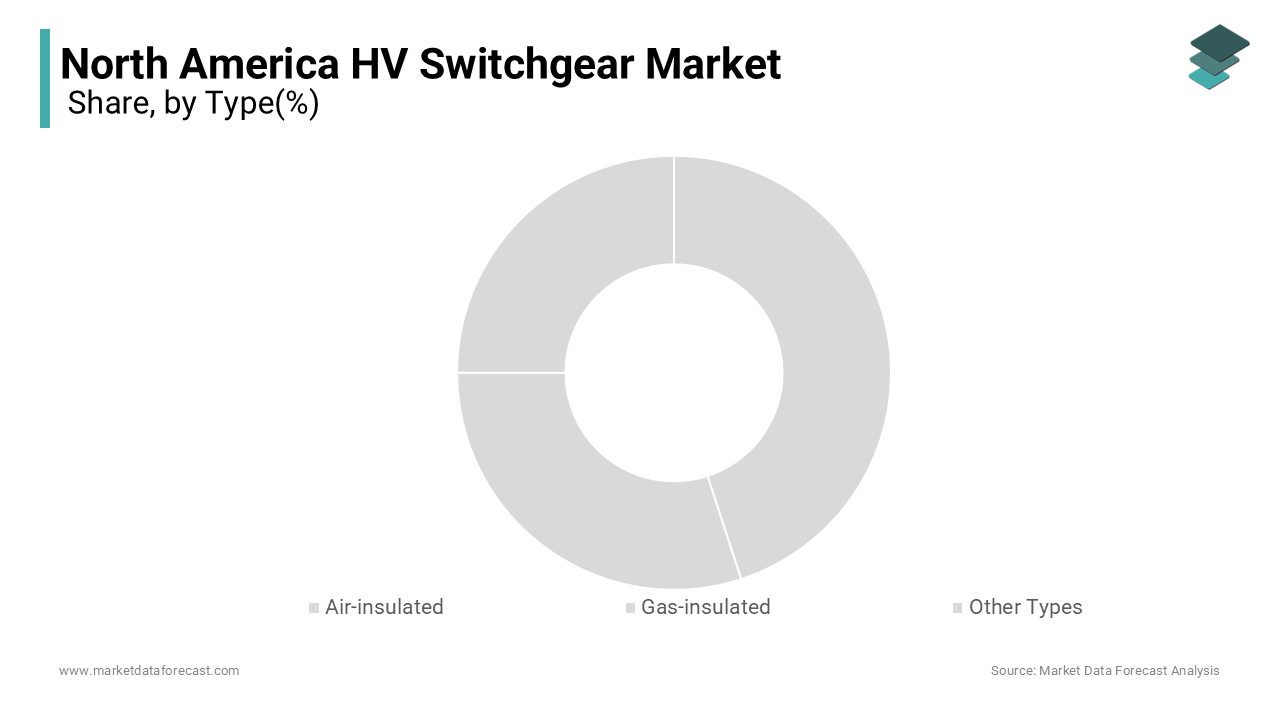
The Air-insulated switchgear (AIS) segment represents the dominant segment in the North American HV switchgear market by accounting for a 68.6% of the total share as of 2024. This segment's supremacy is primarily attributed to its cost-effectiveness and established infrastructure across the region. The widespread adoption of AIS systems in existing substations and new installations continues to drive its market leadership position. The driver behind air-insulated switchgear's market dominance is its economic advantage over alternative technologies. AIS systems typically cost less than gas-insulated alternatives, making them particularly attractive for large-scale utility projects and industrial applications. This significant cost differential has led to widespread adoption across North American utilities, particularly in rural and suburban transmission projects where budget constraints are more pronounced. Furthermore, the maintenance costs for AIS systems are generally lower over their operational lifespan, as reported by the Edison Electric Institute, contributing to their continued preference among utility operators seeking long-term economic efficiency.
The extensive existing infrastructure and deep-rooted technical expertise surrounding air-insulated switchgear systems represent another critical factor supporting its market dominance. Decades of deployment across North America have created a robust ecosystem of skilled technicians, established maintenance protocols, and readily available spare parts. This prevalence has resulted in utilities developing comprehensive in-house expertise for AIS maintenance and operation, reducing dependency on external specialists. Additionally, the standardized nature of AIS components ensures interoperability across different manufacturers and installations. The extensive supply chain network for AIS components further reinforces its market position by ensuring reliable component availability and competitive pricing.
The Gas-insulated switchgear (GIS) segment represents the fastest-growing segment in the North American HV switchgear market and is exhibiting a CAGR of 7.2% from 2025 to 2033. This accelerated growth trajectory is driven by increasing demand for compact, environmentally conscious solutions in urban and industrial applications where space constraints and environmental regulations are paramount considerations. The catalyst for gas-insulated switchgear's rapid market expansion is its exceptional space efficiency compared to conventional air-insulated systems. GIS installations require less footprint area, making them ideal for densely populated urban environments and industrial facilities with limited available space. The compact nature of GIS systems also enables faster deployment in challenging locations, with installation times reduced compared to AIS alternatives.
The development of environmentally friendly GIS technologies utilizing SF6 alternatives represents a significant growth catalyst for this market segment. Stricter environmental regulations, particularly concerning greenhouse gas emissions, are driving utilities to adopt cleaner switchgear solutions. The Environmental Protection Agency's recent guidelines have incentivized the transition to clean air and vacuum-based GIS systems, which eliminate or significantly reduce SF6 usage. Additionally, major manufacturers have introduced innovative GIS solutions utilizing nitrogen or clean air insulation, achieving performance comparable to conventional SF6 systems while reducing environmental impact.
REGIONAL ANALYSIS
United States HV Switchgear Market Insights
The United States maintains an overwhelming dominance in the North American HV switchgear market, commanding approximately 85% of the total regional market share. This commanding position is supported by extensive transmission infrastructure, robust industrial base, and substantial investments in grid modernization initiatives. The country's position as the largest economy in North America naturally translates to significant electrical infrastructure demands.
The United States' HV switchgear market is characterized by mature utility networks, extensive renewable energy integration projects, and ongoing infrastructure modernization efforts. The country's diverse energy landscape, encompassing conventional power generation alongside rapidly expanding renewable capacity, creates substantial demand for advanced switchgear solutions. The presence of major switchgear manufacturers such as General Electric, Siemens, and ABB within domestic borders further strengthens the market ecosystem. Regional variations exist, with states like Texas, California, and New York leading in new installations due to renewable energy mandates and population growth.
Canada HV Switchgear Market Insights
Canada represents the second-largest market in North America for HV switchgear, holding approximately 15% of the regional market share. The country's position is strengthened by its vast geographical expanse, significant hydroelectric resources, and growing emphasis on renewable energy integration and grid reliability. Canada's electrical infrastructure requirements are unique due to its northern climate conditions and extensive remote areas requiring robust power transmission solutions.
The Canadian HV switchgear market is driven by the country's commitment to clean energy transition and the need for reliable power delivery across challenging geographical terrains. Hydro-Québec, as the largest utility in Canada, operates one of the world's largest transmission systems, spanning large kilometers, creating substantial switchgear demand. Provincial initiatives, particularly in Ontario and British Columbia, focus on upgrading aging infrastructure and integrating renewable energy sources, necessitating new switchgear installations. Canada's northern territories present unique challenges, requiring specialized switchgear solutions capable of operating in extreme cold conditions, creating niche market opportunities for manufacturers with cold-weather expertise.
Mexico HV Switchgear Market Insights
Mexico occupies a notable position in the North American HV switchgear landscape, representing a growing market driven by industrial expansion and energy sector reforms. The country's strategic location and economic integration with the United States through USMCA have enhanced its importance in regional electrical infrastructure development.
Mexico's HV switchgear market is experiencing growth due to industrial expansion, particularly in manufacturing sectors, and ongoing energy infrastructure modernization. The Mexican government's energy reform initiatives have attracted substantial private investment in power generation and transmission infrastructure, with funds committed through public-private partnerships for grid modernization. The automotive and manufacturing sectors, concentrated primarily in northern states, require reliable electrical infrastructure to support industrial operations, driving demand for advanced switchgear solutions. The country's renewable energy targets necessitate new transmission infrastructure and switchgear installations. Mexico's participation in regional grid initiatives, including the Western Electricity Coordinating Council, further supports market growth through standardized equipment requirements and technical collaboration.
COMPETITVE LANDSCAPE
The North American HV switchgear market is characterized by consolidation among major players and strategic partnerships aimed at enhancing technological capabilities and geographic reach. This consolidation trend is reshaping market dynamics and influencing procurement patterns across all participating countries.
Major global manufacturers such as Siemens, ABB, and Schneider Electric have established significant manufacturing and service capabilities across North America, with over 70% of regional switchgear production occurring within the continent. According to the National Electrical Manufacturers Association, the top five switchgear manufacturers account for over 60% of North American market revenue, reflecting industry consolidation trends. Strategic acquisitions have accelerated, with over 150 merger and acquisition transactions valued at more than $12 billion occurring in the past five years. The integration of digital technologies has prompted partnerships between traditional switchgear manufacturers and software companies, with over 40% of new product developments incorporating IoT-enabled features. Regional utilities have adopted strategic sourcing agreements with major manufacturers, ensuring supply chain stability and technology standardization. The emergence of Chinese manufacturers such as Siemens Energy and Hitachi Energy joint ventures has introduced competitive pricing pressures while maintaining quality standards. According to the Edison Electric Institute, over 80% of major utilities have established long-term supply agreements with preferred switchgear vendors, reducing market volatility and supporting investment planning. The trend toward turnkey substation solutions has encouraged manufacturers to expand their service offerings beyond equipment supply to include installation, commissioning, and lifecycle management services. This evolution has created new revenue streams and strengthened customer relationships, contributing to market stability and growth across all North American countries.
KEY MARKET PLAYERS
Some of the major players in the North America HV switchgear market include
- ABB Ltd.
- Siemens AG
- General Electric Company
- Schneider Electric SE
- Eaton Corporation
- Mitsubishi Electric Corporation
- Toshiba Corporation
- Hitachi Energy
- Powell Industries Inc.
- CG Power and Industrial Solutions Ltd
Top Players in the North America HV Switchgear Market
Siemens Energy
Siemens Energy stands as a dominant force in the North American HV switchgear market through its comprehensive portfolio of electrical transmission solutions. The company's extensive manufacturing facilities across the United States and Canada enable localized production and rapid delivery capabilities. Their advanced digital switchgear technologies incorporate intelligent monitoring systems that provide real-time operational data and predictive maintenance capabilities. Siemens has consistently invested in research and development to create environmentally sustainable solutions, including SF6-free switchgear systems that align with stringent environmental regulations. The company's strong partnerships with major utilities and industrial clients have established it as a preferred supplier for critical infrastructure projects. Their commitment to grid modernization initiatives and smart grid integration has positioned them at the forefront of technological innovation in the sector.
General Electric Energy
General Electric Energy maintains a significant presence in the North American HV switchgear landscape through decades of technological expertise and market leadership. The company's comprehensive product portfolio spans from traditional air-insulated systems to advanced gas-insulated solutions incorporating cutting-edge digital technologies. GE's manufacturing facilities in North America ensure compliance with regional standards while maintaining global quality benchmarks. Their focus on developing compact, efficient switchgear solutions has particularly resonated with urban utilities facing space constraints. The company's digital grid solutions integrate seamlessly with existing infrastructure, providing enhanced operational visibility and control capabilities. GE's strong service network across North America offers comprehensive maintenance, upgrade, and modernization services that extend the lifecycle of installed switchgear systems.
ABB Ltd
ABB Ltd has established itself as a key player in the North American HV switchgear market through innovative technology solutions and strategic market positioning. The company's commitment to developing environmentally responsible switchgear technologies has resulted in breakthrough products that eliminate or significantly reduce SF6 usage. Their comprehensive range of switchgear solutions caters to diverse applications across utilities, industrial, and commercial sectors. ABB's digital substation solutions incorporate advanced sensing and communication technologies that enable predictive maintenance and enhanced grid reliability. The company's strong presence in renewable energy integration projects has strengthened its market position as the energy transition accelerates. Their modular switchgear designs offer flexibility in installation and future expansion, making them attractive to utilities seeking adaptable infrastructure solutions.
Top Strategies Used by Key Market Participants
Strategic Partnerships and Collaborations Leading players in the North American HV switchgear market actively pursue strategic partnerships with technology companies, utilities, and research institutions to enhance their product capabilities and market reach. These collaborations enable manufacturers to integrate advanced digital technologies, develop innovative solutions for specific applications, and access new customer segments. Partnerships with software companies facilitate the development of sophisticated monitoring and control systems, while alliances with utilities provide valuable insights into emerging market requirements and operational challenges.
Research and Development Investments Major market participants consistently allocate substantial resources toward research and development initiatives focused on creating next-generation switchgear technologies. These investments target environmental sustainability, operational efficiency, and digital integration capabilities. Companies are developing SF6-free alternatives, compact designs for urban applications, and intelligent systems with predictive maintenance features. R&D efforts also focus on improving safety standards, reducing maintenance requirements, and enhancing compatibility with renewable energy integration challenges.
Geographic Expansion and Localization Key players pursue geographic expansion strategies through establishment of regional manufacturing facilities, service centers, and strategic distribution networks. This approach enables faster delivery times, better customer service, and compliance with local regulations and standards. Localization strategies include adapting products to specific regional requirements, establishing local supply chains, and building relationships with regional utilities and industrial clients. This geographic presence also facilitates after-sales service and technical support capabilities.
RECENT MARKET DEVELOPMENTS
- In March 2024, Siemens Energy announced the launch of their new SF6-free 145 kV gas-insulated switchgear solution specifically designed for North American utility requirements, featuring enhanced environmental performance and digital monitoring capabilities.
- In January 2024, General Electric Energy completed the acquisition of Grid Solutions' transmission business, strengthening their portfolio of high-voltage switchgear products and expanding their manufacturing capabilities across North America.
- In November 2023, ABB Ltd unveiled their compact digital switchgear platform incorporating artificial intelligence-based predictive maintenance features, targeting urban transmission applications with space constraints.
- In August 2023, Siemens Energy partnered with Duke Energy to deploy smart switchgear monitoring systems across multiple substations in the southeastern United States, enhancing grid reliability through real-time operational data analytics.
- In May 2023, General Electric Energy established a new manufacturing facility in Ontario, Canada, dedicated to producing environmentally sustainable switchgear solutions for the North American market, supporting local content requirements and reducing delivery times.
MARKET SEGMENTATION
This research report on the North America HV Switchgear Market t is segmented and sub-segmented based on categories.
By Type
- Air-insulated
- Gas-insulated
- Other Types
By Country
- U.S.
- Canada
- Rest of North America