- Product Description Description
- Table of Contents TOC
- List of Table & Figure LOT
- Get Free Sample PDF Sample PDF
Market Size, 2025
$8.48 BnMarket Estimate, 2026
$9.10 BnMarket Forecast, 2034
$16.04 BnCAGR, 2026–2034
7.34%Executive Summary: North America Infectious Disease Diagnostics Market
- Market Scope: Regional analysis of the North American infectious disease diagnostics (IDD) industry, encompassing product types, application panels, molecular/technological platforms, hospital/laboratory end-user settings, and country-level profiles across the U.S., Canada, and Mexico.
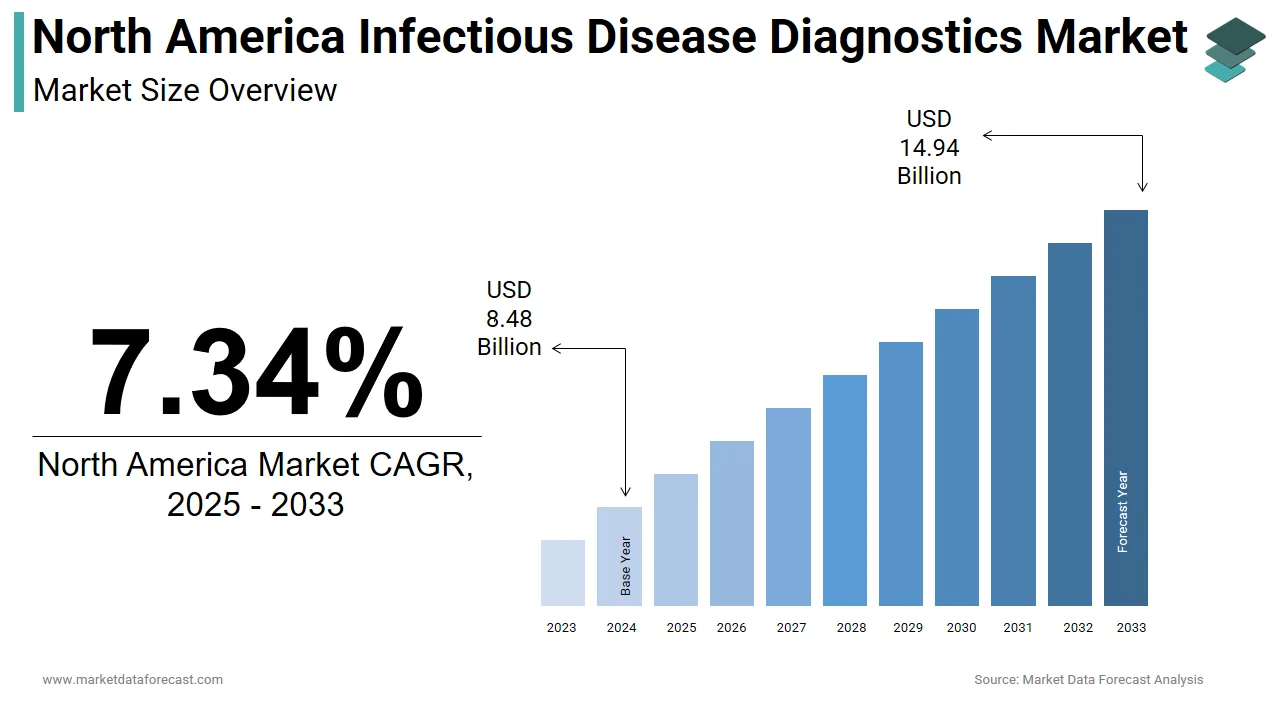
- Market Valuation: Valued at USD 8.48 billion in 2025, reaching USD 9.10 billion in 2026, and projected to expand to USD 16.04 billion by 2034, registering a solid CAGR of 7.34% from 2026 to 2034.
- Primary Growth Drivers: High prevalence of endemic and seasonal viral/bacterial infections (such as influenza, HIV, STIs, and tuberculosis); shifting healthcare focus toward decentralized point-of-care (POC) testing; and continuous R&D investments in molecular diagnostic infrastructure. Market restraints include elevated healthcare expenses and localized awareness gaps.
Key Market Segment Metrics (2026–2034)
| Category | Leading Segment (Base Position) | Fastest-Growing Segment |
|---|---|---|
| By Product | Reagents & Consumables (commands the largest revenue share due to high-frequency, repeatable testing volumes in clinical workflows) | Advanced Instruments & Software (expanding rapidly through automation and digital integration) |
| By Technology | Polymerase Chain Reaction / PCR (leads the market share given its gold-standard sensitivity, specificity, and molecular precision) | DNA Sequencing & INAAT (growing via demand for multi-pathogen identification and resistance profiling) |
| By Application | Respiratory & Viral Infections (HIV, Hepatitis, Influenza, and CT/NG panels drive bulk clinical demand) | Multiplex Syndromic Panels (scaling quickly to simultaneously isolate overlapping symptoms) |
| By End User | Hospitals & Large Clinical Laboratories (primary volume consumers for centralized high-throughput diagnostics) | Point-of-Care & Outpatient Facilities (accelerating through decentralized testing mandates) |
| By Country | United States (dominates regional revenue supported by high healthcare expenditure and advanced clinical networks) | Canada (projected for strong growth backed by favorable regulatory frameworks and robust disease surveillance) |
Major Market Players & Market Structure
Market Structure: Highly competitive landscape anchored by dominant medical technology and diagnostics corporations emphasizing strategic acquisitions, regulatory clearances, and automated molecular platforms.
Key Companies: Abbott Laboratories, bioMérieux SA, Hologic, Inc., Danaher Corporation (Cepheid), Becton, Dickinson and Company, Thermo Fisher Scientific Inc., Roche Diagnostics, Alere Inc., DiaSorin S.p.A., Quidel Corporation, and Bio-Rad Laboratories, Inc.
North America Infectious Disease Diagnostics Market Size
The size of the North America infectious diseases diagnostics market was worth USD 8.48 billion in 2025. The North America market is anticipated to grow at a CAGR of 7.34% from 2026 to 2034 and be worth USD 16.04 billion by 2034, up from USD 9.10 billion in 2026.
Infectious disease diagnostics are the medical tests and laboratory methods used to identify the specific germs, such as bacteria, viruses, fungi, or parasites, causing an illness. This sector serves as the cornerstone of modern clinical microbiology, enabling timely intervention and effective treatment strategies for conditions ranging from common respiratory infections to complex tropical diseases. The region benefits from advanced healthcare infrastructure and robust regulatory frameworks that facilitate the rapid adoption of innovative diagnostic tools. According to the U.S. Centers for Disease Control and Prevention, more than 2.8 million antimicrobial-resistant infections occur annually in the United States, expanding clinical demand for molecular-based diagnostic assays to guide therapeutic interventions. The integration of molecular techniques such as polymerase chain reaction and next-generation sequencing has revolutionized pathogen identification by offering superior sensitivity and specificity compared to traditional culture methods. Public health initiatives further drive demand as governments prioritize surveillance systems to track outbreak patterns and prevent epidemics. The aging population in North America contributes significantly to disease burden, with individuals over 65 years accounting for a disproportionate share of hospital admissions due to infectious complications. As per the U.S. Census Bureau, the population of Americans aged 65 and older is projected to reach 95 million by 2060, escalating the structural volume of clinical testing required across healthcare delivery channels. Furthermore, the rise in chronic comorbidities such as diabetes and cardiovascular diseases compromises immune function, making early detection vital for patient management. Technological advancements in point-of-care testing allow for decentralized diagnostics, enhancing accessibility in remote areas and reducing turnaround times for critical results.
MARKET DRIVERS
Rising Prevalence of Antimicrobial Resistance Accelerates Diagnostic Adoption
The escalating crisis of antimicrobial resistance is a paramount driver propelling the expansion of the North America infectious disease diagnostics market. Misuse and overuse of antibiotics have led to the emergence of multidrug-resistant organisms that render standard treatments ineffective, necessitating precise identification of pathogens and their resistance profiles. As per the Centers for Disease Control and Prevention, more than 35000 people die annually in the United States due to antibiotic-resistant infections, highlighting the urgent need for stewardship programs supported by accurate diagnostics. Rapid diagnostic tests enable clinicians to distinguish between bacterial and viral infections, thereby preventing unnecessary antibiotic prescriptions and preserving the efficacy of existing drugs. The implementation of mandatory reporting systems for resistant strains in hospitals further compels healthcare facilities to invest in advanced diagnostic platforms. Data from the World Health Organization indicates that antimicrobial resistance is one of the top ten global public health threats facing humanity, which reinforces regional efforts to combat this issue through technological innovation. Diagnostic manufacturers respond by developing assays that detect specific resistance genes, such as mecA for methicillin-resistant Staphylococcus aureus or vanA for vancomycin-resistant enterococci. These molecular tools provide results within hours rather than days, allowing for immediate adjustment of therapeutic regimens. Insurance providers and government agencies increasingly link reimbursement rates to appropriate antibiotic usage metrics, incentivizing the adoption of rapid diagnostics. The economic burden of resistant infections, which can exceed 20 billion dollars annually in direct healthcare costs according to CDC estimates, further justifies investment in diagnostic infrastructure. This financial imperative combined with clinical necessity ensures sustained growth in demand for sophisticated diagnostic solutions across the continent.
Increasing Incidence of Emerging and Reemerging Infectious Diseases Fuels Demand
The frequent emergence and reemergence of infectious diseases creates a persistent demand for versatile and scalable diagnostic solutions in the region, which further boosts the growth of the North America infectious disease diagnostics market. Climate change, urbanization, and global travel facilitate the spread of pathogens into new geographic regions, exposing populations to previously unfamiliar threats. As per the National Institute of Allergy and Infectious Diseases, over 75 percent of emerging infectious diseases are zoonotic in origin, meaning they jump from animals to humans, requiring robust surveillance and diagnostic capabilities. Recent outbreaks of diseases such as Zika virus, West Nile virus, and novel coronaviruses have demonstrated the vulnerability of healthcare systems to unexpected pathogens, driving investment in multiplex diagnostic panels. These panels can simultaneously test for multiple pathogens from a single sample, providing comprehensive insights during complex clinical presentations. The Centers for Disease Control and Prevention maintains a network of laboratories equipped to handle high-consequence pathogens, ensuring rapid response capabilities during public health emergencies. Seasonal influenza remains a significant burden, with millions of cases reported annually, necessitating widespread diagnostic testing to guide antiviral treatment and vaccination strategies. According to the CDC, influenza causes tens of thousands of deaths and hundreds of thousands of hospitalizations each year in the United States alone. The threat of bioterrorism also prompts government agencies to stockpile diagnostic kits and maintain readiness protocols. Academic research institutions collaborate with private companies to develop novel assays for rare but deadly pathogens such as Ebola and Marburg virus. This proactive approach to preparedness ensures that diagnostic infrastructure can scale up quickly during crises. The continuous evolution of pathogens requires constant updates to diagnostic algorithms, fostering a dynamic market environment characterized by innovation and adaptability.
MARKET RESTRAINTS
High Costs of Advanced Diagnostic Technologies Restrict Accessibility
The substantial financial burden associated with advanced diagnostic technologies is limiting widespread adoption across diverse healthcare settings in the region, which impedes the expansion of the North America infectious disease diagnostics market. Molecular diagnostic platforms such as real-time polymerase chain reaction and next-generation sequencing require considerable capital investment for equipment acquisition, maintenance, and specialized reagents. According to the Association for Molecular Pathology, recent regulatory expansions regarding laboratory-developed testing procedures impose substantial administrative burdens, inflating startup and validation costs for community pathology labs. Reimbursement policies often lag behind technological advancements, leaving providers with inadequate compensation for complex tests. The Centers for Medicare and Medicaid Services frequently adjust payment rates based on historical data, which may not reflect the true cost of newer high-sensitivity assays. This discrepancy discourages healthcare facilities from upgrading their diagnostic capabilities, particularly in resource-constrained environments. Additionally, the need for highly trained personnel to operate sophisticated instruments and interpret complex results adds to operational expenses. Shortages of qualified molecular technologists exacerbate this issue, leading to staffing challenges and increased labor costs. Data from the American Society for Clinical Pathology indicates a growing gap between the demand for skilled laboratory professionals and the available workforce. High out-of-pocket costs for patients without adequate insurance coverage further limit access to premium diagnostic services. Price-sensitive consumers may opt for cheaper, less accurate alternatives or forego testing altogether, resulting in delayed diagnoses and poorer health outcomes. Manufacturers face pressure to reduce prices while maintaining profitability, which can stifle innovation and slow the introduction of breakthrough technologies. The economic disparity between urban academic centers and rural healthcare providers creates uneven access to state-of-the-art diagnostics, undermining equitable healthcare delivery across the region.
Regulatory Hurdles and Lengthy Approval Processes Delay Market Entry
Stringent regulatory requirements and prolonged approval timelines are formidable obstacles for companies seeking to introduce new diagnostic products in the region, which slows down the growth of the North America infectious disease diagnostics market. The Food and Drug Administration imposes rigorous standards for safety, efficacy, and clinical validity, requiring extensive validation studies before granting market clearance. According to the U.S. Food and Drug Administration, traditional 510(k) premarket notifications for moderate-risk diagnostic devices average roughly 140 to 175 days in total review time prior to commercial clearance. This extended timeline delays revenue generation and increases development costs for manufacturers, particularly small startups with limited financial reserves. The complexity of regulatory submissions demands substantial documentation, including analytical performance data, clinical trial results, and manufacturing quality controls. Changes in regulatory guidelines or additional requests for information from reviewers can further prolong the process, causing uncertainty and strategic delays. The European Union’s transition to new medical device regulations has also influenced global supply chains, affecting the availability of components and reagents in North America. Compliance with Good Laboratory Practice and Good Manufacturing Practice standards requires continuous monitoring and auditing, adding to operational burdens. Small- and medium-sized enterprises often lack the regulatory expertise needed to navigate these complexities efficiently, leading to higher reliance on external consultants and increased overheads. The fear of post-market surveillance penalties or product recalls due to noncompliance discourages risk-taking and innovation. Companies must balance the desire for rapid market entry with the need for thorough regulatory adherence, which can stifle agility. This regulatory landscape favors large established players with dedicated compliance teams while creating barriers to entry for innovative newcomers. The resulting consolidation reduces competition and limits the diversity of diagnostic solutions available to healthcare providers and patients.
MARKET OPPORTUNITIES
Integration of Artificial Intelligence and Machine Learning Presents Opportunity
The incorporation of artificial intelligence and machine learning into infectious disease diagnostics offers transformative opportunities for enhancing accuracy, speed, and predictive capabilities, which is expected to accelerate the expansion of the North American market. These technologies enable the analysis of vast amounts of complex data from genomic sequences, imaging, and electronic health records to identify patterns invisible to human observers. According to the U.S. National Institutes of Health, artificial intelligence algorithms applied to digital microscopy and image processing significantly increase diagnostic detection speed and classification accuracy across high-volume pathogen screening programs. Machine learning models can predict outbreak trends by analyzing environmental factors, patient demographics, and historical infection rates, allowing for proactive public health interventions. Diagnostic companies are developing smart platforms that integrate AI-driven interpretation tools with laboratory instruments, providing real-time decision support for clinicians. The ability to automate routine tasks such as image recognition in microscopy or sequence alignment in genomics reduces workload and minimizes human error. As per the American Medical Informatics Association, the integration of clinical decision support systems and advanced electronic health record metadata streams optimizes laboratory workflow orchestration and reduces clinical decision delays. Partnerships between technology firms and diagnostic manufacturers accelerate the development of hybrid solutions that combine hardware precision with software intelligence. Cloud computing infrastructure supports the storage and processing of large datasets, enabling collaborative research and continuous algorithm improvement. Regulatory bodies are beginning to establish frameworks for evaluating AI-based medical devices, providing clarity for developers. The potential for personalized medicine grows as AI helps tailor diagnostic approaches based on individual patient profiles and genetic predispositions. This technological convergence creates new revenue streams and competitive advantages for early adopters. Healthcare systems benefit from improved efficiency and reduced costs associated with misdiagnosis. The opportunity lies in creating user-friendly interfaces that make advanced AI capabilities accessible to frontline healthcare workers.
Expansion of Point of Care Testing in Non-Traditional Settings Offers Growth Potential
The decentralization of diagnostic services through point-of-care testing in non-traditional settings, such as pharmacies, schools, and workplaces, is a key growth area for the North America infectious disease diagnostics market. Consumers increasingly demand convenience and immediacy, driving the shift from central laboratories to bedside or community-based testing locations. As per the American Pharmacists Association, over 90 percent of Americans live within five miles of a pharmacy, making these venues ideal for expanding access to rapid infectious disease tests. Portable diagnostic devices that require minimal training and provide results in minutes empower non-specialist staff to conduct testing effectively. The COVID-19 pandemic accelerated the acceptance of self-testing kits, establishing a precedent for home-based diagnostics for other conditions such as influenza and strep throat. Employers are integrating health screening programs into workplace wellness initiatives using point-of-care tests to maintain safe operating environments. Schools utilize rapid diagnostics to manage outbreaks and ensure continuity of education during flu seasons. The miniaturization of microfluidic technologies enables the development of handheld devices capable of performing complex molecular assays outside laboratory settings. According to the Point of Care Testing Association, robust reimbursement policies and expanded regulatory avenues for decentralized diagnostic platforms are essential to accelerating patient access to timely treatment across community care settings. Reimbursement codes for point-of-care tests are expanding, allowing providers to bill for these services sustainably. Telemedicine platforms integrate with point-of-care devices, enabling remote consultation and prescription based on immediate test results. This ecosystem enhances patient engagement and adherence to treatment plans. Manufacturers focus on designing intuitive devices with digital connectivity for seamless data transmission to electronic health records. The opportunity extends to rural and underserved areas where access to central laboratories is limited, improving health equity.
MARKET CHALLENGES
Shortage of Skilled Laboratory Personnel Impedes Operational Efficiency
A critical shortage of qualified laboratory professionals is a significant obstacle to the efficient operation and expansion of service in the North America infectious disease diagnostics market. The increasing complexity of diagnostic technologies requires specialized skills in molecular biology, bioinformatics, and data analysis, which are in short supply. As per the American Society for Clinical Laboratory Science, the vacancy rate for medical laboratory scientists has risen to over 10 percent in many regions, leading to staffing bottlenecks and burnout among existing employees. Aging workforce demographics contribute to this crisis as experienced technicians retire without sufficient replacements entering the field. Educational programs struggle to keep pace with demand, resulting in a pipeline gap that threatens long-term sustainability. The high turnover rate increases recruitment and training costs for healthcare facilities, impacting their bottom line. Complex diagnostic workflows require meticulous attention to detail, and any error due to fatigue or understaffing can compromise patient safety. The reliance on manual processes in some laboratories exacerbates the workload burden, delaying result reporting. According to the U.S. Bureau of Labor Statistics, employment of clinical laboratory technologists and technicians is projected to grow 2 percent from 2024 to 2034, lagging behind the average expansion rate across all national occupations. The mismatch creates operational inefficiencies and limits the capacity of laboratories to handle surge volumes during outbreaks. Hospitals face difficulties in maintaining 24-hour coverage for urgent diagnostic tests, affecting emergency care quality. The lack of standardized training programs for new technologies further complicates workforce development. Retention strategies such as competitive compensation and professional development opportunities are essential but often insufficient to address the systemic nature of the shortage. This human resource constraint hinders the full utilization of advanced diagnostic equipment and slows the adoption of innovative testing protocols.
Data Privacy and Security Concerns Complicate Digital Integration
Growing concerns regarding data privacy and cybersecurity threaten the seamless integration of digital diagnostics and electronic health records in the infectious disease sector, which holds back the growth of the North America infectious disease diagnostics market. Diagnostic tests generate sensitive personal health information that must be protected against unauthorized access and breaches. As per the Department of Health and Human Services, healthcare data breaches affected over 45 million individuals in the United States in recent years, highlighting the vulnerability of digital health infrastructure. The connectivity of diagnostic devices to hospital networks and cloud platforms increases the attack surface for cybercriminals seeking to steal patient data or disrupt operations. Compliance with regulations such as the Health Insurance Portability and Accountability Act requires robust encryption, access controls, and audit trails, which add complexity and cost to system implementation. Patients are increasingly aware of privacy risks and may hesitate to share data necessary for comprehensive diagnostic analysis. Interoperability issues between different diagnostic platforms and electronic health record systems hinder efficient data exchange and create silos. The lack of universal standards for data formatting and security protocols complicates integration efforts for multi-vendor environments. Cybersecurity incidents can lead to significant financial penalties, legal liabilities, and reputational damage for healthcare providers. Diagnostic manufacturers must invest heavily in secure software development practices and regular security assessments to mitigate risks. The tension between data utility for public health surveillance and individual privacy rights creates ethical and legal dilemmas. Ensuring anonymous data sharing for research purposes while protecting identity requires sophisticated de-identification techniques. Trust in digital diagnostic systems is fragile, and any breach can erode confidence in technology-driven healthcare solutions. Addressing these concerns requires collaborative efforts among policymakers, technology providers, and healthcare institutions to establish resilient and trustworthy data ecosystems.
REPORT COVERAGE
| REPORT METRIC | DETAILS |
| Market Size Available | 2025 to 2034 |
| Base Year | 2025 |
| Forecast Period | 2026 to 2034 |
| Segments Covered | By Product, Application, End-user, and Region. |
| Various Analyses Covered | Global, Regional and Country-Level Analysis, Segment-Level Analysis, Drivers, Restraints, Opportunities, Challenges; PESTLE Analysis; Porter’s Five Forces Analysis, Competitive Landscape, Analyst Overview of Investment Opportunities |
| Countries Covered | United States, Canada, Mexico, Rest of North America |
| Market Leaders Profiled | Abbott Laboratories, bioMérieux SA, Hologic, Inc., Danaher Corporation, Becton, Dickinson and Company, Cepheid, Inc., Thermo Fisher Scientific Inc., Roche Diagnostics, Alere Inc., Danaher Corporation, DiaSorin S.p.A., Quidel Corporation, and Bio-Rad Laboratories, Inc.
|
SEGMENTAL ANALYSIS
By Product Insights
The reagents segment dominated the North America infectious disease diagnostics market and accounted for a substantial share in 2025. This dominance of the segment was driven by its recurring consumption nature and essential role in every diagnostic test performed. Unlike instruments, which are capital expenditures purchased infrequently, reagents are consumables that must be replenished continuously, ensuring steady revenue streams for manufacturers. The leading position of this segment is bolstered by the high volume of tests conducted daily across hospitals and laboratories for conditions such as influenza, HIV, and hepatitis. As per the Centers for Disease Control and Prevention, millions of diagnostic tests are performed annually in the United States alone, creating immense demand for high-quality assay kits and chemical substrates. The shift toward molecular diagnostics has further amplified reagent consumption since polymerase chain reaction and nucleic acid amplification tests require specialized enzyme primers and probes for each run. These components have limited shelf lives and strict storage requirements, necessitating frequent restocking and reducing inventory hoarding. Manufacturers often employ a razor-and-blade business model where instruments are sold at competitive prices to lock customers into proprietary reagent ecosystems. This strategy ensures long-term customer retention and predictable cash flows. The complexity of modern multiplex panels, which detect multiple pathogens simultaneously, increases the variety and cost of reagents required per test. Regulatory approvals for new infectious disease targets frequently involve novel reagent formulations driving innovation and replacement cycles. Additionally, the rise in point-of-care testing has expanded the market for single-use cartridge-based reagents, which integrate sample preparation and detection steps. The inability to reuse reagents due to contamination risks and accuracy standards mandates single-use protocols, further boosting volume. Supply chain resilience for critical raw materials remains a priority for providers to avoid test interruptions. The continuous emergence of new viral strains requires updated reagent sets, ensuring that obsolescence drives repeat purchases rather than stagnation.

The implementation of widespread routine screening programs for infectious diseases significantly drives the domination of the reagents segment in the North America market. Public health initiatives mandate regular testing for sexually transmitted infections, tuberculosis, and hepatitis among high-risk populations, generating consistent demand for diagnostic consumables. As per the United States Preventive Services Task Force recommendations for universal hepatitis C screening for adults aged 18 to 79 years, this has led to a substantial increase in testing volumes across primary care settings. This policy shift translates directly into higher reagent usage, as each screening event requires a complete kit, including extraction buffers and detection agents. Hospitals and clinics adhere to these guidelines to maintain accreditation and qualify for federal reimbursements, which are often tied to performance metrics. The scale of these programs is massive, with millions of individuals screened annually, creating a baseline demand that is resistant to economic fluctuations. Furthermore, prenatal screening protocols require mandatory testing for syphilis, HIV, and hepatitis B, ensuring that reagents are consumed in obstetric departments regardless of patient symptoms. The standardization of screening algorithms means that laboratories purchase reagents in bulk to achieve economies of scale favoring established suppliers with reliable distribution networks. The transition from risk-based to universal screening expands the addressable population, exponentially increasing the total number of tests performed. Insurance coverage for preventive services under the Affordable Care Act removes financial barriers for patients, further encouraging participation in screening programs. This regulatory and insurance support creates a stable and growing market for reagents that outpaces the growth of instrument sales. Manufacturers respond by optimizing reagent packaging for high-throughput environments, reducing waste and handling time. The reliability of supply becomes a critical factor for laboratories managing large screening backlogs, making long-term contracts common in this segment.
The rapid expansion of multiplex molecular diagnostic panels serves as a powerful driver for the reagents segment by increasing the complexity and value of consumables used in infectious disease testing. These panels allow for the simultaneous detection of multiple pathogens from a single sample, offering comprehensive diagnostic insights that traditional methods cannot match. As per the Association for Molecular Pathology, the adoption of syndromic panels for respiratory, gastrointestinal, and central nervous system infections has grown significantly in hospital settings due to their ability to reduce turnaround times and improve patient outcomes. Each panel requires a unique set of reagents, including specific primer probes and master mixes tailored to detect various genetic sequences. The proprietary nature of these panels means that laboratories must purchase compatible reagents from the original equipment manufacturer, locking them into specific product lines. The clinical utility of these panels in guiding antibiotic stewardship and isolation protocols justifies their higher cost compared to single-target tests. Hospitals prioritize rapid identification of multidrug-resistant organisms to prevent outbreaks, making multiplex panels indispensable in intensive care units. The frequency of panel usage increases during seasonal peaks such as flu season or norovirus outbreaks, leading to spikes in reagent consumption. Manufacturers continuously expand panel offerings to include emerging pathogens, requiring laboratories to update their reagent inventories regularly. The integration of these panels into laboratory information systems streamlines workflow but reinforces dependency on specific reagent formats. The high sensitivity of molecular methods reduces the need for repeat testing due to false negatives, further validating the initial investment in premium reagents. This technological shift transforms reagents from simple commodities into sophisticated diagnostic tools that drive clinical decision-making. The ongoing research into new biomarkers ensures a pipeline of advanced panels that will sustain reagent growth in the coming years.
The software segment is the fastest growing in the North America infectious disease diagnostics market due to the increasing integration of digital technologies in laboratory workflows. The expansion is also fueled by the need for efficient data management, interpretation, and reporting in an era of high-volume testing. As per the Healthcare Information and Management Systems Society, the adoption of laboratory information systems and middleware solutions has accelerated as facilities seek to automate routine tasks and reduce human error. Artificial intelligence and machine learning algorithms embedded in diagnostic software enhance the accuracy of result interpretation, particularly for complex molecular assays and imaging-based diagnostics. These tools can analyze vast datasets to identify patterns and predict outbreak trends, providing valuable insights for public health officials. The shift toward connected devices and the Internet of Things-enabled instruments generates large volumes of data that require sophisticated software for storage and analysis. Cloud-based platforms offer scalability and remote access, allowing healthcare providers to monitor diagnostic operations in real time. Regulatory requirements for data integrity and traceability mandate the use of validated software systems that maintain audit trails and ensure compliance with standards such as the Health Insurance Portability and Accountability Act. The interoperability of software with electronic health records facilitates seamless communication of results to clinicians, improving care coordination. Cybersecurity features within diagnostic software protect sensitive patient information from breaches, addressing growing concerns about data privacy. The ability of software to integrate with telemedicine platforms supports remote diagnosis and consultation, expanding the reach of diagnostic services. Continuous updates and patches ensure that software remains compatible with evolving diagnostic technologies and regulatory guidelines. The subscription-based models adopted by many software providers offer predictable revenue streams and lower upfront costs for healthcare facilities. This digital transformation enhances operational efficiency and enables personalized medicine approaches, driving the rapid expansion of the software segment.
The integration of artificial intelligence for advanced data analysis is a primary factor driving the rapid growth of the software segment in the infectious disease diagnostics market. AI algorithms process complex genomic and proteomic data to identify pathogens with greater speed and accuracy than manual methods. According to the U.S. National Institutes of Health, implementation of machine learning architectures within clinical genomics simplifies the filtration of genetic variants, accelerating data visualization timelines in molecular pathology. These systems learn from historical data to improve their predictive capabilities, identifying rare or novel pathogens that may escape traditional detection methods. The ability of AI to correlate diagnostic results with clinical symptoms and patient history provides a holistic view of the infection, aiding in differential diagnosis. Laboratories utilize AI-powered software to optimize workflow scheduling and resource allocation, reducing bottlenecks during peak testing periods. The automation of quality control checks ensures that only valid results are reported, minimizing the risk of erroneous diagnoses. AI-driven surveillance tools monitor real-time data from multiple sources to detect early signs of outbreaks, allowing for proactive public health interventions. The customization of AI models for specific institutional needs allows hospitals to tailor diagnostic protocols to their patient populations. The reduction in manual labor through automation lowers operational costs and frees up skilled personnel for higher-value tasks. The transparency of AI decision-making processes is improving with explainable AI techniques, building trust among clinicians. Regulatory bodies are developing frameworks for validating AI-based diagnostic software, ensuring safety and efficacy. The continuous improvement of algorithms through feedback loops ensures that the software evolves with emerging scientific knowledge. This technological advantage makes AI-integrated software an essential component of modern diagnostic infrastructure, driving its rapid adoption and market growth.
Interoperability with electronic health records is a critical factor of the growth of the software segment by facilitating seamless data exchange and improving clinical workflow efficiency. Diagnostic software that integrates directly with hospital information systems eliminates the need for manual data entry, reducing errors and saving time. As per the Office of the National Coordinator for Health Information Technology, over 96 percent of non-federal acute care hospitals in the United States have adopted certified electronic health record technology, creating a vast network for diagnostic data integration. This connectivity ensures that test results are available to clinicians immediately upon validation, enabling timely medical decisions. The standardization of data formats such as Fast Healthcare Interoperability Resources allows different software systems to communicate effectively, breaking down silos between laboratories and clinical departments. Automated result routing ensures that critical findings are flagged and sent to the appropriate care providers instantly, enhancing patient safety. The aggregation of diagnostic data within electronic health records supports population health management initiatives by enabling the analysis of infection trends across patient groups. Clinicians can access historical diagnostic information to track disease progression and treatment response, improving longitudinal care. The reduction in administrative burden allows healthcare staff to focus more on patient interaction and less on paperwork. Secure data transmission protocols protect patient privacy while enabling collaboration among multidisciplinary teams. The ability to generate automated reports for regulatory compliance and billing purposes streamlines administrative processes. Healthcare systems prioritize vendors that offer robust integration capabilities to maximize the value of their existing IT investments. This demand for seamless connectivity drives innovation in application programming interfaces and middleware solutions, fueling the expansion of the diagnostic software market.
By End User Insights
The hospitals segment led the North America infectious disease diagnostics market and captured a significant share in 2025. This leading position of the segment was attributed to its role as primary centers for acute care and emergency services. These facilities handle a high volume of critically ill patients requiring rapid and accurate diagnosis to guide immediate treatment decisions. As per the American Hospital Association, there are approximately 6000 hospitals in the United States serving millions of patients annually, many of whom present with infectious symptoms. The availability of advanced diagnostic infrastructure, including microbiology laboratories and molecular testing platforms within hospitals, enables comprehensive pathogen identification. Emergency departments rely heavily on rapid diagnostic tests to triage patients and implement isolation precautions, preventing nosocomial transmissions. The concentration of specialized medical staff and resources in hospitals supports the operation of complex diagnostic instruments that require expert handling. Inpatient stays often involve multiple diagnostic tests to monitor treatment efficacy and detect secondary infections, driving consistent reagent consumption. The implementation of antimicrobial stewardship programs in hospitals mandates the use of precise diagnostics to optimize antibiotic usage and combat resistance. Accreditation standards require hospitals to maintain rigorous quality control and proficiency testing, further embedding diagnostics into their operational framework. The financial capacity of large hospital systems allows for significant investment in state-of-the-art diagnostic technologies. Collaborations with diagnostic manufacturers for research and development often occur within hospital settings, accelerating the adoption of new tests. The centralization of laboratory services in hospital networks creates economies of scale that favor large-volume users. The critical nature of hospital care ensures that diagnostic spending remains a priority even during economic downturns. The integration of diagnostics with electronic health records in hospitals enhances data visibility and clinical decision support. This structural advantage solidifies the position of hospitals as the dominant end user in the market.
The high volume and acuity of patients treated in hospitals fuel the supremacy of this segment in the infectious disease diagnostics market. Hospitals serve as the final safety net for severe and complex cases requiring intensive diagnostic evaluation. As per the Agency for Healthcare Research and Quality, millions of hospitalizations occur annually in the United States, with infectious diseases being a leading cause of admission. The severity of these conditions necessitates rapid and accurate diagnosis to prevent mortality and morbidity. Emergency departments operate around the clock, handling trauma, infections, and exacerbations of chronic conditions that require immediate diagnostic clarification. The presence of immunocompromised patients such as those undergoing chemotherapy or organ transplantation increases the susceptibility to opportunistic infections requiring specialized diagnostic panels. Intensive care units rely on continuous monitoring and frequent testing to manage sepsis and other life-threatening infections. The complexity of hospital cases often involves co-infections or rare pathogens that demand comprehensive diagnostic approaches. The availability of interdisciplinary teams in hospitals facilitates the interpretation of complex diagnostic results and formulation of treatment plans. The high turnover of patients in acute care settings ensures a constant demand for diagnostic services. Hospital protocols mandate screening for infectious diseases upon admission to prevent outbreaks within the facility. The financial reimbursement structures for hospital care support the cost of advanced diagnostic testing. The reputation of hospitals depends on their ability to provide accurate and timely diagnoses, attracting patients and referrals. This combination of clinical necessity and operational scale sustains the leading position of hospitals in the diagnostic market.
The mandatory implementation of antimicrobial stewardship programs in hospitals significantly propels the demand for infectious disease diagnostics. These programs aim to optimize antibiotic prescribing practices to combat resistance and improve patient outcomes. According to the U.S. Centers for Disease Control and Prevention, the Core Elements of Hospital Antibiotic Stewardship Programs establish operational frameworks for optimizing drug selection. The use of rapid diagnostics allows clinicians to de-escalate or narrow-spectrum antibiotics quickly, reducing the selection pressure for resistant organisms. Hospitals track metrics such as days of therapy and antibiotic utilization rates, which are influenced by diagnostic accuracy. The integration of diagnostic results into stewardship rounds enables real-time decision-making by pharmacists and infectious disease specialists. The reduction in unnecessary antibiotic use lowers healthcare costs and minimizes adverse drug events. Regulatory agencies and accrediting bodies evaluate hospital performance based on stewardship metrics linking compliance to funding and reputation. The availability of rapid molecular tests for bloodstream infections and pneumonia supports early targeted therapy. Hospitals invest in diagnostic technologies that provide susceptibility data quickly to facilitate appropriate drug selection. The collaboration between laboratory staff and clinical teams enhances the effectiveness of stewardship initiatives. The data generated from diagnostic tests informs hospital-wide policies on antibiotic formulary management. The success of stewardship programs relies heavily on the speed and precision of diagnostic tools, making them indispensable. This regulatory and clinical imperative ensures sustained investment in diagnostic capabilities within hospital settings.
The independent and reference laboratories segment is expected to exhibit a noteworthy CAGR during the forecast period owing to the outsourcing of diagnostic testing by hospitals and clinics to specialized facilities that offer higher throughput and lower costs. As per the American Clinical Laboratory Association, independent laboratories perform billions of tests annually, leveraging economies of scale to provide cost-effective services. The consolidation of laboratory services into regional hubs allows for the deployment of advanced automation and high-capacity instruments that smaller hospital labs cannot afford. Reference laboratories specialize in esoteric and complex tests, including rare infectious diseases and advanced molecular profiling, attracting referrals from diverse healthcare providers. The flexibility of laboratory networks enables them to adapt quickly to surges in demand during outbreaks by reallocating resources and staffing. The adoption of lean manufacturing principles in laboratory operations improves efficiency and reduces turnaround times. Direct-to-consumer testing models have expanded the reach of laboratories, allowing individuals to order infectious disease tests online. The integration of logistics networks ensures efficient sample transport from collection sites to central laboratories, maintaining specimen integrity. Laboratories invest heavily in information technology to manage large volumes of data and provide seamless reporting to referring physicians. The specialization of laboratory staff in specific diagnostic areas enhances expertise and quality assurance. Partnerships with diagnostic manufacturers for early access to new tests give laboratories a competitive edge. The shift toward value-based care encourages payers to direct patients to high-quality, low-cost laboratory providers. This structural shift in healthcare delivery fuels the rapid expansion of the laboratory segment.
The trend toward outsourcing diagnostic testing to independent laboratories is a major reason behind the growth of this segment due to the pursuit of cost efficiency by healthcare providers. Hospitals and clinics face pressure to reduce operational expenses and focus on core clinical activities. According to the Deloitte Center for Health Solutions, healthcare chief financial officers are optimizing global capability centers and operational business process outsourcing frameworks to mitigate rising corporate facility and capital equipment expenses. Independent laboratories achieve lower costs through high-volume processing and standardized workflows that maximize instrument utilization. The elimination of overhead costs associated with hiring and training specialized laboratory staff further contributes to savings. Healthcare systems prefer variable cost models offered by outsourcing partners over the fixed costs of internal laboratories. The ability of independent laboratories to negotiate better prices for reagents and supplies due to bulk purchasing power translates into lower test prices for clients. The scalability of external laboratories allows healthcare providers to handle fluctuating test volumes without staffing challenges. The focus on core competencies enables hospitals to improve patient care quality while relying on partners for diagnostic support. The transparency of pricing in outsourcing contracts facilitates budget planning and financial management. The quality of service provided by accredited independent laboratories meets or exceeds internal standards, ensuring patient safety. The reduction in turnaround times through optimized logistics enhances clinical satisfaction. This economic rationale drives the continuous migration of testing volume from hospital-based labs to independent facilities, fueling segment growth.
The centralization of specialty infectious disease testing in reference laboratories boosts the expansion of this segment by concentrating expertise and advanced technologies in dedicated facilities. Complex tests such as next-generation sequencing for pathogen identification and serological assays for rare diseases require specialized equipment and skilled personnel that are not feasible for local hospitals to maintain. As per the College of American Pathologists, reference laboratories serve as centers of excellence, providing consultative services and interpretive reports that aid in difficult diagnoses. The aggregation of rare cases in central laboratories enhances statistical power for validation and quality control, improving test accuracy. The ability of reference laboratories to maintain broad test menus ensures that healthcare providers can access a wide range of diagnostic options through a single partner. The development of proprietary assays for emerging pathogens often occurs in reference laboratories before widespread commercial availability. The collaboration between reference laboratories and public health agencies facilitates rapid response to outbreaks through shared data and resources. The standardization of testing protocols across multiple sites ensures consistency and reliability of results. The use of advanced bioinformatics tools in reference laboratories enables deep analysis of genomic data for epidemiological tracking. The reputation of reference laboratories attracts referrals for second opinions and confirmatory testing. The continuous investment in research and development by reference laboratories keeps them at the forefront of diagnostic innovation. This specialization creates a barrier to entry for smaller players and consolidates market share among leading reference laboratory providers.
COUNTRY LEVEL ANALYSIS
U.S. Infectious Disease Diagnostics Market Analysis
The United States outperformed other countries in the North America infectious disease diagnostics market and occupied a commanding share in 2025. This supremacy of the US market was driven by its advanced healthcare infrastructure and high prevalence of infectious diseases. The market status is characterized by robust investment in research and development and widespread adoption of molecular diagnostic technologies. A major driver is the high burden of chronic infectious diseases such as HIV and hepatitis, which require continuous monitoring and management. As per the Centers for Disease Control and Prevention, approximately 1.2 million people in the United States are living with HIV, necessitating regular viral load and resistance testing. The presence of major diagnostic companies headquartered in the country fosters innovation and rapid commercialization of new tests. The regulatory framework provided by the Food and Drug Administration ensures high standards of safety and efficacy, building trust in diagnostic products. The reimbursement landscape, although complex, supports the adoption of advanced diagnostics through Medicare and private insurance coverage. The aging population increases susceptibility to infections, driving demand for diagnostic services in geriatric care. The occurrence of seasonal outbreaks such as influenza and respiratory syncytial virus creates periodic spikes in testing volume. The integration of diagnostics with electronic health records is more advanced in the United States than in other regions, facilitating data-driven care. The strong emphasis on antimicrobial stewardship in hospitals drives the uptake of rapid diagnostic tests. The availability of venture capital for biotechnology startups accelerates the development of novel diagnostic platforms. The cultural acceptance of preventive healthcare encourages regular screening and early detection. These factors combine to maintain the United States as the leader in the regional market.
Canada Infectious Disease Diagnostics Market Analysis
Canada is growing steadily in the North American infectious disease diagnostics market because of a publicly funded healthcare system that prioritizes equitable access to diagnostic services. The market status is influenced by government initiatives to modernize laboratory infrastructure and improve rural access to testing. A key driver is the increasing incidence of tick-borne diseases such as Lyme disease due to climate change and expanding vector habitats. As per the Public Health Agency of Canada, reported cases of Lyme disease have increased significantly in recent years, prompting enhanced surveillance and diagnostic capabilities. The centralized procurement strategies employed by provincial health authorities help control costs and ensure a consistent supply of diagnostic reagents. The adoption of point-of-care testing in remote communities addresses geographical barriers and improves timely diagnosis. The strong regulatory oversight by Health Canada ensures that only high-quality diagnostic products enter the market. The collaboration between academic institutions and industry partners fosters innovation in diagnostic methodologies. The focus on indigenous health includes specific programs for infectious disease screening and management, driving demand in underserved areas. The integration of digital health records across provinces facilitates data sharing and coordinated care. The rising prevalence of sexually transmitted infections among young adults prompts targeted screening campaigns. The government investment in pandemic preparedness has strengthened laboratory capacity and surge readiness. The emphasis on patient-centered care encourages the use of rapid diagnostics to reduce wait times. These systemic factors support the steady growth of the diagnostics market in Canada.
COMPETITIVE LANDSCAPE
The competition in the North America infectious disease diagnostics market is intense and characterized by the presence of established multinational corporations alongside agile emerging biotechnology firms. Major players leverage their extensive distribution networks and brand recognition to dominate hospital and reference laboratory segments. However, niche competitors gain traction by offering specialized assays for rare or emerging pathogens that larger companies may overlook. The market sees frequent mergers and acquisitions as companies seek to consolidate their portfolios and acquire innovative technologies. Price competition is moderate due to the critical nature of diagnostic accuracy but becomes significant in commoditized segments such as rapid antigen tests. Innovation in molecular diagnostics and point-of-care testing serves as a key differentiator, with companies racing to launch faster and more comprehensive panels. Regulatory hurdles create barriers to entry, ensuring that only compliant and high-quality products reach the market. Collaborations with academic institutions and government agencies enhance credibility and facilitate early adoption of new tests. Customer loyalty is driven by reliability, service quality, and integration capabilities with existing laboratory infrastructure. The shift toward value-based care pressures manufacturers to demonstrate clinical utility and cost-effectiveness. Digital transformation and data analytics capabilities are becoming crucial competitive factors as healthcare systems seek integrated solutions. The dynamic nature of infectious diseases requires constant vigilance and adaptability from market participants to remain relevant. This environment fosters continuous improvement and innovation, benefiting healthcare providers and patients through better diagnostic tools.
KEY MARKET PLAYERS
The leading companies operating in the North America infectious disease diagnostics market include:
- Abbott Laboratories
- bioMérieux SA
- Hologic, Inc.
- Danaher Corporation
- Becton, Dickinson and Company
- Cepheid, Inc.
- Thermo Fisher Scientific Inc.
- Roche Diagnostics
- Alere Inc.
- DiaSorin S.p.A.
- Quidel Corporation
- Bio-Rad Laboratories, Inc.
TOP PLAYERS IN THE MARKET
- Abbott Laboratories maintains a prominent position in the North America infectious disease diagnostics market through its comprehensive portfolio of rapid and molecular testing solutions. The company leverages its extensive distribution network to supply hospitals and clinics with reliable diagnostic tools for conditions such as influenza, HIV, and hepatitis. Abbott recently expanded its ID NOW platform capabilities by introducing new assays for respiratory pathogens, enhancing its appeal in point-of-care settings. The company focuses on delivering fast turnaround times, which are critical for emergency departments and urgent care centers. Abbott invests heavily in research and development to improve the sensitivity and specificity of its tests, ensuring accurate clinical decision-making. Strategic partnerships with healthcare systems facilitate the integration of Abbott diagnostics into existing laboratory workflows. The brand emphasizes ease of use and minimal training requirements, making its products accessible to various healthcare professionals. Abbott also prioritizes regulatory compliance and quality assurance to maintain trust among clinicians and patients. Its commitment to innovation is evident in the continuous launch of updated test kits that address emerging infectious threats. By combining technological advancement with broad market access Abbott strengthens its leadership role in providing essential diagnostic services across the region.
- Becton Dickinson and Company serves as a key contributor to the North America infectious disease diagnostics market by offering advanced automated systems and microbiology solutions. The company specializes in blood culture instruments and identification systems that help laboratories detect bloodstream infections efficiently. BD recently introduced enhancements to its Kiestra workflow automation platform, which streamlines sample processing and reduces manual labor in clinical microbiology labs. This innovation supports laboratory efficiency and allows staff to focus on complex diagnostic tasks. The company collaborates with academic institutions to validate new diagnostic algorithms and expand its test menu for rare pathogens. BD focuses on integrating its diagnostic devices with laboratory information systems to ensure seamless data flow and result reporting. The emphasis on antimicrobial stewardship drives the adoption of BD solutions that provide rapid susceptibility results. The company also provides comprehensive training and support services to ensure optimal instrument performance and user satisfaction. BD actively participates in public health initiatives to combat antibiotic resistance through improved diagnostic accuracy. Its robust supply chain ensures consistent availability of reagents and consumables even during periods of high demand. These efforts reinforce BD reputation as a trusted partner in infectious disease management and laboratory modernization.
- Danaher Corporation influences the North American infectious disease diagnostics market through its subsidiary Cepheid, which specializes in molecular diagnostic technologies. The company offers the GeneXpert system, which is widely used for detecting tuberculosis, HIV viral load, and other infectious agents with high precision. Danaher recently expanded the application range of GeneXpert cartridges to include multiplex respiratory panels that identify multiple viruses and bacteria simultaneously. This expansion addresses the need for comprehensive testing during seasonal outbreaks and pandemic scenarios. The company focuses on decentralized testing by providing compact instruments suitable for smaller laboratories and point-of-care locations. Danaher invests in digital connectivity features that allow remote monitoring of instrument status and result transmission to central databases. The acquisition of complementary technologies enhances the company's ability to offer integrated diagnostic solutions. Danaher prioritizes regulatory approvals in key markets to ensure broad accessibility of its innovative tests. The company engages with healthcare providers to demonstrate the clinical value and cost-effectiveness of molecular diagnostics. Its commitment to quality and reliability makes GeneXpert a preferred choice for many clinical laboratories. Danaher continues to drive growth by addressing unmet diagnostic needs through continuous product innovation and strategic market expansion.
TOP STRATEGIES USED BY THE KEY MARKET PARTICIPANTS
Key players in the North America infectious disease diagnostics market primarily focus on product innovation and portfolio expansion to maintain competitive advantage. Companies invest significantly in research and development to create rapid and highly sensitive molecular assays that detect emerging pathogens. Strategic acquisitions and partnerships enable firms to access new technologies and broaden their geographic reach within the region. Manufacturers emphasize automation and workflow integration to reduce laboratory burden and improve turnaround times for critical results. Expanding into point-of-care testing allows companies to capture market share in non-traditional settings such as pharmacies and clinics. Regulatory compliance and quality assurance remain central strategies to build trust with healthcare providers and payers. Digital health integration, including cloud-based data management and artificial intelligence, enhances the value proposition of diagnostic platforms. Companies also prioritize customer education and training to ensure proper utilization of complex diagnostic instruments. Competitive pricing strategies and flexible reimbursement models help overcome cost barriers in resource-constrained settings. Sustainability initiatives in packaging and manufacturing processes appeal to environmentally conscious healthcare institutions. These multifaceted strategies enable market participants to adapt to evolving clinical needs and regulatory landscapes while driving sustained growth in the infectious disease diagnostics sector.
MARKET SEGMENTATION
This research report on the North America infectious diseases diagnostics market is segmented and sub-segmented into the following categories.
By Product
- Instruments
- Reagents
- Services
- Software
By Application
- Hepatitis B
- Hepatitis C
- Human Immunodeficiency Virus (HIV)
- Tuberculosis (TB)
- Chlamydia trachomatis
- Neisseria gonorrhoeae (CT/NG)
- Human papillomavirus (HPV)
- Methicillin-resistant Staphylococcus aureus (MRSA)
- and others (Influenza, Ebola, Typhoid, Malaria, and Dengue)
By Technology
- PCR
- INAAT
- DNA Sequencing
- Hybridization
By End User
- Hospital
- Laboratories
By Country
- United States
- Canada
- Mexico
- Rest of North America