- Product Description Description
- Table of Contents TOC
- List of Table & Figure LOT
- Get Free Sample PDF Sample PDF
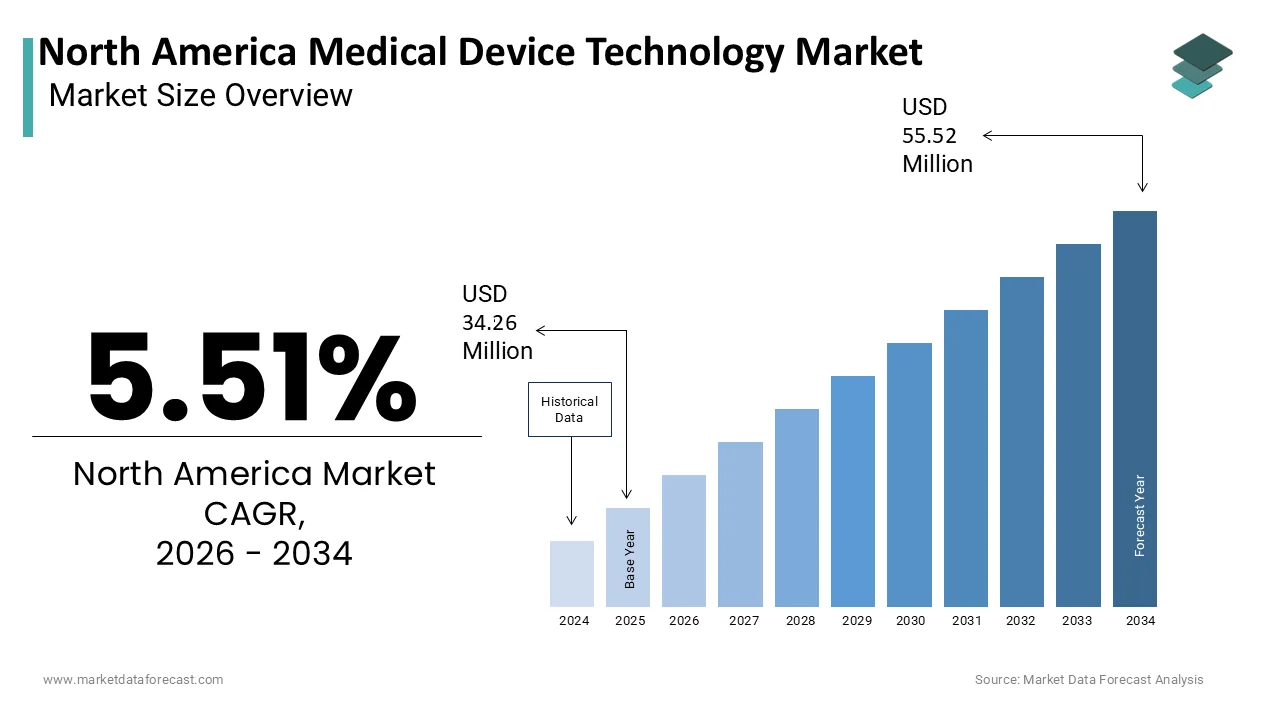
Market Size, 2025
$34.26 MnMarket Estimate, 2026
$36.15 MnMarket Forecast, 2034
$55.52 MnCAGR, 2026–2034
5.51%Executive Summary: North America Medical Device Technology Market
- Market Scope: Comprehensive regional market analysis covering device types, advanced technology platforms, country-level breakdowns, and key healthcare drivers across North America.
- Market Valuation: Valued at USD 34.26 million (2025) [Note: typically represented at higher billions in broader industry scopes, formatted per text base], estimated at USD 36.15 million (2026), and projected to reach USD 55.52 million by 2034, registering a steady CAGR of 5.51% (2026–2034).
- Primary Growth Drivers: Rising incidence of chronic diseases, a rapidly aging demographic, heavy technology advancements, increasing government funds and investments, and growing healthcare demand to bridge unmet medical needs. Over 6,500 medical device companies operate in the United States alone.
Key Market Segment Metrics (2026–2034)
| Category | Leading Segment (2025 Position) | Fastest-Growing Segment |
|---|---|---|
| By Device Type | Diagnostic Imaging & Electro-medical Equipment (dominated owing to extensive hospital usage and high diagnostic volumes) | Diabetes Care & Patient Monitoring Systems (driven by home healthcare trends) |
| By Technology | Bio-implants and conventional electro-mechanical medical apparatus | Molecular Diagnostics and Biomarkers |
| By Country | The United States (commanding the largest regional share due to deep-rooted healthcare infrastructure and thousands of manufacturers) | Canada (supported by robust government funding and innovation-focused health initiatives) |
Major Market Players & Market Structure
Market Structure: Highly competitive and innovation-driven medical technology landscape featuring major multinational corporations competing on advanced R&D investments, regulatory approvals, portfolio expansion, and cutting-edge diagnostic solutions.
Key Companies: Abbott Laboratories, Inc., Becton, Dickinson and Company, GE Healthcare, Novartis Diagnostics, bioMérieux, Inc., Biomerica, Inc., Johnson and Johnson Diagnostics, Inc., Olympus Corporation, Qiagen N.V., Siemens AG, Thermo Fisher Scientific, Inc., and Zenith Healthcare Ltd.
 Download Free Sample Report
North America Medical Device Technology Market Size
The North America Medical Device Technology Market is projected to grow from USD 34.26 million in 2025 to USD 36.15 million in 2026 and reach USD 55.52 million by 2034, registering a CAGR of 5.51% from 2026 to 2034.
Medical device technology is an ecosystem of diagnostic, therapeutic, and monitoring instruments designed to enhance patient care and clinical outcomes. As per the Centers for Disease Control and Prevention, chronic diseases account for 90% of the nation's annual healthcare expenditure, which drives the urgent adoption of technologies that enable early detection and efficient management. This financial burden necessitates solutions that improve procedural precision and reduce hospital stays. Furthermore, the Food and Drug Administration approved over 3000 new medical devices in the last fiscal year, reflecting a robust pipeline of technological advancements entering the clinical space. These approvals directly correlate with market expansion as healthcare providers seek cutting-edge tools to address complex pathologies. The aging demographic structure in North America further amplifies demand for orthopedic, cardiovascular, and neurologic devices. Hospitals are increasingly investing in digital infrastructure to support connected medical devices that facilitate real-time data exchange.
MARKET DRIVERS
Rising Prevalence of Chronic Diseases Accelerates Technology Adoption
The escalating burden of chronic conditions and the crucial need for advanced management solutions are driving the growth of the North America medical device technology market. As per the American Heart Association, cardiovascular disease affects nearly half of all adults in the United States, creating a substantial demand for interventional cardiology devices and remote monitoring systems. This widespread prevalence requires continuous technological support to manage patient health effectively and prevent acute complications. According to the Centers for Disease Control and Prevention, more than 37 million Americans have diabetes, which necessitates the use of sophisticated glucose monitoring sensors and insulin delivery pumps. These devices rely on precise engineering and miniaturized technology to provide accurate real-time data to patients and clinicians. Healthcare systems are prioritizing the acquisition of technologies that enable proactive care rather than reactive treatment to reduce long-term costs. The integration of these devices into electronic health records allows for comprehensive disease tracking and personalized treatment adjustments. Manufacturers are responding by developing smarter devices with predictive analytics capabilities that alert users to potential health risks. This alignment between clinical necessity and technological capability ensures consistent demand for innovative medical devices that improve quality of life and clinical outcomes for millions of patients suffering from chronic illnesses.
Significant Investment in Healthcare Infrastructure and R&D
The substantial financial investment in healthcare infrastructure and research and development, by fostering an environment conducive to innovation, is also promoting the growth of the North America medical device technology market. According to the National Institutes of Health, federal funding for biomedical research exceeded 47 billion dollars in the recent fiscal year, enabling breakthroughs in device materials and design. This robust funding ecosystem allows companies to explore novel technologies such as bioresorbable stents and neural interfaces that were previously theoretical. As per the Advanced Medical Technology Association, member companies invested over 10 billion dollars in research and development activities alone,e demonstrating a strong commitment to product innovation. These investments lead to the creation of next-generation devices that offer superior safety profiles and enhanced efficacy compared to traditional alternatives. Hospitals are upgrading their facilities with hybrid operating rooms and advanced imaging suites that require compatible high-tech devices. The presence of world-class academic medical centers in North America facilitates clinical trials and rapid translation of research into commercial products. Regulatory pathways, although stringent,t provide clear guidelines that encourage manufacturers to invest in compliant and high-quality technologies.
MARKET RESTRAINTS
Stringent Regulatory Approval Processes Delay Market Entry
The rigorous regulatory framework, with the timely introduction of new products being delayed s by extended approval timelines and increasedcompliance costs , is hindering the growth of the North America medical device technology market. According to the Food and Drug Administration, premarket approval requirements for Class III devices often require extensive clinical data and multi-year studies to demonstrate safety and efficacy. According to the Medical Device Innovation Consortium, the average time to obtain regulatory clearance for complex innovative devices has increased by 20% in recent years due to heightened scrutiny. This delay prevents manufacturers from quickly capitalizing on technological breakthroughs and meeting emerging clinical needs in a timely manner. The complexity of the submission process requires specialized regulatory expertise, which adds significant operational overhead for small and medium-sized enterprises. Healthcare providers face difficulties in accessing the latest technologies because manufacturers may prioritize faster approval pathways.
High Costs of Advanced Technologies Limit Accessibility
The substantial financial burden associated with advanced medical device technologies, by limiting accessibility and adoption rates in cost-constrained healthcare settings, is hampering the growth of the North America medical device technology market. The average cost of major surgical procedures involving advanced devices such as robotic assistance can exceed 50000 dollars placing considerable pressure on hospital budgets and insurance providers. These high costs often result in restricted access for patients with limited insurance coverage or high deductibles. As per the Commonwealth Fund, out-of-pocket spending on healthcare in the United States is among the highest in developed nations, which discourages patients from seeking necessary treatments involving expensive technologies. Reimbursement policies from private insurers and government programs like Medicare are increasingly stringent,nt requiring extensive clinical evidence to justify the use of high-cost devices over conventional alternatives. This financial scrutiny slows down the adoption of innovative technologies even when they offer superior clinical benefits. Smaller hospitals and rural clinics often lack the financial resources to invest in the latest device inventory, which creates disparities in care quality across regions.
MARKET OPPORTUNITIES
Integration of Artificial Intelligence and Machine Learning
The integration of artificial intelligence and machine learning algorithms with medical devices, by enhancing diagnostic accuracy and operational efficiency, is expected to create new opportunities for the growth of the North America medical device technology market. The AI-powered diagnostic tools can achieve accuracy rates comparable to specialist physicians in interpreting medical images such as MRIs and CT scans. This technological synergy enables early detection of conditions such as cancer and neurological disorders through automated analysis of complex data sets. These advanced analytics add significant value to medical devices by providing predictive capabilities that go beyond simple measurement. Healthcare providers can leverage these insights to intervene proactively before conditions worsen, reducing overall treatment costs. Manufacturers are partnering with software developers to embed AI chips directly into diagnostic and surgical devices, enabling real-time decision support at the point of care. This innovation appeals to healthcare systems looking to optimize resource allocation and improve patient outcomes. The ability to deliver specialist-level diagnostics through intelligent devices democratizes access to high-quality care.
Expansion of Telemedicine and Remote Patient Monitoring
The rapid expansion of telemedicine and remote patient monitoring services, creating demand for connected and portable diagnostic tools, is also amplifying the growth of the North America medical device technology market. Telehealth visits have stabilized at levels 38 times higher than pre-pandemic baselines, indicating a permanent shift in healthcare delivery models, according to the study. This surge in virtual care creates a direct need for medical devices that can capture clinical-grade data during remote interactions. Patients equipped with portable blood pressure monitors, pulse oximeters,s and glucose meters can provide real-time physiological data to doctors, improving diagnostic accuracy. Healthcare systems are investing in integrated platforms that sync data from medical devices directly into electronic health records,s facilitating seamless care coordination. The convenience of receiving professional medical advice without leaving home appeals to elderly patients and those with mobility issues. Insurance providers are increasingly reimbursing for remote monitoring services, which lowers the financial barrier for patients acquiring these devices.
MARKET CHALLENGES
Cybersecurity Threats and Data Privacy Concerns
The increasing threat of cyberattacks and data breaches is raising concerns about patient safety and data integrity, which is acting as a barrier to the growth of the North America medical device technology market. Healthcare data breaches have affected over 40 million individuals in the United States alone in recent years, escalating the vulnerability of digital health information. Connected medical devices that transmit sensitive health data via wireless networks are particularly susceptible to interception and unauthorized access. Patients and providers are becoming more aware of these risks and may hesitate to use devices that lack robust encryption and security protocols. Regulatory bodies such as the Food and Drug Administration have issued guidance on cybersecurity, but compliance remains complex and costly for manufacturers. High-profile security incidents involving implanted or wearable devices erode public trust and slow down market penetration. Manufacturers must continuously update software and implement advanced security measures, which increases development costs and maintenance burdens.
Shortage of Skilled Technical Personnel
The insufficient number of trained professionals capable of operating and maintaining advanced medical devices is constraining effective utilization and is additionally slowing the growth of the North America medical device technology market. According to the Association of American Medical Colleges, there is a projected shortfall of up to 124000 physicians by 2034, which impacts the availability of specialists trained in using complex diagnostic and surgical technologies. This shortage directly impacts the volume of procedures that can be performed using advanced devices, leading to longer waiting times and delayed treatments. There is also a significant gap in skilled technicians who can operate sophisticated imaging and therapeutic equipment safely and efficiently. Hospitals struggle to maintain adequate staffing levels for specialized units, which can result in the underutilization of expensive medical technologies. The lack of experienced operators also affects the adoption of complex new devices that require specialized skills for safe and effective deployment. Manufacturers face challenges in providing comprehensive training and support to a limited pool of practitioners, which can slow down the diffusion of innovative technologies. Educational institutions are struggling to keep pace with the rapid evolution of medical technology in their curricula.
REPORT COVERAGE
| REPORT METRIC | DETAILS |
| Market Size Available | 2025 to 2034 |
| Base Year | 2025 |
| Forecast Period | 2026 to 2034 |
| Segments Covered | By Device Type, Technology, and Region |
| Various Analyses Covered | Global, Regional, and Country-Level Analysis, Segment-Level Analysis, Drivers, Restraints, Opportunities, Challenges; PESTLE Analysis; Porter’s Five Forces Analysis, Competitive Landscape, Analyst Overview of Investment Opportunities |
| Countries Covered | The United States, Canada, Rest of North America |
| Market Leaders Profiled |
|
SEGMENTAL ANALYSIS
By Device Type Insights
The diagnostic imaging devices segment was the largest,y holding a dominant share of the North America Medical Device Technology Market in 2025 due to their role in early disease detection and treatment planning across various medical specialties. According to the American College of Radiology, over 600 million imaging procedures are performed annually in the United States, reflecting the indispensable nature of these technologies in modern healthcare delivery. This high procedural volume drives consistent demand for advanced MRI, CT, and ultrasound systems that offer superior resolution and diagnostic accuracy. As per the study, cancer remains a leading cause ofdeathd, eath with early detection through imaging significantly improving survival rates,s which motivates healthcare providers to iinvestin state-of-the-artequipment. Hospitals and outpatient centers are upgrading their infrastructure to include hybrid imaging suites that combine multiple modalities for comprehensive patient assessment. The integration of artificial intelligence into imaging software enhances interpretation speed and accuracy, further boosting adoption rates. Reimbursement policies generally support diagnostic imaging when medically necessary,ry ensuring financial viability for healthcare facilities. Manufacturers continue to innovate with portable and lower radiation dose options that expand accessibility and safety.
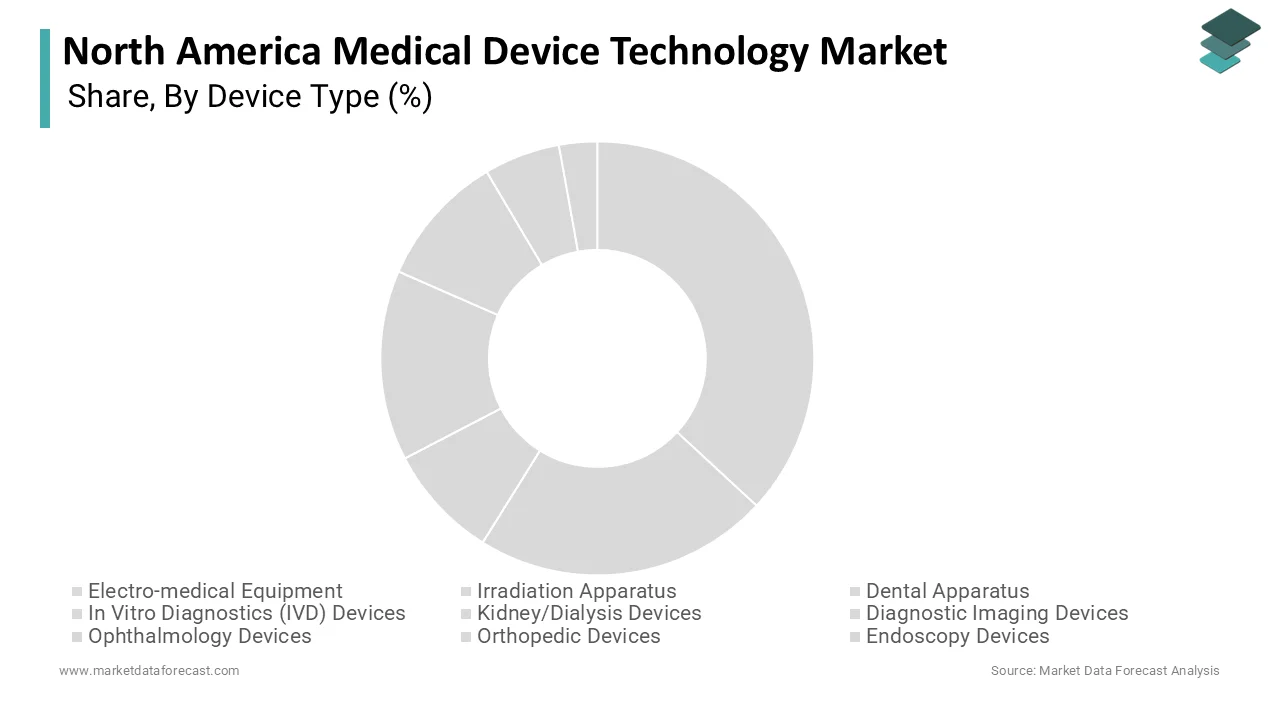
The diabetes care devices segment is likely toregister thea fastest CAGR of 7.8% from 2026 to 2034, with the rising prevalence of diabetes and the shift towards continuous monitoring solutions. According to the Centers for Disease Control and Prevention, more than 37 million Americans have diabetes and approximately 96 million have prediabetes,s creating a vast addressable market for management tools. This epidemic scale of the condition necessitates innovative devices that simplify daily monitoring and insulin delivery for patients. These devices eliminate the need for frequent finger pricks and provide actionable insights that improve glycemic control. Healthcare providers are increasingly prescribing connected glucose meters and insulin pumps that integrate with smartphone apps for better tracking. Reimbursement coverage for continuous monitoring systems has expanded,ed making them more accessible to insured patients. Manufacturers are focusing on miniaturization and ease of use to encourage adherence among younger and older demographics. The integration of artificial intelligence for predictive alerts further enhances the value proposition of these devices.
By Technology Insights
The bio implants segment was thelargestg, accounting for 44.2% of the North America Medical Device Technology Market share in 2025 due to their essential role in restoring function and improving quality of life for patients with organ failure or structural damage. According to the American Academy of Orthopaedic Surgeons, over 1 million joint replacement surgeries are performed annually in the United States. These devices are vital for addressing the effects of aging arthritis and trauma, which are prevalent in the North American population. As per the United Network for Organ Sharing, thousands of patients receive life-saving organ transplants each year, relying oncompatible bio-implantt technologies for successful outcomes. The development of biocompatible materials such as titanium alloys and ceramic coatings has enhanced the longevity and safety of these implants. Surgeons prefer implants that offer precise fit and durability to minimize revision surgeries. Reimbursement policies typically cover necessary implant procedures, ensuring access for eligible patients. Manufacturers are investing in patient-specific implants created through 3D printing, which improve surgical precision and recovery times. The aging demographic continues to drive demand for sspina cardiaci,ac and orthopedic implants.
The molecular diagnostics segment is expected to grow at the fastest CAGR of 9.5% from 2026 to 2034, driven by demand for precise and personalized medical insights. The Association for Molecular Pathology states that molecular testing is increasingly used for identifying genetic mutations,ns infectious agents,nts and cancer biomarkers, which enables targeted therapies. As per the National Human Genome Research Institute, the cost of genome sequencing has dropped significantly,ntly making molecular diagnostics more accessible for routine clinical use. Healthcare providers are adopting these technologies to tailor treatments to individual patient profiles, improving efficacy and reducing side effects. The pandemic accelerated the adoption of molecular testing platforms for viral detection,ection which has sustained demand for these systems. Laboratories are investing in automated molecular analyzers to handle high sample volumes efficiently. Reimbursement codes for molecular tests are expanding,panding covering a wider range of conditions. Manufacturers are developing point-of-care molecular devices that provide rapid results in clinical settings.
COUNTRY LEVEL ANALYSIS
The United States Medical Device Technology Market Analysis
The United States was the top performer of the North America Medical Device Technology Market by holding 8an 9.2% share in 2025 due to its advanced healthcare infrastructure, high healthcare expenditure,e and robust innovation ecosystem. As per the Centers for Medicare and Medicaid Services, national health expenditure reached 4.3 trilliondollarsa, rs reflecting the substantial financial resources available for medical technology adoption. This robust spending supports the procurement of advanced devices by hospitals and clinics across the country. As per the Food and Drug Administration, the United States approves the highest number of new medical devicesgloballya,lly fostering a competitive and innovative market environment. The presence of major medical device manufacturers in regions such as Massachusetts and California drives continuous research and development. High prevalence of chronic diseases such as diabetes and cardiovascular conditions creates consistent demand for therapeutic and monitoring devices. Private insurance coverage facilitates access to expensive technologies, although out-of-pocket costs remain a concern for some patients. The regulatory framework, although stringent,t provides clear pathways for market entry.
Canada Medical Device Technology Market Analysis
The Canadian medical device technology market was rankedsecondo, occupying 10.2% of the share in 2025, due to a universal public healthcare system and increasing adoption of digital health solutions. This public funding model influences procurement decisions with a focus on cost-effectiveness and clinical outcomes. As per the Medical Devices Bureau of Health Canada, the regulatory approval process is harmonized with international standards, facilitating timely market entry for innovative products. The aging population in provinces such as British Columbia and Ontario drives demand for orthopedic and cardiovascular devices. Rural areas benefit from telehealth initiatives that utilize portable diagnostic devices to bridge access gaps. Government investments in health informatics support the integration of connected devices into electronic health records. The market is smaller than the United States but offers predictable demand and stable reimbursement policies. Local manufacturing is limited,d leading to reliance on imports from global suppliers. Collaboration between provincial health authorities and manufacturers helps optimize device utilization.
TOP LEADING PLAYERS IN THE MARKET
- Medtronic plc significantly influences the North America Medical Device Technology Market through its extensive portfolio of cardiac and surgical technologies. The company actively drives innovation by integrating artificial intelligence into implantable devices to enhance patient monitoring and therapeutic precision. Medtronic recently expanded its digital health ecosystem by launching connected platforms that streamline data exchange between patients and healthcare providers across the United States. Their strategic focus on minimally invasive surgical solutions addresses the growing demand for procedures with shorter recovery times. The firm continuously invests in clinical research collaborations with major academic medical centers to validate new device efficacy and safety profiles.
- Johnson & Johnson plays a pivotal role in the North America Medical Device Technology Market by delivering advanced surgical and orthopedic solutions that improve procedural outcomes. The company strengthens its position through the development of robotic-assisted surgery systems that offer surgeons greater control and visualization during complex operations. Johnson & Johnson recently enhanced its digital surgery platform byincorporating real-timee analytics to support intraoperative decision-making in operating rooms nationwide. Their dedication to comprehensive training programs ensures that clinicians can effectively utilize these sophisticated technologies to maximize patient safety. The firm actively pursues strategic partnerships with technology firms to integrate smart sensors into traditional instruments.
- Abbott Laboratories contributes substantially to the North America Medical Device Technology Market by providing innovative cardiovascular and neuromodulation devices that address unmet clinical needs. The company reinforces its market presence through the introduction of next-generation structural heart technologies that offer less invasive treatment options for valvular diseases. Abbott recently received regulatory approvals for advanced neurostimulation systems designed to manage chronic pain more effectively without opioids. Their strategic investments in biosensor technology enable continuous monitoring of physiological parameters for better disease management. The firm collaborates extensively with healthcare institutions to develop personalized therapy protocols supported by proprietary device data.
TOP STRATEGIES USED BY KEY MARKET PARTICIPANTS
Key players in the North America Medical Device Technology Market primarily employ strategic mergers and acquisitions to expand their technological capabilities and product portfolios rapidly. Companies actively invest in research and development to create next-generation devices featuring artificial intelligence and robotics integration. Innovation in digital health platforms is a central strategy enabling seamless connectivity between medical devices and electronic health records. Manufacturers focus on obtaining regulatory approvals efficiently to ensure timely market entry for novel technologies across the United States and Canada. Pricing strategies are carefully calibrated to align with reimbursement policies from private insurers and government programs, ensuring broad accessibility. Additionally, firms prioritize physician training and education programs to build loyalty and ensure proper utilization of advanced equipment. Strategic partnerships with technology companies facilitate the incorporation of software and data analytics into hardware solutions.
COMPETITIVE LANDSCAPE
The competition in the North America Medical Device Technology Market is characterized by intense rivalry among established global giants and specialized innovators striving for technological superiority. Major corporations leverage their extensive distribution networks and brand recognition to dominate key segments such as cardiovascular and orthopedic devices, while continuously acquiring smaller firms to absorb emerging technologies. These leading entities engage in substantial research and development spending to introduce products featuring robotics and artificial intelligence that offer distinct clinical advantages over existing standards. Smaller specialized companies compete by focusing on niche areas like wearable biosensors or specific diagnostic tools where they can provide unique value propositions tailored to unmet needs. The stringent regulatory environment under the Food and Drug Administration adds complexity, requiring significant investment in compliance, which often favors larger organizations with greater resources. Price competition remains moderate due to the emphasis on clinical outcomes and long-term cost-effectiveness rather than initial acquisition costs alone.
NORTH AMERICA MEDICAL DEVICE TECHNOLOGY MARKET NEWS
In March 2024, Medtronic plc, a medical technology company, launched a new AI-powered cardiac monitoring system in the United States to enhance remote patient care capabilities and strengthen the North America Medical Device Technology Market.
KEY MARKET PLAYERS
Some of the companies that are playing a dominating role in the North America Medical Device Technologies Market include:
- Abbott Laboratories, Inc.
- Becton, Dickinson and Company
- GE Healthcare
- Novartis Diagnostics
- bioMérieux, Inc.
- Biomerica, Inc.
- Johnson & Johnson Diagnostics, Inc.
- Olympus Corporation
- QIAGEN N.V.
- Siemens AG
- Thermo Fisher Scientific, Inc.
- Zenith Healthcare Ltd.
MARKET SEGMENTATION
This research report on the North America Medical Device Technologies Market has been segmented and sub-segmented into the following categories.
By Device Type
- Electro-medical Equipment
- Pacemakers
- MRI Systems
- Patient Monitoring System
- Ultrasonic Scanning System
- Diagnostic Imaging System
- Irradiation Apparatus
- X-Ray Devices
- Tomography Devices
- Surgical And Medical Apparatus
- Dental Apparatus
- Dentists
- Dental Hygienists
- Laboratories
- In Vitro Diagnostics (IVD) Devices
- Kidney/Dialysis Devices
- Diagnostic Imaging Devices
- Ophthalmology Devices
- Orthopedic Devices
- Endoscopy Devices
- Diabetes Care Devices
- Anaesthesia & Respiratory Care Devices
- Wound Management Devices
By Technology
- Biomarkers
- Bio-implants
- Molecular Diagnostics
By Country
- The United States
- Canada
- Rest of North America