- Product Description Description
- Table of Contents TOC
- List of Table & Figure LOT
- Get Free Sample PDF Sample PDF
Market Size, 2025
$21.05 BnMarket Estimate, 2026
$21.30 BnMarket Forecast, 2034
$23.44 BnCAGR, 2026–2034
1.2%North America Paper Cups Market Size, Growth, Trends & Forecast (2026–2034)
The North America paper cups market size was valued at USD 21.05 billion in 2025, is estimated to reach USD 21.30 billion in 2026, and is projected to reach USD 23.44 billion by 2034, registering a compound annual growth rate (CAGR) of 1.2% during the forecast period from 2026 to 2034. Propelled by stringent regulatory crackdowns on single-use plastics, expanding on-the-go beverage consumption, and innovations in compostable coatings, the regional market continues to transition toward eco-friendly alternatives.
Key Executive Metrics (At-a-Glance)
- 2025 Base Valuation: USD 21.05 Billion
- 2026 Current Valuation: USD 21.30 Billion
- 2034 Forecast Valuation: USD 23.44 Billion
- Compound Annual Growth Rate (CAGR): 1.2% (2026–2034)
- Leading Cup Type Segment: Hot Paper Cups (59.2% share in 2025)
- Leading Wall Type Segment: Single Wall Paper Cups (Dominant share in 2025)
- Leading Application Segment: Tea and Coffee (Prominent share in 2025)
- Leading Country Market: United States (79.3% share in 2025)
Core Market Drivers
- Regulatory Push Toward Sustainable Packaging: State and municipal plastic bans (e.g., California, New York, Washington) accelerating the shift away from plastic-lined containers.
- Rise of On-the-Go Beverage Consumption: Proliferation of specialty coffee shops, urban lifestyles, and convenience-driven dining habits supporting steady volume demand.
Primary Market Restraints & Challenges
- Limited Recyclability via Traditional Coatings: Polyethylene (PE) liners rendering standard cups difficult to process in conventional municipal recycling streams.
- Raw Material Price Volatility: Fluctuations in virgin and recycled paper pulp costs straining operating margins for small and mid-sized manufacturers.
North America Paper Cups Market Segmentation Breakdown
| Segment Category | Largest / Dominant Segment | Fastest-Growing Segment |
|---|---|---|
| By Cup Type | Hot Paper Cups (59.2% Share in 2025) | Cold Paper Cups (6.3% CAGR) |
| By Wall Type | Single Wall Paper Cups (Dominant in 2025) | Double Wall Paper Cups (7.1% CAGR) |
| By Application | Tea and Coffee | Chilled Food and Beverages (6.8% CAGR) |
| By Country | United States (79.3% Share in 2025) | Canada (15.3% Share in 2025) |
Major Industry Players Profiled
Key market participants shaping the North American paper cups landscape include Huhtamaki Group, International Paper Company, Georgia‑Pacific LLC, Dart Container Corporation, Graphic Packaging International, LLC, Pactiv Evergreen, WestRock Company, Eco‑Products, Inc., and Berry Global, Inc.
 Download Free Sample Report
North America Paper Cups Market Size
The size of the North America paper cups market was worth USD 21.05 billion in 2025. The market is anticipated to grow at a CAGR of 1.2% from 2026 to 2034 and be worth USD 23.44 billion by 2034 from USD 21.30 billion in 2026.

The paper cups are widely used across foodservice, hospitality, retail, and office environments for serving hot and cold beverages. In recent years, the market has evolved with advancements in coating technologies that enhance liquid resistance while reducing environmental impact. Leading manufacturers have introduced compostable and plant-based liners such as polylactic acid (PLA) to replace traditional polyethylene coatings, which aligns with consumer preferences for sustainable packaging solutions. As per the Food Marketing Institute (FMI), more than 65% of U.S. consumers prefer eco-friendly packaging options when purchasing food and beverages on the go.
MARKET DRIVERS
Regulatory Push Toward Sustainable Packaging
The growing body of legislation aimed at reducing plastic waste is driving the growth of the North America paper cups market. Governments across the United States and Canada have implemented or proposed bans on single-use plastic products, including straws, cutlery, and beverage containers. In the U.S., states like California, New York, and Washington have enacted stringent policies limiting plastic use in foodservice operations. These regulatory changes have prompted major fast-food chains and coffee shops, including Starbucks, McDonald's, and Tim Horton,s to transition from plastic-lined cups to paper-based alternatives.
Rise of On-the-Go Beverage Consumption
The growing preference for convenience-driven lifestyles has significantly influenced the demand for disposable paper cups in North America. With urbanization, longer commutes, and increased participation in remote work, consumers are increasingly opting for ready-to-drink beverages that can be consumed anytime and anywhere. Moreover, the proliferation of specialty coffee shops and mobile beverage vendors has reinforced this trend. Chains such as Dunkin', Peet’s Coffee, and independent cafés rely heavily on paper cups to meet customer expectations for portability and hygiene.
MARKET RESTRAINTS
Limited Recyclability Due to Coating Materials
Many paper cups currently in circulation face challenges in terms of recyclability due to the presence of polyethylene (PE) coatings are restricting the growth of the North America paper cups market. These thin plastic linings prevent liquid leakage but render the cups difficult to process in standard recycling facilities. This issue has led to growing skepticism among environmentally conscious consumers about the true sustainability of paper cups. In response, some cities, including Seattle and San Francisco, have restricted the use of PE-lined paper cups unless they are certified compostable. Manufacturers are working on alternatives such as biodegradable PLA coatings, but these materials remain costlier and less durable compared to traditional PE-laminated cups.
Volatility in Raw Material Prices
The fluctuations in the prices of raw materials like virgin and recycled paper pulp is also degrading the growth of the North America paper cups market. Rising costs of wood fiber, energy, and chemicals used in the manufacturing process have placed financial pressure on producers, impacting profit margins and pricing stability. In addition, global trade dynamics influence the availability and affordability of raw materials. Tariffs, transportation bottlenecks, and geopolitical tensions contribute to uncertainty in sourcing inputs at consistent prices. For instance, the U.S.-China trade relationship has had ripple effects on the import costs of certain pulp derivatives, which is affecting small and mid-sized manufacturers disproportionately.
MARKET OPPORTUNITIES
Innovation in Compostable and Biodegradable Cup Designs
The development and commercialization of fully compostable and biodegradable cup alternatives is creating new opportunities for the growth of the North America paper cups market. Leading players in the industry are investing in research and development to introduce cups with bio-based coatings such as polylactic acid (PLA), derived from corn starch, and other plant-based polymers that decompose under industrial composting conditions. Companies like Eco-Products, Huhtamaki, and Novolex have launched certified compostable paper cup lines that meet ASTM D6400 standards, ensuring compatibility with municipal composting programs. Furthermore, major foodservice operators are endorsing these initiatives. Starbucks, for example, has committed to using 100% recyclable or compostable cups by 2025, signaling a broader industry shift toward sustainable materials.
Expansion of Reusable Cup Integration Models
The integration of reusable cup systems within foodservice and retail ecosystems is additionally to fuel the growth of the North America paper cups market. Major coffee chains, including Tim Hortons and McDonald's Canada, have launched pilot programs allowing customers to borrow reusable cups through deposit-return schemes. These initiatives are supported by third-party logistics providers who collect, clean, and redistribute the cups, minimizing reliance on single-use disposables. Startups like CupClub and TerraCycle have introduced smart tracking-enabled reusable cup networks that leverage RFID technology for efficient management. Recognizing this shift, several paper cup manufacturers are diversifying their portfolios to include hybrid solutions such as branded returnable cups and co-branded partnerships with reusable platforms.
MARKET CHALLENGES
Consumer Misconceptions about Sustainability
The prevalence of consumer misconceptions regarding the environmental benefits of paper cups is restricting the growth of the North America paper cups market. Many buyers assume that because paper cups are made from wood fiber, they are inherently recyclable and eco-friendly. However, as previously noted, the majority of paper cups contain polyethylene coatings that make them incompatible with standard recycling processes. This misunderstanding complicates efforts by municipalities and waste processors to manage post-consumer packaging responsibly. Waste Management Inc. has reported that misidentified paper cups frequently end up in landfills or require additional sorting steps that increase processing costs.
Competitive Pressure from Alternative Packaging Solutions
The increasing competition from alternative packaging materials that offer enhanced functionality and improved environmental profiles is also hampering the growth of the North America paper cups market. Innovations in molded fiber, bamboo-based composites, and edible packaging have attracted attention from both consumers and foodservice providers seeking more sustainable options. Reusable alternatives, such as stainless steel and silicone travel mugs, are also gaining popularity, particularly among younger demographics concerned about climate change and plastic pollution.
REPORT COVERAGE
| REPORT METRIC | DETAILS |
| Market Size Available | 2025 to 2034 |
| Base Year | 2025 |
| Forecast Period | 2026 to 2034 |
| Segments Covered | By Cup Type, Wall Type, Application, and Region. |
| Various Analyses Covered | Global, Regional and Country-Level Analysis, Segment-Level Analysis, Drivers, Restraints, Opportunities, Challenges; PESTLE Analysis; Porter’s Five Forces Analysis, Competitive Landscape, Analyst Overview of Investment Opportunities |
| Countries Covered | United States, Canada, Mexico, Rest of North America |
| Market Leaders Profiled | Huhtamaki Group, International Paper Company, Georgia‑Pacific LLC, Solo Cup Company (Dart Container Corporation), Dart Container Corporation, Graphic Packaging International, LLC, Pactiv LLC / Pactiv Evergreen, WestRock Company, Benders Paper Cups (F Bender Limited), Genpak LLC, Eco‑Products, Inc., Berry Global, Inc., Detpak, Stora Enso Oyj, Duni Group, and Reynolds Group Holdings.. |
SEGMENTAL ANALYSIS
By Cup Type Insights
The hot paper cups segment accounted in holding 59.2% of the North America paper cups market share in 2025, with the rising consumption of hot beverages such as coffee, tea, and specialty drinks across cafes, quick-service restaurants, and convenience stores. According to the National Coffee Association (NCA), over 64% of U.S. adults consume coffee daily, with more than half of these servings taken away from home. Additionally, major coffee chains like Starbucks, Dunkin’, and Tim Hortons have standardized their takeaway offerings using hot paper cups, reinforcing this segment's growth. Moreover, manufacturers are investing in thermal insulation technologies, including double-wall designs and biodegradable coatings, to enhance user experience while meeting sustainability goals.
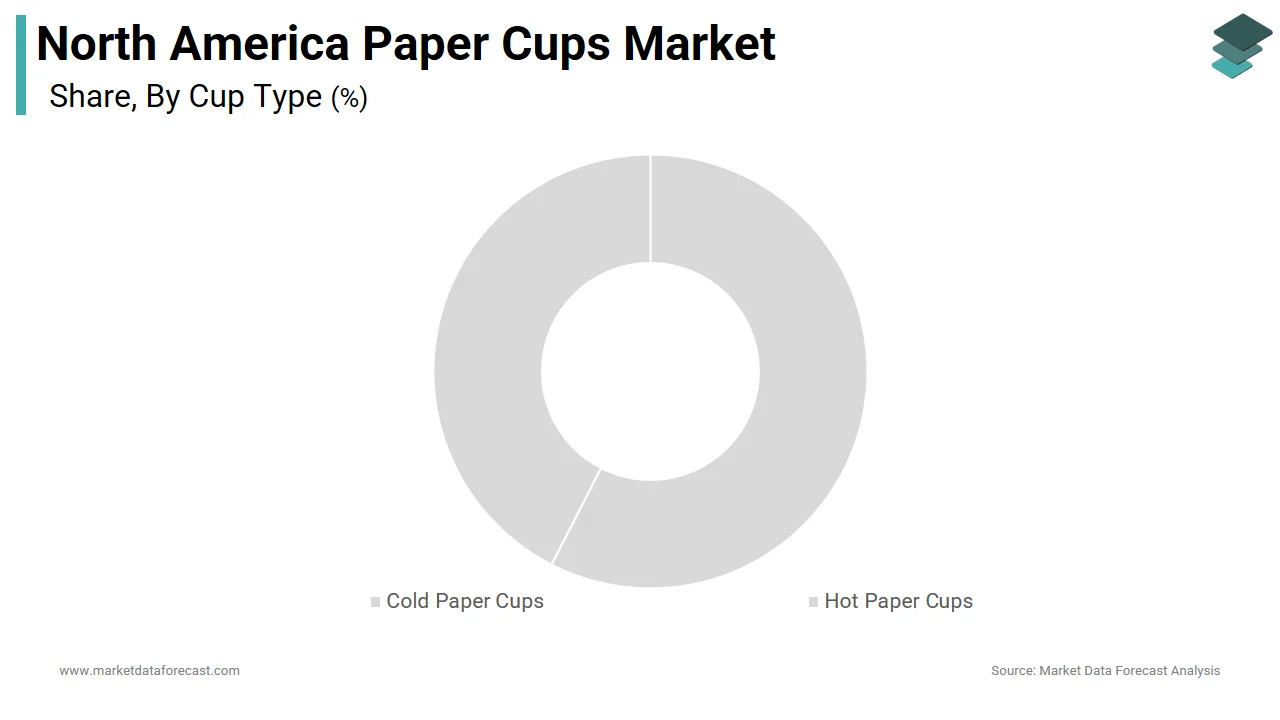
The Cold Paper Cups segment is likely to grow with an expected to register CAGR of 6.3% during the forecast period. According to Beverage Marketing Corporation (BMC), the ready-to-drink (RTD) chilled beverages sector in the U.S. grew by over 9% in volume sales in 2023, driven by health-conscious preferences and on-the-go lifestyles. Cold paper cups serve as ideal packaging for these beverages due to their lightweight nature and compatibility with both single-serve and multi-serve formats. Furthermore, foodservice operators are expanding their chilled drink menus to attract millennial and Gen Z customers who prefer customizable, refreshing options. Chains such as Jamba Juice, Chick-fil-A, and Sonic Drive-In have incorporated cold paper cups as standard takeaway vessels, contributing to increased market penetration. In addition, innovations in moisture-resistant coatings and leak-proof lids have enhanced the functionality of cold paper cups, which is making them a preferred alternative to plastic tumblers.
By Wall Type Insights
The single-wall paper cups segment was the largest and held a dominant share of the North America paper cups market in 2025, with the widespread use of single-wall cups for cold beverages such as soft drinks, juices, and iced teas. Their thinner construction makes them cost-effective and suitable for short-term use, aligning well with high-volume consumption patterns in fast-food outlets and convenience stores. Moreover, single-wall paper cups are extensively used in institutional settings such as schools, hospitals, and corporate cafeterias, where budget constraints and operational efficiency are key considerations.
The double-wall paper cups segment is anticipated to witness a CAGR of 7.1% from 2025 to 2033. Double-wall paper cups offer superior heat retention and improved handling comfort, reducing the need for additional sleeves or multiple layers of single-wall cups. Leading global and regional coffee chains, including Starbucks, Peet’s Coffee, and independent artisanal cafes, have increasingly adopted double-wall cups to elevate the customer experience while aligning with sustainability commitments. Additionally, advancements in manufacturing techniques have enabled the production of lighter yet durable double-wall structures, lowering material costs and improving supply chain efficiency.
By Application Insights
The tea and coffee segment held a prominent share of the North America paper cups market in 2025, with the deeply ingrained coffee culture in the United States and Canada, where millions of consumers rely on takeout and drive-thru services for their daily caffeine fix. According to the National Coffee Association (NCA), over 64% of U.S. adults consume coffee daily, with more than half of those servings purchased outside the home, directly boosting demand for disposable paper cups. Moreover, the proliferation of coffeehouse chains, mobile coffee vendors, and office-based coffee dispensers has reinforced the reliance on single-use paper cups for hot beverages. Additionally, tea consumption in the form of bubble tea and specialty herbal infusions is gaining traction among younger demographics. Many of these products are served in paper cups with secure lids, further supporting market growth.
The chilled food and beverages is expanding with a CAGR of 6.8% in the coming years. Consumers are increasingly opting for ready-to-consume chilled items such as smoothies, yogurt-based drinks, protein shakes, and cold soups, all of which are commonly served in disposable paper cups. Additionally, foodservice providers are leveraging paper cups as a sustainable alternative to plastic containers for serving frozen desserts, aloe vera drinks, and fruit-infused ice blends. Chains such as Smoothie King, Planet Smoothie, and local juice bars have standardized paper cups for their cold offerings, which contributes to higher adoption rates. Moreover, food safety regulations and environmental policies are encouraging the shift from polystyrene and polypropylene cups to fiber-based alternatives.
COUNTRY-LEVEL ANALYSIS
The United States was the top performer in the North America paper cups market with 79.3% in 2025. According to the National Restaurant Association (NRA), the U.S. foodservice sector generated over $1 trillion in sales in 2025, with more than 50% of these transactions involving takeout or delivery orders. Additionally, state-level bans on single-use plastics in California, New York, Washington, and other regions have accelerated the shift toward recyclable and compostable paper-based drinkware. Major coffee chains such as Starbucks, Dunkin', and independent cafés continue to drive product innovation with eco-friendly cup designs, including plant-based linings and reusable return models.
Canada was positioned second in the North America paper cups market with 15.3% of share in 2025. The Canadian government has also introduced policies to phase out single-use plastics, influencing businesses to transition toward more environmentally responsible packaging solutions. Environment and Climate Change Canada (ECCC) reported that in 2023, several provinces, including British Columbia, Ontario, and Quebec, implemented bans on non-recyclable disposable cups, accelerating the adoption of paper-based alternatives. Major retailers and restaurant chains such as Tim Hortons, McDonald’s Canada, and Second Cup have responded by updating their packaging strategies to comply with new standards. Furthermore, educational institutions and corporate offices are increasingly incorporating compostable paper cups into their sustainability programs.
KEY MARKET PLAYERS
Noteworthy Companies dominating the North America paper cups market profiled in the report are Huhtamaki Group, International Paper Company, Georgia‑Pacific LLC, Solo Cup Company (Dart Container Corporation), Dart Container Corporation, Graphic Packaging International, LLC, Pactiv LLC / Pactiv Evergreen, WestRock Company, Benders Paper Cups (F Bender Limited), Genpak LLC, Eco‑Products, Inc., Berry Global, Inc., Detpak, Stora Enso Oyj, Duni Group, and Reynolds Group Holdings.
TOP LEADING PLAYERS IN THE MARKET
One of the leading players in the North America paper cups market is Dart Container Corporation. Dart has established itself as a key supplier of paper-based beverage cups through its Foodservice division is known for its wide range of disposable foodservice products. The company emphasizes sustainable sourcing and continues to innovate with eco-conscious materials that align with evolving consumer preferences.
Another major player is Huhtamaki Oyj, a global packaging solutions provider with a strong presence in North America. Huhtamaki offers a diverse portfolio of paper cups tailored for both hot and cold beverages, focusing on recyclable and compostable options. Its commitment to sustainability and circular economy principles positions it as a preferred partner for major foodservice brands seeking responsible packaging.
Eco-Products, Inc. stands out as a pioneer in environmentally friendly disposable packaging. Eco-Products caters to the growing demand for compostable alternatives with a dedicated line of paper cups featuring plant-based coatings. The company plays a crucial role in shaping industry standards by promoting waste reduction and sustainable material innovation across the North American market.
TOP STRATEGIES USED BY KEY MARKET PARTICIPANTS
A primary strategy among key players in the North America paper cups market is product innovation focused on sustainability. Companies are continuously developing compostable, recyclable, and bio-based coated cups to meet regulatory requirements and consumer expectations for greener packaging solutions.
Another approach is strategic partnerships with foodservice chains and retailers. Manufacturers ensure large-scale adoption of their paper cup offerings while reinforcing brand visibility and trust by aligning with major coffee shops, fast-food outlets, and convenience stores.
COMPETITION OVERVIEW
The competition in the North America paper cups market is marked by intense rivalry among well-established players and emerging eco-focused brands. As sustainability becomes a central purchasing criterion, companies are striving to differentiate themselves through innovative product designs, biodegradable materials, and improved recyclability features. The market landscape is shaped by a mix of global packaging giants and regional manufacturers, all vying for dominance through strategic positioning and customer-centric offerings.
Brand reputation and environmental alignment play a significant role in influencing buyer preferences, particularly among quick-service restaurants and retail chains that prioritize eco-conscious branding. Additionally, regulatory pressures at state and municipal levels are pushing companies to adopt more responsible packaging practices, which is further intensifying competitive differentiation based on sustainability claims.
The competition extends into pricing strategies, distribution networks, and corporate partnerships aimed at securing long-term contracts with major foodservice operators. While larger firms leverage economies of scale and extensive R&D resources, smaller players focus on niche innovations and localized responsiveness.
RECENT MARKET DEVELOPMENTS
- In January 2025, Huhtamaki launched a new line of fully compostable paper cups with plant-based lining, which is targeting urban cafes and national coffee chains, aiming to reduce plastic waste and enhance their sustainability profile.
- In March 2025, Dart Container announced a partnership with a leading U.S. coffee retailer to supply customized insulated paper cups designed for optimal thermal performance while maintaining recyclability.
- In June 2025, Eco-Products introduced a closed-loop recycling initiative in collaboration with select municipalities to collect and process used paper cups by improving end-of-life management and supporting circular economy goals.
- In September 2025, Novolex expanded its production capacity for paper cups at its facility in Georgia, aiming to meet rising demand from foodservice distributors and institutional buyers across North America.
- In November 2025, Graphic Packaging Holding Company unveiled a redesigned line of branded paper cups featuring enhanced print capabilities and moisture resistance, specifically developed for convenience store and restaurant chains seeking premium presentation.
MARKET SEGMENTATION
This North America paper cups market research report is segmented and sub-segmented into the following categories.
By Cup Type
- Cold Paper Cups
- Hot Paper Cups
By Wall Type
- Single Wall Paper Cups
- Double Wall Paper Cups
By Application
- Tea and Coffee
- Chilled Food and Beverages
- Others
By Country
- United States
- Canada
- Mexico
- Rest of North America