- Product Description Description
- Table of Contents TOC
- List of Table & Figure LOT
- Get Free Sample PDF Sample PDF
Market Size, 2025
$8.72 BnMarket Estimate, 2026
$9.14 BnMarket Forecast, 2034
$13.30 BnCAGR, 2026–2034
4.8%North America Pest Control Market Size, Growth, Trends & Forecast (2026–2034)
The North American pest control market size was valued at USD 8.72 billion in 2025, is anticipated to reach USD 9.14 billion in 2026, and is projected to expand up to USD 13.30 billion by 2034, registering a compound annual growth rate (CAGR) of 4.80% during the forecast period from 2026 to 2034. Growth is driven by rapid urbanization, suburban expansion, heightened public health awareness regarding pest-borne diseases, and the rising integration of smart IoT-enabled pest monitoring technologies.
Key Executive Metrics (At-a-Glance)
- 2025 Base Valuation: USD 8.72 Billion
- 2026 Current Valuation: USD 9.14 Billion
- 2034 Forecast Valuation: USD 13.30 Billion
- Compound Annual Growth Rate (CAGR): 4.80% (2026–2034)
- Dominant Pest Control Type Segment: Chemical Pest Control (65.6% share in 2025)
- Fastest-Growing Pest Control Type Segment: Biological Control (8.5% AGR)
- Dominant Pest Type Segment: Insect Pest Control (55.8% share in 2024)
- Fastest-Growing Pest Type Segment: Wildlife Pest Control (9.2% CAGR)
- Dominant Application Segment: Residential Pest Control (45.4% share in 2024)
- Fastest-Growing Application Segment: Commercial Pest Control (7.8% CAGR)
- Dominant Country Market: United States (85.6% share in 2024)
Core Market Drivers
- Urbanization & Suburban Sprawl: Rapid urban densification and residential expansion bringing human habitats into closer proximity with pests and wildlife.
- Health & Hygiene Standards: Increased public emphasis on preventing vector-borne diseases and maintaining stringent sanitary protocols across commercial and residential spaces.
Primary Market Restraints & Challenges
- Regulatory Constraints & Pest Resistance: Increasing EPA phase-outs and restrictions on active chemical ingredients, compounded by the rising development of pesticide-resistant pest strains.
North America Pest Control Market Segmentation Breakdown
| Segment Category | Largest (Dominant) Sub-Segment | Fastest-Growing Sub-Segment |
|---|---|---|
| By Types of Pest Control | Chemical (65.6% share, 2025) | Biological Control (8.5% AGR) |
| By Types of Pest | Insect Pest Control (55.8% share, 2024) | Wildlife Pest Control (9.2% CAGR) |
| By Application | Residential Control (45.4% share, 2024) | Commercial Control (7.8% CAGR) |
| By Country | The USA (85.6% share, 2024) | Canada / Mexico |
Major Industry Players Profiled
Key corporations leading the North American pest control market include Ecolab, FMC Corporation, Rollins, Terminix International Company, Bell Laboratories, and Dow Chemical Company.
North America Pest Control Market Size
The North American pest control market was valued at USD 8.72 billion in 2025 and is expected to reach USD 9.14 billion in 2026 from USD 13.30 billion by 2034, growing at a CAGR of 4.8% during the forecast period from 2026 to 2034.
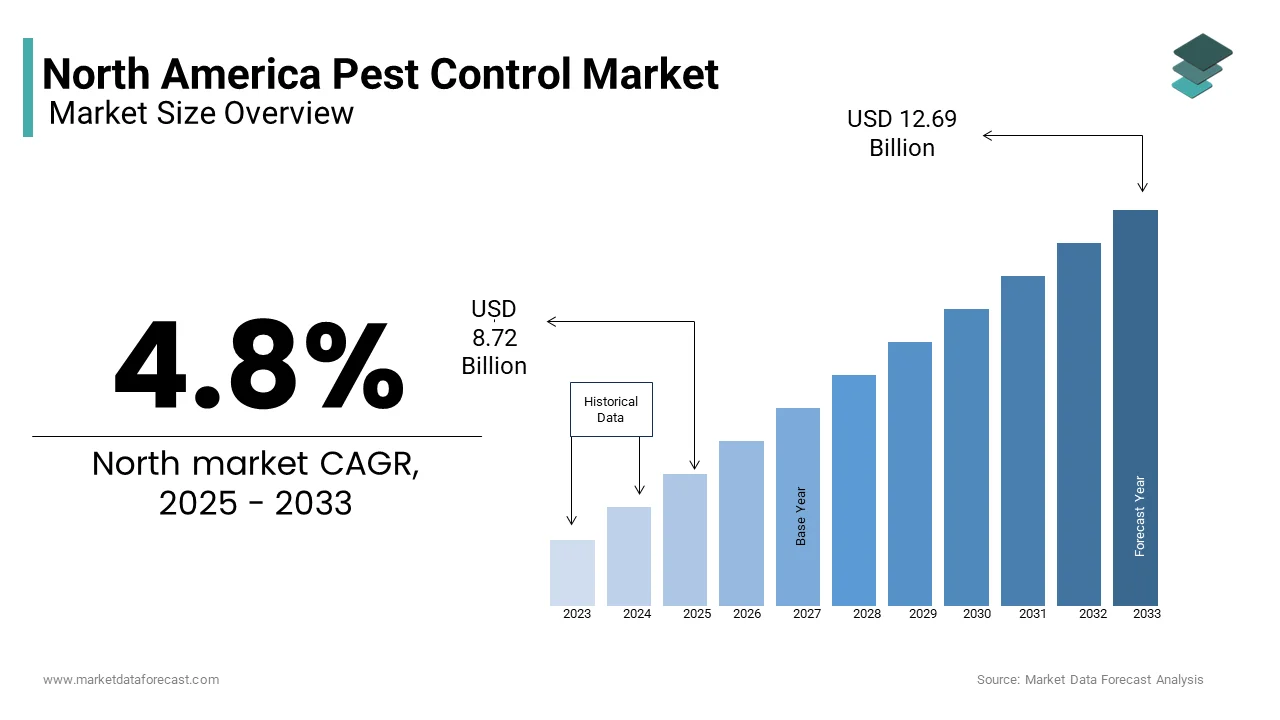
The North American pest control market is thriving within the broader environmental services industry. It benefits from urbanization, agricultural expansion, and heightened awareness of health risks associated with pest infestations. In addition, the market is particularly robust in regions like California and Florida, where warm climates create ideal conditions for pests such as termites, mosquitoes, and rodents. Further, the growing adoption of integrated pest management (IPM) practices, which emphasize eco-friendly solutions, reflects a shift toward sustainability. Apart from these advancements, challenges such as regulatory restrictions on chemical pesticides and resistance development among pest populations continue to shape the market landscape.
MARKET DRIVERS
Urbanization and Housing Expansion
Urbanization has emerged as a key driver of the North American pest control market, with cities expanding rapidly and creating environments conducive to pest proliferation. According to the United Nations Department of Economic and Social Affairs, urban areas in North America are projected to grow by 15% over the next decade, increasing the demand for pest management services in residential and commercial spaces. To illustrate, high-density apartment complexes in cities like New York and Los Angeles often face infestations of bedbugs and cockroaches, necessitating regular pest control interventions. Besides, suburban sprawl into previously undeveloped areas brings humans into closer contact with wildlife, leading to increased encounters with rodents and other pests. A study reveals that nearly 60% of homeowners in suburban neighborhoods reported pest issues in 2022, up from 45% in 2018. This shift is further amplified by stringent housing regulations that mandate pest inspections and treatments before property sales.
Health and Hygiene Awareness
Growing awareness of the health risks posed by pests has fueled demand for pest control services across North America. The World Health Organization (WHO) identifies pests as carriers of diseases such as Lyme disease, malaria, and salmonella, which collectively affect millions annually. In response, consumers are increasingly prioritizing preventive measures to safeguard their homes and workplaces. For example, the rise in asthma cases linked to cockroach allergens has prompted schools and healthcare facilities to adopt stringent pest management protocols, as highlighted by the American Lung Association. Furthermore, the COVID-19 pandemic heightened hygiene standards, with businesses investing in pest control to maintain sanitary conditions.
MARKET RESTRAINTS
Regulatory Restrictions on Chemical Pesticides
One of the primary restraints impacting the North American pest control market is the increasing regulatory scrutiny on chemical pesticides. The EPA has classified several widely used pesticides, such as chlorpyrifos and neonicotinoids, as hazardous to human health and the environment, leading to bans or restricted usage. According to the Pesticide Action Network, over 20 active ingredients have been phased out in the U.S. since 2015, forcing pest control companies to explore alternative solutions. While this shift aligns with the global push for sustainability, it poses operational challenges for service providers who rely on these chemicals for effective pest eradication. For instance, the absence of potent chemical options has reduced the efficacy of treatments for resilient pests like bedbugs and termites, resulting in higher costs and longer treatment durations. Apart from these, compliance with evolving regulations requires significant investments in research and training, straining smaller firms with limited resources.
Development of Pest Resistance
Another significant restraint is the growing issue of pest resistance to conventional pest control methods. Over-reliance on specific pesticides has led to the emergence of resistant pest populations, rendering traditional treatments ineffective. The Entomological Society of America notes that over 500 species of insects and mites have developed resistance to at least one class of pesticides globally, with a notable presence in North America. For example, German cockroaches in urban areas have shown resistance to pyrethroid-based insecticides, complicating eradication efforts in densely populated regions. This challenge is compounded by the lack of awareness among some consumers about the importance of rotating treatment methods to prevent resistance. Moreover, the development of resistant strains increases operational costs for pest control companies, as they must invest in advanced formulations and techniques to address infestations.
MARKET OPPORTUNITIES
Integration of Smart Technologies
The integration of smart technologies presents a transformative opportunity for the North American pest control market. Innovations such as IoT-enabled pest monitoring systems and AI-driven analytics are revolutionizing how pest infestations are detected and managed. For instance, sensors placed in commercial kitchens or warehouses can provide real-time data on pest activity, allowing businesses to address issues promptly. Also, mobile applications and cloud-based platforms enable customers to schedule services, track treatment progress, and receive alerts, enhancing user engagement. These technologies not only improve service efficiency but also cater to the growing demand for transparency and convenience among consumers.
Expansion into Eco-Friendly Solutions
The rising demand for sustainable pest management practices offers another lucrative opportunity for the North American pest control market. Consumers are increasingly seeking environmentally friendly alternatives to chemical pesticides, driven by concerns about ecological impact and human health. The Environmental Defense Fund notes that biopesticides, derived from natural materials like plants and bacteria, are gaining traction as viable substitutes for synthetic chemicals. For example, products containing Bacillus thuringiensis (Bt) have proven effective against mosquitoes and caterpillars without harming non-target organisms. Furthermore, integrated pest management (IPM) strategies, which combine biological controls, habitat modification, and minimal chemical use, are being adopted by schools, hospitals, and government buildings.
MARKET CHALLENGES
High Initial Costs of Advanced Technologies
A significant challenge facing the North American pest control market is the high initial investment required to adopt advanced technologies. Smart pest control systems, including IoT sensors and AI-driven analytics, often come with substantial upfront costs, making them inaccessible for small and medium-sized enterprises. According to McKinsey & Company, implementing a comprehensive smart pest management system can exceed $10,000 per facility, depending on the scale and complexity of the setup. This financial barrier limits the ability of smaller pest control firms to compete with larger players who can afford such innovations. Apart from these, ongoing maintenance and software updates add to the operational expenses, further straining budgets. For rural areas with limited access to capital, these costs can deter the adoption of cutting-edge solutions altogether.
Public Perception and Misconceptions
Another pressing challenge is the negative public perception surrounding pest control practices, particularly those involving chemical treatments. Misconceptions about the safety and environmental impact of pesticides persist, despite advancements in safer formulations. Like, misinformation campaigns have led to widespread skepticism among consumers, with some opting for DIY solutions instead of professional services. This pattern undermines the credibility of pest control companies and reduces demand for their expertise. In addition, incidents of improper pesticide application by untrained individuals exacerbate public distrust. Addressing these misconceptions requires targeted educational campaigns and transparent communication about the benefits and safety measures associated with modern pest control methods.
REPORT COVERAGE
| REPORT METRIC | DETAILS |
| Market Size Available | 2025 to 2034 |
| Base Year | 2025 |
| Forecast Period | 2026 to 2034 |
| CAGR | 4.8% |
| Segments Covered | By Types of Pest Control, Types of Pest, Application, and Country |
| Various Analyses Covered | Global, Regional & Country Level Analysis, Segment-Level Analysis, DROC, PESTLE Analysis, Porter’s Five Forces Analysis, Competitive Landscape, Analyst Overview of Investment Opportunities |
| Regions Covered | The USA, Canada, Mexico, and the Country |
| Market Leaders Profiled | Ecolab, FMC Corporation, Rollins, Terminix International Company, Bell Laboratories, and Dow Chemical Company. |
SEGMENTAL ANALYSIS
By Types Insights
The chemical pest control segment dominated the North American pest control market by accounting for 65.6% of the total share in 2025. This dominance is driven by its widespread adoption due to its effectiveness in eradicating pests quickly and at scale. For instance, chemical treatments remain the preferred choice for controlling infestations in large commercial spaces like warehouses and industrial facilities, where immediate results are critical. The National Pest Management Association (NPMA) states that many pest control companies rely on chemical methods as their primary solution, particularly for severe infestations such as termites and rodents. In addition, advancements in chemical formulations have improved safety and reduced environmental impact, making them more acceptable to consumers. For example, the development of low-toxicity pesticides has led to a 30% increase in their usage in residential areas over the past five years, as reported by the American Chemistry Council.
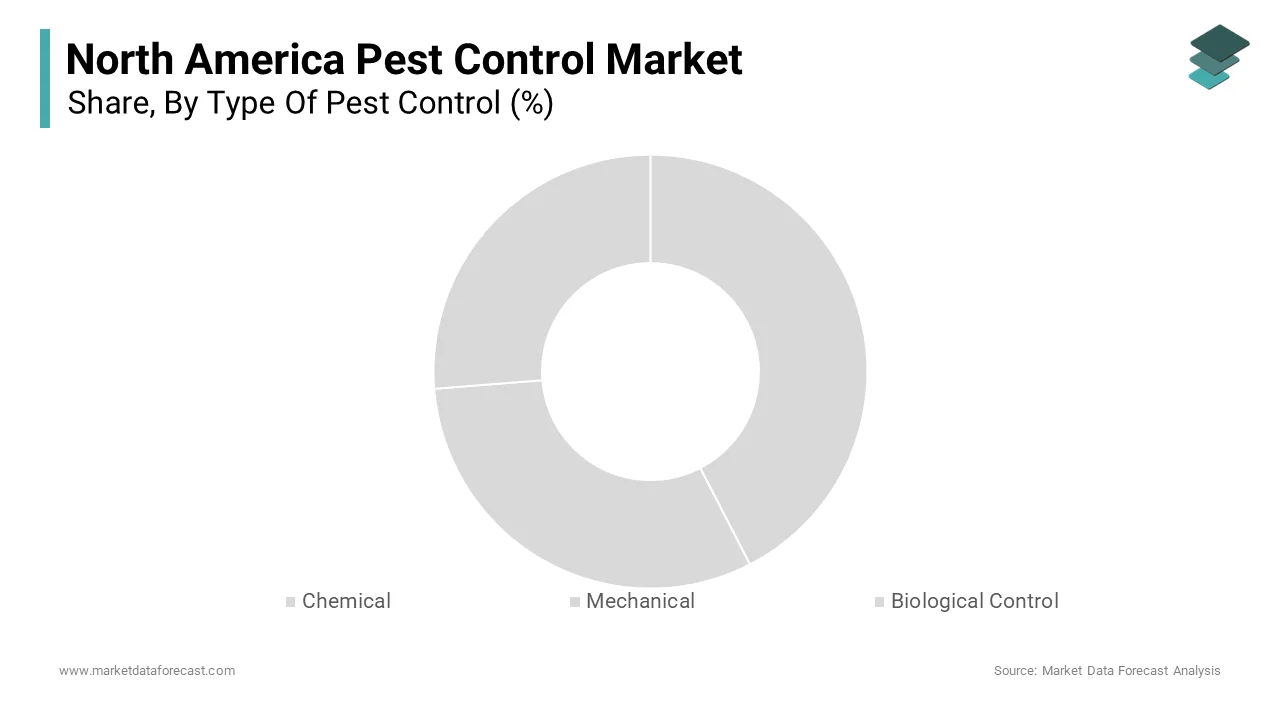
The biological pest control segment is the fastest-growing, with an AGR of 8.5%. This rapid surge is fueled by the increasing demand for eco-friendly solutions and stricter regulations on chemical pesticides. Biological control methods, such as the use of natural predators or biopesticides derived from plants and microorganisms, are gaining traction across agricultural and urban settings. According to the U.S. Department of Agriculture (USDA), biopesticides now account for a notable share of all pest control products used in organic farming, reflecting their rising popularity among environmentally conscious growers. For instance, Bacillus thuringiensis (Bt), a microbial pesticide, has been adopted considerable share of vegetable farmers in California to combat caterpillar infestations without harming beneficial insects. Furthermore, the integration of biological controls into integrated pest management (IPM) strategies has enhanced their appeal, particularly in schools and healthcare facilities.
By Types Insights
The insect pest control segment represented the largest category in the North America pest control market by capturing a 55.8% of the total share in 2024. This prominence is caused by the prevalence of insect-borne diseases and the economic damage caused by pests like mosquitoes, cockroaches, and ants. Similarly, cockroach infestations in urban areas have been linked to asthma cases, with the American Lung Association estimating that 23% of asthma-related hospital visits are associated with cockroach allergens. Residential and commercial sectors are the primary adopters of insect pest control services, with the NPMA noting that hat notable share of households in major cities like New York and Chicago have sought professional treatments for insect infestations.
On the other hand, the wildlife pest control segment is the fastest, with a CAGR of 9.2. This progress is because of urbanization and the encroachment of human settlements into wildlife habitats, leading to increased human-wildlife conflicts. For instance, raccoons, squirrels, and deer are increasingly invading suburban neighborhoods, causing property damage and posing health risks. Also, government initiatives to protect endangered species while managing invasive wildlife populations have spurred demand for humane and sustainable control methods.
By Application Insights
The residential pest control segment was the biggest application with a 45.4% share of the North America pest control market in 2024. This leading position is due to the growing awareness of health risks associated with household pests and the rising demand for preventive measures. Urbanization has exacerbated this trend, with densely populated cities like Los Angeles and Chicago seeing a notable increase in residential pest control services over the past five years. Also, stringent housing regulations mandate pest inspections before property sales, further boosting demand. Homeowners are also investing in recurring pest management plans, with the EPA estimating that subscription-based services have grown.
The commercial pest control segment is moving ahead quickly with a CAGR of 7.8%. This sudden rise is propelled by the expansion of industries such as food processing, hospitality, and healthcare, which require stringent pest management protocols to comply with hygiene standards. For instance, restaurants and hotels are increasingly adopting smart pest monitoring systems to detect infestations early and prevent reputational damage. The Food and Drug Administration (FDA) mandates zero-tolerance policies for pests in food production facilities, leading to a 30% rise in pest control investments by these businesses. In addition, the rise of e-commerce has expanded warehousing needs, creating new opportunities for pest control services in logistics hubs.
COUNTRY ANALYSIS
Top Countries in the North America Market
United States Pest Control Market Analysis
The United States led the North American pest control market by commanding an 85.6% of the regional share in 2024. The country’s vast geographic diversity, ranging from urban centers to agricultural heartlands, creates a fertile ground for pest proliferation. States like Florida and Texas, characterized by warm climates, report the highest incidence of pest-related issues, with termites alone causing major property damage annually. Federal and state-level initiatives, such as the USDA’s Integrated Pest Management program, have bolstered adoption rates, particularly in rural areas. Besides, the growing emphasis on public health has driven demand for mosquito control services, with local governments investing heavily in vector management programs.
Canada Pest Control Market Analysis
Canada is another key player in the North American pest control market. It is because of cold climate reduces pest activity compared to the U.S., but urbanization and agricultural expansion have driven demand for pest management services. Ontario and British Columbia, known for their vineyards and orchards, have seen a significant annual increase in pest control adoption. The Canadian government’s emphasis on sustainable practices has also encouraged the use of biopesticides, with the Organic Products Regulations supporting eco-friendly solutions.
Mexico Pest Control Market Analysis
Mexico accounted for a smaller share of the North American pest control market, with growth driven by its expanding agricultural sector and tourism industry. Regions like Yucatán and Quintana Roo, major tourist destinations, face persistent challenges with mosquitoes and rodents, prompting investments in pest control services. The USDA reports that Mexico’s agricultural exports to the U.S. reached $30 billion in 2022, exhibiting the importance of pest-free produce. Government subsidies and international trade agreements further support this growth, ensuring steady progress in the region.
The remaining markets include smaller countries and territories. These regions are witnessing gradual adoption, particularly in niche applications like wildlife management and vector control. Local governments and NGOs are promoting pest control to address health and environmental concerns, ensuring steady growth in these underrepresented areas.
KEY MARKET PLAYERS
Some of the major companies dominating the market with their products and services include
- Ecolab
- FMC Corporation
- Rollins
- Terminix International Company
- Bell Laboratories
- Dow Chemical Company.
RECENT MARKET NEWS
- In March 2023, Rentokil Initial acquired a U.S.-based pest control firm specializing in eco-friendly solutions. This acquisition is anticipated to strengthen Rentokil’s portfolio of sustainable pest management services and enhance its market presence in North America.
- In July 2022, Orkin launched a new line of smart pest monitoring devices equipped with IoT technology. This initiative aims to provide real-time data on pest activity, enabling proactive interventions and improving customer satisfaction.
- In November 2023, Terminix introduced a biopesticide-based treatment for termite control, targeting environmentally conscious consumers. This move positions Terminix as a leader in green pest control solutions and expands its customer base.
- In January 2024, Ecolab partnered with a Canadian agtech startup to integrate AI-driven analytics into its pest control offerings. This collaboration seeks to enhance predictive capabilities and optimize service delivery for agricultural clients.
- In August 2023, Rollins Inc. expanded its operations in Mexico by establishing new service centers in urban hubs like Mexico City. This expansion is expected to tap into the growing demand for pest control services in the region and strengthen Rollins’ foothold in Latin America.
MARKET SEGMENTATION
This research report on the North American pest control market is segmented and sub-segmented into the following categories.
By Types of Pest Control
- Chemical
- Mechanical
- Biological Control
By Types of Pest
- Termites
- Insects
- Rodents
- Wildlife
By Application
- Commercial
- Industrial
- Agricultural
- Residential Control
By Country
- The USA
- Canada
- Rest of North America