- Product Description Description
- Table of Contents TOC
- List of Table & Figure LOT
- Get Free Sample PDF Sample PDF
Market Size, 2025
$506.29 MnMarket Estimate, 2026
$548.97 MnMarket Forecast, 2034
$1,048.93 MnCAGR, 2026–2034
8.43%Executive Summary: North America Sepsis Diagnostics Market
- Market Scope: Comprehensive regional analysis covering pathogen types, assay kits, molecular diagnostic technologies, software workflows, and country-level developments across the United States and Canada.
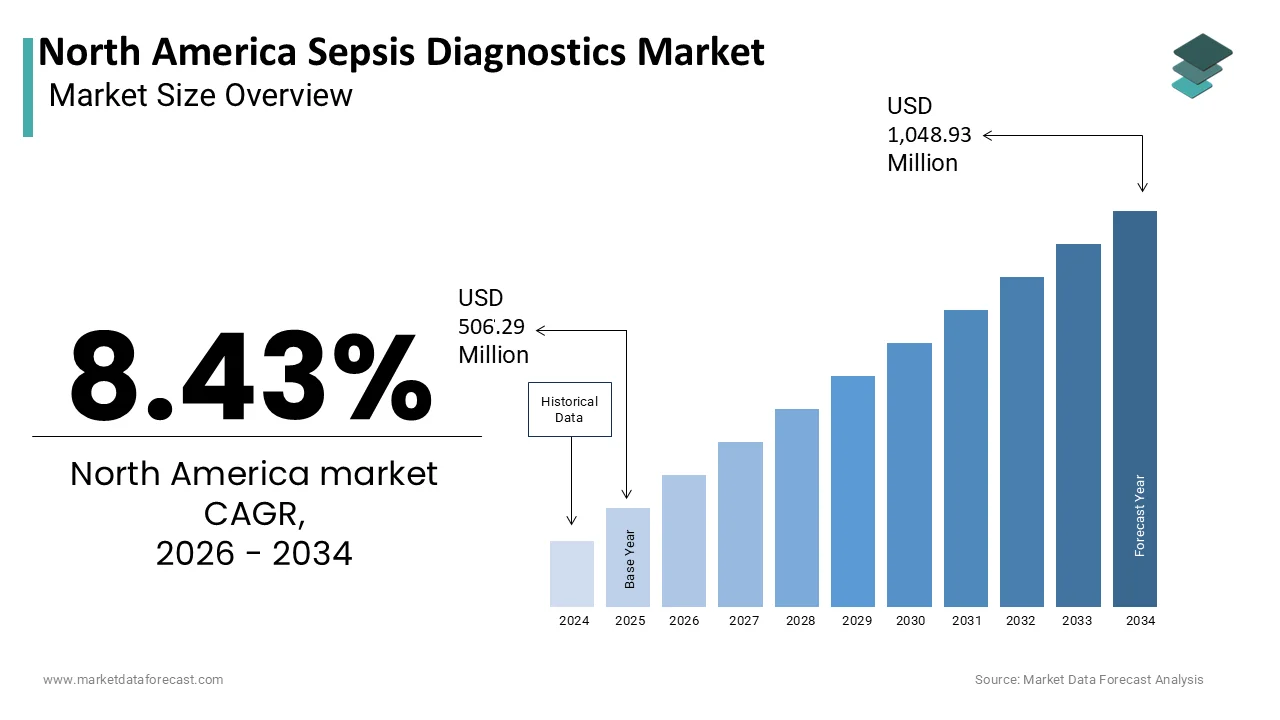
- Market Valuation: Valued at USD 506.29 million (2025), estimated at USD 548.97 million in 2026, and projected to reach USD 1,048.93 million by 2034, registering a robust CAGR of 8.43% (2026–2034).
- Primary Growth Drivers: High prevalence of healthcare-associated infections, increasing threat of multi-drug resistant organisms, mandatory hospital sepsis screening protocols, and the integration of artificial intelligence into clinical workflows. Restraints include high capital expenditures for advanced molecular platforms and limited or inconsistent reimbursement codes for novel host-response tests.
Key Market Segment Metrics (2026–2034)
| Category | Leading Segment (2025 Position) | Fastest-Growing Segment |
|---|---|---|
| By Pathogen | Bacterial Sepsis (accounts for ~85% of cases due to high incidences of bloodstream and gram-positive/negative infections) | Fungal Sepsis (estimated at a 14.1% CAGR driven by growing immunocompromised patient populations) |
| By Product | Assay Kits & Reagents (lead due to recurring test consumption and bundled instrument contracts) | Software / AI Analytics (projected at a 16.2% CAGR powered by predictive health IT algorithms) |
| By Technology | Microbiology / Blood Culture (remains the baseline clinical gold standard for susceptibility profiling) | Molecular Diagnostics (growing at a 14.2% CAGR for rapid multiplex pathogen and resistance gene detection) |
| By Country | United States (dominates regional share supported by advanced healthcare expenditure, FDA pathways, and CMS mandates) | Canada (expanding via provincial infrastructure modernization and public health care initiatives) |
Major Market Participants & Market Structure
Market Structure: Highly consolidated and competitive medical diagnostics sector featuring multinational life-science corporations competing on assay turnaround time, automation capabilities, multiplexing precision, and AI software integrations.
Key Companies: bioMérieux SA, T2 Biosystems, Inc., Cepheid, Thermo Fisher Scientific Inc., Nanosphere, Inc., Abbott Laboratories, Roche Diagnostics, Becton, Dickinson and Company (BD), Bruker Corporation, and Beckman Coulter, Inc.
North America Sepsis Diagnostics Market Size
The North America Sepsis Diagnostics Market is projected to grow from USD 506.29 million in 2025 to USD 548.97 million in 2026 and reach USD 1,048.93 million by 2034, registering a CAGR of 8.43% during the forecast period from 2026 to 2034.
North America faces a critical public health challenge as sepsis remains a leading cause of hospital mortality and healthcare-associated costs. According to Centers for Disease Control and Prevention data, at least 1.7 million adults in the United States develop sepsis annually, with over 270,000 deaths attributed to the condition each year. According to the Society of Critical Care Medicine, early recognition and intervention within the first hour of symptom onset can reduce mortality rates by up to 8%. Regulatory bodies such as the Food and Drug Administration have accelerated the approval pathway for novel rapid diagnostic technologies to address the urgent clinical need for faster turnaround times. Hospitals across North America are implementing electronic health record alerts and sepsis protocols that rely heavily on accurate and timely diagnostic data. The integration of artificial intelligence into laboratory information systems has further enhanced the predictive capability of these diagnostics. This technological evolution supports the industry goal of reducing antibiotic misuse and improving patient outcomes through precision medicine approaches in critical care settings.
MARKET DRIVERS
Rising Incidence of Healthcare Associated Infections and Antibiotic Resistance
The escalating prevalence of healthcare-associated infections and the growing threat of multidrug-resistant organisms are primarily driving the North American sepsis diagnostics market forward. According to the Centers for Disease Control and Prevention, approximately 1 in 31 hospital patients has at least one healthcare associated infection on any given day, which significantly increases the risk of developing sepsis. The emergence of superbugs such as methicillin resistant Staphylococcus aureus and carbapenem resistant Enterobacteriaceae needs rapid identification to initiate targeted antimicrobial therapy. According to World Health Organization data, antibiotic resistance contributes to over 35,000 deaths annually in the United States alone, driving the demand for diagnostics that can detect resistance genes quickly. Traditional blood culture methods often take 48 to 72 hours to yield results, during which time patients may receive inappropriate broad spectrum antibiotics. Rapid molecular diagnostics can identify pathogens and resistance markers within hours, which is allowing clinicians to de-escalate or adjust treatment promptly. This shift toward precision antimicrobial stewardship reduces hospital stays and lowers the overall cost of care. Regulatory initiatives promoting antibiotic stewardship programs further mandate the use of rapid diagnostics in intensive care units. The clinical urgency to prevent septic shock and organ failure ensures consistent demand for high sensitivity and specificity testing platforms. Hospitals prioritize investments in these technologies to improve quality metrics and comply with federal reporting requirements for infection control.
Implementation of Mandatory Sepsis Screening Protocols and Quality Measures
The enforcement of stringent regulatory mandates and quality improvement initiatives requiring systematic sepsis screening has significantly accelerated the adoption of diagnostic tools across North American healthcare facilities, which is further contributing to the North American market expansion. The Centers for Medicare and Medicaid Services includes sepsis management in its Hospital Inpatient Quality Reporting program that ties reimbursement rates to compliance with early detection and treatment protocols. According to Surviving Sepsis Campaign guidelines, hospitals must measure serum lactate levels and obtain blood cultures before administering antibiotics to meet performance standards. The Joint Commission accredited organizations are required to demonstrate adherence to evidence based sepsis bundles, which rely heavily on rapid diagnostic confirmation. According to the American Hospital Association, over 90% of acute care hospitals have implemented electronic sepsis alert systems that trigger automatic diagnostic orders when clinical criteria are met. This institutionalization of sepsis protocols creates a standardized demand for biomarker tests and microbiological assays. State level legislation in New York and California has further mandated specific reporting and treatment timelines, increasing the pressure on laboratories to deliver faster results. The financial penalties for non-compliance and the potential for reduced reimbursement drive continuous investment in diagnostic infrastructure. Healthcare providers view rapid diagnostics as essential tools for meeting these regulatory obligations while improving patient safety outcomes. This regulatory landscape ensures that sepsis diagnostics remain a priority in hospital budgeting and strategic planning.
MARKET RESTRAINTS
High Cost of Advanced Molecular Diagnostic Platforms and Reagents
The substantial capital expenditure required for acquiring advanced molecular diagnostic platforms and the recurring high cost of proprietary reagents present significant barriers to widespread adoption, particularly in smaller community hospitals. According to the American Hospital Association, the average cost of a comprehensive multiplex polymerase chain reaction panel for sepsis identification ranges from 200 dollars to 400 dollars per test, compared to less than 50 dollars for traditional blood cultures. Many rural and critical access hospitals operate on thin margins and lack the financial resources to invest in high throughput automated systems that can process these complex assays. According to the Healthcare Financial Management Association, laboratory budgets face increasing pressure due to staffing shortages and rising supply chain costs, limiting their ability to adopt new technologies. Reimbursement rates from private insurers and government payers often do not fully cover the premium pricing of rapid molecular tests, creating a financial disincentive for routine use. Hospitals must justify the clinical value and cost savings of these expensive tests through rigorous health economic analyses, which can be time consuming and complex. The lack of standardized pricing across different vendors leads to market fragmentation and confusion among procurement departments. Smaller facilities may opt to send samples to reference laboratories that introduce delays in turnaround time, negating the benefits of rapid diagnostics. This financial constraint limits equitable access to advanced sepsis diagnostics across the healthcare spectrum.
Limited Reimbursement Coverage for Novel Biomarkers and Host Response Tests
The inconsistent and often limited reimbursement coverage for novel biomarkers and host response signature tests is further hampering the regional market expansion. According to the American Clinical Laboratory Association, many next-generation sepsis tests lack specific Current Procedural Terminology codes, resulting in variable payment decisions by insurance carriers. The Centers for Medicare and Medicaid Services has been slow to establish national coverage determinations for newer biomarkers such as presepsin and mid-regional pro-adrenomedullin, leaving providers uncertain about compensation. According to a survey conducted by the Association for Molecular Pathology, 40% of laboratories experienced claim denials or delayed payments for advanced sepsis diagnostics due to coding ambiguities. This financial uncertainty discourages hospitals from integrating these tests into standard care pathways despite their potential clinical benefits. Manufacturers face challenges in demonstrating cost-effectiveness to payers who prioritize short term budget impacts over long term patient outcomes. The lack of clear reimbursement pathways stifles innovation as companies hesitate to invest in the development of new assays without guaranteed market access. Clinicians are reluctant to order tests that may result in unexpected bills for patients or financial losses for the institution. This reimbursement gap creates a disconnect between technological availability and practical clinical implementation, slowing the overall growth of the market.
MARKET OPPORTUNITIES
Integration of Artificial Intelligence and Machine Learning in Diagnostic Workflows
The integration of artificial intelligence and machine learning algorithms into sepsis diagnostic workflows presents substantial opportunities for the North American market. According to the National Institutes of Health, AI driven models can analyze electronic health record data in real time to predict sepsis onset up to 12 hours before clinical symptoms manifest, allowing for preemptive diagnostic testing. These algorithms can prioritize high risk samples in the laboratory, reducing turnaround times for critical results. According to the American Medical Informatics Association, hospitals using AI enabled diagnostic support systems saw a 20% reduction in time to appropriate antibiotic administration. Machine learning can also interpret complex multiplex assay data to identify subtle patterns of co infection or resistance that human analysts might miss. Diagnostic manufacturers are partnering with health IT companies to embed these intelligent features directly into their instrument software, creating value added solutions. The ability to continuously learn from large datasets improves the sensitivity and specificity of diagnostic predictions over time. This technological convergence supports the shift toward precision medicine by tailoring diagnostic strategies to individual patient risk profiles. Investors are increasingly funding startups that combine diagnostic hardware with advanced analytics platforms, recognizing the potential for improved clinical outcomes. The adoption of these smart diagnostics aligns with broader digital transformation initiatives in healthcare, offering a competitive edge to early adopters.
Expansion of Point of Care Testing in Emergency Departments and ICUs
The expansion of point-of-care testing capabilities in emergency departments and intensive care units offers significant growth opportunities for sepsis diagnostics by enabling immediate clinical decision-making at the bedside. According to the Society of Academic Emergency Medicine, rapid point-of-care biomarker tests can reduce time to diagnosis by up to 60% compared to central laboratory processing. These portable devices allow clinicians to measure procalcitonin, lactate, and other critical markers within minutes, facilitating faster initiation of sepsis bundles. According to the Emergency Nurses Association, point-of-care testing improves workflow efficiency by eliminating sample transport delays and reducing communication errors. Manufacturers are developing handheld devices with simplified user interfaces that require minimal training, making them suitable for busy clinical environments. The trend toward decentralized laboratory services is driven by the need for speed in critical care scenarios where every minute counts. Reimbursement policies are gradually adapting to support point-of-care testing as evidence of its impact on patient outcomes accumulates. Hospitals are investing in these technologies to enhance their triage capabilities and reduce emergency department overcrowding. The convenience and speed of point-of-care diagnostics make them attractive for rural hospitals and ambulatory surgical centers that lack full service laboratories. This segment expansion diversifies the market beyond traditional central lab settings.
MARKET CHALLENGES
Complexity of Sepsis Pathophysiology and Lack of Universal Biomarkers
The inherent complexity of sepsis pathophysiology and the absence of a single universal biomarker pose significant challenges to the regional market growth. Sepsis manifests differently across patients depending on the pathogen source, host immune response, and comorbidities, making it difficult to create a one-size-fits-all diagnostic solution. According to the Journal of Critical Care, no single biomarker has demonstrated sufficient sensitivity and specificity to diagnose sepsis in all clinical scenarios, leading to reliance on composite scores and multiple tests. The heterogeneity of the condition means that a test effective for Gram-negative bacteremia may fail to detect fungal or viral causes of sepsis. This diagnostic ambiguity often results in false negatives or positives, which can delay appropriate treatment or lead to unnecessary antibiotic use. The Food and Drug Administration requires extensive clinical trials to prove efficacy across diverse patient populations, which is costly and time consuming. Clinicians struggle to interpret conflicting results from different biomarkers, creating decision fatigue and potential errors. The lack of a gold standard for sepsis diagnosis complicates the benchmarking of new tests against existing methods. Researchers continue to search for novel host response signatures, but translating these findings into commercially viable tests remains challenging. This scientific hurdle limits the reliability of current diagnostics and hinders the establishment of definitive clinical guidelines.
Shortage of Skilled Laboratory Personnel and Technical Expertise
The acute shortage of skilled laboratory personnel and technical expertise required to operate and interpret advanced sepsis diagnostic systems creates a bottleneck in market adoption and operational efficiency, which is further challenging the regional market expansion. According to the American Society for Clinical Pathology, the vacancy rate for medical laboratory scientists reached 15%, with many positions remaining unfilled for months. Complex molecular diagnostic platforms require specialized training to maintain quality control, troubleshoot errors, and ensure accurate result reporting. The aging workforce in laboratory medicine is retiring faster than new graduates are entering the field, exacerbating the talent gap. According to the Bureau of Labor Statistics, a continued shortfall of qualified technicians impacts the ability of hospitals to run high complexity tests around the clock. Staff burnout and high turnover rates further compromise laboratory productivity and increase the risk of procedural errors. Smaller hospitals often lack the resources to provide ongoing education and certification for their staff, limiting their ability to adopt sophisticated diagnostic technologies. Manufacturers face challenges in providing adequate customer support and training to a stretched workforce. The reliance on manual steps in some diagnostic workflows increases the burden on already overwhelmed personnel. Addressing this human capital constraint is critical for ensuring the reliable performance of sepsis diagnostics and maintaining patient safety standards.
REPORT COVERAGE
| REPORT METRIC | DETAILS |
| Market Size Available | 2025 to 2034 |
| Base Year | 2025 |
| Forecast Period | 2026 to 2034 |
| Segments Covered | By Pathogen, Product, Technology, and Region. |
| Various Analyses Covered | Global, Regional, and Country-Level Analysis, Segment-Level Analysis, Drivers, Restraints, Opportunities, Challenges; PESTLE Analysis; Porter’s Five Forces Analysis, Competitive Landscape, Analyst Overview of Investment Opportunities |
| Countries Covered | The United States, Canada, Rest of North America |
| Market Leaders Profiled | bioMérieux SA, T2 Biosystems, Inc., Cepheid, Thermo Fisher Scientific Inc., Nanosphere, Inc., Abbott Laboratories, Roche Diagnostics, Becton, Dickinson and Company, Bruker Corporation, Beckman Coulter, Inc. |
SEGMENTAL ANALYSIS
By Pathogen Insights
The bacterial sepsis segment had the largest share of the North American market in 2025. The dominance of the bacterial sepsis segment in the North American market can be credited to its overwhelming prevalence as the primary cause of septic shock and associated mortality. According to the Centers for Disease Control and Prevention, bacterial infections account for approximately 85% of all sepsis cases in the United States, with gram negative and gram positive bacteria being the most common pathogens. The high incidence of healthcare associated infections such as catheter related bloodstream infections and ventilator associated pneumonia drives consistent demand for rapid bacterial identification. According to the Society of Critical Care Medicine, early administration of appropriate antibiotics within the first hour of recognition reduces mortality by up to 8%, necessitating fast and accurate bacterial diagnostics. Traditional blood culture methods remain the gold standard but are increasingly supplemented by rapid molecular assays that detect bacterial DNA directly from blood samples. The rising threat of multidrug resistant organisms such as methicillin resistant Staphylococcus aureus and carbapenem resistant Enterobacteriaceae further amplifies the need for specialized bacterial diagnostic panels. Hospitals prioritize these tests to implement effective antibiotic stewardship programs and prevent the spread of resistant strains. The clinical urgency to distinguish bacterial sepsis from non-infectious inflammatory conditions ensures that bacterial diagnostics remain the cornerstone of sepsis management protocols. Regulatory guidelines from the Infectious Diseases Society of America strongly recommend rapid bacterial identification to optimize treatment outcomes. This segment leadership is reinforced by the extensive portfolio of approved diagnostic tests targeting a wide range of bacterial pathogens.
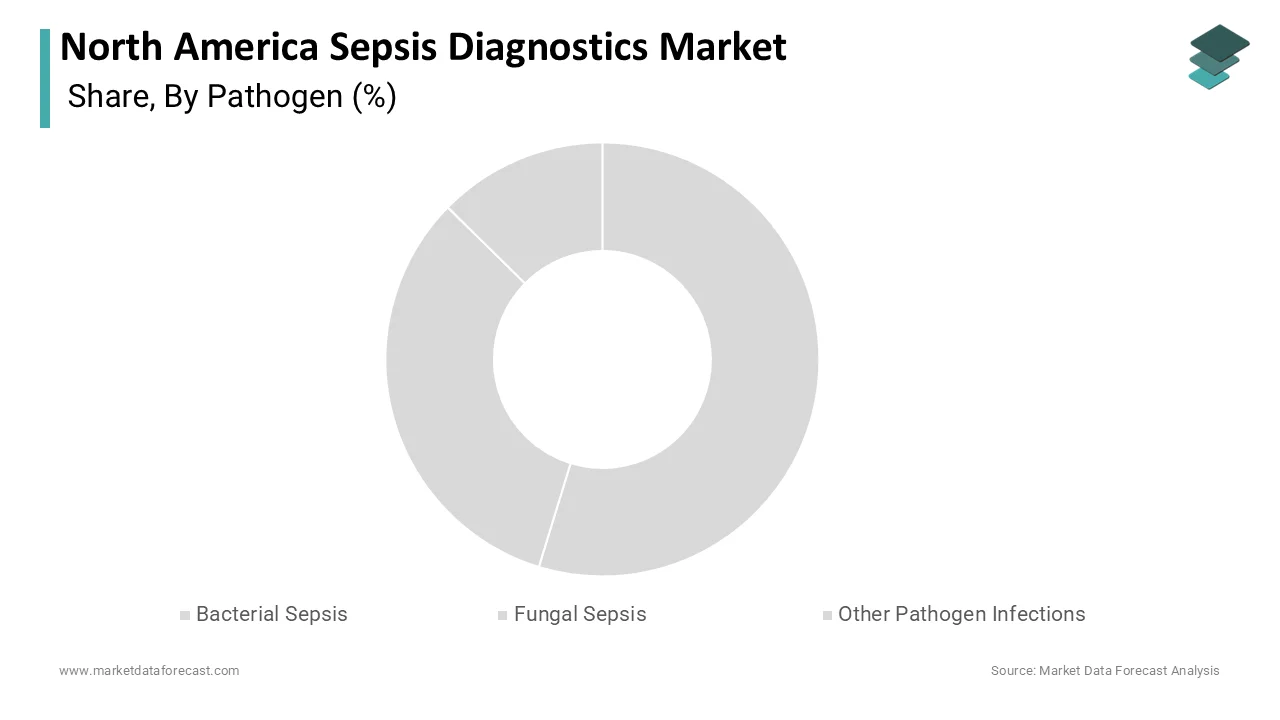
However, the fungal sepsis segment is estimated to showcase a promising CAGR of 14.1% over the forecast period owing to the growing number of immunocompromised patients and the rising incidence of invasive fungal infections. According to the Centers for Disease Control and Prevention, invasive candidiasis causes over 6,000 deaths annually in the United States, with mortality rates exceeding 30% if not diagnosed promptly. The growing population of patients undergoing chemotherapy, organ transplantation, and prolonged intensive care stays has significantly increased susceptibility to fungal pathogens such as Candida and Aspergillus species. According to the Clinical Infectious Diseases Society, traditional culture methods for fungi can take up to five days to yield results, leading to delayed treatment and poor outcomes. Rapid molecular diagnostics and beta D glucan assays have emerged as critical tools for early detection, allowing clinicians to initiate antifungal therapy sooner. The emergence of azole resistant Candida auris has further heightened awareness and demand for advanced fungal diagnostic capabilities. Hospitals are investing in specialized fungal panels to address this gap in care and reduce the high economic burden associated with prolonged hospital stays. The complexity of diagnosing fungal sepsis due to nonspecific symptoms drives the adoption of highly sensitive biomarker tests. This segment growth is supported by increased research funding and regulatory approvals for novel fungal detection technologies.
By Product Insights
The assay kits and reagents segment led the market by accounting for the highest share of the regional market in 2025. The growth of the assay kits and reagents segment in the North American market is attributed to their recurring consumption nature and essential role in both molecular and immunoassay based testing platforms. According to the Association for Molecular Pathology, laboratories perform millions of sepsis related tests annually, each requiring specific reagents and consumables to generate results. The shift toward multiplex polymerase chain reaction panels, which require proprietary cartridges and reagent kits, has created a stable and predictable revenue stream for manufacturers. The Centers for Medicare and Medicaid Services reimbursement policies favor high volume testing, which sustains the demand for these consumables. Hospitals prefer bundled contracts that include a steady supply of reagents to ensure uninterrupted laboratory operations. The expiration dates and storage requirements of these products necessitate regular replenishment, driving continuous procurement cycles. The introduction of new biomarkers such as procalcitonin and presepsin has expanded the variety of available assay kits catering to different clinical needs. Manufacturers focus on optimizing reagent stability and ease of use to maintain customer loyalty. The high margin profile of reagents compared to instruments makes this segment financially attractive for diagnostic companies. The dependency of automated systems on specific proprietary reagents creates high switching costs for customers, ensuring long term engagement. This segment dominance is further reinforced by the increasing adoption of point of care tests, which also rely on single use disposable kits.
However, the software segment is predicted to witness a CAGR of 16.2% over the forecast period in the regional market owing to the integration of artificial intelligence and machine learning into sepsis diagnostic workflows. According to the American Medical Informatics Association, hospitals are increasingly adopting clinical decision support systems that analyze electronic health record data in real time to predict sepsis risk and trigger diagnostic orders. These software platforms integrate with laboratory information systems to automate result interpretation and alert clinicians to critical values immediately. According to the National Institutes of Health, AI driven sepsis prediction models can identify at risk patients up to 12 hours before clinical deterioration, improving outcomes significantly. The complexity of managing large volumes of diagnostic data requires robust software solutions for storage, analysis, and reporting. Regulatory mandates for data interoperability and quality reporting further drive the adoption of specialized sepsis management software. Manufacturers are partnering with health IT companies to embed diagnostic algorithms directly into hospital workflows, creating value added services. The ability to track antibiotic usage and resistance patterns through software analytics supports antibiotic stewardship initiatives. Cloud based platforms offer scalability and remote access, making them attractive for multi-site health systems. This segment growth is fueled by the digital transformation of healthcare and the need for data driven decision making in critical care.
By Technology Insights
The microbiology segment held the leading share of the North American market in 2025 because blood culture remains the gold standard for identifying causative pathogens and determining antibiotic susceptibility. According to the Clinical and Laboratory Standards Institute, over 90% of hospitals in North America utilize automated blood culture systems as the primary method for sepsis diagnosis. These systems provide comprehensive information about the organism, including its identity and resistance profile, which is critical for targeted therapy. According to the American Society for Microbiology, culture based methods are essential for detecting novel or rare pathogens that molecular panels may miss. The widespread availability of microbiology laboratories and trained personnel ensures broad accessibility across various healthcare settings. Continuous advancements in automated incubation and detection technologies have reduced turnaround times and improved sensitivity. The low cost per test compared to molecular methods makes it a sustainable option for routine screening. Regulatory guidelines continue to endorse blood culture as the definitive diagnostic tool for bloodstream infections. The integration of mass spectrometry with culture isolates has further enhanced identification speed and accuracy. This segment leadership is supported by the established infrastructure and clinical trust in microbiological methods. Despite the rise of molecular diagnostics, microbiology remains indispensable for comprehensive sepsis management.
On the other side, the molecular diagnostics segment is predicted to showcase the fastest CAGR in the regional market and grow at a CAGR of 14.2% over the forecast period owing to the rising need for rapid pathogen identification and resistance gene detection. According to the Journal of Clinical Microbiology, multiplex polymerase chain reaction panels can identify pathogens and resistance markers within one to two hours, compared to 48 hours to 72 hours for traditional cultures. This speed allows clinicians to initiate appropriate antimicrobial therapy much earlier, which is crucial for improving survival rates in septic patients. The Food and Drug Administration has approved several comprehensive molecular panels that detect dozens of bacteria, viruses, and fungi simultaneously from a single blood sample. The increasing prevalence of multidrug resistant organisms necessitates precise identification of resistance genes such as mecA and vanA, which molecular tests provide accurately. Hospitals are investing in these technologies to reduce length of stay and antibiotic costs associated with broad spectrum empiric therapy. The high sensitivity of molecular methods enables detection of low level bacteremia that cultures might miss. The convenience of automated sample preparation and minimal hands on time appeals to busy laboratory staff. This segment growth is supported by strong clinical evidence demonstrating improved patient outcomes and cost effectiveness. The expansion of molecular testing into point of care settings further accelerates market adoption.
COUNTRY LEVEL ANALYSIS
U.S. Sepsis Diagnostics Market Analysis
The U.S. had the largest share of the North American market in 2025 and is projected to experience steady growth in advanced diagnostic adoption and clinical technology investments over the next few years. The United States maintains its position as the largest national market for sepsis diagnostics in North America, driven by its advanced healthcare infrastructure, high prevalence of sepsis, and robust reimbursement mechanisms. According to the Centers for Disease Control and Prevention, at least 1.7 million adults in the United States develop sepsis annually, creating immense demand for diagnostic tools. The country spends over 24 billion dollars annually on sepsis related healthcare costs, prompting hospitals to invest in rapid diagnostics to reduce length of stay and improve outcomes. The presence of major diagnostic manufacturers such as BD, Roche, and BioMerieux fosters a competitive landscape that drives continuous innovation. The Food and Drug Administration provides a clear regulatory pathway for new diagnostic technologies, encouraging investment in research and development. Private insurance coverage and Medicare reimbursement policies support access to advanced diagnostic tests, including molecular panels and biomarkers. The implementation of mandatory sepsis reporting and quality measures by the Centers for Medicare and Medicaid Services further drives adoption. The United States leads in the adoption of artificial intelligence and machine learning in sepsis diagnostics, enhancing predictive capabilities. The high concentration of academic medical centers and research institutions facilitates clinical trials and early adoption of new technologies. This combination of factors ensures that the United States remains the primary engine of growth for the North America Sepsis Diagnostics Market.
Canada Sepsis Diagnostics Market Analysis
Canada is likely to witness progressive modernization of provincial laboratory infrastructure and expanded utilization of molecular testing over the next few years. Canada occupies the second largest position in the North American sepsis diagnostics market, characterized by its publicly funded healthcare system and growing focus on improving sepsis outcomes. According to Statistics Canada, the proportion of individuals aged 65 and older reached 20%, correlating with higher rates of sepsis and infectious diseases. The Canadian Patient Safety Institute has launched national initiatives to reduce sepsis mortality, driving the adoption of standardized diagnostic protocols and rapid testing. Provincial health authorities are investing in modernizing laboratory infrastructure to support faster turnaround times for sepsis tests. The universal healthcare system ensures equitable access to diagnostic services, although wait times can vary by region. Canadian hospitals are increasingly adopting molecular diagnostics to address the challenge of antibiotic resistance and improve stewardship. Health Canada regulates diagnostic devices strictly, ensuring high safety and efficacy standards. The collaboration between provincial governments and professional societies promotes best practices in sepsis management. The focus on value based care encourages the use of diagnostics that demonstrate cost effectiveness and improved patient outcomes. Canada's commitment to public health research supports the evaluation and adoption of new diagnostic technologies. The steady growth in diagnostic spending reflects the prioritization of sepsis as a critical public health issue.
COMPETITIVE LANDSCAPE
The North America Sepsis Diagnostics Market features intense competition among established global diagnostic giants and innovative specialized companies competing on speed accuracy and clinical utility. Leading companies differentiate themselves through proprietary molecular technologies and advanced biomarker assays that offer superior sensitivity and specificity for early pathogen detection. The market is characterized by high barriers to entry due to stringent regulatory requirements extensive clinical trial needs and strong existing relationships between incumbents and hospital laboratories. Price competition is moderate as healthcare providers prioritize diagnostic reliability and turnaround time over initial cost savings given the critical nature of sepsis care. Consolidation through mergers and acquisitions is common as larger firms seek to expand their product portfolios and integrate complementary technologies. The shift toward point of care testing and decentralized diagnostics creates new competitive dynamics as companies vie for convenience and ease of use. Regulatory scrutiny regarding data privacy and algorithm transparency requires continuous investment in compliance and cybersecurity. Innovation in artificial intelligence and machine learning continues to reshape competitive positioning as stakeholders seek predictive capabilities for early intervention. Companies that can demonstrate superior clinical value and cost effectiveness through real world evidence gain significant market traction in this evolving landscape.
KEY MARKET PLAYERS
Some of the companies that are playing a dominating role in the North America Sepsis Diagnostics Market include:
- bioMérieux SA
- T2 Biosystems, Inc.
- Cepheid
- Thermo Fisher Scientific Inc.
- Nanosphere, Inc.
- Abbott Laboratories
- Roche Diagnostics
- Becton, Dickinson and Company
- Bruker Corporation
- Beckman Coulter, Inc.
TOP LEADING PLAYERS IN THE MARKET
- Becton Dickinson and Company maintains a prominent position in the North America Sepsis Diagnostics Market through its comprehensive portfolio of blood culture systems and automated identification instruments. The company provides critical tools for early pathogen detection including the BD Phoenix system which offers rapid antimicrobial susceptibility testing. Becton Dickinson recently strengthened its market position by launching enhanced blood culture media formulations that improve the recovery rate of fastidious organisms. The company collaborates with major hospital networks to integrate its diagnostic workflows with electronic health records for seamless data management. Its investment in research and development focuses on reducing turnaround times for positive cultures enabling faster clinical decision making. Becton Dickinson also emphasizes sustainability by introducing eco friendly packaging and waste reduction initiatives in its laboratory products. This commitment to innovation and operational efficiency reinforces its reputation as a trusted partner for clinical microbiology laboratories across the region.
- Hoffmann-La Roche Ltd serves as a key provider of molecular diagnostics and immunoassay solutions for sepsis management in North America. The company offers the Elecsys procalcitonin assay which is widely used for guiding antibiotic therapy and monitoring treatment response in septic patients. Roche recently expanded its molecular portfolio with the launch of new multiplex PCR panels capable of detecting multiple pathogens and resistance genes simultaneously. The company strengthens its market presence through strategic partnerships with academic medical centers to validate the clinical utility of its biomarkers. Roche invests heavily in digital pathology and artificial intelligence to enhance the interpretation of complex diagnostic data. Its global supply chain ensures consistent availability of reagents and instruments even during periods of high demand. The company focuses on providing integrated solutions that combine hardware software and consumables to streamline laboratory operations. This holistic approach supports healthcare providers in delivering timely and accurate sepsis diagnoses.
- bioMerieux SA contributes significantly to the North America Sepsis Diagnostics Market by offering advanced automated systems for microbial identification and antimicrobial susceptibility testing. The company is renowned for its VITEK systems and MALDI TOF mass spectrometry technology which provide rapid and accurate pathogen characterization. bioMerieux recently introduced new software updates that leverage artificial intelligence to predict resistance patterns based on genomic data. The company strengthened its market position by acquiring specialized startups focused on host response biomarkers for early sepsis detection. bioMerieux collaborates with public health agencies to monitor emerging infectious threats and support outbreak investigations. Its commitment to education includes extensive training programs for laboratory personnel on the latest diagnostic techniques. The company also focuses on expanding its point of care offerings to bring diagnostics closer to the patient bedside. This strategy enhances accessibility and speeds up the initiation of appropriate therapeutic interventions in critical care settings.
TOP STRATEGIES USED BY THE KEY MARKET PARTICIPANTS
Key players in the North America Sepsis Diagnostics Market employ strategic initiatives focused on technological innovation and product integration to maintain competitive advantage. Companies prioritize the development of rapid molecular assays and artificial intelligence driven analytics to reduce turnaround times and improve diagnostic accuracy. Strategic partnerships with hospitals and research institutions facilitate clinical validation and adoption of new biomarkers and testing platforms. Manufacturers invest in expanding their portfolios through acquisitions of niche technology firms specializing in host response signatures and point of care devices. Emphasis on regulatory compliance and quality assurance ensures adherence to strict Food and Drug Administration standards. Digital transformation efforts include integrating diagnostic instruments with laboratory information systems for automated data flow and real time reporting. Sustainability initiatives drive the adoption of eco friendly materials and waste reduction practices in product design. These strategies ensure resilience and growth in a highly regulated market characterized by increasing demand for precise and timely sepsis management solutions.
MARKET SEGMENTATION
This research report has been segmented and sub-segmented the North America Sepsis Diagnostics Market into the following categories
By Pathogen
- Bacterial Sepsis
- Fungal Sepsis
- Other Pathogen Infections
By Product
- Instruments
- Blood Culture Media
- Assay Kits & Reagents
- Software
By Technology
- Microbiology
- Molecular Diagnostics
- Immunoassays
- Flow Cytometry
- Other Technologies
By Country
- The United States
- Canada
- Rest of North America