- Product Description Description
- Table of Contents TOC
- List of Table & Figure LOT
- Get Free Sample PDF Sample PDF
Market Size, 2025
$0.54 BnMarket Estimate, 2026
$0.63 BnMarket Forecast, 2034
$2.32 BnCAGR, 2026–2034
17.57%North America Skin Tightening Market Summary
The North America skin tightening market was valued at USD 0.54 billion in 2025, is estimated to reach USD 0.63 billion in 2026, and is projected to reach USD 2.32 billion by 2034, growing at a CAGR of 17.57% from 2026 to 2034. Increasing geriatric population, growing popularity of non-invasive aesthetic procedures, and technological advancements in combination therapies are key growth drivers.
Key Market Trends & Insights
- United States led the North America skin tightening market in 2025.
- Canada is expected to showcase strong growth throughout the forecast period.
- Based on type, the radio frequency segment was the leading segment in 2025.
- Based on portability, the stand-alone segment held the dominant market share in 2025.
- Based on application, anti-aging remained the top segment in 2025.
Market Size & Forecast
- 2025 Market Size: USD 0.54 Billion
- 2026 Market Size: USD 0.63 Billion
- 2034 Projected Market Size: USD 2.32 Billion
- CAGR (2026 to 2034): 17.57%
- United States: Largest market in 2025
- Canada: Strong growth region
North America Skin Tightening Market Size
The North America skin tightening market was valued at USD 0.54 billion in 2025, is estimated to reach USD 0.63 billion in 2026, and is projected to reach USD 2.32 billion by 2034, growing at a CAGR of 17.57% from 2026 to 2034.
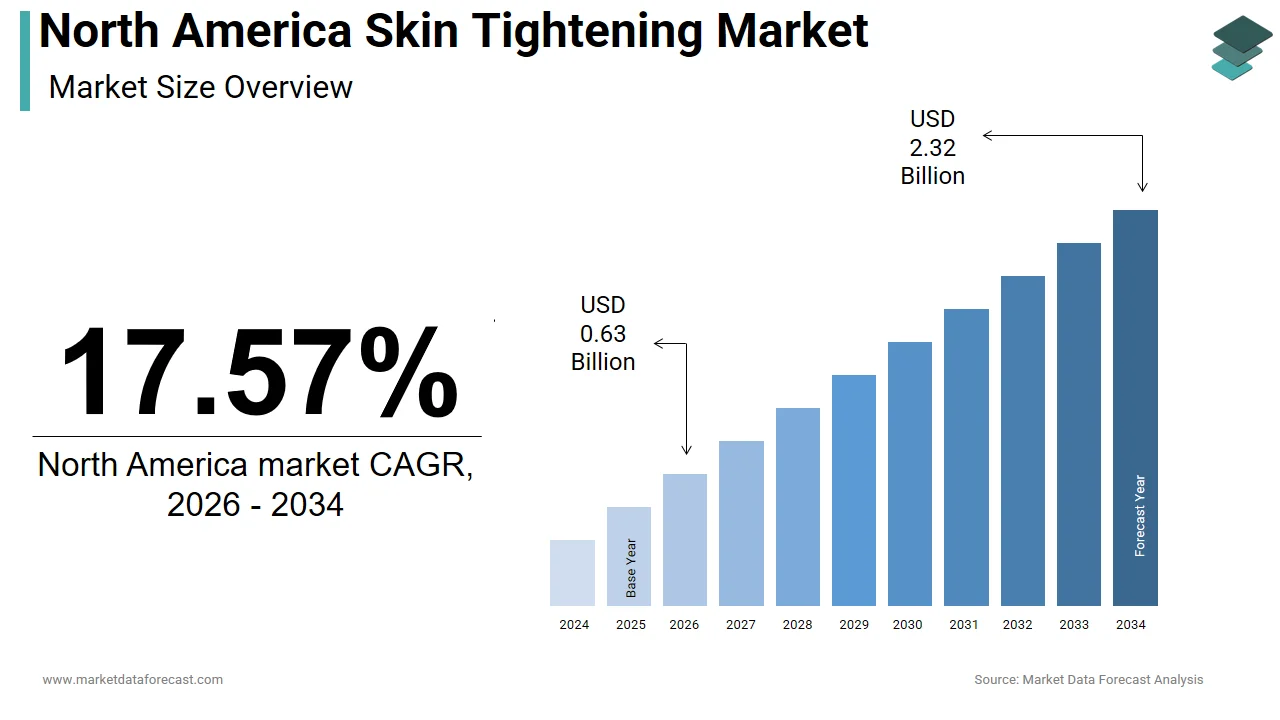
The skin tightening is non-invasive and minimally invasive aesthetic procedures aimed at enhancing skin elasticity and reducing signs of aging. These treatments utilize advanced technologies such as radiofrequency, ultrasound, laser therapy, and micro-focused ultrasound to stimulate collagen production and restore youthful skin texture. As per the American Society for Aesthetic Plastic Surgery, over 1.6 million skin tightening procedures were performed in the United States in 2022, reflecting a steady rise in consumer preference for non-surgical cosmetic interventions. The increasing prevalence of aging demographics among the baby boomer generation, contributes significantly to the growing demand for these treatments. Additionally, heightened awareness regarding appearance and wellness, coupled with technological advancements in aesthetic devices, has further propelled market growth.
MARKET DRIVERS
Increasing Geriatric Population and Age-Related Skin Concerns
The aging population is a major driving factor for the growth of the North America skin tightening market. The natural collagen and elastin production declines with ageing, which leads to sagging skin and wrinkles. According to the Population Reference Bureau, the number of Americans aged 65 and older is projected to reach 80 million by 2040, up from 55 million in 2020. This demographic shift significantly increases the demand for anti-aging treatments. Furthermore, the American Academy of Dermatology states that nearly 90% of visible skin aging is attributed to sun exposure, which is prevalent in North America due to lifestyle and geographic factors. As a result, more individuals seek preventive and corrective skin tightening procedures. The growing emphasis on maintaining a youthful appearance in professional and social environments also fuels demand.
Rising Popularity of Non-Invasive Aesthetic Procedures
The consumer preference for non-invasive alternatives to traditional surgical facelifts is a significant growth for the North America skin tightening market. Non-invasive procedures offer minimal downtime, reduced risk, and immediate results, aligning with modern lifestyles. The American Society of Plastic Surgeons reported a 17% increase in minimally invasive cosmetic procedures between 2019 and 2022, with skin tightening treatments contributing notably to this growth. Technological advancements such as high-intensity focused ultrasound (HIFU) and fractional radiofrequency have enhanced treatment efficacy, attracting a broader consumer base. Additionally, social media influence and celebrity endorsements have normalized aesthetic enhancements, particularly among younger demographics. A 2023 survey by the International Society of Aesthetic Plastic Surgery indicated that 62% of cosmetic procedures in North America are now non-surgical. The accessibility of these treatments through medspas, dermatology clinics, and wellness centers has further democratized access.
MARKET RESTRAINTS
High Cost of Advanced Skin Tightening Devices and Treatments
The high cost associated with advanced skin tightening technologies is restricting the growth of the North America skin tightening market. State-of-the-art devices such as Ultherapy systems or radiofrequency platforms can cost between $50,000 and $200,000, making them financially burdensome for smaller clinics and practitioners. According to a 2022 report by the Healthcare Financial Management Association, the average cost of a single skin tightening session ranges from $1,500 to $3,500, which is often out of reach for many consumers. This pricing structure limits accessibility and reduces the frequency of repeat treatments, which are often necessary for optimal results. Additionally, insurance providers typically do not cover cosmetic procedures, leaving patients to bear the full expense out of pocket.
Risk of Adverse Effects and Lack of Standardized Regulation
The potential for adverse effects associated with skin tightening procedures is also to fuel the growth of the North America skin tightening market. While non-invasive techniques are generally considered safe, complications such as burns, swelling, and nerve damage have been reported. The U.S. Food and Drug Administration has issued multiple safety communications regarding the improper use of certain radiofrequency and laser devices, particularly those operated by inadequately trained personnel. As per a 2021 study published in the Journal of Cosmetic Dermatology, approximately 4.3% of patients undergoing non-ablative skin tightening experienced mild to moderate side effects. Furthermore, the lack of standardized regulatory oversight for at-home devices raises concerns about consumer safety. The absence of mandatory certification for device operators in many states exacerbates the issue, leading to inconsistent treatment outcomes. Public awareness of these risks, amplified through media coverage and consumer advocacy groups, has led to hesitancy among potential users.
MARKET OPPORTUNITIES
Expansion of At-Home Skin Tightening Devices
The proliferation of at-home skin tightening devices presents a significant growth opportunity in the North America skin tightening market. These devices offer convenience and affordability, appealing to tech-savvy consumers who prefer self-administered treatments. According to a 2023 Nielsen report, sales of at-home beauty devices in North America grew by 28% year-over-year, with skin tightening gadgets accounting for a substantial portion of this increase. Companies like NuFACE and Foreo have introduced FDA-cleared devices that utilize microcurrent and radiofrequency technologies, enhancing consumer trust. The growing trend of “self-care” and personalized wellness, accelerated by the post-pandemic shift in consumer behavior, supports this market segment. Additionally, the rising influence of beauty influencers and digital marketing has boosted awareness and adoption of at-home solutions.
Technological Advancements in Combination Therapies
The integration of combination therapies, where multiple skin tightening modalities are used in conjunction represents is also expected to fuel the growth of the North America skint tightening market. Clinics are increasingly adopting hybrid approaches that combine radiofrequency with microneedling, ultrasound with laser therapy, or light therapy with topical agents to enhance outcomes. A 2022 clinical study published in Dermatologic Surgery reported that combination therapies yielded up to 40% better results compared to single-modality treatments. These synergistic approaches allow practitioners to address multiple skin concerns simultaneously, such as texture, tone, and laxity, thereby increasing patient satisfaction and retention. The American Academy of Cosmetic Surgery noted a 22% rise in combination-based treatments between 2020 and 2023. Moreover, the development of AI-driven treatment planning tools and real-time skin analysis systems enables personalized protocols, further enhancing efficacy.
MARKET CHALLENGES
Intense Competition and Market Saturation
The increasing characterized by intense competition and market saturation, which presents a significant challenge for the North America skin tightening market. Clinics often struggle to differentiate their offerings, resulting in aggressive promotional campaigns and bundled pricing strategies that erode profitability. Additionally, the rapid influx of direct-to-consumer brands has disrupted traditional distribution channels, pressuring established players to adapt their go-to-market strategies. The American Medical Association reported that nearly 40% of dermatology practices experienced reduced profit margins due to competitive pricing pressures in 2022. This saturation also complicates consumer decision-making, leading to longer sales cycles and increased marketing costs for providers.
Regulatory and Compliance Complexities Across Jurisdictions
The navigating complex and varied regulatory landscape is posing aa major challenge for the growth of the North America skin tightening market. While the U.S. FDA oversees device approvals, individual states maintain varying licensing and operational requirements for practitioners. In Canada, Health Canada regulates medical devices, but provincial authorities govern clinic operations, leading to inconsistencies in enforcement. According to the Federation of State Medical Boards, over 30 U.S. states lack standardized certification requirements for aesthetic practitioners as of 2023. This regulatory fragmentation increases compliance costs and complicates market entry for new players. Additionally, the FDA has tightened scrutiny on direct-to-consumer marketing of aesthetic devices, requiring substantiated claims and rigorous safety disclosures.
REPORT COVERAGE
| REPORT METRIC | DETAILS |
| Market Size Available | 2025 to 2034 |
| Base Year | 2025 |
| Forecast Period | 2026 to 2034 |
| Segments Covered | By Type, Portability, End-user, Application, and Region. |
| Various Analyses Covered | Global, Regional and Country-Level Analysis, Segment-Level Analysis, Drivers, Restraints, Opportunities, Challenges; PESTLE Analysis; Porter’s Five Forces Analysis, Competitive Landscape, Analyst Overview of Investment Opportunities |
| Countries Covered | United States, Canada, Mexico, Rest of North America |
| Market Leaders Profiled | Solta Medical, Alma Lasers, Fotona D.O.O., Lynton Lasers, Allergan, EINS MED Co., EndyMed Medical Ltd, SmarterSkin Dermatology, and InMode. |
SEGMENTAL ANALYSIS
By Type Insights
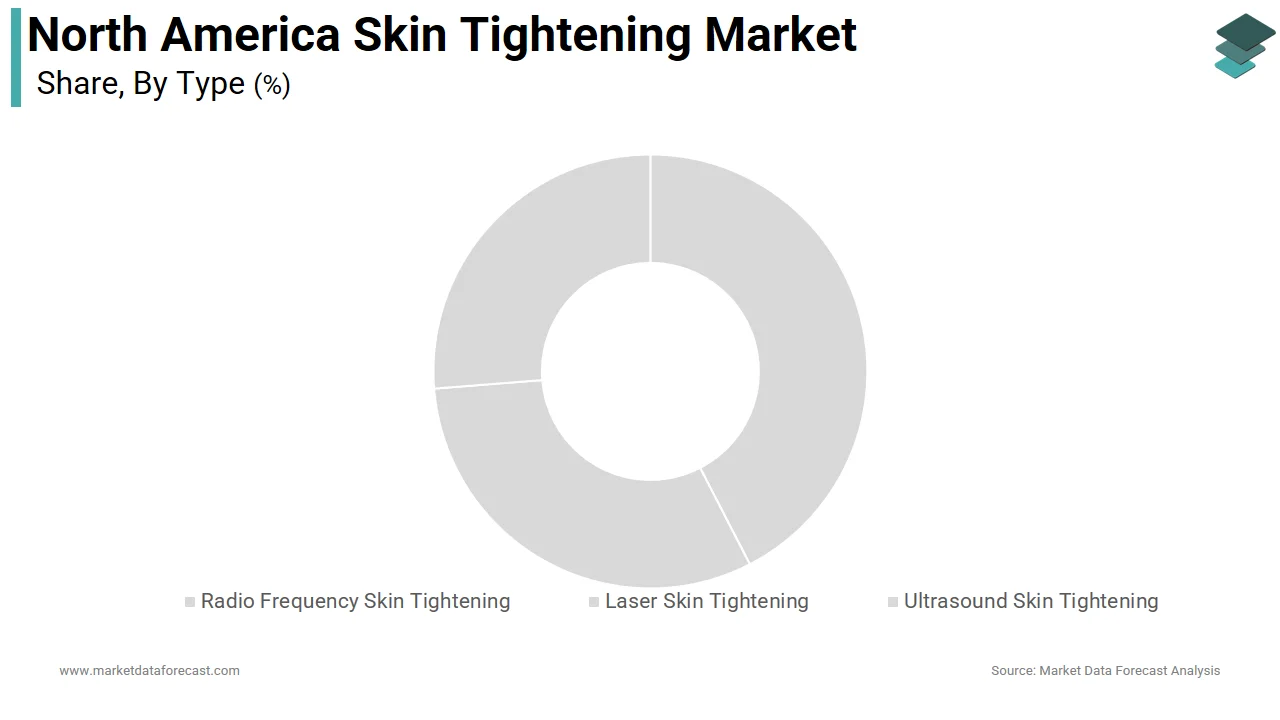
The radio frequency segment was accounted for, holding 42.3% of the North America skin tightening market share in 2024. The clinical effectiveness of radio frequency technology in stimulating collagen production and achieving measurable skin tightening results is eventually propelling the growth of the segment. A comprehensive 2022 meta-analysis published in the Journal of Cosmetic and Laser Therapy demonstrated that radio frequency treatments achieved an average improvement of 67% in skin laxity scores across 2,847 patients over 12 months. According to the American Society for Dermatologic Surgery, RF devices accounted for 73% of all energy-based skin tightening procedures performed in dermatology practices during 2023. The controlled heating mechanism allows for precise temperature management, reducing the risk of thermal injury while maintaining treatment efficacy.
The extensive penetration of radio frequency technology is evidenced by its widespread adoption across various healthcare and aesthetic settings throughout North America. The relatively lower capital investment required for RF devices compared to laser or ultrasound systems makes them more accessible to small and medium-sized practices. This affordability has enabled broader market distribution and increased treatment accessibility for consumers. Additionally, the minimal training requirements for RF device operation have facilitated rapid provider adoption. The American Academy of Cosmetic Surgery reports that RF technology requires only 8-16 hours of specialized training compared to 40-60 hours for laser systems, reducing implementation barriers for new practitioners.
The ultrasound segment is projected to expand with a CAGR of 12.8% from 2026 to 2034. The latest generation of micro-focused ultrasound devices can deliver energy to specific depths ranging from 1.5mm to 4.5mm beneath the skin surface by enabling targeted treatment of the superficial muscular aponeurotic system without damaging overlying tissues. Clinical research published in the Aesthetic Surgery Journal in 2023 demonstrated that advanced ultrasound systems achieved a 34% improvement in facial contour definition and a 28% reduction in jowl prominence within 90 days post-treatment. The ability to visualize treatment areas in real-time through integrated ultrasound imaging has enhanced procedural accuracy and patient satisfaction rates. According to the American Society for Aesthetic Plastic Surgery, patient satisfaction scores for ultrasound-based treatments increased by 15% between 2021 and 2023, reaching 92% approval ratings. The development of fractional ultrasound technology, which creates controlled microthermal zones while preserving surrounding tissue, has expanded treatment applications to delicate areas such as the neck and décolletage.
By Portability Insights
The Stand-alone segment held a dominant share of the North America skin tightening market in 2025. Stand-alone skin tightening devices offer significantly higher power output and advanced technological capabilities compared to portable alternatives, which is resulting in superior clinical outcomes and practitioner preference. Clinical research published in Lasers in Surgery and Medicine demonstrated that stand-alone radio frequency systems achieved 52% greater collagen remodeling compared to portable counterparts over a 12-week treatment period. The enhanced performance capabilities allow for treatment of larger body areas in shorter timeframes, improving practice efficiency and patient throughput. According to the American Academy of Cosmetic Surgery, stand-alone devices reduce average treatment times by 40% compared to portable alternatives, enabling practitioners to serve more patients daily. The sophisticated cooling systems integrated into stand-alone platforms provide enhanced patient comfort and safety during high-energy treatments.
The integration of stand-alone skin tightening devices into comprehensive aesthetic practice models has established them as cornerstone revenue generators for medical spas and dermatology clinics throughout North America. According to the American Medical Spa Association, 94% of medspas with stand-alone skin tightening devices offer membership programs or package deals, contributing to higher patient retention rates and recurring revenue streams. The professional-grade positioning of stand-alone systems also supports premium pricing strategies with treatment costs averaging 35% higher than portable device sessions, further enhancing profitability for providers.
The portable skin tightening devices is substantially to pose a CAGR of 15.4% from 2026 to 2034. The unprecedented consumer demand for convenient, accessible aesthetic treatments has become the primary catalyst driving the rapid expansion of portable skin tightening devices throughout North America. Modern consumers increasingly prioritize time efficiency and flexibility in their healthcare and beauty routines, favoring solutions that eliminate the need for clinic visits and scheduling constraints. The busy lifestyles of working professionals, particularly in urban markets, have created substantial demand for portable solutions that can be integrated into daily routines. According to the U.S. Bureau of Labor Statistics, the average American spends 2.5 hours weekly traveling to and from personal care appointments, creating significant time-saving opportunities for portable device adoption.
The rapid technological advancement in miniaturized aesthetic equipment has dramatically improved the performance capabilities of portable skin tightening devices, which is making them increasingly viable alternatives to traditional professional systems. A 2023 comparative effectiveness study published in the Journal of Cosmetic Dermatology demonstrated that next-generation portable radio frequency devices achieved 78% of the collagen stimulation results produced by professional stand-alone systems. The development of intelligent treatment protocols and automated safety features has enhanced both efficacy and user safety, reducing the learning curve for consumer adoption. Advanced portable systems now incorporate features such as real-time impedance monitoring, temperature regulation, and customizable treatment zones, previously exclusive to professional equipment.
By Application Insights
The anti-aging application segment dominated the North America skin tightening market with 45.3% of the share in 2024. The U.S. Census Bureau projects that by 2030, all baby boomers will be over age 65, resulting in 73 million Americans in this demographic group. According to the American Academy of Anti-Aging Medicine, preventive aesthetic treatments increased by 31% between 2021 and 2023, with skin tightening procedures representing the fastest-growing category within this expansion. The growing awareness that early intervention can prevent more severe aging signs has driven younger demographics to seek preventive skin tightening treatments. The economic impact of aging extends beyond individual consumers to healthcare systems, with the Centers for Disease Control and Prevention reporting that age-related skin conditions cost the U.S. healthcare system over $3.2 billion annually.
The integration of anti-aging skin tightening treatments into broader wellness and lifestyle management approaches has significantly expanded market demand and consumer engagement. Modern consumers increasingly view aesthetic treatments as components of comprehensive health and wellness strategies rather than purely cosmetic interventions. Social media influence has reinforced this wellness-oriented positioning, with lifestyle influencers promoting skin tightening as part of comprehensive self-improvement journeys.
The face-lifting segment is expected to register a CAGR of 14.2% from 2026 to 2034. The overwhelming consumer preference for minimally invasive alternatives to surgical facelifts is spurring the growth of the North America skin tightening market. Modern consumers increasingly seek effective aesthetic solutions that minimize recovery time, reduce risks, and eliminate the need for general anesthesia. The ability to achieve gradual, natural-looking results through non-surgical approaches has also appealed to consumers seeking subtle enhancements rather than dramatic transformations. Social media influence has reinforced this preference by showcasing the discreet nature and immediate return-to-normal activities associated with non-surgical face lifting treatments. Advanced technological innovations in facial targeting and precision delivery systems have revolutionized the effectiveness of non-surgical face lifting treatments, driving unprecedented consumer adoption and market growth. Next-generation skin tightening devices now incorporate sophisticated facial mapping technology, artificial intelligence, and real-time tissue analysis to deliver customized treatments for specific facial regions. Clinical research published in Plastic and Reconstructive Surgery journal demonstrated that advanced facial targeting systems achieved 63% improvement in facial contour definition and 48% reduction in nasolabial fold depth within 12 weeks post-treatment.
COUNTRY-LEVEL ANALYSIS
United States Skin Tightening Market Insights
The United States was the top performer in the North America skin tightening market with 89.2% of the share in 2024. According to the American Society for Aesthetic Plastic Surgery, the U.S. accounts for over 90% of all energy-based aesthetic procedures performed in North America annually. The concentration of leading medical device manufacturers, research institutions, and specialized training centers in major metropolitan areas has created a thriving ecosystem for skin tightening technology development and commercialization. The cultural acceptance of aesthetic enhancements and the influence of entertainment industry standards have normalized skin-tightening treatments across diverse demographic groups. The integration of skin tightening into mainstream medical practices has expanded beyond traditional aesthetic centers to include primary care and wellness facilities, which is propelling the growth of the market.
Canada Skin Tightening Market Insights
Canada was positioned second by holding 11.2% of the North America skin tightening market share in 2024. Canada maintains a significant position in the regional skin tightening market, characterized by strong regulatory oversight, high treatment safety standards, and increasing consumer awareness of non-invasive aesthetic options. The Canadian market benefits from a well-established healthcare infrastructure that supports both medical and cosmetic aesthetic treatments, though with more stringent regulatory requirements than the United States. The country's universal healthcare system creates unique market dynamics, where aesthetic treatments are primarily delivered through private clinics and specialized practices, fostering a competitive environment that drives service quality and innovation. Canadian consumer preferences demonstrate a strong emphasis on treatment safety and practitioner qualifications, leading to higher adoption rates of clinically validated technologies. The Canadian Society for Aesthetic Plastic Surgery reports that 84% of Canadians research practitioner credentials and device safety certifications before undergoing aesthetic treatments, compared to 67% in the United States. Geographic market distribution shows the highest concentration in urban centers such as Toronto, Vancouver, and Montreal, which account for 65% of national treatment volumes. The multicultural demographics of major Canadian cities have created demand for skin-tightening technologies suitable for diverse skin types and ethnicities.
COMPETITIVE LANDSCAPE
The North American skin tightening market exhibits intense competition characterized by technological innovation and strategic positioning among key players. Established medical device companies compete alongside emerging startups, each striving to differentiate their offerings through unique technologies and treatment approaches. The competitive landscape is shaped by continuous product development, with companies investing heavily in research to create more effective, safer, and convenient solutions for consumers and healthcare professionals.
Market participants focus on building strong brand recognition through clinical validation, professional endorsements, and comprehensive training programs for practitioners. The competition extends beyond product features to include service quality, customer support, and post-treatment care protocols. Companies also compete through pricing strategies, financing options, and flexible payment plans to make treatments more accessible to broader consumer segments.
Regulatory compliance and safety standards play crucial roles in competitive positioning, with companies investing in clinical studies and regulatory approvals to establish credibility. The market dynamics are influenced by evolving consumer preferences, technological advancements, and changing aesthetic trends, requiring companies to remain agile and responsive to market demands while maintaining competitive advantages through innovation and quality.
KEY MARKET PLAYERS
Noteworthy Companies dominating the North America Skin tightening market profiled in the report are
- Solta Medical
- Alma Lasers
- Fotona D.O.O.
- Lynton Lasers
- Allergan
- EINS MED Co.
- EndyMed Medical Ltd
- SmarterSkin Dermatology
- InMode
TOP LEADING PLAYERS IN THE MARKET
- Herbalife Nutrition stands as a prominent player in the tragacanth market across the Middle East and Africa regions. The company has leveraged its extensive distribution network and strong brand recognition to establish a significant presence in the natural ingredients sector. Their contribution to the global market includes innovative product formulations that incorporate tragacanth gum as a key ingredient in dietary supplements and wellness products. The company's research and development initiatives have focused on enhancing the functional properties of tragacanth by making it more accessible to consumers seeking natural health solutions. Through strategic partnerships with local distributors and manufacturing facilities, Herbalife has successfully penetrated emerging markets while maintaining quality standards that align with international regulations
- Nestle has established itself as a major force in the tragacanth market through its diverse portfolio of food and beverage products that utilize this natural gum. The company's extensive research capabilities have enabled it to optimize tragacanth applications in various consumer products, particularly in the Middle Eastern and African markets where traditional foods heavily feature this ingredient. Their global influence extends through local sourcing partnerships with regional suppliers by ensuring sustainable procurement practices while supporting local economies. Nestlé's commitment to food science innovation has resulted in enhanced tragacanth processing techniques that improve functionality and consistency across different applications, contributing significantly to standardizing quality benchmarks in the global market.
- Unilever represents a key player in the tragacanth market, utilizing this natural ingredient across multiple product categories, including food, personal care, and household items. The company's presence in the Middle East and Africa has been strengthened through localized manufacturing facilities and a deep understanding of regional consumer preferences. Their global market contribution involves sustainable sourcing initiatives that promote ethical trade practices while ensuring consistent supply chains. Unilever's extensive marketing reach and brand portfolio have helped increase consumer awareness about tragacanth benefits, which is driving market expansion. The company's focus on product innovation has led to the development of new applications for tragacanth in personal care products, expanding its market potential beyond traditional food uses.
TOP STRATEGIES USED BY KEY MARKET PARTICIPANTS
Strategic Acquisitions and Mergers Leading companies in the North American skin tightening market have focused on acquiring innovative technology firms and complementary businesses to expand their product portfolios. These acquisitions enable companies to integrate cutting-edge technologies, enhance research capabilities, and access new customer segments while reducing time-to-market for innovative solutions.
Product Innovation and R&D Investment Key players heavily invest in research and development to create advanced skin tightening technologies that offer superior results with minimal downtime. This strategy involves developing next-generation devices, improving treatment protocols, and creating combination therapies that address multiple skin concerns simultaneously.
Strategic Partnerships and Distribution Agreements Companies form strategic alliances with dermatologists, plastic surgeons, and aesthetic clinics to ensure widespread adoption of their technologies. These partnerships include training programs, marketing support, and exclusive distribution rights that help expand market reach while building strong professional relationships within the medical aesthetics community.
MARKET SEGMENTATION
This North America Skin tightening market research report is segmented and sub-segmented into the following categories.
By Type
- Radio Frequency Skin Tightening
- Laser Skin Tightening
- Ultrasound Skin Tightening
By Portability
- Portable
- Stand-Alone
By End-User
- Hospitals & Clinics
- Specialty Center
By Application
- Reduce Wrinkles
- Face Lifting
- Anti-Aging
By Country
- United States
- Canada
- Mexico
- Rest of North America