- Product Description Description
- Table of Contents TOC
- List of Table & Figure LOT
- Get Free Sample PDF Sample PDF
Market Size, 2025
$348.40 MnMarket Estimate, 2026
$392.65 MnMarket Forecast, 2034
$1,021.87 MnCAGR, 2026–2034
12.7%Executive Summary: North America Surgical Microscopes Market
- Market Scope: Comprehensive market analysis of surgical microscopes in North America covering optical and digital visualization systems across multiple surgical specialties, end-user settings, and price ranges.
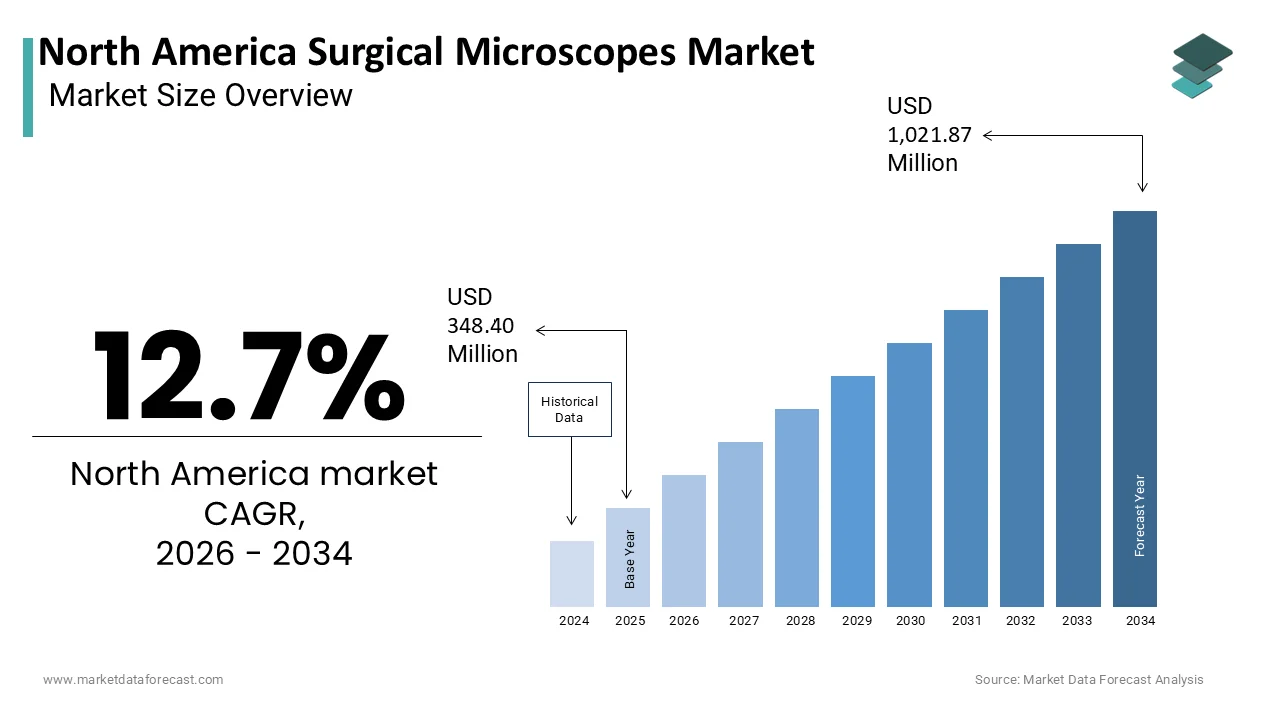
- Market Valuation: Valued at USD 348.40 million (2025), estimated at USD 392.65 million (2026), and projected to reach USD 1,021.87 million by 2034, registering a strong CAGR of 12.7% (2026–2034).
- Primary Growth Drivers: Rising prevalence of age-related ocular (cataracts, glaucoma) and neurological conditions, rapid technological integration of digital/fluorescence imaging, and the expansion of ambulatory surgical centers (ASCs).
Key Market Segment Metrics (2026–2034)
| Category | Leading Segment (2025 Position) | Fastest-Growing Segment |
|---|---|---|
| By Application | Ophthalmology (holding 34.2% share driven by millions of annual cataract and vision correction procedures) | Neurosurgery & Spine Surgery (projected at an 11.2% CAGR due to complex tumor and vascular interventions) |
| By End User | Hospitals (commanding the major share as primary centers for complex inpatient surgeries and academic research) | Outpatient Facilities / ASCs (projected at a 9.8% CAGR driven by a shift toward same-day surgeries) |
| By Price Range | Mid-Range (accounting for 53.4% share, balancing cost-effectiveness and versatile performance for routine cases) | Premium-Range (growing at a 10.5% CAGR driven by demand for 3D visualization, AR, and AI features) |
| By Country | United States (dominant contributor with an 85.4% share backed by high healthcare expenditure and robust infrastructure) | Canada (steady growth supported by public healthcare investments and hospital modernizations) |
Major Market Players & Market Structure
Market Structure: Highly competitive market rivalry characterized by technological innovation (augmented reality, AI integration, and fluorescence imaging), strategic hospital partnerships, and localized service distribution networks.
Key Companies: Carl Zeiss AG, Leica Microsystems GmbH, Alcon Laboratories (Novartis AG), Olympus Corporation, Haag-Streit U.S., Takagi Seiko Co., Ltd., Topcon Medical Systems, Inc., Global Surgical Corporation, and Accu-Scope, Inc.
North America Surgical Microscopes Market Size
The North America Surgical Microscopes Market is projected to grow from USD 348.40 million in 2025 to USD 392.65 million in 2026 and reach USD 1,021.87 million by 2034, registering a CAGR of 12.7% during the forecast period from 2026 to 2034.
Surgical microscopes are high-precision optical instruments utilized to magnify surgical fields during intricate medical procedures. These devices are indispensable in specialties such as neurosurgery, ophthalmology, otolaryngology, and plastic surgery, where visualization of minute anatomical structures is critical for patient safety and procedural success. As per the Centers for Disease Control and Prevention, approximately 17 million inpatient surgeries are performed annually in the United States alone, creating a substantial base for advanced visualization tools. The region is characterized by a high adoption rate of technologically advanced equipment driven by robust healthcare infrastructure and favorable reimbursement policies. According to the American Academy of Ophthalmology, over 4 million cataract surgeries are conducted each year in the United States,s necessitating reliable, high-resolution microscopy systems. The integration of digital imaging, augmented reality, and fluorescence guidance into modern microscopes has transformed them from passive viewing tools into active diagnostic and therapeutic platforms. Regulatory oversight by the Food and Drug Administration ensures stringent safety and performance standards influencing product development cycles.
MARKET DRIVERS
Rising Prevalence Of Age-Related Ocular And Neurological Conditions
The escalating prevalence of age-related ocular and neurological disorders for the adoption of surgical microscopes is prompting the growth of the North America surgical microscopes market. Conditions such as cataracts, glaucoma, macular degeneration, and brain tumors require precise microsurgical interventions that are only possible with high magnification and illumination. According to the National Eye Institute, more than 24 million Americans aged 40 and older suffer from cataracts, a number expected to rise to 30 million by 2030. This surge in patient volume directly correlates with increased procurement of ophthalmic surgical microscopes by hospitals and ambulatory surgical centers. Similarly, the American Brain Tumor Association reports that approximately 80000 new cases of primary brain tumors are diagnosed annually in the United States, necessitating advanced neurosurgical microscopy for tumor resection. The complexity of these procedures demands microscopes equipped with ergonomic designs and integrated imaging capabilities to reduce surgeon fatigue and enhance precision. Healthcare providers are investing in state-of-the-art equipment to maintain competitive advantage and meet patient expectations for minimally invasive outcomes. Government initiatives aimed at improving access to eye care and neurological services further drive demand. The chronic nature of these conditions ensures a steady stream of surgical cases requiring microscopic assistance.
Technological Advancements In Digital And Fluorescence Imaging
The rapid integration of digital technologies and fluorescence imaging capabilities into surgical microscopes is significantly propelling the growth of the North American surgical microscopes market. Modern microscopes are no longer purely optical devices but sophisticated digital platforms that offer real-time image enhancement, recording,g and sharing capabilities. According to the Society of Neurological Surgeons, the adoption of intraoperative fluorescence imaging using agents lik5-aminolevulinicic acid has improved tumor visualization and resection completeness in glioma surgeries. These features facilitate better surgical planning, education, and remote consultation, enhancing overall patient care. The ability to overlay augmented reality data onto the surgical field provides surgeons with critical anatomical information without diverting their gaze. Manufacturers are focusing on developing lightweight ergonomic designs with intuitive user interfaces to improve workflow efficiency. Hospitals are prioritizing upgrades to digital systems to align with electronic health record integration requirements. The trend towardsvalue-basedd care encourages the use of technologies that improve surgical outcomes and reduce complications.
MARKET RESTRAINTS
High Capital Costs And Budget Constraints In Healthcare Facilities
The substantial capital investment required for acquiring advanced surgical microscopes, particularly for smaller healthcare facilities and ambulatory surgical centers, is restricting the growth of the North America surgical microscopes market. High-end models equipped with digital imaging, fluorescence, and robotic assistance can cost between 100000 and 300000 dollars, posing a financial barrier for many institutions. Data from healthcare procurement surveys indicates that budget constraints often lead to deferred purchases or the continued use of outdated microscopy systems. Maintenance and calibration costs further add to the total cost of ownership,p requiring specialized technical support that may not be readily available. Public healthcare systems and community clinics face pressure to prioritize essential life-saving equipment over premium visualization tools. This financial limitation restricts the availability of advanced microscopes to large tertiary care centers, rs exacerbating disparities in surgical care quality. Manufacturers face pressure to lower prices, which can impact profit margins and reduce funds available for research and development. The lack of flexible financing options or leasing models in some segments further hinders acquisition.
Shortage Of Skilled Professionals For Operation And Maintenance
The shortage of skilled biomedical technicians and surgeons trained in the operation of advanced surgical microscopes is also inhibiting the growth of the North America surgical microscopes market. Modern digital microscopes require specialized knowledge for optimal setup, calibration,n and maintenance, which is not universally available across the region. There is a growing deficit of qualified biomedical equipment technicians with expertise in complex optical and digital systems. The complexity of newer devices with artificial intelligence features requires continuous education, which is often inaccessible to staff in smaller facilities. High turnover rates in the healthcare sector further exacerbate the problem as experienced personnel migrate to better-paying positions. Educational institutions have not kept pace with the rapid technological advancements in surgical microscopy, leaving a void in professional training. This skills gap limits the effective deployment of advanced technologies. Manufacturers struggle to provide adequate training support due to the vast geographic spread of the market. Addressing this human resource constraint is essential for maximizing the clinical value of surgical microscopes.
MARKET OPPORTUNITIES
Integration With Artificial Intelligence And Robotics
The integration of surgical microscopes with artificial intelligence and robotic systems is expected to promote new opportunities for the growth of the North America surgical microscopes market. AI algorithms can enhance image quality, automate focus adjustments,s and identify anatomical structures in real time, reducing cognitive load on surgeons. This technology enables predictive analytics that can alert surgeons to potential risks during procedures. Data from leading academic medical centers shows that robotic-assisted microsurgery improves precision and reduces hand tremors, enhancing surgical outcomes. Manufacturers are developing smart microscopes that integrate seamlessly with robotic arms, allowing for hands-free operation and enhanced stability. The ability to store and analyze surgical video data supports quality improvement initiatives and training programs. Government funding for medical innovation in the United States and Canada facilitates the development of these advanced systems. This technological synergy positions surgical microscopes as central components of the operating room of the future.
Expansion Into Ambulatory Surgical Centers And Outpatient Care
The shifting trend towards outpatient care and the expansion of ambulatory surgical centers is driving the growth of the North American surgical microscopes market. Patients and payers increasingly prefer less invasive procedures that allow forsame-dayy discharge, reducing hospital stays and costs. According to the Ambulatory Surgery Center Association, over 70% of all surgical procedures in the United States are now performed in outpatient settings. These facilities require compact, versatile, and easy-to-use microscopes that can handle a variety of specialties, including ophthalmology, ENT, and plastic surgery. Data from industry analysts indicates that ASCs are investing heavily in advanced equipment to attract top surgeons and compete with hospitals. Manufacturers are responding by developing portable and modular microscope systems tailored for space-constrained environments. The rise of cosmetic and refractive surgeries in outpatient clinics further drives demand for high-resolution visualization tools. Insurance reimbursement policies favoring outpatient procedures encourage the establishment of new surgical centers. This decentralization of surgical care creates a new customer segment with specific needs for efficiency and ease of use.
MARKET CHALLENGES
Regulatory Heterogeneity And Compliance Burdens
The complex and evolving regulatory landscape is certainly a major challenge for the growth of the North America surgical microscopes market. While the United States Food and Drug Administration and Health Canada have stringent approval processes, differences in classification and documentation requirements can delay market entry. Manufacturers must maintain separate quality management systems and clinical evidence for each jurisdiction, straining operational resources. The introduction of new cybersecurity regulations for connected medical devices adds another layer of compliance complexity. Companies must ensure that their digital microscopes meet strict data privacy and security standards to protect patient information. This regulatory fragmentation discourages rapid innovation and increases the cost of product development. Small and medium-sized enterprises often struggle to navigate these requirements, limiting competition. The uncertainty surrounding future regulatory changes creates hesitation in investment decisions.
Cybersecurity Risks In Connected Surgical Devices
The increasing connectivity of surgical microscopes raises significant cybersecurity concerns and also inhibits the growth of the North American surgical microscope market. Modern digital microscopes are integrated into hospital networks for data storage and sharing, making them vulnerable to cyber-attacks. A successful breach could compromise patient data or disrupt surgical operations,s posing serious safety risks. Data from cybersecurity firms indicates that many medical devices lack robust encryption and authentication mechanisms. The lack of uniform cybersecurity standards for medical devices creates confusion and inconsistency in protection measures. Hospitals are becoming more cautious about adopting connected devices due to fear of vulnerabilities. Compliance with regulations such as the HIPAA Security Rule requires rigorous testing and validation. Ensuring end-to-end data security requires ongoing vigilance and updates, which complicates lifecycle management.
REPORT COVERAGE
| REPORT METRIC | DETAILS |
| Market Size Available | 2025 to 2034 |
| Base Year | 2025 |
| Forecast Period | 2026 to 2034 |
| Segments Covered | By Application, End-User, Price Range, and Region. |
| Various Analyses Covered | Global, Regional, and Country-Level Analysis, Segment-Level Analysis, Drivers, Restraints, Opportunities, Challenges; PESTLE Analysis; Porter’s Five Forces Analysis, Competitive Landscape, Analyst Overview of Investment Opportunities |
| Countries Covered | The United States, Canada, Rest of North America |
| Market Leaders Profiled | Accu-Scope, Inc., Novartis AG, Alltion (Wuzhou) Co., Ltd., Haag-Streit U.S., Danaher CorporationAlcon Laboratories, Inc., Olympus Corporation, ARRI AG, Leica Microsystems GmbHCarl Zeiss AG, Topcon Medical Systems, Inc., Global Surgical CorporationTakagi Seiko Co., Ltd. |
SEGMENTAL ANALYSIS
By Application Insights
The ophthalmology segment was the largest,y holding 34.2% of the North America surgical microscopes market share in 2025, with the high volume of vision correction and cataract removal procedures, which require extreme precision and magnification. The eye is a delicate organ where even minor errors can lead to permanent vision loss, makinghigh-qualityy optical systems indispensable. According to the American Academy of Ophthalmology, over 4 million cataract surgeries are performed annually in the United States alone, representing one of the most common surgical interventions globally. Each procedure typically utilizes a dedicated surgical microscope, ensuring consistent and recurring demand for these devices. This demographic trend creates a steady pipeline of patients requiring microsurgical intervention. Furthermore, the increasing adoption of refractive surgeries like LASIK and corneal transplants drives the need for advanced microscopes with enhanced depth of field and coaxial illumination. Reimbursement policies for ophthalmic procedures are well established in both the United States and Canada, reducing financial barriers for patients and encouraging procedural volume. The specialization of ophthalmic microscopes with features such as foot-controlled zoom and assistant scopes that enhances surgical efficiency.
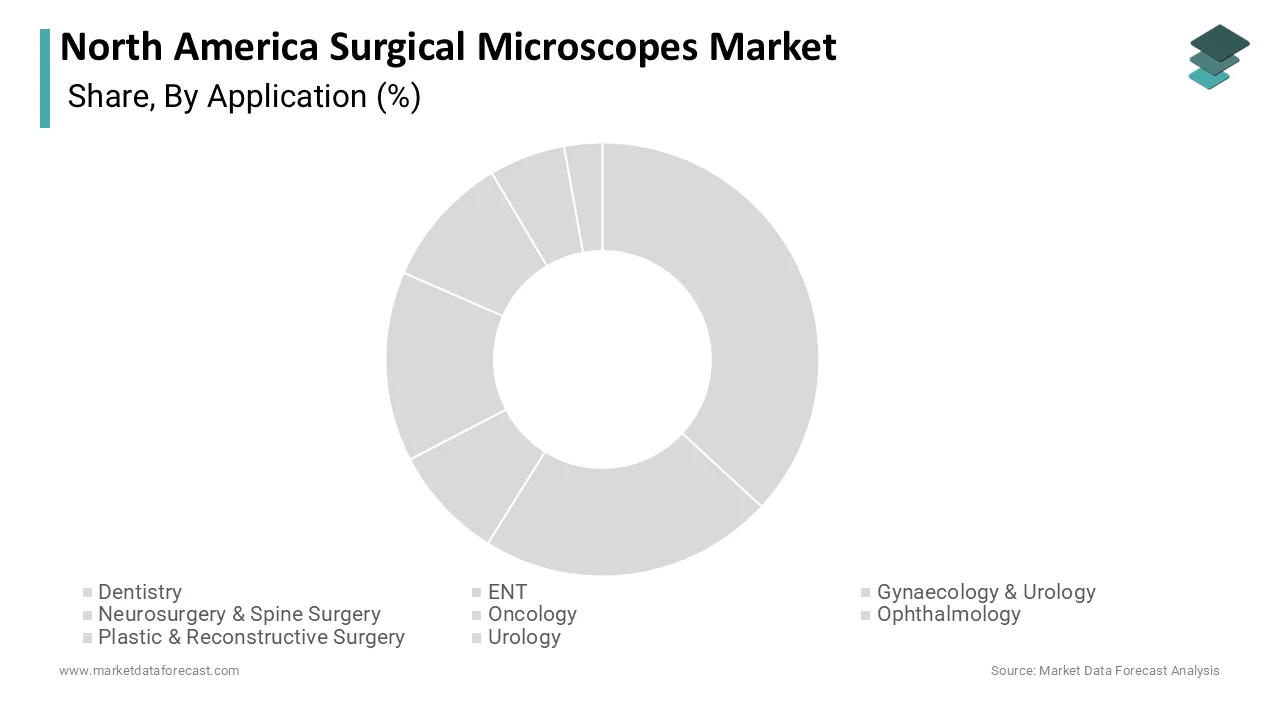
The neurosurgery segment is projected to witness the fastest CAGR of 11.2% from 2026 to 2034, with the increasing incidence of brain tumors, spinal disorders, and vascular abnormalities that require intricate microsurgical interventions. These complex procedures demandhigh-resolutionn visualization, fluorescence guidance,e and ergonomic stability to preserve healthy neural tissue. The aging population is more susceptible to neurological conditions, driving demand for surgical solutions. Government funding for neuroscience research supports the development of advanced tools such as exoscopes and robotic-assisted microscopy. The complexity of neurosurgery justifies the investment in premium microscopy systems that offer superior clarity and depth perception. Manufacturers are developing lightweight head-mounted displays and 3D visualization systems that reduce surgeon fatigue and improve precision. The integration of augmented reality overlays provides real-time anatomical guidance, enhancing surgical confidence.
By End User Insights
The hospitals segment held a significant share of the North America surgical microscopes market in 2025 due to their role as primary centers for complex and high-volume surgical procedures. These institutions possess the financial resources, infrastructure,e and specialized staff required to operate and maintain advanced microscopy systems. According to the American Hospital Association, there are over 5000 community hospitals in the United States performing millions of surgeries annually across various specialties, es including neurosurgery, ophthalmology, and ENT. Data from the Canadian Institute for Health Information shows that hospitals account for the majority of inpatient surgical volumes, driving consistent demand for high-end surgical microscopes. Teaching hospitals and academic medical centers are particularly significant buyers as they require state-of-the-art equipment for training residents and conducting research. The concentration of specialized surgeons in hospital settings creates a centralized demand for premium visualization tools. Reimbursement policies for complex surgeries performed in hospitals are well established, supporting capital expenditure on expensive equipment. Hospitals also benefit from economies of scale when purchasing multiple units for different departments.
The outpatient facilities segment is likely to grow at the fastest CAGR of 9.8% from 2026 to 2034 owing to the shifting trend towards ambulatory surgical centers and specialty clinics that offer cost-effective and convenient surgical care. According to the Ambulatory Surgery Center Association, over 70% of all surgical procedures in the United States are now performed in outpatient settings, reflecting a major shift in healthcare delivery. Specialty clinics focusing on ophthalmology, ENT, and plastic surgery are expanding rapidly,dly requiring compact and efficient surgical microscopes. These facilities prioritize equipment that is easy to use, requires minimal maintenance, and offers quick setup times. Manufacturers are responding by developing portable and modular microscope systems tailored for space-constrained environments. The rise of cosmetic and refractive surgeries in outpatient clinics further drives demand for high-resolution visualization tools.
By Price Range Insights
The Mid-Range segment was the largest, accounting for 53.4% of the North America surgical microscopes market share in 2025 due to its optimal balance of performance features and affordability. These microscopes offer sufficient magnification, illumination, and ergonomic features for most routine surgical procedures without the high cost of premium models. Data from hospital budget reviews indicates that mid-range models are preferred for general surgery, ENT, T and gynecology, where extreme precision is not always required. These devices typically feature manual zoom focus and basic LED illumination, which are reliable and easy to maintain. The lower initial cost makes them accessible to community hospitals, ls ambulatory surgical centers, and private practices. Manufacturers offer a wide variety of configurations in this segment,ment allowing buyers to customize features based on specific needs. The total cost of ownership for mid-range microscopes is lower due to simpler mechanics and fewer electronic components. This segment benefits from steady replacement demand as older units reach the end of their lifecycle.
The Premium-Range segment is anticipated to grow at the fastest CAGR of 10.5% from 2026 to 2034, with increasing demand for advanced features such as digital integration, fluorescence imaging, and robotic assistance in complex surgical procedures. The premium microscopes are increasingly adopted in academic medical centers and specialized surgical hubs, where cutting-edge technology is prioritized. Data from manufacturer sales reports indicates a surge in orders for high-end models equipped with 3D visualization and augmented reality capabilities. These devices offer superior image quality, ergonomic benefits,s and data connectivity that enhance surgical precision and outcomes. The rising complexity of neurosurgical and ophthalmic procedures justifies the higher investment in premium equipment. Teaching hospitals use premium microscopes for training and research, leveraging their recording and streaming capabilities. The trend towards value-based care encourages the adoption of technologies that reduce complications and improve efficiency. Manufacturers are focusing innovation efforts on the premium segment, introducing new features regularly. This continuous innovation drives upgrade cycles and attracts early adopters.
COUNTRY LEVEL ANALYSIS
United States Surgical Microscopes Market Analysis
The United States was the largest contributor in the North America surgical microscopes market by occupying an 85.4% share in 2025, with its advanced healthcare infrastructure, high healthcare expenditure, and large volume of surgical procedures. The country is home to the world’s largest number of hospitals and ambulatory surgical centers, creating substantial demand for visualization tools. According to the Centers for Medicare and Medicaid Services, national health expenditure in the United States exceeded 4.3 trillion dollars in 2021, supporting the procurement of advanced medical equipment. According to the American Hospital Association, over 5000 hospitals and 5000 ambulatory surgical centers operate in the U, S performing millions of surgeries annually. The presence of leading manufacturers and distributors fosters a competitive market with rapid adoption of new technologies. Favorable reimbursement policies for complex surgical procedures encourage hospitals to invest in premium microscopy systems. The high prevalence of chronic diseases such as cancer, er cardiovascular disorders, and eye conditions drives surgical volume. Academic medical centers serve as hubs for research and development, accelerating the introduction of innovative products. The competitive healthcare landscape prompts facilities to differentiate themselves through technological superiority. Regulatory clarity from the Food and Drug Administration facilitates timely product launches.
Canada Surgical Microscopes Market Analysis
Canada was next, holding 14.2% of the North America surgical microscopes market share in 2025, with public healthcare investment and an aging population. The country’s universal healthcare system ensures broad access to surgical services, including microsurgery. Provincial governments allocate funds for hospital modernization and equipment upgrades, ensuring that facilities remain equipped with current technology. The adoption of digital and robotic-assisted microscopy is gaining traction in major urban centers like Toronto and Vancouver. Local distributors partner with international manufacturers to provide service and support, ensuring equipment reliability. Regulatory approval by Health Canada ensures safety and quality standards are met. The focus on equitable access drives investment in regional healthcare facilities, thereby reducing disparities. Research institutions collaborate with industry to develop innovative solutions tailored to local needs. The stable political and economic environment supports long-term planning and investment.
COMPETITIVE LANDSCAPE
The competitive landscape of the North American surgical microscopes market is characterized by intense rivalry among established global leaders and specialized niche manufacturers. Leading players compete primarily on technological innovation, image quality, and ergonomic design rather than price alone,ne especially in the premium segment. Sustainability and ease of maintenance are becoming key battlegrounds, with companies investing in energy-efficient LEDs and modular designs to reduce operational costs. Price competition remains moderate in the hospital sector but is more pronounced in ambulatory surgical centers, where budget constraints are tighter. Strategic alliances with healthcare systems and group purchasing organizations help secure long-term contracts and streamline procurement. Regulatory compliance with FDA standards creates barriers to entry for new competitors but ensures high quality and safety for patients.
KEY MARKET PLAYERS
Some of the companies that are playing a dominating role in the North America Surgical Microscopes Market include:
- Accu-Scope, Inc.
- Novartis AG
- Alltion (Wuzhou) Co., Ltd.
- Haag-Streit U.S.
- Danaher Corporation
- Alcon Laboratories, Inc.
- Olympus Corporation
- ARRI AG
- Leica Microsystems GmbH
- Carl Zeiss AG
- Topcon Medical Systems, Inc.
- Global Surgical Corporation
- Takagi Seiko Co., Ltd.
TOP LEADING PLAYERS IN THE MARKET
- Leica Microsystems Inc. maintains a formidable presence in theNorth Americana surgical microscopes market through its extensive portfolio of high-precision optical instruments for neurosurgery, ophthalmology,gy and ENT applications. The company is renowned for its ergonomic designs and advanced illumination technologies that enhance surgeon comfort and visualization accuracy. Leica recently launched new digital microscopy platforms integrating artificial intelligence to assist in tissue identification and surgical navigation. The company has strengthened its position by expanding its service network across the United States and Canada, ensuring rapid support and maintenance for healthcare facilities. Strategic partnerships with leading academic medical centers facilitate clinical research and product validation. Leica's continuous investment in research and development focuses on miniaturization and enhanced imaging capabilities. These initiatives reinforce its reputation for quality and innovation, while addressing the evolving needs of modern surgical practices in the region.
- Carl Zeiss Meditec AG contributes significantly to the North American surgical microscopes market by offering cutting-edge visualization solutions tailored for complex surgical procedures. The company specializes in ophthalmic and neurosurgical microscopes featuring integrated optical coherence tomography and fluorescence imaging capabilities. Zeiss recently introduced augmented reality overlays in its microscope systems, providing surgeons with real-time anatomical data during operations. The company has expanded its manufacturing and distribution capabilities in the United States to reduce lead times and improve customer responsiveness. Collaborations with major hospital networks enable the integration of Zeiss devices into digital health ecosystems. Zeiss's commitment to sustainability is evident in its energy-efficient designs and recyclable materials.
- Takagi Seiko Co Ltd plays a pivotal role in the North American surgical microscopes market, particularly in the ophthalmology segment with its high-quality slit lamps and surgical microscopes. The company leverages its expertise in precision optics to deliver durable and reliable instruments used in cataract and refractive surgeries. Takagi recently enhanced its product line with LED illumination systems that offer superior brightness and longevity compared to traditional halogen lights. The company has strengthened its market position by partnering with local distributors to expand its reach into rural and community healthcare settings. Focus on user-friendly interfaces and ergonomic designs appeals to surgeons seeking efficiency and comfort. Takagi's dedication to quality control ensures consistent performance and patient safety.
TOP STRATEGIES USED BY KEY MARKET PARTICIPANTS
Key players in the North America surgical microscopes market employ several strategic approaches to maintain competitiveness and drive growth. Product innovation remains central, with companies developing digital augmented reality and AI-integrated microscopes to enhance surgical precision and workflow efficiency. Strategic partnerships with hospitals, academic centers, and technology firms help expand reach and facilitate clinical validation of new technologies. Companies focus on localization by establishing service networks and distribution hubs in key regions to ensure rapid support and reduce downtime. Educational initiatives and surgeon training programs are prioritized to increase awareness and proper usage of advanced features. Digital health integration through cloud connectivity enables remote proctoring and data analytics, adding value for healthcare providers. Compliance with stringent regulatory standards ensures market access and builds trust among clinicians.
NORTH AMERICA SURGICAL MICROSCOPES MARKET NEWS
In June 2024, Carl Zeiss Meditec AG introduced augmented reality overlays in its microscope systems to provide real-time anatomical data and strengthen the North America Surgical Microscopes Market.
MARKET SEGMENTATION
This research report segmented and sub-segmented the North America Surgical Microscopes Market into the following categories.s
By Application
- Dentistry
- ENT
- Gynaecology & Urology
- Neurosurgery & Spine Surgery
- Oncology
- Ophthalmology
- Plastic & Reconstructive Surgery
- Urology
By End-User
- Hospitals
- Outpatient Facilities
By Price Range
- Low-range
- Mid-range
- Premium-range
By Country
- The United States
- Canada
- Rest of North America