North America Wine Market Research Report – Segmented By Taste (Dry, Medium, And Sweet Wine), Style (Still Wine, Sparkling Wine, Dessert Wine, And Fortified Wine), Color (Red Wine, White Wine And Rose Wine), And Country (Us, Canada And Rest Of North America) - Industry Analysis On Size, Share, Trends & Growth Forecast (2026 To 2034)
Market Size, 2025
$120.30 BnMarket Estimate, 2026
$127 BnMarket Forecast, 2034
$195.94 BnCAGR, 2026–2034
5.57%The size of the North American wine market was calculated to be USD 120.30 billion in 2025 and is anticipated to be worth USD 195.94 billion by 2034, from USD 127 billion in 2026, growing at a CAGR of 5.57% during the forecast period.
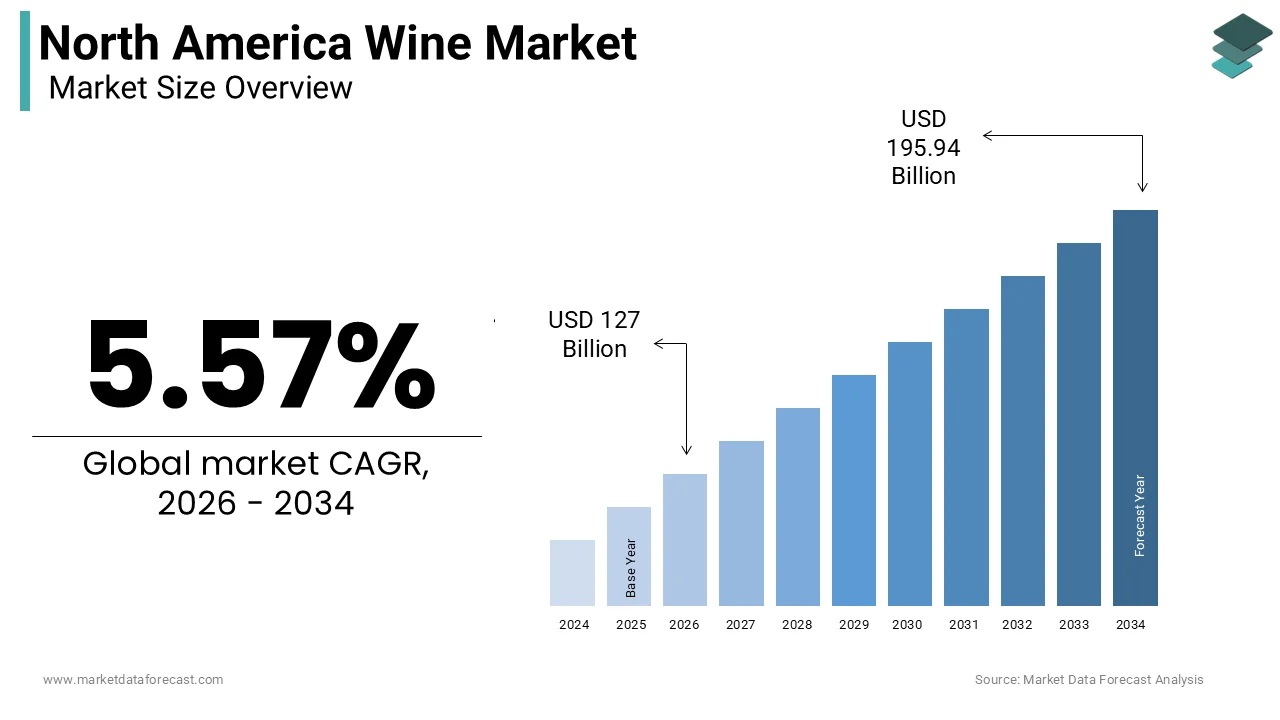
The market is showcasing evident potential in the mentioned forecasting period. The market continues to gain momentum with the rapid development in the industry. Wine comes under the category of affordable luxury items, resulting in many Wine-producing companies launching more types of wines in the market. The North American wine market is majorly driven by the recent change in lifestyles, increasing consumption of liquor, growing disposable income, and rising affordability of Wine. However, some of the restraints hamper the growth of the industry, like heavy taxes, strict regulations by the governments, and health hazards associated with Wine consumption.
U.S. is a major producer and consumer of wine and has the highest per capita wine consumption.
Major key players in the North America Wine Market are Caviro, Concha y Toro, Constellation Brands, Diageo, E & J Gallo, Grupo Penaflor, and Johnnie Walker.
Frequently Asked Questions
The growth of the wine market in North America is driven by several factors, including rising consumer preference for premium and craft wines, growing awareness of moderate wine consumption, and the expansion of e-commerce platforms. Additionally, wine tourism and changing lifestyle patterns have significantly contributed to increased consumption.
The major types of wine consumed in North America include red wine, white wine, rosé wine, and sparkling wine. Among these, red wine varieties such as Cabernet Sauvignon and Merlot remain highly popular, while white wines like Chardonnay and Sauvignon Blanc also hold a significant share.
Several trends are shaping the market, including the growing demand for organic and biodynamic wines, increasing popularity of low-alcohol and non-alcoholic options, and the emergence of innovative packaging formats such as canned wines. Sustainability and environmentally friendly production practices are also gaining importance among consumers.
E-commerce has played a transformative role in wine sales across North America by providing consumers with convenient access to a wide range of products. Online platforms, subscription services, and direct-to-consumer shipping models have enabled wineries to reach a broader audience and enhance customer engagement.
The North America wine market faces several challenges, including strict regulations and taxation policies related to alcohol sales, increasing competition from other alcoholic beverages such as beer and spirits, and climate change impacts affecting grape production and supply chains.
Key players in the North America wine market include major companies such as E. & J. Gallo Winery, Constellation Brands, The Wine Group, and Treasury Wine Estates, all of which play a significant role in shaping the competitive landscape through product innovation and extensive distribution networks.
Sustainability is becoming increasingly important in the North America wine market as producers adopt eco-friendly practices such as organic farming, water conservation, and sustainable packaging. Consumers are showing a growing preference for brands that demonstrate environmental responsibility.
The future outlook for the North America wine market remains positive, with steady growth expected over the coming years. This growth will likely be driven by continued premiumization, innovation in product offerings, and the expansion of younger consumer demographics exploring wine consumption.
Retail stores, supermarkets, restaurants, and online platforms are key distribution channels driving wine sales.
Imports contribute significantly by offering diverse wine varieties and meeting consumer demand for international brands.
Related Reports
Access the study in MULTIPLE FORMATS
Purchase options starting from
$ 2000
Didn’t find what you’re looking for?
TALK TO OUR ANALYST TEAM
Need something within your budget?
NO WORRIES! WE GOT YOU COVERED!
Call us on: +1 888 702 9696 (U.S Toll Free)
Write to us: sales@marketdataforecast.com
Reports By Region