- Product Description Description
- Table of Contents TOC
- List of Table & Figure LOT
- Get Free Sample PDF Sample PDF
Market Size, 2025
$2.15 BnMarket Estimate, 2026
$2.37 BnMarket Forecast, 2034
$5.15 BnCAGR, 2026–2034
10.2%Global Nurse Call Systems Market Report Summary
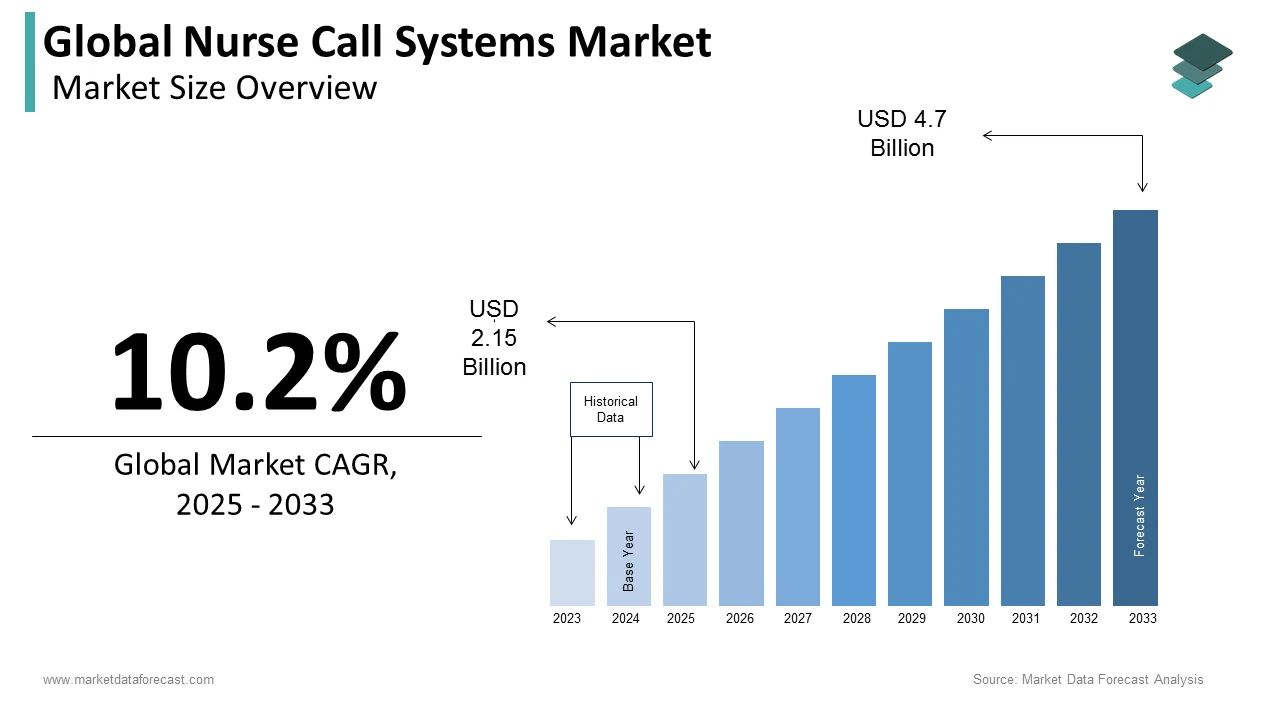
The global nurse call systems market was valued at USD 2.15 billion in 2025 and is projected to grow from USD 2.37 billion in 2026 to USD 5.15 billion by 2034, registering a CAGR of 10.2% from 2026 to 2034. Market growth is driven by increasing demand for advanced patient communication systems, rising healthcare infrastructure investments, and growing emphasis on patient safety and workflow efficiency in hospitals and long-term care facilities. Nurse call systems play a critical role in enabling rapid communication between patients and caregivers, improving emergency response times, and enhancing healthcare operational efficiency. The increasing adoption of smart healthcare technologies, digital hospital solutions, and integrated communication platforms is further supporting global market expansion.
Key Market Trends
- Rising adoption of smart patient communication and alert systems.
- Increasing focus on patient safety and healthcare workflow optimization.
- Growing integration of IoT-enabled and wireless healthcare communication technologies.
- Expansion of digital healthcare infrastructure and smart hospitals.
- Increasing demand for integrated alarm management and real-time communication systems.
Segmental Insights
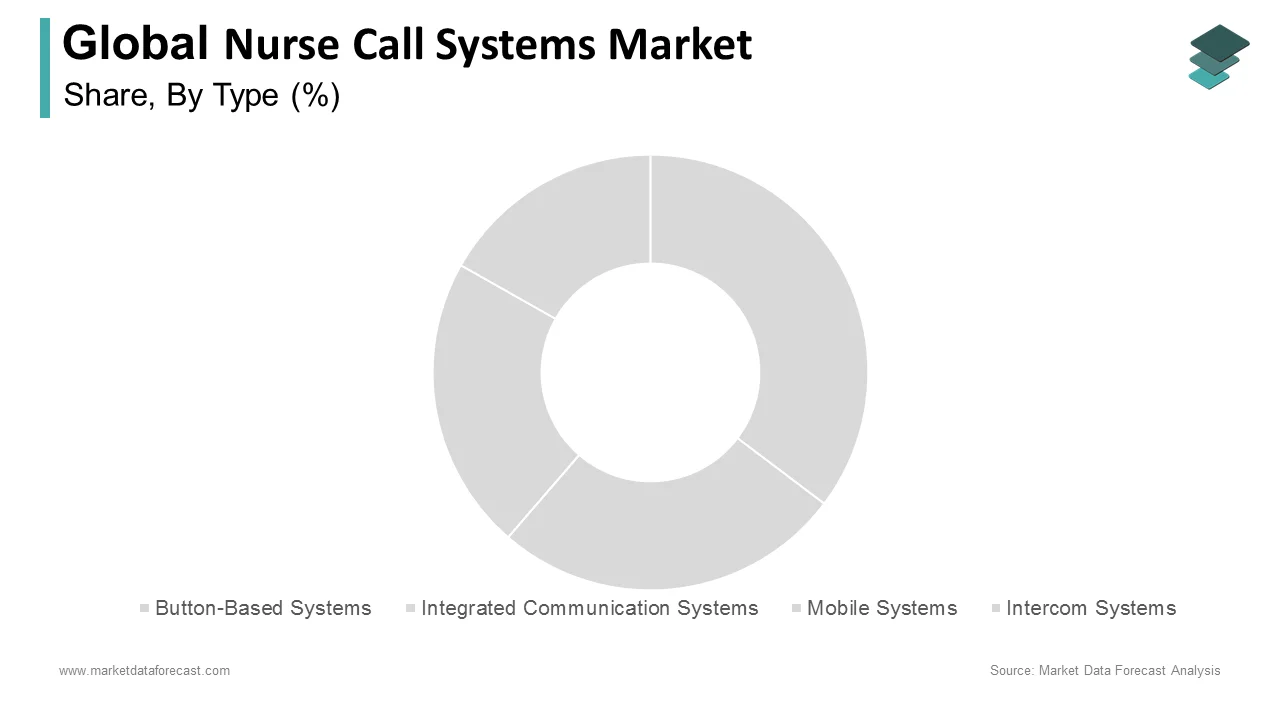
- Based on type, the button-based systems segment dominated the global nurse call systems market in 2025 by accounting for 41.6% market share, driven by ease of use, cost-effectiveness, and widespread deployment across healthcare facilities.
- Based on technology, the wired technology segment led the market by capturing 55.1% share in 2025, supported by strong reliability, secure connectivity, and long-standing implementation in hospital infrastructures.
- Based on application, the alarms and communications segment held the majority share of 40.1% in 2025, driven by increasing demand for rapid emergency response systems and efficient caregiver communication solutions.
- Based on end user, the hospitals segment dominated the market by accounting for 52.7% share in 2025, supported by growing patient volumes, rising investments in healthcare infrastructure, and increasing adoption of advanced patient monitoring systems.
Regional Insights
The global nurse call systems market is witnessing strong growth across major regions, supported by healthcare digitalization, increasing patient safety initiatives, and rising hospital modernization efforts.
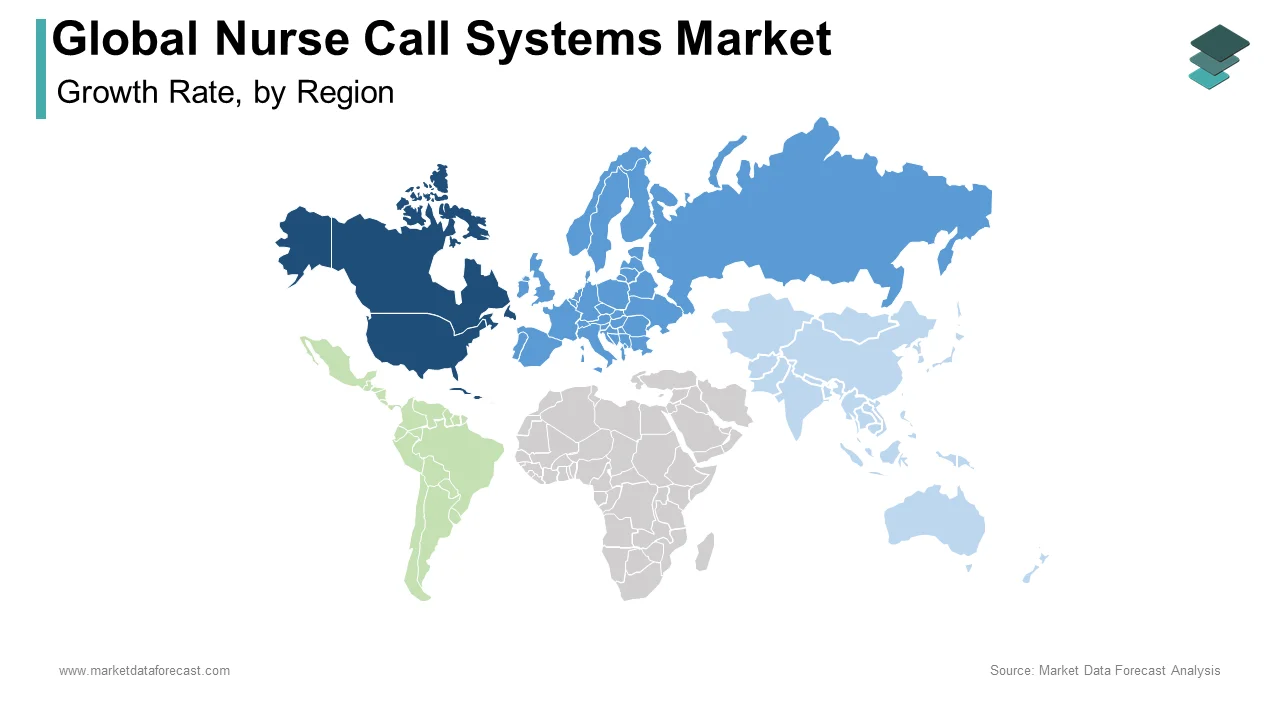
- North America dominated the global market in 2025 with 41.4% share, driven by advanced healthcare infrastructure, strong adoption of healthcare communication technologies, and growing investments in smart hospital systems.
- Europe remained the second-largest regional market with 26.5% share in 2025, supported by expanding healthcare modernization programs and increasing demand for integrated patient care systems.
- Asia-Pacific is projected to register rapid growth during the forecast period, driven by expanding healthcare infrastructure, increasing medical tourism, and rising adoption of digital healthcare technologies across emerging economies.
Competitive Landscape
The global nurse call systems market is characterized by strong competition among healthcare technology providers and communication system manufacturers focusing on integrated healthcare communication solutions, patient safety technologies, and smart hospital infrastructure. Market participants are emphasizing development of wireless communication systems, cloud-based monitoring platforms, and real-time caregiver alert solutions to strengthen market positioning. Strategic collaborations, acquisitions, and investments in healthcare digitalization are shaping competitive dynamics across the market.
Prominent companies operating in the global nurse call systems market include Rauland-Borg Corporation, Hill-Rom Holdings, Inc., Ascom, Johnson Controls International Plc, Ackermann (By Honeywell), Siemens AG, Jeron Electronic Systems, Inc., Azure Healthcare Limited, Schrack Seconet AG, Intercall Systems, Inc., Honeywell International Inc., Tektone Sound & Signal Mfg., Inc., Cornell Communications, Stanley Healthcare, Courtney Throne, and Tunstall Group.
Global Nurse Call Systems Market Size
The global nurse call systems market was worth US$ 2.15 billion in 2025 and is anticipated to reach a valuation of US$ 5.15 billion by 2034 from US$ 2.37 billion in 2026, and it is predicted to register a CAGR of 10.2% during the forecast period 2026 to 2034.
Nurse Call Systems are critical communication networks in healthcare facilities that allow patients to instantly alert caregivers for assistance. These systems range from basic audio intercoms to advanced wireless solutions integrated with mobile devices and electronic health records, ensuring rapid response to patient needs. The primary objective is to enhance patient safety, improve staff efficiency, and reduce adverse events such as falls or medication errors. The World Health Organization (WHO) reports that approximately 1 in every 10 patients is harmed while receiving hospital care (primarily in high-income countries). While communication breakdowns are a major cause of these incidents, the WHO lists medication errors, unsafe surgical procedures, and infections as the most common sources of harm. As per the Centers for Disease Control and Prevention, falls are the leading cause of injury among older adults,, with approximately 3 million older people treated in emergency departments for fall injuries each year in the United States alone. This statistic underscores the vital role of timely nurse assistance enabled by efficient call systems. The evolution of these systems now includes real-time location services and staff duress alarms, which contribute to a safer working environment for healthcare professionals. With the increasing complexity of hospital operations and the rising acuity of patient conditions,, the demand for sophisticated nurse call solutions has intensified. Healthcare institutions are prioritizing investments in technology that supports workflow optimization and reduce nurse burnout. The integration of these systems with broader hospital IT ecosystems allows for data-driven insights into response times and patient care patterns. This technological shift reflects a broader commitment to quality care delivery and operational excellence in modern healthcare environments.
MARKET DRIVERS
Rising Global Aging Population and Increased Prevalence of Chronic Diseases
The demographic shift towards an aging population globally is a key driver for the adoption and growth of advanced systems within the nurse call systems market. As per the United Nations Department of Economic and Social Affairs, the number of persons aged 65 years or older is projected to double from 727 million in 2020 to 1.5 billion in 2050. This significant increase in the elderly demographic correlates with a higher prevalence of chronic conditions such as diabetes,, cardiovascular diseases, and mobility impairments, which require frequent monitoring and immediate medical attention. Older patients are at a greater risk of falls and other adverse events necessitating reliable and rapid communication with nursing staff. The World Health Organization reports that noncommunicable diseases (like heart disease and cancer) kill 41 to 43 million people each year, leading to long hospital stays and intensive medical care. The increased length of stay and complexity of care for these patients drive the need for efficient nurse call systems that can prioritize alerts and ensure timely interventions. Hospitals and long-term care facilities are increasingly investing in wireless and mobile nurse call solutions to manage the higher patient-to-nurse ratios effectively. These systems enable staff to respond quickly to emergencies, reducing the likelihood of complications and improving overall patient outcomes. The growing demand for assisted living facilities and home healthcare services further expands the market for portable and user-friendly nurse call devices. Healthcare providers are striving to accommodate the needs of an aging population. To achieve this, implementing a robust communication infrastructure is essential for maintaining high standards of care and operational efficiency.
Stringent Regulatory Standards and Focus on Patient Safety Initiatives
Regulatory mandates and heightened focus on patient safety initiatives significantly propel the adoption of these systems in healthcare facilities worldwide, which accelerates the expansion of the nurse call systems market. Governments and healthcare accreditation bodies have established strict guidelines requiring hospitals to maintain high standards of patient care and safety. According to the Joint Commission International, patient identification and effective communication among caregivers are critical components of their international patient safety goals. These standards mandate that healthcare providers implement systems that ensure timely response to patient needs and minimize the risk of errors. As per the Agency for Healthcare Research and Quality, hospital-acquired conditions affect millions of patients annually, resulting in significant financial burdens and compromised health outcomes. To mitigate these risks, healthcare institutions are increasingly adopting advanced nurse call systems that integrate with electronic health records and provide real-time data on patient status. These systems help in tracking response times, identifying bottlenecks in care delivery, and ensuring compliance with regulatory requirements. The emphasis on value-based care models further incentivizes hospitals to invest in technologies that improve patient satisfaction and reduce readmission rates. Nurse call systems play a pivotal role in enhancing the patient experience by providing a sense of security and ensuring that help is readily available. Additionally, the implementation of staff duress buttons within these systems addresses workplace violence concerns, which have risen in healthcare settings. Healthcare providers are driven to upgrade their communication infrastructure. This ensures adherence to regulatory standards and prioritizes patient safety, fostering a safer and more efficient care environment.
MARKET RESTRAINTS
High Installation and Maintenance Costs Associated with Advanced Systems
The substantial financial investment required for the installation and maintenance of advanced nurse call systems is a major constraint on the global market. This is particularly true for smaller healthcare facilities and for those in developing regions. Upgrading from legacy analog systems to modern digital or wireless solutions involves considerable upfront costs, including hardware, software infrastructure upgrades, and training. The American Hospital Association notes that hospital spending has risen sharply, with a major portion of those budgets going toward digital technology upgrades. For many hospitals, especially those operating on tight margins, the cost of implementing a comprehensive nurse call system can be prohibitive. As per the World Bank, healthcare spending in low and middle-income countries remains limited, with many facilities lacking the resources to invest in sophisticated communication technologies. The ongoing maintenance costs, including software updates, technical support, and replacement of components, further add to the financial burden. Additionally, the integration of nurse call systems with existing hospital IT infrastructure, such as electronic health records and building management systems, requires specialized expertise and additional investment. Smaller clinics and rural hospitals often struggle to justify these expenses given their lower patient volumes and limited revenue streams. The economic uncertainty and budget constraints faced by healthcare providers globally further exacerbate this challenge. Consequently, many facilities delay upgrades or opt for basic systems that may not offer the full range of benefits provided by advanced solutions. This financial barrier limits the widespread adoption of state-of-the-art nurse call technologies, hindering the potential for improved patient care and operational efficiency in resource-constrained settings.
Interoperability Issues with Existing Healthcare IT Infrastructure
Interoperability challenges between new systems and existing healthcare IT infrastructure further hinder the expansion of the nurse call systems market. Healthcare facilities often operate with a diverse array of legacy systems, including electronic health records, patient monitoring devices, and building management systems that may not seamlessly integrate with modern nurse call solutions. According to the Healthcare Information and Management Systems Society, interoperability remains a top challenge for healthcare organizations, with many struggling to achieve seamless data exchange between different platforms. The lack of standardized communication protocols and proprietary interfaces used by various vendors complicates the integration process, leading to fragmented workflows and data silos. As per the Office of the National Coordinator for Health Information Technology, inconsistent data formats and incompatible systems hinder the ability of healthcare providers to access comprehensive patient information in real time. This fragmentation can result in delayed responses to patient calls, increased administrative burden, and potential errors in care delivery. Healthcare IT teams often face significant technical hurdles in configuring these systems to work together, requiring custom development and extensive testing. The complexity of integration projects can lead to prolonged implementation timelines and increased costs, discouraging hospitals from upgrading their nurse call systems. Furthermore, the rapid pace of technological advancement means that systems may become obsolete quickly, necessitating frequent upgrades and further complicating interoperability. The seamless integration of nurse call systems into the broader healthcare ecosystem is currently impeded by interoperability issues. This barrier will persist until industry-wide standards for connectivity and data exchange are fully adopted.
MARKET OPPORTUNITIES
Integration of Internet of Things and Smart Hospital Technologies
The integration of Internet of Things (IoT) capabilities and smart hospital technologies offers a substantial opportunity for growth in the nurse call systems market. Modern nurse call systems are evolving into comprehensive communication hubs that connect with various IoT devices such as wearable patient monitors, smart beds, and infusion pumps. According to the Global System for Mobile Communications Association, the number of IoT connections in healthcare is expected to grow significantly, enabling real-time data collection and analysis. This connectivity allows nurse call systems to automatically trigger alerts based on physiological changes detected by wearable devices or movement sensors, reducing the reliance on manual patient activation. As per the International Data Corporation, spending on IoT solutions in healthcare is increasing as providers seek to improve operational efficiency and patient outcomes. By leveraging IoT data, nurse call systems can prioritize alerts based on patient acuity, ensuring that critical cases receive immediate attention. This proactive approach enhances patient safety and reduces the workload on nursing staff by automating routine monitoring tasks. Furthermore, the integration with smart hospital infrastructure enables predictive analytics, helping administrators optimize staff allocation and resource management. The ability to visualize patient status and staff location in real time through dashboards improves decision-making and response times. As hospitals increasingly adopt smart technologies to create connected care environments, the demand for IoT-enabled nurse call systems is poised to rise. This technological convergence offers a pathway to more efficient, personalized, and data-driven healthcare delivery, creating new revenue streams for manufacturers and providers.
Expansion of Home Healthcare and Remote Patient Monitoring Solutions
The rapid expansion of home healthcare and remote patient monitoring services unlocks potential for the nurse call systems market. As healthcare shifts towards decentralized models, there is a growing need for reliable communication tools that extend beyond traditional hospital settings. According to the Centers for Medicare and Medicaid Services, home health care spending in the United States is projected to increase substantially, driven by the preference for aging in place and cost containment strategies. Nurse call systems adapted for home use allow patients to communicate directly with caregivers or family members in case of emergencies, providing peace of mind and enhancing safety. As per the World Health Organization, home-based care is becoming an essential component of universal health coverage, particularly for chronic disease management and post-acute care. Manufacturers are developing portable and wireless nurse call devices that are easy to install and use in residential settings. These systems can integrate with telehealth platforms, enabling remote consultations and continuous monitoring of vital signs. The aging population and the rising prevalence of chronic conditions further fuel the demand for home healthcare solutions. By expanding their product portfolios to include home care-oriented nurse call systems, companies can tap into a rapidly growing segment. Partnerships with home health agencies and insurance providers can facilitate wider adoption and reimbursement for these technologies. This shift towards home-based care not only improves patient convenience but also reduces hospital readmissions, creating a win-win scenario for patients, providers, and payers.
MARKET CHALLENGES
Cybersecurity Risks and Data Privacy Concerns
Cybersecurity risks and data privacy concerns are a major challenge for the nurse call systems market. This is largely because these systems are becoming increasingly connected and digitized. Modern nurse call systems transmit sensitive patient data and integrate with hospital networks, making them potential targets for cyberattacks. According to the IBM Security Cost of a Data Breach Report, the healthcare industry continues to have the highest average cost of a data breach, exceeding 10 million dollars per incident. A successful attack on a nurse call system could disrupt critical communications, compromise patient safety, and expose confidential health information. As per the Health Insurance Portability and Accountability Act regulations in the United States, healthcare providers must ensure the confidentiality, integrity, and availability of protected health information. Compliance with these stringent regulations requires robust security measures, including encryption, access controls, and regular security audits. However, many healthcare facilities lack the resources and expertise to implement comprehensive cybersecurity protocols for all connected devices. The complexity of integrating nurse call systems with other IT infrastructure increases the attack surface and vulnerability to threats. Ransomware attacks on hospitals have become more frequent, causing operational disruptions and endangering patient lives. Manufacturers must prioritize security by design, incorporating advanced encryption and authentication mechanisms into their products. Additionally, healthcare providers need to invest in staff training and incident response plans to mitigate risks. The ongoing threat of cyberattacks and the high cost of compliance pose significant challenges to the adoption and operation of connected nurse call systems.
Shortage of Skilled Technical Staff for Implementation and Support
The shortage of skilled technical staff capable of implementing, maintaining, and supporting advanced systems is also a significant hurdle for the nurse call systems market. As these systems become more complex with features like IoT integration and data analytics, the demand for specialized IT and biomedical engineering expertise increases. According to the Bureau of Labor Statistics, the healthcare sector faces a persistent shortage of qualified technical personnel, with projections indicating a continued gap in the workforce. Hospitals often struggle to find staff with the necessary skills to configure, integrate, and troubleshoot sophisticated nurse call systems. As per the American Hospital Association, workforce shortages are a top concern for healthcare leaders, impacting the ability to adopt new technologies effectively. The lack of trained personnel can lead to prolonged implementation timelines, improper system configuration, and inadequate maintenance, resulting in suboptimal performance and increased downtime. Additionally, the turnover rate among healthcare IT staff is high, further exacerbating the shortage and increasing recruitment and training costs. Smaller facilities and those in rural areas are particularly affected as they may not have dedicated IT departments or access to specialized support services. Manufacturers and vendors face challenges in providing timely technical support and training to customers due to the limited pool of qualified professionals. This skills gap hinders the effective utilization of advanced nurse call features and limits the potential benefits of these systems. Addressing this challenge requires investment in education and training programs as well as the development of user-friendly systems that require less technical expertise to manage.
REPORT COVERAGE
| REPORT METRIC | DETAILS |
| Market Size Available | 2025 to 2034 |
| Base Year | 2025 |
| Forecast Period | 2026 to 2034 |
| Segments Covered | By Type, Technology, Application, End-User, and Region. |
| Various Analyses Covered | Global, Regional and Country-Level Analysis, Segment-Level Analysis, Drivers, Restraints, Opportunities, Challenges; PESTLE Analysis; Porter’s Five Forces Analysis, Competitive Landscape, Analyst Overview of Investment Opportunities |
| Regions Covered | North America, Europe, Asia Pacific, Latin America, the Middle East, and Africa |
| Market Leaders Profiled | Rauland-Borg Corporation, Hill-Rom Holdings, Inc., Ascom, Johnson Controls International Plc, Ackermann (By Honeywell), Siemens AG, Jeron Electronic Systems, Inc., Azure Healthcare Limited, Schrack Seconet AG, Intercall Systems, Inc., Tektone Sound & Signal Mfg., Inc., Cornell Communications, Stanley Healthcare, Courtney Throne and Tunstall Group. |
SEGMENTAL ANALYSIS
By Type Insights
The button-based systems segment maintained dominance in the nurse call systems market and accounted for a 41.6% share in 2025. This dominance of the segment was driven by its reliability, simplicity, and widespread installation in existing healthcare infrastructure. These systems are the standard in most hospitals and long-term care facilities globally because they offer a direct and uninterrupted line of communication between patients and nursing staff. According to the American Hospital Association, there are 6,100 hospitals in the United States. While many facilities still use traditional nurse call buttons, hospitals are rapidly upgrading to digital and wireless communication tools. The familiarity of these systems among elderly patients who may struggle with complex digital interfaces ensures high adoption rates and consistent usage. Data from the Centers for Medicare and Medicaid Services shows that over 1.1 million residents live in U.S. nursing homes. These facilities often use simple call systems to ensure residents can easily signal for help with minimal training. The robustness of wired button systems against network failures and power outages further cements their position as the most trusted solution for critical care environments. Healthcare administrators prioritize these systems for their low maintenance costs and proven track record in reducing response times during emergencies. The extensive installed base creates a barrier to entry for newer technologies, as replacing entire infrastructures involves significant capital expenditure and operational disruption. Consequently, button-based systems remain the backbone of patient-provider communication, ensuring that every patient, regardless of technological proficiency, can access immediate assistance when needed.
The mobile systems segment is on the rise and is expected to be the fastest-growing segment in the market by witnessing a CAGR of 11.5% from 2026 to 2034 due to the increasing adoption of smartphones and tablets among healthcare professionals. This segment is expanding rapidly as hospitals seek to improve staff mobility and reduce response times by enabling nurses to receive alerts directly on their handheld devices. The integration of nurse call systems with mobile devices allows for real-time location tracking and prioritized messaging, which enhances workflow efficiency and patient safety. Studies on healthcare technology indicate that switching from overhead paging to mobile communication tools can significantly reduce communication delays and improve nurse response times. The ability to send contextual information, such as patient room number and type of request, directly to the nearest available nurse optimizes resource allocation and reduces unnecessary movement. Furthermore, the growing trend of bring your own device policies in healthcare institutions lowers the hardware costs associated with implementing mobile nurse call solutions. The younger demographic of healthcare workers who are digital natives prefer mobile interfaces over stationary consoles, driving institutional adoption. Modern healthcare facilities are increasingly choosing mobile systems to enhance agility and patient satisfaction. This transition is made possible by continuous improvements in wireless infrastructure and stronger security protocols.
By Technology Insights
The wired technology segment led the nurse call systems market and captured a 55.1% share in 2025. This leading position of the segment was attributed to its superior reliability, security, and immunity to wireless interference. Healthcare facilities, particularly those in critical care units and operating rooms, prioritize wired connections to ensure uninterrupted communication during life-threatening situations. NFPA 110 and NFPA 99 codes strictly require hospital emergency systems to have reliable backup power and fail-safe mechanisms. These performance standards apply equally to all systems, whether the facility chooses wired or wireless infrastructure. The stability of wired systems ensures that signals are transmitted instantly without latency or packet loss, which is crucial for timely medical interventions. According to cybersecurity insights from HIMSS, while wireless networks introduce specific entry points for attackers, data security depends primarily on robust encryption and "Zero Trust" protocols rather than the physical connection type alone. Many older hospital buildings were constructed with extensive cabling for nurse call systems, making retrofitting with wireless technology costly and complex. The longevity and durability of wired components mean lower replacement frequencies and reduced total cost of ownership over time. Regulatory bodies often mandate wired backups for critical communication channels, further sustaining demand for this technology. The trust placed in wired systems by clinical staff who rely on them for daily operations reinforces their dominant position. Despite the rise of wireless options, wired technology remains the gold standard for mission-critical applications where failure is not an option, ensuring its continued leadership in the market.
However, the wireless technology segment is expected to exhibit a noteworthy CAGR of 11.7% during the forecast period, owing to the flexibility, ease of installation, and compatibility with modern smart hospital initiatives. The ability to deploy wireless systems without extensive cabling makes them ideal for renovations, expansions, and temporary healthcare facilities. According to the International Telecommunication Union, global mobile cellular subscriptions have reached billions, enabling robust wireless infrastructure that supports healthcare applications. Wireless nurse call systems allow for seamless integration with Internet of Things devices such as wearable patient monitors and asset tracking tags, creating a connected ecosystem. The scalability of wireless solutions enables hospitals to easily add new nodes or expand coverage areas without significant structural changes. This adaptability is particularly attractive to outpatient clinics and home healthcare providers who require portable and flexible communication tools. The reduction in installation time and labor costs associated with wireless systems further accelerates their adoption. Additionally, wireless technology facilitates remote monitoring and telehealth services, allowing caregivers to respond to patient needs from anywhere within the facility. Healthcare providers are increasingly prioritizing agility and digital transformation. Thus, wireless nurse call systems are becoming the preferred choice for modernizing patient communication infrastructure.
By Application Insights
The alarms and communications segment held the majority share of 40.1% of the nurse call systems market in 2025. Its essential role in ensuring immediate patient safety and provider responsiveness is the factor credited to the supremacy of this segment. This segment includes emergency calls, fall detection alerts, and general assistance requests, which are fundamental to hospital operations. According to the Agency for Healthcare Research and Quality (AHRQ), patient falls and medication errors are leading safety concerns in hospitals. To address these risks, healthcare facilities are focusing on comprehensive safety protocols and systemic workflow improvements. The primary role of nurse call systems is to bridge the gap between patients in distress and nursing staff, making alarms and communications the most utilized feature. As per the Joint Commission International (JCI), improving effective communication is a core International Patient Safety Goal. This standard requires hospitals to implement structured processes to ensure critical patient data and test results are reported accurately and clearly among the care team. The high frequency of use for basic call functions ensures that this segment remains dominant across all healthcare settings, from intensive care units to general wards. Regulatory standards mandate the presence of functional alarm systems in patient rooms, further driving demand. The integration of voice communication capabilities allows for quick assessment of patient needs, reducing unnecessary visits and improving efficiency. The critical nature of these functions means that hospitals prioritize investment in robust and reliable alarm systems above other advanced features. Hence, alarms and communications remain the foundational element of the nurse call systems market, sustaining its leading position.
On the contrary, the workflow optimization segment is predicted to witness the highest CAGR of 12.2% between 2026 and 2034. This quick surge of the segment is propelled by the need to improve operational efficiency and reduce staff burnout. Modern nurse call systems are evolving into comprehensive workflow management tools that integrate with electronic health records and staff scheduling software. According to data highlighted by the American Nurses Association (ANA), nurse burnout is a critical workforce issue, with over 60% of nurses reporting high levels of chronic stress and emotional exhaustion that heavily impact the healthcare system. Workflow optimization features such as automated task assignment, priority-based alerting, and real-time staff location tracking help alleviate this burden. Insights shared by the Harvard Business Review indicate that across various industries, digitizing workflows and automating tasks can significantly increase staff productivity and boost overall job satisfaction. By directing alerts to the most appropriate and available caregiver, these systems minimize redundant movements and streamline care delivery. The ability to track response times and analyze performance metrics allows administrators to identify bottlenecks and optimize staffing levels. The growing emphasis on value-based care models incentivizes hospitals to adopt technologies that enhance efficiency and reduce operational costs. Workflow optimization tools also facilitate better coordination among multidisciplinary teams, ensuring that patient needs are met comprehensively. Healthcare facilities are striving to do more with limited resources. Consequently, the demand for workflow optimization capabilities in nurse call systems is accelerating rapidly.
By End User Insights
The hospitals segment was the largest in the nurse call systems market and occupied a 52.7% share in 2025. This prominence of the segment was supported by its large-scale operations, high patient volumes, and complex care requirements. These facilities require robust and scalable communication systems to manage diverse departments ranging from emergency rooms to surgical suites. World Health Organization (WHO) data confirms there are millions of hospital beds globally. To ensure patient safety in these environments, the WHO mandates robust systems for effective communication and rapid emergency response. The high acuity of patients in hospitals necessitates immediate response capabilities, making advanced nurse call systems essential. Reports from the American Hospital Association (AHA) indicate that hospitals consistently invest significant resources in health information technology to comply with federal regulations and improve clinical outcomes. The complexity of hospital workflows requires integrated systems that can handle multiple types of alerts and communicate with various stakeholders, including doctors, nurses, and support staff. The presence of intensive care units and operating rooms where rapid communication is critical further drives demand for high-reliability systems. Hospitals also serve as training grounds for new technologies, influencing adoption in other healthcare settings. The continuous expansion of hospital infrastructure in emerging markets contributes to the sustained dominance of this segment. The critical role of nurse call systems in preventing adverse events and enhancing patient satisfaction ensures that hospitals remain the primary end users in the market.
But the long-term care facilities segment is estimated to register the fastest CAGR of 12.5% over the forecast period. This rapid expansion of the segment is fuelled by the aging population and increasing demand for assisted living services. These facilities require specialized communication tools that cater to residents with chronic conditions and mobility issues. According to the United Nations Department of Economic and Social Affairs, the global population aged 60 years and older is expected to reach 2.1 billion by 2050, increasing the demand for long-term care. Nurse call systems in these settings often include fall detection, wanderer control, and wellness check features, which are crucial for resident safety. The shift towards person-centered care models emphasizes the need for responsive and personalized communication systems. Regulatory requirements for safety and emergency preparedness in long-term care facilities are becoming stricter, driving adoption. The integration of nurse call systems with family notification apps allows relatives to stay informed, enhancing the appeal of these facilities. The growing preference for aging in place and community-based care further expands the market for wireless and user-friendly nurse call solutions in long-term care settings.
REGIONAL ANALYSIS
North America Nurse Call Systems Market Analysis
North America was the top performer in the global nurse call systems market and accounted for a 41.4% share in 2025. This dominance of the segment was driven by advanced healthcare infrastructure and stringent regulatory standards. The region benefits from high healthcare expenditure and a strong focus on patient safety initiatives. According to the Centers for Medicare and Medicaid Services, national health spending in the United States reached 4.3 trillion dollars in 2021, driving investments in healthcare technology. The presence of major market players and early adoption of innovative technologies further solidifies its leadership. The aging baby boomer population increases demand for healthcare services in hospitals and long-term care facilities. Regulatory mandates from organizations like The Joint Commission require efficient communication systems to prevent medical errors. The high prevalence of chronic diseases necessitates continuous monitoring and rapid response capabilities. Technological advancements such as IoT integration and mobile connectivity are widely adopted in the region. The robust reimbursement framework supports the acquisition of advanced medical devices. North America’s mature market continues to drive innovation, setting trends for other regions. The focus on value-based care encourages hospitals to invest in technologies that improve efficiency and patient outcomes. Consequently, North America remains the largest and most sophisticated market for nurse call systems globally.
Europe Nurse Call Systems Market Analysis
Europe was positioned second in the nurse call systems market and captured a 26.5% share in 2025. This position was supported by universal healthcare coverage and government initiatives to modernize medical infrastructure. The region is characterized by a high density of hospitals and long-term care facilities, particularly in countries like Germany, France, and the United Kingdom. According to the European Commission, healthcare spending in the European Union accounts for approximately 10 percent of gross domestic product, supporting steady investments in medical technology. The aging population in Europe increases the demand for elderly care services and associated communication systems. Stringent data protection regulations, such as the General Data Protection Regulation, influence the design and implementation of secure communication systems. Governments are promoting digital health strategies to improve care coordination and reduce hospital readmissions. The adoption of wireless and mobile nurse call systems is growing as facilities seek to enhance staff efficiency. Collaborative efforts among European nations to standardize healthcare technologies facilitate market growth. The presence of established medical device manufacturers in the region supports local innovation and supply. Europe’s commitment to high-quality patient care ensures sustained demand for reliable and advanced nurse call solutions.
Asia-Pacific Nurse Call Systems Market Analysis
Asia-Pacific is a rapidly growing region in the nurse call systems market due to expanding healthcare infrastructure and rising medical tourism. Countries such as China, India, and Japan are investing heavily in hospital construction and modernization to accommodate growing populations. According to World Bank data, health expenditure in East Asia and the Pacific has risen significantly, reflecting a shift in government priorities toward achieving universal health coverage and improving access. The rising middle class and increasing awareness of patient safety drive demand for advanced communication technologies. Japan’s super-aged society creates substantial demand for nurse call systems in long-term care facilities and hospitals. Government initiatives in India, such as the Ayushman Bharat scheme, aim to upgrade rural and urban healthcare infrastructure, boosting market potential. The adoption of smart hospital concepts in developed economies like Singapore and South Korea accelerates the uptake of integrated nurse call solutions. Medical tourism hubs in Thailand and Malaysia require world-class facilities to attract international patients, driving technology adoption. The increasing prevalence of chronic diseases in the region further necessitates efficient patient monitoring systems. Asia-Pacific’s dynamic growth trajectory positions it as a key contributor to the global nurse call systems market.
Latin America Nurse Call Systems Market Analysis
Latin America is moving ahead steadfastly in the global market owing to healthcare reforms and infrastructure improvements. Countries like Brazil, Mexico, and Argentina are focusing on expanding access to quality healthcare services. According to the Pan American Health Organization, health spending in the region has been increasing, although disparities remain between the public and private sectors. The private healthcare sector is a primary driver for nurse call system adoption as hospitals compete for patients by offering superior services. As per the World Bank, the expansion of middle-class populations in Latin America increases demand for private healthcare facilities equipped with modern technology. Government initiatives to reduce waiting times and improve hospital efficiency encourage investments in communication infrastructure. The rising burden of noncommunicable diseases necessitates better patient monitoring and response systems. International collaborations and funding from organizations like the Inter-American Development Bank support healthcare modernization projects. The adoption of wireless nurse call systems is gaining traction due to lower installation costs and flexibility. Local distributors and partnerships with global manufacturers facilitate market entry and product availability. While economic volatility poses challenges, the long-term trend towards healthcare improvement sustains market growth. Latin America’s evolving healthcare landscape offers significant opportunities for nurse call system providers seeking expansion.
Middle East and Africa Nurse Call Systems Market Analysis
The Middle East and Africa region is witnessing gradual growth in the nurse call systems market due to government investments in healthcare infrastructure and medical tourism. Gulf Cooperation Council countries such as the United Arab Emirates and Saudi Arabia are leading the adoption of advanced medical technologies. The establishment of world-class hospitals and medical cities attracts international patients requiring state-of-the-art communication systems. As per the Saudi Ministry of Health, the kingdom’s Vision 2030 includes significant investments in healthcare infrastructure to improve service quality and accessibility. The rising prevalence of chronic diseases and an aging population in some parts of the region drive demand for efficient patient care solutions. In Africa, South Africa and Kenya are emerging markets with growing private healthcare sectors adopting modern nurse call systems. International aid and partnerships support healthcare capacity building in lower-income countries. The focus on improving patient safety and reducing medical errors encourages hospitals to upgrade their communication infrastructure. While challenges such as budget constraints exist, the strategic emphasis on healthcare excellence in the Middle East fuels market expansion. The region’s potential for growth is supported by ongoing infrastructure projects and regulatory improvements.
COMPETITIVE LANDSCAPE
The competition in the nurse call systems market is characterized by the presence of several established global players and numerous regional manufacturers vying for market share. Leading companies differentiate themselves through technological innovation, product reliability, and comprehensive service offerings. The market is moderately consolidated with key players holding significant positions due to their extensive distribution networks and strong brand recognition. Competition is intensifying as companies strive to integrate advanced features such as mobile connectivity, artificial intelligence, and Internet of Things capabilities into their systems. Price competition is evident in certain segments, particularly in developing regions, where cost sensitivity is high. However, many healthcare providers prioritize quality and functionality over price, driving demand for premium solutions. Strategic alliances and partnerships are common as companies seek to enhance their technological capabilities and expand their market reach. New entrants face barriers such as high research and development costs and stringent regulatory requirements. Existing players continuously invest in innovation to stay ahead of competitors and meet evolving customer needs. The focus on improving patient safety and staff efficiency remains a central theme in competitive strategies. Companies that offer scalable, customizable, and interoperable solutions are better positioned to succeed in this dynamic and growing market landscape.
KEY MARKET PLAYERS
Some of the companies that are playing a dominating role in the global nurse call systems market include
- Rauland-Borg Corporation
- Hill-Rom Holdings, Inc.
- Ascom
- Johnson Controls International Plc
- Ackermann (By Honeywell)
- Siemens AG
- Jeron Electronic Systems, Inc.
- Azure Healthcare Limited
- Schrack Seconet AG
- Intercall Systems, Inc.
- Honeywell International Inc
- Tektone Sound & Signal Mfg., Inc.
- Cornell Communications
- Stanley Healthcare
- Courtney Throne
- Tunstall Group
TOP PLAYERS IN THE MARKET
- Honeywell International Inc is a global leader in nurse call systems, offering integrated solutions that enhance patient safety and operational efficiency. The company provides advanced wireless and wired systems that seamlessly connect with hospital infrastructure to ensure rapid response times. Honeywell focuses on innovation by incorporating Internet of Things capabilities into its platforms, allowing for real-time data analytics and predictive maintenance. Recent actions include the expansion of its smart hospital portfolio through strategic partnerships with healthcare technology firms. These collaborations enable the integration of nurse call systems with electronic health records and building management systems. Honeywell also invests heavily in research and development to create user-friendly interfaces for both patients and staff. By prioritizing cybersecurity and reliability, the company strengthens its position as a trusted provider in critical care environments. Its global presence allows it to serve diverse markets with tailored solutions that meet local regulatory standards. Honeywell continues to drive market growth by delivering comprehensive communication ecosystems that support modern healthcare delivery models and improve overall patient outcomes.
- Ascom Holding AG specializes in smart mobile workflow solutions for healthcare professionals, including advanced nurse call systems. The company is renowned for its ability to integrate voice data and alarm notifications into a single handheld device used by clinical staff. Ascom strengthens its market position by focusing on interoperability, ensuring its systems work seamlessly with third-party hospital equipment and software. Recent initiatives involve enhancing its Telligence platform, which uses artificial intelligence to prioritize alerts and reduce alarm fatigue among nurses. The company actively collaborates with hospital networks to customize solutions that address specific workflow challenges. Ascom also emphasizes sustainability by designing energy-efficient devices and reducing electronic waste. Its strong presence in Europe and expanding footprint in North America and Asia Pacific demonstrate its commitment to global growth. By continuously updating its software offerings and providing robust technical support, Ascom maintains a competitive edge. The company’s dedication to improving clinician satisfaction and patient care quality drives its ongoing success in the dynamic nurse call systems market.
- Hill Rom Holdings Inc now part of Baxter International Inc is a prominent provider of patient care technologies, including sophisticated nurse call systems. The company offers solutions that integrate with patient monitoring devices and bed sensors to provide comprehensive situational awareness for nursing staff. Following its acquisition by Baxter Hill, Rom leverages expanded resources to accelerate innovation in digital health connectivity. Recent actions include the launch of updated software platforms that facilitate better communication between caregivers and patients through mobile devices. The company focuses on reducing hospital-acquired conditions by enabling faster response to patient needs. Hill Rom also invests in training programs to help healthcare facilities maximize the benefits of their nurse call investments. Its global distribution network ensures widespread availability of its products and services. By combining clinical expertise with technological innovation, the company delivers solutions that enhance patient safety and streamline hospital operations. The integration with Baxter’s broader portfolio creates synergies that further strengthen its market leadership and ability to deliver value-based care solutions worldwide.
TOP STRATEGIES USED BY KEY MARKET PARTICIPANTS
Key players in the nurse call systems market employ several strategic initiatives to maintain competitiveness and drive growth. Product innovation is a primary strategy, with companies investing heavily in research and development to create advanced wireless and mobile solutions. Integration with electronic health records and other hospital IT systems is crucial for providing seamless workflows and data accessibility. Strategic partnerships and collaborations with healthcare providers and technology firms enable companies to expand their product offerings and reach new markets. Mergers and acquisitions are frequently used to consolidate market position and acquire specialized technologies or talent. Companies also focus on enhancing customer support and training services to ensure optimal system performance and user satisfaction. Geographic expansion into emerging markets presents significant growth opportunities as healthcare infrastructure improves globally. Compliance with stringent regulatory standards and cybersecurity protocols is essential to build trust and ensure patient safety. Marketing efforts emphasize the benefits of improved patient outcomes and staff efficiency to attract healthcare administrators. These multifaceted strategies help key participants adapt to evolving healthcare needs and technological advancements while sustaining long-term business success.
KEY MARKET PLAYERS
Some of the companies that are playing a dominating role in the global nurse call systems market include
- Rauland-Borg Corporation
- Hill-Rom Holdings, Inc.
- Ascom
- Johnson Controls International Plc
- Ackermann (By Honeywell)
- Siemens AG
- Jeron Electronic Systems, Inc.
- Azure Healthcare Limited
- Schrack Seconet AG
- Intercall Systems, Inc.
- Tektone Sound & Signal Mfg., Inc.
- Cornell Communications
- Stanley Healthcare
- Courtney Throne
- Tunstall Group
MARKET SEGMENTATION
This research report on the global nurse call systems market has been segmented and sub-segmented based on type, technology, application, end-user, and region.
By Type
- Button-Based Systems
- Integrated Communication Systems
- Mobile Systems
- Intercom Systems
By Technology
- Wired communication
- Wireless communication
By Application
- Alarms & Communications
- Workflow Optimization
- Wanderer Control
- Fall Detection & Prevention
By End User
- Hospitals
- Long-term Care Facilities
- Clinics & Physician Offices
By Region
- North America
- Europe
- Asia Pacific
- Latin America
- Middle East and Africa