- Product Description Description
- Table of Contents TOC
- List of Table & Figure LOT
- Get Free Sample PDF Sample PDF
Market Size, 2025
$67.74 BnMarket Estimate, 2026
$72.89 BnMarket Forecast, 2034
$130.87 BnCAGR, 2026–2034
7.6%Global Oyster Mushroom Market Report Summary
The global oyster mushroom market was valued at USD 67.74 billion in 2025, is estimated to reach USD 72.89 billion in 2026, and is projected to reach USD 130.87 billion by 2034, growing at a CAGR of 7.6% during the forecast period. Market growth is driven by increasing consumer preference for plant-based and nutrient-rich foods, rising awareness of the health benefits of mushrooms, and growing demand for sustainable food sources. Oyster mushrooms are widely consumed due to their high protein content, low fat composition, and versatility in culinary applications. In addition, expanding vegan and vegetarian populations, along with increasing use in functional foods and nutraceuticals, is supporting global market expansion.
Key Market Trends
- Rising demand for plant-based and functional foods is driving the adoption of oyster mushrooms across global markets.
- Increasing consumer focus on health, nutrition, and immunity is boosting mushroom consumption.
- Growing popularity of minimally processed and fresh food products is supporting demand for fresh oyster mushrooms.
- Expansion of vegan and vegetarian diets is accelerating market growth.
- Increasing use of oyster mushrooms in nutraceuticals and dietary supplements is creating new growth opportunities.
Segmental Insights
- Based on type, the grey segment was the largest and held 45.3% of the global oyster mushroom market share in 2025. This dominance is attributed to its widespread availability, high yield, and strong consumer preference due to taste and texture.
- Based on form, the fresh segment accounted for a significant share of the oyster mushroom market, driven by consumer preference for whole and minimally processed foods that allow direct evaluation of quality and freshness.
- Based on application, the food segment held a significant share of the oyster mushroom market in 2025. The segment’s growth is fueled by widespread use in culinary dishes, ready to cook products, and functional food formulations.
Regional Insights
- The global oyster mushroom market is experiencing strong growth across regions, supported by rising food demand and increasing awareness of sustainable agriculture.
- Asia Pacific was the leading region, accounting for 55.4% of the global oyster mushroom market share in 2025, driven by high consumption levels, favorable climatic conditions, and large scale mushroom cultivation in countries such as China, India, and Japan.
Competitive Landscape
The global oyster mushroom market is moderately competitive, with key players focusing on product quality, cultivation techniques, and expansion of distribution networks. Companies are investing in organic farming practices, innovation in mushroom based products, and strategic partnerships to strengthen their market presence. Prominent players in the global oyster mushroom market include Amax NutraSource Inc US, Bristol Botanicals Limited UK, Bio Botanica US, Hokkaido Oyster Japan, Hunan Huacheng Biotech Inc China, Mushroom Science US, Nammex Canada, Qingdao Dacon Trading Co China, The Mushroom Company US, and Xi'an Greena Biotech Co Ltd China.
Global Oyster Mushroom Market Size
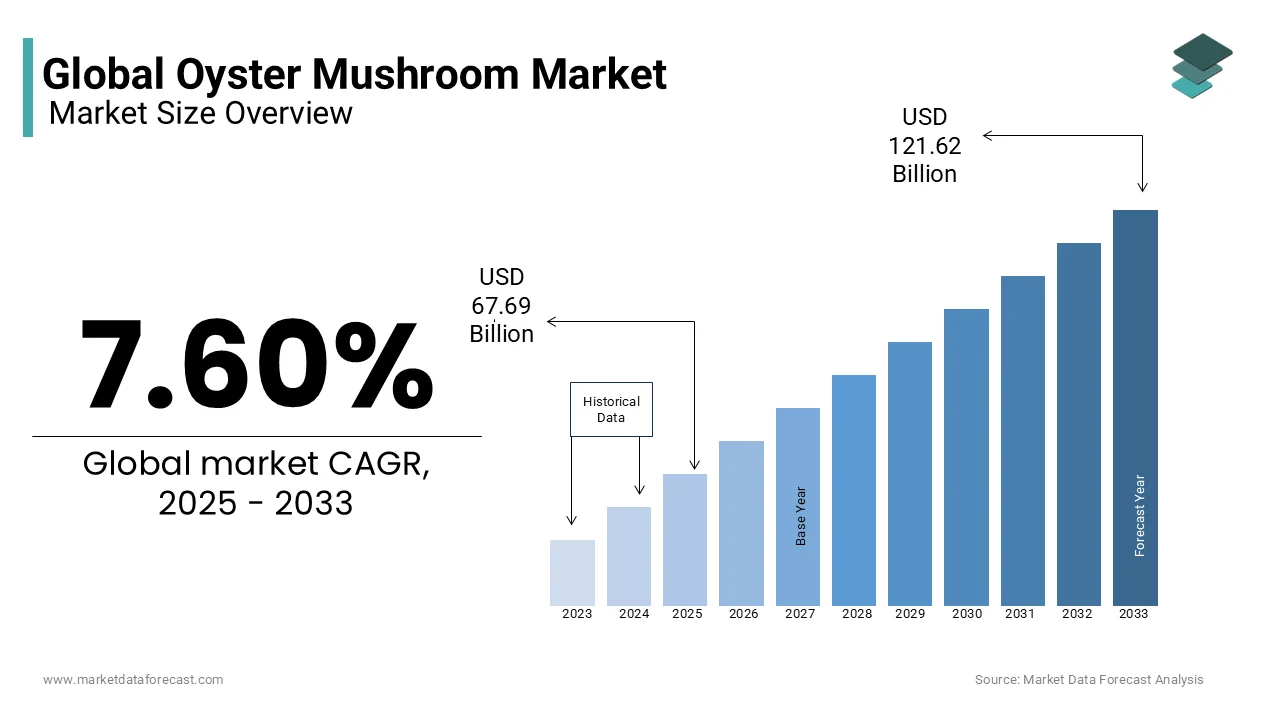
The global oyster mushroom market size was valued at USD 67.74 billion in 2025. The Oyster Mushroom market size is expected to reach USD 130.87 billion by 2034 from USD 72.89 billion in 2026. The market is promising a CAGR for the predicted period is 7.60%.
The oyster mushroom is a sustainable food system due to their ability to thrive on lignocellulosic waste such as straw, sawdust, and coffee grounds. The Food and Agriculture Organization of the United Nations identifies mushrooms as a vital source of protein and micronutrients, with oyster varieties containing up to 30% protein by dry weight. According to the World Health Organization, the integration of fungi into diets offers a strategic solution to combat malnutrition and non communicable diseases given their low fat and high fiber content. The United States Department of Agriculture notes that oyster mushrooms possess significant bioremediation capabilities, allowing them to degrade environmental pollutants, while producing food. Regulatory bodies like the European Food Safety Authority continuously assess the safety of wild and cultivated strains to ensure consumer protection against toxins.
MARKET DRIVERS
Surging Global Demand for Plant Based Protein Alternatives
The escalating global shift towards plant-based diets, as consumers seek sustainable and nutritious meat alternatives is driving the growth of oyster mushroom market. Oyster mushrooms offer a unique meaty texture and umami flavor profile that closely mimics animal protein, making them an ideal ingredient for vegetarian and vegan culinary applications. The Good Food Institute reports that the global plant based food market has witnessed exponential growth, with sales reaching billions of dollars annually as health and environmental concerns reshape consumer preferences. Research published by the National Institutes of Health indicates that oyster mushrooms are rich in essential amino acids, vitamins B and D, and minerals like potassium and iron, addressing common nutritional gaps in plant-based diets. Furthermore, the rise of flexitarianism, where individuals reduce but do not eliminate meat consumption, has broadened the addressable market significantly. The versatility of oyster mushrooms allows them to be processed into nuggets, jerky, and minced meat analogs, further enhancing their appeal.
Expansion of Circular Economy Practices in Agricultural Waste Utilization
The growing adoption of circular economy principles in agriculture by transforming agricultural waste into valuable food resources is additionally fuelling he growth of the oyster mushroom market. Oyster mushrooms are saprotrophic fungi capable of efficiently converting lignocellulosic biomass such as rice straw, wheat bran, corn cobs, and even textile waste into high quality protein. The United Nations Environment Programme highlights that approximately 1.3 billion tons of food are wasted globally each year by creating an urgent need for upcycling solutions that oyster mushroom cultivation provides. According to the International Society for Mushroom Science, the biological efficiency of oyster mushrooms allows them to produce nearly 1 kilogram of fresh mushrooms from every 1 kilogram of dry substrate, offering superior yield compared to many other crops. This process not only generates food but also produces nutrient rich spent mushroom substrate that serves as an excellent organic fertilizer, closing the nutrient loop. The World Bank notes that integrating mushroom farming into rural economies can significantly boost income for smallholder farmers by utilizing locally available waste materials without competing for arable land. In regions like Asia and Africa, initiatives supported by the Food and Agriculture Organization promote mushroom cultivation as a strategy for poverty alleviation and food security. The ability to grow these fungi in controlled indoor environments year round further enhances their economic viability.
MARKET RESTRAINTS
High Perishability and Complex Cold Chain Logistics
The extreme perishability of fresh oyster mushrooms by imposing stringent requirements on storage, transportation, and shelf-life management is restricting the growth of oyster mushroom market. Unlike dried or canned varieties, fresh oyster mushrooms have a very short post-harvest life, often lasting only 7 to 10 days under optimal refrigeration before developing slime, discoloration, or off odors. The Food and Drug Administration states that improper temperature control during transit can accelerate microbial spoilage, leading to substantial post-harvest losses that can exceed 30% in developing supply chains. According to the International Institute of Refrigeration, maintaining a consistent cold chain from the farm to the retail shelf is logistically challenging and cost prohibitive for many small-scale producers in regions with inadequate infrastructure. The delicate physical structure of oyster mushrooms makes them highly susceptible to mechanical damage during handling and packaging, further reducing their marketable yield. The high energy costs associated with refrigerated transport and storage also inflate the final retail price, limiting accessibility for price sensitive consumers. Additionally, the lack of standardized packaging solutions that balance humidity control and gas exchange exacerbates spoilage rates.
Susceptibility to Contamination and Crop Failure Risks
The vulnerability of oyster mushroom cultivation to microbial contamination and environmental fluctuations by threatening yield stability and production consistency is additionally hampering the growth of oyster mushroom market. Oyster mushroom mycelium competes aggressively with various molds, bacteria, and pests such as green mold (Trichoderma), cobweb mold, and fungus gnats, which can decimate entire crops within days if not managed meticulously. The American Phytopathological Society reports that contamination events are the leading cause of crop loss in commercial mushroom farming, often resulting in total write offs of production batches. Maintaining sterile conditions requires significant investment in climate-controlled facilities, air filtration systems, and rigorous hygiene protocols, which raises the barrier to entry for new growers. According to the International Society for Mushroom Science, even minor deviations in temperature, humidity, or carbon dioxide levels can stress the mycelium, making it more susceptible to pathogen attack and reducing fruit body quality. The reliance on specific substrate preparation methods such as pasteurization or sterilization adds another layer of complexity and cost, with failures in these steps leading to rampant contamination. Data from the Food and Agriculture Organization highlights that smallholder farmers in developing nations often lack access to technical training and clean spawn, resulting in erratic yields and financial instability.
MARKET OPPORTUNITIES
Innovation in Mycelium Based Biomaterials and Packaging Solutions
The emergence of mycelium technology as a sustainable alternative to synthetic materials beyond traditional food applications is creating new opportunities for the growth of oyster mushroom market. Companies are increasingly leveraging the rapid growth and binding properties of oyster mushroom mycelium to create biodegradable packaging, leather substitutes, and construction materials that decompose naturally at the end of their lifecycle. The Ellen MacArthur Foundation estimates that the global market for bio based materials could reach hundreds of billions of dollars as industries seek to replace petroleum derived plastics and foams. Startups and established corporations alike are partnering with mushroom cultivators to utilize spent substrate and dedicated mycelium farms for producing durable, fire resistant, and water repellent composites. According to research from the Delft University of Technology, mycelium based materials offer comparable strength to polystyrene foam while being fully compostable within weeks. The United Nations Industrial Development Organization supports these innovations as part of the broader bioeconomy strategy to reduce industrial carbon footprints. This expansion into material science opens lucrative new avenues for growth, positioning oyster mushroom biomass as a versatile feedstock for the green manufacturing revolution.
Development of Value Added Functional Foods and Nutraceuticals
The rising consumer interest in functional foods and natural health supplements through the extraction and formulation of bioactive compounds is additionally to promote new opportunities for the growth of oyster mushroom market. Oyster mushrooms are rich in beta glucans, lovastatin, and antioxidants which have been scientifically proven to support immune function, lower cholesterol, and regulate blood sugar levels. The Global Wellness Institute projects that the nutraceutical sector will continue to expand rapidly as consumers prioritize preventive health measures and natural remedies. Pharmaceutical and supplement manufacturers are increasingly incorporating oyster mushroom extracts into capsules, powders, and fortified beverages to target specific health conditions such as hypertension and diabetes. According to the National Center for Complementary and Integrative Health, clinical studies have validated the hypolipidemic effects of oyster mushroom compounds, driving demand for standardized extracts. The trend towards clean label ingredients encourages food producers to use mushroom powders as natural flavor enhancers and nutritional boosters in snacks and meal replacements. Data from the Nutrition Business Journal indicates that sales of mushroom based supplements have surged, reflecting a shift towards holistic wellness solutions.
MARKET CHALLENGES
Complexity in Standardizing Cultivation Protocols Across Regions
The lack of standardized cultivation protocols and quality control measures is leading to inconsistencies in product quality and safety, which is one of the challenges for the growth of oyster mushroom market. Variations in local climate, substrate composition, and spawn quality result in significant differences in mushroom size, texture, flavor, and nutritional content, complicating efforts to establish uniform global supply chains. The International Organization for Standardization notes that the absence of universally accepted standards for mushroom grading and safety testing hinders international trade and consumer confidence. According to the Food and Agriculture Organization, small scale farmers often rely on traditional methods that may not adhere to modern food safety regulations regarding pesticide residues or heavy metal accumulation from substrates. The diversity of Pleurotus species and strains further complicates standardization, as each variety has specific environmental requirements and growth characteristics that are not always well understood or documented. The fragmentation of the industry, dominated by numerous smallholders rather than large-consolidated entities that makes the implementation of rigorous quality assurance systems difficult and costly.
Limited Consumer Awareness and Culinary Versatility Perception
The persistent gap in consumer awareness regarding the culinary versatility and nutritional benefits is additionally to limit the growth of oyster mushroom market. Many consumers perceive mushrooms solely as a side dish or garnish rather than a staple protein source or main course ingredient, limiting their usage frequency and volume. The International Mushroom Council reports that educational deficits about proper storage, preparation techniques, and recipe ideas contribute to low household adoption rates in Western markets. According to sensory research published by the Journal of Food Science, unfamiliarity with the texture and flavor profile of oyster mushrooms can lead to hesitation among first time buyers who prefer more conventional vegetables. Additionally, cultural biases in certain regions view fungi with suspicion or associate them exclusively with medicinal use rather than daily nutrition. Overcoming these perceptual barriers requires sustained investment in consumer education, chef partnerships, and product demonstration initiatives to showcase the adaptability of oyster mushrooms in diverse cuisines.
REPORT COVERAGE
| REPORT METRIC | DETAILS |
| Market Size Available | 2025 to 2034 |
| Base Year | 2025 |
| Forecast Period | 2026 to 2034 |
| CAGR | 7.60% |
| Segments Covered | By Type, Form, Application, And Region. |
| Various Analyses Covered | Global, Regional and Country Level Analysis; Segment-Level Analysis; DROC; PESTLE Analysis; Porter’s Five Forces Analysis; Competitive Landscape; Analyst Overview of Investment Opportunities |
| Regions Covered | North America, Europe, APAC, Latin America, Middle East & Africa |
| Market Leaders Profiled | Amax NutraSource, Inc. (US), Bristol Botanicals Limited (UK), Bio-Botanica (US), Hokkaido-oyster (Japan), Hunan Huacheng Biotech,Inc.(China), Mushroom Science (US), Nammex (Canada), Qingdao Dacon Trading Co. (China), The Mushroom Company (US), Xi'an Greena Biotech Co., Ltd (China). |
SEGMENTAL ANALYSIS
By Type Insights
The grey segment was accounted in holding 45.3% of the global oyster mushroom market in 2025 with its exceptional biological efficiency and ability to thrive across a wide range of temperatures and substrate types, making it the most reliable crop for commercial growers. According to the Food and Agriculture Organization of the United Nations, the biological efficiency of Grey Oyster mushrooms often exceeds 100%, meaning growers can harvest more than 1 kilogram of fresh mushrooms from every 1 kilogram of dry substrate used. This high conversion rate significantly lowers the cost of production per unit, providing a competitive advantage over other varieties that require stricter environmental parameters. The International Society for Mushroom Science notes that Grey Oyster strains are less susceptible to common contaminants like Trichoderma compared to delicate colored varieties, reducing crop failure rates for farmers. Furthermore, their rapid colonization speed allows for shorter production cycles, enabling growers to achieve up to 6 harvests per year.

The pink segment is projected to register a fastest CAGR of 12.5% during the forecast period with its vibrant coloration which makes it highly photogenic and ideal for the visually driven landscape of modern food marketing and social media platforms. In an era where food aesthetics play a crucial role in purchasing decisions, the bright pink hue of this variety stands out on plates and in retail displays, generating significant organic promotion through user generated content. Restaurants and gourmet food retailers are increasingly featuring Pink Oyster mushrooms in signature dishes to attract customers looking for unique and colorful meal options. According to data from Mintel, product launches featuring colorful and exotic mushroom varieties have increased by over 50% in recent years, with Pink Oyster leading the trend. Influencers and food bloggers frequently showcase recipes using this variety, amplifying its reach and desirability. This viral potential transforms the Pink Oyster from a niche curiosity into a mainstream demand driver, accelerating its adoption in both foodservice and retail channels faster than any other type.
By Form Insights
The fresh segment was the largest by holding a significant share of the oyster mushroom market with the culinary trend favoring whole, minimally processed foods where consumers can assess quality, texture, and freshness directly before purchase. Oyster mushrooms are highly valued for their delicate structure and subtle aroma, characteristics that are best experienced when the product is sold in its natural state rather than dried or canned. Fresh oyster mushrooms retain their full moisture content and volatile flavor compounds, which are often diminished during dehydration or thermal processing methods. According to the study, the sensory attributes of fresh mushrooms, including their firm texture and earthy scent are determinants of consumer satisfaction and repeat purchase behavior. Additionally, the versatility of fresh oyster mushrooms allows them to be used in a wider array of culinary applications, from raw salads to quick sautes, compared to rehydrated dried versions which have a different texture.
The processed segment is anticipated to witness a fastest CAGR of 9.8% from 2026 to 2034. The rapid growth of the processed oyster mushroom segment is primarily fueled by the changing lifestyles of modern consumers who increasingly rely on convenient, ready to eat, and shelf stable food options that fit into busy schedules. Processed forms such as dried, canned, frozen, and pickled oyster mushrooms offer extended shelf lives ranging from months to years, eliminating the waste concerns associated with fresh produce and allowing for stockpiling. Dried oyster mushrooms, in particular, concentrate the umami flavor by making them a popular ingredient in spice blends and seasoning packets used by food manufacturers. The ability to transport processed mushrooms over long distances without refrigeration also opens up export markets that are inaccessible to fresh producers, further expanding the addressable market.
By Application Insights
The food segment was accounted in holding a significant share of the oyster mushroom market in 2025 with the deep integration of oyster mushrooms into diverse culinary traditions worldwide, where they are celebrated for their unique texture and ability to mimic meat. Oyster mushrooms are a staple in Asian cuisines, particularly in Chinese, Japanese, and Korean dishes, and have gained massive popularity in Western vegetarian and vegan cooking as a primary protein substitute. The Good Food Institute reports that the global market for plant based meat alternatives is expanding rapidly, with oyster mushrooms being a preferred ingredient due to their fibrous structure that closely resembles pulled pork or chicken when cooked. The United States Department of Agriculture highlights that the inclusion of mushrooms in school lunch programs and institutional catering has increased as part of initiatives to promote healthier eating habits and reduce meat consumption. Furthermore, the versatility of oyster mushrooms allows them to be used in a vast array of dishes including soups, stews, stir fries, pizzas, and burgers, ensuring consistent demand across all meal occasions.
The medical segment is anticipated to grow at a fastest CAGR of 11.2% from 2026 to 2034 with an expanding body of clinical research validating the therapeutic potential of oyster mushroom extracts in managing chronic conditions such as hyperlipidemia, diabetes, and hypertension. Scientific studies have demonstrated that compounds like lovastatin and beta glucans found in oyster mushrooms effectively lower LDL cholesterol and improve insulin sensitivity by offering natural alternatives or adjuncts to conventional pharmaceuticals. The International Diabetes Federation reports that the global prevalence of diabetes is reaching epidemic levels, creating a massive demand for effective natural interventions that can help regulate blood glucose levels. Research published in the Journal of Medicinal Food confirms that regular consumption of oyster mushroom extracts can significantly reduce cardiovascular risk factors, prompting healthcare providers to recommend them as part of preventive care protocols. The National Institutes of Health has funded numerous trials investigating the immunomodulatory effects of oyster mushroom polysaccharides, further legitimizing their use in clinical settings.
REGIONAL ANALYSIS
Asia Pacific Oyster Mushroom Market Analysis
Asia Pacific was the top performer in the global oyster mushroom market by holding 55.4% of the share in 2025 with its status as the largest producer and consumer region with deep cultural roots in mushroom cultivation and cuisine. China, India, and Japan, which collectively account for the vast majority of global oyster mushroom output and consumption. According to the Food and Agriculture Organization of the United Nations, China alone produces millions of tons of edible mushrooms annually, with oyster varieties being a significant portion due to their ease of cultivation on rice straw and cottonseed hulls. The culinary tradition in Asia heavily features mushrooms in daily diets, from street food to high end banquet dishes by ensuring consistent and high volume demand. The World Bank notes that rising disposable incomes in emerging economies like India and Vietnam are leading to increased consumption of protein rich vegetables, further boosting the market. Additionally, government initiatives in countries like South Korea and Thailand support mushroom farming as a strategy for rural development and poverty alleviation, providing subsidies and technical training to smallholder farmers.
Europe Oyster Mushroom Market Analysis
Europe oyster mushroom market held second position by holding 20.4% of share in 2025 with strong demand for organic, sustainable, and plant-based food products. The European Food Safety Authority's stringent regulations on food safety and pesticide residues have pushed the market towards high quality organic cultivation methods, which oyster mushrooms are well suited for due to their ability to grow on sterile substrates. The robust vegetarian and vegan movements, supported by organizations like the European Vegetarian Union, have intensified the demand for oyster mushrooms as a meat alternative in restaurants and households. Data from Eurostat shows that imports of fresh and processed mushrooms into the EU have grown steadily, driven by the popularity of ethnic cuisines and the expansion of the health food sector. The European Union's Green Deal and farm to fork strategy are encouraging sustainable agricultural practices, benefiting oyster mushroom growers who utilize agricultural waste.
North America Oyster Mushroom Market Analysis
North America oyster mushroom market growth is likely to witness a prominent opportunities throughout the forecast period with srapidly growing interest in functional foods, gourmet dining, and local urban farming initiatives. The United States and Canada are the primary drivers, with a consumer base that is increasingly educated about the health benefits and culinary versatility of specialty mushrooms. The Centers for Disease Control and Prevention reports that the rising prevalence of chronic diseases in North America has spurred significant demand for functional foods like oyster mushrooms that offer cholesterol lowering and immune boosting properties. The Organic Trade Association indicates that North American consumers are willing to pay a premium for locally grown and organic produce, fueling the growth of urban vertical farms that specialize in oyster mushroom cultivation. The region's sophisticated foodservice industry, led by celebrity chefs and farm to table restaurants, has elevated the status of oyster mushrooms from a niche ingredient to a menu staple.
Latin America Oyster Mushroom Market Analysis
Latin America oyster mushroom market growth is driven by the region's rich biodiversity, favorable climate for year round cultivation, and increasing adoption of mushrooms in local diets. Brazil and Mexico are the largest markets, where oyster mushrooms are gaining popularity as an affordable protein source and a valuable export commodity. The Pan American Health Organization notes that the rising incidence of obesity and diabetes in Latin America is boosting the demand for low calorie, nutrient dense foods like oyster mushrooms. According to the Inter American Institute for Cooperation on Agriculture, there are ongoing efforts to improve local cultivation techniques and establish certification standards to boost export potential to North America and Europe. The growing middle class in urban areas is leading to higher consumption of processed foods and gourmet ingredients, which incorporates oyster mushrooms.
Middle East and Africa Oyster Mushroom Market Analysis
The Middle East and Africa region is likely to grow with an emerging production capabilities in East Africa and a growing appetite for diverse food options in the Gulf Cooperation Council countries. Countries like South Africa, Kenya, and Nigeria are developing nascent mushroom industries, utilizing local agricultural waste to produce oyster mushrooms for domestic consumption and regional export. In the Middle East, the luxury food market and the presence of a large expatriate population drive demand for premium fresh produce, including oyster mushrooms, in high end supermarkets and hotels. According to the African Union, initiatives to boost intra African trade and agricultural development are helping to formalize the mushroom sector and improve supply chains. The arid climate in parts of the region makes indoor controlled environment agriculture, which oyster mushrooms thrive in, an attractive solution for local food production.
COMPETITIVE LANDSCAPE
The competition in the oyster mushroom market is characterized by a fragmented landscape comprising large multinational agribusinesses alongside numerous small scale local growers and specialized boutique farms. Major players compete primarily on product freshness consistency of supply and the ability to offer certified organic or sustainably grown varieties. The market dynamics are shifting as companies strive to differentiate themselves through innovative packaging solutions that extend shelf life and reduce food waste during transportation. High barriers to entry exist for large scale industrial production due to the significant capital required for climate controlled facilities and sterile processing environments. Price competition remains intense in the commodity segment while premium niches focus on unique varieties like pink or golden oysters. The constant pressure to improve biological efficiency and reduce contamination rates drives continuous investment in agricultural technology and staff training.
KEY MARKET PLAYERS
Some of the notable key players in the Europe oyster mushroom market are
- Amax NutraSource, Inc. (US)
- Bristol Botanicals Limited (UK)
- Bio Botanica (US)
- Hokkaido Oyster (Japan)
- Hunan Huacheng Biotech, Inc. (China)
- Mushroom Science (US)
- Nammex (Canada)
- Qingdao Dacon Trading Co. (China)
- The Mushroom Company (US)
- Xi'an Greena Biotech Co., Ltd (China)
Top Players in the Market
- Monaghan Mushrooms stands as a global leader in the specialty mushroom sector with a significant focus on oyster varieties across its international operations. The company leverages advanced cultivation technologies to ensure consistent high quality and year round supply for major retail and foodservice clients worldwide. Monaghan recently strengthened its market position by investing in state of the art packaging facilities that extend the shelf life of fresh oyster mushrooms, addressing key logistical challenges. The firm actively promotes sustainable farming practices by utilizing agricultural waste substrates and minimizing water usage in its growing houses. Their commitment to research and development has led to the introduction of new oyster strains with improved yield and flavor profiles.
- Costa Group Holdings Limited is a prominent agribusiness entity with a robust portfolio of fresh produce including a diverse range of oyster mushrooms supplied to supermarkets across Australia and Asia. The company utilizes controlled environment agriculture to optimize growth conditions and maximize the nutritional value of its oyster mushroom crops. Costa recently enhanced its market presence by launching organic oyster mushroom lines to meet the surging consumer demand for chemical free and sustainably grown food options. The firm has integrated vertical farming techniques to reduce land use and increase production efficiency per square meter. Their strategic partnerships with local growers ensure a steady supply chain while supporting regional agricultural communities.
- MycoWorks is a pioneering biotechnology company that has revolutionized the oyster mushroom market by leveraging mycelium technology to create high performance sustainable materials alongside food applications. While known for its leather alternatives the company utilizes oyster mushroom mycelium to develop proprietary biomaterials that serve diverse industrial sectors. MycoWorks recently strengthened its position by scaling up its production facilities to meet the growing demand from luxury fashion brands seeking eco friendly alternatives to animal leather. The firm invests heavily in scientific research to enhance the structural properties of mycelium derived from oyster mushrooms for various commercial uses. Their innovative approach transforms agricultural byproducts into valuable resources aligning with circular economy principles.
Top Strategies Used by Key Market Participants
Key players in the oyster mushroom market primarily employ strategies such as vertical integration to control the entire supply chain from substrate preparation to final retail distribution. Companies frequently invest in research and development to create new mushroom strains with enhanced yield disease resistance and superior flavor profiles. Expanding into organic certification and sustainable farming practices helps firms cater to the growing demographic of environmentally conscious consumers. Strategic partnerships with local farmers and cooperatives enable businesses to secure raw materials and expand production capacity without massive capital expenditure.
MARKET SEGMENTATION
This research report on the global oyster mushroom market has been segmented and sub-segmented based on type, form, application, and region.
By Type
- Grey oyster
- White oyster
- Pearl Oyster
- Blue Oyster
- Golden Oyster
- Pink Oyster
- Phoenix Oyster
By Form
- Fresh
- Processed
By Application
- Food
- Medical
- Others
By Region
- North America
- Europe
- Asia Pacific
- Latin America
- Middle East and Africa