- Product Description Description
- Table of Contents TOC
- List of Table & Figure LOT
- Get Free Sample PDF Sample PDF
Market Size, 2025
$19.46 BnMarket Estimate, 2026
$20.24 BnMarket Forecast, 2034
$27.7 BnCAGR, 2026–2034
4%Executive Summary: Global Mushroom Cultivation Market
- Market Scope: Comprehensive global mushroom cultivation market analysis covering mushroom types, cultivation methods, product forms, applications, distribution channels, regional growth frameworks, and circular economy integration.
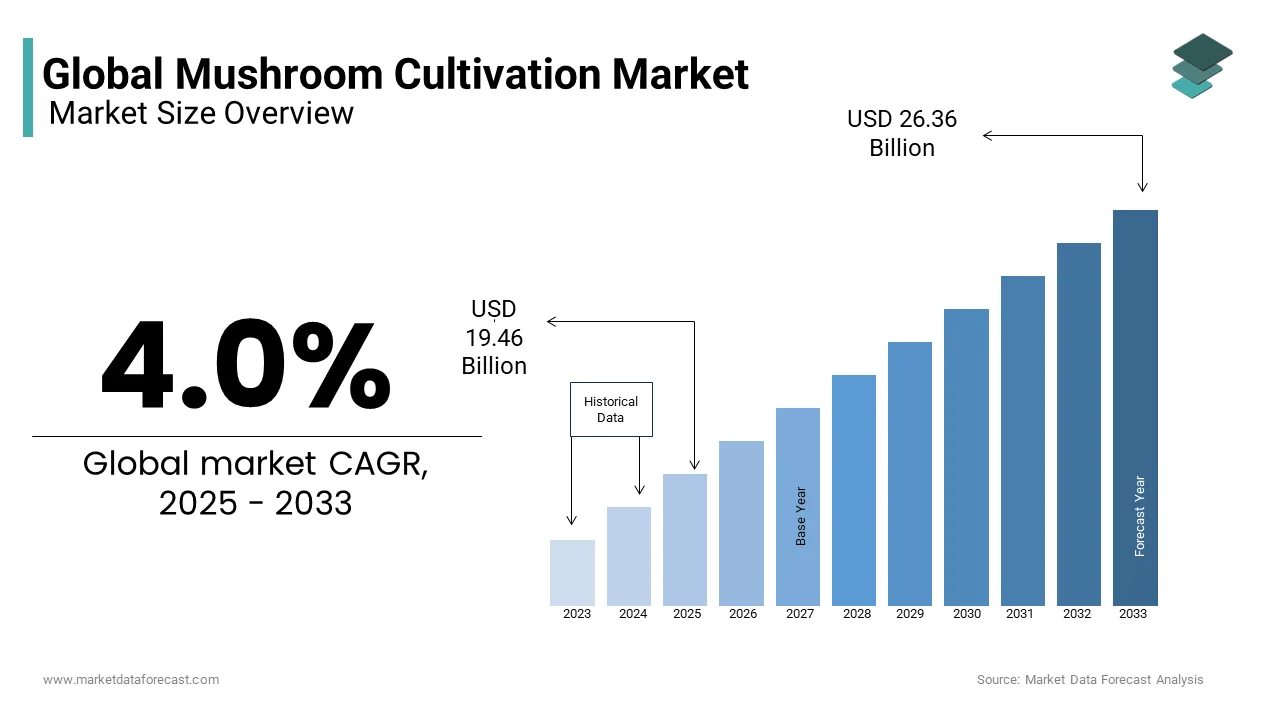
- Market Valuation: Valued at USD 19.46 billion (2025), estimated at USD 20.24 billion (2026), and projected to reach USD 27.70 billion by 2034, registering a steady CAGR of 4.0% (2026–2034).
- Primary Growth Drivers: Growing global demand for plant-based protein and functional foods, expansion of urban and Controlled Environment Agriculture (CEA), and the valorization of agricultural waste through circular economic models.
Key Market Segment Metrics (2026–2034)
| Category | Leading Segment (2025 Position) | Fastest-Growing Segment |
|---|---|---|
| By Mushroom Type | Button mushrooms / Agaricus bisporus (held 44.7% of the global market share) | Oyster mushrooms (projected at a CAGR of 12.4% due to decentralized farming adaptability) |
| By Cultivation Method | Indoor cultivation (accounted for 65.6% of market share via climate control and automation) | Outdoor cultivation (predicted at a CAGR of 10.4% for low-capital, resource-constrained regions) |
| By Product Form | Fresh mushrooms (held 70.7% market share driven by preference for unprocessed daily produce) | Processed mushrooms (projected at a CAGR of 11.3% for convenience, powders, and supplements) |
| By Region | Asia-Pacific (dominated with 46.4% market share led by China's massive production capacity) | North America and Middle East & Africa (expanding via alternative proteins and CEA investments) |
Major Market Players & Market Structure
Market Structure: Fragmented and dynamic global ecosystem comprising large-scale industrial producers, regional agribusinesses, and emerging biotech innovators competing across automated indoor farming, organic certification, and sustainable substrates.
Key Companies: Monaghan Mushrooms, Walsh Mushrooms Group, Mycelia, South Mill Mushrooms Sales, Smithy Mushrooms Ltd., Rheinische Pilz Zentrale GmbH, Italian Mushroom SAS, Hirano Mushroom LLC, Fujishin Co. Ltd., Green Forest Mushroom Company, and Mitsubishi Chemical Agri Dream Corporation.
Global Mushroom Cultivation Market Size
The global mushroom cultivation market size was valued at USD 19.46 billion in 2025 and is anticipated to reach USD 20.24 billion in 2026 from USD 27.70 billion by 2034, growing at a CAGR of 4.0% from 2026 to 2034.
The Mushroom Cultivation Market refers to the organized agricultural practice of growing edible, medicinal, and specialty fungi such as Agaricus bisporus (button mushroom), Pleurotus (oyster), and Lentinula edodes (shiitake under controlled environmental conditions. This form of vertical farming requires minimal land, thrives on agricultural waste substrates, and operates efficiently in both rural and urban settings. According to the Food and Agriculture Organization of the United Nations, over 12 million tonnes of mushrooms were produced globally in 2023, which is reflecting a steady rise in cultivation intensity. As per the International Society for Mushroom Science, mushroom farming now contributes to the livelihoods of more than 500,000 smallholder farmers across Southeast Asia alone. The sector is increasingly recognized for its role in circular agriculture, with crop residues, like rice straw and sugarcane bagasse, repurposed as growth media, enhancing sustainability and reducing waste in agrifood systems.
MARKET DRIVERS
Growing Global Demand for Plant-Based Protein and Functional Foods
The growing global demand for plant-based protein and functional foods is a pivotal force accelerating mushroom cultivation, which is a major market driver. Mushrooms are rich in high-quality protein, B vitamins, selenium, and beta-glucans, which support immune function. According to the World Health Organization, nearly 2 billion adults worldwide suffer from micronutrient deficiencies, prompting health authorities to recommend fungi as a dietary supplement. The European Food Safety Authority has approved health claims linking mushroom-derived beta-glucans to improved immune response, fueling their inclusion in fortified foods. As per the Global Nutrition Report, 34 countries have integrated edible fungi into national food security strategies to combat malnutrition. In India, the National Institute of Nutrition advocates for mushroom consumption in mid-day meal programs due to its high lysine content—critical for child development. These nutritional advantages, combined with a low environmental impact, position mushrooms as a cornerstone of future food systems.
Expansion of Urban and Controlled Environment Agriculture (CEA)
The expansion of urban and Controlled Environment Agriculture (CEA) is transforming mushroom cultivation into a scalable, year-round enterprise, which is further contributing to the global market expansion. Unlike traditional crops, mushrooms can be grown vertically in repurposed warehouses, shipping containers, and basements, requiring only 10–15 $\text{m}^2$ to generate commercial output. According to the United Nations Human Settlements Programme, over 56% of the global population resides in urban areas, a figure projected to reach 60% by 2030, intensifying pressure on food supply chains. In response, cities like Singapore and Rotterdam have incentivized urban mushroom farms to enhance local food resilience. The Singapore Food Agency reports that indoor mushroom farms now supply 18% of the nation’s fresh produce demand, up from 6% in 2020. These systems use 90% less water than field agriculture, as documented by the International Water Management Institute, making them ideal for water-scarce regions. This shift toward decentralized, climate-resilient production is redefining the scalability of mushroom farming.
MARKET RESTRAINTS
Limited Access to High-Quality Spawn and Genetic Strain Degradation
Limited access to high-quality spawn and genetic strain degradation severely hampers yield consistency and productivity in mushroom cultivation, which is primarily hampering the growth of the global mushroom cultivation market. Spawn must be genetically stable and contamination-free to ensure successful fruiting. However, according to the International Atomic Energy Agency, over 40% of spawn used in small-scale farms across Sub-Saharan Africa and South Asia exhibits genetic drift or bacterial contamination, which is leading to crop failure rates exceeding 30%. As per the Consultative Group on International Agricultural Research, informal spawn production networks often lack sterile laboratory conditions, accelerating strain degeneration. In Vietnam, the Ministry of Agriculture and Rural Development found that 55% of oyster mushroom farms experienced at least one total crop loss annually due to poor spawn quality. Without standardized certification and distribution systems, cultivators remain vulnerable to inconsistent yields, undermining profitability and discouraging investment in scaling operations.
Stringent Regulatory Barriers for Medicinal Mushroom Products
Stringent regulatory barriers for medicinal mushroom products impede commercialization beyond fresh produce markets, which is further impeding the expansion of the global market. Species such as Ganoderma lucidum (reishi) and Cordyceps militaris are valued for their bioactive compounds, yet face complex approval pathways for therapeutic use. According to the U.S. Food and Drug Administration, mushroom-based supplements must undergo rigorous substantiation for health claims, with only 12 extracts approved for GRAS (Generally Recognized As Safe) status as of 2023. The European Medicines Agency requires full clinical trials for any product asserting immunomodulatory effects, a process that can cost upwards of $5 million. In China, while Cordyceps cultivation is state-supported, the export of processed derivatives is restricted under biodiversity protection laws. These regulatory inconsistencies across jurisdictions delay market entry, limit product diversification, and deter private-sector R&D investment in high-value medicinal applications.
MARKET OPPORTUNITIES
Integration of Mushroom Cultivation into National Circular Economy Frameworks
The integration of mushroom cultivation into national circular economy frameworks presents a promising opportunity for global mushroom cultivation market. Mushrooms uniquely convert lignocellulosic waste such as coffee grounds, corn cobs, and cotton waste into high-value biomass. According to the World Bank, over 1.3 billion tonnes of agricultural residue are burned annually, contributing to 5% of global CO2 emissions. Countries like the Netherlands and India are now channeling this waste into mushroom production: the Dutch government reports that 85% of greenhouse-grown mushrooms utilize recycled substrates from nearby agro-industries. In Tamil Nadu, India, the Department of Horticulture has established 1,200 waste-to-mushroom units since 2021, diverting over 40,000 tonnes of paddy straw annually. These initiatives reduce open burning, lower substrate costs, and generate rural employment, positioning mushroom farming as a key pillar in national climate action and waste valorization strategies.
Rising Investment in Mycoremediation and Fungal Biomaterials
Rising investment in mycoremediation and fungal biomaterials is expanding the economic scope of mushroom cultivation beyond food, which is another major opportunity for the global market. Mycelium demonstrates proven efficacy in degrading hydrocarbons, absorbing heavy metals, and breaking down plastics. According to the United Nations Environment Programme, mycoremediation trials in Nigeria reduced crude oil contamination in soil by 87% within six weeks. In the Netherlands, companies like Mycorenew are deploying oyster mushroom beds to treat industrial effluents. Concurrently, mycelium-based materials are replacing polystyrene and leather in packaging and fashion. The European Commission’s Bio-based Industries Consortium confirms that mycelium production capacity in Europe grew by 200% between 2021 and 2023. These dual applications elevate mushroom farming from subsistence agriculture to a high-impact, multi-sectoral industry with global scalability.
MARKET CHALLENGES
Vulnerability to Climate Variability and Microclimate Instability
Vulnerability to climate variability and microclimate instability poses a critical challenge to consistent mushroom yields. Unlike field crops, mushrooms require precise control of temperature, humidity (85–95%), CO2 levels, and ventilation to trigger fruiting. According to the Intergovernmental Panel on Climate Change, the frequency of extreme heat events has increased by 50% since the 1980s, disrupting cultivation cycles in tropical regions. In Bangladesh, the Department of Agricultural Extension recorded a 22% decline in winter mushroom harvests in 2023 due to unseasonal temperature spikes above 28°C, which inhibit mycelial development. Similarly, power outages in Kenya and Pakistan compromise refrigeration and misting systems, causing spoilage rates exceeding 40%, as reported by the African Development Bank. These microclimatic dependencies make mushroom farms highly sensitive to energy instability and climate anomalies, limiting operational reliability in developing economies.
Short Post-Harvest Shelf Life and Inadequate Cold Chain Infrastructure
A short post-harvest shelf life and inadequate cold chain infrastructure is further challenging the expansion of the global market. Fresh mushrooms lose moisture rapidly and begin to degrade within 48–72 hours at ambient temperatures. According to the Food and Agriculture Organization, post-harvest losses in mushroom supply chains exceed 30% in South Asia and Sub-Saharan Africa due to a lack of refrigerated transport and storage. In Nigeria, the Federal Ministry of Agriculture and Rural Development estimates that 38% of harvested mushrooms are discarded before reaching urban markets. Even in developed nations, limited cold storage at retail points accelerates spoilage: the UK’s Waste and Resources Action Programme found that 27% of supermarket mushrooms are discarded weekly due to cosmetic blemishes and expiry. Without expanded cold logistics and consumer education on preservation, the perishability of mushrooms remains a structural bottleneck to large-scale commercialization.
REPORT COVERAGE
| REPORT METRIC | DETAILS |
| Market Size Available | 2025 to 2034 |
| Base Year | 2025 |
| Forecast Period | 2026 to 2034 |
| CAGR | 4.0% |
| Segments Covered | By Mushroom Type, Cultivation Method, Product Form, Application, Distribution Channel, Region |
| Various Analyses Covered | Global, Regional & Country Level Analysis; Segment-Level Analysis; DROC, PESTLE Analysis; Porter’s Five Forces Analysis; Competitive Landscape; Analyst Overview of Investment Opportunities |
| Regions Covered | North America, Europe, APAC, Latin America, Middle East & Africa |
| Market Leaders Profiled | Monaghan Mushrooms (Ireland), Walsh Mushrooms Group (Ireland), Mycelia (Belgium), South Mill Mushrooms Sales (US), Smithy Mushrooms Ltd. (UK), Rheinische Pilz Zentrale GmbH (Germany), Italian Mushroom SAS (Italy), Hirano Mushroom LLC (Kosovo), and Fujishin Co. Ltd. (Japan). |
SEGMENTAL ANALYSIS
By Mushroom Insights
The button mushroom (Agaricus bisporus) segment dominated the market by holding 44.7% of the global market share in 2025. This dominance is primarily driven by its widespread consumer acceptance and integration into mainstream culinary practices. According to the International Society for Mushroom Science, button mushrooms constitute over 60% of fresh mushroom consumption in North America and Europe, where they are routinely used in salads, soups, and processed foods due to their mild flavor and firm texture. Their adaptability to industrial-scale indoor farming has further solidified their position, with automated facilities in the Netherlands and the United States achieving up to four harvest cycles per month. The highly developed commercial infrastructure dedicated to button mushroom production is further fuelling the growth of the button mushrooms segment in the worldwide market. According to the U.S. Department of Agriculture, Pennsylvania alone produces over 500 million pounds of button mushrooms annually, representing 65% of national output. This concentration has enabled economies of scale, advanced spawn development, and optimized substrate formulations using composted horse manure and straw. Additionally, the species’ relatively short growth cycle—typically 4–6 weeks from inoculation to harvest—ensures rapid turnover and consistent supply. With established distribution networks and strong retail penetration, the button mushroom remains the cornerstone of commercial mushroom farming worldwide.
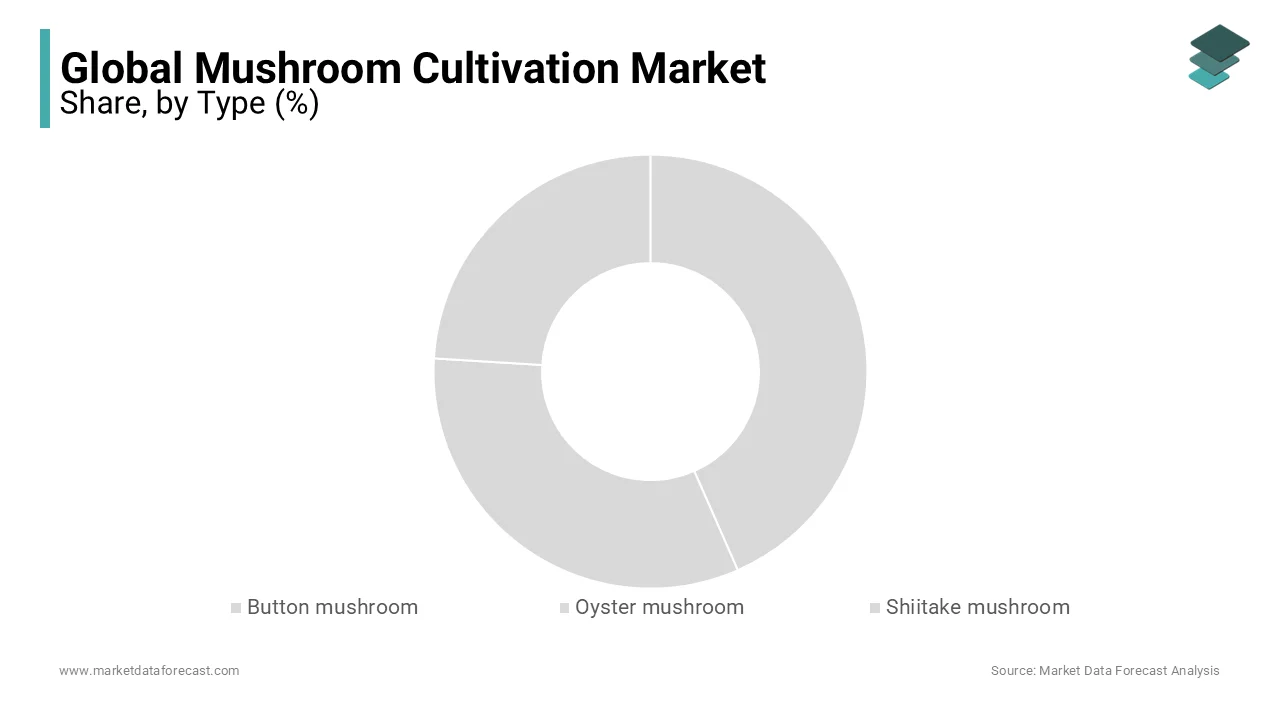
On the other end, the oyster mushroom segment is the fastest-growing category in the global mushroom cultivation market and is projected to expand at a CAGR of 12.4% during the forecast period in the global market owing to its exceptional adaptability to low-input, decentralized farming systems, particularly in tropical and subtropical regions. According to the United Nations Development Programme, oyster mushrooms can be cultivated on agricultural waste such as banana stems, coffee pulp, and rice husks, making them ideal for smallholder farmers in Southeast Asia and Sub-Saharan Africa. The International Institute of Tropical Agriculture reports that over 120,000 households in Nigeria and Uganda have adopted oyster mushroom farming as a livelihood intervention since 2020. The rising demand for oyster mushrooms in plant-based meat alternatives and functional food applications is further supporting the expansion of the oyster mushrooms segment in the global market. As per the European Food Safety Authority, oyster mushrooms contain up to 28% protein by dry weight and are rich in ergothioneine, a potent antioxidant linked to reduced inflammation. Companies like MycoWorks and Meati Foods are leveraging Pleurotus mycelium to develop whole-cut meat analogs, with commercial pilot lines operational in the U.S. and Germany by 2023. Additionally, China’s Ministry of Agriculture and Rural Affairs has classified oyster mushroom cultivation as a priority rural revitalization activity, offering subsidies and training programs that have boosted production by 19% annually since 2021. These dual forces—agricultural inclusivity and high-value innovation—are accelerating its market ascent.
By Cultivation Method Insights
The indoor cultivation segment led the market by accounting for 65.6% of the global market share in 2025. The dominance of indoor cultivation segment in the global market is attributed to its superior control over environmental parameters essential for fungal development. Mushrooms require precise regulation of temperature, humidity, and light cycles as these conditions are difficult to maintain in open fields. As per Wageningen University & Research, indoor facilities can maintain optimal humidity at 85–95% and temperatures between 15–22°C, increasing yield consistency by up to 40% compared to outdoor systems. In countries like the Netherlands and South Korea, fully automated grow rooms use AI-driven climate controls to optimize fruiting, achieving up to six harvests per year. The scalability and year-round production capability of indoor systems is further contributing to the expansion of the indoor cultivation segment in the global market. According to the U.S. Agricultural Research Service, commercial indoor farms can operate continuously, unaffected by seasonal fluctuations, enabling a reliable supply to supermarkets and food processors. In India, the National Centre for Mushroom Research reports that indoor units in Himachal Pradesh and Tamil Nadu have doubled productivity since 2020 due to climate-controlled sheds. Furthermore, indoor cultivation reduces contamination risks from pests and wild spores, lowering crop loss rates to below 10%, as documented by the African Journal of Biotechnology. These advantages make indoor farming the preferred method for large-scale, commercial operations aiming for consistency and food safety compliance.
On the other side, the outdoor cultivation segment is emerging as the fastest-growing method and is predicted to record a CAGR of 10.4% during the forecast period in the global market owing to its low capital intensity and suitability for rural and resource-constrained settings. According to the International Fund for Agricultural Development, outdoor mushroom farming requires minimal infrastructure—often just shaded beds or polytunnels—making it accessible to smallholder farmers with limited investment capacity. In Rwanda, over 15,000 women-led cooperatives have adopted outdoor oyster mushroom cultivation using banana leaves and sawdust substrates, generating supplemental income, as reported by the Ministry of Agriculture. The integration of outdoor mushroom farming into agroecological and regenerative agriculture initiatives is further contributing to the expansion of the outdoor cultivation segment in the global market. According to the World Agroforestry Centre, mushroom beds can be established beneath tree canopies or alongside crop fields, enhancing land-use efficiency without competing for arable space. In Indonesia, the Ministry of Environment and Forestry has promoted mushroom cultivation on palm oil waste in degraded peatlands, reducing open burning and restoring soil organic matter. Additionally, outdoor systems align with organic certification standards, as they typically avoid synthetic inputs. With rising support from development agencies and climate resilience programs, outdoor cultivation is gaining traction as a sustainable, inclusive farming model.
By Product Form Insights
The fresh mushrooms segment occupied the largest share of 70.7% of the global market in 2025. The growth of the fresh mushrooms segment in the global market is attributed to the consumer preference for unprocessed, perishable produce in daily diets. According to the U.S. Dietary Guidelines Advisory Committee, fresh mushrooms are recommended as a low-calorie, nutrient-dense food, contributing to increased inclusion in home cooking and restaurant menus. The British Retail Consortium reports that 88% of mushroom sales in UK supermarkets occur in fresh form, with consumers prioritizing texture and immediate usability. Additionally, short supply chains in urban farming hubs enable same-day delivery, preserving freshness and reducing spoilage. The lack of widespread consumer familiarity with processed mushroom formats is further fuelling the expansion of the fresh mushrooms segment in the global market. As per the Global Panel on Food Security, only 29% of households in Latin America and South Asia regularly purchase dried or canned mushrooms, primarily due to taste and rehydration concerns. In contrast, fresh mushrooms are perceived as natural and versatile, suitable for grilling, sautéing, and raw consumption. The European Fresh Produce Association emphasizes that fresh fungi maintain higher levels of volatile compounds responsible for aroma and flavor, which degrade during thermal processing. With cold chain improvements and expanding retail refrigeration, the fresh segment continues to outpace processed alternatives in both volume and consumer trust.
On the other end, the processed mushrooms segment is predicted to witness a CAGR of 11.3% during the forecast period owing to an increasing demand for convenience and functional ingredients. According to the Institute of Food Technologists, dried mushroom powders and extracts are being incorporated into soups, sauces, snacks, and dietary supplements due to their concentrated umami flavor and bioactive properties. The U.S. market for mushroom-based supplements alone exceeded $1.2 billion in 2023, as reported by the Council for Responsible Nutrition, with lion’s mane and chaga extracts gaining popularity for cognitive support. Additionally, the expansion of ready-to-eat and plant-based meat products is accelerating processed mushroom adoption. Nestlé’s 2023 launch of the “Incredible Burger” in Europe, which uses texturized oyster mushroom protein, reflects this trend. The European Commission’s Farm to Fork Strategy notes that mycoprotein-based foods could reduce food-related greenhouse gas emissions by up to 80% compared to beef. Furthermore, freeze-dried mushrooms are gaining favor in military rations and space missions due to their lightweight nature and nutrient retention—NASA has included them in astronaut meal trials since 2022. These high-value applications are redefining processed mushrooms as a strategic ingredient in future food systems.
REGIONAL ANALYSIS
Asia Pacific Market Analysis
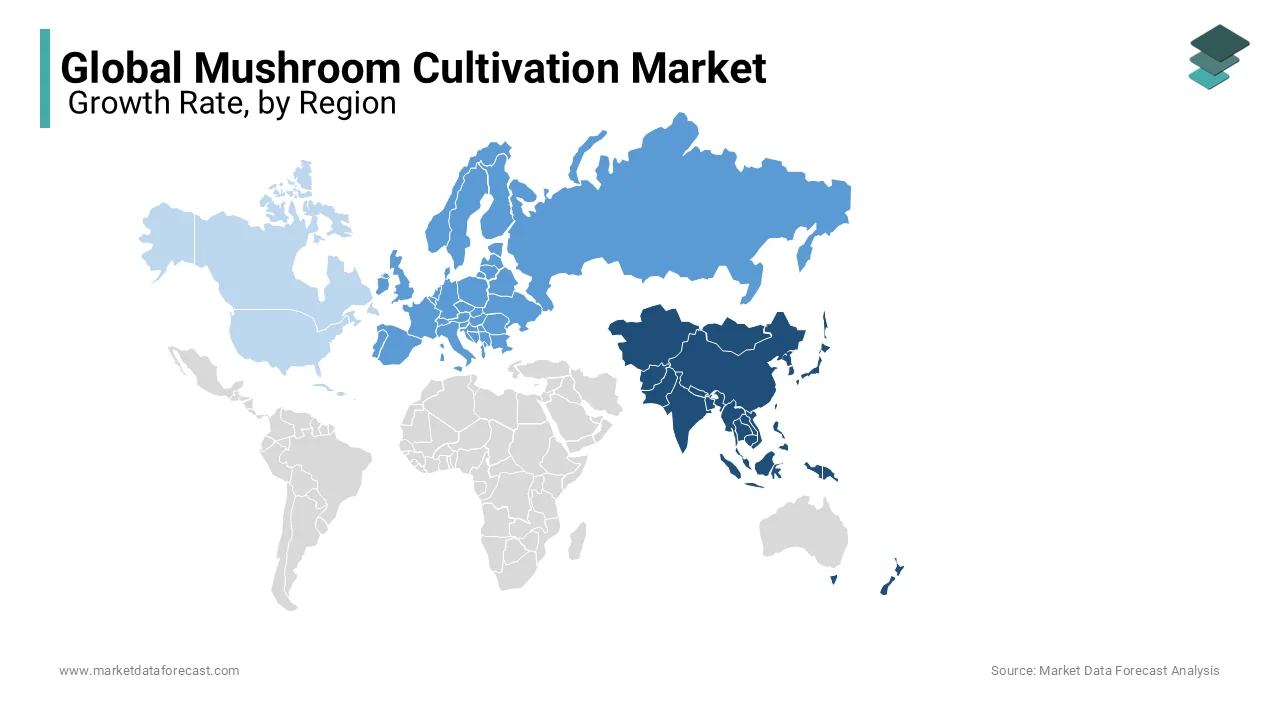
Asia-Pacific dominated the mushroom cultivation market in 2025 with 46.4% of the global market share in 2025. The region’s dominance is rooted in its long-standing cultural integration of fungi into daily cuisine and traditional medicine. China alone produces over 75% of the world’s mushrooms, with the National Bureau of Statistics confirming an output of 42 million tonnes in 2023, primarily shiitake, oyster, and enoki varieties. Government initiatives, such as China’s “Mushroom Village” program, have established over 1,200 specialized cultivation zones, boosting rural employment and export capacity. India and Thailand are also expanding rapidly, with the Indian Council of Agricultural Research promoting mushroom farming as a climate-resilient livelihood for smallholders. The Ministry of Agriculture in Thailand reports that oyster mushroom production increased by 17% annually since 2020 due to waste-based substrates and low-energy growing systems. Urban vertical farms in Singapore and South Korea are pioneering automated indoor units, supplying hypermarkets with hyper-local produce. With strong policy support, vast agricultural residue availability, and rising domestic consumption, Asia-Pacific remains the epicenter of global mushroom cultivation.
Europe Market Analysis
Europe occupied the second largest share of the global market in 2025 due to its advanced technological integration and emphasis on food safety and sustainability. The Netherlands stands as a technological leader, producing over 150,000 tonnes annually in fully automated, climate-controlled facilities, as documented by Wageningen University. The Dutch government supports research into mycelium-based biomaterials and circular substrate recycling, aligning with EU Green Deal objectives. In Poland and the UK, large-scale indoor farms supply 90% of domestic fresh mushroom demand, reducing import dependency. The growing consumer demand for organic and specialty mushrooms is further supporting the expansion of the European market. According to Eurostat, organic mushroom sales in Germany and France grew by 21% between 2021 and 2023, driven by health-conscious urban populations. The European Commission has funded projects like MycoRegen to develop low-impact cultivation systems using food waste. Additionally, gourmet varieties, such as king oyster and nameko, are gaining traction in fine dining, supported by Michelin-starred chefs advocating for local, seasonal fungi. With strong R&D infrastructure and regulatory clarity, Europe remains a hub for innovation and premium mushroom production.
North America Market Analysis
North America is predicted to showcase a prominent CAGR in the global market during the forecast period owing to the high per capita consumption and rapid innovation in alternative proteins. The United States produces over 400,000 tonnes annually, with Pennsylvania contributing the majority, as reported by the USDA. Consumer demand for functional foods has spurred the growth of medicinal mushroom supplements, with the American Botanical Council noting a 33% increase in sales of Reishi and Lion’s Mane extracts in 2023. Retail giants like Whole Foods and Kroger have expanded their fresh and dried mushroom offerings in response. Additionally, the rise of mycelium-based biotech startups is transforming the sector. Companies such as Ecovative and MycoWorks have secured over $300 million in venture funding since 2021 to develop mushroom leather and packaging. NASA’s 2023 Artemis mission included a mycelium habitat experiment, highlighting its potential in space agriculture. With strong private investment, academic research, and consumer openness to novel applications, North America is positioning mushrooms at the forefront of sustainable material science and next-generation nutrition.
Latin America Market Analysis
Latin America is estimated to hold a notable share of the global mushroom cultivation market during the forecast period, with growth concentrated in Brazil, Mexico, and Colombia. The region’s market is defined by a blend of traditional consumption and emerging commercial farming. According to Brazil’s Ministry of Agriculture, domestic production reached 180,000 tonnes in 2023, primarily button and oyster mushrooms, with São Paulo and Minas Gerais as key hubs. Government programs, like Mais Alimentos, have provided technical training and spawn subsidies to over 12,000 small farmers since 2020. Another driver is the expansion of export-oriented cultivation. As per the Inter-American Institute for Cooperation on Agriculture, Chile and Costa Rica have increased mushroom exports to North America by 26% annually since 2021, leveraging favorable climate conditions for off-season supply. Additionally, urban farming initiatives in Bogotá and Mexico City are promoting rooftop mushroom units to enhance food security. Despite logistical challenges, Latin America’s rich biodiversity and agricultural waste base offer significant untapped potential for scalable, sustainable mushroom farming.
Middle East and Africa Market Analysis
The Middle East & Africa is expected to exhibit a noteworthy CAGR in the global market during the forecast period, with growth emerging from urban centers and development initiatives. South Africa leads the region, producing over 30,000 tonnes annually, as reported by the Department of Agriculture, Land Reform and Rural Development. The country’s commercial farms supply supermarkets in Johannesburg and Cape Town, while NGOs promote small-scale oyster mushroom projects to combat malnutrition in rural areas. In the Gulf Cooperation Council, the UAE and Saudi Arabia are investing in high-tech vertical farms to reduce food imports under Vision 2030 and Food Security Strategy 2051. The Dubai Future Foundation confirms that indoor mushroom units now supply 15% of the emirate’s fresh produce demand. In Kenya, the International Potato Center has integrated mushroom farming with potato waste utilization, benefiting over 8,000 farmers. With rising urbanization, climate pressures, and food import dependency, the region is increasingly viewing mushroom cultivation as a strategic tool for resilience and self-sufficiency.
COMPETITIVE LANDSCAPE
The Mushroom Cultivation Market is marked by a dynamic interplay between large-scale industrial producers, regional agribusinesses, and emerging biotech innovators. Established players dominate through technological superiority, cold chain infrastructure, and regulatory compliance, particularly in developed markets. However, local cultivators in Asia and Africa are gaining ground by leveraging low-cost substrates and decentralized models suited to rural economies. Competition is intensifying as companies differentiate through organic certification, strain specificity, and sustainability claims. The rise of mycelium-based materials and functional foods has attracted non-traditional entrants, including biotech startups and food tech firms, increasing competitive complexity. With limited global spawn standardization and varying regulatory landscapes, the market remains fragmented, fostering both collaboration and rivalry across geographies and sectors.
KEY MARKET PLAYERS
A few of the market players in the global Mushroom Cultivation Market are
- Monaghan Mushrooms (Ireland)
- Walsh Mushrooms Group (Ireland)
- Mycelia (Belgium)
- South Mill Mushrooms Sales (US)
- Smithy Mushrooms Ltd. (UK)
- Rheinische Pilz Zentrale GmbH (Germany)
- Italian Mushroom SAS (Italy)
- Hirano Mushroom LLC (Kosovo)
- Fujishin Co. Ltd. (Japan).
Top Players In The Market
- Monaghan Mushrooms has established itself as a global leader in fresh mushroom production, with a significant footprint across the Asia-Pacific region through strategic partnerships and technology transfer initiatives. The company has actively collaborated with local growers in Japan and South Korea to introduce advanced composting techniques and climate-controlled growing environments that enhance yield consistency. In 2023, Monaghan launched a joint venture in Thailand to supply premium button and oyster mushrooms to high-end supermarkets and hotel chains, leveraging its expertise in food safety and cold chain logistics. The company also introduced a digital monitoring system for substrate pasteurization and humidity control, which it customized for tropical climates. By combining European cultivation standards with region-specific adaptations, Monaghan has strengthened its reputation as a provider of high-integrity, scalable mushroom farming solutions in diverse Asian markets.
- The Green Forest Mushroom Company, based in China, is a dominant regional force known for its vertically integrated production model and export-oriented strategy. The company operates one of the largest automated mushroom farms in Fujian Province, specializing in shiitake, oyster, and enoki varieties for both domestic and international markets. In 2022, Green Forest expanded its facility to include AI-driven harvesting robots and IoT-based environmental sensors, reducing labor costs by 40% while improving product uniformity. It has also invested in sustainable substrate development, utilizing rice straw and bamboo waste to align with China’s circular economy goals. The company supplies major retailers in Southeast Asia and has secured certification from Japan’s Ministry of Health, Labour and Welfare for its pesticide-free cultivation process. Through continuous innovation and compliance with stringent export standards, Green Forest has positioned itself as a benchmark for industrial-scale mushroom farming in the Asia-Pacific region.
- Mitsubishi Chemical Agri Dream Corporation leverages Japan’s legacy in precision agriculture to redefine commercial mushroom cultivation in the Asia-Pacific market. The company specializes in fully enclosed, sterile indoor farms that utilize proprietary LED lighting spectra and automated nutrient delivery systems to optimize mycelial growth. In 2023, Agri Dream deployed its “Smart Mushroom Farm” container units in urban areas of Vietnam and Indonesia, enabling local entrepreneurs to produce high-quality mushrooms with minimal technical expertise. These modular units are designed to operate in high-humidity environments and reduce water usage by 70% compared to conventional systems. The company also collaborates with research institutions to develop disease-resistant strains of Pleurotus and Lentinula species. By integrating biotechnology with decentralized production models, Mitsubishi Chemical Agri Dream is driving the modernization of mushroom farming across densely populated and resource-constrained regions.
Top Strategies Used By Key Market Participants
Key players in the Mushroom Cultivation Market are deploying advanced automation, vertical integration, strain optimization, sustainable substrate sourcing, and strategic export expansion to consolidate their market presence. Companies are investing in climate-controlled indoor facilities equipped with IoT sensors and AI analytics to maximize yield consistency and minimize contamination risks. Others are forming alliances with agricultural cooperatives to secure raw materials and expand rural production networks. Product diversification into medicinal extracts, mycoprotein, and biodegradable materials is gaining traction. Additionally, firms are obtaining organic and food safety certifications to access premium markets in North America, Europe, and East Asia, while leveraging digital platforms for direct-to-consumer sales and traceability.
MARKET SEGMENTATION
This research report on the global mushroom cultivation market is segmented and sub-segmented based on type and region.
By Mushroom Type
- Button Mushroom
- Shiitake Mushroom
- Oyster Mushroom
- Enoki Mushroom
- Other Types
By Cultivation Method
- Indoor Cultivation
- Outdoor Cultivation
By Product Form
- Fresh Mushrooms
- Processed Mushrooms
By Application
- Food & Beverage
- Pharmaceuticals
- Nutraceuticals
- Others
By Distribution Channel
- Supermarkets & Hypermarkets
- Online Retail
- Others
By Region
- Asia Pacific
- North America
- Europe
- Latin America
- Middle East and Africa