- Product Description Description
- Table of Contents TOC
- List of Table & Figure LOT
- Get Free Sample PDF Sample PDF
Market Size, 2025
$21.76 BnMarket Estimate, 2026
$23.41 BnMarket Forecast, 2034
$42.06 BnCAGR, 2026–2034
7.60%Global Button Mushroom Market Size, Growth, Trends & Forecast (2025–2034)
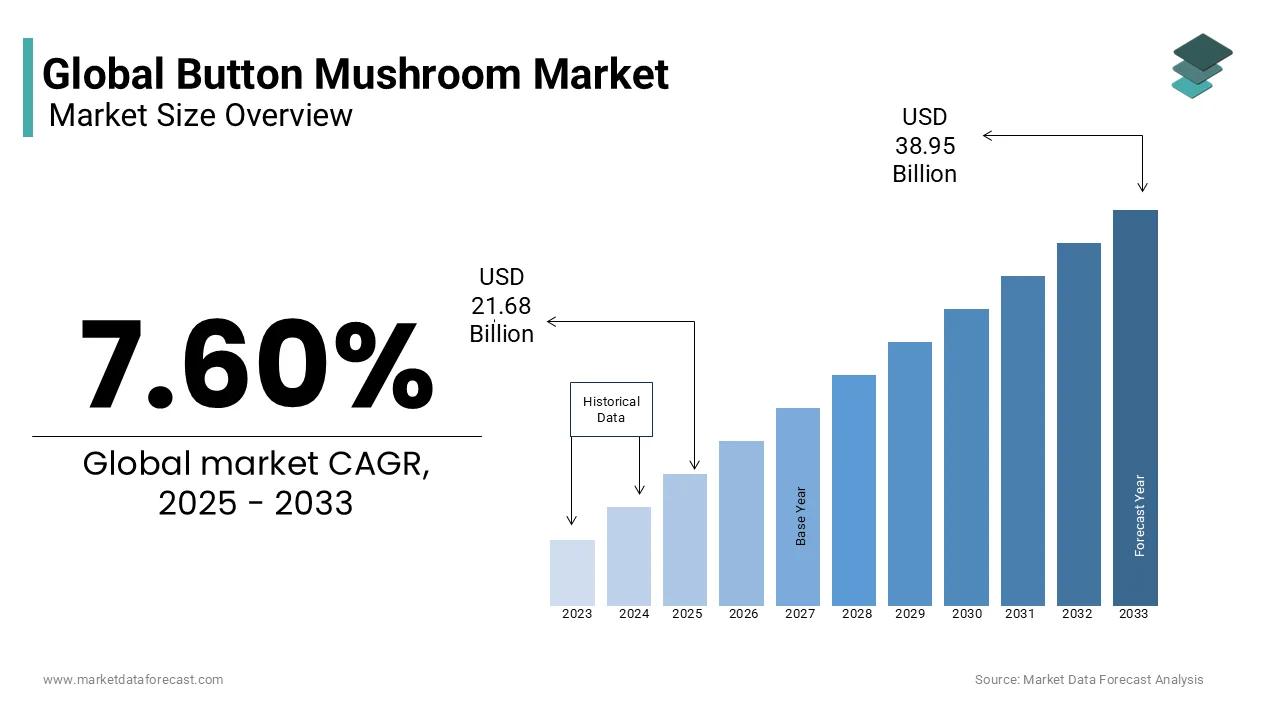
The global button mushroom market size was valued at USD 21.76 billion in 2025, is anticipated to reach USD 23.41 billion in 2026, and is projected to scale up to USD 42.06 billion by 2034, registering a compound annual growth rate (CAGR) of about 7.60% during the forecast period from 2026 to 2034. Driven by the rising preference for plant-based protein sources, the expansion of convenience food sectors, and a strong culinary heritage, the global edible fungi market continues to exhibit robust growth.
Key Executive Metrics (At-a-Glance)
- 2025 Base Valuation: USD 21.76 Billion
- 2026 Current Valuation: USD 23.41 Billion
- 2034 Forecast Valuation: USD 42.06 Billion
- Compound Annual Growth Rate (CAGR): ~7.60% (2026–2034)
- Dominant Form Segment: Fresh (holding the largest market share due to consumer preference for unprocessed, natural ingredients)
- Fastest-Growing Form Segment: Processed (estimated to grow at a CAGR of 6.4% due to expanding convenience foods and preservation tech)
- Dominant Distribution Channel: Supermarkets and Hypermarkets (dominating share by offering comprehensive product assortments and multi-format retail convenience)
- Fastest-Growing Distribution Channel: Online Retail (anticipated to register the fastest growth at a CAGR of 8.2% driven by e-commerce expansion and direct delivery models)
- Dominant Region: Asia-Pacific (accounting for approximately 40% of global production and consumption, anchored by China's massive agricultural capacity)
Core Market Drivers
- Plant-Based Diet Shift: Growing consumer migration toward vegetarian, vegan, and flexitarian diets, where button mushrooms serve as an umami-rich meat substitute.
- Convenience Food Proliferation: Rising demand for ready-to-eat and pre-prepared packaged meals featuring button mushrooms in frozen pizzas, soups, and sauces.
Primary Market Restraints & Challenges
- High Perishability & Cold Chain Constraints: Short shelf life (7 to 10 days) requiring rigid temperature controls and leading to significant post-harvest and distribution waste.
- Input Cost Volatility: Fluctuations in raw material composting components and rising energy inflation required for precise climate-controlled indoor cultivation.
Global Button Mushroom Market Segmentation Breakdown
| Segment Category | Leading Sub-Segment (2025 Base) | Fastest-Growing Sub-Segment (2026–2034) |
|---|---|---|
| By Form | Fresh (dominant segment anchored by natural texture and nutritional retention) | Processed (fastest-growing at a 6.4% CAGR driven by convenience foods and preservation tech) |
| By Distribution Channel | Supermarkets and Hypermarkets (leading retail share due to vast multi-product footprints) | Online Retail (fastest-growing at an 8.2% CAGR powered by e-commerce and direct-to-consumer delivery) |
| By Region | Asia-Pacific (leading global producer and consumer region led by China) | Middle East & Africa / Latin America (fastest-emerging zones adopting high-tech indoor farming and modern retail) |
Major Industry Players Profiled
Key enterprises shaping the global market include Shanghai Finc Bio-Tech Inc., Bonduelle Fresh Europe, Oke champ S.A., Lutece Holdings B.V., Monterey Button Mushrooms Inc., Monaghan Button Mushrooms Ireland, Drinkwater’s Button Mushrooms Limited, and Costa Pvt. Ltd.
Global Button Mushroom Market Size
The global button mushroom market size was valued at USD 21.76 billion in 2025, and the global market size is expected to reach USD 42.06 billion by 2034 from USD 23.41 billion in 2026, with a CAGR of about 7.60% throughout the forecast period.
Button mushrooms remain the most widely consumed fungal variety globally. This specific species dominates the edible fungi sector due to its mild flavor, versatility in culinary applications, and established agricultural protocols. In Europe, the market is deeply integrated into traditional dietary habits where mushrooms serve as a staple ingredient in various cuisines ranging from soups to main courses. The production infrastructure relies heavily on controlled environment agriculture, which allows for year-round harvests independent of external climatic conditions. According to the Food and Agriculture Organization of the United Nations, global mushroom and truffle production reached approximately 48.3 million metric tons in 2022, with China being the largest producer followed by the United States and several European nations. Poland and the Netherlands stand out as significant contributors within the European region due to their advanced substrate preparation technologies and efficient supply chains. Consumer awareness regarding the nutritional profile of button mushrooms, including their high content of selenium, potassium, and B vitamins, has further solidified their position in health-conscious diets. The European Union regulations on food safety and organic certification also play a pivotal role in shaping production standards, ensuring that consumers receive products free from harmful pesticides and contaminants. This regulatory framework supports premium pricing for organic variants while maintaining trust in conventional supply channels. The market dynamics are influenced by seasonal variations in demand, particularly during winter months when immune-boosting foods gain popularity among households across the continent.
MARKET DRIVERS
Rising Consumer Preference for Plant Based Protein Sources
The shift towards plant-based diets is majorly driving the growth of the global button mushrooms market. Button mushrooms possess a meaty texture and umami flavor profile that makes them an ideal substitute in vegetarian and vegan dishes, thereby driving demand in these growing segments. According to the European Commission, a survey indicated that approximately 45% of European consumers have reduced their meat consumption for various reasons. This demographic trend directly benefits mushroom producers as Agaricus bisporus is frequently used in ready meals, burgers, and minced meat replacements. The nutritional density of button mushrooms further supports this driver as they provide essential amino acids and fiber without the saturated fats associated with red meat. As per the International Society for Mushroom Science, mushroom consumption in Western Europe has increased by 15% over the past five years, correlating with the rise in plant-based product launches. Retailers have responded by expanding their fresh and processed mushroom offerings in dedicated health food aisles. Additionally, the low-calorie content of button mushrooms appeals to weight-management-focused consumers who prioritize nutrient-rich yet energy-dense foods. This alignment with broader health and sustainability trends ensures sustained growth as food manufacturers continue to innovate with mushroom-based ingredients to meet the evolving preferences of the modern European consumer base.
Expansion of Ready to Eat and Convenience Food Segments
The proliferation of ready-to-eat and convenience food products significantly propels the demand for button mushrooms as they are a preferred ingredient in pre-prepared meals, which is further fuelling the global button mushrooms market expansion. Modern urban lifestyles characterized by busy schedules have led to a surge in the consumption of packaged foods that offer quick preparation times without compromising on taste or nutrition. Button mushrooms are extensively used in frozen pizzas, pasta sauces, soups, and stir-fry mixes due to their ability to retain texture and flavor after processing. As per Eurostat, the household expenditure on convenience foods in the European Union has grown steadily, with the processed vegetable sector showing a compound annual growth rate of 4.2% in recent years. This growth trajectory underscores the integral role of versatile vegetables like button mushrooms in the industrial food-processing landscape. Manufacturers favor button mushrooms for their consistent size and shape, which facilitates automated slicing and packaging processes, reducing labor costs and improving efficiency. Furthermore, the shelf life of processed mushroom products has improved due to advancements in preservation technologies such as vacuum packing and modified atmosphere packaging. These innovations allow retailers to stock a wider variety of mushroom-infused convenience items, thereby increasing visibility and accessibility for consumers. The integration of button mushrooms into mainstream convenience food portfolios ensures a stable demand channel that is less susceptible to seasonal fluctuations compared to fresh produce markets.
MARKET RESTRAINTS
Vulnerability to Perishability and Supply Chain Constraints
The high perishability of fresh button mushrooms is a major restraint and limiting market expansion and increasing operational costs for producers and retailers. Button mushrooms have a short shelf life, typically lasting only 7 to 10 days under refrigerated conditions, which necessitates rapid distribution and efficient cold chain logistics. Any disruption in temperature control during transport can lead to significant post-harvest losses due to browning, spoilage, and microbial growth. According to the Waste and Resources Action Programme, an estimated 6.4 million metric tons of edible food is wasted at the retail and manufacturing levels in the United Kingdom annually, with delicate items like mushrooms contributing to these losses. This high waste rate erodes profit margins and forces suppliers to implement costly packaging solutions such as breathable films and protective trays to extend freshness. The reliance on specialized infrastructure also restricts market access for smaller producers who may lack the capital to invest in advanced cold storage facilities. Consequently, the market is dominated by large-scale operators who can afford the logistical complexities involved in maintaining product quality from farm to fork. Additionally, consumer perception of quality is highly sensitive to visual defects such as discoloration or bruising, which can occur easily during handling. This sensitivity requires rigorous quality control measures throughout the supply chain, adding to the overall cost structure and limiting the ability of producers to compete on price in highly competitive retail environments.
Fluctuations in Raw Material and Energy Costs
Volatility in the costs of raw materials and energy inputs is another significant challenge to the button mushrooms market. The cultivation of Agaricus bisporus requires specific substrates primarily composed of composted straw, horse manure, and gypsum, whose prices are subject to agricultural market fluctuations. Energy costs are particularly critical as mushroom farms require precise climate control, including heating, cooling, and humidity regulation, to ensure optimal growth conditions. According to the European Central Bank, energy inflation in the Eurozone reached record levels in 2022, with energy prices increasing by approximately 40% year-on-year. These escalating input costs squeeze profit margins for mushroom growers who often operate on thin financial buffers. Unlike some crops that can be stored for long periods, mushrooms must be harvested and sold quickly, preventing producers from holding inventory to wait for better prices. This inability to hedge against cost fluctuations makes the sector vulnerable to economic shocks and inflationary pressures. Furthermore, the labor-intensive nature of mushroom harvesting adds to the cost burden, especially in regions facing labor shortages or increasing minimum wage laws. Producers are forced to either absorb these costs, reducing their competitiveness, or pass them on to consumers, which may dampen demand in price-sensitive market segments. The cumulative effect of these financial pressures constrains investment in expansion and innovation within the industry.
MARKET OPPORTUNITIES
Development of Organic and Specialty Mushroom Variants
The growing demand for organic and specialty mushroom products offers a substantial opportunity for market players to differentiate their offerings and capture higher value segments. Consumers are increasingly prioritizing organic produce due to concerns over pesticide residues and environmental sustainability, creating a fertile ground for certified organic button mushrooms. As per the Research Institute of Organic Agriculture, organic farmland in the European Union has reached 16.9 million hectares, representing a growth of over 50% since 2012. This trend enables producers to command premium prices for organic button mushrooms, which are perceived as healthier and safer alternatives to conventionally grown varieties. Additionally, there is rising interest in specialty variants such as cremini and portobello, which are mature forms of the same species but offer different textures and flavors. These variants appeal to gourmet cooks and high-end restaurants seeking diverse culinary experiences. The introduction of value-added products such as marinated, sliced, or dried organic mushrooms further enhances revenue potential by extending shelf life and convenience. Retailers are responding by dedicating more shelf space to organic and specialty mushroom lines, thereby increasing visibility and accessibility. Producers who invest in organic certification and diversify their product portfolios can mitigate the risks associated with commodity pricing and build brand loyalty among discerning consumers. This strategic shift towards premiumization aligns with broader food trends emphasizing quality, transparency, and sustainability.
Integration of Mushrooms in Functional Food and Nutraceutical Applications
The incorporation of button mushrooms into functional foods and nutraceuticals represents a promising avenue for market growth, which is also driven by their bioactive properties. Button mushrooms contain beta-glucans, antioxidants, and other compounds that support immune health and metabolic function, making them attractive ingredients for health-focused product development. According to the European Food Safety Authority, scientific assessments regarding the safety and efficacy of novel foods and food additives are strictly maintained to ensure consumer health. This has led to the emergence of mushroom-enriched snacks, beverages, and dietary supplements that leverage the nutritional benefits of Agaricus bisporus. According to the Global Wellness Institute, the global wellness economy was valued at $5.6 trillion in 2022. In Europe, the demand for immunity-boosting products has surged, particularly in the post-pandemic era, prompting companies to integrate mushroom extracts into everyday consumables. This diversification allows mushroom producers to tap into new revenue streams beyond traditional fresh and processed food markets. Collaborations between agricultural producers and pharmaceutical or nutraceutical firms can facilitate the extraction and standardization of bioactive compounds, enhancing the commercial viability of mushroom-based health products. By positioning button mushrooms as functional ingredients rather than just culinary items, the market can appeal to health-conscious consumers seeking preventive healthcare solutions through diet. This strategic repositioning opens up opportunities for higher margin products and long-term customer engagement.
MARKET CHALLENGES
Labor Shortages and Dependency on Manual Harvesting
A persistent challenge facing the button mushrooms market is the acute shortage of skilled labor required for manual harvesting and processing. Despite advancements in automation, the delicate nature of button mushrooms means that harvesting remains largely a manual task to prevent damage and ensure quality selection. This dependency on human labor makes the industry vulnerable to workforce fluctuations and migration policies that affect the availability of agricultural workers. According to the European Agricultural Machinery Association, the agricultural sector in Europe relies on approximately 1 million seasonal workers annually to meet production needs. This scarcity drives up wages and increases operational costs, forcing producers to compete intensely for a limited pool of workers. The physical demands of mushroom harvesting, combined with often remote farm locations, make it less attractive to local labor pools, exacerbating the reliance on migrant workers. Political changes and border restrictions can further disrupt labor supply chains, leading to production delays and un-harvested crops. While robotic harvesting technologies are being developed, they are not yet widely adopted due to high initial costs and technical limitations in handling variable mushroom sizes and shapes. Until these technologies become more accessible and efficient, the industry will continue to grapple with labor constraints that limit scalability and increase vulnerability to external shocks. This structural issue requires long-term strategic investments in automation and workforce training to ensure sustainable growth.
Strict Regulatory Compliance and Food Safety Standards
Navigating the complex landscape of food safety regulations and compliance standards poses a significant challenge for button mushroom market in Europe. The European Union enforces stringent rules regarding pesticide residues, heavy metals, and microbial contamination in fresh produce, which require rigorous testing and documentation. According to the European Food Safety Authority, the 2022 report on pesticide residues in food showed that 96.3% of the samples fell within legally permissible levels. Compliance with these standards necessitates substantial investment in quality assurance systems, laboratory testing, and traceability technologies, which can be burdensome for small and medium-sized enterprises. Additionally, the requirement for detailed labeling, including origin information and allergen warnings, adds to the administrative workload and cost. Any failure to meet these regulatory requirements can result in severe penalties and loss of market access. The dynamic nature of food safety regulations means that producers must constantly adapt their practices to stay compliant, which requires ongoing training and updates to operational protocols. Furthermore, the increasing consumer demand for transparency regarding sourcing and production methods adds another layer of complexity, requiring producers to maintain detailed records throughout the supply chain. This regulatory pressure, while essential for consumer protection, creates barriers to entry and increases the cost of doing business, potentially stifling innovation and competition in the market. Producers must balance compliance costs with profitability to remain viable in a highly regulated environment.
REPORT COVERAGE
| REPORT METRIC | DETAILS |
| Market Size Available | 2025 to 2034 |
| Base Year | 2025 |
| Forecast Period | 2026 to 2034 |
| CAGR | 7.60% |
| Segments Covered | By Form, Application, and Region |
| Various Analyses Covered | Global, Regional and Country Level Analysis; Segment-Level Analysis; DROC; PESTLE Analysis; Porter’s Five Forces Analysis; Competitive Landscape; Analyst Overview of Investment Opportunities |
| Regions Covered | North America, Europe, APAC, Latin America, Middle East & Africa |
| Market Leaders Profiled | Shanghai Finc Bio-Tech Inc, Bonduelle Fresh Europe, Oke champ S.A, Lutece Holdings B.V., Monterey Button Mushrooms Inc, Monaghan Button Mushrooms Ireland, Drinkwater’s Button Mushrooms Limited, Costa Pvt Ltd. |
SEGMENTAL ANALYSIS
By Form Insights
The fresh segment dominated the market by commanding for the largest share of the global market in 2025. The dominance of fresh segment in the global market can be credited to the strong consumer preference for unprocessed natural ingredients in daily cooking. Fresh button mushrooms are perceived as healthier and more nutritious compared to their processed counterparts as they retain their original texture, flavor, and full nutritional profile, including vital vitamins and minerals. According to the European Commission, fresh fruit and vegetable consumption in the EU averages approximately 364 grams per day per person. This preference is further reinforced by the culinary versatility of fresh Agaricus bisporus, which can be easily incorporated into salads, soups, stir-fries, and grilled dishes without the need for extensive preparation. The availability of fresh mushrooms in local markets and grocery stores ensures consistent access for consumers who prioritize quality and freshness in their dietary choices. Additionally, the rise of home cooking trends during recent years has amplified the demand for fresh produce as individuals seek to control the ingredients and nutritional content of their meals. Retailers support this dominance by maintaining robust cold chain logistics to ensure that fresh mushrooms reach consumers in optimal condition, thereby sustaining high sales volumes. The immediate usability of fresh mushrooms without the need for rehydration or additional processing steps also appeals to time-conscious consumers who value convenience without compromising on the integrity of natural food sources.
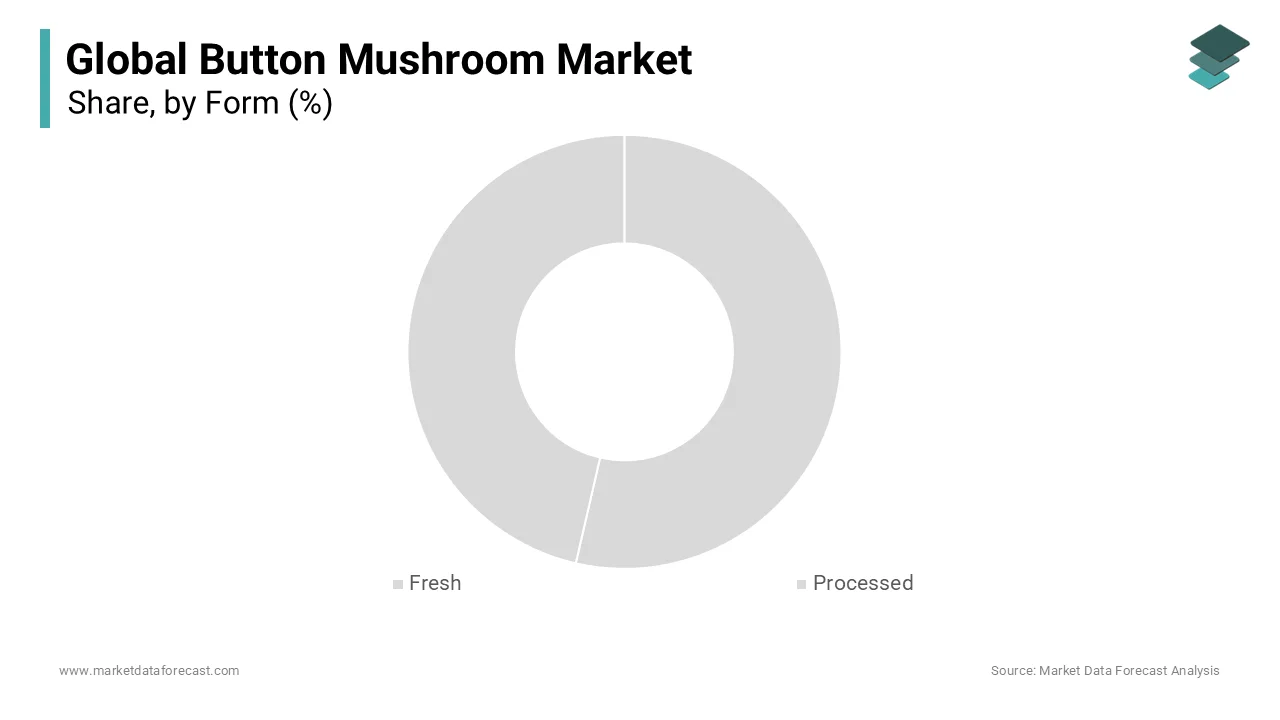
However, the processed segment is on the rise and is estimated to grow at a CAGR of 6.4% during the forecast period in the global market owing to the expanding convenience food industry and advancements in preservation technologies. Processed button mushrooms, including canned, dried, and frozen variants, offer significant advantages in terms of shelf life and ease of storage, making them ideal for industrial food production and households with limited refrigeration space. As per the Food and Agriculture Organization of the United Nations, the global export value of prepared or preserved mushrooms reached over $2.5 billion in 2021. The ability of processed mushrooms to retain their nutritional value while offering extended usability appeals to manufacturers of ready-to-eat meals, soups, and sauces who require consistent ingredient quality year-round. Furthermore, innovations in packaging such as vacuum sealing and modified atmosphere packaging have enhanced the sensory qualities of processed mushrooms, reducing the stigma associated with canned or preserved vegetables. The increasing penetration of modern retail formats in emerging economies also facilitates the distribution of processed mushroom products to a broader consumer base. Urbanization and changing lifestyles, characterized by smaller household sizes and busier schedules, further accelerate the adoption of processed mushrooms as they eliminate the need for cleaning and chopping. This segment benefits from the scalability of industrial processing, which allows for cost-effective production and widespread availability across diverse geographic regions.
By Distribution Channel Insights
The supermarkets and hypermarkets segment occupied the dominant position in the global market in 2025 due to their ability to offer a wide variety of fresh and processed mushroom products under one roof. These large-format retail outlets provide consumers with the convenience of purchasing mushrooms alongside other grocery items, thereby encouraging impulse buys and regular replenishment. According to Eurostat, modern retail channels like supermarkets and hypermarkets account for more than 70% of the market share for food and beverage retail in several European nations. The structured environment of these stores allows for effective merchandising strategies, such as prominent placement of fresh produce in high-traffic areas, which enhances visibility and drives sales volume. Additionally, supermarkets often have established relationships with large-scale mushroom producers, ensuring a consistent supply of high-quality products that meet strict safety and freshness standards. The availability of both conventional and organic mushroom options caters to diverse consumer preferences and income levels, further solidifying the segment's leadership. Private label brands offered by major supermarket chains also contribute to market dominance by providing affordable alternatives that appeal to price-sensitive shoppers. The integration of digital technologies, such as online shopping platforms and loyalty programs by supermarket chains, enhances customer engagement and retention. Furthermore, the ability of these retailers to manage complex cold chain logistics ensures that perishable fresh mushrooms maintain their quality from distribution centers to store shelves, thereby minimizing waste and maximizing consumer satisfaction.
However, the online retail segment is estimated to register fastest growth and is anticipated to grow at a CAGR of 8.2% over the forecast period in the global market due to the rapid adoption of e-commerce platforms and direct-to-consumer delivery models. The convenience of ordering mushrooms from home and having them delivered directly to the doorstep appeals to busy urban consumers who value time efficiency and contactless shopping experiences. According to the International Trade Centre, the global e-commerce market reached a value of approximately $26.7 trillion in 2020. Online platforms offer a wider selection of specialty and organic mushroom varieties that may not be available in local physical stores, thereby attracting niche market segments. The use of advanced logistics and temperature-controlled packaging ensures that fresh mushrooms arrive in excellent condition, addressing previous concerns about product quality in online grocery shopping. Subscription services for regular deliveries of fresh produce, including mushrooms, are gaining popularity among health-conscious consumers who seek consistent access to high-quality ingredients. Social media and digital marketing campaigns by online retailers effectively highlight the nutritional benefits and culinary uses of button mushrooms, driving awareness and demand. The integration of artificial intelligence in recommendation engines helps personalize shopping experiences, suggesting mushroom-based recipes and complementary products. This segment benefits from the increasing penetration of smartphones and internet connectivity in emerging markets, expanding the potential customer base for online mushroom sales.
REGIONAL ANALYSIS
Asia Pacific Button Mushroom Market Analysis
Asia Pacific led the button mushrooms market globally in 2025 and is likely to maintain its global leadership in mushroom production over the next few years as China continues to expand its industrial cultivation capacity and India emerges as a significant regional consumer. The region holds the largest share of the global button mushrooms market accounting for approximately 40% of total production and consumption, driven by massive population bases and increasing dietary diversification. According to the Food and Agriculture Organization of the United Nations, China’s mushroom and truffle production exceeded 41 million metric tons in 2022. The region benefits from favorable climatic conditions and low labor costs which support large-scale commercial farming operations. Rising income levels in countries such as India and Southeast Asian nations are leading to greater adoption of western dietary habits, including the consumption of button mushrooms in various cuisines. Government initiatives in several Asian countries promote mushroom farming as a sustainable agricultural practice that provides livelihood opportunities for rural communities. The expansion of modern retail infrastructure and cold chain facilities in urban centers facilitates the distribution of fresh mushrooms to a growing middle class. Additionally, the cultural significance of mushrooms in traditional medicine and cuisine in countries like Japan and South Korea supports steady demand. The region is also witnessing increased investment in processing facilities to cater to export markets, particularly in Europe and North America. Urbanization and changing lifestyles are driving demand for convenient and healthy food options, positioning button mushrooms as a key component of modern diets. The presence of major global players and local producers creates a competitive landscape that fosters innovation and efficiency in production and distribution channels across the Asia Pacific region.
Europe Button Mushroom Market Analysis
Europe is likely to remain at the forefront of the organic and specialty mushroom market for the next few years as stringent EU sustainability mandates and consumer health trends drive a shift toward premium fungi varieties. The region represents a mature and highly developed market for button mushrooms, characterized by high per capita consumption and stringent quality standards. The region accounts for approximately 25% of global mushroom consumption, with Poland, the Netherlands, and Spain being the leading producers. According to the European Mushroom Council, Poland exported over 245,000 tons of fresh mushrooms in 2022, primarily to other European markets. The European market is driven by strong consumer awareness of the health benefits of mushrooms, including their role in immune support and weight management. Strict regulatory frameworks regarding food safety and organic certification ensure high product quality, which commands premium prices in retail markets. The prevalence of organized retail chains and well-established distribution networks facilitates efficient market penetration across the continent. Growing interest in sustainable and locally sourced food products supports the demand for domestically produced button mushrooms. The region is also a hub for innovation in mushroom cultivation technologies, including vertical farming and automated harvesting systems. Increasing demand for plant-based proteins and meat substitutes further boosts the popularity of button mushrooms in culinary applications. The presence of numerous small and medium-sized enterprises alongside large multinational corporations creates a dynamic market environment. Seasonal variations in demand are mitigated by advanced storage and processing capabilities, ensuring year-round availability. The European market serves as a benchmark for quality and sustainability, influencing global trends in mushroom production and consumption.
North America Button Mushroom Market Analysis
North America is likely to experience accelerated growth in the "meat-alternative" mushroom segment over the next few years as the flexitarian trend gains more mainstream traction in both the US and Canada. The region holds a significant position in the global button mushrooms market with the United States and Canada being key contributors to regional demand. The market is characterized by steady growth driven by a health-conscious consumer base that increasingly incorporates mushrooms into balanced diets. According to the United States Department of Agriculture, the value of sales for the 2022-2023 mushroom crop in the US was $1.07 billion. The popularity of plant-based diets and flexitarianism has elevated the status of button mushrooms as a versatile ingredient in vegetarian and vegan recipes. The presence of major retail chains and food service providers ensures widespread availability of fresh and processed mushroom products. Increasing awareness of the nutritional benefits of mushrooms, including their high content of antioxidants and vitamins, supports consistent demand. The region also benefits from advanced agricultural technologies and research initiatives that improve yield and quality of mushroom crops. Growing interest in gourmet cooking and ethnic cuisines has expanded the culinary applications of button mushrooms beyond traditional uses. The market is supported by robust supply chains and logistics infrastructure that facilitate efficient distribution across vast geographic areas. Regulatory standards for food safety and labeling are strictly enforced, ensuring consumer trust in mushroom products. The trend towards organic and sustainably grown mushrooms is gaining traction among environmentally conscious consumers. Innovation in packaging and preservation technologies extends shelf life and reduces waste, enhancing the overall efficiency of the market.
Latin America Button Mushroom Market Analysis
Latin America is likely to transition from a niche producer to a growing regional consumer market over the next few years as urbanization in Brazil and Mexico drives the expansion of modern supermarkets and healthy dietary trends. The region represents an emerging market for button mushrooms with significant potential for growth, driven by increasing urbanization and changing dietary preferences. Countries such as Brazil, Mexico, and Chile are leading the regional production and consumption of mushrooms, although the market size remains smaller compared to North America and Europe. According to the Inter-American Institute for Cooperation on Agriculture, agricultural productivity in Latin America has grown at an average annual rate of approximately 1.9% over the past two decades. The region benefits from favorable climatic conditions that support year-round cultivation of button mushrooms with lower energy costs for climate control. Increasing disposable incomes and the expansion of modern retail formats in urban areas are making mushrooms more accessible to a broader consumer base. The influence of global food trends and the proliferation of international restaurant chains are introducing mushroom-based dishes to local populations. Government support for agricultural diversification encourages farmers to adopt mushroom cultivation as a high-value crop. The market is characterized by a mix of small-scale local producers and larger commercial operations catering to domestic and export markets. Challenges such as limited cold chain infrastructure and lack of consumer awareness in rural areas hinder faster growth. However, initiatives to educate consumers about the culinary and health benefits of mushrooms are gradually expanding the market. The potential for value-added products such as canned and dried mushrooms offers opportunities for market development. Regional trade agreements facilitate the exchange of mushroom products among Latin American countries, enhancing market integration.
Middle East and Africa Button Mushroom Market Analysis
The Middle East and Africa is likely to see a surge in high-tech indoor mushroom farming over the next few years as Gulf nations invest in controlled-environment agriculture to improve local food security and reduce import dependence. The region constitutes a niche market for button mushrooms, with gradual adoption driven by expatriate communities and increasing exposure to international cuisines. Countries such as South Africa, Egypt, and the United Arab Emirates are the primary consumers and producers in the region. According to the African Development Bank, agriculture accounts for about 25% of Africa’s GDP and is a major focus for developmental investment. The market is influenced by the presence of large hotel and restaurant sectors in urban centers that demand high-quality fresh produce for international menus. Growing health awareness among the middle-class population is leading to increased inclusion of mushrooms in daily diets. The hot climate in many parts of the region necessitates controlled environment agriculture, which increases production costs but ensures consistent quality. Import dependence for certain varieties and processed products remains high due to limited local production capacity. However, investments in agricultural technology and training programs are helping to boost local cultivation. The market faces challenges related to supply chain inefficiencies and limited consumer familiarity with mushroom preparation methods. Efforts to promote mushroom consumption through various awareness programs are steadily expanding the consumer base.
COMPETITIVE LANDSCAPE
The competition in the button mushrooms market is characterized by a mix of large multinational corporations and numerous small to medium sized local producers creating a fragmented yet dynamic landscape. Large players leverage economies of scale advanced technologies and extensive distribution networks to maintain dominance while smaller firms compete on niche offerings such as organic or locally sourced products. Price competition remains intense due to the commodity nature of fresh mushrooms forcing producers to continuously optimize costs and improve efficiency. Differentiation through sustainability certifications and innovative packaging serves as a key competitive tool as consumers increasingly prioritize environmental responsibility. The barrier to entry is moderate due to the technical expertise required for controlled environment agriculture but low capital requirements for small scale operations allow new entrants to emerge. Regional players often hold strong positions in local markets due to established relationships and logistical advantages. Consolidation through mergers and acquisitions is observed as larger entities seek to expand geographic reach and product portfolios. The market demands constant innovation in cultivation techniques and supply chain management to address challenges such as labor shortages and perishability. Competitive success depends on balancing cost efficiency with product quality and sustainability credentials.
Key Market Players
Some of the key players in button mushroom market are
- Shanghai Finc Bio Tech Inc.
- Bonduelle Fresh Europe
- Okechamp S.A.
- Lutece Holdings B.V.
- Monterey Button Mushrooms Inc.
- Monaghan Button Mushrooms Ireland
- Drinkwater’s Button Mushrooms Limited
- Costa Pvt. Ltd.
Top Players in the Market
- Monaghan Mushrooms stands as a leading global supplier of fresh mushrooms with extensive operations across Europe and North America. The company focuses on sustainable cultivation practices and advanced agricultural technologies to ensure consistent high quality produce. Recently Monaghan Mushrooms has invested significantly in renewable energy sources for its farming facilities reducing its carbon footprint and enhancing operational efficiency. The firm actively engages in research and development to improve mushroom strains and substrate formulations. By strengthening its supply chain logistics Monaghan Mushrooms ensures timely delivery of fresh products to major retail partners. Their commitment to food safety and traceability reinforces consumer trust and brand loyalty. The company also collaborates with local farmers to expand production capacity while maintaining strict quality standards. These strategic initiatives enable Monaghan Mushrooms to maintain a robust presence in the competitive global market and meet the growing demand for nutritious fungal products.
- Costa Group Holdings is a prominent player in the Australian and international mushroom market known for its innovative approach to controlled environment agriculture. The company utilizes state of the art growing facilities that optimize yield and resource efficiency. Costa Group has recently expanded its product portfolio to include value added mushroom items such as pre sliced and marinated varieties catering to convenience seeking consumers. The firm emphasizes sustainability by implementing water recycling systems and organic waste management programs. Through strategic partnerships with retailers Costa Group enhances product visibility and accessibility in key markets. The company also invests in digital technologies to monitor crop health and predict harvest times accurately. These efforts strengthen its market position by ensuring consistent supply and superior product quality. Costa Group continues to explore new growth opportunities through expansion into adjacent regions and development of novel mushroom based food solutions.
- Scelta Mushrooms is a leading European producer specializing in both fresh and processed mushroom products with a strong focus on innovation and sustainability. The company operates advanced processing facilities that convert raw mushrooms into canned dried and frozen formats for global distribution. Scelta Mushrooms has recently launched new eco friendly packaging solutions to reduce plastic waste and appeal to environmentally conscious consumers. The firm actively participates in circular economy initiatives by utilizing mushroom byproducts for animal feed and bioenergy production. By investing in automated harvesting technologies Scelta Mushrooms improves operational efficiency and reduces labor dependency. The company maintains strong relationships with retail and food service clients across Europe and beyond. Its commitment to quality and sustainability drives brand recognition and customer retention. Scelta Mushrooms continues to expand its global footprint through strategic collaborations and investment in production infrastructure ensuring long term growth and market relevance.
Top Strategies Used by the Key Market Participants
Key players in the button mushrooms market primarily employ vertical integration strategies to control the entire supply chain from substrate preparation to final distribution. This approach ensures consistent quality and reduces dependency on external suppliers. Companies heavily invest in sustainable farming practices including renewable energy adoption and waste reduction programs to meet regulatory requirements and consumer expectations. Product diversification is another critical strategy where firms expand into value added segments such as pre sliced marinated and organic mushrooms to capture higher margins. Strategic partnerships with retailers and food service providers enhance market access and brand visibility. Innovation in packaging technologies extends shelf life and reduces spoilage addressing perishability challenges. Additionally companies focus on research and development to improve crop yields and disease resistance. Digital transformation through automation and data analytics optimizes production efficiency and inventory management. These combined strategies enable market participants to maintain competitive advantage and respond effectively to evolving consumer preferences and market dynamics.
MARKET SEGMENTATION
This research report on the global button mushroom market has been segmented and sub-segmented based on form, Application & region.
By Form
- Fresh
- Processed
By Application
- Food Processing Industry
- Retail Outlets
- Direct Consumption
- Pharmaceutical
- Food Services
- Others
By Distribution Channel
- Supermarkets/Hypermarkets
- Convenience Stores
- Others
By Region
- North America
- Europe
- Asia Pacific
- Latin America
- MIddle East and Africa