- Product Description Description
- Table of Contents TOC
- List of Table & Figure LOT
- Get Free Sample PDF Sample PDF
Market Size, 2025
$23.40 BnMarket Estimate, 2026
$25.56 BnMarket Forecast, 2034
$51.80 BnCAGR, 2026–2034
9.23%Executive Summary: Europe Mushroom Market
- Market Scope: Comprehensive regional market analysis covering mushroom types, product forms, distribution channels, country-level leadership frameworks, and plant-based protein metrics for the European mushroom sector.
- Market Valuation: Valued at USD 23.40 billion (2025), estimated at USD 25.56 billion (2026), and projected to reach USD 51.80 billion by 2034, registering a robust CAGR of 9.23% (2026–2034).
- Primary Growth Drivers: Accelerating shift toward plant-based diets, umami flavor popularity, consumer health consciousness regarding B vitamins and antioxidants, and functional food/medicinal mushroom expansions. Market challenges include short shelf-life and cultivation temperature sensitivities, while opportunities lie in reishi adaptogenic wellness products, processed mushroom ingredients, and online retail channels.
Key Market Segment Metrics (2026–2034)
| Category | Leading Segment Position | Fastest-Growing Segment |
|---|---|---|
| By Type / Form / Distribution | Button mushroom (held 58.2% share in 2025) & Hypermarkets/supermarkets (led with 64.3% share in 2025) | Reishi mushroom segment (witnessing highest CAGR of 14.2% for wellness) & Online stores (fastest CAGR of 18.5%) |
| By Region / Country | France (held largest market share at 23.2% in 2025 supported by gourmet traditions) | Germany (identified as a key growth market due to its robust plant-based food sector) |
Major Market Players & Market Structure
Market Structure: Highly competitive European mushroom cultivation and processing landscape centering on vertical integration, sustainable farming, renewable energy investments for facilities, and specialized food ingredient manufacturing.
Key Companies: Monaghan Mushrooms Group, Banken Champignons, Smithy Mushrooms, Maesyffin Mushrooms, Hughes Mushrooms Ltd, Monalisa SpA, Flemming Dreisig, Scelta Mushrooms BV, and BioFungi GmbH.
Europe Mushroom Market Size
The mushroom market size in Europe was valued at USD 23.40 billion in 2025. The European market is expected to grow at a CAGR of 9.23% from 2026 to 2034 and be valued at USD 51.80 billion by 2034 from USD 25.56 billion in 2026.
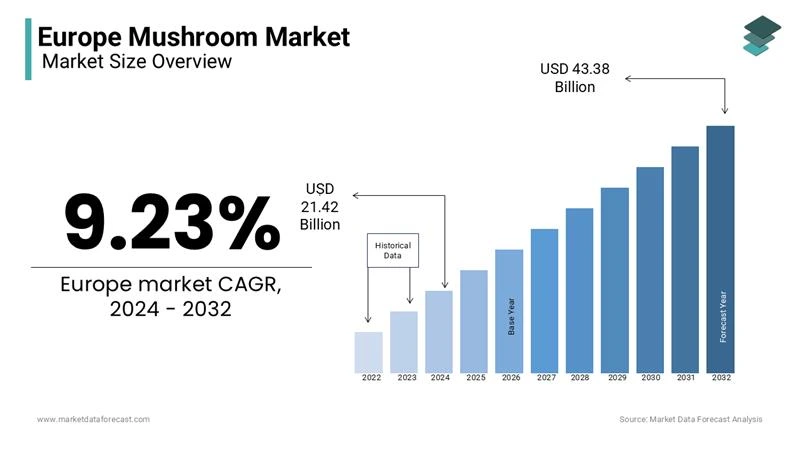
Mushrooms are increasingly recognized not only as a versatile ingredient but also as a sustainable protein source aligned with plant-forward dietary shifts. The European Food Safety Authority has affirmed the safety and nutritional value of cultivated mushrooms, noting their rich content of B vitamins, selenium, and ergothioneine, with an antioxidant unique to fungi. Consumer interest in umami flavor and meat alternatives has further elevated mushrooms from a commodity vegetable to a strategic food category.
MARKET DRIVERS
Rising Consumer Preference for Plant-Based and Sustainable Diets Drives Demand
The accelerating shift toward plant-based eating across Europe is a primary catalyst for mushroom consumption, given their functional and nutritional attributes as a meat substitute. As per the European Commission’s Farm to Fork Strategy, over 30 percent of consumers in Western Europe reported reducing meat intake in 2023, with mushrooms cited as a top alternative due to their fibrous texture and umami depth. Nutritional science further supports this trend; the European Food Information Council states that mushrooms provide 2 to 3 grams of protein per 100 grams and contain zero cholesterol, making them ideal for heart-conscious diets.
Expansion of Functional Food and Nutraceutical Applications Enhances Market Relevance
Mushrooms are gaining prominence in Europe’s functional food sector due to bioactive compounds such as beta-glucans, ergothioneine, and polysaccharides linked to immune modulation and cognitive health. The European Food Safety Authority has issued positive scientific opinions on the role of fungal beta-glucans in maintaining normal blood cholesterol levels by enabling approved health claims on product labeling. In Finland and Denmark, public health campaigns now promote mushrooms as part of brain-healthy diets for aging populations, citing a 2022 Karolinska Institute study that associated regular mushroom intake with a 30 percent lower risk of mild cognitive impairment.
MARKET RESTRAINTS
Stringent Phytosanitary and Traceability Regulations Increase Compliance Burden
The rigorous food safety and traceability mandates that impose significant operational constraints on producers, particularly small-scale growers, are degrading the growth of the European mushroom market. As per the European Union’s Regulation (EC) No 178/2002, all food business operators must implement full traceability systems from substrate sourcing to retail, requiring digital record keeping and batch coding. Cross-border trade faces additional hurdles; shipments from non-EU countries like China undergo mandatory laboratory testing for cadmium and lead under Commission Regulation (EU) 2023/915, causing delays.
Volatility in Substrate Availability and Energy Costs Constricts Production Stability
Mushroom cultivation in Europe is highly sensitive to fluctuations in substrate composition and energy pricing, to controlled environment farming is hindering the growth of the European mushroom market. The primary substrate, composted wheat straw and poultry manure, faces supply instability due to competing agricultural demands and environmental regulations on manure use. As per the European Environment Agency, restrictions on livestock manure application under the Nitrates Directive have reduced the availability of high-quality organic compost in regions like Flanders and Northern France, key mushroom-producing zones. Simultaneously, energy dependency poses an acute risk; indoor mushroom farms require precise temperature, humidity, and CO2 control, consuming 80 to 120 kilowatt hours per square meter annually according to Wageningen University. The European Central Bank reported that industrial electricity prices in the EU surged by 142 percent between 2021 and 2022 during the energy crisis, forcing several Dutch and Polish growers to reduce cycles or halt production. Although renewable integration is advancing, only 18 percent of European mushroom facilities used on-site solar or geothermal systems as of 2023, per the European Mushroom Growers Federation.
MARKET OPPORTUNITIES
Development of Vertical and Urban Mushroom Farming Opens New Production Frontiers
The innovative cultivation models, such as vertical and urban mushroom farming, to localize production and reduce supply emissions, are creating new opportunities for the growth of the European mushroom market. These systems employ circular economy principles by converting coffee grounds, brewery waste, and straw into substrate, with Amsterdam’s GroCycle reporting a 95 percent waste diversion rate from municipal streams. Urban cultivation also shortens time to shelf; mushrooms grown in Paris-based Mycopolitan reach retailers within 12 hours of harvest compared to 72 hours for conventional supply chains.
Growing Integration of Mushrooms into Gourmet and Ethnic Cuisine Expands Culinary Demand
The diversification of European palates through immigration and culinary globalization is significantly propelling the growth of the European mushroom market. High-end gastronomy further elevates mushrooms; Michelin-starred chefs in Italy and Spain increasingly use foraged porcini and cultivated maitake in seasonal tasting menus, which is prompting premium perception. Foodservice distributors report a 34 percent annual increase in orders for exotic mushroom blends since 2021, as per the European Foodservice Suppliers Association.
MARKET CHALLENGES
Climate Sensitivity of Traditional Cultivation Methods Threatens Yield Consistency
They are vulnerable to climatic variability due to reliance on semi-controlled or traditional growing environments. As per the European Mushroom Growers Federation, nearly 40 percent of farms in Southern and Eastern Europe still use non-climate-controlled tunnels or sheds, where ambient temperature and humidity directly impact spawn run and pinhead formation. The Copernicus Climate Change Service recorded that the summer of 2022 saw average temperatures in Spain and Italy exceed 35 degrees Celsius for 22 consecutive days, causing a 15 to 20 percent drop in button mushroom yields due to heat-induced staling of mycelial growth. While climate-controlled facilities mitigate these risks, their high capital cost limits adoption among family-run operations that constitute over 65 percent of European mushroom farms.
Labor Shortages and Mechanization Gaps Impede Operational Scalability
The workforce constraints that hinder productivity and modernization, particularly during labor-intensive phases like harvesting and casing, are likely to degrade the growth of the European mushroom market. As per the European Commission’s Agricultural Labor Market Report 2023, the horticulture sector experienced a 28 percent shortfall in seasonal workers post-pandemic, with mushroom farms reporting the highest vacancy rates due to the physically demanding and time-sensitive nature of tasks. In the Netherlands, where over 250 million kilograms of mushrooms are produced annually, growers cite difficulty in recruiting workers willing to perform night shift harvesting under high humidity conditions. Although robotic harvesters exist, their adoption remains limited; fewer than 5 percent of European farms use automation as per Wageningen Economic Research, primarily due to high upfront costs and technical complexity in handling delicate fruiting bodies. This labor bottleneck not only caps output but also delays the transition to precision agriculture, leaving the sector exposed to rising wage pressures and demographic shifts in rural communities.
REPORT COVERAGE
| REPORT METRIC | DETAILS | |
| Market Size Available | 2025 to 2034 | |
| Base Year | 2025 | |
| Forecast Period | 2026 to 2034 | |
| CAGR | 9.23% | |
| Segments Covered | By Type, Form, Distribution Channel, End Use, and Region | |
| Various Analyses Covered | Global, Regional, & Country Level Analysis; Segment-Level Analysis; DROC; PESTLE Analysis; Porter’s Five Forces Analysis; Competitive Landscape; Analyst Overview of Investment Opportunities | |
| Regions Covered | UK, France, Spain, Germany, Italy, Russia, Sweden, Denmark, Switzerland, Netherlands, Turkey, Czech Republic, Rest of Europe | |
| Market Leaders Profiled | Monaghan Mushrooms Group, Banken Champignons, Smithy Mushrooms, Maesyffin Mushrooms, Hughes Mushrooms Ltd, Monalisa SpA, Flemming Dreisig, Scelta Mushrooms BV, and BioFungi GmbH | |
SEGMENTAL ANALYSIS
By Type Insights
The button mushroom segment was accounted for in holding 58.2% of the European mushroom market share in 2025, with its widespread culinary acceptance, year-round availability, and cost-effective cultivation across temperate climates. Button mushrooms comprising white button, cremini, and portobello variants of Agaricus bisporus are deeply embedded in European food culture, appearing in everything from supermarket salads to restaurant sauces. Retail penetration is near universal; a 2023 survey by the European Fresh Produce Association found that 94 percent of hypermarkets in Germany, France, and Italy stock fresh button mushrooms weekly.
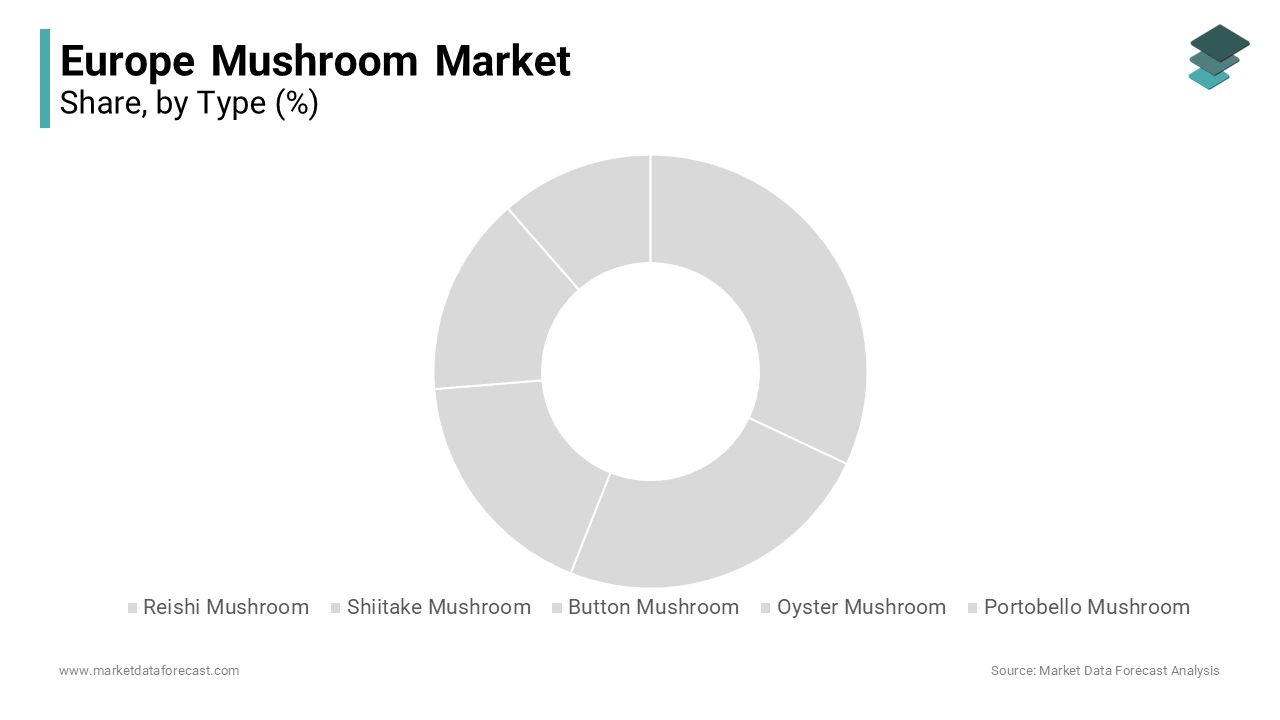
The reishi segment is likely to grow with an expected CAGR of 14.2% during the forecast period, owing to the rising consumer interest in adaptogenic and immune-supporting botanicals in wellness-conscious markets like Germany and Sweden. Regulatory pathways have also eased over 120 reishi-based dietary supplements received national food safety approvals in the EU in 2023 as per the European Food Safety Authority’s Novel Food Catalogue. Retailers are responding with dedicated wellness aisles; DM Drogerie in Germany reported a 41 percent year-on-year increase in reishi powder and capsule sales in 2023. Additionally, functional beverage startups in Switzerland and the Netherlands now incorporate dual-extracted reishi into nootropic coffee and tea blends targeting stress resilience.
By Form Insights
The fresh mushrooms segment was the largest and held a dominant share of the Europe mushroom market in 2025, with the strong culinary traditions that prioritize whole ingredient cooking, particularly in Southern and Central Europe. Consumers associate freshness with superior taste, texture, and nutritional integrity; a Eurobarometer survey in 2022 revealed that 81 percent of EU households prefer purchasing whole mushrooms over processed alternatives for home cooking. Moreover, foodservice demand remains robust. According to the European Restaurant Association, over 70% of mushroom usage in commercial kitchens is fresh due to superior searing and umami release. National dietary campaigns in Italy and Spain further promote fresh mushroom consumption as part of Mediterranean eating patterns, cementing their position as a staple produce item.
The processed mushrooms segment is likely to grow with an expected CAGR of 11.8% throughout the forecast period, with the rise of convenience eating, plant-based product development, and functional food innovation. In the nutraceutical space, dual-extracted mushroom concentrates are integrated into gummy capsules and protein bars; MycoTech Labs in Denmark scaled production by 200 percent in 2023 to meet demand from supplement brands. Additionally, the EU’s Clean Label Initiative encourages the removal of artificial additives, making mushroom-derived ingredients attractive for clean formulation.
By Distribution Channel Insights
The hypermarkets and supermarkets segment was the largest by occupying 64.3% of the Europe mushroom market share in 2025, with its extensive physical footprint, high foot traffic, and integrated fresh produce sections that facilitate impulse purchases. Major retailers like Edeka in Germany, Tesco in the UK, and Auchan in France allocate prominent shelf space to mushrooms, often featuring them in weekly promotions tied to seasonal recipes or sustainability campaigns. Cold chain integration ensures consistent quality from distribution center to shelf, with real-time temperature monitoring now standard in 85% of EU supermarket logistics networks as per the European Logistics Association.
The online stores segment is likely to grow with a significant CAGR of 18.5% during the forecast period, with the digitization of grocery shopping accelerated by pandemic-induced behavioral shifts and sustained by convenience and product discovery. Platforms like Ocado in the UK and Picnic in the Netherlands offer same-day delivery of fresh mushrooms with precise harvest date labeling, appealing to quality-conscious urban consumers.
By End Use Insights
The food and beverages industry segment held a dominant share of the Europe mushroom market in 2025. Mushrooms are integral to both traditional cuisine and modern food innovation across the continent. Dairy alternatives are also incorporating mushrooms. Arla Foods launched a shiitake-infused plant-based cheese in Denmark in 2023, targeting flavor complexity. National culinary identities reinforce the usage of France’s “cuisine du te, terroir” celebrates wild and cultivated mushrooms in autumnal dishes, while Polish bigos stew relies on dried forest mushrooms.
The pharmaceutical industry segment is lucratively growing with an expected CAGR of 16.1% during the forecast period, with the clinical validation of fungal bioactives for immune modulation, neuroprotection, and metabolic health. Beta-glucans from shiitake and reishi are now incorporated into medical nutrition products for oncology patients. Fresenius Kabi launched an immune support formula containing lentinan in German hospitals in 2023 following positive Phase III trial results. The European Medicines Agency has granted orphan drug designation to a reishi triterpene compound for rare autoimmune conditions, accelerating regulatory pathways. Contract manufacturers like Siegfried in Switzerland have invested in GMP-compliant extraction facilities dedicated to mushroom APIs.
REGIONAL ANALYSIS
France Market Analysis
The French mushroom market held 23.2% of the share in 2025, with strong domestic consumption and gourmet culinary traditions. According to the French Ministry of Agriculture, French households consume an average of 2.1 kilograms of mushrooms per person annually. The country produces over 150,000 tons yearly, with significant output of specialty varieties like pleurotes and girolles alongside button mushrooms. France’s “Label Rouge” certification for premium mushrooms ensures quality differentiation, with certified products commanding 30 percent higher retail prices as per the French Fresh Produce Interbranch Organization.
Germany Market Analysis
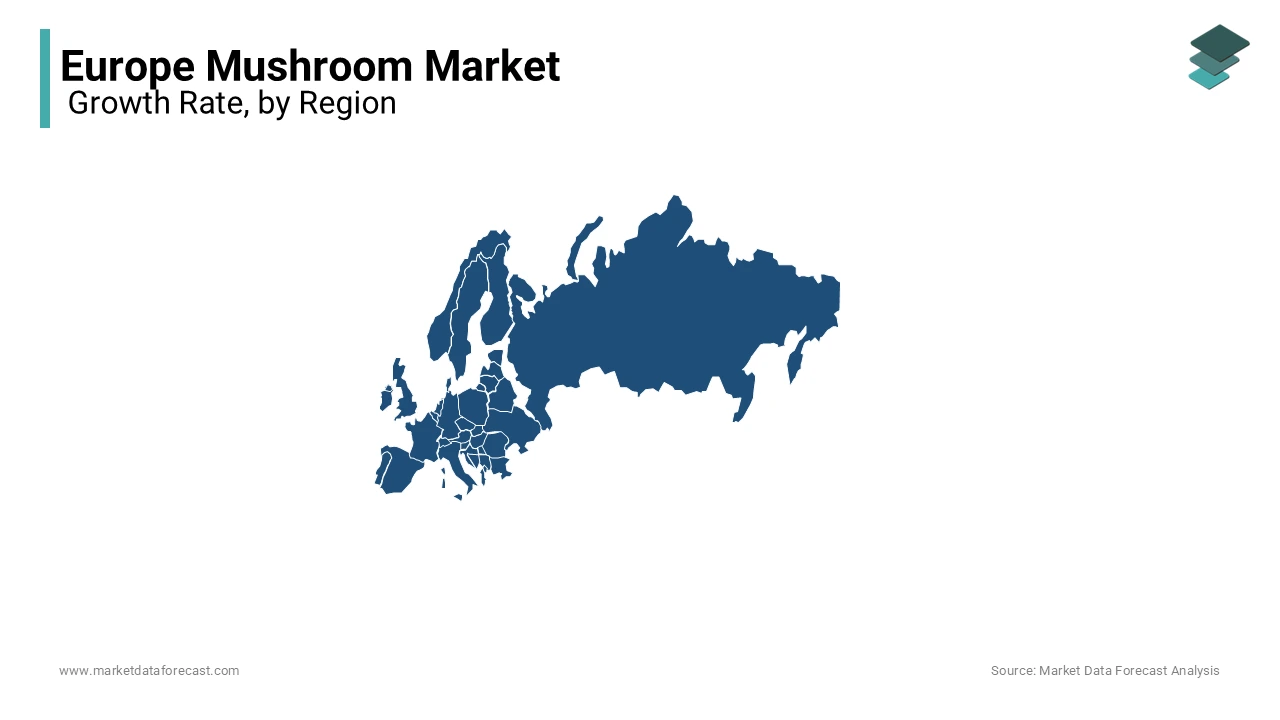
German mushroom market is likely to have significant growth opportunities in the coming years. As per the German Federal Statistical Office, Germans consumed 1.8 kilograms of mushrooms per person in 2023, with strong demand for both fresh and dried forms. Major food companies like Rügenwalder Mühle and Veganz integrate mushroom protein into plant-based portfolios, reflecting the nation’s vegan movement—12 percent of Germans identify as vegetarian or vegan per the Robert Koch Institute. Germany also hosts key R&D centers; the Fraunhofer Institute developed a mycelium fermentation platform for bioactive extraction in 2022.
Italy Market Analysis
Italy's mushroom market growth with its integration of mushrooms into traditional cuisine and growing specialty cultivation. According to the Italian National Institute of Statistics, Italy produces over 100,000 tons annually, with significant regional output of porcini (wild) and cultivated oyster mushrooms in Emilia Romagna and Piedmont. Export of dried porcini remains a niche strength, with Italy supplying 80 percent of the EU’s wild dried mushroom imports as per the European Commission’s Trade Directorate. Recent investments in controlled environment agriculture in Southern Italy aim to reduce seasonal dependency.
COMPETITION OVERVIEW
The Europe mushroom market is shaped by a mix of large integrated producers, regional cooperatives, and agile specialty growers. Established players like Monaghan Mushrooms and Scelta dominate through scale, technological innovation, and diversified product portfolios spanning fresh, processed, and functional formats. These companies leverage strong relationships with supermarket chains and food manufacturers to secure shelf space and ingredient contracts. Simultaneously, niche producers focusing on organic exotic or medicinal mushrooms are gaining traction by catering to wellness-oriented and gourmet segments.
KEY MARKET PLAYERS
A few of the dominating players in the Europe Mushroom Market include
- Monaghan Mushrooms Group
- Banken Champignons
- Smithy Mushrooms
- Maesyffin Mushrooms
- Hughes Mushrooms Ltd
- Monalisa SpA
- Flemming Dreisig
- Scelta Mushrooms BV
- BioFungi GmbH
Top Strategies Used By The Key Market Participants
Key players in the Europe mushroom market employ several strategic approaches to their competitive position. They prioritize vertical integration to control substrate quality cultivation, distribution, and ensure consistency and traceability. Investment in sustainable practices such as renewable energy, compost recycling, and water conservation aligns with EU environmental regulations and consumer expectations. Companies are expanding into value-added segments, including ready meals, plant-based blends, and functional ingredients, to capture premium pricing. Strategic partnerships with retailers, chefs, and research institutions enhance product development and market credibility. Additionally, firms are adopting digital technologies like blockchain for supply chain transparency and automation to address labor shortages and improve yield efficiency across controlled environment farms.
LEADING PLAYERS IN THE EUROPE MUSHROOM MARKET
Monaghan Mushrooms
Monaghan Mushrooms is a leading European producer headquartered in Ireland with extensive operations across the United Kingdom Netherlands, and Germany. The company specializes in fresh button and specialty mushrooms and supplies major retailers and foodservice chains throughout the continent. It has invested significantly in sustainable cultivation practices, including renewable energy integration and water recycling systems. In recent years, Monaghan Mushrooms expanded its product portfolio to include ready-to-cook mushroom kits and plant-based blends targeting health-conscious consumers.
Lutece Holdings
Lutece Holdings is a prominent French mushroom producer known for its premium fresh and canned mushroom products distributed across Western and Southern Europe. The company emphasizes quality through its vertically integrated supply chain, which controls substrate preparation, growing, and packaging under stringent hygiene protocols. Lutece has strengthened its position by obtaining organic and Label Rouge certifications for select lines appealing to discerning consumers. Recently, the company partnered with French culinary schools to promote mushroom-based gastronomy and introduced a range of ready-to-eat mushroom meals in recyclable packaging. These initiatives reflect its strategy to align with European trends in sustainable consumption and convenience without compromising on gourmet quality.
Scelta Mushrooms
Scelta Mushrooms is a Netherlands-based global innovator in processed mushroom solutions with a strong footprint in Europe. The company supplies dried mushroom powders, extracts, and value-added ingredients to food manufacturers, pharmaceutical companies, and chefs across the region. Scelta is recognized for its patented drying and extraction technologies that preserve flavor and bioactive compounds.
MARKET SEGMENTATION
This research report on the European mushroom market has been segmented and sub-segmented based on the following categories.
By Type
- Reishi Mushroom
- Shiitake Mushroom
- Button Mushroom
- Oyster Mushroom
- Portobello Mushroom
- Others
By Form
- Fresh Mushrooms
- Processed Mushrooms
- Canned Mushrooms
- Dried Mushrooms
- Frozen Mushrooms
By Distribution Channel
- Hypermarkets/Supermarkets
- Speciality Stores
- Online Stores
- Others
By End-Use
- Food and Beverages Industry
- Pharmaceutical Industry
- Cosmetics
By Country
- UK
- France
- Spain
- Germany
- Italy
- Russia
- Sweden
- Denmark
- Switzerland
- Netherlands
- Turkey
- Czech Republic
- Rest of Europe