- Product Description Description
- Table of Contents TOC
- List of Table & Figure LOT
- Get Free Sample PDF Sample PDF
Market Size, 2025
$5.49 BnMarket Estimate, 2026
$6.07 BnMarket Forecast, 2034
$13.5 BnCAGR, 2026–2034
10.52%Global Agaricus Bisporus Market Report Summary
The global agaricus bisporus market was valued at USD 5.49 billion in 2025 and is estimated to reach USD 6.07 billion in 2026. The market is projected to reach USD 13.50 billion by 2034, growing at a CAGR of 10.52% during the forecast period from 2026 to 2034. The growth of the global agaricus bisporus market is driven by increasing consumer demand for nutritious and plant-based food products, growing awareness of the health benefits associated with mushroom consumption, and expanding applications in the food processing industry. Rising adoption of vegetarian and vegan diets, coupled with advancements in commercial mushroom cultivation technologies, is further supporting market expansion. Additionally, the increasing use of agaricus bisporus in functional foods and ready-to-eat meal products is creating significant growth opportunities worldwide.
Key Market Trends
-
Rising consumer preference for plant-based and nutrient-rich food products is boosting demand for agaricus bisporus mushrooms.
-
Growing adoption of controlled-environment agriculture and automated indoor mushroom farming systems.
-
Increasing use of mushrooms in functional foods, meat substitutes, and health-focused food formulations.
-
Expansion of retail distribution networks and e-commerce platforms improving product accessibility.
-
Growing emphasis on sustainable agricultural practices and efficient resource utilization in mushroom cultivation.
Segmental Insights
- Based on type, the fresh mushroom segment was the largest and held 64.5% of the global agaricus bisporus market share in 2025. The segment’s dominance is attributed to strong consumer preference for fresh produce, superior taste and texture, and its extensive use in household cooking, foodservice establishments, and processed food applications.
- Based on end user, the supermarkets segment accounted for 44.7% of the global agaricus bisporus market share in 2025. The segment's leadership is driven by the convenience of one-stop shopping, extensive product availability, competitive pricing, and strong consumer trust in organized retail outlets.
Regional Insights
The global agaricus bisporus market is witnessing substantial growth across major regions, supported by increasing demand for healthy food products, advancements in cultivation technologies, and expanding retail distribution networks.
-
North America occupied the largest share of the global agaricus bisporus market in 2025 and is expected to maintain its leading position during the forecast period. The region's growth is driven by rising consumer adoption of plant-based meat alternatives, increasing health consciousness, and the growing implementation of automated indoor farming systems.
-
Europe remains a significant market due to high mushroom consumption rates, well-established cultivation infrastructure, and increasing demand for organic food products.
-
Asia-Pacific is expected to witness rapid growth owing to expanding urban populations, rising disposable incomes, and growing awareness of the nutritional benefits of mushrooms.
-
Latin America and the Middle East & Africa are emerging markets, supported by improving agricultural practices and increasing investments in commercial mushroom production.
Competitive Landscape
The global agaricus bisporus market is characterized by the presence of established mushroom producers and agricultural companies competing through production capacity expansion, technological innovation, and supply chain optimization. Companies are increasingly focusing on sustainable cultivation practices, product quality enhancement, and strategic partnerships to strengthen their market positions. Growing investments in controlled-environment agriculture and value-added mushroom products are further intensifying competition across the market. Prominent players in the global agaricus bisporus market include The Mushroom Company, Bonduelle Fresh Europe, Agro Dutch Industries Ltd, Drinkwater’s Button Mushrooms Limited, Banken Champignons, Lutece Holdings B.V., Drinkwater Mushrooms Ltd, Monaghan Button Mushrooms Ireland, Monterey Button Mushrooms Inc., Okechamp S.A., Shanghai Finc Bio-Tech Inc., and The Button Mushroom Company.
 Download Free Sample Report
Global Agaricus Bisporus Market Size
The global agaricus bisporus market size was valued at USD 5.49 billion in 2025, and is expected to reach USD 13.50 billion by 2034 from USD 6.07 billion in 2026. The market's promising CAGR for the predicted period is 10.52%.
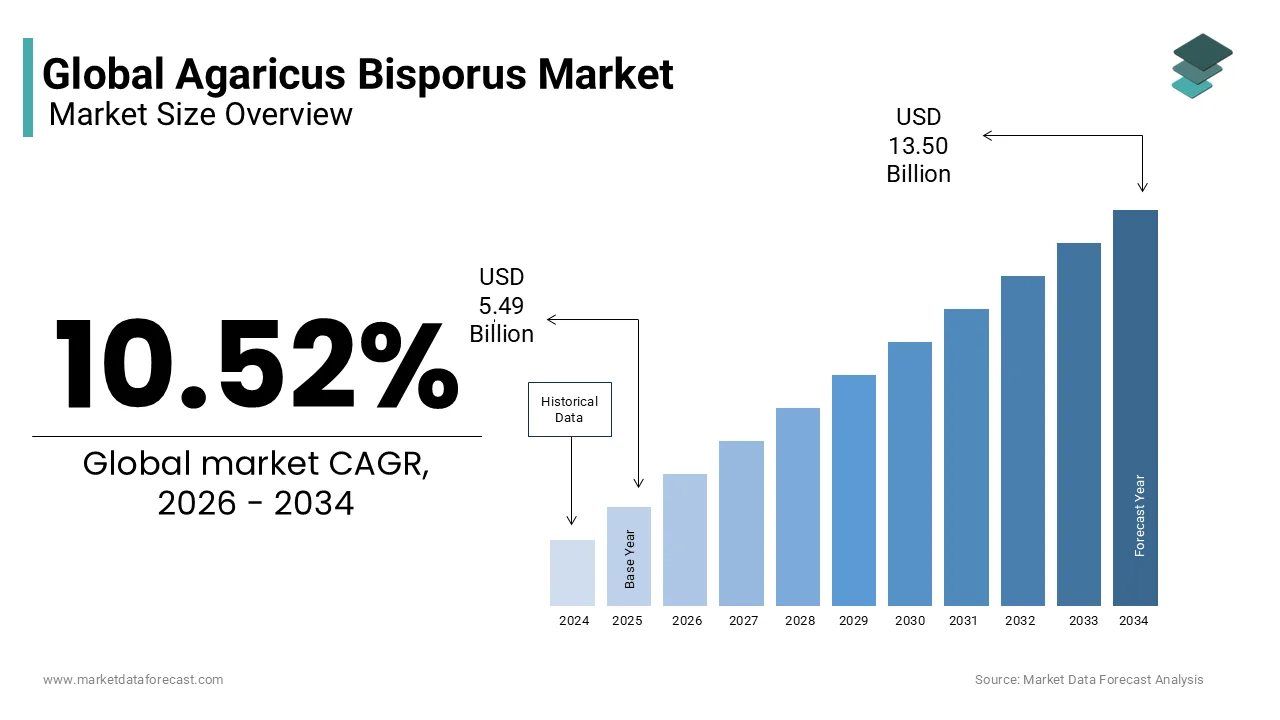
Agaricus bisporus represents the most widely cultivated edible mushroom species globally, encompassing both white button and cremini varieties. This fungal commodity serves as a critical component in global food security due to its high protein content and low caloric value. The market definition extends beyond simple agricultural production to include complex supply chains involving substrate preparation, controlled environment agriculture, and advanced post-harvest processing. In Europe, the consumption patterns reflect a deep cultural integration of mushrooms into daily diets, with per capita consumption reaching approximately 4 kilograms annually in leading nations such as the Netherlands and Poland. According to the Food and Agriculture Organization of the United Nations, global mushroom production reached 9 million tonnes in 2022, driven largely by Asian markets but with significant stability in European output. As per the European Mushroom Council, over 90% of fresh mushrooms sold in Western Europe are Agaricus bisporus, underlining its dominance over exotic varieties. According to recent data from Eurostat, indoor cultivation facilities now account for nearly 85% of total European mushroom production and this indicates a shift away from seasonal outdoor farming toward year-round industrialized agriculture. This transition ensures consistent quality and supply regardless of external climatic variations, establishing a robust foundation for market analysis that prioritizes technological adoption and sustainable farming practices over mere volume metrics.
MARKET DRIVERS
Rising Consumer Preference for Plant-Based Protein Sources Drives Demand
The global shift toward plant-based diets is majorly driving the expansion of the global agaricus bisporus market. Consumers increasingly seek meat alternatives that offer similar textural experiences and nutritional benefits without the environmental footprint associated with livestock farming. Mushrooms possess a unique umami flavor and fibrous texture that mimics meat, making them an ideal substitute in various culinary applications. According to the Good Food Institute, retail sales of plant-based foods in Europe reached 5.7 billion euros in 2022, with mushroom-based products contributing significantly to this surge. According to nutritional data from the United States Department of Agriculture, 100 grams of raw Agaricus bisporus contains approximately 3 grams of protein and zero cholesterol, appealing to health-conscious demographics. Furthermore, according to a survey conducted by the International Food Information Council, 68% of consumers actively try to include more plant-based proteins in their weekly meals. This dietary transition is not merely a trend but a structural change in eating habits, particularly among millennials and Generation Z who prioritize sustainability. The versatility of Agaricus bisporus allows it to be processed into burgers, nuggets, and mince, thereby expanding its addressable market beyond traditional fresh produce aisles. As regulatory bodies in the European Union continue to promote sustainable food systems, the alignment of mushroom cultivation with low water usage and minimal land requirements further strengthens its position as a preferred protein source.
Expansion of Quick Service Restaurant Menus Incorporating Mushroom Variants
The strategic inclusion of Agaricus bisporus in quick service restaurant menus significantly amplifies market demand through increased volume consumption. Major global food chains are reformulating their offerings to cater to the growing segment of flexitarians and vegetarians, utilizing mushrooms as a core ingredient in burgers, wraps, and breakfast items. According to the National Restaurant Association, 70% of operators reported that their customers were ordering more plant-based or vegetarian items in recent years, with mushrooms being a top choice for meat extension blends. This integration leverages the cost-effectiveness of mushrooms compared to premium plant-based isolates while maintaining consumer satisfaction regarding taste and mouthfeel. According to data from the National Restaurant Association, 55% of adults are more likely to visit a restaurant that offers healthy and sustainable menu options. By incorporating blended patties that mix beef with finely chopped Agaricus bisporus, restaurants reduce costs by up to 20% while lowering the saturated fat content of their dishes. This economic incentive drives widespread adoption across franchise networks. Additionally, the convenience factor associated with ready-to-cook mushroom products aligns with the fast-paced lifestyle of urban consumers. The standardization of mushroom supply chains ensures that large-scale food service providers receive consistent quality, which is crucial for maintaining brand reputation. As digital ordering platforms highlight nutritional information, the visibility of mushroom-based dishes increases, further stimulating trial and repeat purchases among diverse customer bases.
MARKET RESTRAINTS
Vulnerability to Post-Harvest Spoilage and Short Shelf Life
The inherent biological nature of Agaricus bisporus is hindering the expansion of the agaricus bisporus market. Mushrooms have a high moisture content and continue to respire post-harvest, leading to quick browning, softening, and microbial spoilage if not stored under precise conditions. According to the Journal of Food Science, untreated fresh mushrooms can lose up to 30% of their weight within 48 hours at ambient temperature due to moisture loss and respiration. This perishability necessitates an expensive and energy-intensive cold chain infrastructure from farm to retail shelf. According to data from the Waste and Resources Action Programme, approximately 25% of fresh produce waste in European households consists of vegetables and fungi, with mushrooms being disproportionately affected due to their delicate structure. Retailers face substantial financial losses from shrinkage, which often leads to conservative ordering practices and reduced shelf space allocation. The requirement for continuous refrigeration at temperatures between 0 and 2°C increases operational costs for distributors and retailers alike. Furthermore, consumer perception of quality is highly sensitive to visual cues such as cap opening and discoloration, meaning that even minor deviations in storage conditions can render the product unsellable. This fragility limits the geographical reach of fresh mushroom distributors, confining many producers to regional markets unless they invest heavily in modified atmosphere packaging technologies. The lack of widespread access to advanced preservation methods in developing regions further exacerbates these losses, restricting market penetration.
High Sensitivity to Climate Control and Energy Costs
The cultivation of Agaricus bisporus requires strictly controlled environmental conditions, which is making the market highly vulnerable to fluctuations in energy prices and climate anomalies and hampering the global market expansion. Maintaining optimal temperature, humidity, and carbon dioxide levels throughout the growth cycle demands continuous operation of heating, ventilation, and air conditioning systems. According to the European Commission, the average price of natural gas for non-household consumers in the EU rose by 45% in 2022 due to geopolitical tensions and supply chain disruptions, directly impacting the profitability of mushroom farms. Since mushrooms are grown indoors in dark environments, artificial lighting is not required, but climate control remains the largest operational expense, according to data from the World Mushroom Society, accounting for up to 40% of total production costs. Extreme weather events, such as heatwaves or unexpected cold snaps, can compromise the integrity of facility insulation and increase the load on cooling or heating systems. This dependency on stable energy supplies creates a barrier to entry for small-scale farmers who cannot afford backup power systems or energy-efficient technologies. Additionally, the carbon footprint associated with high energy consumption faces increasing scrutiny from environmentally conscious consumers and regulators. The European Green Deal mandates stricter efficiency standards for agricultural operations, forcing producers to invest in renewable energy sources or retrofit existing facilities. These capital expenditures strain cash flows and may lead to consolidation within the industry, reducing competition and potentially stabilizing prices at higher levels for end consumers.
MARKET OPPORTUNITIES
Innovation in Value-Added Processed Mushroom Products
The development of value-added processed mushroom products offers a substantial opportunity for the agaricus bisporus market. Transforming fresh Agaricus bisporus into dried, canned, frozen, or powdered forms extends shelf life significantly and opens new distribution channels. According to market data, the global mushroom market size was valued at USD 54.5 billion in 2023, and it is expected to grow at a compound annual growth rate of 9.7% from 2024 to 2030, driven by demand from the food processing industry. Mushroom powder is increasingly used as a natural flavor enhancer and nutritional supplement in soups, sauces, and snack foods, leveraging its high glutamate content. According to data from trade publications, sales of gourmet mushroom products, including truffle-infused Agaricus items, increased by 18% in recent years. This segmentation allows producers to target premium markets with higher profit margins. Furthermore, the extraction of bioactive compounds such as beta-glucans from mushroom waste streams presents an emerging avenue for the pharmaceutical and nutraceutical sectors. According to research published in the Journal of Functional Foods, beta-glucans derived from Agaricus bisporus exhibit potent immune-modulating properties, attracting interest from health supplement manufacturers. By diversifying product portfolios beyond fresh whole mushrooms, companies can reduce dependency on volatile fresh produce markets and create stable revenue streams. Investment in extraction technologies and partnerships with health brands can unlock significant value from what was previously considered agricultural waste.
Adoption of Circular Economy Practices in Substrate Preparation
The integration of circular economy principles in substrate preparation provides a strategic opportunity for the agaricus bisporus market. Agaricus bisporus cultivation relies heavily on composted organic waste, such as straw, manure, and gypsum, transforming agricultural byproducts into high-value food. According to the Ellen MacArthur Foundation, adopting circular models can reduce material costs by up to 20% for agricultural enterprises. Mushroom farms are increasingly partnering with local agricultural producers to secure a steady supply of raw materials, thereby reducing transportation emissions and supporting regional economies. According to data from the Sustainable Agriculture Network, using locally sourced substrates can lower the carbon footprint of mushroom production by 15%. Additionally, the spent mushroom substrate generated after harvest is rich in nutrients and can be repurposed as organic fertilizer or animal feed, creating a closed-loop system. According to the European Biogas Association, anaerobic digestion of spent substrate can generate renewable energy, further offsetting operational costs. This holistic approach aligns with corporate sustainability goals and appeals to eco-conscious consumers who prefer brands with transparent and responsible supply chains. Regulatory incentives for waste reduction and resource efficiency in the European Union provide financial support for farms implementing these practices. By positioning themselves as leaders in sustainable agriculture, mushroom producers can differentiate their brands and secure long-term contracts with retailers committed to environmental stewardship.
MARKET CHALLENGES
Labor Shortages in Harvesting and Processing Operations
The labor shortages, particularly in harvesting and processing stages that require manual dexterity is a significant challenge to the expansion of the agaricus bisporus market. Despite advancements in automation, the delicate nature of mushrooms necessitates careful handling to prevent bruising and maintain aesthetic quality, limiting the extent of mechanization. According to the European Federation of Food, Agriculture and Tourism Trade Unions, the agricultural sector experienced a 12% decline in available seasonal workers in recent years due to restrictive immigration policies and demographic aging. This scarcity drives up wage costs and leads to production bottlenecks during peak harvest periods. According to data from the International Labour Organization, labor costs constitute approximately 30% of total production expenses in labor-intensive mushroom farms. The reliance on migrant labor makes the industry vulnerable to policy changes and geopolitical shifts, creating uncertainty in workforce planning. Furthermore, the physical demands of harvesting in humid and confined growing rooms result in high turnover rates, requiring continuous recruitment and training efforts. Small and medium-sized enterprises struggle to compete with larger corporations that can offer better working conditions and wages, leading to market consolidation. The lack of skilled workers also hinders the adoption of new technologies, as existing staff may lack the technical proficiency to operate advanced monitoring systems. Addressing this challenge requires investment in ergonomic tools and partial automation solutions that assist rather than replace human workers, ensuring productivity while maintaining product quality.
Stringent Regulatory Compliance and Food Safety Standards
Navigating the complex landscape of food safety regulations and compliance standards poses a significant challenge for agaricus bisporus market expansion. Strict limits on pesticide residues, heavy metals, and microbial contamination require rigorous testing and quality control measures throughout the supply chain. According to the European Food Safety Authority, regular food safety controls monitor a high volume of imported mushroom batches, ensuring compliance with strict maximum residue levels. Producers must implement comprehensive traceability systems to track each batch from substrate to shelf, which involves substantial administrative and technological investments. According to data from the Global Food Safety Initiative, achieving and maintaining certification standards such as GlobalGAP can increase operational costs by 10 to 15%. Small-scale farmers often lack the resources to meet these stringent requirements, limiting their access to major retail channels. Additionally, evolving regulations regarding packaging materials and environmental impact assessments add layers of complexity to business operations. The need for regular audits and documentation diverts resources from core production activities. Failure to comply can result in severe penalties, product recalls, and reputational damage that can be difficult to recover from. As consumer awareness of food safety issues grows, retailers impose even stricter private standards that exceed legal requirements, further pressuring suppliers. This regulatory burden creates barriers to entry and favors large integrated companies with dedicated compliance departments, potentially stifling innovation and diversity in the market.
REPORT COVERAGE
| REPORT METRIC | DETAILS |
| Market Size Available | 2024 to 2033 |
| Base Year | 2024 |
| Forecast Period | 2025 to 2033 |
| CAGR | 10.52% |
| Segments Covered | By Type, End User, and Region. |
| Various Analyses Covered | Global, Regional & Country Level Analysis, Segment-Level Analysis, DROC, PESTLE Analysis, Porter’s Five Forces Analysis, Competitive Landscape, Analyst Overview of Investment Opportunities |
| Regions Covered | North America, Europe, APAC, Latin America, Middle East & Africa |
| Market Leaders Profiled | The Mushroom Company, Bonduelle Fresh Europe, Agro Dutch Industries Ltd, Drinkwater’s Button Mushrooms Limited, Banken Champignons, Lutece Holdings B.V, Drinkwater Mushrooms Ltd, Monaghan Button Mushrooms Ireland, Monterey Button Mushrooms Inc, Okechamp S.A, Shanghai Finc Bio-Tech Inc, The Button Mushroom company |
SEGMENTAL ANALYSIS
By Type Insights
The fresh mushroom segment dominated the market by capturing 64.5% of the global market share in 2025. Culinary versatility and daily dietary integration drive the domination of the fresh segment. The fresh variety dominates because it serves as a foundational ingredient in diverse global cuisines. Consumers prefer the natural texture and authentic flavor profile that fresh specimens provide over preserved alternatives. According to the International Society for Horticultural Science, fresh mushrooms retain 95% of their original water content, which is crucial for achieving the desired mouthfeel in salads, stir-fries, and gourmet dishes. This biological requirement drives continuous demand from households and culinary professionals alike. Furthermore, the perception of freshness is strongly linked to nutritional value. According to data published by the Journal of Agricultural and Food Chemistry, fresh Agaricus bisporus contains higher levels of water-soluble vitamins, such as riboflavin and niacin, compared to their dehydrated counterparts. This nutritional superiority motivates health-conscious buyers to prioritize fresh purchases. Retailers also support this preference by allocating prime shelf space to fresh produce sections, ensuring high visibility. The integration of fresh mushrooms into daily meal preparation routines solidifies their position as the primary choice, ensuring that this segment maintains its commanding lead in the overall market landscape.
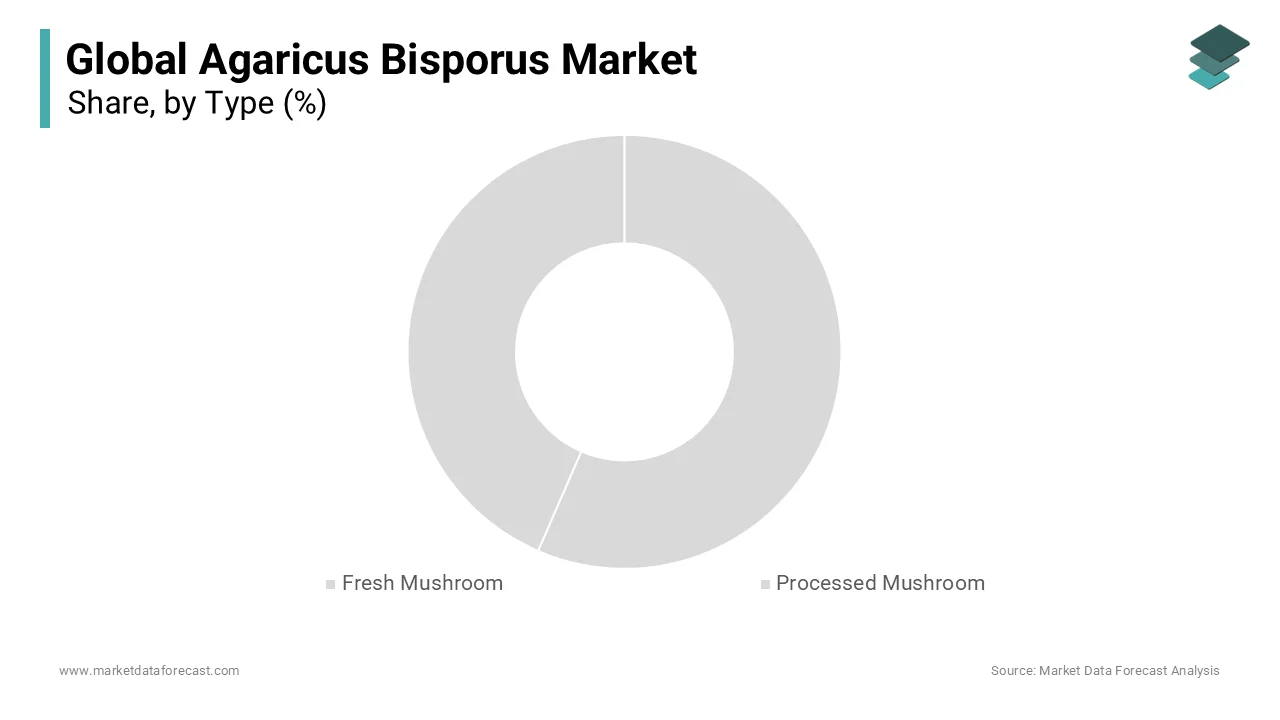
However, the dried mushroom segment is the fastest-growing category and is estimated to showcase a CAGR of 6.9% during the forecast period. Extended shelf life and reduced food waste act as primary catalysts for the rapid expansion of the dried subsegment. The dried subsegment is expanding rapidly because it effectively solves the inherent perishability issues associated with fresh fungi. Dehydration removes the majority of moisture, inhibiting microbial growth and enzymatic browning, which allows the product to remain viable for extended periods. According to the Food and Agriculture Organization, dried mushrooms can retain their edibility and core nutritional profile for up to 12 months when stored properly, drastically reducing household and retail food waste. This longevity appeals to consumers living in remote areas or regions with underdeveloped cold chain infrastructure, where fresh produce spoilage rates are historically high. According to data from the World Resources Institute, extending the shelf life of perishable vegetables through drying can reduce overall food waste by up to 30% in developing economies. Furthermore, the lightweight nature of dried products significantly lowers transportation costs and carbon emissions compared to shipping heavy, water-rich fresh mushrooms. This economic and environmental efficiency encourages distributors to expand their dried product lines. As global sustainability initiatives gain momentum, the shift toward shelf-stable dried mushrooms aligns perfectly with corporate zero-waste goals, fueling the accelerated growth rate of this specific subsegment.
By End User Insights
The supermarkets segment held 44.7% of the global market share in 2025. One-stop shopping convenience is the primary factor driving the domination of the supermarket segment. Supermarkets command the largest share of the end-user market primarily due to the unparalleled convenience of one-stop shopping. Modern consumers prioritize time efficiency, preferring to purchase all their grocery needs, including fresh and processed fungi, in a single location. According to the Consumer Brands Association, 80% of households consider the convenience of location and extended operating hours as the top factors when selecting a grocery retailer. Supermarkets capitalize on this by offering a comprehensive assortment of Agaricus bisporus, ranging from whole fresh buttons to pre-sliced and marinated options. According to data from the National Retail Federation, shoppers who buy fresh produce in large-format stores spend 25% more per visit compared to those visiting specialty shops. This high basket size incentivizes retailers to maintain robust inventory levels and offer competitive pricing. Furthermore, supermarkets frequently employ strategic product placement, positioning mushrooms near high-traffic areas like meat counters to encourage cross-purchasing for meal preparation. The integration of loyalty programs and targeted digital coupons also drives repeat purchases. By providing a seamless and convenient shopping experience, supermarkets continue to dominate the distribution landscape for these fungal products.
On the other side, the restaurants segment is the fastest-growing category and is anticipated to record a CAGR of 7.2% during the forecast period. Menu innovation and plant-forward dishes drive the accelerated growth of the restaurant segment. The restaurant segment is experiencing the fastest growth due to aggressive menu innovation and the rising popularity of plant-forward culinary concepts. Chefs are increasingly incorporating Agaricus bisporus into their menus not just as a side dish, but as the centerpiece of main courses to cater to the expanding demographic of flexitarians and vegetarians. According to the National Restaurant Association, 55% of professional chefs consider plant-based proteins as the top culinary trend influencing menu development in recent years. Mushrooms are highly valued in professional kitchens for their ability to absorb flavors and provide a meaty texture, making them ideal for gourmet burgers, risottos, and vegan stews. According to data from the James Beard Foundation, restaurants featuring dedicated plant-forward menus saw a 20% increase in overall customer traffic compared to traditional establishments. By leveraging the umami profile of these fungi, culinary professionals can create satisfying dishes that appeal to both dedicated vegetarians and meat-eating consumers looking to reduce their animal protein intake. This widespread culinary adoption across casual dining and fine dining establishments directly fuels the rapid expansion of the restaurant segment.
REGIONAL ANALYSIS
North America Agaricus Bisporus Market Analysis
North America occupied the highest share of the global market in 2025 and is likely to experience sustained growth in its commercial indoor mushroom cultivation over the next few years due to rising consumer adoption of plant-based meat alternatives and automated farming systems. The region boasts a sophisticated supply chain and high per capita consumption of both fresh and processed fungi. According to the United States Department of Agriculture, domestic production of Agaricus mushrooms in the country reached 654 million pounds during the 2022-2023 season, primarily concentrated in states like Pennsylvania and California. This robust domestic output is supported by state-of-the-art indoor farming facilities that utilize automated climate control systems to ensure year-round consistency. According to data from the Agricultural Marketing Resource Center, the adoption of energy-efficient growing technologies has reduced the carbon footprint of North American mushroom farms by 12% over the last five years. Furthermore, the region is a hub for culinary innovation, with food manufacturers heavily investing in mushroom-based meat alternatives and snack products. The strong presence of major retail chains and a growing health-conscious consumer base further stimulate demand. As sustainability initiatives gain traction, North American producers are increasingly focusing on circular economy practices, utilizing spent substrate for bioenergy and organic fertilizers. This commitment to sustainable agriculture and continuous technological innovation solidifies the strong market position of North America in the global landscape.
Europe Agaricus Bisporus Market Analysis
Europe is likely to see steady advancements in its physical production yields over the next few years as countries increasingly adopt precision agriculture tools and shift toward automated circular substrate systems. The region benefits from a deep cultural integration of mushrooms into traditional cuisines and a highly organized farming cooperative structure. According to the Food and Agriculture Organization, European mushroom production reached approximately 1.48 million tonnes in 2022, with the Netherlands, Poland, and France leading the output. This massive production scale is facilitated by stringent quality standards and advanced research institutions that continuously optimize cultivation substrates and pest management techniques. According to data from Eurostat, European mushroom farms have achieved a 15% improvement in yield per square meter over the past decade through the implementation of precision agriculture tools. The region also leads in the development of value-added processed products, such as gourmet blends and functional food ingredients. Strong regulatory frameworks ensure food safety and environmental compliance, which enhances consumer trust in locally grown products. Furthermore, the European Green Deal provides substantial financial incentives for farms transitioning to renewable energy sources and zero-waste production models. This strong institutional support, combined with high domestic consumption and a focus on premium quality, ensures that Europe remains the dominant force in the global Agaricus bisporus industry.
Asia Pacific Agaricus Bisporus Market Analysis
Asia Pacific is likely to drive the vast majority of global consumption increases over the next few years due to rapid urbanization, rising middle-class disposable incomes, and the expansion of modern quick-service restaurant networks. The region is the undisputed leader in total output, with China alone accounting for the vast majority of global cultivation. According to the Food and Agriculture Organization, mushroom and truffle production in China alone exceeded 40 million tonnes in 2022, reflecting a deeply rooted culinary tradition that values fungi for both nutritional and medicinal properties. According to data from the Asian Vegetable Research and Development Center, the adoption of modern, climate-controlled growing facilities in countries like India and Vietnam has increased commercial yields by 25% in recent years. This shift from traditional outdoor cultivation to industrialized indoor farming ensures a steady supply of high-quality Agaricus bisporus to meet the demands of rapidly urbanizing populations. Furthermore, rising disposable incomes and a growing middle class are driving a shift toward westernized diets and quick-service restaurants, where mushrooms are increasingly featured. Government initiatives aimed at boosting agricultural exports and improving rural livelihoods also provide strong support to local farmers. As the region continues to modernize its agricultural infrastructure and expand its processing capabilities, Asia-Pacific will undoubtedly maintain its leading position and drive the overall growth of the global market.
Latin America Agaricus Bisporus Market Analysis
Latin America is likely to rapidly transition toward domestic production self-sufficiency over the next few years as regional agritech startups scale up low-cost climate control equipment. Historically reliant on imports to meet local demand, countries like Brazil and Argentina are now investing heavily in domestic cultivation infrastructure to achieve self-sufficiency. According to the Inter-American Institute for Cooperation on Agriculture, the total cultivated area for edible fungi in the region expanded by 18% in recent years, driven by small and medium-sized enterprises adopting low-cost, high-yield farming techniques. According to data from the Latin American Mushroom Association, the introduction of subsidized climate control equipment has allowed local farmers to overcome tropical climatic challenges, resulting in a 20% increase in annual harvest volumes. The rising urban middle class is increasingly seeking diverse and nutritious food options, leading to higher penetration of mushrooms in supermarkets and food service channels. Additionally, the region is exploring the export potential of processed mushroom products to North American and European markets. By leveraging favorable agricultural conditions and implementing targeted government support programs for agritech startups, Latin America is steadily transforming from a marginal player into a significant contributor to the global supply chain.
Middle East and Africa Agaricus Bisporus Market Analysis
The Middle East and Africa is likely to observe a substantial acceleration in controlled environment urban farming initiatives over the next few years to actively combat harsh ambient environmental constraints and reduce dependence on expensive import logistics. In arid regions, the cultivation of Agaricus bisporus is heavily reliant on advanced greenhouse technologies and hydroponic systems that minimize water usage and control temperature fluctuations. According to the International Center for Biosaline Agriculture, the adoption of smart greenhouse solutions in the Gulf Cooperation Council countries has increased local mushroom production by 30% over the last three years, significantly reducing dependency on expensive imports. According to data from the African Development Bank, agricultural investment in controlled environment agriculture across Sub-Saharan Africa has grown by 12% annually, creating new opportunities for urban farming initiatives. The rising awareness of food security and the nutritional benefits of plant-based proteins is driving demand among health-conscious consumers in major metropolitan areas. Furthermore, international partnerships and knowledge transfer programs are equipping local farmers with the technical expertise required to optimize substrate preparation and pest management. As infrastructure improves and consumer palates diversify, the Middle East and Africa are poised for substantial growth, gradually expanding their footprint in the global Agaricus bisporus landscape.
COMPETITIVE LANDSCAPE
The competition in the Agaricus Bisporus Market is highly fragmented yet increasingly consolidated among a few dominant multinational corporations. These major players leverage economies of scale, advanced cultivation technologies, and extensive distribution networks to maintain their leadership positions. The market is characterized by intense rivalry, prompting companies to continuously innovate their product offerings and optimize their supply chain operations. Participants are heavily focused on sustainability, investing in renewable energy sources and circular economy practices to reduce their environmental footprint and appeal to environmentally conscious consumers. Furthermore, the rising demand for plant based diets has intensified competition in the processed and value added segments, driving firms to develop novel mushroom based meat alternatives and functional food ingredients. To differentiate themselves, companies are also adopting aggressive marketing strategies and forming strategic partnerships with retail chains and food service providers. The barrier to entry remains relatively high due to the significant capital requirements for building automated growing facilities and navigating complex food safety regulations. Consequently, smaller regional producers often struggle to compete on price and consistency, leading to ongoing mergers and acquisitions as larger entities seek to expand their geographical footprint and technological capabilities across diverse international markets and retail channels globally today.
KEY MARKET PLAYERS
Key players in the agaricus bisporus market are
- The Mushroom Company
- Bonduelle Fresh Europe
- Agro Dutch Industries Ltd
- Drinkwater’s Button Mushrooms Limited
- Banken Champignons
- Lutece Holdings B.V.
- Drinkwater Mushrooms Ltd
- Monaghan Button Mushrooms Ireland
- Monterey Button Mushrooms Inc.
- Okechamp S.A.
- Shanghai Finc Bio-Tech Inc.
- The Button Mushroom Company.
Top Players in the Market
- Monterey Mushrooms operates as a premier cultivator and distributor, focusing extensively on delivering premium quality fresh fungi to retail and food service channels across North America. The company leverages advanced automated growing facilities to ensure consistent yield and superior product quality throughout the year. Recently, the organization invested heavily in sustainable packaging solutions, transitioning to fully recyclable materials for its fresh product lines to align with environmental goals. Furthermore, they expanded their distribution network by opening new state of the art cooling centers, which significantly reduces transit time and preserves the freshness of the mushrooms upon reaching retail shelves. These strategic initiatives reinforce their reputation for reliability and quality in the global supply chain.
- Greenyard functions as a global leader in fresh and processed produce, maintaining a massive operational footprint across Europe and beyond. The company integrates the entire value chain, from substrate preparation and cultivation to advanced processing and global logistics. Recently, Greenyard launched a comprehensive range of plant based meat alternatives utilizing finely processed Agaricus bisporus to cater to the surging flexitarian consumer demographic. They also upgraded their European processing facilities with new freezing technologies that better retain the cellular structure and nutritional profile of the mushrooms. By continuously innovating their product portfolio and optimizing their supply chain efficiency, the company successfully meets the evolving demands of international retailers and food manufacturers, solidifying its status as a pivotal industry participant.
- Bonduelle specializes in plant based food products, with a strong strategic focus on expanding its mushroom offerings through both fresh and processed formats. The company actively engages in research and development to create convenient, ready to eat mushroom snacks and culinary blends that appeal to modern, busy consumers. Recently, Bonduelle executed a series of strategic acquisitions of local specialty farms to secure a stable supply of organic and sustainably grown fungi. They also introduced new modified atmosphere packaging lines that extend the shelf life of their fresh products without the use of artificial preservatives. Through these targeted expansions and technological upgrades, the company continues to strengthen its market presence and deliver high quality, nutritious mushroom products to a diverse global customer base.
Top Strategies Used by Key Market Participants
Key players in the Agaricus Bisporus Market primarily utilize vertical integration and technological innovation as their core strategies to maintain competitive advantages. By controlling the entire production cycle from substrate formulation to final distribution, companies can significantly reduce operational costs and ensure consistent product quality. Furthermore, major participants are heavily investing in automated climate control systems and artificial intelligence to optimize growing conditions, thereby maximizing yield and minimizing resource consumption. Another prevalent strategy involves extensive research and development focused on creating value added processed products, such as mushroom powders and plant based meat blends, to capture higher profit margins. Market leaders also prioritize strategic acquisitions and partnerships with local cultivators to expand their geographical reach and secure stable supply chains. Finally, transitioning to sustainable and fully recyclable packaging materials serves as a crucial strategy to enhance brand reputation and comply with stringent environmental regulations.
MARKET SEGMENTATION
This research report on the global agaricus bisporus market has been segmented and sub-segmented based on type, end user & region.
By Type
- Fresh Mushroom
- Processed Mushroom
- Dried
- Frozen
- Canned
By End-user
- Restaurants
- Supermarkets
- Cafeterias
- Hotels
- Others
By Region
- North America
- Europe
- Asia-Pacific
- Latin America
- Middle East & Africa