- Product Description Description
- Table of Contents TOC
- List of Table & Figure LOT
- Get Free Sample PDF Sample PDF
Market Size, 2025
$15.35 BnMarket Estimate, 2026
$16.04 BnMarket Forecast, 2034
$22.81 BnCAGR, 2026–2034
4.5%Global Palladium Market Summary
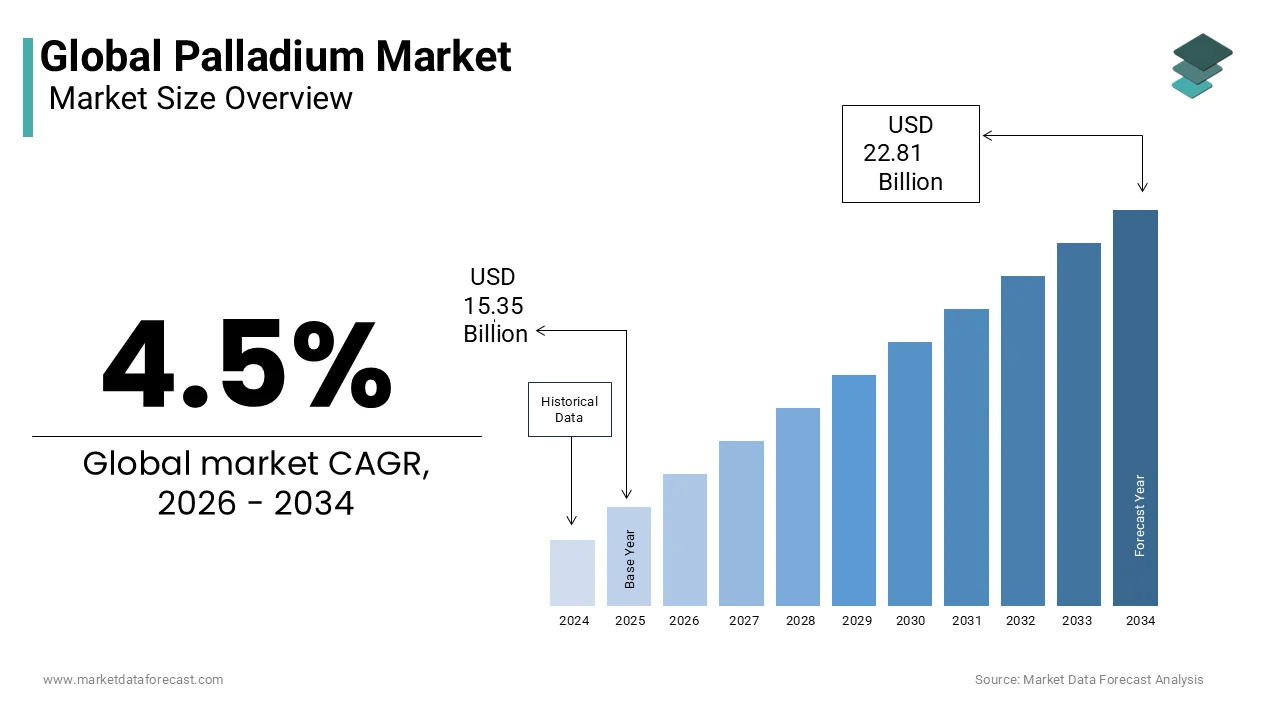
The global palladium market was valued at USD 15.35 billion in 2025 and is projected to grow from USD 16.04 billion in 2026 to USD 22.81 billion by 2034, registering a CAGR of 4.5% from 2026 to 2034.
Key Market Highlights
- 2025 Market Size: USD 15.35 Billion
- 2026 Estimate: USD 16.04 Billion
- 2034 Forecast: USD 22.81 Billion
- CAGR (2026–2034): 4.5%
- Largest Application: Automotive (dominant share in 2025)
- Fastest-Growing Segment: Electrical & Electronics (6.3% CAGR)
- Largest Region: Asia Pacific (42.4% share in 2025)
Quick Growth Drivers
- Tightening global emissions standards (Euro 7, China 6b, U.S. Tier 3)
- Continued gasoline vehicle demand in emerging economies
- Expansion of MLCC and semiconductor manufacturing
- Urban air pollution mitigation initiatives
- Hybrid vehicle production sustaining catalyst demand
Principal Restraints
- Substitution risk with platinum in gasoline catalysts
- Long-term structural decline of ICE vehicles in developed markets
- Price volatility due to supply concentration
- Increasing EV penetration reducing catalyst demand
High-Value Opportunities
- Palladium-silver membranes in hydrogen purification
- Role in fuel cell catalyst optimization
- Palladium-based medical & dental alloys
- Oncology research into palladium compounds
- Secondary supply expansion through recycling
Key Market Challenges
- Heavy supply concentration in Russia and South Africa
- Energy-intensive PGM mining processes
- Environmental scrutiny of tailings and emissions
- Geopolitical export risks and sanctions
What Wins Commercially (Competitive Edge)
- Secure primary supply agreements
- Strong recycling & secondary recovery networks
- Low-carbon refining technologies
- Integration with automotive OEM catalyst R&D
- Regional refining & distribution hubs in Asia
Top Strategic Ask for Executives
- Expand recycling capacity to hedge supply risk
- Invest in hydrogen-related palladium applications
- Develop platinum-substitution balancing strategies
- Diversify sourcing beyond geopolitically sensitive regions
- Align with OEM sustainability reporting requirements
Leading Players
Some of the companies that are playing a dominating role in the global palladium market include:
- Norilsk Nickel
- Sibanye-Stillwater
- Anglo American Platinum
- Impala Platinum Holdings
- Johnson Matthey
- Heraeus
Global Palladium Market Size
The global palladium market was valued at USD 15.35 billion in 2025 and is projected to grow from USD 16.04 billion in 2026 to USD 22.81 billion by 2034, at a CAGR of 4.5% from 2026 to 2034
Palladium is a lustrous platinum-group metal (PGM). It is primarily valued for its exceptional catalytic properties, particularly in facilitating the oxidation of hydrocarbons and carbon monoxide. It plays an indispensable role in automotive emissions control, where it is an important component of three-way catalytic converters designed to reduce harmful pollutants from internal combustion engines. Unlike bulk industrial metals, palladium is used in minute quantities, typically 2 to 7 grams per light-duty gasoline vehicle, but its functional impact is profound, enabling compliance with stringent air quality regulations. According to the study, transportation accounts for a portion of total U.S. greenhouse gas emissions, along with tailpipe pollutants. The World Health Organization attributes over 4 million premature deaths annually to ambient air pollution, emphasizing the public health imperative for effective catalytic technologies. As per the research, a portion of new gasoline-powered vehicles worldwide rely on palladium-containing catalysts, which makes it a silent guardian of urban air quality and a cornerstone of environmental policy enforcement.
MARKET DRIVERS
Stringent Global Automotive Emission Regulations
The enforcement of increasingly strict vehicle emission standards, particularly in developed and rapidly urbanizing economies, is propelling the growth of the palladium market. Regulatory frameworks such as Euro 7 in Europe, China 6b, and U.S. Tier 3 mandate near-zero levels of carbon monoxide, nitrogen oxides, and unburned hydrocarbons, compelling automakers to increase palladium loading in catalytic converters. According to the study, passenger cars contribute a portion of the EU’s total CO₂ emissions, prompting the European Commission to tighten particulate and NOx limits. Similarly, as per the study, palladium-based catalysts achieve conversion efficiency for CO and hydrocarbons under real-world driving conditions. The regulatory dependency on palladium remains entrenched as governments are prioritizing public health and climate goals. This ensures sustained industrial demand despite technological transitions.
Growth in Gasoline Vehicle Production in Emerging Markets
Rising adoption of electric vehicles in developed nations and the expansion of middle-class mobility in emerging economies continue to drive robust demand for gasoline-powered vehicles, boosting the growth of the palladium market. In India, vehicle sales grew, with a large number of internal combustion engine (ICE) cars sold, according to the study. Similarly, Southeast Asian nations are experiencing rapid motorization, with annual vehicle production increasing, according to research. These vehicles, even when equipped with basic emissions systems, require palladium to meet regional environmental standards. According to a study, ICE vehicles will remain in operation globally, with a portion of new sales in developing countries still reliant on gasoline engines. Palladium-intensive catalytic systems remain the primary tool for mitigating urban air pollution as urbanization accelerates and infrastructure for EVs lags. This drives the demand in high-growth regions.
MARKET RESTRAINTS
Substitution with Platinum in Catalytic Converters
The increasing substitution with platinum, driven by cost volatility and supply chain diversification, restricts the growth of the alladium market. Historically, palladium has commanded a premium over platinum due to tighter supply and higher catalytic efficiency in gasoline engines. According to a study, platinum loadings in gasoline converters increased, while palladium use declined in certain applications. The U.S. Department of Energy confirms that modern catalyst formulations can achieve similar emission reductions using platinum-palladium-rhodium blends, reducing dependency on any single metal. Apart from these, platinum’s lower price and greater abundance in South African mines offer strategic advantages. As per the World Platinum Investment Council, a period of palladium-for-platinum 'reverse' substitution will begin in 2025, increasing palladium demand by approximately 366,000 ounces by 2027.
Decline in Internal Combustion Engine Vehicle Production in Developed Economies
The structural shift toward electric vehicles (EVs) in North America, Europe, and parts of Asia is eroding the long-term foundation of palladium demand and is degrading the growth of the palladium market. Battery electric vehicles (BEVs) require no catalytic converters, eliminating palladium from their powertrain systems. According to the research, EVs accounted for a portion of global car sales, with the EU and China leading the transition. The European Commission proposes and passes a law requiring a 100% reduction in carbon dioxide emissions for new cars and vans by 2035. This effectively bans the sale of new fossil-fuel vehicles from that date onward. However, hybrid vehicles still use catalytic systems. Their smaller engines require less palladium. This irreversible policy-driven decline in ICE production threatens to outpace substitution and recycling gains, which creates a structural demand ceiling for palladium despite its irreplaceable role in current emissions control.
MARKET OPPORTUNITIES
Expansion into the Hydrogen Economy and Fuel Cell Technologies
The hydrogen economy, particularly in hydrogen purification and fuel cell membranes, is setting up new opportunities for the palladium market. While platinum remains dominant in proton-exchange membrane (PEM) fuel cells, palladium-based alloys are being developed to enhance durability and reduce costs. According to the U.S. Department of Energy’s Hydrogen and Fuel Cell Technologies Office, palladium-silver membranes are among the most effective for high-purity hydrogen separation, achieving 99.999% purity in industrial applications. The International Energy Agency projects that global hydrogen demand could reach 530 million metric tons annually by 2050 under net-zero scenarios, creating new pathways for palladium integration. Apart from these, palladium-coated catalysts reduce platinum loading in fuel cells. Palladium’s unique material properties could open high-value niches beyond automotive emissions as the clean hydrogen sector scales.
Development of Palladium-Based Medical and Dental Applications
Its use is in biocompatible alloys, anticancer agents, and diagnostic tools. Palladium’s low toxicity, corrosion resistance, and compatibility with human tissue make it ideal for dental crowns, bridges, and implants, setting up new opportunities for the palladium market. According to the research, a portion of high-end dental prosthetics in the U.S. contain palladium-silver or palladium-copper alloys, valued for their strength and non-discoloring properties. In oncology, palladium(II) complexes are being studied as alternatives to platinum-based chemotherapy drugs like cisplatin. Research published in Nature Reviews Clinical Oncology emphasizes that palladium compounds exhibit faster reaction kinetics and potentially lower nephrotoxicity, with several candidates in preclinical trials. The National Institutes of Health has funded studies on palladium-based radiotracers for positron emission tomography (PET) imaging. Hence, palladium’s role in healthcare could become a significant secondary market.
MARKET CHALLENGES
Geopolitical Concentration of Primary Supply
Geopolitical concentration of primary supply is challenging the growth of the palladium market. The global palladium supply is highly concentrated, with Russia and South Africa accounting for a portion of primary mine production, according to the study. Norilsk Nickel in Russia alone produces a portion of the world’s palladium, which creates systemic vulnerability to geopolitical disruptions. Sanctions imposed on Russian entities following the Ukraine conflict have raised concerns about supply reliability, prompting automakers and refiners to diversify sourcing. The European Commission has classified palladium as an important raw material with a high supply risk, urging stockpiling and recycling initiatives. In South Africa, labor unrest, power outages, and regulatory uncertainty at PGM mines in the Bushveld Complex have repeatedly disrupted output, as documented by the Chamber of Mines of South Africa. This concentration weakens supply security and increases price volatility, which challenges industrial planning and investment.
Environmental and Energy Intensity of PGM Mining
The extraction and refining of palladium are among the most energy-intensive and environmentally impactful processes in the mining sector, which challenge the growth of the palladium market. Palladium is typically recovered as a byproduct of nickel and copper mining, requiring the processing of up to 10 tons of ore to yield a single troy ounce. The sector is also a significant emitter of sulfur dioxide and greenhouse gases. The Intergovernmental Panel on Climate Change reports that PGM operations in the Bushveld Complex contribute notable metric tons of CO₂-equivalent emissions annually. Apart from these, Tailings storage facilities (TSFs) pose significant risks of contamination, and a slurry leak occurred in South Africa in 2022. Miners face rising costs for energy transition and environmental remediation because of the increasing burden to decarbonize. This threatens the economic viability of marginal operations and constrains future supply growth.
REPORT COVERAGE
| REPORT METRIC | DETAILS |
| Market Size Available | 2025 to 2034 |
| Base Year | 2025 |
| Forecast Period | 2026 to 2034 |
| Segments Covered | By Application, and Region. |
| Various Analyses Covered | Global, Regional and Country-Level Analysis, Segment-Level Analysis, Drivers, Restraints, Opportunities, Challenges; PESTLE Analysis; Porter’s Five Forces Analysis, Competitive Landscape, Analyst Overview of Investment Opportunities |
| Countries Covered | North America, Europe, Asia Pacific, Latin America, Middle East & Africa |
| Market Leaders Profiled | Norilsk Nickel, Sibanye-Stillwater, Anglo American Platinum (Amplats), Impala Platinum Holdings (Implats), Johnson Matthey, and Heraeus. |
SEGMENTAL ANALYSIS
By Application Insights
The automotive segment dominated the palladium market by capturing a significant share in 2025. The growth of the automotive segment is driven by palladium’s irreplaceable role in catalytic converters for gasoline-powered vehicles, where it facilitates the oxidation of carbon monoxide and unburned hydrocarbons into less harmful gases. The U.S. Environmental Protection Agency mandates that light-duty vehicles reduce a range of pollutants, including carbon monoxide, hydrocarbons, and nitrogen oxides, with reductions exceeding 95% compared to pre-control levels. This standard is met primarily through three-way catalytic converters that use a combination of precious metals, such as platinum, palladium, and rhodium. The continued production of internal combustion engine (ICE) vehicles, especially in emerging markets, ensures that palladium remains a cornerstone of global air quality regulation and automotive manufacturing.
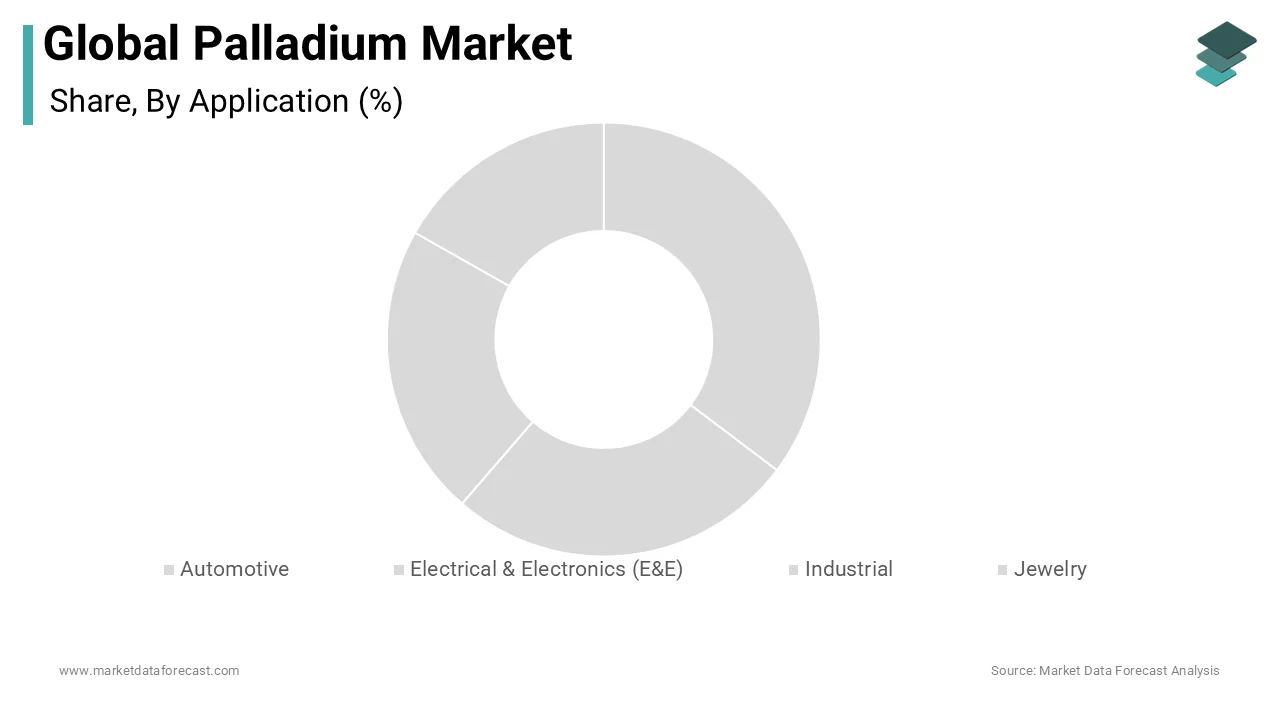
The Electrical & Electronics (E&E) segment is estimated to register the fastest CAGR of 6.3% from 2025 to 2033 due to palladium’s use in multilayer ceramic capacitors (MLCCs), connectors, and semiconductor components, where its excellent conductivity, corrosion resistance, and thermal stability are important. According to the study, each modern smartphone contains MLCCs, many of which utilize palladium-silver electrodes due to their reliability under repeated thermal cycling. Palladium is added to pure silver in thick-film pastes to create a silver-palladium (Ag/Pd) alloy that prevents electromigration and enhances reliability, despite increasing the overall material cost. The demand for miniaturized, durable components is surging. Apart from these, palladium’s role in hybrid microcircuits and aerospace electronics further strengthens its strategic importance in next-generation technologies.
REGIONAL ANALYSIS
Asia-Pacific Palladium Market Insights
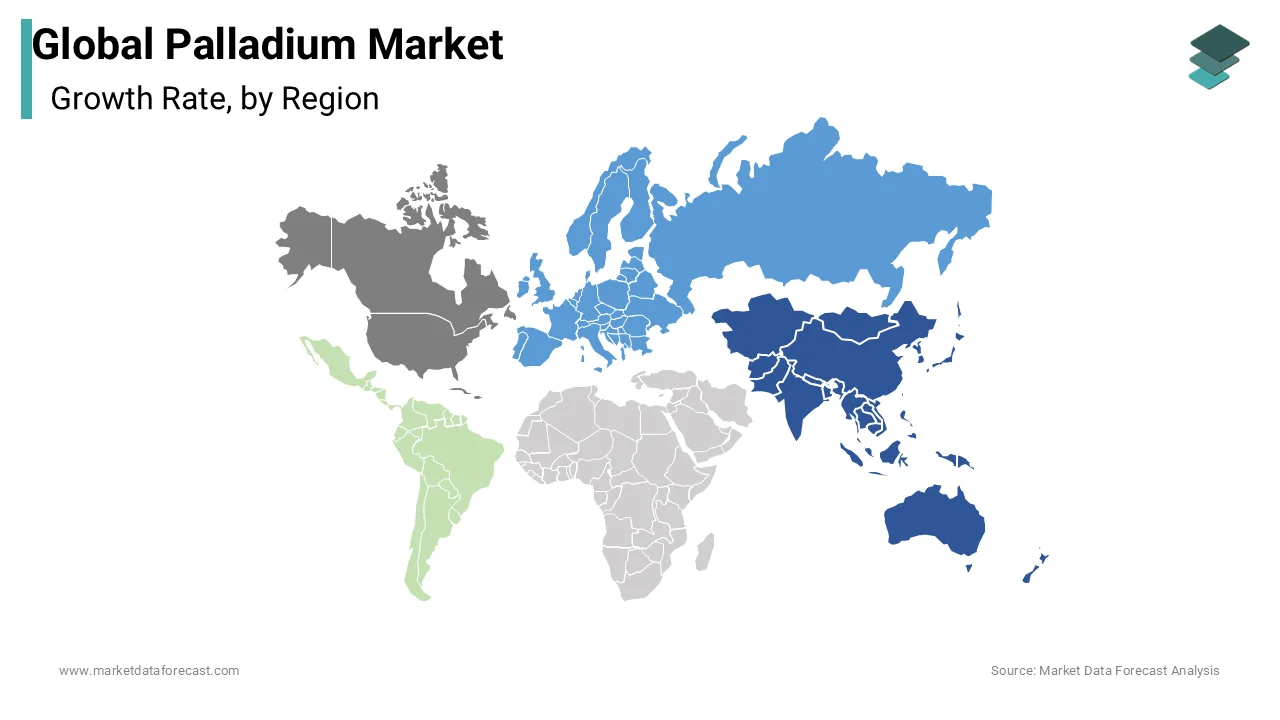
Asia-Pacific was the top performer in the palladium market in 2025 and accounted for 42.4% of the global market share in 2025. China is the region’s dominant force, functioning as both the world’s largest automotive market and a major electronics manufacturing hub. According to a study, millions of passenger vehicles were produced in China, the vast majority being gasoline-powered and equipped with palladium-intensive catalytic converters. Apart from these, China produces a portion of the world’s smartphones and consumer electronics, driving demand for palladium in MLCCs and circuitry. Japan and South Korea also contribute significantly, with advanced semiconductor and automotive industries relying on high-purity palladium. The region’s integration into global supply chains and tightening emissions standards position Asia-Pacific as the primary engine of palladium demand despite growing EV adoption.
North America Palladium Market Insights
North America is the second-largest in the palladium market and accounted for 23.6% of global market share in 2025, with the United States serving as the primary market. The region’s demand is anchored in its mature automotive industry, which continues to produce millions of gasoline-powered vehicles annually. As per the study, millions of light-duty ICE vehicles were produced in the U.S.. Canada complements this with strong demand in electronics and medical device manufacturing. Apart from these, the Inflation Reduction Act has spurred investment in hydrogen fuel cell development, where palladium is used in membrane purification systems.
Europe Palladium Market Insights
Europe grew steadily in the palladium market, with Germany, France, and the UK leading in automotive manufacturing and industrial applications. The region’s demand is shaped by some of the world’s strictest emissions regulations, including Euro 6d and the upcoming Euro 7 standards, which mandate ultra-low NOx and particulate emissions. Germany alone produces a large number of vehicles annually, many for export, creating sustained demand for catalytic materials. The transition period and continued hybrid vehicle production will sustain demand through the decade despite this. Apart from these, Europe’s advanced electronics and medical device sectors provide secondary growth avenues for palladium in high-reliability components.
Latin America Palladium Market Insights
Latin America grew steadily in the palladium market, with Brazil and Mexico serving as the primary demand centers. Mexico plays an important role due to its integration into North American automotive supply chains by producing a notable number of vehicles annually, as per research. These vehicles are primarily exported to the U.S. and Canada. It must comply with stringent emissions standards by necessitating palladium-rich catalytic converters. Apart from these, the region’s growing consumer electronics market, particularly in Brazil and Chile, is increasing demand for MLCCs and connectors. Hence, Latin America’s strategic manufacturing position ensures steady palladium demand linked to export-oriented industries.
Middle East and Africa Palladium Market Insights
The Middle East and Africa are likely to grow in the palladium market, with South Africa and the UAE as key nodes. South Africa is unique in this context: while it consumes minimal palladium, it is a major producer, hosting the Bushveld Complex, which supplies a portion of global primary palladium, as per research. The country’s refining and recycling sectors use small quantities domestically in catalytic research and jewelry. In the Middle East, demand is driven by infrastructure development and luxury vehicle imports. The UAE’s Ministry of Climate Change and Environment has adopted Euro 6-equivalent standards, increasing palladium requirements for imported vehicles. However, regional consumption remains low. But the UAE is emerging as a logistics and trade hub for PGMs by facilitating global distribution and supporting downstream investment in recycling and high-tech applications. Some of the important companies in the global palladium market include:
COMPETITIVE LANDSCAPE
KEY MARKET PLAYERS
Some of the important companies in the global palladium market include
-
Norilsk Nickel (Russia)
-
Sibanye-Stillwater
-
Anglo American Platinum (Amplats)
-
Impala Platinum Holdings (Implats)
-
Johnson Matthey
-
Heraeus
TOP PLAYERS IN THE MARKET
Anglo American Platinum
Anglo American Platinum, headquartered in South Africa, is a dominant force in the global palladium supply chain, with significant influence extending into the Asia-Pacific market through long-term off-take agreements and refining partnerships. The company operates within the Bushveld Complex, the world’s largest known repository of platinum group metals, including substantial palladium reserves. Amplats has strengthened its engagement with Asian refiners and automotive catalyst manufacturers by ensuring traceable and responsibly sourced material compliant with OECD due diligence standards.
Norilsk Nickel
Norilsk Nickel, a Russian multinational, is one of the world’s largest producers of palladium, playing a pivotal role in supplying the Asia-Pacific region, particularly China, Japan, and South Korea. Despite geopolitical challenges, Nornickel maintains long-standing relationships with major Asian refiners and catalyst manufacturers due to the high purity and consistency of its palladium output from the Norilsk-Talnakh deposits. In recent years, the company has focused on diversifying its export logistics, increasing shipments via third-country intermediaries to ensure continuity amid trade restrictions.
Heraeus Group
Heraeus, a German-based technology and materials company, exerts significant influence in the Asia-Pacific palladium market through its advanced refining, recycling, and materials science capabilities. The company operates state-of-the-art precious metals refineries and maintains technical centers in Shanghai, Tokyo, and Singapore that support automotive, electronics, and medical clients across the region. Heraeus supplies high-purity palladium to catalyst manufacturers such as Bosch and Denso, ensuring compliance with stringent emissions standards in China and Japan. Heraeus has established itself as a trusted solutions provider by bridging global supply with regional demand for high-performance palladium applications.
COMPETITION OVERVIEW
The palladium market features a highly concentrated and geopolitically sensitive competitive landscape, where dominance is determined not by volume alone but by access to supply, refining capability, and technological integration. Primary production is largely controlled by a few state-linked or large-cap mining firms in Russia and South Africa, creating supply vulnerability that refiners and recyclers are working to offset. Competition is intensifying in downstream innovation, with companies vying to offer high-efficiency catalysts, recycled-content materials, and advanced electronic components. In the Asia-Pacific, the race is focused on sustainability, traceability, and application-specific engineering, where firms with localized technical support and circular economy models gain an advantage. The structural decline of internal combustion engines in the West contrasts with sustained demand in emerging markets, reshaping global trade flows. Ultimately, the most resilient players are those combining secure sourcing, environmental stewardship, and deep integration into high-growth industrial ecosystems.
TOP STRATEGIES USED BY THE KEY MARKET PARTICIPANTS
Key players in the palladium market are deploying multifaceted strategies to maintain competitiveness amid supply constraints, regulatory shifts, and technological disruption. Major approaches include vertical integration into recycling to secure secondary supply from end-of-life catalytic converters and electronic waste. Companies are investing in low-carbon refining technologies and emissions reduction to meet automakers’ sustainability criteria. Strategic partnerships with automotive OEMs and catalyst manufacturers enable co-development of optimized formulations that reduce palladium dependency without compromising performance. Geopolitical diversification is being pursued to mitigate risks associated with concentrated primary supply, particularly from Russia. Digital traceability systems using blockchain are being implemented to ensure ethical sourcing and regulatory compliance. Apart from these, firms are expanding their footprint in Asia-Pacific through local refining hubs, technical service centers, and joint ventures, strengthening responsiveness to regional demand in automotive, electronics, and emerging hydrogen applications.
MARKET SEGMENTATION
This research report on the Global Palladium Market is segmented and sub-segmented into the following categories.
By Application
- Automotive
- Electrical & Electronics (E&E)
- Industrial
- Jewelry
- Others
By Region
- Asia Pacific
- North America
- Europe
- Latin America
- Middle East & Africa