- Product Description Description
- Table of Contents TOC
- List of Table & Figure LOT
- Get Free Sample PDF Sample PDF
Market Size, 2025
$119.09 BnMarket Estimate, 2026
$127.78 BnMarket Forecast, 2034
$224.53 BnCAGR, 2026–2034
7.3%Global Physical Security Market Size, Growth, Trends & Forecast (2026–2034)
The global physical security market was valued at USD 119.09 billion in 2025, is estimated to reach USD 127.78 billion in 2026, and is projected to scale up to USD 224.53 billion by 2034, registering a compound annual growth rate (CAGR) of 7.3% during the forecast period from 2026 to 2034. Driven by rising security threats, rapid deployment of wireless technology, IP protocol-based video surveillance, and the integration of cloud-computing platforms, the industry continues to expand steadily.
Key Executive Metrics (At-a-Glance)
- 2025 Base Valuation: USD 119.09 Billion
- 2026 Current Valuation: USD 127.78 Billion
- 2034 Forecast Valuation: USD 224.53 Billion
- Compound Annual Growth Rate (CAGR): 7.3% (2026–2034)
- Dominant Component System: Video Surveillance (holding the largest revenue share through IP and AI-enabled cameras)
- Dominant Organization Type: Large Enterprises (due to expansive infrastructure footprints and dedicated security budgets)
- Dominant Region: North America (leading with established technology infrastructure and presence of global market leaders)
- Fastest-Growing Region: Asia-Pacific & Europe (rapidly expanding to catch up with North American adoption standards)
Core Market Drivers
- Rising Security Concerns: Escalating numbers of terrorist attacks, theft, and unauthorized intrusions demanding robust protection systems.
- Technological Convergence: Deployment of wireless tech, IoT devices, cloud computing platforms, and IP-protocol video surveillance transitioning systems toward logical security.
Primary Market Restraints & Challenges
- High Initial Capital & Maintenance: Substantial upfront investment costs for system integration and hardware upgrades.
- System Complexity: Managing user convenience alongside stringent security policies and potential vulnerabilities in complex architectures.
Global Physical Security Market Segmentation Breakdown
| Segment Category | Leading Sub-Segment (2025 Base) | Key Focus Areas / Growth Sub-Segments |
|---|---|---|
| By Component Systems | Video Surveillance (dominant market share via IP-based and smart cameras) | PACS, PSIM, PIAM, Fire and Life Safety |
| By Component Services | Security Systems Integration | ACaaS, VSaaS, and Remote Monitoring services |
| By Organisation Type | Large Enterprises | Medium and Small Enterprises (SMEs) |
| By Vertical | Government & Banking Sectors | Telecommunications, Healthcare, and Media Management |
| By Region | North America (dominant market share due to funding and infrastructure) | Europe and Asia-Pacific (fastest-growing regional markets) |
Major Industry Players Profiled
Key market leaders shaping the competitive global physical security landscape include ADT Inc., Bosch Building Technologies, Cisco Systems, Inc., Honeywell International Inc., Johnson Controls International plc., Anixter International Inc., Genetec, Secom Co., Ltd, G4S plc., Pelco by Schneider Electric, Zhejiang Dahua Technology Co., Ltd., Kastle Systems, Hikvision Digital Technology Co., Ltd., STANLEY Convergent Security Solutions, Inc., and Axis Communications.
Global Physical Security Market Size
The global physical security market was worth USD 119.09 billion in 2025. The global market is predicted to reach USD 127.78 billion in 2026 and USD 224.53 billion by 2034, growing at a CAGR of 7.3% during the forecast period.
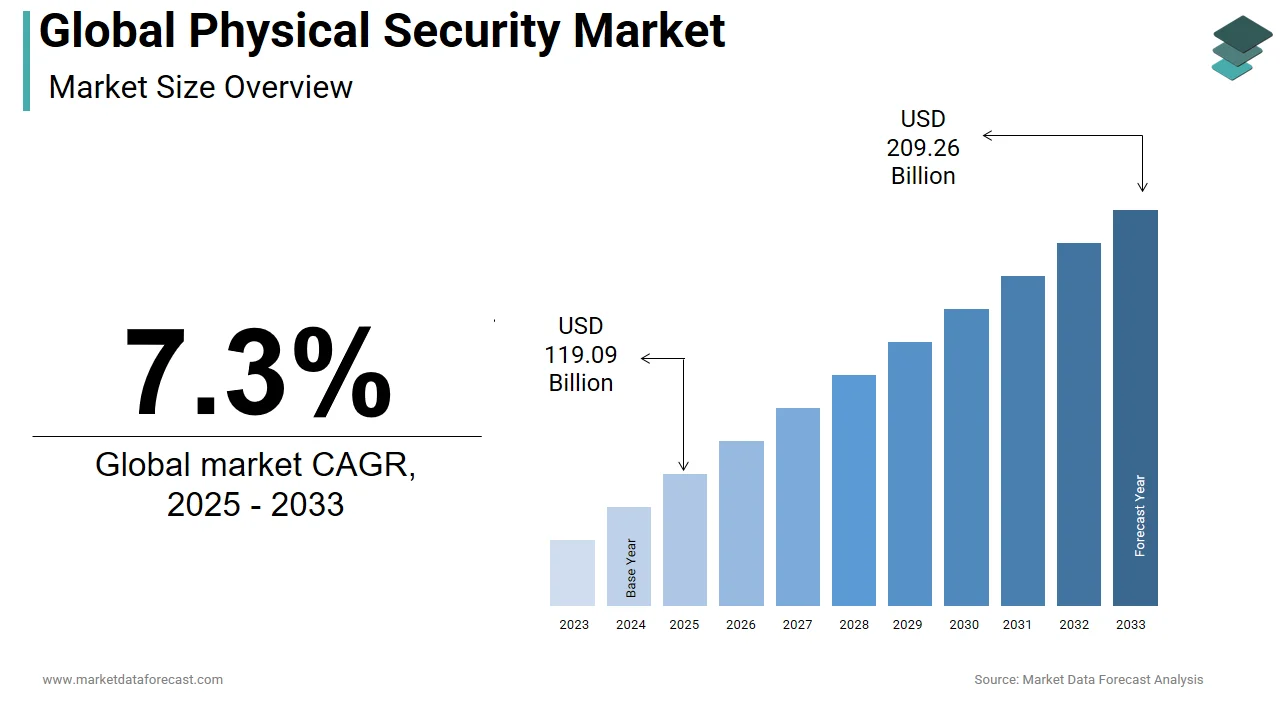
Among the many factors that are fuelling the physical security market, some of the key factors include the increasing number of terrorist attacks, technological advances and the deployment of wireless technology in security systems, the rising use of IP protocol-based cameras for video surveillance, and the growing adoption of the IoT devices and market with security systems based on cloud computing platforms, etc. In addition to these factors, the refocusing of traditional solutions such as alarm systems, badge readers, and door locks towards logical security, including threat management, violation detection, and higher rate intrusion prevention, are also adding to the market rate growth.
REPORT COVERAGE
| REPORT METRIC | DETAILS |
| Market Size Available | 2025 to 2034 |
| Base Year | 2025 |
| Forecast Period | 2026 to 2034 |
| CAGR | 7.3% |
| Segments Covered | By Component Systems, Component Services, Organisation Type, Vertical, And Region |
|
Various Analyses Covered | Global, Regional & Country Level Analysis, Segment-Level Analysis, DROC, PESTLE Analysis, Porter’s Five Forces Analysis, Competitive Landscape, Analyst Overview on Investment Opportunities |
| Regions Covered | North America, Europe, APAC, Latin America, Middle East & Africa |
|
Market Leaders Profiled | ADT Inc. (US), Bosch Building Technologies (Germany), Cisco Systems, Inc. (US), Honeywell International Inc. (US), and Johnson Controls International plc. (US), Anixter International Inc. (US), Genetec (Canada), Secom Co., Ltd (Japan), G4S plc. (UK), Pelco by Schneider Electric (US), Zhejiang Dahua Technology Co., Ltd. (US), Kastle Systems (US), Hikvision Digital Technology Co., Ltd. (China), STANLEY Convergent Security Solutions, Inc. (US), Axis Communications (Sweden), and others. |
REGIONAL ANALYSIS
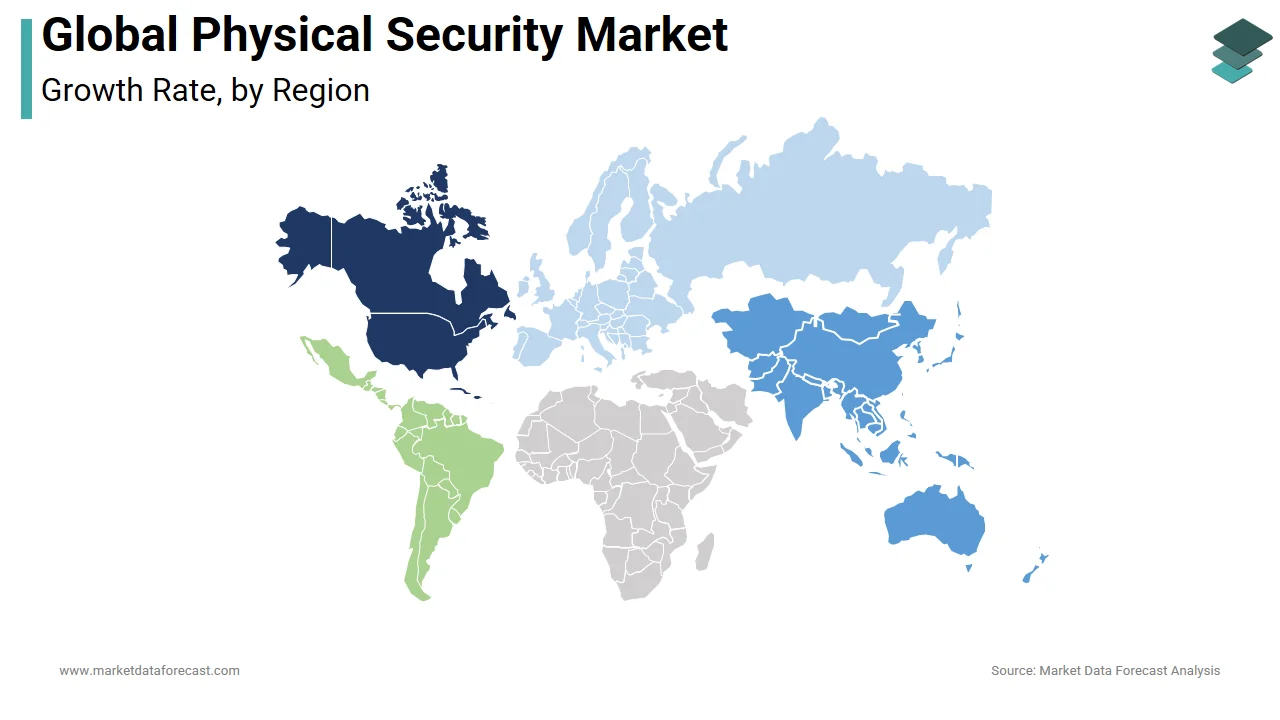
North America has dominated the global physical security market for quite some time, owing to factors such as the presence of global market leaders, the availability of advanced technology and updated infrastructure, increased government incentives and funding, etc. When talking about the fastest-growing markets, Europe and the Asia Pacific top the race to catch up with the North American market.
KEY MARKET PLAYERS
Some of the key market players operating in this industry are ADT Inc. (US), Bosch Building Technologies (Germany), Cisco Systems, Inc. (US), Honeywell International Inc. (US), and Johnson Controls International plc. (US), Anixter International Inc. (US), Genetec (Canada), Secom Co., Ltd (Japan), G4S plc. (UK), Pelco by Schneider Electric (US), Zhejiang Dahua Technology Co., Ltd. (US), Kastle Systems (US), Hikvision Digital Technology Co., Ltd. (China), STANLEY Convergent Security Solutions, Inc. (US), Axis Communications (Sweden), and others.
MARKET SEGMENTATION
This research report on the global physical security market is segmented and sub-segmented based on the component systems, component services, organisation type, vertical, and region.
By Component Systems
- PACS
- PSIM
- PIAM
- Video Surveillance
- Fire and Life Safety
By Component Services
- ACAAS
- VSAAS
- Remote Monitoring
- Security Systems Integration
By Organisation Type
- Large
- Medium
- Small
By Vertical
- Banking
- Telecommunications
- Healthcare
- Media management, etc.
By Region
- North America
- Europe
- Asia Pacific
- Latin America
- Middle East & Africa